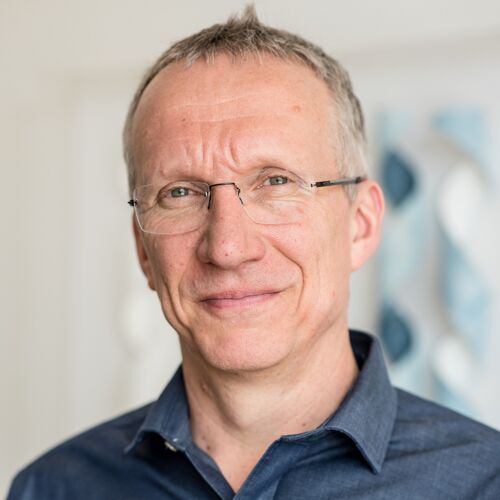
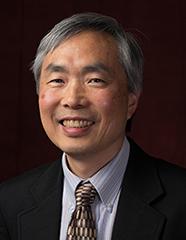
Johan Håstad is a Professor at the Department of Mathematics, School of Engineering Sciences, KTH Royal Institute of Technology. His research focuses on theoretical computer science, particularly algorithms, computational complexity, approximation algorithms, and cryptography. He is funded by the Knut and Alice Wallenberg Foundation through project grants and the Wallenberg AI, Autonomous Systems and Software Program (WASP). External Funding: Knut and Alice Wallenberg Foundation, WASP Editorial Roles: Theory of Computing, TheoretiCS Professional Activities: Cyber Defense Center, Royal Swedish Academy of Sciences (former chairman) Research Interests : • Algorithms and Complexity • Circuit Complexity • Approximation Algorithms • Quantum Computing and Cryptography Scientific Awards : Knut and Alice Wallenberg Foundation Support Labs and Teams : • Involved in KTH's Cyber Defense Center • Editor for key journals in theoretical computer science
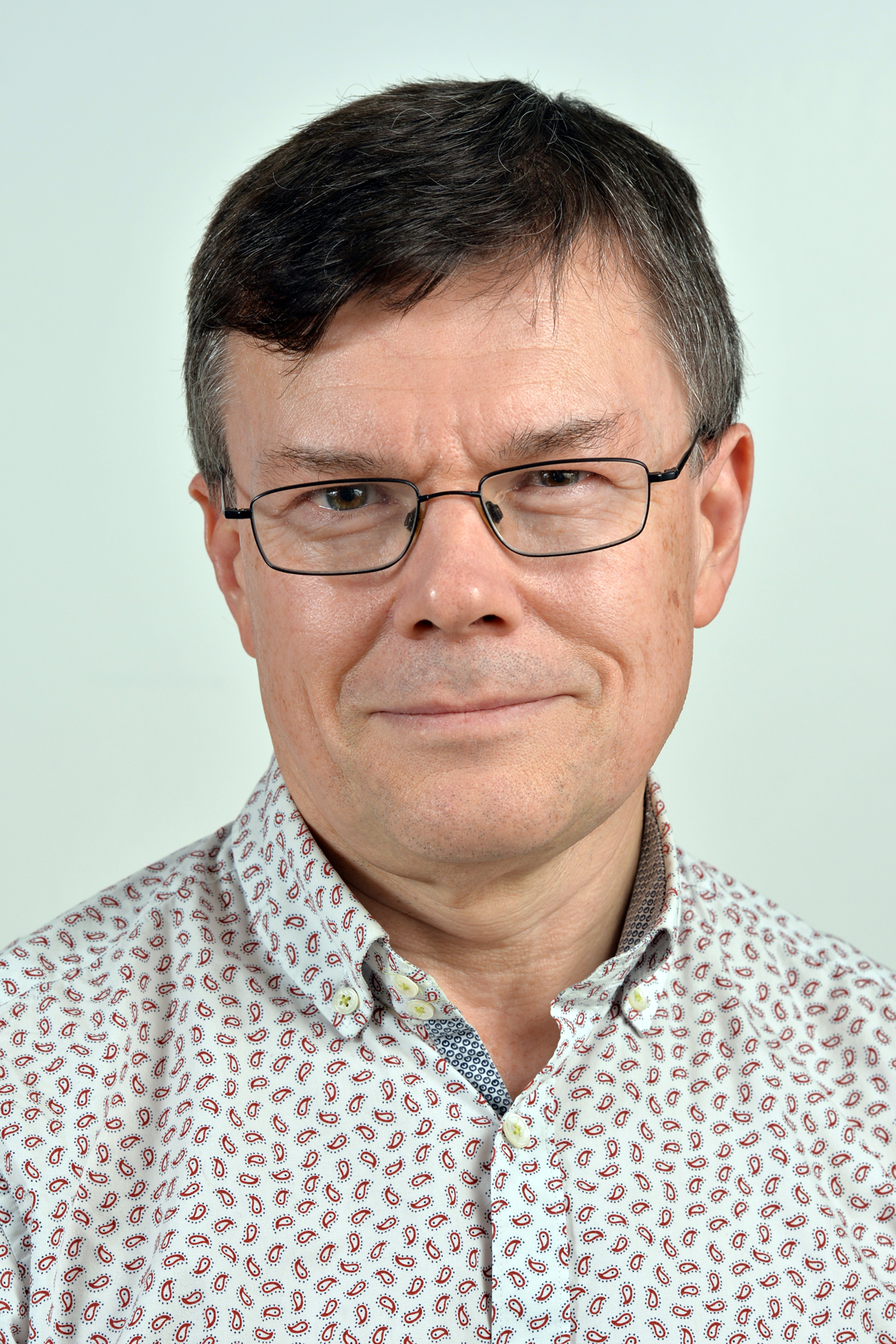
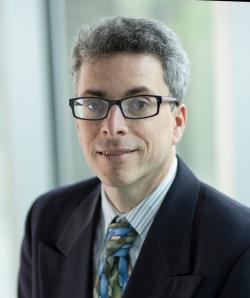
Patrick Morris is a postdoctoral researcher in the GAPCOMB group at Universitat Politècnica de Catalunya (UPC) in Barcelona, funded by a Marie Curie fellowship. He holds a PhD in Combinatorics and Graph Theory from Freie Universität Berlin (2021), a Master's from the same institution, and a 4-year MSci from the University of Bristol. His research focuses on Extremal and Probabilistic Combinatorics with applications to Discrete Probability, Number Theory, and Algebraic Group Theory. Notably, his work on canonical Ramsey theorems earned a Best Paper Award at LAGOS 2023. His studies often explore structural properties of graphs and hypergraphs under random perturbations, with emphasis on Hamiltonicity, bootstrap percolation, and transversal problems. Collaborations include projects with Prof. Guillem Perarnau and Prof. Tibor Szabó, yielding impactful results in combinatorial theory. Education: PhD in Mathematics (2021), Freie Universität Berlin Master's in Combinatorics & Graph Theory (Freie Universität Berlin) MSci in Mathematics (University of Bristol, 2015) Research Interests: Extremal Combinatorics Probabilistic Combinatorics Bootstrap Percolation Hypergraph Theory Random Graphs Ramsey-Turán Theory Key Contributions: Over 15 peer-reviewed papers in top journals (e.g., Random Structures & Algorithms , Journal of Combinatorial Theory ), with focus on Hamilton cycles, clique factors, and canonical Ramsey-type theorems. His work bridges combinatorial structure and probabilistic methods, often addressing open problems in graph theory.
Mark Jerrum is a Professor of Mathematics at Queen Mary University of London, part of the School of Mathematical Sciences. His research focuses on combinatorics, computational complexity, and stochastic processes, particularly in the design and analysis of randomized algorithms. He explores the mixing times of Markov chains and computational complexity of counting problems, including partition functions and generating functions, often motivated by statistical physics, constraint satisfaction, and graph polynomials. Notable grants include an EPSRC-funded project on Sampling in Hereditary Classes (EP/S016694/1, 2019–2023). He has contributed to teaching, serving as module organiser for MTH4213 (Numbers, Sets and Functions) in 2023–24. His work bridges theoretical computer science and discrete mathematics, with applications in algorithmic design and probabilistic analysis. Research highlights include advancements in perfect sampling algorithms, approximation algorithms for counting problems, and foundational work on the interplay between statistical physics models and computational complexity. He is affiliated with the Centre for Combinatorics, Algebra and Number Theory, reflecting his interdisciplinary approach to combinatorial and algorithmic challenges.
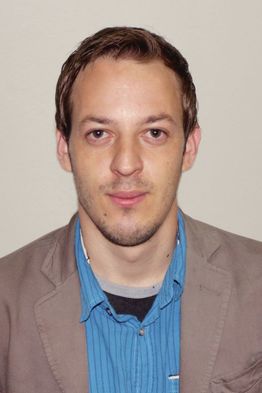
Daniel Grier is an Assistant Professor at the University of California, San Diego in the Computer Science and Engineering and Mathematics departments. His research focuses on quantum complexity theory , particularly near-term quantum computing paradigms and proving quantum advantage over classical systems. PhD in Computer Science from MIT under Scott Aaronson Postdoc at the Institute for Quantum Computing (University of Waterloo) B.S. in Computer Science and Mathematics from University of South Carolina His work spans quantum algorithms , complexity theory , and quantum simulation , with notable contributions to BosonSampling , Clifford circuits , and classical shadow tomography . He has developed open-source tools like gridCHP++ , a C++ stabilizer simulator for planar quantum circuits. Publications highlight collaborations with researchers including Scott Aaronson , David Gosset , and Luke Schaeffer , covering topics such as quantum query complexity , quantum simulation efficiency , and quantum-classical separations .
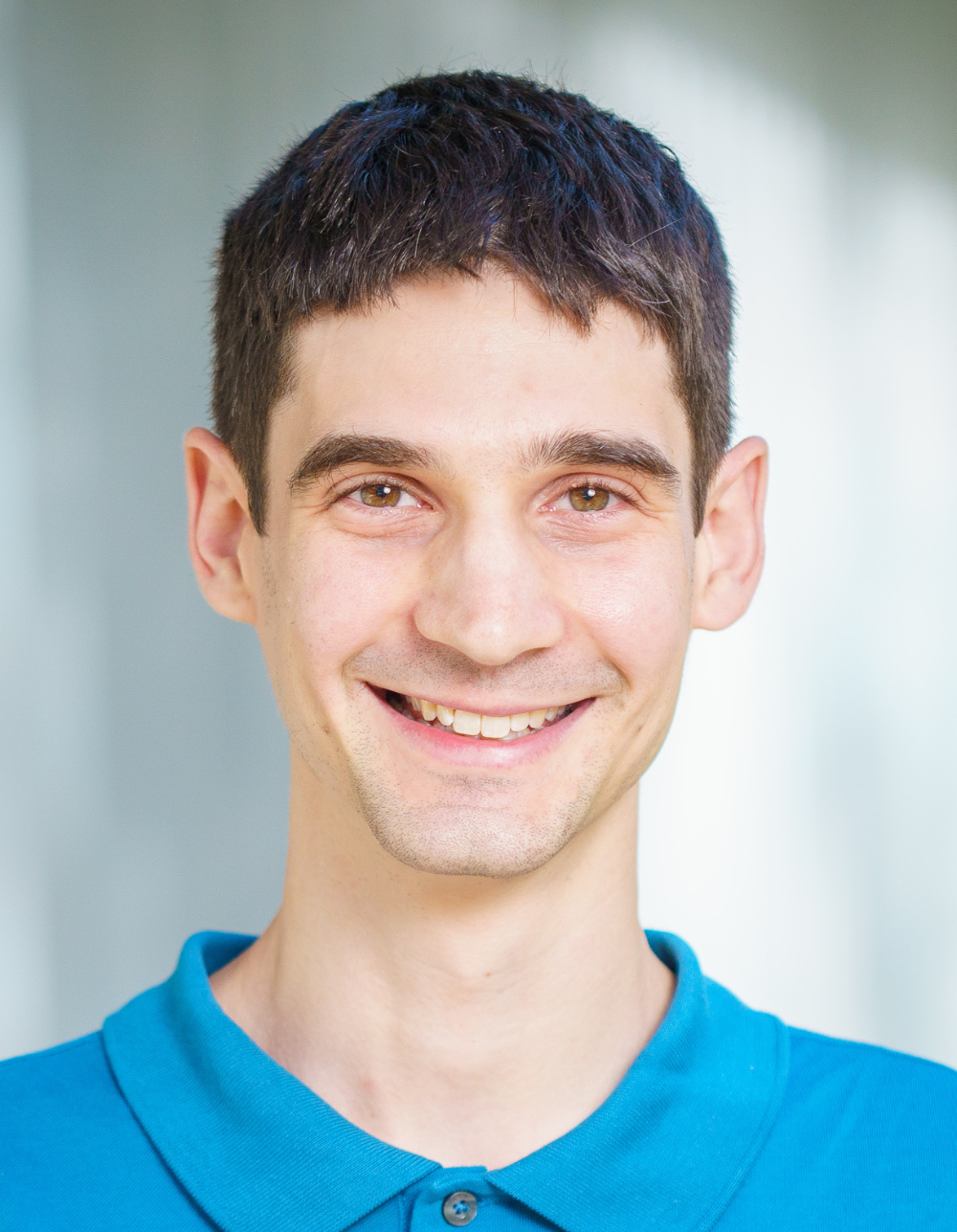
Marko Đukanović serves as an Assistant Professor at the Department of Computer and Information Sciences within the Faculty of Natural Sciences and Mathematics at the University of Banja Luka. His academic career spans combinatorial optimization, graph theory, and bioinformatics applications, with significant contributions to algorithm design for complex computational problems. His research focuses on combinatorial optimization , particularly in graph domination problems and longest common subsequence variants . His work bridges theoretical computer science with practical applications in bioinformatics, social network analysis, and computational biology. Recent publications demonstrate expertise in developing advanced algorithms including biased random-key genetic algorithms, variable neighborhood search, and neural network-guided optimization techniques. Key publication trends show his specialization in solving constrained optimization problems on graphs, with growing emphasis on integrating machine learning components into traditional combinatorial algorithms. His 2024 publications in IEEE Transactions on Evolutionary Computation and Applied Mathematics and Computation represent significant contributions to the field. Best Paper Award at EvoStar Conference 2024 for 'A Neural Network Based Guidance for a BRKGA: An Application to the Longest Common Square Subsequence Problem' Dr. Đukanović actively participates in international academic collaboration, including recent panel discussions on knowledge transfer between Bosnia and Herzegovina and global expert communities. His work demonstrates strong international collaboration, particularly with researchers from TU Wien and institutions across Europe.
Stefan Kratsch is a Professor of Theoretical Computer Science at the Institute of Computer Science, Humboldt University of Berlin. He holds this position since September 2017 and has previously held academic roles at the University of Bonn (2015–2017) and Technical University Berlin (2012–2014). His research focuses on parameterized complexity, efficient preprocessing, and computational complexity, with a strong emphasis on theoretical foundations and algorithm design. University: Humboldt University of Berlin Department: Institute of Computer Science (Algorithm Engineering group) Academic Rank: Professor Email: stefan.kratsch@hu-berlin.de, kratsch@informatik.hu-berlin.de Kratsch’s recent publications highlight his work on advanced algorithmic techniques for graph problems. Key areas include kernelization methods, flow-augmentation for connectivity problems, and tight complexity bounds for classical problems parameterized by structural measures like clique-width and cutwidth. His theoretical contributions aim to bridge preprocessing efficiency with computational hardness. Stefan actively engages in academic service, including organizing workshops and serving on program committees for leading conferences such as IPEC, LATIN, and SWAT. He has reviewed for numerous journals and grant panels, including the European Research Council and German Research Foundation. Advising: He supervised PhD candidate Michael Piechotta, whose defense is scheduled for September 2025.
László Kozma is an Assistant Professor at Freie Universität Berlin in the Theoretical Computer Science department. He obtained his PhD at Saarland University under Raimund Seidel, followed by postdocs at Tel Aviv University and TU Eindhoven. His work focuses on data structures , combinatorics , and algorithmic adaptivity , with significant contributions to self-adjusting heaps, binary search trees, and geometric optimization. Recent research includes pattern-avoiding sequences and saddlepoint algorithms . His publications span exponential algorithms , TSP variants , and heap structures , with a recurring theme of connecting combinatorial geometry to algorithm design. Co-authors include leading researchers like Robert Tarjan, Uri Zwick, and Haim Kaplan. Key software implementations (e.g., smooth heap ) are publicly available. He has developed tools like Cuckoo Hashing Visualization and the historical WikipediaVision project, demonstrating practical engagement with algorithmic concepts. His mathematical genealogy traces back to classical researchers.
Jin-Yi Cai is a distinguished Professor of Computer Science and Steenbock Professor of Mathematical Sciences at the University of Wisconsin at Madison, where he has been a faculty member since 2000. Previously, he held academic positions at State University of New York at Buffalo (Professor 1996-2000, Associate Professor 1993-1996), Princeton University (Assistant Professor 1989-1993), and Yale University (Assistant Professor 1986-1989). He has also been a Radcliffe Institute Fellow at Harvard University (2007-2008) and a Guggenheim Fellow and Visiting Professor at the University of Toronto (1999-2000). Dr. Cai earned his Ph.D. in Computer Science from Cornell University in 1986, an M.A. in Mathematics from Temple University in 1983, and a Certificate in Mathematics from Fudan University in 1981. His academic journey spans prestigious institutions across the United States and demonstrates a consistent trajectory of scholarly excellence. Professor Cai's research focuses on theoretical computer science, particularly computational complexity theory, with significant contributions to holographic algorithms, counting constraint satisfaction problems, and graph homomorphisms. His work bridges computer science and mathematics, developing sophisticated algorithms and proving fundamental complexity results. His research has evolved from foundational work in structural complexity and oracle separations to specialized work in holographic algorithms and counting problems, demonstrating both depth and breadth in theoretical computer science. His publication record shows a consistent output of high-impact research, with major contributions spanning over three decades. His work on holographic algorithms represents a particularly innovative strand of research that has opened new avenues in computational complexity. The progression of his research demonstrates increasing specialization in counting problems while maintaining connections to broader theoretical frameworks in computer science and mathematics. 2022 Simons Fellowship 2022 CCF Award for Overseas Outstanding Contribution 2022 Fellow, American Mathematical Society (AMS) 2021 Fulkerson Prize in Discrete Mathematics 2021 Gödel Prize in Theoretical Computer Science 2014 Steenbock Professorship, UW Madison 2001 ACM Fellow 1998 John Simon Guggenheim Fellowship 1994 Sloan Fellowship Professor Cai has served as Editor of the Journal of Computer and System Sciences and Associate Editor of the Journal of Computational Complexity. His work has been recognized with numerous prestigious fellowships including the Guggenheim Fellowship, Sloan Fellowship, and Humboldt Research Award. His research has had significant impact in theoretical computer science, earning him the Gödel Prize and Fulkerson Prize, two of the most prestigious awards in theoretical computer science and discrete mathematics respectively.
Gregory Gutin is a Professor of Computer Science at Royal Holloway, University of London, UK. He has held academic positions at Brunel University (Lecturer in Mathematics, 1996), Odense University (Visiting Lecturer in Computer Science, 1995; Postdoctoral Researcher, 1993), and was a PhD student at Tel Aviv University's School of Mathematics (1991). His career spans roles as a School Teacher in Gomel (Byelorussia, 1979), Researcher in Byelorussian institutions (1982-1987), and academic staff in the UK, Denmark, and Israel. He earned a PhD in Mathematics from Tel Aviv University, with prior research roles in Byelorussia (geology, oil, mathematics). His work bridges theoretical and applied computer science, focusing on combinatorial optimization, parameterized algorithms, and information security. Dr. Gutin's research centers on combinatorial optimization and parameterized algorithms , with applications in graph theory , constraint satisfaction , and access control in information security. His publications address arc routing problems, workflow satisfiability, and probabilistic methods for parameterized complexity, contributing both to foundational theory and practical implementations. His selected publications highlight a focus on fixed-parameter tractable algorithms for constraint satisfaction, arc routing in operations research, and access control mechanisms. These works solved open problems in algorithm design and influenced subsequent research in parameterized complexity and security systems. Best Paper Award at ACM SACMAT 2016 Best Paper Award at ACM SACMAT 2015 Royal Society Wolfson Research Merit Award 2014 Kirkman Medal 1996 Wolf Prize for PhD Students 1992 Dr. Gutin has collaborated extensively with researchers like Magnus Wahlstrom, Anders Yeo, and David Karapetyan. His work on workflow satisfiability introduced novel constraint classes used in access control systems, and he co-authored the influential textbook Digraphs: Theory, Algorithms and Applications (2009). The Royal Society award in 2014 recognized his sustained contributions to algorithmic research.
Per Austrin is a Lecturer at the Royal Institute of Technology (KTH) in the Department of Theoretical Computer Science. He has been actively involved in teaching courses such as Algorithms and Complexity (DD2352) , Advanced Algorithms (DD2440) , and Problem Solving and Programming Under Pressure (DD2458) , serving as examiner and course coordinator for several programs. His research focuses on the foundations of computational complexity, approximation algorithms, and cryptographic barriers. Key areas include hardness of approximation for constraint satisfaction problems (CSPs), combinatorial optimization, and theoretical limits in cryptography and coding theory. His work often intersects with probabilistic methods and quantum computing challenges. Recent publications highlight his contributions to understanding lower bounds in optimization problems, inapproximability thresholds, and complexity in structured combinatorial problems. Detailed information about his work can be found on his personal website: Per Austrin's Website .
Noah Fleming is an Assistant Professor in the Department of Computer Science at Memorial University, where he is a core member of the Theory Group. He holds a PhD from the University of Toronto under Toni Pitassi, with postdoctoral research at UCSD and the Simons Institute at UC Berkeley. His research focuses on computational complexity, proof complexity, circuit complexity, and robust algorithms, with specific interests in TFNP and sublinear algorithms. Education: PhD in Computer Science (University of Toronto, 2017), supervised by Toni Pitassi. Postdoctoral positions at UCSD (2017–2020) and Simons Institute (2020–2021). Research interests include foundational questions in computational complexity, such as proof systems, circuit lower bounds, and the interplay between computational models and algorithmic robustness. His work often bridges theoretical computer science with practical algorithm design, particularly in SAT solvers and sublinear algorithms. Recent publications explore topics like polynomial hierarchy functions, sensitivity bounds in approximation algorithms, and tradeoffs in proof complexity. His work appears in top venues like STOC, CCC, and ITCS. Advising: Supervises PhD students Christophe Marciot and Deniz Imrek (co-supervised with Anna Gal), MSc student Jordan Kilfoy (co-supervised with Antonina Kolokolova), and undergraduate researchers Parsa Esmkhani, Grey Seaward, and Michael Gregory (both co-supervised with Antonina Kolokolova). Active in organizing the Theory Group's seminars and workshops. Labs/Teams: Leads the Complexity Theory research stream within the Theory Group at Memorial University, collaborating with faculty like Antonina Kolokolova and visiting researchers from institutions such as UC Berkeley and University of Toronto.
Yuichi Yoshida is a Professor at the National Institute of Informatics (NII), affiliated with the Principles of Informatics Research Division. He also holds a concurrent position as Senior Researcher at Preferred Networks. His academic career at NII spans from Assistant Professor (2012–2015), Associate Professor (2015–2022), to full Professor since 2022. He serves as Vice Director of the Global Research Center for Big Data Mathematics at NII and has held advisory and research roles at Preferred Infrastructure and the Ministry of Education, Culture, Sports, Science and Technology (MEXT). Ph.D. in Informatics, Kyoto University, 2012 Master of Informatics, Kyoto University, 2009 Bachelor of Engineering, Kyoto University, 2007 His research focuses on theoretical computer science, particularly property testing , approximation algorithms , sublinear-time algorithms , and constraint satisfaction problems . He investigates how theoretical insights can be applied to real-world graphs, with recent emphasis on average sensitivity of algorithms and Lipschitz continuity in combinatorial optimization . His work bridges theory and practical scalability in large network analysis and machine learning. The most recent 15 publications (2022–2025) demonstrate a strong trend in algorithmic stability, spectral methods for hypergraphs, influence propagation in networks, and learning-augmented algorithms. Key venues include FOCS, SODA, ICALP, and NeurIPS, reflecting high impact in theoretical computer science and machine learning. Topics such as Lipschitz continuity, average sensitivity, spectral sparsification, and sublinear algorithms recur, indicating a cohesive research program on robust and efficient computation. Best Paper Award, AISTATS (2018) MEXT Commendation for Science and Technology – Young Scientists’ Prize (2017) Inoue Research Award for Young Scientists (2014) KDDI Foundation Award (2024) Funai Information Technology Award (2024) Yuichi Yoshida advises PhD students and hosts numerous postdocs, RAs, and international interns. He leads major research projects funded by JSPS and JST, including Grants-in-Aid for Scientific Research (S) and PRESTO programs. His service includes program committee roles for ICML, NeurIPS, SODA, and ICALP. He has co-authored a book on Property Testing and contributed to encyclopedias on big data technologies. He leads research teams on algorithm desensitization and large-scale graph algorithms, and has been program co-chair for GRADES-NDA'23. His lab fosters international collaboration, hosting interns from top universities worldwide.
Harold Connamacher is an Associate Professor in the Department of Computer and Data Sciences at Case School of Engineering, Case Western Reserve University . He holds the Robert J. Herbold Professor of Transformative Teaching title and serves as Associate Chair in his department. University: Case Western Reserve University School: Case School of Engineering Department: Computer and Data Sciences Academic Rank: Associate Professor Research Interests Harold's research focuses on random constraint satisfaction problems , algorithms , and artificial intelligence . He applies theoretical computer science techniques to analyze problem structures and enhance algorithm performance, particularly in combinatorial optimization and computational complexity. Teaching Interests : Programming languages, discrete mathematics, graph theory, algorithms, data structures, computer science theory, and database programming. His work in computer science education has been recognized with multiple awards, including the Carl F. Wittke Award for Excellence in Undergraduate Teaching (2019) and the Delta Upsilon Srinivasa P. Gutti Engineering Teaching Award (2017). Scientific Awards Carl F. Wittke Award for Excellence in Undergraduate Teaching 2019 Guy Savastano Outstanding Educator Award 2019 Delta Upsilon Srinivasa P. Gutti Engineering Teaching Award 2017 Tau Beta Pi Publications span topics in theoretical computer science , machine learning , and mathematical combinatorics , including works on satisfiability thresholds, spanning tree optimization, and educational methodologies in programming instruction.
Olivier Fourdrinoy is a Temporary Teaching and Research Associate at the University of Artois, affiliated with the Jean Perrin Faculty's Department of Computer Science. He completed a DEA in 'intelligent systems and applications' under Pierre Marquis and later defended his PhD in 2007 on 'Using polynomial techniques for the practical resolution of SAT instances.' His research focuses on artificial intelligence, particularly the SAT problem, exploring hybrid algorithms, clause redundancy reduction, and polynomial-time methods. He has collaborated with CRIL (Lens Computer Science Research Center) and contributed to SAT solving techniques evaluated on benchmarks like the SAT competitions. Fourdrinoy's academic journey includes a Master's in computer science and a DEUG Mias. Education: DEUG Mias → Computer Science Degree → Master's → DEA (Research Master's) → PhD (2007) His work emphasizes computational logic, algorithm optimization, and theoretical computer science applications. Notable contributions include reducing SAT instances to polynomial forms and enhancing clause elimination methods. Fourdrinoy's research has been tested across diverse SAT problem domains (industrial, random, graph coloring) using solvers like ZChaff and MiniSat. He remains active in academic research without explicit mentions of awards or students.
Alexandra Kolla is an Adjunct Associate Professor at the University of Illinois. Her research focuses on the intersection of quantum computing, spectral graph theory, and combinatorial optimization, with notable contributions to approximation algorithms and the study of complex systems like the Potts model and Ising model. She has received the NSF CAREER Award for her work on NP-hard problems and explores computational limits through methods such as semidefinite programming and spectral analysis. Her research interests span quantum algorithms, classical optimization techniques, and the application of statistical physics principles to computational problems. She investigates graph expansion properties, phase transitions in physical systems, and the development of efficient algorithms for challenging problems such as Max-Cut and Qudit Hamiltonians. Her work often bridges theoretical computer science and mathematics, leveraging tools like spectral graph theory and the sum-of-squares method to advance algorithmic performance and understanding. Scientific Awards: NSF CAREER Award Alexandra has been involved in collaborative research projects such as the AF: Small grant for exploring matrix signings and algorithms for expanders. While her primary role is in theoretical research, her work impacts practical areas like network topology design and data center efficiency. She actively contributes to academic conferences and symposia, including the Fifty-Ninth Annual IEEE Symposium on Foundations of Computer Science, showcasing her engagement with the broader scientific community.