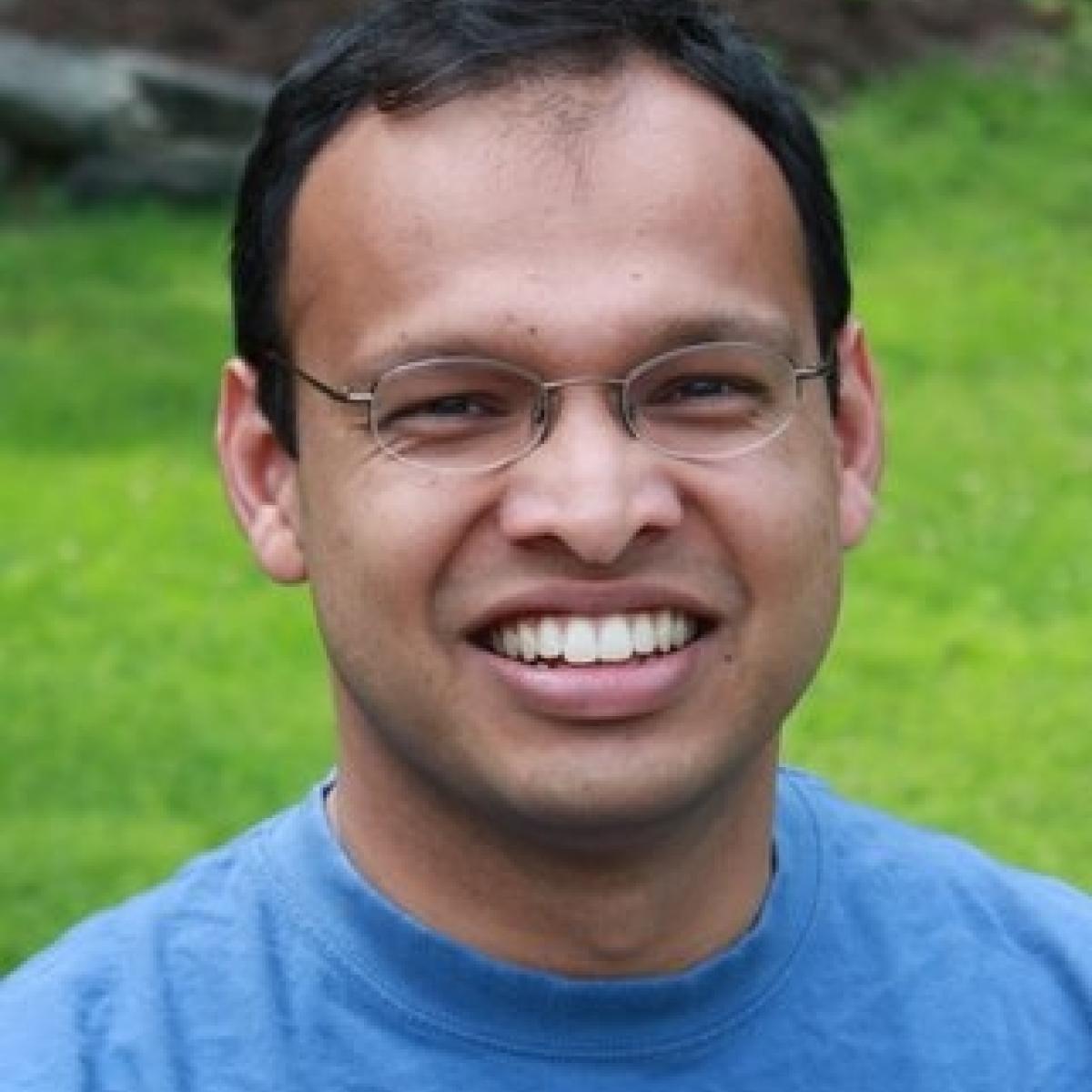
Nikhil Bansal is a Professor in Theoretical Computer Science at the University of Michigan, Ann Arbor. He earned his PhD from Carnegie Mellon University and previously worked at IBM Research, TU Eindhoven, and CWI Amsterdam. His research focuses on algorithm design, discrepancy theory, and combinatorial optimization. Education: PhD, Carnegie Mellon University Bansal's work bridges classical and quantum computing, with recent publications exploring k -Forrelation, vector balancing, and stochastic scheduling. His algorithmic approaches often combine geometric insights and probabilistic methods. Scientific Awards: Patrick C. Fischer Professor of Theoretical Computer Science NSF Career Award (2023) He has advised numerous PhD and postdoctoral researchers, including Marek Elias, Shashwat Garg, and Makrand Sinha. Bansal actively contributes to program committees (ICALP 2021, STOC 2020, FOCS 2018) and organizes workshops on discrepancy theory and optimization.
Manuel Penschuck is a Research Fellow at the Institute of Computer Science , Goethe University Frankfurt, Germany. His research focuses on algorithm engineering, graph theory, and scalable network generation, with emphasis on parallel computing, I/O-efficient algorithms, and random graph models. He actively contributes to conferences like ESA, SEA, and IPDPS, and has co-authored publications in top venues including LIPIcs , IEEE Transactions , and SIAM . His work includes engineering algorithms for non-linear preferential attachment , parallel shuffling , and hyperbolic graph generation . He has co-organized program committees for ESA, EuroPar, and SEA, and his collaborations span institutions such as MPI-INF, TU Darmstadt, and Australian National University. Recent publications highlight advances in uniform graph sampling, geometric network models, and distributed systems. His research integrates theoretical rigor with practical implementation, addressing challenges in big data and high-performance computing. He is a key contributor to the Networkit toolkit for large-scale network analysis.
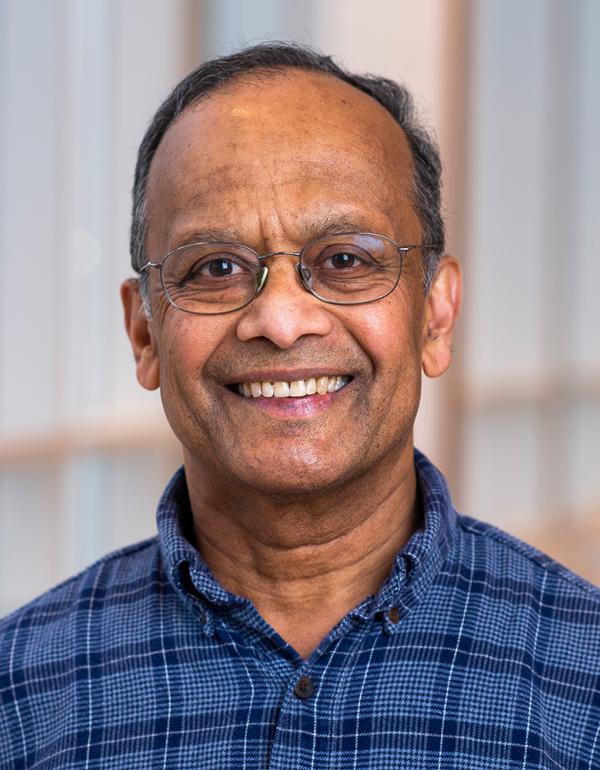
Andrej Bogdanov is a Professor at the University of Ottawa in the School of Electrical Engineering and Computer Science . He earned his B.S. and M.Eng. from MIT and Ph.D. from UC Berkeley . Before joining Ottawa, he held positions at the Chinese University of Hong Kong , ITCS (Tsinghua) , DIMACS (Rutgers) , and the Institute for Advanced Study . He has served as a Visiting Professor at the Tokyo Institute of Technology (2013) and the Simons Institute (2017, 2021). Research Interests : Computational complexity, cryptography foundations, pseudorandomness, one-way functions, property testing, quantum algorithms, and sublinear-time algorithms. Teaching : Courses on Discrete Mathematics, Great Algorithms, Computational Complexity, and Cryptography at University of Ottawa, Chinese University of Hong Kong, and Rutgers University. Publications : 15+ recent works in TCC , CRYPTO , ICALP , RANDOM , and journals like Journal of Cryptology and Theory of Computing . Service : Program co-chair for SAC 2026 , and committee member for major conferences including CRYPTO , TCC , Eurocrypt , and FOCS . Advising : 12 current and former Ph.D./M.Phil. students, with postdoctoral advisees at institutions like IIT Palakkad and Academia Sinica . His work bridges theoretical computer science with applications in cryptography, quantum computing, and network security.
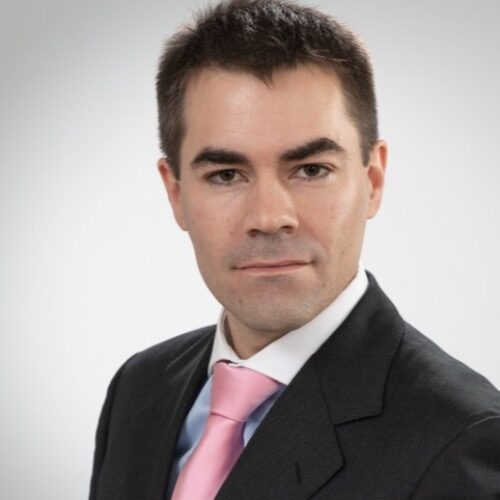
Rafail Ostrovsky is a Distinguished Professor of Computer Science and Mathematics (by courtesy) at UCLA's Henry Samueli School of Engineering and Applied Science. He holds the Norman E. Friedman Chair in Knowledge Sciences and serves as Director of the Center for Information and Computation Security. With over 350 refereed publications and 15 issued USPTO patents, he is one of the most influential researchers in theoretical computer science and cryptography. Professor Ostrovsky's research spans cryptography, network algorithms, and search and classification of large-scale, high-dimensional data. His work focuses on foundational aspects of secure computation including zero-knowledge proofs, secure multi-party computation, private information retrieval, and privacy-preserving data analysis. His contributions to streaming algorithms, metric embedding, and clustering for high-dimensional data have established important theoretical frameworks with practical applications. He has pioneered techniques for secure computation that maintain privacy while enabling collaborative data analysis. His recent publications demonstrate continued leadership in advancing secure computation protocols, with emphasis on efficiency improvements, practical implementations, and novel applications in blockchain technology and distributed systems. His work consistently addresses fundamental theoretical challenges while maintaining relevance to real-world security problems, bridging the gap between theoretical cryptography and practical security solutions. Selected Honors: 1993 Henry Taub Prize 2017 IEEE Computer Society Edward J. McCluskey Technical Achievement Award 2018 RSA Award for Excellence in Mathematics 2022 W. Wallace McDowell Award (the highest award given by the IEEE Computer Society) Professor Ostrovsky has served in significant leadership roles including chair of the IEEE Technical Committee on Mathematical Foundations of Computing (2015-2018) and chair of the IEEE FOCS 2011 Program Committee. He has served on over 40 international conference program committees and currently serves on the editorial boards of the Journal of ACM and Algorithmica Journal. As a Fellow of the National Academy of Inventors, AAAS, ACM, IEEE, and IACR, and as a foreign member of Academia Europaea, his contributions have been widely recognized across multiple disciplines. He actively teaches advanced courses including Introduction to Cryptography (CS183), Foundations of Cryptography (CS282A/M209A), and Cryptographic Protocols (CS282B/M209B), mentoring the next generation of security researchers while continuing to push the boundaries of secure computation through his research.
Rajarshi Roy is a Professor at the Institute for Physical Science and Technology (IPST) at the University of Maryland. His research focuses on nonlinear dynamics, chaos theory, and their applications in optical systems. He explores phenomena such as synchronization patterns, machine learning-driven network analysis, and quantum-optical systems. His experimental work includes studies on optoelectronic oscillators, delay-coupled systems, and photonic random number generation. His research interests span nonlinear dynamics , chaos theory , and optical systems . Key areas include synchronization of coupled oscillators, chimera states, and machine learning applications in network inference. He also investigates noise effects in photonics and quantum technologies, such as entanglement quality estimation in fiber systems. His recent work emphasizes combining machine learning with nonlinear dynamics to analyze complex systems. For instance, his studies on delayed dynamical systems and neuromorphic computing showcase innovations in network inference and reservoir computing. Experimental validations using optoelectronic setups highlight his interdisciplinary approach. Roy’s articles explore cutting-edge topics like entropy harvesting in photon-counting systems, topological control of synchronization, and suppression of optical scattering via chaos. His contributions bridge fundamental nonlinear science with technological applications in photonics and information systems.
Petteri Kaski is an Associate Professor at the Department of Computer Science, School of Science, Aalto University , and a member of the Helsinki Institute for Information Technology (HIIT) . His research focuses on theoretical computer science, particularly in algorithm design, exact and parameterized algorithms, algebraic algorithms, and combinatorics. Doctoral Degree in Engineering and Technology, Helsinki University of Technology (2005) Licentiate Degree in Engineering and Technology, Helsinki University of Technology (2002) Master's Degree in Engineering and Technology, Helsinki University of Technology (2001) His recent work explores tensor scaling, Johnson-Lindenstrauss transforms, Hamiltonian cycles, and computational complexity, with contributions to polynomial-time algorithms, finite field computations, and combinatorial optimization. Notable awards include the Best Paper Award at ICALP 2017 , an ERC Starting Grant (2014) , and the Kirkman Medal (2007) . He has served on scientific committees for conferences like STACS 2025 and ICALP 2024 , and collaborated with institutions such as the IT University of Copenhagen and Universität Regensburg . Key Research Areas : Theoretical Computer Science, Algorithm Design, Exact Algorithms, Algebraic Computation, Graph Theory, Combinatorics
Pauli Miettinen is a Professor of Data Science at the University of Eastern Finland, affiliated with the School of Computing within the Faculty of Science, Forestry and Technology. His research focuses on data science methodologies, including matrix and tensor decompositions, redescription mining, and social network analysis. Key applications span ecological niche modeling, health data analysis, and parliamentary candidate opinion analysis. He leads the Algorithmic Data Analysis research group and contributed to the Neuro-Innovation project (2021–2026). Recent work includes advancements in differentially private redescription mining and hyperbolic community graph generation. His publications emphasize efficient algorithms for data mining tasks like biclustering and non-negative matrix factorization. Selected achievements include developing the HyGen graph generator and pioneering techniques for interpretable data representation. His research bridges theoretical method development with practical applications in diverse domains.
Saman Azhari is an Assistant Professor at the Graduate School of Information Production and Systems , Waseda University, Japan. His research focuses on Nanotechnology , Biosensors , and Reservoir Computing for biomedical and robotic applications. Developed self-sterilizing face masks using enzymatic power generation (2025) Engineered smart contact lenses for wireless cholesterol monitoring and ocular diagnostics (2025, 2024) Innovated CNT/PDMS nanocomposites for haptic sensors and in-sensor computing (2024, 2021) Explored 3D nanomaterial reservoir computing with SWNT/POM networks (2023, 2021) Collaborated on microwave-assisted CNT synthesis from waste materials (2018) His recent publications (2025-2023) emphasize flexible biosensors , atomic switch networks , and energy-efficient AI hardware . Key subfields include piezoresistive pressure sensing , synaptic plasticity in nanoparticle systems , and plant-insertable sucrose monitors . He holds patents for tactile sensing devices and mechanical sensors.
Ronald de Wolf is a part-time Full Professor at the Institute for Logic, Language and Computation (ILLC), University of Amsterdam, and a researcher/group leader at the Algorithms and Complexity group of CWI (Dutch Centre for Mathematics and Computer Science). He is an active member of QuSoft and the Amsterdam Theoretical Computer Science ecosystem. His PhD was completed at CWI and ILLC, followed by postdoctoral research at UC Berkeley. Research Focus: De Wolf specializes in quantum computing, complexity theory, and algorithm design. His work explores quantum advantages in computation, communication, and learning, with applications in optimization, machine learning, and information theory. Recent investigations include quantum algorithms for linear algebra, error correction, and communication complexity. Publication Trends: His recent articles (2020-2025) predominantly focus on quantum algorithmic advantages, complexity bounds, and practical applications in machine learning and optimization. Key themes include quantum speedups for linear algebra, error-resilient quantum protocols, and theoretical limits of quantum computation. Awards & Honors: ERCIM Cor Baayen Award (2003) STOC Best Paper Award (2012) STOC Test-of-Time Award (2022) Gödel Prize (2023) Academic Leadership: He currently advises PhD student Lynn Engelberts and has graduated 10 doctoral students. As coordinator of the NWO Gravitation program Quantum Software Consortium , he oversees major research initiatives. He secured participation in EU projects (QAIP, RESQ, QAP, QCS, QALGO, QuantAlgo) and leads research teams at CWI and QuSoft.
Yuncong Hu is an Assistant Professor at Shanghai Jiao Tong University specializing in applied cryptography, decentralized systems, and zero-knowledge proofs. Previously, he completed his Ph.D. at UC Berkeley's RISE Lab under Prof. Raluca Ada Popa and Prof. Alessandro Chiesa, and earned his Bachelor's degree from Shanghai Jiao Tong University in 2017 as a member of the ACM Honored Class. His educational background includes: Ph.D. in Computer Science, UC Berkeley (RISE Lab), advised by Prof. Raluca Ada Popa and Prof. Alessandro Chiesa Bachelor's degree in Computer Science, Shanghai Jiao Tong University, 2017 (ACM Honored Class) Dr. Hu's research focuses on practical cryptographic systems, particularly zero-knowledge proofs (zkSNARKs), with emphasis on efficiency, versatility, and real-world deployment. His work bridges theoretical cryptography with system implementation, addressing challenges in decentralized trust, secure computation, and privacy-preserving protocols. Key contributions include foundational work on preprocessing zkSNARKs, transparency log systems, and cryptographic primitives for emerging applications. Analysis of his 15 most recent publications (2020-2025) reveals a dominant focus on zkSNARKs optimization and novel applications, with significant contributions to vector commitments, range proofs, and federated learning security. His research trajectory shows increasing diversification into AI security (LLM fingerprinting) and hardware-aware cryptographic implementations while maintaining core expertise in proof systems. Publications consistently appear in top venues including Eurocrypt, S&P, and NeurIPS, demonstrating both theoretical rigor and practical impact. No scientific awards are mentioned in the provided information. Dr. Hu has not listed current advisees or major grants in the provided materials, but his active open-source contributions (arkworks, Merkle^2, Gemini) and program committee service for Asiacrypt 2023 and USENIX Security 2024 indicate ongoing research leadership. His work shows strong industry relevance through implementations targeting real-world constraints in IoT and decentralized systems. During his doctoral work at UC Berkeley's RISE Lab, he contributed to security-focused systems research. At Shanghai Jiao Tong University, he leads research advancing cryptographic protocols for next-generation applications, with particular emphasis on making zero-knowledge proofs accessible across diverse computing environments through projects like the arkworks ecosystem.
Tianren Liu is an Assistant Professor at the Center on Frontiers of Computing Studies (CFCS), Peking University, where he joined in 2022. His research focuses on cryptography and theoretical computer science with particular emphasis on information-theoretic approaches to cryptographic problems. Dr. Liu received his Bachelor's degree from IIIS Tsinghua University, advised by Prof. John Steinberger, and his Master's and Ph.D. degrees from MIT, where he was advised by Prof. Vinod Vaikuntanathan. Prior to joining Peking University, he was a postdoctoral researcher at the University of Washington, mentored by Prof. Huijia (Rachel) Lin. His primary research interests include information-theoretic cryptography (covering problems such as Private Information Retrieval, Conditional Disclosure of Secrets, Private Simultaneous Messages, and secret sharing), secure multi-party computation with information-theoretic security properties, garbled circuits, analysis of practical ciphers from an information-theoretic perspective, and separation results regarding the possibility of basing cryptography on NP-hardness assumptions. His work often bridges theoretical foundations with practical cryptographic applications, favoring protocols with information-theoretic security guarantees. Dr. Liu's publication record demonstrates consistent contributions to top-tier cryptography venues including CRYPTO, EUROCRYPT, STOC, and TCC. His recent work explores garbled circuits for mixed computation types, statistical properties of cryptographic primitives like SPN block ciphers, and efficient protocols for secure computation. His research shows a trajectory of addressing fundamental questions in cryptographic theory while developing practical techniques that overcome previous limitations in circuit size barriers and security guarantees. Best Student Paper award at TCC 2018 Dr. Liu actively mentors graduate students, currently supervising two Ph.D. candidates: Luojian Wei and Liqiang Liu, who began their doctoral studies in 2023. He welcomes motivated students with background in cryptography and theoretical computer science for potential Ph.D. opportunities starting in 2026. He also teaches courses in Cryptography and Discrete Mathematics at Peking University. His office is located in Room 103-2, Jingyuan Courtyard No.5, Peking University.
Nikolay Konstantinovich Vereshchagin is a Professor at Lomonosov Moscow State University's Faculty of Mechanics and Mathematics. He also holds affiliations with the Poncelet Lab (since 2005), Yandex School of Data Analysis (since 2007), and Higher School of Economics (since 2013). Education: Moscow State University (Faculty of Mechanics and Mathematics) Degrees: Ph.D. (1987), Doctor of Physical and Mathematical Sciences (1996), Full Professor (1997) His research focuses on computational complexity, Kolmogorov complexity, Shannon entropy, and tiling problems. His work connects algorithmic information theory with machine learning, cryptography, and theoretical computer science. Publications demonstrate expertise in algorithmic statistics, oracle complexity, and randomness foundations, with collaborations in theoretical computer science journals and conferences like CiE (Computability in Europe).
Penghui Yao is a Professor in the Department of Computer Science and Technology at Nanjing University, where he is a member of the CS Theory group. His academic career spans prestigious institutions including the Centre for Quantum Technologies at National University of Singapore, Centrum Wiskunde Informatica (CWI), Institute for Quantum Computing (IQC) at University of Waterloo, and Joint Center for Quantum Information and Computer Science (QuICS) at University of Maryland. Education: BSc in Mathematics from East China Normal University PhD from Centre for Quantum Technologies, National University of Singapore (supervised by Rahul Jain and Miklos Santha) Professor Yao's research focuses on quantum computing and theoretical computer science, with particular expertise in quantum algorithms and computational complexity. His work bridges classical and quantum information theory, with significant contributions to analysis of Boolean functions and their quantum applications. He has developed novel approaches to communication complexity problems in both classical and quantum settings, advancing our understanding of the fundamental limits of computation. His recent publications reveal a strong trend toward practical quantum algorithms with applications in distributed systems, quantum simulation, and quantum cryptography. The breadth of his work spans from theoretical foundations of quantum complexity classes to experimental implementations of quantum processes, demonstrating both depth in theoretical understanding and relevance to practical quantum computing challenges. Professor Yao actively mentors the next generation of quantum computing researchers, supervising multiple PhD and Master's students at Nanjing University while maintaining collaborations with international research groups. His service to the community includes program committee roles for major quantum computing conferences including QIP and TQC.
Professor Stasys Jukna is an Affiliated Scientist at Vilnius University's Institute of Data Science and Digital Technologies, specifically within the Cybersocial Systems Engineering Group. Originally from Lithuania and identifying as a Samogitian, he maintains strong academic ties with Vilnius University while also having historical connections with Goethe University of Frankfurt and the University of Trier. His research focuses on theoretical computer science, particularly circuit complexity and combinatorics. Jukna has made significant contributions to understanding lower bounds in computational complexity, Boolean function analysis, and dynamic programming limitations. His work bridges mathematical theory with practical computational applications. Jukna has authored several influential books including Extremal Combinatorics with Applications in Computer Science (2001, 2nd ed. 2011), Boolean Function Complexity: Advances and Frontiers (2012), and Tropical Circuit Complexity: Limits of Pure Dynamic Programming (2023). His recent publications consistently explore the boundaries of computational complexity, particularly in circuit design and dynamic programming approaches. His research demonstrates a consistent trajectory examining fundamental limits in computation, with recent work focusing on tropical circuits, hazard-free implementations, and the relationship between different computational paradigms. The pattern shows increasing specialization in understanding the theoretical boundaries of dynamic programming approaches and circuit complexity. Professor Jukna has served on editorial boards including the Lithuanian Mathematical Journal and the Electronic Colloquium on Computational Complexity . His work has been supported by organizations including the German Research Foundation (DFG) and the Alexander von Humboldt Foundation. His teaching career spans multiple institutions, having taught Mathematical Logic and Discrete Mathematics at Vilnius University (1976-79/81), Combinatorics for Computer Science at the University of Trier (1996-99), and various theoretical computer science courses at Goethe University Frankfurt since 2000.
Dr. Troy Lee is an Associate Professor of Quantum Cryptography at the Centre for Quantum Software and Information within the Faculty of Engineering and Information Technology at the University of Technology Sydney . His research focuses on quantum algorithms, computational complexity, and graph theory, with particular emphasis on quantum-classical separations and query complexity. Education: Not explicitly mentioned Research Areas: Quantum algorithms, computational complexity, graph theory, quantum cryptography, and Boolean function analysis Teaching: Supervised the course Data Structures and Algorithms in 2022 Grants: Currently involved in quantum algorithm design and defense optimization projects (2025-2028, 2021-2024) His recent publications highlight advancements in quantum query complexity, graph algorithms, and exact learning techniques. Notably, his work includes quantum speedups for graph connectivity problems and improved bounds for Fourier-sparse function learning. Dr. Lee maintains active collaborations across theoretical computer science and quantum computing domains, contributing to both foundational and applied research in quantum software development.