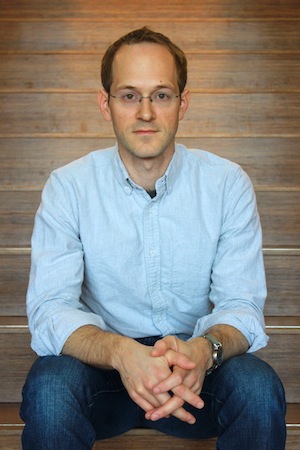
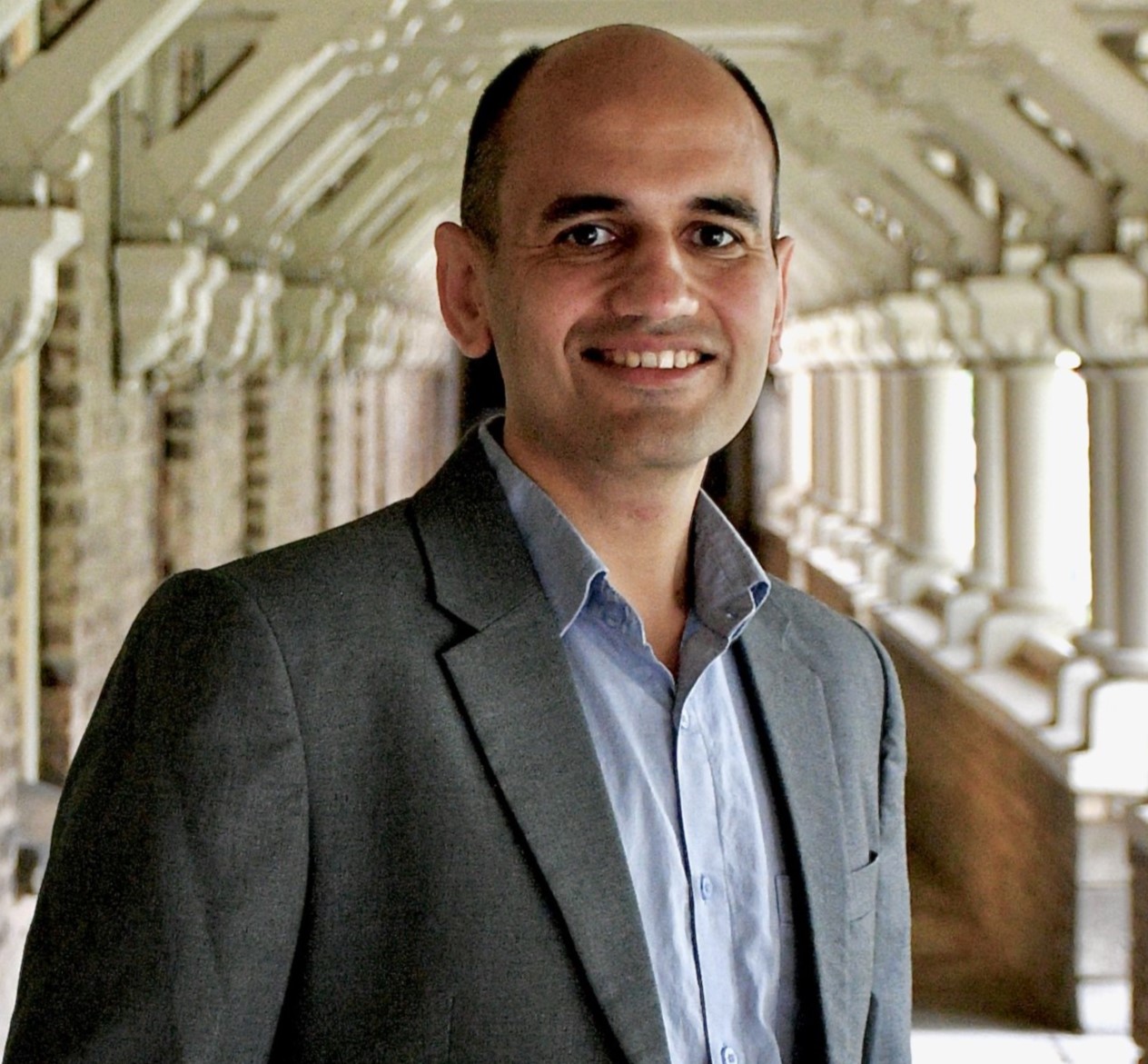
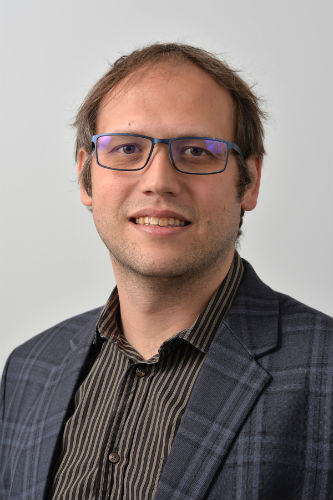
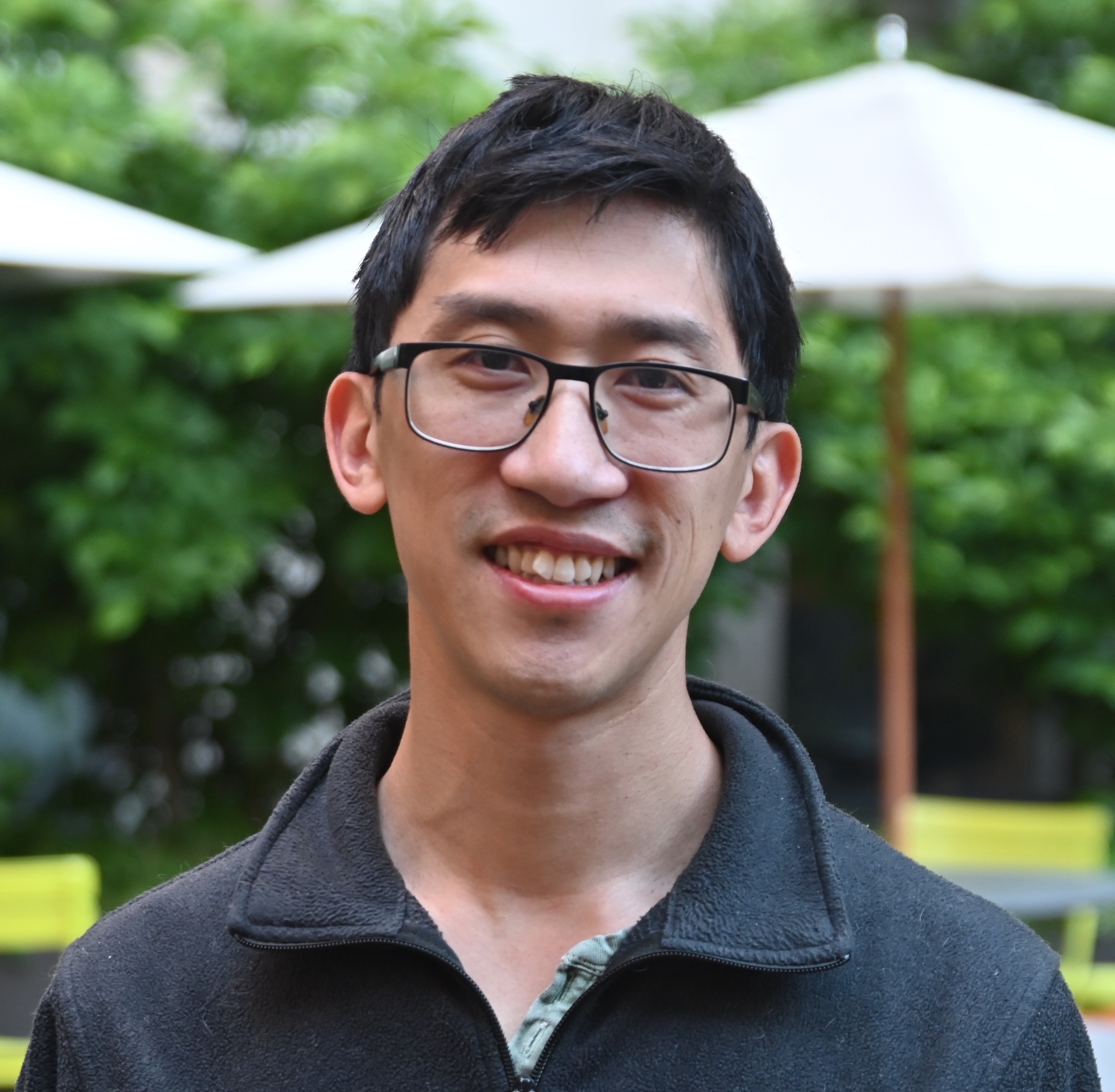
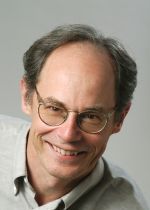
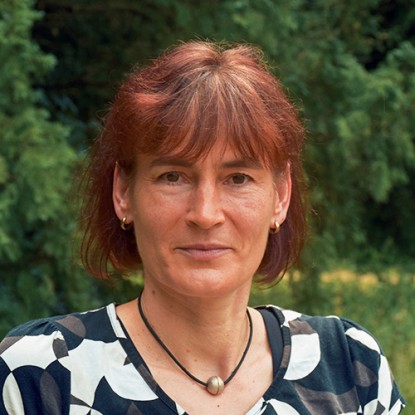
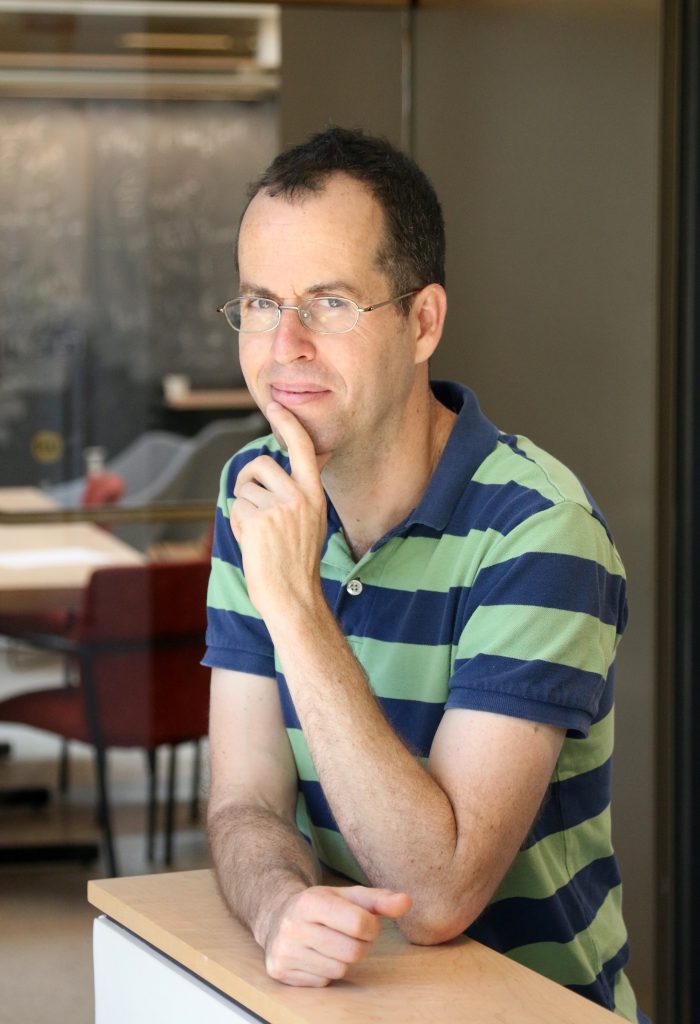
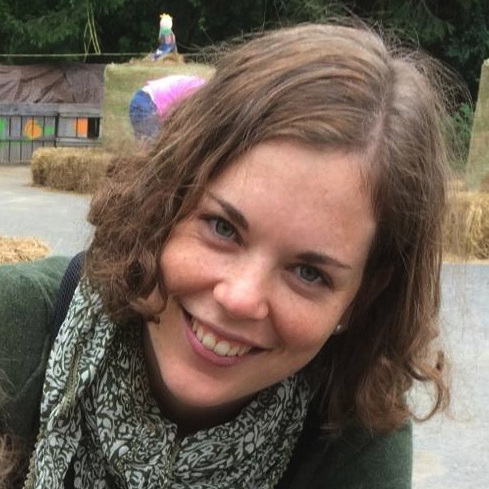
Andrew Childs is a Professor at the University of Maryland, affiliated with the Department of Computer Science and the Institute for Advanced Computer Studies (UMIACS). He serves as Director of the NSF Quantum Leap Challenge Institute for Robust Quantum Simulation (RQS) and is a Fellow at the Joint Center for Quantum Information and Computer Science (QuICS). His research focuses on quantum algorithms for simulating physical systems, algebraic problems, and quantum walk protocols, with applications in quantum computing and computational complexity. University of Maryland Institute for Advanced Computer Studies (UMIACS) Joint Center for Quantum Information and Computer Science (QuICS) NSF Quantum Leap Challenge Institute for Robust Quantum Simulation Childs' research spans quantum simulation, quantum Fourier transform, phase estimation, and Hamiltonian dynamics. He has developed techniques to reduce quantum computational resources for simulating quantum systems and explored limitations of quantum computers through hidden subgroup problems and non-unitary dynamics. His publications cover diverse areas including quantum walk optimization, Hamiltonian simulation methods, and applications to cryptography and condensed matter physics. Recent works address spatial search algorithms, product formulas for commutators, and quantum routing protocols. As an educator, Childs has taught courses on quantum algorithms and information processing at both the University of Maryland and University of Waterloo, with lecture notes and materials spanning multiple years. Contact: amchilds@umd.edu | Office: ATL 3359 | Affiliated with University of Maryland's quantum research institutes.
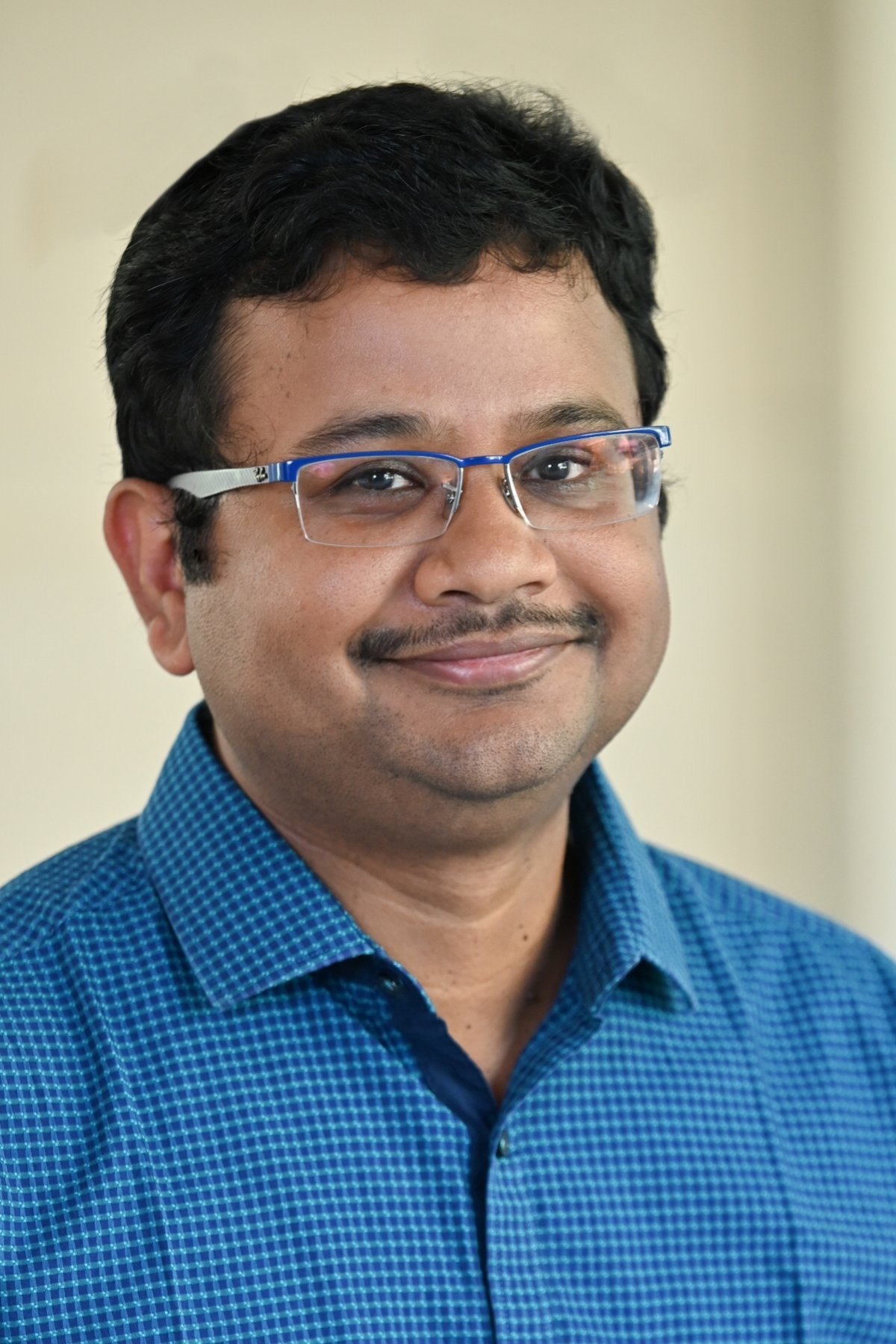
Kuldeep S. Meel is the Stephen Fleming Early-Career Associate Professor at the School of Computer Science, Georgia Institute of Technology, and an Associate Professor at the University of Toronto (on leave). He previously held a NUS Presidential Young Professorship at the National University of Singapore. His research focuses on automated reasoning, aiming to enable computing systems to handle uncertain real-world environments through scalable techniques integrating randomized algorithms, statistical inference, formal methods, distribution testing, and software engineering. Core research areas: Automated Reasoning, Formal Methods, Approximate Model Counting, Probabilistic Inference, Constraint Solving His research group has achieved significant recognition in both individual awards and publications. Key trends in his recent work include advancing model counting algorithms, developing frameworks for probabilistic explanations, and improving scalability in formal verification and constraint satisfaction. His tools have consistently ranked top in international competitions, demonstrating practical impact in automated reasoning. 2019 NRF Fellowship for AI 2022 ACP Early Career Researcher Award 2020 IEEE Intelligent Systems AI's 10 to Watch Top placements in Model Counting, SAT, and CAV competitions He mentors a diverse group of PhD and Master's students and collaborates with institutions worldwide. His group's publications span premier conferences in AI, formal methods, and design automation, reflecting interdisciplinary contributions to theoretical and applied computer science.
Daniel M. Kane is a Professor at the University of California, San Diego (UCSD), holding a joint appointment in the Department of Mathematics and the Department of Computer Science and Engineering (CSE). His research spans mathematics and theoretical computer science, with a focus on number theory, combinatorics, complexity theory, and computational statistics. He earned a Ph.D. in Mathematics from Harvard University (2011) and dual BS degrees in Mathematics with Computer Science and Physics from MIT (2007). Prior to UCSD, he was a postdoctoral researcher at Stanford University (2011–2014) on an NSF fellowship. His research interests include robust statistics, machine learning, polynomial threshold functions, and algorithmic methods for high-dimensional data. Notable achievements include co-authoring the book Algorithmic High-Dimensional Robust Statistics (Cambridge University Press, 2023) and receiving the Best Paper Award at the Conference on Computational Complexity (2013), as well as gold medals at the International Mathematical Olympiad (2002 and 2003). Current teaching includes courses such as Math 96 (Putnam Seminar), Math 154 (Graph Theory), CSE 101 (Algorithms), and CSE 203A (Randomized Algorithms). He has consulted for companies like CASPER Labs and AIble, and his work extends to cryptographic protocols, including quantum money schemes based on quaternion algebras. Key contributions include breakthroughs in robust mean estimation, list-decodable learning, and the development of efficient algorithms for statistical problems. His research often bridges foundational theory with practical applications in machine learning and data analysis.
Dr. Primoz Skraba is a Professor in Applied and Computational Topology at the School of Mathematical Sciences, Queen Mary University of London. As Deputy Head of the Centre for Probability, Statistics and Data Science, he bridges theoretical topology with practical applications in data analysis, machine learning, and optimization. Education : PhD in Electrical Engineering from Stanford University (2009) Prior Roles : Positions at INRIA, France; Jozef Stefan Institute, Slovenia; University of Primorska; University of Nova Gorica His research focuses on applying topological methods to analyze complex data. Key areas include: Stability of persistence diagrams for quantitative control in finite sampling Variants of persistence (zig-zag, robustness, multiparameter) Algorithmic Complexity in computational topology Stochastic Topology for random geometric models (Poisson, Boolean) Recent publications emphasize persistent homology in random geometric complexes, universality theorems, and integrating topological methods into machine learning. He received grants from the Leverhulme Trust, EPSRC, and Alan Turing Institute for projects on topological universality and AI foundations. His advisee Gabryel Mason-Williams explores wireless sensor network applications of homology.
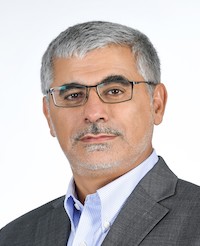
Prof. Baker Mohammad serves as Professor and Director of the System on Chip Lab in the Department of Computer and Information Engineering at Khalifa University. With over 15 years of industrial experience at Intel and Qualcomm designing microprocessors and DSP chips, he bridges academic research with real-world engineering challenges in high-performance computing and low-power systems. His educational background includes: Ph.D. in Electrical and Computer Engineering, University of Texas at Austin (2008) M.S. in Electrical and Computer Engineering, Arizona State University B.S. in Electrical Engineering, University of New Mexico Dr. Mohammad's research spans cutting-edge domains where VLSI design converges with AI acceleration and emerging memory technologies . His work pioneers Memristor applications in environmental sensing (radiation, vacuum, glucose) and neuromorphic computing, while advancing energy harvesting systems for wearable electronics. The integration of in-memory computing with security primitives represents a paradigm shift in hardware design, moving beyond traditional CMOS limitations. His publication trajectory reveals accelerating focus on self-powered neuromorphic systems and RRAM-based architectures, with recent work (2021-2023) emphasizing hardware-software co-design for edge AI. Over 75% of his recent publications involve cross-disciplinary collaborations spanning materials science, chemistry, and biomedical engineering. Notable scientific recognition includes: IEEE TVLSI Best Paper Award 2016 IEEE MWSCAS Myrill B. Reed Best Paper Award Qualcomm Qstar Award for Performance Leadership KUSTAR IP Excellence Award Multiple SRC Techon Best Session Papers As a dedicated mentor, he has supervised over 15 graduate students while securing competitive funding from Khalifa University, ADEK, Qualcomm, Tii, and UAE space agencies. His grant portfolio demonstrates exceptional translational impact, converting fundamental research in memristive devices into drone flight computers and medical sensors. Current projects integrate academic rigor with industrial deployment timelines. The System on Chip Lab operates as a multidisciplinary hub where semiconductor physicists collaborate with AI researchers to develop RISC-V-based secure processors and piezoelectric nanogenerator systems. Recent expansions include partnerships with Tii for aerospace applications and medical device startups for glucose monitoring technology.
Leslie Ann Goldberg is a Senior Research Fellow at St Edmund Hall and Professor of Computer Science at the University of Oxford. She currently serves as Head of the Department of Computer Science (on sabbatical 2025-26) and focuses on foundational problems in Algorithms and Complexity Theory , particularly randomised algorithms for network communication, machine learning, and statistical physics models. Her research includes solving Aldous' 1987 conjecture on backoff protocol instability (with John Lapinskas), developing rigorous mathematical analysis frameworks for algorithmic efficiency, and advancing approximate counting techniques via Markov Chain Monte Carlo methods (with Andreas Galanis and collaborators). Key projects involve graph homomorphisms , Moran process dynamics , and #BIS complexity class analysis. Recent publications (2023-2024) span topics like Sybil defense mechanisms, low-temperature sampling on random graphs, and parameterised subgraph counting modulo 2. Her work demonstrates cross-disciplinary impact in computational biology, statistical physics, and database theory. Scientific Awards include Best Paper Prizes at ICALP 2016, ICALP 2010, and IPEC 2017. She supervises PhD student Paulina Smolarova and collaborates extensively with researchers in Oxford and beyond.
Henry Yuen is the Srivani Family Associate Professor of Computer Science at Columbia University, with affiliations in the CS Theory group, Data Science Institute, and Columbia Quantum Initiative. His work bridges theoretical computer science and quantum information, focusing on the computational foundations of quantum systems. Yuen received his BA in Mathematics from the University of Southern California (2010) and PhD in Computer Science from MIT (2016). His research explores quantum complexity theory, quantum cryptography, and quantum information through both theoretical frameworks and practical applications. His recent publications reveal a strong focus on quantum pseudorandomness, quantum circuit complexity, and quantum cryptographic primitives. The research trajectory demonstrates increasing sophistication in connecting quantum computational models with fundamental questions in complexity theory, particularly through the lens of quantum interactive proofs and quantum state complexity. His work frequently intersects with operator algebras and quantum information theory, reflecting the interdisciplinary nature of modern quantum computing research. NSF CAREER award Sloan Fellowship Yuen actively mentors graduate students, with several PhD students having graduated to postdoctoral positions or faculty roles. His service includes co-organizing the Columbia CS Theory Seminar and serving on program committees for major conferences including QIP, STOC, and ITCS. He has organized multiple workshops on quantum computing challenges and cryptography. As a member of the Columbia Quantum Initiative, Yuen contributes to Columbia's growing quantum ecosystem, collaborating across departments to advance both theoretical foundations and potential applications of quantum information processing.
Arnab Sen is an Associate Professor at the School of Mathematics, University of Minnesota. His research focuses on probability theory and discrete harmonic analysis, with emphasis on models from statistical physics such as spin glasses, random graphs, random matrices, and random polynomials. PhD in Statistics, UC Berkeley (2010), advised by Steven N. Evans and Elchanan Mossel Postdoctoral Fellow, Statistical Laboratory, University of Cambridge His research spans discrete probability , statistical physics , and random matrix theory , addressing topics like disorder chaos in spin glasses, eigenvalue distributions, and quantum percolation. He has taught graduate and undergraduate courses including Random Matrix Theory , Introduction to Stochastic Processes , and Multivariable Calculus . His recent publications analyze spin glass models, random matrices, and combinatorial systems.
Cécile Mailler is a Reader in Probability at the University of Bath, where she is a member of the probability group Prob-L@B. She has held significant research positions including an EPSRC postdoctoral fellowship (2018-2021) titled "Random trees: analysis and applications" and previously worked as a postdoc at Prob-L@B (2013-2016) as part of Peter Mörters' EPSRC project "Emergence of Condensation in Stochastic Networks". She earned her PhD under the supervision of Brigitte Chauvin and Danièle Gardy at the Laboratoire de Mathématiques de Versailles. Her research focuses on probability theory with emphasis on branching processes, random trees, reinforcement mechanisms, Pólya urns, stochastic approximation, random networks, and statistical physics. She has made significant contributions to understanding preferential attachment models, zero-range processes, and random Boolean trees. Her work bridges theoretical probability with applications in statistical physics and combinatorics. Analysis of her recent publications shows a strong focus on random tree structures, branching processes, and reinforcement learning algorithms, with applications spanning from network theory to statistical mechanics. Her research demonstrates sophisticated mathematical techniques applied to complex stochastic systems, particularly those with reinforcement mechanisms and memory effects. Associate Editor of the Applied Probability Trust (since October 2020) Associate Editor of Stochastic Processes and Their Applications (since March 2022) Author of a general introduction to Pólya urns for the LMS Newsletter (November 2020) Co-organizer of the "Random Walks: Applications and Interactions" conference at CIRM (January 2026) She actively supervises PhD students working on topics including the multi-city ants process, Pólya urns with growing initial composition, large deviations for the Monkey walk, and competing growth processes. She has secured research funding through EPSRC fellowships and has been involved in multiple collaborative projects with prominent researchers in probability theory. Mailler regularly teaches mini-courses on advanced probability topics at international summer schools and workshops, demonstrating her commitment to knowledge dissemination in the field.
John Wawrzynek is a Professor of Electrical Engineering and Computer Sciences at the University of California, Berkeley. He is affiliated with the Department of Electrical Engineering and Computer Sciences in the College of Engineering and serves as Co-Director of the Berkeley Wireless Research Center and Co-PI of the CONIX Research Center, one of the six centers in the Joint University Microelectronics Program sponsored by DARPA. Dr. Wawrzynek received his B.S. in Electrical Engineering from SUNY, Buffalo (1977), M.S. in EE from the University of Illinois, Urbana/Champaign (1979), and Ph.D. in Computer Science from Caltech (1987). Before joining the Berkeley faculty in 1988, he worked as a consultant at Schlumberger Palo Alto Research. His research focuses on Computer Architecture, Reconfigurable Computing, Wireless Systems, and Integrated Circuit and System Design . His work spans both theoretical foundations and practical implementations, with particular emphasis on FPGA-based computing systems, reconfigurable architectures, and wireless communication systems. His research group has made significant contributions to the field of reconfigurable computing, including the development of the Garp architecture and various tools for reconfigurable computing systems. Analysis of his recent publications (2022-2025) reveals continued focus on reconfigurable computing, FPGA design, wireless networking, and formal methods for hardware verification. His work shows an evolution from traditional computer architecture towards specialized hardware acceleration, machine learning for EDA, and wireless systems research, with particular emphasis on SAT sampling, differentiable computing, and efficient FPGA implementation of neural networks. DAC's Most Influential Paper Award (2025) NSF Presidential Young Investigator (PYI) (1989) Charles Lee Powell Fellowship (1985) NASA Certificate of Recognition (1983) Rensselaer Engineering and Science Medal (1975) Professor Wawrzynek has advised numerous graduate students throughout his career, many of whom have gone on to prominent positions in both industry and academia including Google, Xilinx, and MIT Lincoln Laboratory. His research has been supported by various grants from NSF, DARPA, and industry partners. He leads the Berkeley Wireless Research Center, which focuses on next-generation wireless communication systems and technologies, and is actively involved in the CONIX Research Center which explores connected intelligence at the network's edge.
Barbara Drossel is a Full Professor at the Institute of Solid State Physics within the Faculty of Physics at the Technical University of Darmstadt, where she has been conducting research since February 2002. Her work bridges theoretical physics, complex systems theory, and theoretical ecology, focusing on interdisciplinary approaches to understanding emergent phenomena in natural systems. She leads the AG Drossel research group that investigates the theoretical foundations of complex networks, ecological communities, and quantum systems. Professor Drossel's research spans multiple domains with emphasis on complex systems theory, where she has made significant contributions to understanding random Boolean networks, food web modeling, and the physics of ecological communities. Her work demonstrates how simple rules can lead to complex emergent behavior across different scales, from quantum systems to ecological networks. She investigates how top-down causation operates in complex systems and explores the relationship between microscopic dynamics and macroscopic patterns in diverse contexts. Analysis of her recent publications reveals a consistent focus on theoretical frameworks that connect physics with ecology. Her work shows increasing integration of quantum mechanics with ecological modeling, particularly in understanding emergence and time evolution in complex systems. She frequently employs network theory to analyze ecological communities and has developed innovative approaches to studying species interactions, mutualistic networks, and spatial dynamics in meta-communities. Minerva Fellowship Heisenberg Fellowship DFG Fellowship for research at MIT Professor Drossel has supervised numerous doctoral students whose work spans theoretical ecology, complex systems, and statistical physics. Her research group has secured funding for projects examining the stability of ecological networks, quantum decoherence, and the mathematical foundations of complex systems. She maintains active collaborations with researchers across Europe and has contributed to major theoretical advances in understanding how complexity emerges from simple interactions in diverse systems. The AG Drossel research group operates at the intersection of physics and theoretical biology, maintaining strong connections with both the physics and biology departments at TU Darmstadt. The group combines mathematical rigor with biological relevance, developing models that capture essential features of complex natural systems while remaining analytically tractable. Their work has influenced both theoretical physics and ecological theory, demonstrating the power of interdisciplinary approaches to complex systems.
Rocco Servedio is a Professor in the Department of Computer Science at Columbia University, where he leads research in theoretical computer science with a focus on computational complexity theory, learning theory, and the role of randomness in computation. He previously served as Chair of the Computer Science Department from 2018 to 2021. He holds a Ph.D., MS, and AB in Mathematics from Harvard University. His research interests include property testing, computational learning theory, and algorithmic lower bounds. He has contributed to foundational work in areas like junta testing, trace reconstruction, and convexity testing. Servedio has held leadership roles in major conferences such as STOC, CCC, and COLT, and has mentored students through courses like Unconditional Lower Bounds and Derandomization . Education: Ph.D. in Computer Science, Harvard University MS in Computer Science, Harvard University AB in Mathematics, Harvard University His research bridges theoretical computer science and applied mathematics, with recent work exploring the intersection of Gaussian processes, convex geometry, and algorithmic efficiency. Servedio's contributions to the field are exemplified through his involvement in high-impact conferences and his leadership in advancing fundamental computational theories.
Ross J. Kang is a Canadian mathematician currently serving as an Associate Professor at the Korteweg–de Vries Institute for Mathematics within the Faculty of Science at the University of Amsterdam since 2022. He is an active member of the Discrete Mathematics and Quantum Information group and the NETWORKS consortium. Previously, he held positions as Assistant/Associate Professor at Radboud University Nijmegen (2014-2022), Assistant Professor at Utrecht University (2013), and Researcher at Centrum Wiskunde & Informatica (2012-2013). His academic journey includes postdoctoral positions at Durham University (2010-2012) and McGill University (2008-2010), where he was advised by Bruce Reed and Louigi Addario-Berry. DPhil in Mathematics, University of Oxford (2008) - Thesis: 'Improper colourings of graphs', advised by Colin McDiarmid BSc (Hons) in Mathematics and Computer Science, University of Victoria (2003) - Governor General's Silver Academic Medal recipient Ross J. Kang's research focuses on probabilistic and extremal combinatorics, random discrete structures, graph coloring, geometric graphs, and algorithms. His work bridges theoretical mathematics with practical applications, exploring fundamental questions in discrete mathematics. He has made significant contributions to understanding graph coloring problems, particularly in the contexts of list coloring, distance coloring, and strong coloring. His research often employs probabilistic methods to establish bounds and structural properties in graph theory. Kang's work on the hard-core model, local occupancy method, and triangle-free graphs has advanced our understanding of the interplay between local constraints and global structure in discrete systems. Analysis of his recent publications reveals a strong emphasis on graph coloring problems, particularly list coloring variants and their extensions. His work frequently explores the relationship between graph structure (such as degree constraints, girth, or forbidden subgraphs) and coloring properties. A notable trend is his development and application of the local occupancy method to establish improved bounds for chromatic numbers in various graph classes. His research also demonstrates a consistent interest in extremal problems, seeking optimal configurations under specific constraints, particularly in the context of triangle-free graphs and geometric representations. NWO Open Competition M-1 grant entitled 'Asymptotic triangle-free structure (3Free)', 2022-2026 NWO Vidi grant entitled 'On the edge: theory and techniques at the frontiers of edge-colouring', 2017-2023 NWO Veni grant entitled 'Generalised colouring for random graph models', 2012-2015 Van Gogh travel grants (2020-2021 with Marthe Bonamy; 2016-2017 with Louis Esperet) Governor General's Silver Academic Medal (2003) Ross J. Kang has successfully supervised multiple PhD students including Eoin Hurley (defending May 2025), Stijn Cambie (defended April 2022), and François Pirot (winner of 2020 prix Charles Delorme). His research is supported by significant grants from the Netherlands Organisation for Scientific Research (NWO), including the prestigious Open Competition M-1 grant. Kang is actively involved in the academic community through his editorial role at Combinatorial Theory, co-organization of conferences like the Dutch Days of Combinatorics, and leadership in initiatives such as Innovations in Graph Theory, a diamond open access journal he helped launch in August 2023. As a member of the Discrete Mathematics and Quantum Information group at the University of Amsterdam and the NETWORKS consortium, Kang collaborates with researchers across various institutions. He has established strong international connections through his Van Gogh travel grants and participation in collaborative projects like the Sparse (Graphs) Coalition sessions. His research group focuses on theoretical aspects of discrete mathematics with connections to quantum information science, and he maintains active collaborations with researchers across Europe and North America.
Elchanan Mossel is a Professor of Mathematics at the Massachusetts Institute of Technology (MIT), with a joint appointment at the Institute for Data, Systems, and Society (IDSS). His research focuses on probability, combinatorics, statistical inference, and their applications to computer science and social choice theory. He earned his B.Sc. from the Open University of Israel, and both his M.Sc. (1997) and Ph.D. (2000) in Mathematics from the Hebrew University of Jerusalem. Before joining MIT in 2016, he was a faculty member at UC Berkeley and held visiting positions at the Weizmann Institute and the Wharton School of the University of Pennsylvania. Mossel's work bridges theoretical foundations and applied problems, including computational complexity, randomized algorithms, Markov random fields, and evolutionary biology. He has made significant contributions to the theory of social choice, game theory, and the mathematical underpinnings of machine learning. Notable achievements include resolving the Majority Is Stablest conjecture and advancing phylogenetic reconstruction methods. His awards include the Sloan Fellowship and Miller Fellowship. He has mentored numerous graduate students, including Sebastien Roch, Allan Sly, and Miklos Racz, and has held editorial roles in journals like the Electronic Journal of Probability . Mossel's teaching spans topics from introductory probability to advanced courses on social networks and game theory.
Dora Erdos is a Senior Lecturer and Director of Undergraduate Studies in the Department of Computer Science at Boston University. She specializes in algorithmic challenges, data mining, and combinatorial optimization with a focus on network-based problems. Her work bridges theoretical computer science and practical applications in education technology and network analysis. Education: PhD in Computer Science, Boston University (2015) MSc in Pure Mathematics, Eotvos University (Advisor: Andras Frank) Postdoctoral Research at Brown University's Raphael Lab (Advisor: Ben Raphael) Research Interests: Erdos investigates algorithms for network analysis, including centrality measures, graph reconstruction, and optimization problems in educational systems. She develops scalable methods for tensor factorization and content placement in navigational networks. Her work often integrates combinatorial approaches with real-world applications. Professional Roles: As Director of Undergraduate Studies, Erdos oversees academic advising and curriculum development. She emphasizes student accessibility, maintaining office hours and encouraging direct communication via email (edori@bu.edu). Recent Research Trends: Her publications (2011–2017) focus on network-centric problems such as centrality evaluation frameworks, boolean tensor decomposition, and team formation algorithms for educational scheduling. These contributions highlight her dual expertise in theoretical algorithm design and applied educational technology.