Antonina Pirrotta is Full Professor at University of Palermo, serving as Director of the PhD School (since 2023) and CIDiS Research Center (since 2021). Her research in structural dynamics includes vibration control systems and probabilistic methods. Honors include the EASD Senior Research Prize (2020), EMI Fellowship (2020), and International Excellence Fellowship at KIT (2021). Innovations include optimized dampers for seismic and wind load mitigation. Research integrates analytical stochastic methods with experimental dynamics. Recent publications advance fractional calculus applications in random vibration theory and control device optimization. Editorial roles include Associate Editor for Meccanica and Journal of Engineering Mechanics .
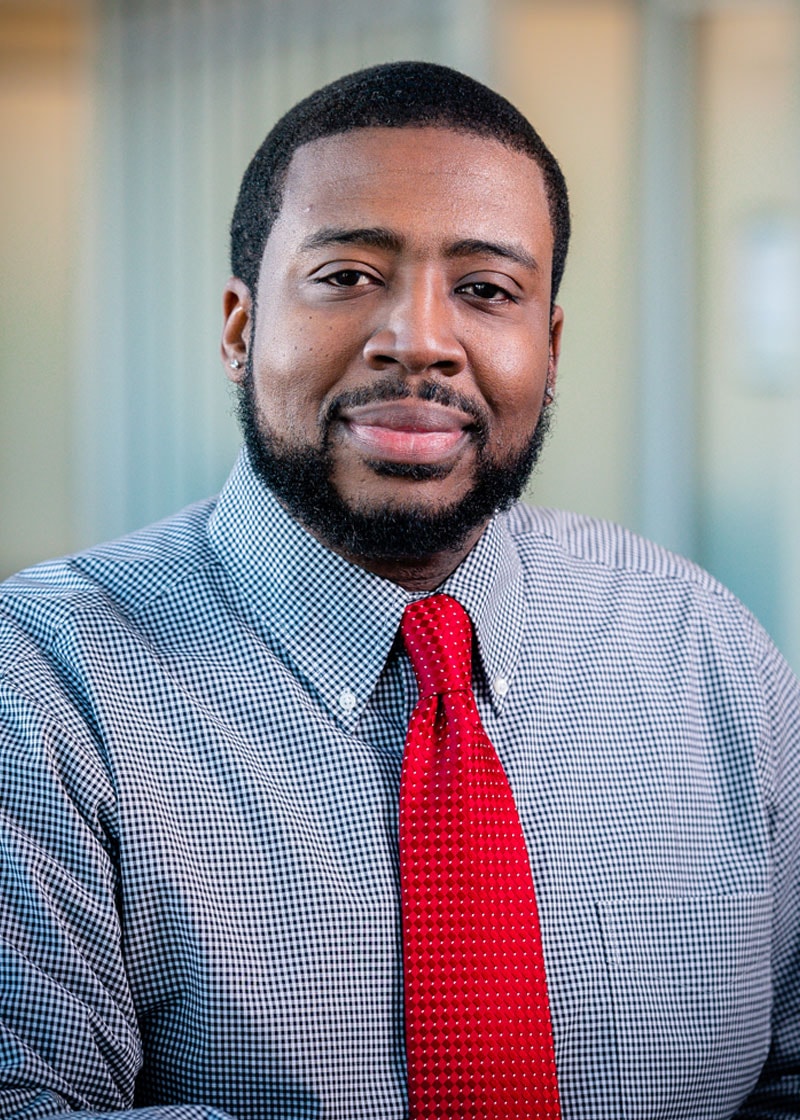
Dr. Olivio Clay is Professor of Psychology and Director of Developmental Psychology at the University of Alabama at Birmingham. His research addresses racial and ethnic health disparities in older adults, with particular focus on caregiving stress, diabetes management, healthcare access, and cognitive-mobility relationships. His work examines racial differences in physical/mental health trajectories and caregiver resilience, seeking to identify mediators of health disparities and develop targeted interventions. Methodologically, he specializes in advanced statistical modeling of longitudinal data from large cohort studies. Dr. Clay completed all his degrees at UAB (BS, MS, PhD) and maintains a strong focus on community-engaged research. His work has been featured in the Birmingham Times for its impact on Alzheimer's patients and caregivers.
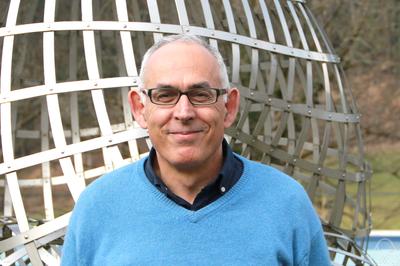
Amin Coja-Oghlan is Professor of Efficient Algorithms and Complexity Theory at TU Dortmund University's Department of Computer Science. His research integrates probabilistic combinatorics, information theory, and statistical physics to solve fundamental problems in theoretical computer science. Education includes a doctorate in Mathematics (University of Hamburg, 2002) and habilitation in Computer Science (Humboldt University Berlin, 2005). Research advances understanding of phase transitions in constraint satisfaction problems, optimization landscapes, and random structures. Recent publications analyze SAT thresholds, group testing, and sparse matrix properties. Academic appointments include professorships at Goethe University Frankfurt and lectureships at Edinburgh and Warwick. Research contributions bridge discrete mathematics with computational complexity.
Eric Loken is an Associate Professor in the Department of Educational Psychology at the University of Connecticut's Neag School of Education. He earned his PhD from Harvard University, specializing in advanced statistical modeling with applications to educational testing. His research focuses on latent variable models, Bayesian inference, and reproducibility in science. Recent publications explore missing data in computerized adaptive testing (2025), person-specific heterogeneity in IRT models (2024), and methodological frameworks for multi-analyst studies (2024). Loken's work addresses critical methodological challenges including measurement error impacts on replication, model specification in mixture models, and patterns of omitted responses in language proficiency testing. He maintains active research in parenting intervention effects on child development outcomes. Methodological focus: Bayesian statistical modeling Psychometric theory Reproducibility science Large-scale educational assessment
Divinus Oppong-Tawiah is an Assistant Professor of Operations Management and Information Systems at York University's Schulich School of Business. His research focuses on how new technologies transform organizational forms and practices, particularly examining social norms and influence mechanisms in digitally enabled work environments. He employs diverse empirical methods including network science, data science, and randomized controlled trials. His research interests include Business Analytics, Design Science, Digital Platforms, Network Science, and Persuasion & Gamification. His publications frequently explore organizational dynamics in digital contexts, sustainability communication, and behavioral interventions in workplace settings. Research trends show consistent focus on technology-mediated organizational innovation and ethical considerations in digital transformation. Professor Oppong-Tawiah maintains an active research program examining digital innovation across multiple domains including platform ecosystems, sustainable technology adoption, and organizational gamification.
Marc Noy is a Professor at the Department of Applied Mathematics II, Polytechnic University of Catalonia (UPC), affiliated with the School of Mathematics and Statistics. He is the Director of the Barcelona Graduate School of Mathematics (BGSMath) and leads the 2015-2019 Excellence program BGSMath/María de Maeztu. His research focuses on Combinatorics and Graph Theory, including asymptotic enumeration, random graphs, discrete geometry, and Tutte polynomials. He has advised multiple PhD and Master’s students and contributes to editorial roles for the Electronic Journal of Combinatorics and the Catalan Mathematical Society’s Bulletin. His teaching spans undergraduate and graduate courses in Combinatorics, Graph Theory, Complex Analysis, and Discrete Mathematics at UPC. He has participated in numerous international conferences and workshops, including the ICM 2014 and FOCM 2017. His work emphasizes the probabilistic analysis of graph structures, limit laws, and enumerative combinatorics. His recent publications explore topics like logical limit laws in graph classes, random planar graphs, and Tutte polynomial evaluations. He maintains active collaborations in combinatorial enumeration, with contributions to understanding graph properties in minor-closed classes and random geometric configurations.
Juanjo Rué Perna is an Associate Professor at the Universitat Politècnica de Catalunya (UPC), holding a position in the Department of Mathematics . He also serves as Director of the CFIS (Centre de Formació Interdisciplinària Superior). Previously, he was a Juniorprofessor (Assistant Professor) at Freie Universität Berlin (2013-2016), affiliated with the Combinatorics and Graph Theory group. His academic journey includes postdoctoral positions at ICMAT (Madrid, 2010-2013) and École Polytechnique (France, 2009-2010). Rué obtained his PhD in Discrete Mathematics from UPC in 2009 under Marc Noy, focusing on the enumeration of topological graphs. His research interests span Enumerative Combinatorics , Graph Theory , Random Graphs , and Additive Combinatorics , with notable contributions to planar maps and asymptotic analysis. He has supervised four PhD students, including Clément Requilé and Christoph Spiegel. He has organized major conferences like EUROCOMB 2021 and authored books such as El arte de contar: Combinatoria y enumeración and academic works on transcendental numbers. Rué's work bridges theoretical mathematics with applications in quantum gravity and statistical physics, emphasizing interdisciplinary approaches.
Rishideep Roy is a Lecturer in the School of Mathematics, Statistics and Actuarial Science at the University of Essex, Colchester Campus. Previously, he served as an Assistant Professor of Decision Sciences at the Indian Institute of Management Bangalore (2016–2023). He holds a PhD in Statistics from the University of Chicago (2016), with a thesis on Extreme Values of Log-Correlated Gaussian Fields, and degrees from the Indian Statistical Institute Kolkata (MSc Statistics, 2011; BSc Honours, 2009). His research focuses on statistical modeling, Bayesian analysis, sports analytics, election forecasting, and interacting particle systems. Notable areas include voter models for fraud detection, real-time soccer match predictions, and applications of log-correlated fields in financial modeling. He also explores probability theory, extreme value analysis, and network dynamics. Roy’s work bridges theoretical statistics and practical applications, including market churn analysis, sports betting frameworks, and healthcare-acquired infection reduction strategies. He maintains an open-door policy for academic queries and actively contributes to teaching and supervision within his department. His publications span topics like rumor spread dynamics, branching random walks, and bivariate exponential distributions. While no specific grants or awards are listed, his research reflects a strong emphasis on interdisciplinary applications of statistical methodologies.
Per-Håkan Lundow serves as an Associate Professor in the Department of Mathematics and Mathematical Statistics at Umeå University, Sweden, holding the Docent qualification. His office is located at MIT-huset, plan 3, Matematik och matematisk statistik, MIT.B.325, Umeå (901 87), with contact email per-hakan.lundow@umu.se and phone +46 90 786 79 93. Lundow's research spans: Statistical Mechanics of Ising models and spin glasses across dimensions 2-5 Computational combinatorics and optimization Finite-size scaling and universality classes Applications to Boson sampling and quantum computing His work combines theoretical analysis with advanced computational methods to investigate critical phenomena and phase transitions in complex systems. Publication trends reveal sustained focus on high-dimensional spin systems since 2002, with recent emphasis on five-dimensional Ising model behavior, damage spreading in random cluster models, and efficient permanent computation algorithms. Collaborations with Ian Campbell and Klas Markström dominate his output, appearing consistently across Nuclear Physics B, Physical Review E, and Journal of Computational Physics publications. Lundow participated in the "Three and four-dimensional tera-spin systems" research project (2016-2020) and is an active member of Umeå University's Computational Combinatorics and Optimization research group. No information regarding student advising or additional grant funding appears in the source material.
Alex Rozhin is a Reader in Electronics & Computer Engineering at Aston University, where he leads the Nanomaterials Photonic Research Theme and heads the Nanoscience Research Group. His research spans nanotechnology, photonics, and nanomaterials synthesis, with applications in ultrafast lasers, optical sensors, and environmental monitoring. Key innovations include carbon nanotube-based saturable absorbers for GHz fiber lasers, functionalized nanomaterials for photonic gas sensors, and fluorescence mapping techniques for microplastic detection. His group develops nanocomposites for photonic devices, advanced manufacturing methods, and micro-spectrometers. Rozhin has received prestigious awards including the Royal Academy of Engineering/Leverhulme Trust Senior Research Fellowship and JSPS Postdoctoral Fellowship. His current projects focus on hybrid photonic sensors, nanomaterial-based water treatment membranes, and microplastic detection technologies as part of European initiatives.
Pandelis Dodos is a Professor in the Department of Mathematics at the National and Kapodistrian University of Athens, Greece. His research focuses on combinatorics, functional analysis, and their intersections, particularly Ramsey theory, Banach space geometry, and descriptive set theory. He holds a PhD from the National Technical University of Athens (2003) and a Habilitation à Diriger des Recherches from Université Pierre et Marie Curie (2009). His work bridges analysis and combinatorics, addressing problems in nonlinear spectral gaps, forbidden intersection configurations, and high-dimensional random arrays. He leads the ANACOMB project (Hellenic Foundation for Research and Innovation), exploring combinatorial problems via analytical methods. Notable collaborations include researchers such as V. Kanellopoulos, K. Tyros, and S. Todorcevic. His contributions include monographs on Ramsey theory and Banach spaces, as well as over 50 peer-reviewed articles. Education: MSc Electrical Engineering (NTUA, 1997) PhD Mathematics (NTUA, 2003) Habilitation (UPMC Paris 6, 2009) His research projects include the ANACOMB initiative, investigating density Hales-Jewett conjectures and concentration inequalities. He advises PhD candidate Stamatis Skouras and collaborates with institutions like Texas A&M and Charles University. His work frequently intersects with theoretical computer science and probability theory. Awards: None explicitly listed, but recognized through extensive international collaboration and editorial roles in journals like Mathematische Annalen and Transactions of the AMS . Grants & Labs: ANACOMB (HFRI-FM20-02717), leading a multinational team addressing analytic combinatorics. Active in organizing workshops like COMPRAAthens 2024 .
Chen Huang is an Associate Professor in the Department of Scientific Computing at Florida State University (FSU), within the College of Arts and Sciences. His research focuses on computational materials science, particularly developing multiphysics methods for high-accuracy materials simulations and advancing orbital-free density functional theory (DFT) for large-scale studies of functional materials like metal alloys and lithium battery components. Huang holds a Ph.D. in Physics from Princeton University and a B.Sc. in Physics from Tsinghua University, China. Education Ph.D. in Physics, Princeton University B.Sc. in Physics, Tsinghua University Research Interests Development of novel multiphysics methods for oxide interface electronic structure predictions Orbital-free DFT advancements for scalable simulations of functional materials Electronic structure calculations and materials modeling Publications Trends Huang's recent work emphasizes improving DFT methodologies through embedded cluster approximations, analytical force calculations, and optimized effective potentials. His studies address challenges in simulating metals, catalytic reactions, and optoelectronic materials, with applications in energy storage and quantum chemistry. Key contributions include enhancing computational efficiency for large-scale systems and refining electron correlation treatments. Awards No specific scientific awards mentioned in the provided materials. Advising & Grants Current advisee: Mani Tyagi (Ph.D. student since 2023) Past students: Yu-Chieh Chi (UCSB Research Computing Consultant), Maliheh Shaban Tameh (ASU Postdoc) Former postdoc: Albert Dearden (2014-2015) Labs & Teams Huang leads the HUANG GROUP , focusing on computational materials science and DFT methodological advancements through the PROFESS software suite. The group collaborates on embedded cluster density approximations and high-accuracy electronic structure simulations.
Professor Jody Brook is an Associate Dean for Research and Professor at the University of Kansas School of Social Welfare. She holds a PhD from the University of Kansas (2005) and an MSW from Tulane University. Her expertise spans child welfare systems, substance abuse interventions, and trauma-informed practices. She has led 17 externally funded research projects, focusing on service delivery in child welfare, substance abuse, and specialty courts. Over 44 peer-reviewed articles and 23 research reports highlight her contributions to evidence-based interventions like the Strengthening Families Program and Family Treatment Courts. Her work emphasizes policy implementation, organizational change, and improving permanency outcomes for children. Current roles include teaching in the DSW research sequence and evaluating initiatives like the Kansas Serves Substance Affected Families program. Education: PhD, University of Kansas (2005); MSW, Tulane University (clinical license since 1991). Research Interests: Substance abuse across the lifespan, child welfare systems, trauma-responsive practices, family drug courts, and mixed-methods evaluations. Her work bridges clinical practice and policy, particularly addressing substance-affected families and system-level interventions. Major Grants: Oklahoma Partnership Initiative, Kansas Regional Partnership Grants, and Iowa Court Collaborative. Key Contributions: Over 60 national presentations, including invited talks on trauma-informed care and substance abuse policy. Labs/Teams: Central to the School's research infrastructure, she collaborates with interdisciplinary teams on initiatives like the Kansas Assessment Permanency Project and the Iowa Regional Partnership Grant.
Phanuel Mariano is an Assistant Professor of Mathematics at Union College, focusing on probability, geometric analysis, and stochastic processes. His research employs probabilistic methods to solve analytical problems in geometric settings, including coupling techniques and spectral theory. Key areas include: Lyapunov exponent analysis for random matrix products Exit time bounds for diffusion processes Geometric inequalities for Dirichlet eigenvalues Central limit theorems with explicit variance Recent NSF-funded work addresses non-invertible matrix products and Pólya functionals. Publications feature in Transactions of the AMS, Annals of Probability, and Journal of Statistical Physics.
Xiang Li is an Associate Professor in the Department of Computer Science and Engineering at Santa Clara University, within the College of Engineering. She holds a Ph.D. from the University of Florida and specializes in large-scale optimization, cyber-security, and network systems. Her research focuses on developing models and algorithms for challenges in Online Social Networks (OSNs), Device-to-Device (D2D) Networks, IoT, and Smart Grids. She has authored over 30 articles in top-tier journals and conferences, including best paper awards at IEEE SocialSec 2018 and IEEE MSN 2014. Dr. Li serves as an Associate Editor for the Journal of Combinatorial Optimization and Computational Social Networks Journal, and has received prestigious grants such as the NSF CISE Research Initiation Initiative (CRII) award (2020). Her research interests include cyber-physical systems, privacy vulnerability in OSNs, cascading failure analysis, and adaptive resource allocation. Notable projects involve quantifying privacy risks from socialbot attacks, designing frameworks for cascading failure mitigation in smart grids, and optimizing D2D communication in dynamic environments. Awards include the UF Informatics Institute Fellowship and multiple travel grants from NSF and IEEE. Dr. Li’s professional service includes roles as TPC member for ICDCS, ICDM, and CSoNet, along with session chair duties at ACM SIGMETRICS. She actively participates in NSF panels and conference organization, including co-chairing the WiDS conference at Santa Clara University. Her work bridges theoretical optimization with practical cybersecurity and network efficiency challenges.