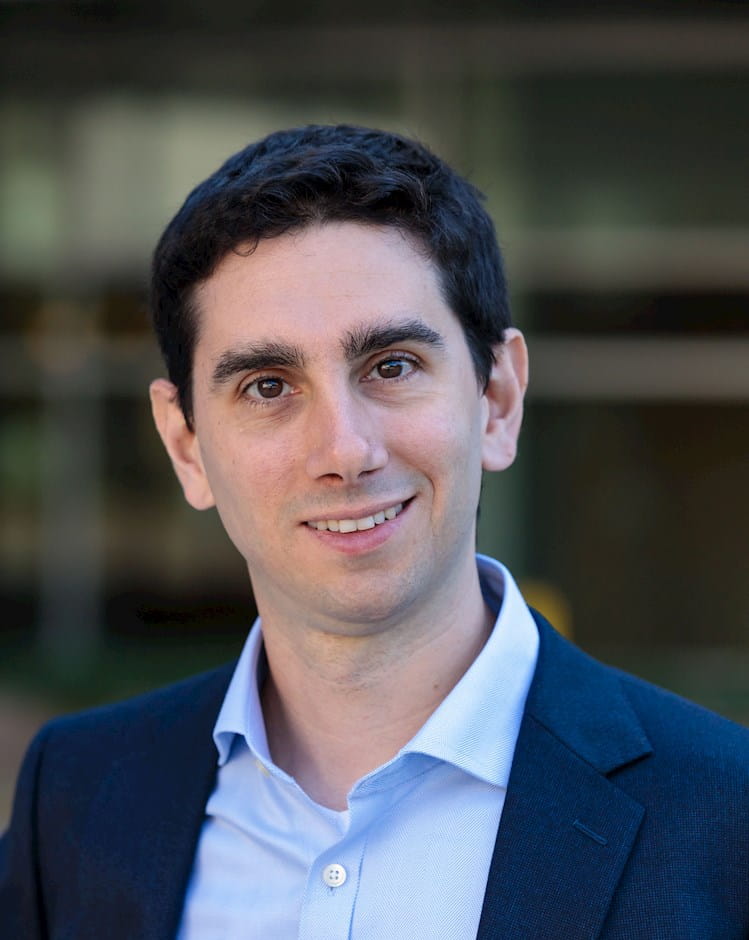
David Rohrlich is a Professor of Mathematics and Statistics at Boston University, serving as Director of Graduate Studies. His primary affiliation is with the Department of Mathematics and Statistics. He specializes in Number Theory, focusing on topics such as Artin representations, arithmetic statistics, and Galois theory. His research explores areas including algebraic number theory, arithmetic geometry, and representation theory. Notable contributions include studies on self-dual Artin representations, quaternionic structures in arithmetic statistics, and the interplay between Galois representations and L-functions. Rohrlich has published extensively on topics such as Mordell-Weil groups, average multiplicities, and dihedral Artin representations. His work often involves intricate connections between algebraic structures and number-theoretic phenomena. He holds a PhD and has advised numerous graduate students (though specific names are not listed here). His office is located in CDS 433, with regular in-person and virtual office hours.
Ghaith Hiary is a Professor and Vice Chair for Graduate Recruitment in the Department of Mathematics at The Ohio State University. He holds a PhD from the University of Minnesota (2008). His research focuses on computational and analytic number theory, with emphasis on the Riemann zeta function, L-functions, random matrix theory, and asymptotic analysis. Hiary's work bridges theoretical mathematics and high-performance computation. He develops efficient algorithms (e.g., amortized-complexity methods) to evaluate zeta functions at extreme heights (e.g., near t=10 28 ), implemented in C++/Mathematica. His research uses random matrix models to study zeta-function moments and employs techniques like van der Corput estimates and hybrid methods for explicit bounds. His publications demonstrate consistent focus on zeta-function computations, factorization algorithms, and arithmetic biases. Recent work (2022-2025) explores invariant measures, Lehman's method generalizations, and sign changes in random multiplicative functions, maintaining strong ties to analytic and probabilistic number theory. Hiary shares code and datasets via GitHub, including implementations of T 1/3 algorithms for zeta computations. He collaborates with institutions like the University of Waterloo and maintains numerical databases of zeta zeros.
Ben Green is the Waynflete Professor of Pure Mathematics at the University of Oxford and a Fellow of Magdalen College. His work spans additive combinatorics, analytic number theory, harmonic analysis, ergodic theory, discrete geometry, and group theory, with a focus on interdisciplinary approaches. Research Interests: Additive combinatorics and its applications to primes Analytic number theory (prime distribution, L-functions) Harmonic analysis (Fourier methods, spectral theory) Ergodic theory and its combinatorial applications Discrete geometry (ordinary lines, convex structures) Group theory (approximate groups, expansion) Article Trends: His recent work emphasizes multiplicative functions, Ramsey-type problems in number theory, expansion in finite groups, and extremal set theory. Themes include prime gaps, arithmetic progressions, and interactions between analysis and algebra. Scientific Awards: Clay Research Award (2004) Ostrowski Prize (2005) Whitehead Prize (2005) Leverhulme Prize (2007) European Mathematical Society Prize (2008) Royal Society Fellow (2010) Sylvester Medal (2014) Senior Whitehead Prize (2019) Advising: Ben has supervised numerous D.Phil students across additive combinatorics, analytic number theory, and related fields. Past students hold postdoctoral and academic positions globally.
Jan de Gier is a Professor at the School of Mathematics and Statistics, The University of Melbourne . He is also the Founding Director of MATRIX , Australia’s residential research institute in the mathematical sciences, and a former Deputy Director and Chief Investigator in the Australian Research Council Centre of Excellence for Mathematical and Statistical Frontiers (ACEMS) . Additionally, he co-founded the Australian and New Zealand Association for Mathematical Physics (ANZAMP) in 2011 and served as its inaugural Chair. His research focuses on solvable lattice models at the intersection of mathematical physics and statistical mechanics . Key areas include the application of quantum integrability , algebraic structures like the Yang-Baxter equation, Hecke algebras, and quantum groups, as well as analytical methods such as complex analysis and elliptic curves. His work bridges pure and applied mathematics through connections between enumerative combinatorics , representation theory , and real-world phenomena like traffic flow modeling via exclusion processes . The 15 most recent articles reflect his expertise in integrable systems , non-equilibrium statistical mechanics , and algebraic combinatorics . Topics span Macdonald polynomials , stochastic duality , quantum spin chains , and traffic modeling , with methodologies involving matrix product forms , exact solutions , and critical phenomena analysis. He has contributed to editorial efforts through the AustMS Gazette and MATRIX Annals, and has been involved in public science communication via opinion pieces on mathematics funding and applications. His work emphasizes the importance of fundamental research in driving technological innovation, as highlighted in media articles discussing pi calculation , zero-knowledge proofs , and mathematics education .
Sean Howe is an Assistant Professor in the Department of Mathematics at the University of Utah, where he has been employed since July 2019. His research is supported by NSF grants DMS-2201112 and DMS-2501816. In the academic year 2023-2024, he was a Friends of the Institute for Advanced Study Member at the special year on p-adic arithmetic geometry at the Institute for Advanced Study. Dr. Howe received his PhD from the University of Chicago in 2017 under the supervision of Matt Emerton. Prior to his position at Utah, he was an NSF Postdoctoral Scholar at Stanford University from September 2017 to June 2019. He earned a joint master's degree from Leiden University and Universite Paris-Sud 11 through the ALGANT program in 2012 and completed his undergraduate studies at the University of Arizona. Dr. Howe's research spans arithmetic and algebraic geometry, representation theory, and number theory, with a particular focus on p-adic aspects. His work often explores the connections between geometry and number theory through the lens of p-adic methods, including p-adic Hodge theory, perfectoid spaces, and the Langlands program. He has made significant contributions to understanding cohomological structures in mixed characteristic settings, the geometry of moduli spaces, and the statistical properties of L-functions. His extensive publication record demonstrates a strong trajectory in advancing p-adic geometry and its applications. Recent work shows increasing focus on cohomological smoothness in mixed characteristic, p-adic periods, and the interplay between random matrix theory and arithmetic statistics. His research often bridges abstract theoretical frameworks with concrete computational approaches. NSF Postdoctoral Scholar NSF grants DMS-2201112 and DMS-2501816 Dr. Howe is an active mentor, currently advising five PhD students: Minhua Cheng, Madison Delmoe, Shea Engle, Abhay Goel, and Suo Jun Tan. He has successfully graduated two PhD students: Matthew Bertucci (2025) and Hanlin Cai (2024). He also regularly mentors undergraduate researchers, with notable projects including Emil Geisler's work on stable multiplicities in configuration space cohomology and Daniel Koizumi's software for computing braid monodromy of cubic surfaces. His teaching portfolio includes advanced courses in algebraic topology, number theory, and algebra, reflecting his broad expertise across pure mathematics. He has taught courses such as Math 6950 (Topics in Algebraic Topology), Math 4400 (Introduction to Number Theory), and Math 6320 (Modern Algebra II).
Professor Louis Schmidt is a leading academic in the Department of Psychology, Neuroscience & Behaviour at McMaster University , with a research focus on developmental psychophysiology, temperament, and the long-term effects of early adversity. His work bridges neuroscience, psychology, and behavioral science, emphasizing the interplay between brain function and socio-emotional development across the lifespan. Key research themes: Shyness, social anxiety, autism spectrum disorder, schizophrenia, and outcomes of extremely low birth weight. Recognized for mentoring postdoctoral fellow Kristie Poole, who was celebrated as a role model in the Child Emotion Laboratory. Scientific Awards : Royal Society of Canada recognition for contributions to research and scholarship. Research Trends from 15 recent publications include: Neurophysiological mechanisms of shyness (EEG, ERP, RSA) Impact of antenatal corticosteroids on adult brain function Intergenerational effects of maternal mental health interventions Cross-cultural comparisons of temperamental shyness Developmental consequences of preterm birth Behavioral and neural correlates of social anxiety in diverse populations Grants & Collaborations : Led the SNACS randomized controlled trial on antenatal corticosteroids, with applications in obstetrics and developmental neuroscience. Collaborates extensively on topics like autism spectrum disorder, schizophrenia, and emotion regulation. Labs & Teams : Directs the Child Emotion Laboratory at McMaster University, fostering interdisciplinary research on developmental psychopathology and neural mechanisms of temperament.
Christophe VIGNAT is a Professor at CentraleSupélec, affiliated with the Laboratoire des Signaux et Systèmes (L2S). His research focuses on number theory, special functions, probability, and their applications in signal processing and control systems. He has held visiting professorships at École Polytechnique Fédérale de Lausanne (EPFL) and Tulane University. VIGNAT's work bridges pure mathematics and applied fields, with notable contributions to Bernoulli/Euler polynomials, multiple zeta values, and probabilistic methods in number theory. His recent publications explore topics like partition functions, theta functions, and Ramanujan-type identities. He has delivered talks at international conferences and collaborates widely with researchers in mathematics and physics. Research Interests: Number theory, special functions (Bessel, orthogonal polynomials), probability theory, signal processing, control systems, analytic combinatorics, and their interconnections. His work often employs symbolic computation and probabilistic approaches to uncover identities and structures in mathematical analysis. Publications Trends: Recent articles emphasize partition theory, zeta functions, and integrals related to classical polynomials. His collaborations highlight interdisciplinary efforts between pure mathematics and applied sciences. Over 150 refereed papers and conference contributions demonstrate his prolific output across diverse mathematical domains. Education: While specific academic history isn’t detailed, his roles and publications suggest advanced training in mathematics and engineering, typical for a full professor in systems and control.
Jonas Bergström is a Professor in the Department of Mathematics at Stockholm University specializing in Algebra, Geometry, Topology, and Combinatorics. His research focuses on arithmetic geometry, moduli spaces, Siegel modular forms, and number theory, with extensive collaborations across international institutions including KTH Royal Institute of Technology. His research interests span algebraic geometry, topology, combinatorics, and number theory, with particular emphasis on moduli spaces of curves, abelian varieties, Siegel modular forms, and arithmetic geometry. Bergström's work bridges theoretical mathematics with computational approaches, often developing algorithms for complex mathematical structures. His research group actively explores commutative and homological algebra, complex and real algebraic geometry, arithmetic geometry, homotopy theory, and Ramsey theory. The most recent publications reveal a strong focus on cohomology of moduli spaces, Siegel modular forms, abelian varieties over finite fields, and L-functions. His work demonstrates a consistent pattern of combining algebraic geometry with number theory, particularly investigating arithmetic properties of algebraic varieties and developing computational methods for modular forms. The research shows increasing emphasis on algorithmic approaches and connections to theoretical physics through moduli space cohomology. Bergström has supervised several PhD students including Sjoerd de Vries (current), Stefano Marseglia, and Olof Bergvall (with Prof. Carel Faber). He currently mentors postdoctoral researchers Séverin Philip and Thomas Wennink, while former postdocs include Angelina Zheng, Valentijn Karemaker, Oliver Leigh, and Alex Samuel Bamunoba. His research is supported through collaborations with major mathematical networks including the Nordic number theory network and joint seminars with KTH. He is affiliated with the Algebra and Geometry Seminar (KTH and SU) and maintains active research connections through multiple collaborative projects, including joint work with Gerard van der Geer and Carel Faber on Hecke operators and Siegel modular forms. Bergström also contributes to open mathematical research through GitHub repositories containing computational results on cohomology of moduli spaces.
Jacob D. Leshno is an Associate Professor of Economics and Robert H. Topel Faculty Scholar at the University of Chicago Booth School of Business. His research employs game theory, applied mathematics, and microeconomic theory to study allocation mechanisms and marketplace design, with applications spanning school choice systems, patient assignments to nursing homes, and decentralized cryptocurrency protocols. Professor Leshno's academic background includes: PhD in Economics from Harvard University, completed under Nobel laureate Alvin Roth M.Sc. in Pure Mathematics from Tel Aviv University B.Sc. in Pure Mathematics from Tel Aviv University His research program centers on market design theory with two primary strands. The first focuses on matching markets, where he developed tractable cutoff characterizations that clarify market structures for college admissions and medical residency matching (NRMP). His work demonstrates how price discovery mechanisms can streamline inefficient processes like college applications and subsidized housing allocation. The second strand examines cryptocurrencies and blockchain technology, investigating how open-source computer code functions as market rules in decentralized systems. This research explores both the economic security of permissionless consensus and fundamental limitations of proof-of-work protocols. Professor Leshno's publications reveal a cohesive research trajectory applying economic theory to increasingly complex market structures. His work consistently bridges theoretical rigor with practical implementation, evolving from traditional matching markets to the frontier of decentralized digital systems. Publications in top journals like American Economic Review and Journal of Political Economy demonstrate both analytical depth and real-world relevance across education, healthcare, and financial technology sectors. Professor Leshno has received significant recognition for his contributions: ACM SIGecom Test of Time Award for foundational work in matching markets INFORMS Frederick W. Lanchester Prize for outstanding contributions to operations research Prior to Chicago Booth, Professor Leshno served as Assistant Professor at Columbia Business School and completed a postdoctoral fellowship at Microsoft Research New England, following industry experience at Yahoo! and IBM. He teaches MBA courses in Competitive Strategy and Market Design, and developed a PhD seminar bridging computer science theory with economic principles for distributed systems. His research continues to influence both academic theory and practical implementations of market mechanisms across multiple sectors. Professor Leshno maintains active collaborations with leading researchers including Itai Ashlagi, Irene Lo, and Gur Huberman, advancing the theoretical foundations of market design while addressing contemporary challenges in digital marketplaces and allocation systems.
Phillip B. Gibbons is a Professor in both the Computer Science Department and Electrical & Computer Engineering Department at Carnegie Mellon University. He received his Ph.D. in Computer Science from the University of California at Berkeley in 1989 and has held research positions at AT&T Bell Laboratories, Lucent Bell Laboratories, and Intel Research Pittsburgh before joining CMU's faculty. His research spans parallel computing, distributed systems, databases, computer architecture, and machine learning. Gibbons' work bridges theory and systems, with publications in top-tier conferences including SOSP, OSDI, SIGMOD, VLDB, NeurIPS, and many others across computer science and engineering disciplines. His research has been supported by significant funding from NSF, Intel, and other organizations. Gibbons has made substantial contributions to streaming algorithms, parallel computing frameworks, distributed systems security, and large-scale machine learning systems. His work on data stream algorithms with Alon, Matias, and Szegedy has been particularly influential in the field. He has served in numerous leadership roles including Editor-in-Chief of ACM Transactions on Parallel Computing (2012-2018) and on the editorial boards of Journal of the ACM and IEEE Transactions on Cloud Computing. He has also been active on program committees for major conferences in systems, databases, and theory. IEEE Fellow (2014) - For contributions to parallel computing and databases ACM Fellow (2006) - For contributions to parallel computing, databases, and sensor networks Selected for Oral Presentation at NeurIPS '13 (only 20 selected out of 1420 submissions) Co-winner of the best paper award for NSDI '06 Gibbons has advised numerous students and mentored researchers who have gone on to make significant contributions in academia and industry. His research has been supported by major grants including the $15M Intel Science and Technology Center for Cloud Computing (2011-2015) where he served as Co-PI/Co-Director. He currently leads research projects on write-efficient algorithms, big learning systems, and visual cloud systems. His laboratory work focuses on bridging theoretical computer science with practical systems implementation, particularly in the areas of parallel and distributed computing. Current research directions include adapting algorithms for emerging memory technologies and optimizing machine learning systems for large-scale deployment.
Yaoqing Yang is an Assistant Professor at the Department of Computer Science, Dartmouth College. He earned his PhD in Electrical and Computer Engineering (ECE) from Carnegie Mellon University (CMU) and completed postdoctoral research at UC Berkeley's RISE Lab. His work focuses on robustness in machine learning systems, spectral analysis of neural networks, and algorithm design for structured data like graphs and point clouds. PhD in ECE, Carnegie Mellon University Postdoc, RISE Lab, UC Berkeley BS in Electrical Engineering, Tsinghua University Research interests include diagnosing and mitigating model failures through heavy-tailed spectral analysis, decision boundary studies, and loss landscape visualization. He develops methods such as AlphaPruning and SharpBalance to enhance large language models and ensemble learning. Recent work spans 2025 publications on spectral evolution of neural networks, agentic AI for science, and LLM safety. Key collaborations include Michael W. Mahoney and other researchers. Burke Research Initiation Award, Dartmouth (2024) DOE grant for scientific foundation models (2024) DARPA grant for AI robustness (2024) He serves as Area Chair at NeurIPS 2025 and ICLR 2026, and has presented at Google Research, Lawrence Berkeley National Laboratory, and leading universities worldwide. His lab at Dartmouth engages in theoretical and applied research, with connections to UC Berkeley's RISE Lab and collaborations across institutions like CMU and Tsinghua University.
Luca Demetrio is an Assistant Professor at the University of Genoa, Italy, specializing in adversarial machine learning and cybersecurity. Previously, he was a Post-doctoral Researcher at the PRA Lab within the Department of Electrical and Electronic Engineering at the University of Cagliari. He holds bachelor's (2015), master's (2017), and Ph.D. (2021) degrees from the University of Genova, with his doctoral thesis focusing on formalizing evasion attacks against security detectors. His research emphasizes enhancing the robustness of machine learning models against adversarial attacks, particularly targeting malware detectors, SQL injection defenses, and Windows security systems. He leads the development of SecML Malware, a Python library for generating adversarial Windows malware, and contributes to the SecML framework. His work has been published in top-tier journals like ACM TOPS and IEEE TIFS. Key research interests include adversarial example generation, malware analysis, and cybersecurity defense mechanisms. He has explored query-efficient attacks on phishing detectors, certified adversarial robustness via randomized smoothing, and robust synthetic data-driven threat detection. His recent studies (2023–2025) address challenges in hardening machine learning models against evasion attacks, adversarial SQL injection countermeasures, and securing autonomous driving systems from adversarial reinforcement learning attacks.
Haipeng Shen is a Professor of Innovation and Information Management at HKU Business School, The University of Hong Kong, serving as Associate Dean (EMBA and IMBA) and holding the Patrick S C Poon Professorship in Analytics and Innovation. He chairs the Business Analytics and Innovation program and joined HKU in 2015 after previously holding a professorship at the University of North Carolina at Chapel Hill. His academic credentials include: PhD in Statistics, The Wharton School of Business, University of Pennsylvania, 2003 MA in Statistics, The Wharton School of Business, University of Pennsylvania, 2000 BS in Mathematics, School of Mathematical Sciences, Peking University, 1998 Professor Shen's research focuses on data-driven decision making under uncertainty, with expertise spanning big data analytics, business analytics, healthcare analytics, and service engineering. He develops advanced statistical and machine learning methodologies to solve complex operational problems in call centers, optimize stroke care protocols, and enhance financial risk modeling, emphasizing real-time applications in high-stakes environments. Analysis of his recent publications reveals a consistent interdisciplinary approach bridging operations research, statistics, and domain-specific knowledge. His work demonstrates strong methodological innovation in time-series forecasting for service systems, risk assessment frameworks for medical complications, and covariance structure analysis for financial markets, with direct translational impact on business operations and clinical outcomes. His scientific contributions have been recognized with prestigious awards including: Most Influential Publication Award from China Stroke Association (2018) Fellow of the American Statistical Association (2015) Best Advisor of the Year Award from Academy of Asian Business (2018) Elected Member of International Statistical Institute (2015) Cluster Chair for Big Data Analytics at INFORMS International (2015) As an academic leader, Professor Shen has secured significant research funding from organizations including The Xerox Foundation and National Institute on Drug Abuse. He serves as Associate Editor for Management Science, Journal of the American Statistical Association, and Technometrics, while mentoring graduate students in statistical methodology and applied analytics. His current initiatives position HKU Business School at the forefront of healthcare innovation through big data analytics, driving collaborations with medical institutions to transform stroke care and hospital operations in Asia.
Dr. Alfred Chong is an Associate Professor in the Department of Actuarial Mathematics and Statistics at Heriot-Watt University (HWU). Previously, he served as an Assistant Professor at the University of Illinois at Urbana-Champaign (UIUC) and co-founded the Illinois Risk Lab. His research focuses on Actuarial Science, Financial Mathematics, and Quantitative Risk Management, addressing emerging risks like cyber, pandemic, and climate risks, leveraging machine learning, optimization, and stochastic control. He holds a PhD from The University of Hong Kong and King's College London, and is an Associate of the Society of Actuaries. Chong actively contributes to academic governance, including roles in the EPSRC Mathematical Sciences Early Career Forum and the Maxwell Institute's Data and Decisions research theme. Education: PhD in Actuarial Science, University of Hong Kong & King's College London Research Interests: Chong explores risk sharing mechanisms, forward preferences in insurance, and mitigation strategies for large-scale risks. His work integrates data analytics and machine learning to solve decision-making challenges, such as cybersecurity risk assessment, pandemic resource allocation, and climate risk modeling. Recent projects include incident-specific cyber insurance design and delegated investment strategies for retirement savings. Awards: Michael V. Colla Prize for Mathematics Related to Medicine (2022) Best of 2020 in the Annual Meeting of the Casualty Actuarial Society (2021) Advising & Grants: Chong supervises PhD students in holistic risk management, forward preferences, and reinforcement learning applications. He has secured grants supporting interdisciplinary research in risk modeling and insurance innovation. Labs & Teams: Co-founder of the Illinois Risk Lab (UIUC), now leading research at HWU's Actuarial Mathematics & Statistics department. Engaged with the International Centre for Mathematical Sciences for knowledge exchange initiatives.
Cécile Mailler is a Reader in Probability at the University of Bath, where she is a member of the probability group Prob-L@B. She has held significant research positions including an EPSRC postdoctoral fellowship (2018-2021) titled "Random trees: analysis and applications" and previously worked as a postdoc at Prob-L@B (2013-2016) as part of Peter Mörters' EPSRC project "Emergence of Condensation in Stochastic Networks". She earned her PhD under the supervision of Brigitte Chauvin and Danièle Gardy at the Laboratoire de Mathématiques de Versailles. Her research focuses on probability theory with emphasis on branching processes, random trees, reinforcement mechanisms, Pólya urns, stochastic approximation, random networks, and statistical physics. She has made significant contributions to understanding preferential attachment models, zero-range processes, and random Boolean trees. Her work bridges theoretical probability with applications in statistical physics and combinatorics. Analysis of her recent publications shows a strong focus on random tree structures, branching processes, and reinforcement learning algorithms, with applications spanning from network theory to statistical mechanics. Her research demonstrates sophisticated mathematical techniques applied to complex stochastic systems, particularly those with reinforcement mechanisms and memory effects. Associate Editor of the Applied Probability Trust (since October 2020) Associate Editor of Stochastic Processes and Their Applications (since March 2022) Author of a general introduction to Pólya urns for the LMS Newsletter (November 2020) Co-organizer of the "Random Walks: Applications and Interactions" conference at CIRM (January 2026) She actively supervises PhD students working on topics including the multi-city ants process, Pólya urns with growing initial composition, large deviations for the Monkey walk, and competing growth processes. She has secured research funding through EPSRC fellowships and has been involved in multiple collaborative projects with prominent researchers in probability theory. Mailler regularly teaches mini-courses on advanced probability topics at international summer schools and workshops, demonstrating her commitment to knowledge dissemination in the field.