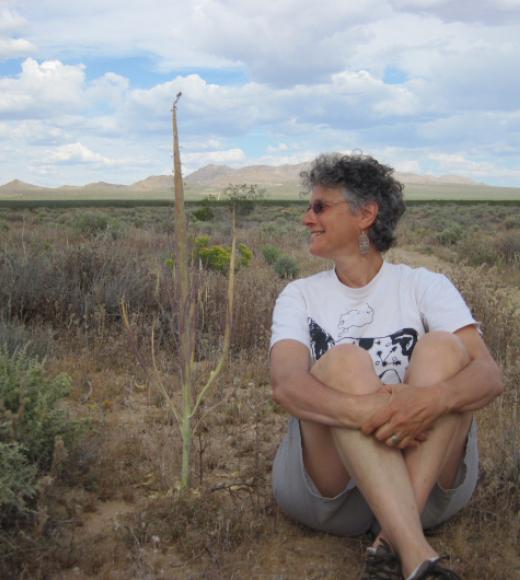
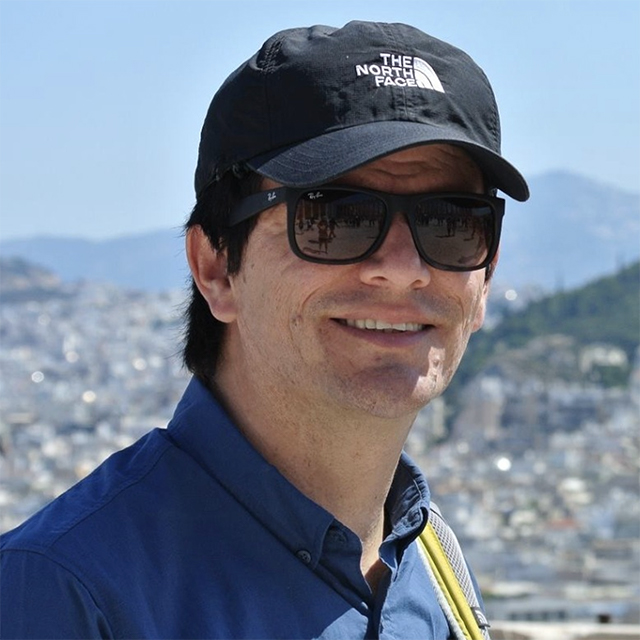
Sharon Strauss is a Professor in the Department of Evolution and Ecology at the University of California, Davis. Her research focuses on how species evolve due to community interactions, particularly examining the ecological and evolutionary consequences of herbivory, pollination networks, and climate change impacts on plant fitness. She investigates mechanisms of speciation, plant defense strategies, and the role of abiotic and biotic factors in shaping plant communities. Her work integrates field experiments, genomic analyses, and historical data to explore topics such as serpentine endemism, climate niche constraints, and adaptive responses to environmental shifts. Notably, she has contributed to understanding the genomic basis of adaptation in Streptanthus species and the role of soil microbial communities in plant coexistence. Dr. Strauss has been recognized with awards including the Per Brinck Oikos Award 2013 . Her research spans plant-microbe interactions, phenological shifts under climate change, and the evolutionary origins of ecological traits. She collaborates across disciplines to address global challenges in biodiversity conservation and ecological resilience.
Wouter Berghuijs is an Assistant Professor of Catchment Hydrology at the Department of Earth Sciences, Vrije Universiteit Amsterdam. He coordinates courses such as Hydrology (BSc) and Catchment Hydrology (MSc) and contributes to advanced hydrology modules. His research focuses on terrestrial water cycling under climate and land-use change, emphasizing streamflow dynamics, groundwater-surface water interactions, and catchment similarity. Key findings include the linkage between snowfall reduction and streamflow decline, published in Nature Climate Change and Nature . Recent publications highlight climate projections for Northern Hemisphere snowmelt, vegetation impacts on water loss, and hydrological extremes. His work spans global datasets and process-based modeling, supported by a VU Starting Grant (2021). VU Starting Grant (2021) He supervises graduate students and collaborates across institutions including Delft University of Technology and University of Bristol. Notable datasets include global groundwater recharge estimates (Zenodo, 2022).
Babitha George is a Researcher in the Department of Earth Sciences at Vrije Universiteit Amsterdam (VU Amsterdam), affiliated with the Faculty of Science. She holds the role of Project Researcher in the active AVENGERS WP3 project focusing on aerosol radiative forcing and climate change. Her research spans extreme rainfall analysis, tropical cyclone dynamics, and ensemble methods in climate modeling. Her work emphasizes sensitivity analysis for extreme weather events, such as those in India’s Kerala region and the Himalayas, using frameworks like TIGGE ensembles. She has also contributed to studies on the predictability of tropical cyclones like Nargis (2008) and explored plasma physics through corrections in IMF variations. Her current project (2023–2026) addresses radiative forcing and emissions, linking her atmospheric research to broader climate change challenges. George’s publications reflect a blend of meteorological modeling, geophysical dynamics, and interdisciplinary approaches to environmental science.
Dr Donal Mullan is a Senior Lecturer in Physical Geography at Queen's University Belfast, within the School of Natural and Built Environment. His research focuses on climate change scenarios, soil erosion, muddy flooding, and environmental management resilience. He holds a Ph.D. in Climate Impacts Modelling from Queen’s University Belfast (2008–2012), an M.Sc. in Climate Change from the University of East Anglia (2007–2008), and a B.Sc. in Geography from Queen’s University Belfast (2004–2007). Research Interests: Regional Climate Scenario Development Climate Impacts on Natural and Built Environments Soil Erosion and Muddy Flooding Dynamics Climate Adaptation Strategies in Arctic/Sub-Arctic Regions Recent work explores climate threats to northern infrastructure and peatland ecosystems. He has led/co-investigated projects funded by the NI Department for the Economy (£60k, 2017–2018), Aboriginal Affairs and Northern Development Canada ($23k CAD, 2014), and the British Society for Geomorphology (£2.6k, 2012–2013). Teaching includes modules such as 'Climate Change' and 'Managing Environmental Issues in Belgium.' He advises on climate policy for Northern Ireland and serves as an external examiner for Maynooth University’s MSc in Climate Change. Awards: Estyn Evans Dissertation Prize (2007) Sarah M. Holland Memorial Prize (2007)
Luigi Lombardo is an Associate Professor in the Department of Applied Earth Sciences and affiliated with the Digital Society Institute. His research focuses on geohazards, particularly landslides, wildfires, and cascading disasters. He applies advanced geospatial analysis, machine learning, and remote sensing techniques to model environmental risks and improve disaster management. Key research interests include landslide susceptibility modeling, earthquake-induced hazards, climate change impacts, and spatial-temporal data science. He develops innovative tools like the SZ-plugin for QGIS, enhancing geohazard analysis accessibility. Recent work addresses post-seismic recovery dynamics, Arctic thaw slumps, and probabilistic landslide assessments across global regions (e.g., Colombia, Turkey, Italy). His studies emphasize interdisciplinary approaches to bridge geoscience and societal needs, contributing to UN Sustainable Development Goals related to climate action and disaster resilience. Publications highlight methodological advancements such as physics-informed neural networks, functional regression for landslide prediction, and ensemble modeling for multi-hazard scenarios. He collaborates internationally to build open datasets like the Arctic Retrogressive Thaw Slump (ARTS) inventory. Research trends show a focus on integrating AI with geophysical principles, improving early warning systems, and quantifying cascading risks from coupled natural-human systems. His work aims to inform policy decisions and enhance community resilience through actionable scientific insights.
Dr. Dhruba Pikha Shrestha is an Assistant Professor at the Department of Applied Earth Sciences within the Faculty of Geo-Information Science and Earth Observation (ITC) at the University of Twente since 2010. He holds a PhD in Earth Science from Ghent University (2000), an MSc in Soil Survey from ITC (1984), and a BSc in Agriculture from the University of Udaipur (1973). His career spans over four decades, including roles as a UN Volunteer in Yemen, FAO consultant in Saudi Arabia, and academic leadership at ITC. His research focuses on remote sensing, GIS, and modeling for land degradation assessment, soil erosion, and disaster risk management. He coordinates modules like Process Modelling of Natural Hazards and Natural Resource Degradation Modelling . Over 60 MSc theses have been supervised under his guidance. Key projects include EU-funded initiatives like the DESIRE Project (2008-2010) for soil conservation monitoring and the IncREO Project (2014-2015) in Italy. He has collaborated with institutions in Bangladesh, India, Nepal, Thailand, and Southeast Asia on geo-information applications for environmental management. His work aligns with UN SDGs related to sustainable land use and climate action. Publications emphasize innovative techniques like UAV-based sediment analysis, SoilGrids integration, and fuzzy logic soil mapping. His contributions span technical reports, conference proceedings, and textbooks on geopedology and disaster prevention.
Sreenath Avaronthan Veettil is a Research Fellow at the School of Earth Atmosphere and Environment at Monash University. His work focuses on convective clouds, aerosol-cloud interactions, and extreme weather events, particularly in the context of climate change and monsoon systems. Research interests include: Convective cloud dynamics and hydrometeor characteristics Extreme rainfall attribution to climate change Monsoon variability and teleconnection patterns Arabian Sea cyclone formation Regional climate modeling and prediction Weather-climate system interactions Recent publications (2021-2023) highlight trends in convective rainfall over India, monsoon responses to El Niño, and cyclone-climate relationships. Collaborations span atmospheric research, climate science, and ocean-atmosphere dynamics. Peer-reviewed outputs include 8 publications (2021-2023) in journals like Atmospheric Research and npj Climate and Atmospheric Science , with open-access availability and citations ranging from 6 to 47 per article.
Dr. Ruth Geen is a Lecturer in Atmospheric Sciences at the University of Birmingham's School of Geography, Earth and Environmental Sciences. She holds a PhD in Atmospheric Physics from Imperial College London (2016) and a First Class MPhys from the University of Oxford (2012). Prior to joining Birmingham, she was a Research Fellow in Mathematics at the University of Exeter (2016–2021). Her research focuses on improving confidence in regional climate projections through hierarchical modeling approaches, emphasizing large-scale atmospheric circulations. Key areas include Arctic influences on midlatitude weather, monsoon dynamics (e.g., East Asian and West African monsoons), and model biases in climate simulations. She teaches on the MSc in Applied Meteorology and Climatology and supports fieldwork in Berlin. Geen's work bridges theoretical frameworks and real-world climate systems, with recent emphasis on Arctic warming impacts, teleconnections, and monsoon rainfall mechanisms. Her publications span Journal of Climate , Nature Communications , and Reviews of Geophysics , reflecting contributions to climate dynamics and model validation. She is affiliated with the Meteorology and Climate group at Birmingham and collaborates internationally on climate modeling and prediction initiatives.
Yang Gui-Ying is a distinguished researcher in meteorology and climate dynamics affiliated with the University of Reading's Department of Meteorology within the School of Mathematical, Physical and Computational Sciences. Her work focuses on equatorial waves, tropical atmospheric dynamics, and climate modeling. Key areas include the role of equatorial waves in tropical cyclones, Hadley Cell variability, and interactions between convection and large-scale circulations. She has contributed to advancing methodologies for identifying equatorial waves in observational data and improving seasonal predictions of extreme weather events in Southeast Asia. Her research spans studies on Borneo vortices, Madden-Julian Oscillation (MJO), and the influence of QBO phases on stratospheric wave propagation. Collaborations with institutions like the Hadley Centre and NCAS highlight her involvement in climate model evaluations and systematic error analysis. Recent work emphasizes equatorial waves as precursors for tropical cyclones and their integration into hybrid forecasting systems. Publications highlight her expertise in atmospheric circulation patterns, including the Hadley Cell's structure and tropical convection's role in driving these systems. Her contributions have advanced understanding of multi-scale interactions in tropical meteorology and improved climate model performance through detailed wave dynamics analysis.
Professor Hannah Cloke is a faculty member in the Department of Meteorology at the University of Reading, where she holds the title of Professor in Hydrology. Her work focuses on interdisciplinary environmental science, particularly flood forecasting, drought impact modeling, and the application of artificial intelligence to hydrological challenges. She is an Officer of the Order of the British Empire (OBE) for her contributions to science and society. While specific educational details are not listed in the text, her professional roles include leadership in research initiatives such as the Dr Carbon Atmospheric Observatory and involvement with the Global Flood Awareness System . Her research integrates cutting-edge methodologies like machine learning (e.g., Hydra-LSTM architectures) with traditional hydrological modeling to address global water-related hazards. Her recent articles emphasize improving flood and drought forecasting systems, analyzing climate change impacts on extreme weather events, and advancing remote sensing techniques for urban flood detection. A recurring theme is the co-design of forecast products with stakeholders to enhance disaster preparedness in regions like Uganda, Bangladesh, and Kenya. Key Awards: Order of the British Empire (OBE) Professor Cloke’s advising record is not explicitly listed here, but she collaborates extensively on global initiatives such as the European Flood Awareness System and EC-Land Hydro . She leads projects exploring the societal dimensions of water crises, including studies on drought materiality in South Africa and flood risk management in Germany. Her work bridges physical and social sciences, addressing both technical and community aspects of disaster resilience.
Eric Guilyardi is a Professor in the Department of Meteorology at the University of Reading, affiliated with the National Centre for Atmospheric Science (NCAS). His research focuses on climate dynamics, particularly the El Niño-Southern Oscillation (ENSO), Atlantic Meridional Overturning Circulation (AMOC), and the impacts of anthropogenic climate change on ocean-atmosphere systems. He contributes to major international climate modeling initiatives such as CMIP5 and CMIP6. Academic Role: Professor Affiliations: Department of Meteorology, University of Reading; NCAS Research interests include model evaluation, climate variability mechanisms, and projections of future climate states. Key contributions include studies on ENSO diversity, AMOC sensitivity, and the role of ocean-atmosphere feedbacks in climate predictability. Recent work highlights include analyses of AMOC variability in coupled models, the influence of Indian Ocean dynamics on ENSO, and the reconstruction of historical climate patterns using advanced modeling frameworks. His publications span high-impact journals like Nature Climate Change and Geophysical Research Letters.
Dr. Kieran Hunt is a NERC Principal Research Fellow in Tropical Meteorology and AI at the University of Reading's Department of Meteorology. He holds additional roles as Chair of the CLIVAR Asian-Australian Monsoon Working Group's extreme weather subgroup, Co-Director of the Hub for Applied Weather and Climate at Reading, and Associate Editor of the Journal of Geophysical Research: Machine Learning and Computation . His research focuses on tropical dynamics, machine learning applications in meteorology, extreme weather in South Asia, hydrology, and renewable energy systems. Current research includes the MITRE project exploring explainable AI for natural hazard prediction in India. Past projects include BITMAP (funded by the Belmont Forum), INCOMPASS (NERC-funded), and IMPROVE (UK Met Office-Indian collaboration). He supervises multiple PhD students across institutions like IIT Kharagpur and the University of Reading. Key publications highlight AI-driven streamflow forecasting, energy demand modeling, and climate variability studies. His work bridges traditional meteorology with machine learning innovations, addressing challenges in weather prediction, renewable energy integration, and climate resilience.
Reinhard Schiemann is a Professor of Climate Science at the University of Reading's Department of Meteorology, part of the National Centre for Atmospheric Science (NCAS). His research focuses on high-impact weather phenomena in a changing climate, including atmospheric blocking, cyclonic storms, and their drivers. He leads national and international projects such as CANARI (Climate Change in the Arctic-North Atlantic Region) and contributes to initiatives like PRIMAVERA, advancing high-resolution climate modeling. Schiemann's work emphasizes model development, particularly in simulating extreme weather events and climate variability. He collaborates globally on programs like WISTREEA (wind energy trends) and EXTAnt (Antarctic extreme weather). His research outputs span over 70 peer-reviewed articles, with recent contributions on atmospheric blocking projections, soil-moisture heat interactions, and monsoon dynamics. Affiliated with the University of Reading, Schiemann's expertise bridges climate science, meteorology, and computational modeling to address climate change impacts on extreme weather systems.
Matthew S. Lachniet is a Professor of Geoscience at the University of Nevada, Las Vegas (UNLV), where he has served as Department Chair (2020–2023) and directs the Las Vegas Isotope Science (LVIS) Laboratory since 2006. He holds a Ph.D. in Geology (2001, Syracuse University), an M.S. (1997, Michigan State University), and a B.A. (1995, Antioch College). His research integrates light stable and radiogenic isotope geochemistry with speleothem analysis to study paleoenvironmental and paleoclimatic changes, focusing on regions such as Costa Rica, Panama, Mexico, Alaska, and the Great Basin. Key questions include the stability of tropical climates, teleconnections between tropical and extratropical systems, and the impact of anthropogenic climate change on rainfall patterns. Dr. Lachniet has been recognized with prestigious awards, including the 2023 UNLV Barrick Distinguished Scholar Award and the 2023 College of Science’s Distinguished Researcher Award, as well as a 2024 Fulbright Scholar Award to New Zealand and a 1998–1999 Fulbright Student Scholar Award to Costa Rica. His research also explores the Urban Heat Island effect in Las Vegas and its contribution to local warming, alongside collaborations on projects like the Lake Izabal Basin Research Endeavor (LIBRE) drilling initiative. Lachniet’s teaching includes undergraduate courses on Global Warming, Paleoclimatology, and Quaternary Seminar, as well as graduate-level courses on Stable Isotope Geochemistry. He actively engages with public outreach, authoring blogs that contextualize paleoclimatic data for modern climate challenges and historical landscapes, such as reconstructing the location of 19th-century Indigenous photographs in Nevada. His work bridges geology and climate science, emphasizing interdisciplinary approaches to understanding Earth’s climate history and future trajectories. Education: Ph.D., Geology, Syracuse University, 2001 M.S., Geology, Michigan State University, 1997 B.A., Antioch College, 1995 High School, Interlochen Center for the Arts, 1991 Research Interests: Paleoclimatology and stable isotope geochemistry Tropical-extratropical climate teleconnections Speleothem-based rainfall history reconstruction Impacts of ENSO and ITCZ shifts Anthropogenic climate change adaptation Quaternary glacial and monsoonal dynamics Awards: UNLV Barrick Distinguished Scholar Award (2023) College of Science’s Distinguished Researcher Award (2023) Fulbright Scholar Award to New Zealand (2024) Fulbright Student Scholar Award to Costa Rica (1998–1999) UNLV Barrick Scholar Award (2007) Grants & Advising: His research has been supported by continuous National Science Foundation funding from 2003 to 2026. While no formal advisee names are listed, his roles as a professor and lab director suggest active involvement in mentoring graduate students and postdoctoral researchers. He collaborates with international institutions, including Ca’ Foscari University of Venice and the Smithsonian Tropical Research Institute, to advance interdisciplinary climate studies. Labs & Teams: Director, Las Vegas Isotope Science (LVIS) Lab Contributor to the SISAL global speleothem database and LIBRE drilling project
Dr. John Mejia is an Associate Research Professor in Climatology at the Desert Research Institute (DRI) and the University of Nevada, Reno, specializing in atmospheric modeling and climate dynamics. He leads research on regional climate modeling frameworks for the Western U.S., focusing on weather and climate prediction, uncertainty quantification, and climate change impacts. His work integrates advanced atmospheric models like WRF and CESM to study hydroclimate, mesoscale convection, and urban heat islands. Education: PhD in Meteorology/Regional Climate Modeling from the University of Oklahoma (2008), MSc in Water Resources Management from National University of Colombia (2002), and BSc in Civil Engineering/Hydrology from National University of Colombia (1999). Research interests include atmospheric dynamics, moisture surges during the North American Monsoon, and improving climate models for policy-relevant applications. He teaches courses in Climate Modeling, Atmospheric Turbulence, and Mesoscale Modeling at the University of Nevada's graduate program. Key achievements include the 2014 Peter B. Wagner Medal for applying atmospheric models to policy development, a NASA Group Achievement Award (2008), and recognition for academic excellence at the University of Oklahoma. His research has been published in high-impact journals such as Journal of Geophysical Research and International Journal of Climatology . Dr. Mejia's grants and advising focus on climate adaptation, aerosol impacts on precipitation, and urban climate studies. He collaborates with NSF EPSCoR to broaden STEM participation and mentors students in climate modeling and atmospheric science.