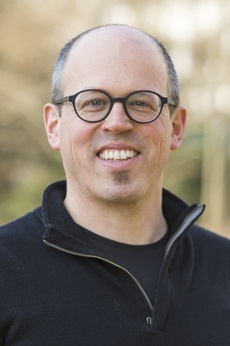
Peter Knippertz is a Professor at the Karlsruhe Institute of Technology (KIT), leading research at the Institute of Meteorology and Climate Research. He serves as the representative for the collaborative research center 'Waves to Weather'. His work focuses on atmospheric dynamics, dust storms, monsoons, and machine learning applications in weather prediction. Recent publications emphasize West African climate systems, tropical waves, dust particle analysis, and forecast optimization. He coordinates field campaigns (e.g., CADDIWA) and develops educational tools like the TEEMLEAP testbed for atmospheric prediction training.
Daniel Wright is an Associate Professor in the Department of Civil and Environmental Engineering at the University of Wisconsin–Madison, part of the College of Engineering. His research focuses on flood hazards, urban drainage systems, and climate change impacts. He specializes in developing innovative methods to assess flood risks in urban areas and large watersheds. His work integrates hydrological modeling, satellite data analysis, and AI-driven techniques to improve flood prediction accuracy. Key themes include rainfall projection under climate change, urban infrastructure resilience, and the application of stochastic storm transposition for flood risk assessment. He collaborates on global datasets like STREAM-Sat to enhance real-time precipitation monitoring. Recent research highlights include advancing ensemble-based stochastic downscaling, validating satellite precipitation products, and evaluating urban drainage system performance under extreme rainfall scenarios. His contributions address both technical challenges and policy implications of climate adaptation in water resources management. Dr. Wright has no listed awards but is actively engaged in peer-reviewed publications and conference discussions on climate-linked economics and infrastructure innovation. His advising and grant activities are not detailed in the provided texts. His research also explores interdisciplinary topics such as urban ecohydrology and wildfire-driven flood dynamics.
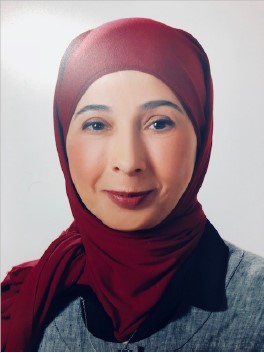
Dr. Zain Al-Houri is an Assistant Professor of Instruction in the Department of Civil Engineering at the University of Texas at Tyler. She holds a Ph.D. in Civil and Environmental Engineering from Washington State University (2008), an M.Sc. from the University of South Carolina (1999), and a B.S. from Jordan University of Science and Technology (1995). Her expertise spans hydrology, water resources engineering, and environmental engineering with a focus on urban stormwater management and climate change impacts. Research interests include sustainable urban drainage systems, permeable pavements, rooftop rainwater harvesting, and evaluating BMPs in Jordan. She has contributed to over a dozen peer-reviewed publications and presented at international conferences such as WSCC and ICWRE. Dr. Al-Houri received an Honorable Mention for a poster presentation at the 2007 Water in the Pacific Northwest Conference. Her teaching portfolio covers water resources, fluid mechanics, environmental engineering, and core civil engineering courses like statics and construction management. She actively advises undergraduate and graduate students in water-related research. Her work addresses critical challenges in water resource management, particularly in arid regions like Jordan, through innovative solutions such as green infrastructure and climate-resilient design strategies.
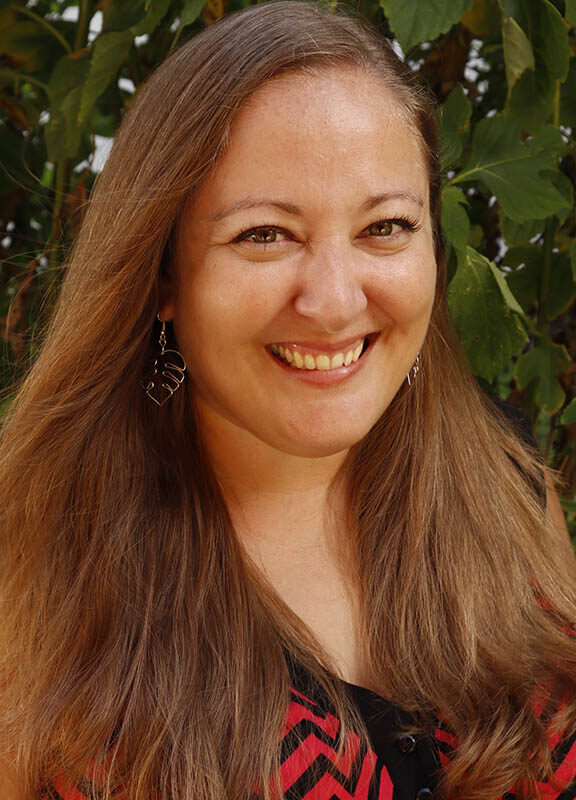
Dr. Abby Frazier is an Assistant Professor of Geography at Clark University, specializing in climatology and geospatial analysis. Her research focuses on climate variability, drought dynamics, and climate adaptation in Pacific Islands, particularly Hawaii. She holds a PhD and MA from the University of Hawaii and B.A./B.S. degrees from the University of Vermont. Her work integrates geospatial tools to address freshwater resource management, ENSO impacts, and wildfire regimes. Collaborative projects include the Pacific Drought Knowledge Exchange and the Hawaii Climate Data Portal. Key grants include NOAA-funded initiatives for drought early warning systems and climate resilience in Pacific Islands. Recent research emphasizes co-production of actionable science with stakeholders, including contributions to the Fifth National Climate Assessment (NCA5) for Hawaii and Oceania. She leads interdisciplinary efforts to bridge climate science with policy and community needs across diverse ecosystems.
Kevin Brinson is an Assistant Research Professor in the Department of Geography & Spatial Sciences at the University of Delaware's College of Earth, Ocean & Environment (CEOE). He serves as Director of the Delaware Environmental Observing System (DEOS), Director of the Center for Environmental Monitoring and Analysis (CEMA), and State Climatologist for Delaware. His research focuses on environmental sensing, hydroclimatic extremes, agricultural meteorology, and mesonet operations. Brinson holds a Ph.D. in Climatology from the University of Delaware (2023), an M.S. in Geography (2006), and a B.S. in Atmospheric Sciences from UNC-Asheville (2002). His work emphasizes applied climatology for agriculture and water resource management, leveraging mesonet data to develop decision support systems. Brinson leads DEOS, a network of 55 environmental monitoring stations across Delaware, and oversees CEMA, which analyzes environmental data for stakeholders. His research integrates satellite imagery, ground-based sensors, and climate models to address challenges like irrigation water usage estimation and hydroclimatic variability analysis. Publications highlight his contributions to mesonet standardization, extreme precipitation analysis, and climate adaptation planning. His interdisciplinary approach bridges academic research with practical applications for Delaware's communities and policymakers. Professional service includes advising state agencies on climate resilience and collaborating with agricultural stakeholders to optimize resource management.
Pete Jacoby is a Professor and Plant Ecologist at Washington State University (WSU), affiliated with the Department of Crop and Soil Sciences, the Viticulture & Enology Program, and the Center for Precision and Automated Agricultural Systems. He leads research on water use efficiency, precision agriculture, and sustainable irrigation strategies for specialty crops, particularly grapevines. His work integrates remote sensing technologies with agronomic practices to optimize resource use in semi-arid environments. Education: PhD (1971, University of Wyoming, Rangeland Ecology), M.S. (1968, University of Wyoming, Rangeland Remediation), and B.S. (1966, Texas A&M University, Rangeland & Forestry Sciences). Research Interests : Jacoby’s lab focuses on subsurface micro-irrigation systems, crop water productivity, and sensor-based irrigation scheduling. Innovations like Direct Root-Zone (DRZ) irrigation have shown significant water savings (up to 85%) while maintaining yield. His team collaborates with vineyards in Washington’s Columbia Valley and Red Mountain AVAs, emphasizing practical applications for growers. Grants & Funding : Recent grants include a National Science Foundation award ($1.2M) for sensor networks and multiple state-funded projects totaling over $700K. Research is supported by commodity groups like the WA State Grape & Wine Research Program and federal programs like USDA-ARS. Labs & Collaborations : The Jacoby Lab is based at WSU Pullman and the Irrigated Agriculture Research & Extension Center (Prosser, WA). Collaborators include UC Davis, Oregon State University, and Shandong Agriculture University (China). Undergraduates and graduate students work on projects ranging from irrigation engineering to vine physiology.
Ola Kwiecien is an active research academic at Northumbria University specializing in paleoclimatology and environmental change. With a PhD obtained in 2008, Dr. Kwiecien has established a significant research profile through numerous international collaborations and publications focusing on climate reconstruction using speleothem and other geological records across diverse global regions including Eurasia, Africa, Mexico, India, and Mongolia. Dr. Kwiecien's research interests center on understanding past climate dynamics through geological proxies, with particular expertise in speleothem analysis and isotope geochemistry. Their work examines long-term climate patterns, seasonal climate variations, and the impacts of major geological events on regional and global climate systems. Key research areas include the reconstruction of continental temperature records spanning millions of years, the relationship between volcanic eruptions and climate change, and the connections between abrupt climate events and human history. The publication record demonstrates a consistent focus on high-precision dating techniques and multi-proxy approaches to climate reconstruction. Recent work shows increasing sophistication in seasonal climate resolution and integration of data from multiple geographical regions to build comprehensive climate histories. The research spans fundamental geological processes to implications for understanding current and future climate change. As an active researcher, Dr. Kwiecien collaborates with an extensive international network of scientists across multiple institutions, contributing to major climate research initiatives. Their work appears in leading journals across earth sciences, climate science, and environmental research fields, reflecting the interdisciplinary nature of their contributions to understanding Earth's climate history.
Dr. Colin Polsky is a Professor of Geosciences and Founding Director of the Florida Atlantic University School of Environmental, Coastal, and Ocean Sustainability (FAU ECOS). He leads the Center for Environmental Studies (CES), focusing on sustainability through research, education, and community engagement in coastal resilience, wetlands ecology, and energy innovations. His academic training spans mathematics, humanities, French, geography, and science & international affairs from the University of Texas, Penn State, and Harvard. He has directed CES since 2014, expanding its mission to address climate challenges through interdisciplinary collaboration. Research interests center on climate vulnerability, human dimensions of environmental change, and socio-ecological systems. Key themes include urban/suburban land management, flood risk modeling, and policy impacts on residential practices. He has secured $18M in NSF funding, with $1.7M directly managed, and authored 26 peer-reviewed articles, two books, and numerous reports. Leadership roles include 10 years as a Center Director, 8 years leading undergraduate research programs, and 1.5 years as an associate dean. Notable contributions include frameworks for flood risk screening tools, analysis of neighborhood peer effects on environmental behavior, and interdisciplinary studies of residential ecosystems. He has served on NRC, NSF, and IPCC committees, emphasizing stakeholder-driven climate communication. The ECOS School, launched in 2023, aims to unify FAU’s environmental efforts across disciplines.
Herbert Formayer is an Associate Professor at the University of Natural Resources and Life Sciences, Vienna (BOKU), specializing in Meteorology and Climatology. His research focuses on climate change impacts across multiple sectors including energy systems, hydrology, biodiversity, and extreme weather events. He leads projects like ROBINE-AT and SECURES, addressing infrastructure resilience and energy sector vulnerability. Key areas include high-alpine hydrological modeling, regional climate projections, and ecosystem responses to warming. Research highlights include analyzing foehn wind dynamics in the Eastern Alps, evaluating forest fire behavior under climate change, and developing high-resolution meteorological datasets for Austria. His work integrates transdisciplinary approaches, collaborating with policymakers to translate climate science into actionable strategies. Notable contributions span climate adaptation for energy grids, biodiversity conservation in alpine ecosystems, and quantifying precipitation biases in hydrological models. His projects often involve advanced statistical methods and climate model ensembles to enhance scenario reliability.
Gideon Henderson is a Professor of Earth Sciences at University College. He currently works part-time (80%) as Chief Scientific Advisor and Director General for Science and Analysis at the UK Government Department (Defra). His research focuses on using isotopic and geochemical proxies to reconstruct past environmental conditions, including climate variability, ocean chemistry changes, and human-environment interactions. Key areas include speleothem studies, trace metal cycling in oceans, and carbon sequestration via enhanced rock weathering. Education details are not explicitly provided in the text. His work spans multiple disciplines, integrating field data with numerical modeling through tools like the CaveCalc speleothem chemistry model and contributions to the 230Th global database. He has collaborated on large-scale oceanographic programs such as GEOTRACES, studying processes like riverine inputs, hydrothermal vent effects, and anthropogenic radionuclide sources in the Baltic Sea. Research interests emphasize isotopic tracers for paleoenvironmental reconstructions, particularly in arid and permafrost regions. He investigates how climate changes impact ecosystems and human societies, as seen in his studies of Maya civilization collapse linked to droughts and mid-Holocene Sahara rainfall dynamics. His recent work explores CO2 removal potential in UK agricultural soils and the role of tropical plumes in climate systems. No scientific awards are mentioned in the provided texts. His advisory roles include guiding Defra's environmental policies while maintaining academic engagement through collaborative research projects and laboratory-based experiments on mineral dissolution in soils.
Dr. Carleen Tijm-Reijmer is an Associate Professor and Programme Director in the Department of Physics at Utrecht University's Faculty of Science. Her research focuses on Polar Meteorology and Cryospheric Sciences, with expertise in Antarctic and Greenland ice sheet dynamics, surface energy balance, and remote sensing applications. She holds roles including Scientific Editor for the Journal of Glaciology (2017–2023) and President of the European Geophysical Union's Division on Cryospheric Sciences (2021–2025). Her work integrates field observations with climate modeling to study ice melt mechanisms, atmospheric circulation impacts, and remote sensing validation. Recent research emphasizes satellite data analysis (MODIS/VIIRS) for ice surface temperature and precipitation patterns, alongside in situ measurements of energy balance components in polar regions. Key contributions include datasets like AntAWS (Antarctic automatic weather stations) and climatologies of rainfall over Greenland. Publications highlight interdisciplinary approaches to understanding cryospheric changes, with a focus on model-data fusion and climate change projections. She collaborates widely, contributing to international projects on ice sheet mass balance and Antarctic Peninsula climate dynamics.
Dr. Timothy Clune is a Senior Lecturer in Management/HRM at La Trobe University's Albury-Wodonga Campus. He specializes in sustainable agribusiness, regional economic resilience, and water resource management. His research integrates environmental, social, and financial dimensions to address challenges in regional landscapes. Clune holds a PhD in Agriculture (University of Sydney) and a Master of Environmental Law (Australian National University). He leads La Trobe's contribution to the Victorian Drought Resilience Adoption and Innovation Hub and collaborates with organizations like the Murray-Darling Basin Authority. His work emphasizes interdisciplinary approaches, stakeholder co-design, and policy development to enhance community sustainability. Education: PhD (Agriculture), University of Sydney (1997) Master of Environmental Law, Australian National University (2016) Bachelor of Science in Agriculture (Hons 1), University of Sydney (1991) Research Interests: Focus on sustainable agribusiness, climate adaptation, water policy, and community resilience. His projects include water entitlement discourse in the Murray-Darling Basin and drought resilience strategies through collaborative frameworks. Professional Activities: Member of La Trobe's Resilient Environments & Communities Theme Advisory Committee Advisory roles in the Victorian Drought Resilience Hub and Mallee Regional Innovation Centre Reviewer for the Australian Research Council (ARC) Awards: Fellow of the Higher Education Academy (2023) Teaching & Grants: Leads the Agribusiness Major/Minor programs and developed courses like Agribusiness Management. Active in funded research projects such as the Wine Industry Recovery Program (2022-2023) and hybrid entrepreneurship studies (2022-2025). Labs & Teams: Collaborates with the Centre for Freshwater Ecosystems and Centre for the Study of the Inland, focusing on interdisciplinary environmental and social challenges.
Sharon Strauss is a Professor in the Department of Evolution and Ecology at the University of California, Davis. Her research focuses on how species evolve due to community interactions, particularly examining the ecological and evolutionary consequences of herbivory, pollination networks, and climate change impacts on plant fitness. She investigates mechanisms of speciation, plant defense strategies, and the role of abiotic and biotic factors in shaping plant communities. Her work integrates field experiments, genomic analyses, and historical data to explore topics such as serpentine endemism, climate niche constraints, and adaptive responses to environmental shifts. Notably, she has contributed to understanding the genomic basis of adaptation in Streptanthus species and the role of soil microbial communities in plant coexistence. Dr. Strauss has been recognized with awards including the Per Brinck Oikos Award 2013 . Her research spans plant-microbe interactions, phenological shifts under climate change, and the evolutionary origins of ecological traits. She collaborates across disciplines to address global challenges in biodiversity conservation and ecological resilience.
Wouter Berghuijs is an Assistant Professor of Catchment Hydrology at the Department of Earth Sciences, Vrije Universiteit Amsterdam. He coordinates courses such as Hydrology (BSc) and Catchment Hydrology (MSc) and contributes to advanced hydrology modules. His research focuses on terrestrial water cycling under climate and land-use change, emphasizing streamflow dynamics, groundwater-surface water interactions, and catchment similarity. Key findings include the linkage between snowfall reduction and streamflow decline, published in Nature Climate Change and Nature . Recent publications highlight climate projections for Northern Hemisphere snowmelt, vegetation impacts on water loss, and hydrological extremes. His work spans global datasets and process-based modeling, supported by a VU Starting Grant (2021). VU Starting Grant (2021) He supervises graduate students and collaborates across institutions including Delft University of Technology and University of Bristol. Notable datasets include global groundwater recharge estimates (Zenodo, 2022).
Babitha George is a Researcher in the Department of Earth Sciences at Vrije Universiteit Amsterdam (VU Amsterdam), affiliated with the Faculty of Science. She holds the role of Project Researcher in the active AVENGERS WP3 project focusing on aerosol radiative forcing and climate change. Her research spans extreme rainfall analysis, tropical cyclone dynamics, and ensemble methods in climate modeling. Her work emphasizes sensitivity analysis for extreme weather events, such as those in India’s Kerala region and the Himalayas, using frameworks like TIGGE ensembles. She has also contributed to studies on the predictability of tropical cyclones like Nargis (2008) and explored plasma physics through corrections in IMF variations. Her current project (2023–2026) addresses radiative forcing and emissions, linking her atmospheric research to broader climate change challenges. George’s publications reflect a blend of meteorological modeling, geophysical dynamics, and interdisciplinary approaches to environmental science.