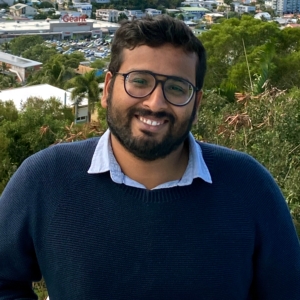
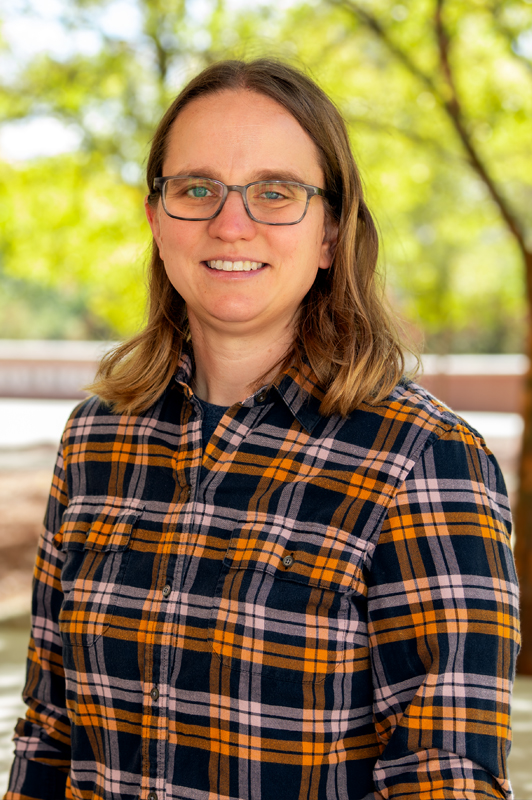
Gabriel Garbanzo León is an external researcher affiliated with the Centre for Crop Systems Analysis , focusing on biophysical and agricultural challenges in coastal West African ecosystems. His work primarily addresses soil salinity, water dynamics, and sustainable rice production in Guinea-Bissau's mangrove swamps . Research Interests : Soil salinity diagnosis and mitigation in mangrove environments Hydrological modeling for agricultural water efficiency Biophysical characterization of coastal rice production systems Integration of remote sensing in agricultural monitoring Article Trends : Recent publications emphasize interdisciplinary approaches (soil science, ecology, and remote sensing) to optimize resource use in mangrove rice systems, with a focus on Guinea-Bissau and regional collaborations. Network & Collaborations : Active in international agricultural research networks, collaborating with scholars in Portugal (e.g., do Rosário Cameira, Paredes ) and institutions studying Western Africa and Mangrove Forests .
Vishnu S Nair serves as Assistant Professor (Grade I) in the School of Earth, Environmental and Sustainability Sciences at IISER Thiruvananthapuram since January 2024, following postdoctoral positions at IRD-France (2022-2023) and UC Berkeley (2019-2021). His research bridges tropical meteorology and climate science with practical applications for monsoon forecasting and climate adaptation. Education PhD in Meteorology & Oceanography, ESSO-INCOIS/Andhra University (2011-2017) Dr. Nair's research centers on monsoon low-pressure systems, investigating their historical variability, climate change impacts, and connections to extreme rainfall events. He develops advanced tracking algorithms and dynamical downscaling techniques to improve climate projections for vulnerable regions like South Asia and Pacific Islands. His work integrates observational analysis, climate modeling, and real-time forecasting systems to address critical questions about monsoon dynamics under global warming. His 14 publications (2014-2023) reveal consistent focus on monsoon system behavior, with recent work emphasizing future projections of low-pressure systems and observed increases in extreme rainfall rates. Key methodologies include high-resolution modeling, global dataset creation, and teleconnection analysis between monsoons and phenomena like ENSO and IOD. Scientific Recognition Gold Medal for Best PhD Thesis, Andhra University (2018) Junior Research Fellowship with Lectureship, CSIR-UGC (2011) CLIPSSA Postdoctoral Fellowship at IRD-France (2022-2023) Monsoon Mission Postdoctoral Fellowship at UC Berkeley (2019-2021) Dr. Nair actively recruits PhD candidates (requiring CSIR-JRF/GATE fellowships) and offers winter/summer internships in tropical meteorology. His research is supported by international projects including CLIPSSA for Pacific Island climate adaptation and India's Monsoon Mission for forecasting improvements. He contributes to global monsoon datasets used by meteorologists worldwide and serves as referee for leading journals like Geophysical Research Letters . He leads the Monsoon Dynamics Research Group at IISER-TVM, collaborating with institutions including Météo-France, UC Berkeley, and Indian climate research centers. Current initiatives focus on dynamical downscaling for island-scale climate projections and real-time tracking systems for monsoon low-pressure systems.
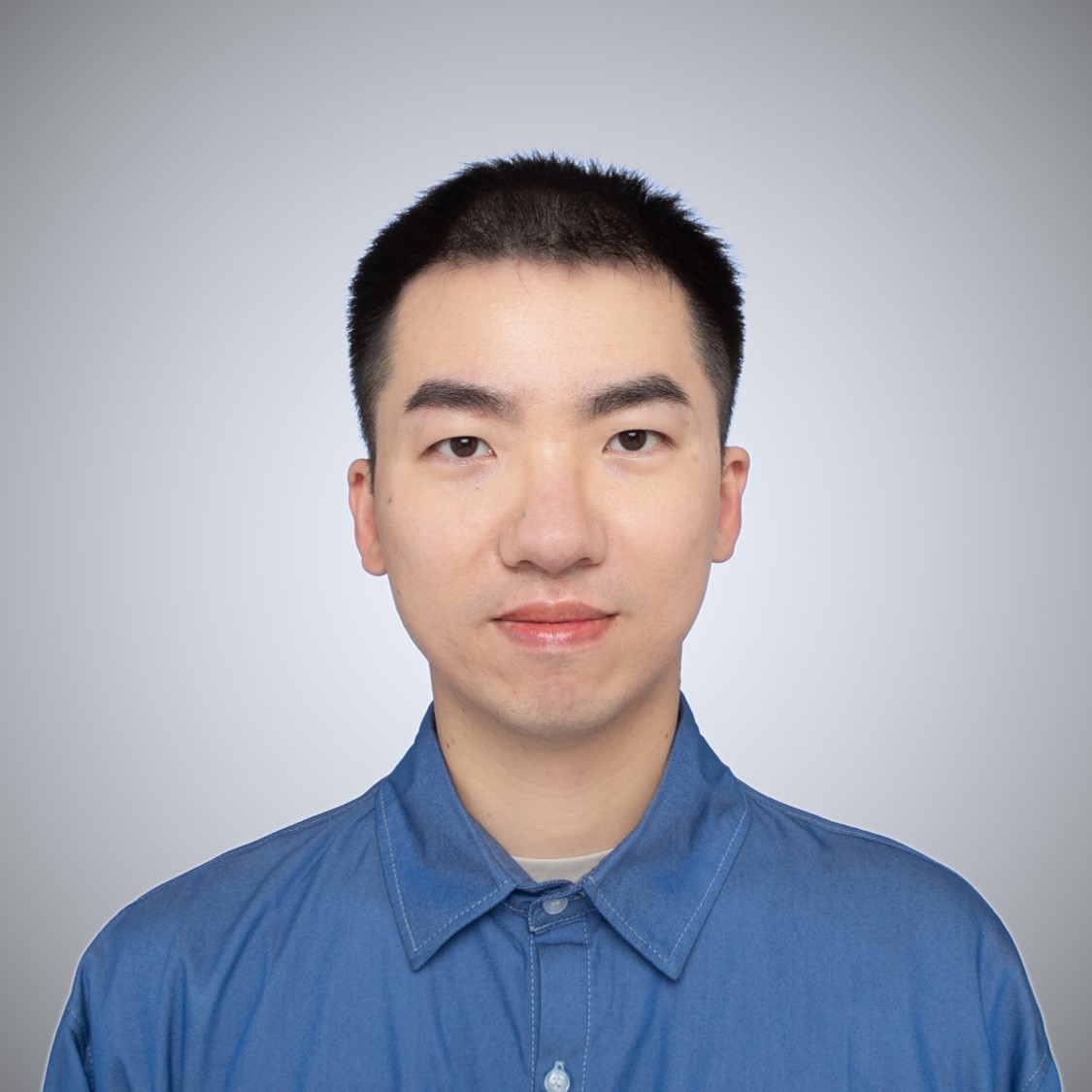
Dawei Han serves as Professor of Hydroinformatics at the University of Bristol's School of Civil, Aerospace and Design Engineering, leveraging advanced computational techniques to address hydrological challenges. Holding a B.Eng. and M.Sc. from Huabei alongside a Ph.D. from Salford, he is recognized as a Chartered Engineer (C.Eng.) and Fellow of the Chartered Institution of Water and Environmental Management (FCIWEM). His academic credentials include: Bachelor of Engineering (B.Eng.) from Huabei Master of Science (M.Sc.) from Huabei Doctor of Philosophy (Ph.D.) from University of Salford Professor Han's research focuses on integrating hydroinformatics with practical water management solutions, particularly in urban environments. His work pioneers applications of machine learning for rainfall nowcasting, radar-based hydrological monitoring, and climate change impact assessment. Key innovations include DREE-RF for rainfall energy estimation and frameworks for urban flood resilience, emphasizing data-driven approaches to enhance prediction accuracy and risk mitigation strategies. Analysis of his 2024-2025 publications reveals dominant themes in urban hydrology (40%), flood risk management (30%), and climate-remote sensing integration (30%). His research spans global contexts from UK catchments to Iraqi rainfall systems, consistently employing computational methods like neural networks and WRF modeling to address data-scarce environments and extreme weather events. Professional recognition includes: Fellow of the Chartered Institution of Water and Environmental Management (FCIWEM) While specific student supervision details are unavailable, his extensive publication record indicates active mentorship in hydroinformatics. Research grants likely support his work on radar remote sensing and urban climate adaptation, though explicit funding sources aren't documented in the source material. His affiliation with Bristol's engineering school positions him within interdisciplinary teams addressing infrastructure resilience, though laboratory-specific information remains unreported.
Prof. ZHUANG Yizhou is an Assistant Professor in the Department of Geography at Hong Kong Baptist University. His research focuses on weather and climate extremes, climate change attribution, and land-atmosphere coupling. With a Ph.D. in Meteorology from Peking University and extensive postdoctoral experience at UCLA, he brings significant expertise in atmospheric sciences to his academic role. Dr. Zhuang's educational background includes: 2019-2024: Postdoctoral Scholar, University of California, Los Angeles (UCLA), USA 2017: Visiting Graduate Researcher, University of California, Los Angeles (UCLA), USA 2015-2017: Visiting Research Scholar, University of Texas at Austin, USA 2013-2019: Ph.D., Meteorology, Peking University, China 2009-2013: B.S., Atmospheric Sciences (Remote Sensing Focus), Nanjing University of Information Science and Technology, China Dr. Zhuang's research spans multiple critical areas in climate science. His work on weather and climate extremes examines phenomena like wildfires, droughts, and floods. In climate change attribution , he investigates the human influence on extreme weather events, with several publications in PNAS demonstrating how anthropogenic warming has altered drought mechanisms and fire risks. His research on land-atmosphere coupling explores the complex feedback mechanisms between Earth's surface and the atmosphere. Additionally, he applies machine learning techniques and remote sensing technologies to analyze cloud formations and precipitation patterns. Analysis of Dr. Zhuang's recent publications reveals a consistent focus on drought mechanisms and fire weather risk in western North America. His work frequently employs advanced statistical methods like self-organizing maps and canonical correlation analysis to understand complex climate phenomena. A notable trend is his investigation of how anthropogenic climate change is fundamentally altering the nature of droughts, shifting from precipitation-deficit dominated to temperature-driven events, with significant implications for water resource management. Dr. Zhuang has received several prestigious awards for his research contributions: JIFRESSE Outstanding Leadership/Service Award, UCLA, 2023 Richard P. and Linda S. Turco Exceptional Research Publication Award, UCLA, 2023 China Scholarship Council (CSC) Joint Ph.D. Scholarship, 2015-2017 As an academic mentor, Dr. Zhuang supervises graduate students, with evidence of at least one student (G. Wang) whose work has been published under his supervision. He serves as a reviewer for numerous high-impact journals including Proceedings of the National Academy of Sciences (PNAS), Earth's Future, and Geophysical Research Letters. Additionally, he has mentored students in the UCLA Joint Institute for Regional Earth System Science and Engineering (JIFRESSE) Summer Internship Program, with his mentee Annie Rosen winning the 2024 Best JSIP Presentation Award. Dr. Zhuang maintains an active research group, as indicated by his personal website www.zhuangyz.org. His team focuses on climate extremes, attribution studies, and land-atmosphere interactions, with ongoing projects examining drought mechanisms, fire weather risks, and precipitation variability across different regions of the United States, particularly the western states and Great Plains.
Jeff Sadler is an Assistant Professor in the Department of Biosystems & Agricultural Engineering at Oklahoma State University, where he also serves as an Extension Specialist for Water Resources with OSU Extension. He leads the WaDE (Water Data and Education) Lab, focusing on data science and machine learning applications in water resources. Education: PhD in Civil and Environmental Engineering, University of Virginia (2019) MS in Civil Engineering, Brigham Young University (2015) BS in Civil Engineering, Brigham Young University (2013) Research Interests: Jeff’s research lies at the intersection of data science and water resources. He specializes in machine learning, particularly physics-guided and process-aware deep learning, for modeling stream temperature, water quality, flood dynamics, and hydrological forecasting. His work emphasizes real-time decision support, reproducible modeling, and integrating domain knowledge into data-driven systems. Recent Research Trends: His recent publications demonstrate a strong focus on advanced deep learning architectures (e.g., graph neural networks, recurrent models), data assimilation, multi-task learning, and surrogate modeling for environmental systems. Applications center on the Delaware River Basin and coastal Virginia, with implications for climate change adaptation and infrastructure resilience. Scientific Awards: No awards explicitly listed in the provided text. Advising and Grants: Jeff mentors graduate students and supervises master's and doctoral research. He is actively funded through multiple grants from the USDA, NOAA, and USGS, supporting projects in water quality monitoring, rural health, evapotranspiration forecasting, and integrated hydrological modeling. Labs and Teams: He leads the WaDE Lab, which develops data-driven tools for water resource education and management. He has collaborated extensively with researchers from the U.S. Geological Survey, University of Virginia, and other institutions on cyberinfrastructure, reproducible modeling, and environmental machine learning.
Professor Muttucumaru Sivakumar is a faculty member at the University of Wollongong (UOW), holding the rank of Professor and serving as Academic Program Director for Environmental Engineering (ENVE) within the School of Civil, Mining, Environmental and Architectural Engineering. He has been with UOW since 1984, progressing through roles such as Lecturer, Senior Lecturer, and Associate Professor before becoming a full Professor in 2025. His academic career includes visiting positions at institutions worldwide, including the University of Minnesota, University of Heidelberg, and Indian Institutes of Technology. Education: He earned a BSc Eng from the University of Peradeniya (Sri Lanka, 1970–1974), an MEng from the Asian Institute of Technology (Thailand, 1976), and a PhD from the University of Newcastle (Australia, 1977–1981). Research Interests: His work focuses on water quality modeling of coastal reservoirs, sediment transport, membrane distillation for wastewater treatment, and environmental hydraulics. Current projects include coastal reservoir development for Jakarta, solar-powered desalination, and wastewater-based epidemiology for pathogen monitoring. Grants: Key funding includes the KONEKSI grant for Jakarta’s coastal reservoir development (2023–2024) and internal grants for geopolymer research and anaerobic co-digestion. He also secured equipment grants for nanopore sequencing platforms and low-vacuum electron microscopy. Advising & Students: He has supervised over 15 HDR completions since 1990, including notable PhD graduates such as San Rathviboon (2011) and Debashis Raha (2006). Current students focus on topics like methane control in wastewater systems and coastal reservoir sediment transport. Labs & Teams: His research groups collaborate on interdisciplinary projects involving water resource management, environmental engineering, and sustainable infrastructure development. He leads initiatives in the International Association for Coastal Reservoir Research (IACRR).
Kristen L. Corbosiero is a Professor in the Department of Atmospheric & Environmental Sciences at the University at Albany, State University of New York. Her primary research focuses on understanding the structure, intensity changes, and environmental interactions of tropical cyclones, including processes like secondary eyewall formation and rapid intensification. She utilizes both observational data and numerical models to explore topics such as cloud microphysics, vertical wind shear effects, and the role of lightning in storm dynamics. Education: PhD, Atmospheric Science, University at Albany, SUNY, 2005 MS, Atmospheric Science, University at Albany, SUNY, 2000 BS with Distinction, Atmospheric Science, Cornell University, 1997 Research Interests: Dr. Corbosiero investigates tropical cyclone behavior, including the formation of hurricane rainbands and secondary eyewalls, the impact of environmental conditions on storm evolution, and the influence of cloud microphysical parameterizations. Her work also addresses the predictability of heavy rainfall events linked to tropical systems, such as atmospheric rivers and remnant cyclones. Articles & Research Trends: Her recent publications emphasize ventilation processes in tropical cyclones, diurnal pulsations in hurricane structure, and the climatological significance of downshear reformation. She collaborates on projects funded by NASA, NOAA, and UCAR, advancing the understanding of cyclone dynamics and forecast improvement. Advising & Students: Dr. Corbosiero has mentored numerous graduate and undergraduate students, many of whom have contributed to studies on tropical cyclone evolution, precipitation patterns, and mesoscale meteorology. Notable advisees include Nicholas Johnson (ventilation in sheared storms) and Alex Mitchell (eastern Pacific cyclone variability). Labs & Teams: Her research group actively explores topics like tropical cyclone predictability, lightning activity in storms, and the North American Monsoon System’s interaction with eastern Pacific systems. Current projects involve ensemble-based sensitivity analysis and high-resolution numerical simulations.
Dr. Ali Nazemi is an Associate Professor in the Department of Building, Civil, and Environmental Engineering at Concordia University, where he joined in 2015 as a Strategic Hire in Water Resources. He holds adjunct appointments at the University of Saskatchewan's School of Environment and Sustainability and is an Associate Member of the Global Institute for Water Security. His foundational education includes a PhD from the University of Birmingham (UK), an MSc from Ferdowsi University of Mashhad (Iran), and a BSc from KNT University of Technology (Iran). Dr. Nazemi's research advances methodologies for water security challenges under climate change, focusing on: Hydrological modeling and algorithm development Climate change vulnerability assessments Coupled human-water systems Hydroclimatic data diagnostics His recent publications predominantly explore climate model integration, uncertainty quantification in water systems, and hybrid modeling approaches, with consistent themes of climate adaptation and risk management across Canadian and international contexts. He has been recognized with several awards, including: Dorothy Hodgkin Postgraduate Award (UK government, 2005–2009) Best Presentation Award at IEEE World Congress on Computational Intelligence (2006) Post Graduate Teaching Award (University of Birmingham, 2004–2007) Dr. Nazemi actively supervises graduate students through his Water Security and Climate Change (WSCC) lab, with projects on climate downscaling, vulnerability assessment tools, and coupled human-water systems. He leads research collaborations with the Saskatchewan Water Security Agency, NSERC's Changing Cold Region Network, and the Global Water and Energy Cycle Experiment.
Peter Molnar is a Professor at ETH Zürich's Department of Civil, Environmental and Geomatic Engineering, where he leads research in hydrology, geomorphology, and environmental engineering. His work spans river basin dynamics, sediment transport, precipitation modeling, and climate-water interactions, with field sites focused on Alpine systems. His research interests center on river basin water and sediment dynamics , precipitation analysis and stochastic modeling , fluvial systems including river networks and riparian zones , and geomorphic processes in mountain streams . Key projects include the Maggia River Experimental Site, basin sediment cascade modeling, and hydroclimatic analysis of rainfall intensity-temperature relationships. His publication record shows consistent high-impact work in journals including Nature , Nature Climate Change , and Water Resources Research , with recent focus on climate change impacts, sensor development, and sustainable agriculture. Golden Owl Award for best teaching (2011) Organizer of international workshops on geomorphology complexity and urban precipitation Patron of CometX initiative Molnar actively mentors PhD students including current candidates working on droughts in Ethiopia, Alpine Rhine sediment budgets, and mountain ecohydrology. His research is supported by Swiss National Science Foundation grants, ETH funding, and international collaborations. He leads experimental work at the Maggia River site and develops warning systems for rainfall-triggered landslides.
Rosalind Cornforth is a Professor of Climate and Development and Director of the Walker Institute at the University of Reading, Department of Meteorology. She holds a PhD in Tropical Meteorology and has over 15 years of experience collaborating with governments and NGOs in developing nations. As Walker Institute Director, she leads strategic vision, operations, and interdisciplinary projects in climate resilience. Her roles include Senior Research Scientist at the National Centre for Atmospheric Science (NCAS) and Ambassador for the TAMSAT group. Her research focuses on African weather systems, climate early warning systems, rainfall variability, knowledge exchange, and governance for adaptation. Key projects include the Africa Climate Exchange (AfClix), AfClix Early Warning System for Sudan, and BRAVE groundwater studies. She advises on UN initiatives, including WHO/WMO, UNDP, and the African Union. Recent publications (2020–2024) address climate adaptation, flood early warning, heat stress, and transboundary resilience. She supervises postgraduate students and leads NERC-funded projects. Her work bridges science and policy, emphasizing actionable solutions for vulnerable regions.
Joel Hartter is a Professor in the Department of Environmental Studies at the University of Colorado, where he also served as the founding director of the Masters of the Environment and Outdoor Recreation Economy programs. With dual BS degrees in Mechanical Engineering and German from the University of Michigan, an MS in Forest Engineering from Oregon State University, and a PhD in Geography from the University of Florida, his expertise bridges sustainability science, policy, and practice. His research focuses on private sector engagement in sustainability, ESG frameworks, climate action, and the Sustainable Development Goals (SDGs), with particular attention to net-zero strategies, bioeconomy implementation, and nature-based solutions. Dr. Hartter’s work emphasizes stakeholder engagement, inclusive decision-making, and bridging science with practical applications in conservation, climate resilience, and economic development. He has led projects globally in Africa, South America, and the US, addressing challenges such as wildlife conservation, sustainable supply chains, and community-based natural resource management. As a National Geographic Explorer and advisor to Fortune 500 companies, NGOs, and governments, he integrates sustainability into organizational strategies to drive innovation and competitive advantage. His teaching reaches over 20,000 students annually through courses on sustainability leadership and workforce development. Dr. Hartter’s interdisciplinary approach combines geospatial analysis, participatory methods, and behavioral science to address complex socio-ecological issues. His research spans topics like climate migration, household vulnerability, and the impact of conservation policies on communities. Notable projects include studying land-use changes in Uganda’s Albertine Rift and evaluating the effects of oil exploration on protected areas in Murchison Falls Conservation Area. Dr. Hartter collaborates closely with communities, governments, and international organizations to create equitable, actionable sustainability solutions.
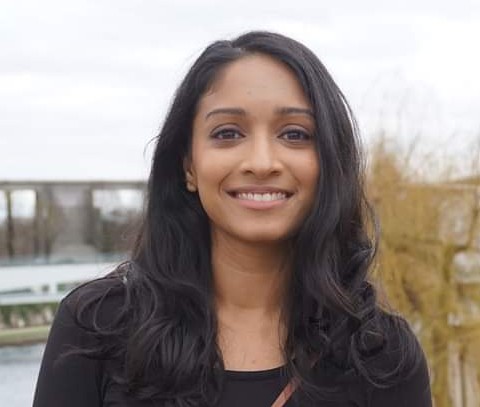
Dr. Sahani Pathiraja is a Lecturer (tenure track assistant professor) at UNSW Sydney , specializing in Data Science . Her research bridges mathematical and statistical foundations with practical applications in environmental and biomedical sciences. Research Focus : Sequential Bayesian inference, Monte Carlo methods, stochastic analysis of non-linear filtering, uncertainty quantification, and real-time parameter estimation. Current Projects : Co-investigator in the ARC Industrial Transformation Training Centre: Data Analytics for Resources and Environment (DARE) and the Next Generation Graduate Program (NGGP) in Sports Data Science and AI . Research Supervision : Dr. Pathiraja supervises PhD students in areas including: Bayesian inference Stochastic differential equations Data assimilation Non-linear filtering Scientific Collaborations : Her work intersects with environmental science, biomedical applications, and machine learning. Projects include stochastic hydrology, SDEs, and operator learning for environmental systems. Contact Information : Email: s.pathiraja@unsw.edu.au Phone: +61 2 8065 0836 Office: Room 2070, Level 2, The Red Centre, UNSW Sydney
Nik Callow is an Associate Professor at the UWA School of Agriculture and Environment and co-Director of the UWA Centre for Water and Spatial Science. His expertise spans hydrology, geomorphology, remote sensing, and GIS. He leads major projects like the Australian Plant Phenomics Network (APPN) and WaterSmart Dams, focusing on water-dependent ecosystems and spatial science innovations. Callow oversees UWA’s drone operations and supports ~60 drone pilots. He teaches courses in geographical sciences and environmental monitoring, and his research integrates drone technology with climate change studies. Education: PhD in Geography (UWA, 2007), GCHEd (UQ, 2011) Affiliations: Member of the Western Australian EPA Expert Scientific Advisory Council, Resilient Landscapes Hub (NESP), and multiple industry collaborations. Research interests include ecohydrology, marginal snowpacks, and palaeoclimate studies. Projects address water management, biodiversity, and climate resilience in Australia and globally. His work has received the EGU Jim Dooge Award (2020) for contributions to wetland salinity research. Active grants include partnerships with Snowy Hydro, Rio Tinto, and the Grains Research and Development Corporation. Teaching focuses on field science, GIS, and climate processes.
Li Li is a Professor in the Department of Civil and Environmental Engineering at Pennsylvania State University. She leads the Li Reactive Water research group, focusing on the Critical Zone and its response to climate change and human activities. Her work examines interactions between water, soils, rocks, roots, and microbes, with implications for water quality and sustainability. Research interests include reactive transport modeling, stream chemistry dynamics, and the impacts of climate extremes on hydrological systems. She has contributed to high-profile studies such as the discovery of ancient carbon release via rivers and the effects of extreme rainfall on nutrient loss in American soils. Recent recognitions include dual awards from the Earth and Space Association (2024) and being named an Institute of Energy and the Environment Fellow. Her lab actively collaborates on projects like the BioRT-HBV model and applications of deep learning in hydrological data analysis. Key projects: Facilitating environmental investigations with single-column models, maximizing CO₂ trapping in geological formations Leadership roles: IEE Fellow, Principal Investigator of NSF-funded research
Frances O'Donnell is an Associate Professor in the Department of Civil and Environmental Engineering at Auburn University, where she leads the Auburn Ecohydrology Lab. Her research focuses on ecohydrology, emphasizing vegetation-water cycle interactions, stormwater management, and ecosystem restoration with applications in geographically isolated wetlands and transportation infrastructure resilience. Education: Ph.D. in Civil and Environmental Engineering, Princeton University B.A. in Organismic and Evolutionary Biology, Harvard University Research Interests: Dr. O'Donnell investigates soil moisture dynamics and evapotranspiration processes to develop green infrastructure solutions for stormwater management. Her work integrates field measurements, hydrological modeling, and remote sensing to quantify ecosystem services of wetlands and improve climate resilience in water systems. Key projects examine forest restoration impacts on groundwater and sustainable practices for agricultural pollution mitigation. Publication Trends: Recent publications (2023-2025) reveal three dominant themes: landslide prediction along Alabama highways using soil moisture thresholds, sediment/nutrient dynamics in agricultural wetlands under climate change, and cost-optimization tools for green infrastructure. International collaborations in Haiti address drinking water accessibility, while Arizona watershed studies analyze forest management effects on water balance. Scientific Awards and Grants: NASA Research Grant for Geographically Isolated Wetlands USDA-NIFA Foundational and Applied Science Program Grant ($500,000) Advising and Collaborations: Dr. O'Donnell mentors graduate students through thesis research with real-world applications, including permeable pavement design tools and UAV-based water quality monitoring. She collaborates with NASA, USDA, and NOAA on federal projects, and her students publish in journals like Water Environment Research while securing positions at Virginia Tech and Geosyntec Consultants. Laboratory: The Auburn Ecohydrology Lab conducts field experiments in Alabama watersheds and Haiti, utilizing sensor networks, hydrological models, and drone technology to advance understanding of water-ecosystem interactions for sustainable infrastructure planning.