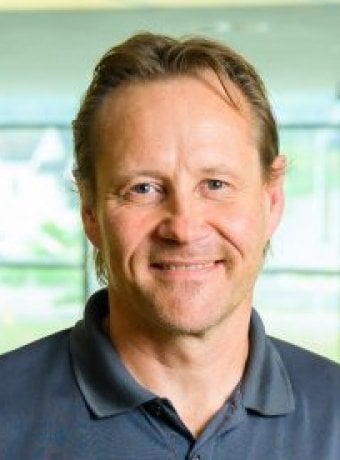
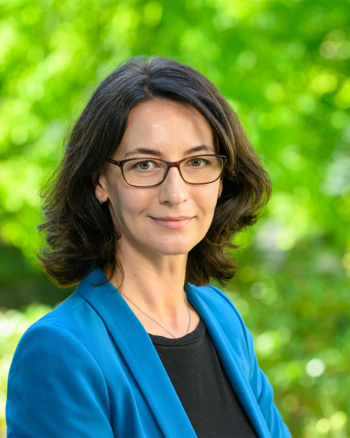
Dr. Rebecca Clements is a Research Fellow at RMIT University's School of GUSS, focusing on sustainable and equitable urban development. Her current projects include the 'Deep Timetable' ARC project (Noongar-led railway history in WA) and examining parking approaches in Australian cities' apartment boom. Previously, she held a Henry Halloran Research Trust Postdoctoral Fellowship at the University of Sydney's Infrastructure Governance Incubator and conducted micromobility research with the Institute of Transport and Logistics Studies. Her PhD from the University of Melbourne explored Japanese parking policies during automobility. Research interests include overcoming urban car dominance, parking policy, transport justice (e.g., children’s mobility), and decolonial infrastructure governance. Key awards include the Henry Halloran Fellowship. Her work bridges policy analysis, equity, and decolonial methodologies to reimagine urban futures.
Niels van Oort is an Associate Professor of Public Transport at Delft University of Technology (TU Delft), co-director of the Smart Public Transport Lab, and affiliated with the Department of Transport & Planning within the Faculty of Civil Engineering and Geosciences. His work focuses on public transport planning, data-driven design, and societal impacts including inclusiveness, land-use, and sustainability. He holds a dual role as a part-time consultant via his company Van Oort Mobility Consultancy since 2020. Education: MSc in Public Transport from TU Delft (2003), PhD in Service Reliability in Public Transport (2011). Professional experience includes roles at HTM (public transport operator), MIT (2009), and Goudappel Coffeng consultants (2007–2012). Transitioned to academia as a part-time assistant professor at TU Delft in 2012, becoming full-time in 2018. Research emphasizes network optimization, timetable reliability, micromobility, and first/last mile solutions. Key areas include pandemic impacts on transport behavior, digital inequality in mobility access, and sustainable transport policies. Supervises PhD students on integrated networks and passenger behavior. Teaching includes courses on public transport operations, advanced modelling, and transport networks. Active in academic publishing and conferences, with over 20 peer-reviewed articles since 2010. Engaged in interdisciplinary labs like SUM Lab (Smart Urban Mobility) and contributes to public discourse through media and consultancy. Labs/Teams: Smart Public Transport Lab (co-director), SUM Lab, and Delft Transport Modelling Group. Grants and projects focus on data-driven solutions for public transport efficiency and equity.
Professor Washington Yotto Ochieng serves as Head of the Department of Civil and Environmental Engineering and Chair Professor in Positioning and Navigation Systems at Imperial College London. He directs the Centre for Active Resilience and Security (CARS) and maintains key affiliations with the Centre for Systems Engineering and Innovation, Centre for Transport Engineering and Modelling, Institute for Molecular Science and Engineering, and Space Lab. His extensive advisory roles include the Science Museum Group Board of Trustees, Royal Institute of Navigation Presidency, and Royal Academy of Engineering Africa Steering Committee. His educational background includes a BSc (First Class) in Engineering from the University of Nairobi and MSc (Distinction) and PhD in Civil Engineering from the University of Nottingham. He received an honorary DSc from Technical University of Kenya in 2023. Ochieng's research pioneers critical infrastructure resilience, user-centric mobility, and positioning/navigation/timing (PNT) systems. He has designed satellite navigation systems (including Europe's EGNOS and GALILEO) for multi-domain applications and advanced Air Traffic Management and Intelligent Transport Systems. His work integrates geomatics, transportation engineering, and sustainable mobility to solve global urban infrastructure challenges, with recent emphasis on decarbonization and AI-driven solutions. His 2024-2025 publications reveal strong trends in sustainable transportation decarbonization, AI-optimized traffic management, and resilient urban positioning systems. Research focuses on hydrogen fuel cell trains, carbon-efficient aviation, and deep reinforcement learning applications for emission reduction, demonstrating interdisciplinary integration of engineering, environmental science, and artificial intelligence to address climate challenges. Fellow of the Royal Academy of Engineering (2013) Harold Spencer-Jones Gold Medal from Royal Institute of Navigation (2019) Doctor of Science (honoris causa) from Technical University of Kenya (2023) Elder of the Order of the Burning Spear (EBS) from Kenya (2023) Commander of the Order of the British Empire (CBE) (2024) Ochieng provides strategic guidance to UK Government bodies (Government Office for Science, Department for Transport, FCDO), European Parliament, and European Court of Auditors. His advisory work shaped the Blackett Review on Satellite-derived Time/Position, UK Space Strategy, and Future of Mobility report. He chairs the Science Museum London Advisory Board and leads FCDO's Sustainable Urban Economic Development program in Africa, with significant grant influence through UK National Physical Laboratory and Department for International Development. He directs the Centre for Active Resilience and Security (CARS) and leads Space Lab initiatives, focusing on mission-critical PNT systems and infrastructure resilience. His teams collaborate with international consortia including RTCM Special Committee 134 and US Institute of Navigation, developing next-generation navigation solutions for safety-critical applications across transport, aviation, and urban environments.
Michel Gendreau is a Full Professor in the Department of Mathematics and Industrial Engineering at Polytechnique Montréal . His research focuses on the application of Operations Research to Transportation , Telecommunications , and Energy Systems , with an emphasis on Stochastic Optimization and Real-time Planning . He co-directs the Intelligent Transportation Systems Laboratory and is affiliated with the CIRRELT , IVADO , and Trottier Energy Institute . Education : Ph.D. in Computer Science (1984), Université de Montréal His work includes developing metaheuristics for complex optimization problems and dynamic transportation systems . Recent projects address smart supply chains and real-time logistics . He has supervised over 40 doctoral and master's students, including notable graduates like Sanchez-Martinez, Guillen Reyes, and Parada Pradenas. Dr. Gendreau has been recognized with prestigious fellowships from IFORS (2022) and INFORMS (2010). His academic contributions span 420 publications, with recent studies appearing in Reliability Engineering and System Safety and Networks , focusing on stochastic programming , multiperiod routing , and UAV network design . He collaborates extensively with industry partners and has secured grants from organizations like FRQNT and CIRRELT . His research integrates machine learning with operations research to solve real-world challenges in transportation , energy , and logistics .
Xuesong Zhou is a Professor of Transportation Systems at the School of Sustainable Engineering and the Built Environment , Arizona State University (ASU). He leads the ASU Transportation+AI Lab and develops open-source tools like DTALite, NEXTA, and OSM2GMNS with over 100,000 downloads. His research focuses on multimodal transportation planning , dynamic traffic assignment , and rail scheduling with methodological contributions to traffic flow theory and operations research . Dr. Zhou's research bridges transportation system operations , computer applications for ITS , and logistics optimization . His work on differentiable programming reformulations and state-space-time network modeling has advanced real-time traffic prediction and multi-echelon facility scheduling . Scientific awards include: 2022 Elsevier Multimodal Transportation Best Article Award 2018 Transportation Research Part C Best Associate Editor Award 2012 INFORMS Railway Applications Section Best Paper Award He has advised 9 PhD students and 6 postdoctoral researchers to completion, with mentees now at institutions like Georgia Institute of Technology and Michigan State University. Current projects include NSF CONNECT and DOE Argonne collaborations on multi-scale traffic simulation and smart campus cyberinfrastructure .
Joe Geunes is a Professor and Associate Department Head for Graduate Affairs in the Department of Industrial & Systems Engineering at Texas A&M University, holding the Mike and Sugar Barnes Professorship. His research focuses on production planning, supply chain management, logistics, and operations optimization. He earned his Ph.D. in Business Administration (Management Science & Operations Research) and M.B.A. from The Pennsylvania State University in 1999 and 1993, respectively. Dr. Geunes has received notable accolades including Fellow of the Institute of Industrial Engineers (2015), Marilyn and L. David Black Faculty Fellow (2022), and Best Reviewer Award from Omega (2022). His work spans infrastructure network restoration, supply chain resilience, and optimization algorithms for logistics systems. Recent projects address railcar operations, distribution network fortification, and disaster response strategies. Education: Ph.D., Business Administration (Management Science & Operations Research), The Pennsylvania State University – 1999 M.B.A., The Pennsylvania State University – 1993 Awards: Fellow, Institute of Industrial Engineers – 2015 Marilyn and L. David Black Faculty Fellow – 2022 Best Reviewer Award, Omega – 2022 Best Application Paper, IISE – 2018 His research integrates mathematical modeling and computational methods to address real-world challenges in supply chain design, inventory management, and infrastructure resilience. Recent publications emphasize multi-modal logistics, robust optimization under uncertainty, and post-disaster network recovery strategies.
Prof. Constantinos Antoniou is a Full Professor in the Chair of Transportation Systems Engineering at the Technical University of Munich (TUM), part of the TUM School of Engineering and Design. He holds a Diploma in Civil Engineering from the National Technical University of Athens (1995), an MS in Transportation (1997), and a PhD in Transportation Systems (2004) from MIT. His research focuses on transportation systems engineering, including modeling/simulation, intelligent transport systems (ITS), behavioral economics in transport, road safety, and sustainable transport systems. He has authored over 500 scientific publications, including over 210 peer-reviewed journal papers, and serves as Co-Editor-in-Chief of Transportation Research Part A . Awards include the Francquis Chair (2023), IEEE ITS Outstanding Application Award (2011), and Marie Curie Fellowship (2006–2008). He has secured over €4M in third-party funding, leading projects such as SCUDO, CulturalRoad, and PHOEBE. Currently supervising 17 PhD students, he has mentored seven graduates who now hold academic positions at institutions like UCL and UPC. Research interests span autonomous vehicles, traffic resilience, and policy-driven transport solutions. Key projects include analyzing urban air mobility, MaaS potential, and pandemic impact on transport networks. His work contributes to UN Sustainable Development Goals, emphasizing sustainable cities and communities.
Prof. Rob Goverde is a Professor of Railway Traffic Management & Operations at the Department of Transport & Planning, TU Delft, and Director of the Digital Rail Traffic Lab. He holds a PhD in Railway Operations (2005) from TU Delft and an MSc in Mathematics from Utrecht University (1993). His research focuses on resilient railway timetabling, disruption management, energy-efficient train control, and railway safety. He teaches MSc courses like 'Railway Operations and Control' and coordinates the MSc Annotation Railway Systems and a collaborative BSc program with Beijing Jiaotong University. Research interests include railway operations optimization using operations research, max-plus algebra, and data analytics. Projects funded by Shift2Rail, NSFC, and NWO address topics like high-speed rail network capacity and resilient railway systems. He leads the Railway Systems theme at TU Delft Transport Institute and serves as Editor-in-Chief of the Journal of Rail Transport Planning & Management. His work bridges mathematical methodologies with railway domain knowledge to enhance system performance and sustainability.
Lacra Pavel is a Professor in the Edward S. Rogers Sr. Department of Electrical and Computer Engineering at the University of Toronto, Faculty of Applied Science and Engineering. She joined the department in August 2002 after industry experience at Nortel Networks and Solinet Systems, and remains active in the System Control Group and Photonics Group. Her educational background includes: Diploma of Engineering (with distinction) in Automatic Control, Technical University Gh. Asachi of Iasi, Romania (1989) PhD in Electrical and Computer Engineering, Queen's University at Kingston (1996) Research focuses on integrating game theory, control theory, and optimization within networked systems. She pioneered applications in noncooperative/evolutionary game theory for network control, nonlinear/robust control frameworks, and energy-efficient optical/transportation networks. Current work develops mathematical foundations for learning in games via control-theoretic approaches to enable autonomous multi-agent network optimization. Recent publications (2019-2013) reveal dominant trends: distributed Nash equilibrium seeking using passivity-based and operator-splitting methods, stability analysis for optical network power control with time-delays, and extensions to transportation systems like railway timetabling. Key subfields include graphical games, ADMM algorithms, and Lyapunov-based boundary control for distributed parameter systems. Scientific recognition includes: Fellow of the IEEE (2025) for contributions to game theory, control, and optimization for network systems Connaught New Staff Award, University of Toronto (2003) New Opportunities Infrastructure Award, CFI/OIT (2003) Award for Innovation, Solinet Systems (2001, 2002) Inventor Recognition Award, Nortel Networks (2000) She has advised over 20 graduate students including current PhD candidates and former students now at MIT, Princeton, Amazon, and Ciena. Major grants include the CFI/OIT New Opportunities Infrastructure Award (2003). Her research bridges theoretical game control with practical implementations in optical and transportation networks. As co-director of the System Control Group and member of the Photonics Group, she leads teams developing algorithms for autonomous network optimization. Current projects focus on stochastic approximation methods for multi-agent learning and energy-efficient network design.
N. van Oort is an Associate Professor in the Department of Transport, Mobility and Logistics at Delft University of Technology. He specializes in public transport systems, sustainable mobility, and data-driven decision making. His research focuses on optimizing transport networks, electrification strategies, and future mobility scenarios. He has led the Smart Public Transport Lab, contributing to projects like the CriticalMaaS initiative (2019-2023), exploring Mobility as a Service dynamics. His work spans over 249 publications and 8 recognized prizes, including awards for innovative transport solutions and research excellence. Van Oort actively engages in public discourse, appearing in media like NPO Radio 1 and Trouw, discussing topics such as 2050 mobility futures and challenges in Dutch public transport. He has advised on policy matters and serves as a keynote speaker at industry events.
Pasi Lautala is a Professor in the Department of Civil, Environmental, and Geospatial Engineering at Michigan Technological University (Michigan Tech) and currently serves as the Associate Dean for Research. He holds a BS from Tampere University of Technology (Finland) and MS/PhD from Michigan Tech. His research focuses on rail and highway transportation engineering, with emphasis on grade crossing safety, multimodal logistics, sustainability, railway capacity analysis, and engineering education development. Since 2007, Lautala has directed the Rail Transportation Program (RTP) within the Michigan Tech Transportation Institute (MTTI), expanding rail research collaborations across disciplines. He leads over $10M in external research funding, including projects on trespasser safety, freight logistics, and lifecycle analysis. Lautala is a key figure in rail education revitalization, serving as Rail Group Chair at the Transportation Research Board (TRB) and advising the Michigan Commission for Supply Chain Logistics. His teaching spans courses like Transportation Engineering, Railroad Design, and Logistics Management. Lautala has advised numerous undergraduate and graduate projects, emphasizing industry partnerships. Recent contributions include developing in-vehicle auditory alerts for rail crossings and AI-driven safety systems like RAIILS. Key collaborations include the Federal Railroad Administration (FRA) on grade crossing safety ($641K+ projects), U.S. DOT on rail modal analysis, and Battelle on connected vehicle systems. He mentors the Tracks to the Future youth program and co-leads international rail education initiatives.
Dr. Marika Karbstein is a Researcher at the Zuse Institute Berlin (ZIB), where she has been employed since April 2006. Affiliated with the DFG Research Center Matheon "Mathematics for key technologies" from 2006-2014, she earned her doctoral degree in Mathematics from Technische Universität Berlin in 2013. Her work bridges theoretical optimization and practical public transport applications. Her academic background includes: 1999-2005: Studies of Applied Mathematics (Wirtschaftsmathematik) at Technische Universität Berlin 2003-2006: Student assistant at Konrad-Zuse-Zentrum Berlin 2013: Doctoral degree in Mathematics (Dr. rer. nat), Technische Universität Berlin Dr. Karbstein specializes in mathematical optimization for public transport systems, focusing on strategic planning, service design, and passenger behavior modeling. Her research integrates timetabling, line planning, and passenger routing through advanced integer programming and network optimization techniques. She develops practical solutions for infrastructure design, crew scheduling, and fare planning, emphasizing real-world applicability in urban transport networks. Her methodology combines theoretical rigor with implementation-focused approaches to improve system efficiency and user experience. Her publication record shows consistent innovation in periodic timetable optimization and integrated transport modeling. Early work established foundations in Steiner tree problems for transport networks, evolving into sophisticated frameworks for passenger routing and line planning. Recent contributions emphasize direct connections and transfer minimization, reflecting industry needs for seamless passenger journeys. The research demonstrates strong interdisciplinary connections between operations research, computer science, and transportation engineering. Her scientific recognition includes: Diploma Thesis Award of the German Operations Research Society (2006) Runner-Up for Richard-Rado-Prize (2014) Dissertation Award of German Operations Research Society (2014) VBKI Wissenschaftspreis (2014) Tucker Prize Finalist (2015) Best Paper Award at ATMOS 2013 As a core member of the DFG Research Center Matheon, Dr. Karbstein contributed to major collaborative projects funded by the German Research Foundation. Her work with Ralf Borndörfer at ZIB has led to practical implementations including Potsdam's 2010 line plan optimization. While specific grants aren't detailed, her research has been sustained through institutional support at ZIB and Matheon's interdisciplinary framework. She actively collaborates with transport operators to translate theoretical advances into operational improvements. Dr. Karbstein operates within ZIB's renowned applied mathematics environment, leveraging its high-performance computing resources. Her work extends through Matheon's consortium connecting Berlin's mathematics community. Current research focuses on integrating passenger behavior models with real-time scheduling systems, advancing the frontier of data-driven transport optimization.
Christina Büsing is a Professor in Combinatorial Optimization at RWTH Aachen University. She leads the Teaching and Research Group on Combinatorial Optimization and is a principal investigator in the UnRAVeL Graduate College. Her research focuses on optimization under uncertainty , robust optimization , and combinatorial optimization , with applications to healthcare , energy systems , and transportation logistics . Alumni of TU Berlin, WWU Münster, and Universidad Complutense de Madrid Junior Professor for Robust Planning in Medical Care at RWTH Aachen (2016-2021) Her methodological expertise spans exact algorithms , heuristics , and complexity theory , with recent publications addressing network flows, facility location, and healthcare scheduling. She has received awards for teaching excellence and gender equality advocacy. 2022 Brigitte Gilles Award for women in science 2019 FAMOS Award for family-friendly leadership 2018 Best Teaching Award at RWTH Aachen Her work combines theoretical rigor with practical applications in urban railway traffic management , solar power systems , and agent-based pandemic response modeling .
Prof. Dr. Natalia Kliewer is a Professor of Business Informatics at the Free University of Berlin, where she leads the Professorship for Business Information Systems within the Department of Business Informatics in the Faculty of Economics and Business Administration. She has been serving in this position since 2009, following a Junior Professorship at the University of Paderborn from 2005-2009. Free University of Berlin (2009-present): Professor of Business Informatics University of Paderborn (2005-2009): Junior Professorship for Business Informatics and Operations Research Doctorate from University of Paderborn (2005) Studies in Information Systems at Kirgisischen Technischen Universität and Business Informatics at Münster and Paderborn (until 2000) Prof. Kliewer's research focuses on optimization in transport and traffic systems, with particular expertise in robust planning approaches, delay management, and airline revenue management. Her work bridges business informatics with practical transportation challenges, developing algorithms and decision support systems that enhance efficiency in public and air transportation networks. She has made significant contributions to integrated vehicle and crew scheduling, timetabling, and resource deployment planning that can withstand disruptions and uncertainties in real-world operations. Her recent publications demonstrate a strong trend toward addressing sustainability challenges in transportation, particularly through the integration of e-mobility solutions in public transport systems. Her research increasingly combines traditional operations research methods with data-driven approaches, including machine learning for travel time prediction and robust schedule generation. The work spans multiple transportation modes including buses, trains, and aircraft, with a consistent focus on developing integrated optimization approaches that consider multiple planning stages simultaneously. Member of the Advisory Board of the German Society for Operations Research (since 2013) Mentored students receiving prestigious awards including the GOR Bachelor Prize (Felix Becker) Prof. Kliewer has supervised numerous doctoral students including Dr. Lucas Mertens and Dr. Max Gerlach, and has advised multiple bachelor's and master's theses. Her research is supported by significant grants from the German Research Foundation (DFG), including multiple projects on robust efficiency in resource deployment plans for air transport and public transportation. She leads the BERLIN MOBILITY DATA HUB initiative and has secured funding for projects on e-mobility infrastructure planning and smart mobility solutions. She leads a research team that includes doctoral students, postdoctoral researchers, and student assistants working on various aspects of transportation optimization. Her group collaborates closely with transportation operators and industry partners to ensure practical relevance of their research. Current projects focus on AI-enhanced hybrid optimization for personnel scheduling, robust planning in public transport, and blockchain applications for secure documentation in aviation maintenance.
Alessio Trivella is a Researcher specializing in Industrial Engineering & Business Information Systems , with a focus on optimization models for energy, transportation, and logistics. His work bridges academic research with industry applications, emphasizing mathematical programming, stochastic optimization, and sustainability. Research Interests: His expertise spans combinatorial optimization , dynamic programming , and network algorithms , addressing challenges in green hydrogen production , hydrogen railway systems , container loading , and renewable energy procurement . Key themes include uncertainty modeling , resource flow optimization , and system resilience . Scientific Contributions: Recent work (2023–2025) explores sustainable energy hubs , hydrogen infrastructure , retail planning , and railway automation , with publications in journals like Renewable Energy and Management Science . His research aligns with UN Sustainable Development Goals, particularly in energy sustainability and smart transport systems . Awards: Recognized for excellence with the Outstanding Reviewer Award OR Spectrum 2019 .