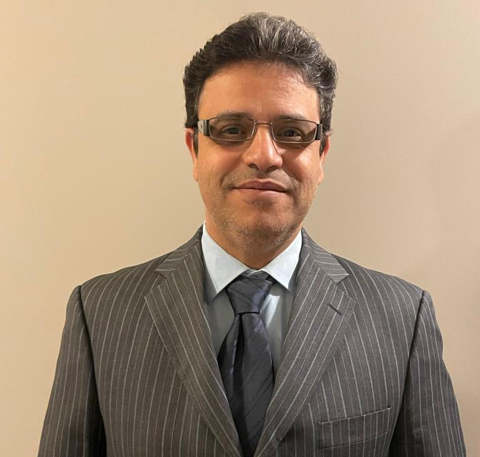
Dr. Mohammad Zulkernine is a Full Professor and Canada Research Chair in Cyber-Physical System Security at Queen’s University’s School of Computing (Faculty of Arts and Science). He leads the Queen’s Reliable Software Technology (QRST) research group and directs the Queen’s Centre for Security & Privacy. His research focuses on secure software systems for cyber-physical systems, including autonomous vehicles, IoT, and cloud computing. Dr. Zulkernine holds a cross-appointment in Electrical and Computer Engineering and is a licensed Professional Engineer in Ontario. Education: BSc (Bangladesh BUET), MEng (Japan), PhD (University of Waterloo). He joined Queen’s in 2003 and has held sabbaticals at University of Trento, Italy and Irdeto Canada. He has published over 250 papers, led 35+ research projects, and supervised 120+ students. Awards include Canada Research Chairs (Tier I and II), Queen’s Excellence in Graduate Supervision Award, and Distinguished Supervision Award from the School of Computing. Research Interests: Cyber-Physical System Security, Software Reliability, IoT Security, Vehicle Networks, Secure Software Engineering, and Cybersecurity Risk Assessment. Active industry collaborations include EU-funded projects and Canada-Africa initiatives.
Jim Hall is a Professor of Climate and Environmental Risk at the University of Oxford's School of Geography and the Environment, and serves as Director of Research there. He is also a Visiting Fellow at Linacre College and holds leadership roles including Chair of the Science Advisory Committee at IIASA, and Expert Advisor to the UK's National Infrastructure Commission. His work focuses on systemic risk analysis, infrastructure resilience, and policy implications of climate change adaptation. Prof Hall has pioneered methodologies like the National Infrastructure Systems Model (NISMOD) and chairs the Data and Analytics Facility for National Infrastructure (DAFNI). His research spans flood risk management, energy systems decarbonization, and transboundary water resource conflicts in regions such as the Eastern Nile Basin and the Caribbean. Key research areas include robust decision making under uncertainty, info-gap theory applications, and integrated assessments of human-environmental systems. He has contributed to major international assessments, including the IPCC's Fourth Assessment Report, and developed frameworks for multi-hazard stress testing of infrastructure networks. Scientific Awards: George Stephenson Medal (2001), Prince Sultan Prize for Water (2018), Royal Academy of Engineering Fellowship (2010) His advising and grants work includes mentoring a DPhil student Erin Canning and leading projects like MARIUS and ENHANCE. He has also developed innovative modeling tools for coastal erosion prediction and probabilistic assessments of global shipping fuel transitions. Prof Hall’s research groups actively engage in interdisciplinary projects, including the Oxford Martin Programme on Resource Stewardship and the UK Infrastructure Transitions Research Consortium. His work emphasizes bridging scientific analysis with actionable policy solutions for climate adaptation.
Niels van Oort is an Associate Professor of Public Transport at Delft University of Technology (TU Delft), co-director of the Smart Public Transport Lab, and affiliated with the Department of Transport & Planning within the Faculty of Civil Engineering and Geosciences. His work focuses on public transport planning, data-driven design, and societal impacts including inclusiveness, land-use, and sustainability. He holds a dual role as a part-time consultant via his company Van Oort Mobility Consultancy since 2020. Education: MSc in Public Transport from TU Delft (2003), PhD in Service Reliability in Public Transport (2011). Professional experience includes roles at HTM (public transport operator), MIT (2009), and Goudappel Coffeng consultants (2007–2012). Transitioned to academia as a part-time assistant professor at TU Delft in 2012, becoming full-time in 2018. Research emphasizes network optimization, timetable reliability, micromobility, and first/last mile solutions. Key areas include pandemic impacts on transport behavior, digital inequality in mobility access, and sustainable transport policies. Supervises PhD students on integrated networks and passenger behavior. Teaching includes courses on public transport operations, advanced modelling, and transport networks. Active in academic publishing and conferences, with over 20 peer-reviewed articles since 2010. Engaged in interdisciplinary labs like SUM Lab (Smart Urban Mobility) and contributes to public discourse through media and consultancy. Labs/Teams: Smart Public Transport Lab (co-director), SUM Lab, and Delft Transport Modelling Group. Grants and projects focus on data-driven solutions for public transport efficiency and equity.
Jiaoyang Li is an Assistant Professor at the Robotics Institute, Carnegie Mellon University , where she leads research in large-scale multi-robot coordination. She earned her Ph.D. in Computer Science from the University of Southern California (2022) under Professor Sven Koenig and holds a B.Eng. in Automation from Tsinghua University (2017) . Ph.D. (2022): University of Southern California B.Eng. (2017): Tsinghua University Research Focus : Jiaoyang Li's work centers on algorithms for multi-robot coordination in dynamic environments. Key areas include: Multi-Agent Path Finding (MAPF) Lifelong Planning for Autonomous Systems Kinodynamic Motion Planning Warehouse and Transportation Automation Human-Robot Collaboration Integration of Planning and Machine Learning Swarm Robotics Publication Trends : Recent work spans 2023-2025 , showing emphasis on: Scalable coordination for 10,000+ robots Bézier curve optimization for dual-arm assembly Diffusion models in multi-robot motion planning Guidance graph optimization for airport/railway traffic Multi-objective search in warehouse automation Temporal plan graphs for switchable passing orders Scientific Honors : ICAPS-24 Best Student Paper Award Three top dissertation awards (ICAPS-23, IFAAAMAS, USC) 2023 League of Robot Runners champion Outstanding student paper award at ICAPS-20 Technology Commercialization Award from USC Student Leadership : Advises 5 Ph.D. students and 1 Master's student at CMU, with alumni now at MIT (Ying Feng) and USC (Yimin Tang). Collaborates with visiting students from National University of Singapore and Tsinghua University. Lab Affiliation : Directs the Artificial Intelligence for Robot Coordination at Scale (ARCS) Lab , focusing on: Warehouse automation with thousands of robots Multi-arm LEGO assembly systems Railway coordination algorithms Cooperative assembly with multiple manipulators
Hongtao Zhu is an Associate Professor at the University of Wollongong (UOW), Australia, affiliated with the School of Mechanical, Materials, Mechatronic and Biomedical Engineering. He holds a PhD from Northeastern University (China) and has held academic positions at UOW since 2002, progressing from Research Fellow (2002–2013) to Senior Lecturer/Lecturer (2013–2022) before becoming an Associate Professor in 2022. His research focuses on Contact Mechanics , Tribology , Advanced Manufacturing , and Computational Material Science . Notable contributions include studies on rail-wheel contact systems, high-entropy alloys, and friction reduction in manufacturing processes. He has authored/co-authored over 230 publications with an H-index of 38 (Scopus) and secured $2.2M in industry grants. Zhu leads the 'Wheel and Rail Contact System' research group, collaborating with major railway industries. He has supervised 22 PhD students (6 as principal supervisor) and currently oversees 5 PhD candidates. His professional roles include editorial board memberships for journals like Advances in Materials Science and Engineering and service as an assessor for funding bodies in Australia, Chile, Poland, and the Czech Republic. Key achievements include securing 5 ARC Discovery Projects, 3 ARC Linkage Projects, and industry collaborations with organizations like Sydney Trains and Comsteel. His work addresses critical challenges in rail infrastructure durability, material optimization, and sustainable manufacturing.
Shunde Yin serves as an Associate Professor in the Department of Energy & Petroleum Engineering at the University of Wyoming's College of Engineering & Physical Sciences, based in Room 4019 of the Engineering Building. His research focuses on advanced computational methods in petroleum geomechanics with practical applications to reservoir engineering challenges. His educational background includes a Ph.D. in Geotechnical Engineering from the University of Waterloo (2008), an M.S. in Geotechnical Engineering from the Chinese Academy of Sciences (2003), and a B.E. in Civil Engineering from Shijiazhuang Railway Institute (1999). Dr. Yin specializes in Coupled thermal-hydraulic-mechanical-chemical (THMC) modeling and soft computing applications within petroleum geomechanics. His work integrates computational techniques to address subsidence, reservoir depletion, and seismic monitoring challenges, bridging theoretical geomechanics with field applications in energy extraction. Analysis of his 2002-2008 publications reveals consistent innovation in numerical methods for reservoir geomechanics, featuring displacement discontinuity techniques, finite element analysis, and machine learning applications across thermal, hydraulic, mechanical, and chemical domains. No scientific awards were documented in the source material. Information regarding student advising, research grants, and laboratory facilities was not provided in the available documentation.
Anders Karlström is a Professor at KTH Royal Institute of Technology, specializing in Transport Modelling and Economics. His research focuses on sustainable transportation systems, emissions reduction, and energy efficiency. Key interests include activity-based modelling, dynamic discrete choice frameworks, and policy analysis for urban mobility. He has contributed to studies on travel behavior, infrastructure planning, and environmental impacts of transport systems across multiple international cities. His work integrates advanced methodologies such as recursive logit models, spatial regression, and machine learning for predictive analytics. Notable research areas involve evaluating weather variability effects on travel patterns, optimizing traffic state estimation with sensor data, and developing scenario-based models for future employment growth. Karlström collaborates with industries to enhance the competitiveness of sustainable transport solutions globally.
Sebastijan Dumancic is an Assistant Professor at Delft University of Technology, focusing on neuro-symbolic AI through program synthesis and probabilistic programming. He leads the RAIL lab and collaborates with institutions like Harvard, MIT, and CNRS. His research bridges symbolic AI and machine learning, applying program synthesis to scientific discovery, transportation, and robotics. He holds an FWO-funded PhD from KU Leuven and has participated in initiatives like ELLIS and the Symbolic Computation and Machine Learning Initiative. Program synthesis Probabilistic programming Neuro-symbolic AI Constraint-based learning His recent articles highlight advancements in program synthesis, neuro-symbolic integration, and constraint satisfaction. Projects like Find2Fix and Intelligent Greenhouse Horticulture (funded by NWO) demonstrate practical applications. ELLIS Membership University Teaching Qualification He supervises numerous MSc and PhD students in projects involving logic programming, program synthesis, and probabilistic modeling. Active in workshops and symposia, he contributes to neuro-symbolic AI and scientific discovery.
Thom de Vries is an Associate Professor at the University of Groningen's Faculty of Economics and Business, based in the HRM & Organizational Behavior department. He also serves as Program Director for the Master of Science in Human Resource Management and holds a lecturer position in Industrial Engineering Management. His expertise focuses on organizational resilience, team boundary spanning, and infrastructure management. He holds a Ph.D. in Business Administration (cum laude) from the University of Groningen (2015), with prior experience as a Business Researcher at TNO and academic leadership roles in program committees. Education highlights include: Ph.D. in Business Administration (cum laude), University of Groningen (2015) Res. M.A. and M.A. in Business Administration (cum laude), University of Groningen (2011, 2009) B.A. in Public Administration, Thorbecke Academie (2007) Research interests emphasize team dynamics in complex environments, particularly: Resilience and adaptability in critical infrastructure organizations Boundary spanning across teams/organizations Design of multiteam systems for complex tasks Disruption management in supply chains Notable projects include the NGinfra-funded ConCorCom initiative studying coordination during infrastructure challenges, and NWO grants exploring resilience and decision-making under uncertainty. His work has earned awards like the Academy of Management Best Paper Award and multiple teaching recognitions. Grants include: NGINFRA/NWO: ConCorCom (Context, Coordination, Competencies) NWO VENI: Team Boundary Spanning in Disruptions NWO: Resilience-Efficiency Balance in Planning Teaching roles span disciplines including Organizational Behavior, Survey Research, and Experimental Design across faculties. He actively supervises research master students and contributes to executive education programs.
Inigo Flores Ituarte is a Research Professor at Tampere University's Faculty of Engineering and Natural Sciences, affiliated with the Automation Technology and Mechanical Engineering department. He leads the Digital Design and Manufacturing (D2M) research lab, focusing on sustainable manufacturing and twin-transition strategies integrating digital and green technologies. His work emphasizes optimization-driven design, additive manufacturing innovations, and AI-driven expert systems to enhance energy efficiency and reduce environmental impacts. Key research pillars include: Pillar 1: Twin-transition in Engineering Design and Manufacturing Processes, addressing sustainable manufacturing and intelligent systems Pillar 2: Development of open D2M systems and Process-Structure-Property-Performance (PSPP) linkages in advanced materials His research explores multi-disciplinary optimization combining model-based simulations and data-driven techniques. Notable contributions include generative AI integration in CAD systems, cognitive manufacturing systems, and cost-effective process monitoring using CNN-based methods. Inigo's work emphasizes environmental sustainability, with a focus on reducing manufacturing's energy consumption (54% of global use) and CO2 emissions. He advocates for interconnected material systems, smart manufacturing processes, and AI-assisted decision-making to achieve cognitive intelligence in industrial operations. His D2M lab's overarching goal is to maximize product/process performance while improving cost-effectiveness and minimizing environmental footprints. Recent projects include railway bogie demonstrators via multi-material deposition and sensor systems leveraging IoT and ChatGPT integration.
Dr. Mohamed Youssef is an Associate Professor in the Department of Electrical, Computer and Software Engineering at Ontario Tech University. He holds a PhD (Electrical and Computer Engineering) from Queen’s University (2005). His primary affiliation is the Faculty of Engineering and Applied Science, with research focusing on propulsion systems, power electronics, railway systems, and renewable energy technologies. Education: PhD, Electrical and Computer Engineering, Queen’s University (2005) MSc, Power Electronics, Concordia University (2001) MSc, Electric Power and Machines, Ain Shams University (1999) BSc, Electric Power and Machines, Ain Shams University (1995) Research Interests: Dr. Youssef’s expertise spans propulsion systems for automotive and hyperloop technologies , power electronics for IoT and renewable energy , railway electromagnetic compatibility , and power system stability . His work emphasizes practical applications in electric vehicles, smart grid integration, and sustainable energy systems. He leads the PEDAL (Power Electronics and Drives Laboratory) at Ontario Tech. Awards and Recognition: Recipient of the NSERC Post-doctorate Scholarship (2006) Best Paper Award at IECON 2004 Award of Merit from Ontario Center of Excellence (2006) Nominated for the Howard Alper Prize (2007) Professional Activities: He serves as a reviewer for IEEE Transactions on Power Electronics , IEEE Transactions on Industrial Electronics , and others. He has held roles as Technical Chair at IEEE SEGE 2015 and Track Chair at IEEE SEGE 2016. Current affiliations include Senior Member of IEEE and Chair of the IEEE Power Electronics Chapter in Toronto. Labs and Teams: He directs the PEDAL Lab , focusing on advanced power electronics and electric vehicle technologies. Collaborations include Bombardier Transportation and Armstrong Pumps.
Dr. Andrea Bastoni is a Postdoctoral Researcher and Research Fellow at the Chair of Cyber-Physical Systems in Production Engineering at Technical University of Munich (TUM), Faculty of Mechanical Engineering. He is also the CTO and co-founder of Minerva Systems , developing operating system solutions for AI-ready embedded applications. His expertise spans real-time operating systems, cyber-physical systems, and predictable system design for heterogeneous platforms. His research focuses on enhancing predictability of memory hierarchies in complex SoCs through techniques like memory bandwidth regulation and cache partitioning. This work has industrial applications in safety-critical domains such as avionics and railways, where he contributes to certifiable hypervisors and operating systems. As former Software Architect of the PikeOS hypervisor at SYSGO GmbH (2012-2020), he specialized in DO-178C, IEC 61508, and EN 50128 standards. His academic background includes a Ph.D. in Computer Engineering from the University of Rome Tor Vergata (2007-2011), where he developed LITMUS^RT as part of UNC's Real-Time Systems Group during a visiting researcher period (2009-2010). His publications reflect ongoing work on Multicore Real-Time Scheduling , Mixed-Criticality Task Isolation, and Arm DynamIQ shared unit analysis. He actively participates in program committees for conferences like RTSS, DSN, and DATE.
Professor Washington Yotto Ochieng serves as Head of the Department of Civil and Environmental Engineering and Chair Professor in Positioning and Navigation Systems at Imperial College London. He directs the Centre for Active Resilience and Security (CARS) and maintains key affiliations with the Centre for Systems Engineering and Innovation, Centre for Transport Engineering and Modelling, Institute for Molecular Science and Engineering, and Space Lab. His extensive advisory roles include the Science Museum Group Board of Trustees, Royal Institute of Navigation Presidency, and Royal Academy of Engineering Africa Steering Committee. His educational background includes a BSc (First Class) in Engineering from the University of Nairobi and MSc (Distinction) and PhD in Civil Engineering from the University of Nottingham. He received an honorary DSc from Technical University of Kenya in 2023. Ochieng's research pioneers critical infrastructure resilience, user-centric mobility, and positioning/navigation/timing (PNT) systems. He has designed satellite navigation systems (including Europe's EGNOS and GALILEO) for multi-domain applications and advanced Air Traffic Management and Intelligent Transport Systems. His work integrates geomatics, transportation engineering, and sustainable mobility to solve global urban infrastructure challenges, with recent emphasis on decarbonization and AI-driven solutions. His 2024-2025 publications reveal strong trends in sustainable transportation decarbonization, AI-optimized traffic management, and resilient urban positioning systems. Research focuses on hydrogen fuel cell trains, carbon-efficient aviation, and deep reinforcement learning applications for emission reduction, demonstrating interdisciplinary integration of engineering, environmental science, and artificial intelligence to address climate challenges. Fellow of the Royal Academy of Engineering (2013) Harold Spencer-Jones Gold Medal from Royal Institute of Navigation (2019) Doctor of Science (honoris causa) from Technical University of Kenya (2023) Elder of the Order of the Burning Spear (EBS) from Kenya (2023) Commander of the Order of the British Empire (CBE) (2024) Ochieng provides strategic guidance to UK Government bodies (Government Office for Science, Department for Transport, FCDO), European Parliament, and European Court of Auditors. His advisory work shaped the Blackett Review on Satellite-derived Time/Position, UK Space Strategy, and Future of Mobility report. He chairs the Science Museum London Advisory Board and leads FCDO's Sustainable Urban Economic Development program in Africa, with significant grant influence through UK National Physical Laboratory and Department for International Development. He directs the Centre for Active Resilience and Security (CARS) and leads Space Lab initiatives, focusing on mission-critical PNT systems and infrastructure resilience. His teams collaborate with international consortia including RTCM Special Committee 134 and US Institute of Navigation, developing next-generation navigation solutions for safety-critical applications across transport, aviation, and urban environments.
Kash Barker serves as the John A. Myers Professor and David L. Boren Professor at the University of Oklahoma in the Department of Industrial & Systems Engineering within the College of Engineering. As Graduate Liaison, he leads research on network resilience, supply chains, and systems engineering for societal good, with applications spanning infrastructure, supply chains, and community systems. His lab has produced 11 Ph.D. graduates (10 in academia) and 31 M.S. graduates. Research Domains: Resilient networks and interdependent systems Risk and decision analytics Supply chain survivability Pandemic economic impact modeling Climate migration optimization Cyber-Physical-Social Systems Article Trends emphasize disinformation defense , network restoration optimization , and multi-layer resilience modeling across infrastructure, supply chains, and community systems. His work combines game theory , machine learning , and decision analysis frameworks. Scientific Awards & Roles: Fellow, Institute of Industrial and Systems Engineers Senior Member, IEEE Fellow, Fulbright Finland Foundation (2023) Associate Editor roles in IISE Transactions and Naval Research Logistics Editorial Board Member for Risk Analysis and Scientific Reports Faculty Advisor, OU INFORMS student chapter Educational Background: Ph.D., Systems Engineering, University of Virginia M.S., Industrial Engineering, University of Oklahoma B.S., Industrial Engineering, University of Oklahoma
Carl Müller-Crepon is an Assistant Professor at the Department of Government, London School of Economics and Political Science (LSE) . His research focuses on state-building, political ethnicity, conflict, and geographic analysis, particularly in Africa and Europe. He previously held roles at the University of Oxford and ETH Zurich, and has affiliations with Harvard University. His work combines computational methods with geospatial data to study historical and modern dynamics of ethnicity, state capacity, and political violence. Education: PhD in Political Science, ETH Zurich (2019) MA in Political Science, ETH Zurich (2015) BA in International Affairs and Economics, University of St. Gallen (2013) Research Interests: His work explores how administrative borders shape ethnic identities, the impact of colonial policies on development, and the role of nationalism in territorial disputes. He innovates in geospatial data analysis and machine learning, publishing in top journals like the American Political Science Review and International Organization . Key Contributions: Developed the SIDE dataset for fine-grained ethnic demography analysis. Studied the reciprocal relationship between ethnic geographies and political borders since the 19th century. Explored state capacity in Africa using travel time metrics and road networks. Grants & Labs: Leading projects on colonial administrative design and ethnic persistence. Collaborations with institutions like ETH Zurich’s International Conflict Research Group.