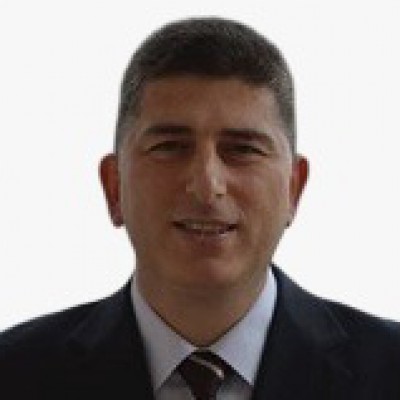
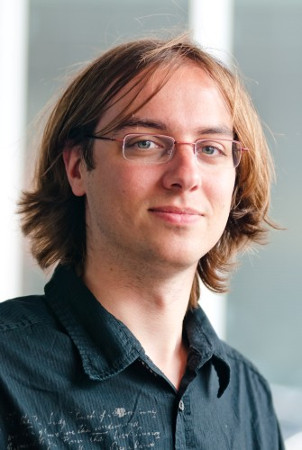
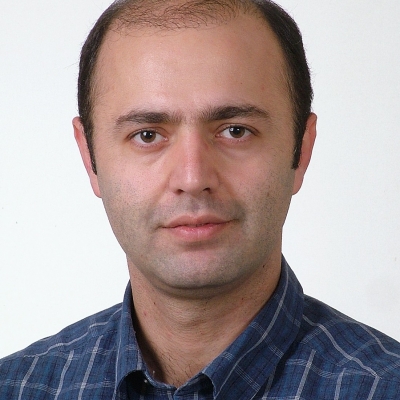
Yannick Le Moullec is a researcher affiliated with Tallinn University of Technology, specializing in wireless communication technologies, Internet of Things (IoT), and 6G network optimization. His work focuses on energy-efficient systems, device-to-device communication, UAV swarms, and hybrid machine learning models for microfluidic imaging. He has contributed to NB-IoT, RIS-based communication, and federated learning frameworks. Education : Not explicitly mentioned Research Trends : His recent publications emphasize 6G networks, device-to-device discovery, UAV coordination, and edge computing. He explores synergies between reinforcement learning and stochastic resource allocation. Grant Activity : No specific grants listed Labs & Collaborations : Collaborates with teams across Estonia, France, and international institutions on IoT and embedded systems, particularly in healthcare and emergency communication contexts.
Jong-Deok Kim is an active researcher in wireless communication and IoT systems, with frequent collaborations on publications spanning dynamic channel bonding, network optimization, and low-power protocols. His work addresses challenges in Wi-Fi, LoRa, and millimeter-wave networks, focusing on throughput, latency, and reliability. Research Focus: Wireless networks, edge computing, and blockchain for IoT. Key Topics: Channel allocation, federated learning, and error compensation methods. His recent publications highlight trends in adaptive algorithms for dense networks, hybrid positioning systems, and federated learning applications. Awards and grants are not explicitly mentioned in the provided data.
George Koutitas is a researcher at Texas A&M University's College of Engineering, specializing in Machine Learning , Augmented Reality , and Smart Grid Technologies . His work bridges wireless communications with energy-efficient systems, spanning from AR/VR training platforms for EMS personnel to machine learning models for rare disease prediction . Research keywords include: Machine Learning for Healthcare Augmented/Virtual Reality Systems Energy-Efficient Networking Smart Grid Optimization Digital Twin Applications Recent publications (2020-2023) focus on AR resource utilization , wireless channel visualization , and energy-aware base stations , reflecting a consistent trend toward telecom sustainability and immersive technology applications . Collaborations include institutions across Europe and the U.S. in topics like 5G networks and IoT .
Professor Il-Min Kim is a Full Professor in the Department of Electrical and Computer Engineering at Queen's University (Smith Engineering). He leads the Wireless Artificial Intelligence Laboratory (WAI Lab), focusing on AI-driven wireless systems, IoT/IoE/IIoT, federated learning, edge computing, and 6G/V2X communications. His work integrates machine learning, signal processing, and cybersecurity with wireless infrastructure. Education: B.S. (Yonsei University, 1996), M.S./Ph.D. (KAIST, 2001). Postdoctoral research at MIT (2001-2002) and Harvard (2002-2003) preceded his faculty role at Queen's since 2003. Promoted to Associate Professor (2009) and Full Professor (2014). Research emphasizes Wireless AI , including on-device AI, federated learning, geoscience AI (Geo-AI), and secure communication protocols. Key areas: AI for 6G/V2X, energy-efficient edge computing, and robust spectrum sensing. His lab develops frameworks for distributed systems, compressive sensing, and nonlinear energy harvesting. Notable contributions include hybrid replay mechanisms for incremental learning, diffusion models for industrial IoT, and deep learning-based channel estimation. His work addresses challenges in data security, model robustness, and real-time inference under resource constraints.
Assoc. Prof. Dr. Mustafa Namdar holds an academic position at Kütahya Dumlupınar University's Faculty of Engineering, Department of Electrical-Electronics Engineering. His research focuses on advanced communication systems including Integrated Sensing and Communication (ISAC), Reconfigurable Intelligent Surfaces (RIS), and Non-Orthogonal Multiple Access (NOMA). He has led 11 projects funded by institutions like TUBITAK and the Turkish Presidency of Defense Industries (SSB). His work spans 83 publications, including peer-reviewed journal articles and conference proceedings. Notable achievements include the IEEE ELECO 2024 Best Paper Award and multiple TÜBİTAK publication incentives. Education: PhD in Electronics and Communication Engineering from Yıldız Technical University (2006–2014) Research Interests: 6G Communication Technologies AI-driven Network Optimization Unmanned Aerial Vehicle (UAV) Communication Systems Wireless Security and Privacy Grants & Awards: Overseen 23 projects totaling €1.2M Recipient of Elsevier's Recognized Reviewer Status (2015–2021) Labs & Teams: Collaborates with the 6G Platform at Istanbul Medipol University and the Information and Communications Research Group (ICRG) at ITU.
Eli De Poorter is a Professor at the Faculty of Engineering and Architecture , Ghent University , and affiliated with IMEC since 2017. His work bridges experimental wireless research with machine learning techniques, focusing on IoT , UWB localization , and self-learning networks . Received his PhD in 2011 from Ghent University’s Department of Information Technology FWO Postdoctoral Research Grant recipient Co-author of over 100 international publications Active in program committees of multiple conferences His research spans wireless protocol optimization , interference detection , and system configuration dependencies . Notable projects include UWB-based healthcare monitoring , industrial IoT networks , and animal wearables for agriculture . Develops energy-aware tinyML models for battery-less devices Explores Transformer networks and self-supervised learning for wireless systems Investigates multi-modal industrial IoT and Wi-Fi/UWB hybrid synchronization Scientific Awards FWO Postdoctoral Research Grant Labs & Teams Internet Technology and Data Science Lab (IDLab) IMEC research institute
Dr. Steven W. McLaughlin serves as the Provost and Executive Vice President for Academic Affairs at Georgia Tech, overseeing all academic units. He is also a Professor in the School of Electrical and Computer Engineering. McLaughlin holds degrees from Northwestern University (B.S.E.E.), Princeton University (M.S.E.), and the University of Michigan (Ph.D.). His research focuses on communications and information theory, with contributions to error control coding, data security, and quantum key distribution. He co-founded CREATE-X, a program that has launched 72 student-led companies and engaged over 1,500 students in entrepreneurship. McLaughlin has authored over 250 publications, holds 36 U.S. patents, and is a Fellow of the IEEE. Awardees include the Chevalier dans l'Ordre National du Mérite (France’s second-highest civilian honor) and the Presidential Early Career Award for Scientists and Engineers (PECASE). His leadership roles include Dean of the College of Engineering and Vice Provost for International Initiatives. He has pioneered initiatives in global engagement and educational innovation, emphasizing interdisciplinary collaboration and technology-driven solutions.
Prof. Mathini Sellathurai is a Full Professor and Dean of Science and Engineering at Heriot-Watt University, Edinburgh. She leads the Signal Processing for Intelligent Systems and Communications Lab, with expertise in radar technology, MIMO systems, and wireless communications. Her research focuses on adaptive signal processing applications in radar, lidar, sonar, and RF networks. She holds adjunct roles at McMaster University and has served on IEEE editorial boards and technical committees. Education & Experience: PhD with NSERC doctoral award Industrial experience at Bell Laboratories (2000) and Canadian Communications Research Centre (2001-2004) Research Interests: Signal Processing innovations in parasitic antennas, MIMO radar, cognitive radio, and underwater communications. She explores network coding, iterative receiver design, and beamforming techniques to enhance communication systems efficiency and performance. Awards: IEEE Ellersick Best Paper Award (2005) Industry Canada Public Service Awards (2005) Technology Transfer Awards (2004) Teaching & Leadership: Teaches electrical engineering fundamentals, image processing, and advanced analysis. Oversees multi-institutional projects funded by EPSRC, DSTL, and EU Framework programs (e.g., Cognitive Radio Oriented Wireless Networks). Labs & Collaborations: Heads the Signal Processing Lab (EM 3.24), collaborating on EU-funded initiatives and industry partnerships with QinetiQ and Wireless Fiber Systems. Active in defense-related radar research through UDRC and EPSRC grants.
Iftikhar Hussain serves as a Research Associate within the School of Social Sciences, specifically at the Edinburgh Business School of Heriot-Watt University in Edinburgh, United Kingdom. His academic profile centers on interdisciplinary research bridging engineering, social sciences, and sustainable development, with significant contributions to UN Sustainable Development Goals through transportation and infrastructure innovation. His research interests focus on sustainable urban systems, emphasizing transportation optimization, cold chain logistics, and smart city applications. Key methodologies include multiagent simulation, negotiation modeling, and machine learning techniques applied to carpooling networks, waste management, UAV communications, and cognitive radio security. This work consistently addresses real-world challenges in resource efficiency and sustainable infrastructure planning. Analysis of his 23 publications (2014-2025) reveals strong interdisciplinary trends, with recent work (2022-2025) showing increased output in sustainable infrastructure and wireless communications. His publications demonstrate consistent collaboration across engineering and social science domains, with notable impact in transportation modeling (63 citations for 2024 smart city waste management study) and emerging contributions to UAV communications and cold chain sustainability. No scientific awards are documented in available records. Regarding academic mentoring and funding, no information about student supervision or research grants appears in current profiles, though his collaborative publication record indicates active research partnerships. His ORCID (0000-0003-3360-4532) shows engagement with international research networks, particularly in sustainable infrastructure and transportation systems. No dedicated laboratory or research team leadership is specified in current documentation, though his work involves multi-institutional collaborations evidenced by co-authorship patterns across publications in transportation, wireless networks, and sustainable urban development.
Xuemin (Sherman) Shen is a University Professor at the University of Waterloo, specializing in advanced communication systems and AI-driven network optimization. His research focuses on 6G networks, digital twin technology, vehicular systems, and generative AI applications in wireless communications. He leads initiatives in edge computing, federated learning, and secure physical layer communications. Key research areas include 6G architecture design, intelligent transportation systems, and AI integration into network management. His work bridges theoretical advancements with practical implementations in areas like OTFS modulation, MIMO equalization, and hybrid-field antenna systems. Recent projects emphasize digital twin frameworks for network orchestration, immersive communications via edge computing, and trustworthy semantic communication systems. His contributions span both foundational studies and applied solutions in wireless security, distributed learning, and terahertz communication systems.
Andrey Sesyuk is a Lecturer and PhD Research Scholar at the University of Central Lancashire Cyprus (UCLan Cyprus). He teaches in the Department of Electrical and Electronic Engineering, leading courses such as Electronic Engineering Practice , Electronic Systems Applications , and Electronic Systems . His academic journey includes a BEng (Hons) in Electrical and Electronic Engineering (2020) and an expected PhD (2023) from UCLan Cyprus. Research interests focus on Telecommunications , Mobile Wireless Communications , Electronic Positioning , Radio Propagation Modelling , Image Processing , and Internet of Things applications. He actively contributes to advancing wireless technologies and embedded systems. Recipient of multiple accolades, including the prestigious 4-year Undergraduate Scholarship and a fully funded PhD Scholarship . His dedication to academic excellence is reflected in awards such as the High Achieving Student and High Achieving Graduate distinctions. As a lecturer, he mentors students in practical and theoretical aspects of electrical engineering. His work aligns with UCLan Cyprus’s commitment to innovation in STEM education and applied research.
Tuna Tuğcu is a Professor in the Department of Computer Engineering at Bogazici University, where he leads research in nanonetworking and wireless communications. He holds affiliations with the Computer Networks Research Lab (NetLab), Nanonetworking Research Group (NRG), and Telecommunications and Informatics Technologies Research Center (TETAM). He earned his PhD in Computer Engineering from Bogazici University in 2001 and completed postdoctoral research at Georgia Institute of Technology. His research focuses on NanoNetworking/Molecular Communications , 5G Networks , Cognitive Radio , and Wireless Systems . Key areas include diffusion-based signal propagation, modulation techniques for molecular channels, and optimization of nanoscale communication protocols. His recent publications emphasize practical applications in transmitter localization, error minimization, and throughput enhancement for emerging technologies. Awards include: Best Paper Award at ISCC'12 (2012) Best Paper Award at AICT (2010) National Utility Model for disaster coordination systems (TR 2013 11786 Y) He serves as Senior Projects Coordinator and chairs the Information Technologies Committee. He also contributes to ÖBİKAS and TETAM governance. No specific grants or student advisees are detailed in the source text.
Falko Dressler is a full professor and Chair for Telecommunication Networks at the School of Electrical Engineering and Computer Science, Technische Universität Berlin (TU Berlin). He holds a M.Sc. and Ph.D. from the University of Erlangen's Department of Computer Science (1998 and 2003). His roles include associate editor-in-chief for IEEE Trans. on Network Science and Engineering and IEEE Trans. on Mobile Computing , as well as chairing conferences like IEEE INFOCOM and ACM MobiSys. He was an IEEE and ACM Distinguished Lecturer, and authored influential textbooks such as Self-Organization in Sensor and Actor Networks and Vehicular Networking . Education: M.Sc. (1998), Ph.D. (2003) in Computer Science, University of Erlangen Professional Activities: Editorial roles across 8+ journals, conference leadership (e.g., IEEE GLOBECOM), academic fellowships (IEEE, ACM, AAIA) Research Interests: Focus on resilient wireless communication systems integrating distributed machine learning and edge computing. Key domains include IoT, cyber-physical systems, and bio-nano networks. His work bridges theoretical advances with practical applications in vehicular networks, 5G/6G systems, and tactile Internet. Publications: Over 300+ peer-reviewed papers spanning topics like multiband channel analysis, federated learning at edge networks, and O-RAN architecture. Recent work emphasizes 6G innovations, metaverse convergence, and explainable AI for network security. Awards: IEEE Fellow (2014), ACM Fellow (2019), AAIA Fellow (2022), German National Academy of Science member (acatech) Grants/Teams: Leads TKN (Telecommunication Networks) lab, co-organizing IEEE INFOCOM 2026. Supervised over 50 PhD students, many in vehicular/edge computing domains. Labs/Teams: Directs TU Berlin's Telecommunication Networks (TKN) group, collaborating internationally on projects like ReNeSys 2025 and IEEE MedComNet. Active in standardization efforts for Open RAN and vehicular VLC.
Emanuel Radoi is a Professor in Signal Processing at the University of Brest , France, and a member of the "Information Security, Intelligence and Integrity" research team at Lab-STICC, CNRS UMR 6285. He has been an IEEE Senior Member since 2014 and served as Associate Editor for IEEE Communications Letters (2018-2021). M.Sc. (1997) and Ph.D. (1999) in Electronic Engineering and Signal Processing from University of Brest 20 book chapters and over 120 international conference/journal papers Specializes in UWB signal processing, full-duplex communications, spectrum sensing, time-frequency analysis, and sparse signal processing His recent research focuses on IR-UWB radar applications for indoor localization, people counting, and collision avoidance systems, as well as full-duplex communication architectures and compressed sensing techniques. He has developed experimental USRP-based implementations for real-time signal processing and contributed to advanced sea clutter models for radar target detection. Key publications address: Compressed sensing for UWB channel estimation (2016-2022) Self-interference cancellation in full-duplex transceivers (2020-2022) Machine learning integration with radar signal processing (2024) Cognitive radio architectures for high-speed railway applications (2014) Scientific Contributions: 2014 IEEE Senior Membership 2018-2021 IEEE Communications Letters Associate Editor Best Paper Award and Exemplary Reviewer recognition He actively participates in international conferences, chairs technical sessions, and contributes to journal special issues. His work bridges theoretical signal processing with practical implementations in wireless systems and radar technologies.
Stéphane Azou is a Full Professor at the Ecole Nationale d'Ingénieurs de Brest (ENIB), part of the University of Brest, France. He holds a Master's and PhD in Electronic Engineering from the University of Brest (1993 and 1997), and an HDR (Habilitation à Diriger des Recherches) from the same institution in 2007. His career includes roles as an Associate Professor at the University of Brest (2000–2012) and leading the Signal Processing for Communications group at Lab-STICC from 2007–2012. Currently, he heads the Microwave Photonics & Photonics Architectures and Systems (ASMP) team within Lab-STICC. His research focuses on optical communications, fiber-wireless systems, signal processing, and hardware impairments compensation. He has authored over 60 articles and serves as an Associate Editor for the International Journal of Electronics and Communications and is a Senior Member of the IEEE. Education: PhD in Electronic Engineering, University of Brest (1997) Master of Science in Electronic Engineering, University of Brest (1993) HDR (Accreditation to Supervise Research), University of Brest (2007) Research Interests: His work spans optical fiber communication systems, radio-over-fiber technologies, advanced modulation formats, and signal processing techniques for improving system performance. Key areas include physical layer monitoring, compensation of hardware impairments (e.g., IQ imbalance, laser phase noise), and experimental validation of novel architectures like C-RAN and 5G fronthaul systems using semiconductor optical amplifiers (SOAs). Professional Contributions: Azou has led teams in Lab-STICC, a CNRS laboratory, and contributed to projects on parametric networks for joint channel estimation and symbol detection. His recent work addresses challenges in UWB radar-based detection, nonlinear compensation techniques, and stochastic modeling of optical components like SOAs. Awards and Roles: Senior Member, IEEE (2017–present) Associate Editor, International Journal of Electronics and Communications