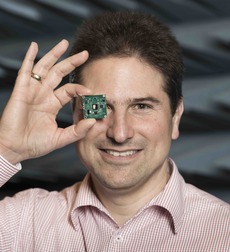
Prof. Dr.-Ing. Thomas Zwick is a full professor and director of the Institute of High Frequency Engineering and Electronics (IHE) at the Karlsruhe Institute of Technology (KIT). He holds a Dipl.-Ing. (M.S.E.E.) and Dr.-Ing. (Ph.D.E.E.) from the University of Karlsruhe. His career includes roles at IBM Research (2001–2004), Siemens AG (2004–2007 managing automotive radar teams), and KIT since 2007. He leads research in high-frequency technologies, antennas, radar systems, and wireless communications. Research interests include radio wave propagation, antenna design, automotive radar architectures, and millimeter-wave systems. He has authored/co-authored over 400 papers, 20 patents, and received IEEE Fellow status (2018), honorary doctorate from Budapest University (2022), and membership in the Heidelberg Academy and acatech. His work emphasizes integrating sensing and communication systems, 3D-printed RF components, and high-frequency measurement techniques. Teaching focuses on high-frequency engineering, electronic circuits, and radar systems. He oversees the IHE’s laboratories, including the Microwave Engineering Lab and Student Innovation Lab. Recent work explores sub-THz communication, RIS-aided ISAC systems, and beamforming for reduced EMF exposure in urban scenarios.
Schloss Dagstuhl - Leibniz Center for InformaticsGermany
Xingwang Li is an active researcher affiliated with the School of Physics and Electronic Information Engineering at Henan Polytechnic University in Jiaozuo, China. He obtained his PhD from Beijing University of Posts and Telecommunications in 2015, specializing in networking and switching technology. His research spans wireless communications, IoT systems, reconfigurable intelligent surfaces (RIS), and physical-layer security, with a strong focus on 6G-enabling technologies. Dr. Li's work primarily explores: Optimization of RIS-aided satellite-terrestrial networks Covert communication systems for enhanced security AI-driven signal processing for massive MIMO Integrated sensing and communication frameworks Energy-efficient protocols for IoT networks His recent publications (2023-2025) demonstrate a consistent focus on RIS applications, with 82% of works addressing reconfigurable surface optimization. Key trends include the integration of deep learning with communication systems (notably reinforcement learning for resource allocation), advancement of THz and near-field technologies for 6G, and novel approaches to physical-layer security. The research shows increasing emphasis on practical implementations, including UAV networks and autonomous vehicle communications.
Prof. Slawomir Stanczak is a Full Professor in Network Information Theory at Technische Universität Berlin and Head of the Wireless Communications and Networks department at Fraunhofer Heinrich-Hertz-Institut (HHI). His expertise spans wireless communications, signal processing, and machine learning, with a focus on 5G/6G networks and reconfigurable intelligent surfaces. He has held visiting roles at RWTH Aachen University and Stanford University, and leads initiatives like the 6G Research & Innovation Cluster and the xG-Incubator project. Education: Dipl.-Ing. in Electrical Engineering, TU Berlin (1998) Dr.-Ing. (summa cum laude), TU Berlin (2003) Habilitation (venia legendi), TU Berlin (2006) Research & Awards: Recipient of the Best Paper Award from the German Communication Engineering Society (2014) Research grants from the German Research Foundation Co-authored over 200 peer-reviewed papers and two books Chair of the ITU-T Focus Group on Machine Learning for Future Networks (2017-2020) Leadership & Projects: Chairman of 5G Berlin association since 2020 Coordinator of 6G Research & Innovation Cluster and CampusOS flagship project Project lead of xG-Incubator (StartUpConnect initiative) Teaching: Offers courses on Machine Learning and Wireless Communication at TU Berlin.
Falko Dressler is a Full Professor and Chair for Telecommunication Networks at the School of Electrical Engineering and Computer Science, Technische Universität Berlin. He holds a Ph.D. and M.Sc. in Computer Science from Friedrich-Alexander University of Erlangen-Nuremberg (1998-2003). His research focuses on next-generation wireless systems , distributed machine learning , edge computing , and applications in Internet of Things (IoT) , cyber-physical systems , and internet of bio-nano-things . Editorial roles: IEEE Trans. on Mobile Computing, Elsevier Computer Communications, IEEE/ACM Trans. on Networking Conference leadership: IEEE INFOCOM, ACM MobiSys, IEEE VNC Textbooks: Self-Organization in Sensor and Actor Networks (Wiley), Vehicular Networking (Cambridge) Recent publications highlight trends in Edge Computing Resilience and 6G Network Architecture , with a strong emphasis on Molecular Communication , Terahertz Band Synchronization , and Federated Learning in vehicular environments. Scientific contributions include multiple IEEE Fellow , ACM Fellow , and VDE ITG Prize 2023 recognitions. Advisory and professional activities include membership in the German National Academy of Science and Engineering (acatech), IEEE COMSOC Conference Council, and ACM SIGMOBILE Executive Committee. His work spans cooperative driving, ultra-low power sensor networks, and security in nano-communication systems.
Konstantinos Nikitopoulos is a Professor at the University of Surrey , UK, specializing in Wireless Communications and Signal Processing . His research focuses on MIMO Systems , Open-RAN , and Non-Linear Processing for next-generation wireless networks. His recent work explores Analogue Processing for Tbps Wireless Systems and Neuromorphic Computing in MU-MIMO detection. He has developed frameworks like MIMO-SoftiPHY and SACCESS for software-based radio acceleration and power-efficient network design. Key Publications : Power-Efficient RIC, NL-COMM, NeuroMIMO Collaborators : Rahim Tafazolli, George Katsaros, Marcin Filo His research impacts 6G Network Development through innovations in Beamforming , Channel Estimation , and Software-Defined Radios .
Adlen Ksentini is a Professor at EURECOM, a leading graduate school and research center in Sophia Antipolis, France, specializing in digital science and communication systems. His extensive research focuses on next-generation mobile networks (5G/6G), network management, and the integration of artificial intelligence with telecommunications infrastructure. Dr. Ksentini actively contributes to major EU research initiatives including 6G-BRICKS and AC3, serving as a key researcher and project leader in the development of future network architectures. Dr. Ksentini's research interests center around network slicing, intent-based networking, edge computing, and the application of machine learning to network management problems. His work bridges theoretical advancements with practical implementations in 5G/6G systems, with particular emphasis on zero-touch network management, energy efficiency optimization, quality of service assurance, and the integration of large language models with network operations. His research has significantly contributed to the development of O-RAN (Open Radio Access Network) frameworks and the evolution of network automation. His recent publication trends reveal a strategic shift toward AI-native network architectures, with increasing focus on integrating large language models (LLMs) with network management systems. His work demonstrates a clear progression from traditional network management approaches to more autonomous, AI-powered systems capable of intent-based configuration, self-optimization, and predictive maintenance. The publications show strong emphasis on practical implementations within the 6G research ecosystem, addressing critical challenges in network slicing, resource allocation, and energy efficiency. As a research supervisor, Dr. Ksentini mentors several PhD students including Abdelkader Mekrache, Karim Boutiba, Bouziane Brik, and Houda Hafi, who frequently appear as co-authors on his publications. His research is primarily funded through major EU research projects such as 6G-BRICKS (Building Reusable Testbed Infrastructures for Cloud-to-Device Breakthrough Technologies) and AC3 (which focuses on Cloud Edge Continuum). Dr. Ksentini is actively involved with the 6G-BRICKS project consortium and the AC3 project team, where he contributes to developing next-generation network architectures that integrate communication, computing, and sensing capabilities. His work within these projects focuses on creating reusable testbed infrastructures and addressing security and trust management challenges in the cloud-edge continuum.
Dr.-Ing. Ullrich Mönich is a Senior Researcher and Lecturer at the Technical University of Munich (TUM) , affiliated with the Chair of Theoretical Information Technology and leading research activities at the Advanced Communication Systems and Embedded Security Lab (ACES Lab) . Since 2019, he has been instrumental in shaping experimental and theoretical research in 6G communications, physical layer security, and signal processing. Education: Dr.-Ing. in Electrical Engineering, Technische Universität München (2011) – supervised by Prof. Holger Boche Previous affiliations include MIT (2012–2015) and TU Berlin Research Focus: His research spans signal processing, wireless communications, machine learning, and sampling theory , with a strong emphasis on physical layer security , computability in signal processing , and 6G communications . He explores theoretical foundations and practical implementations, including neuromorphic computing, digital twinning, and secure modular coding schemes. Publications & Trends: His recent publications (2023–2025) are heavily concentrated in 6G communications , integrated sensing and communications (ISAC) , semantic physical layer security , and digital twinning . These works often combine theoretical analysis with experimental validation using 5G/6G testbeds and neuromorphic hardware. Teaching & Supervision: Regularly teaches "Foundations of Analog, Digital, and Quantum Computers" (tutorials since 2018) Previously taught "Applied Functional Analysis" and "Advanced Signal Theory" Involved in practical courses like "Software Defined Radio Laboratory" Labs & Teams: He leads the ACES Lab at TUM, which focuses on experimental validation of advanced communication systems, including physical layer security, neuromorphic computing, and 6G testbeds. The lab collaborates with national and international partners, including MIT, and is supported by major funding bodies such as the German Federal Ministry of Education and Research (BMBF) and the German Research Foundation (DFG).
Prof. Dr.-Ing. Ingo Viering is an Honorary Professor at TU Munich's Chair of Communications Engineering and Co-Founder/CEO of Nomor Research GmbH. He also serves as a consultant at Nokia Bell Labs. His academic role focuses on system aspects in communications, particularly in 5G networks, self-organizing networks (SON), and LTE evolution. Viering holds a PhD from the University of Ulm (2003) and a Diploma in Electrical Engineering from TU Darmstadt (1999). His research spans 5G mobility, heterogeneous networks, antenna concepts (e.g., MIMO), and cognitive radio systems. Over 50+ publications highlight his contributions to radio resource management, network slicing, and SON algorithms. Notable work includes frameworks for slice-aware resource management using AI and beamforming optimizations in 5G. His academic leadership includes guiding diploma theses in MIMO systems and antenna array concepts. Current affiliations include active teaching and research at TU Munich.
Prof. Dr. Haris Gačanin is a faculty member at RWTH Aachen University, affiliated with the Institute for Distributed Signal Processing under the College of Electrical Engineering. His research focuses on integrating machine learning with wireless communication systems, particularly in industrial IoT, edge computing, and network optimization. Current academic rank: Professor Contact: harisg@dsp.rwth-aachen.de Research Interests: Wireless systems, machine learning, signal processing, and network optimization. Key contributions include: Adaptive resource allocation in IIoT and vehicular networks AI-driven channel estimation and feedback mechanisms Security-oriented emitter identification via metric learning Federated/transfer learning for edge environments Hardware-efficient deep learning models for mmWave and THz communications Methodological Focus: Combines reinforcement learning, attention mechanisms, and robust neural architectures with practical implementations on FPGA and vehicular systems.
Philippe Ciblat is a Professor at TELECOM Paris Tech, affiliated with the Department of Signal Processing and Communications. His research spans signal processing, wireless communications, and machine learning applications in networking. He has collaborated extensively with institutions like the University of Paris-Saclay and international researchers in areas such as cooperative communication protocols, resource allocation, and coding theory. Research Interests: Machine learning for signal processing, wireless channel modeling (Rician fading), lattice decoding, caching strategies, and distributed optimization. Notable Work: Pioneered transformer-based packet scheduling, neural network approaches to lattice decoding, and effective capacity analysis in fading channels. His contributions include over 170 publications in top venues (IEEE Trans. Signal Process., IEEE Trans. Wireless Commun.) and collaborations with industry partners on practical implementations like cache-aided polar coding. He has advised multiple researchers in distributed systems and wireless resource management.
Dr.-Ing. Nico Palleit is affiliated with the University of Rostock's Institute of Communications Engineering, part of the Faculty of Computer Science and Electrical Engineering. His research focuses on MIMO (Multiple-Input Multiple-Output) systems, channel estimation, and prediction techniques to enhance spectral efficiency. He holds a PhD titled Channel Prediction in Multi-Antenna Systems (2011) and has contributed to advancements in MIMO channel analysis, including frequency/time prediction and interference management. Research Interests: Nico's work addresses challenges in modern radio transmission systems, emphasizing the development of robust channel estimation strategies. Key areas include MIMO channel modeling, non-line-of-sight (NLOS) positioning, and optimizing transmitter-side channel state information. His research bridges theoretical frameworks with practical implementations in wireless communication systems. Publications Overview: His 15+ publications (2006–2012) span topics like MIMO channel prediction, antenna array design, and interference channel optimization. Recent work emphasizes frequency/time-domain channel prediction and power allocation strategies for maximizing system capacity. These contributions highlight interdisciplinary approaches combining signal processing with electrical engineering principles. Affiliations & Labs: As part of the Radio Communication Research Group, he collaborates on projects within the Institute's advanced wireless communication initiatives. His work supports next-generation radio systems through innovative solutions for MIMO-FDD and OFDM-based architectures.
Weierstrass Institute for Applied Analysis and StochasticsGermany
Evgeny Khorov is a Full Professor and Deputy Chair at Moscow Institute of Physics and Technology (MIPT) and Head of the Wireless Networks Lab at the Institute for Information Transmission Problems of the Russian Academy of Sciences (IITP RAS) and the Telecommunication Systems Lab at Higher School of Economics (HSE). His research focuses on 5G/6G systems , next-generation Wi-Fi , Wireless IoT , and QoS-aware optimization. Ph.D. (2012) and D.Sc. (2022) in Telecommunications from IITP RAS and MIPT Visiting Research Fellow at King's College London (2015) His work includes mathematical modeling of networking protocols, Wi-Fi standardization (IEEE 802.11), and contributions to Wi-Fi 6 (802.11ax) and Wi-Fi 7 (802.11be) . He supervises students and has co-authored over 200 papers. Recent articles highlight advancements in Wi-Fi 7/8 , URLLC , 5G multi-connectivity , and machine learning for traffic classification . Scientific Awards: Best Demo Award, ACM Mobihoc (2022) Best Paper Awards: IEEE ISWCS (2012), Elsevier Computer Communications (2018), IEEE PIMRC (2019) Moscow & Russian Government Prizes for Young Scientists (2013, 2016) Scopus Award Russia (2018) Best Cooperation Project Leader (multiple times) He serves as Editor-in-Chief of Problems of Information Transmission (since 2024) and chairs major IEEE conferences (Globecom 2018 Workshop, BlackSeaCom 2019).
Christian Wietfeld is a Professor at TU Dortmund, Germany, specializing in telecommunications, 5G/6G networks, and robotics. His research focuses on network slicing, machine learning for communications, vehicular networks, and intelligent reflecting surfaces. Affiliations: TU Dortmund Key Collaborations: Stefan Böcker, Benjamin Sliwa, Manuel Patchou His work spans 6G multi-X communications, private industrial networks, and disaster response robotics. Recent projects include mmWave reflector systems, predictive uplink slicing, and AI-driven network planning. 2024-2025 publications highlight advancements in 6G IRS, energy-efficient 5G, and vehicular connectivity. Sub-fields include beam management, digital twins, and non-terrestrial networks. He contributes to experimental frameworks like Open RAN and ns-3 simulations, emphasizing scalable solutions for industrial and emergency applications.
Leila Musavian is a Professor of Wireless Communications at the University of Surrey's Department of Electrical and Electronic Engineering within the Faculty of Engineering and Physical Sciences. She is a leading researcher in next-generation wireless communication systems with a focus on 5G/6G technologies, particularly in the areas of non-orthogonal multiple access (NOMA), energy harvesting communications, physical layer network coding, and ultra-reliable low-latency communications (uRLLC). Her research has significant implications for vehicular networks, IoT applications, and future wireless infrastructure. Her research interests span multiple critical areas of modern wireless communications, including energy-efficient resource allocation, security in wireless networks, massive MIMO systems, and reconfigurable intelligent surfaces. She has pioneered work on the performance analysis of NOMA systems under statistical quality of service constraints, which has become increasingly important for emerging applications requiring ultra-reliable and low-latency communications. Her research bridges theoretical foundations with practical implementations, often incorporating machine learning techniques for optimization of wireless networks. Her publication portfolio shows a clear evolution toward cutting-edge topics in wireless communications, with recent focus on holographic beamforming via dynamic metasurface antennas, robotic wireless energy transfer, and deep reinforcement learning applications for vehicular optical camera communications. These works demonstrate her ability to identify and address emerging challenges in next-generation wireless systems, particularly those related to 6G technologies and beyond. Professor Musavian has successfully supervised numerous PhD students who have gone on to become active researchers in the field, with many continuing to collaborate with her on cutting-edge projects. Her research has been supported by significant grants from national and international funding bodies, though specific grant details are not visible in the current dataset.
Prof. Hans Dieter Schotten is a leading academic in mobile and industrial communications, serving as Professor of Radio Communication and Navigation at Rheinland-Pfälzische Technische Universität Kaiserslautern-Landau and Scientific Director/Head of the Intelligent Networks department at the German Research Center for Artificial Intelligence (DFKI) since 2007. He coordinates Germany's 6G Platform and leads the Open6GHub research hub. Education: Electrical Engineering (RWTH Aachen University, 1984–1990) Doctorate: Doctor of Engineering (RWTH Aachen University, 1997) His research focuses on: Next-generation 5G/6G network design Security in Industry 4.0 systems Wireless automation for automotive/railway applications AI-driven network trustworthiness (e.g., IGEL-AI project) Real-time 6G healthcare solutions (e.g., 6G-Health project) Asset Administration Shells for industrial interoperability Recent publications emphasize cell-free massive MIMO optimization and impatient queuing strategies in 6G contexts. He advises international companies, courts, and organizations on technical standards and serves on advisory boards for institutions like IHP - Leibniz Institute for Innovative Microelectronics.