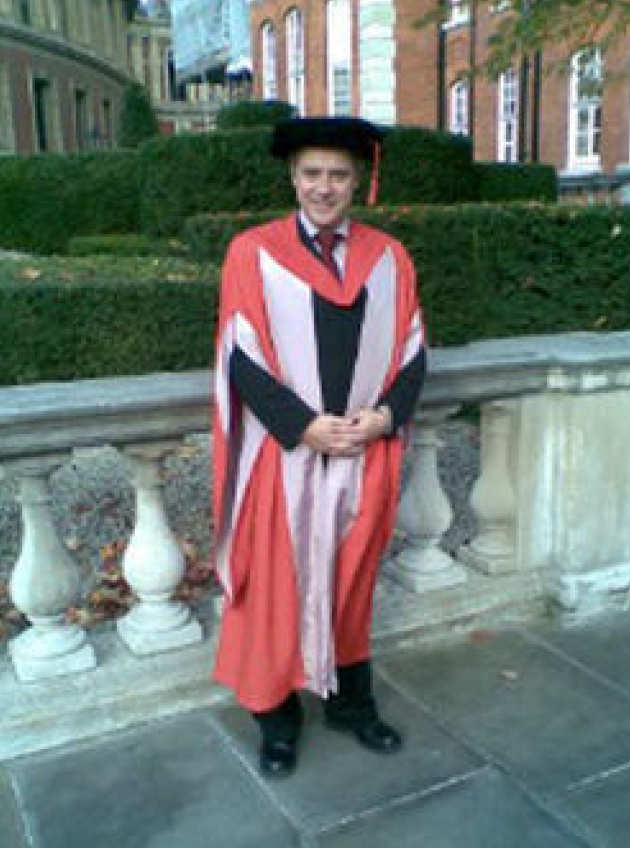
Professor Justin Chalker is the Matthew Flinders Professor and Research Leader at Flinders University 's College of Science and Engineering, affiliated with the Flinders Institute for NanoScale Science and Technology. He works at the intersection of organic chemistry, chemical biology, and materials science , focusing on sustainable chemistry solutions for environmental and technological challenges. Education: B.S. in Chemistry and B.A. in History/Philosophy of Science (University of Pittsburgh, 2006); D.Phil. in Chemistry (University of Oxford, supervised by Benjamin Davis) Career: Assistant Professor at University of Tulsa (2012-2015); Lecturer (2015) and Senior Lecturer (2017-present) at Flinders University His lab develops chemical tools for biological system interrogation and novel materials like sulfur-based polymers for mercury remediation, recyclable composites, and zinc-ion battery cathodes. Current projects include inverse vulcanization, waste valorization, and environmental applications of sustainable chemistry. His research aligns with UN Sustainable Development Goals for environmental protection and resource efficiency, particularly in material science (vulcanization, composite materials, polysulfides) and chemical biology (cysteine modification, protein chemistry). Key scientific recognitions: 2016 Tall Poppy Award, 2017 Dream Chemistry Award Finalist, Eureka Prize Finalist (2018), SA STEM Educator of the Year (2018), AMP Tomorrow Maker Award (2018) Prospective students can contact Dr. Chalker directly for Ph.D. and Honours opportunities. The lab website ( www.chalkerlab.com ) provides details on their research in sulfur chemistry, recyclable polymers, and chemical sustainability .
Prof. Dr. Armido Studer is a Full Professor of Organic Chemistry at the Institute of Organic Chemistry, Faculty of Mathematics and Natural Sciences, University of Münster (WWU Münster), Germany. He has been serving as a Full Professor (W3) since November 2009, following his appointment as a Full Professor (C4) in 2004. Studer also serves as the Spokesman of the International Research Training Group IRTG 2678 'Functional π-Systems: Activation, Interaction and Application (pi-Sys)' since 2021 and previously led the Collaborative Research Center SFB 858 'Synergetic Effects in Chemistry - From Additivity towards Cooperativity' from 2010 to 2021. Studer received his education at ETH Zürich, where he completed his diploma thesis and doctoral studies under Prof. Dr. D. Seebach. He conducted postdoctoral research at the University of Pittsburgh with Prof. Dr. D. P. Curran before returning to ETH Zürich for his habilitation. His academic career includes positions as Associate Professor at Philipps-Universität Marburg (2000-2004) and subsequent professorships at WWU Münster. Professor Studer's research focuses on radical chemistry, particularly in the development of new synthetic methods using radical intermediates. His work spans free radical chemistry, electron catalysis, and the application of nitroxides in organic synthesis. Recent research directions include 'Radical Chemistry with the Hydrogen Atom Through Water Activation (H-dot)' and 'The Electron as a Catalyst: e-cat', both funded by ERC Advanced Grants. His group has made significant contributions to C-H functionalization, skeletal editing of heterocycles, and cooperative catalysis involving photoredox and N-heterocyclic carbene systems. The research has applications in pharmaceutical chemistry, materials science, and sustainable chemical synthesis. Studer's publication record shows a strong focus on heterocyclic chemistry, radical reactions, and catalytic methodologies. His recent work demonstrates expertise in meta-selective functionalization of heteroarenes, skeletal editing techniques, and the development of novel radical cascade reactions. The group has published extensively in high-impact journals including Nature, Science, JACS, and Angewandte Chemie. Adolf-von-Baeyer-Denkmünze (2025) Arthur C. Cope Late Career Scholars Award of the American Chemical Society (2024) ERC Advanced Grants (2024, 2016) Multiple Highly Cited Researcher designations (2017-2022) Elected member of multiple academies (European Academy of Sciences, Academia Europaea, German National Academy of Sciences Leopoldina) Pedler Award of the Royal Society of Chemistry (2019) Professor Studer has mentored over 100 PhD students and postdoctoral researchers who have gone on to successful careers in academia and industry worldwide. His research is supported by significant grants including multiple ERC Advanced Grants and funding from the German Research Council (DFG) for collaborative research centers. The Studer Group maintains numerous international collaborations, particularly with institutions in Japan, China, and the United States, reflecting his global impact in organic chemistry. The Studer Group operates state-of-the-art laboratories at the University of Münster, equipped for advanced organic synthesis, photochemistry, and materials characterization. The group is known for its collaborative culture and has been featured in numerous group photos documenting its evolution since the early 2000s, first at Philipps-Universität Marburg and then at WWU Münster.
Professor George Britovsek (FRSC) is a leading figure in catalysis and sustainable carbon management at Imperial College London . As Director of the MRes in Catalysis & Engineering and Head of Teaching in Inorganic Chemistry, he bridges academic leadership with cutting-edge research. His work focuses on transition metal complexes for converting ethylene , alkanes , biomass , and CO₂ into valuable chemicals and fuels through industrial collaborations. Education : M.Sc. (Technical University of Aachen, 1990), Ph.D. (Aachen, 1993) under Prof. W. Keim Postdoctoral Training : University of Tasmania (1994-1996), Imperial College London (1996-2000) His research interests span: Selective oxidation of alkanes using bio-inspired iron complexes Alkene conversions to functional polymers via novel catalysts CO₂ valorization into polymers and cyclic carbonates Biomass-derived feedstocks for chemical synthesis Recent catalysis trends highlight his work on: Designing Fe-N/C catalysts for epoxidation Developing PN3P pincer ligands for H₂ activation Creating degradable polyethylene via iron-catalyzed chain growth Modeling alternating α-olefin distributions in chromium systems Awards : Fellow of the Royal Society of Chemistry (FRSC) Students & Collaborators actively engage in: Photocatalytic polymer degradation Electrocatalytic CO₂ conversion Functionalized polymeric materials 3D-printed catalytic scaffolds His Britovsek Research Group operates at the Molecular Sciences Research Hub, White City Campus, advancing both homogeneous and heterogeneous catalysis through experimental and computational approaches.
Elisabeth Prince is an Assistant Professor at the University of Waterloo, specializing in polymer chemistry and biomaterials. Her research focuses on developing advanced materials for biomedical applications, sustainable materials, and microfluidic technologies. Key areas include conductive hydrogels, cleavable polymers for recyclability, and biomimetic systems for drug delivery and cancer therapy. Her work bridges disciplines such as materials science, nanotechnology, and biomedical engineering. Recent studies involve applications in strain-stiffening hydrogels, filamentous aerogels for electromagnetic shielding, and microfluidic platforms for organoid production. These innovations aim to address challenges in regenerative medicine, environmental sustainability, and personalized cancer treatments. No scientific awards are listed in the provided materials. Research activities include collaborations on 3D-printed microfluidic devices and nanofibrillar hydrogels mimicking biological systems. No advising relationships or grants are explicitly mentioned in the text.
Jennifer L. West is the Dean of the University of Virginia School of Engineering and Applied Science and holds the Saunders Family Professorship in Engineering. She is a dual professor in Biomedical Engineering and Mechanical and Aerospace Engineering. Dean West has a 30-year record as a researcher, educator, inventor, and entrepreneur, focusing on biomaterials, nanotechnology, and tissue engineering to address unmet medical needs, particularly in cancer therapy. Her education includes a B.S. from MIT (1992) and a Ph.D. from the University of Texas at Austin (1996). Before UVA, she was at Duke University as the Fitzpatrick Family Distinguished Professor of Engineering and Associate Dean for Ph.D. Education. Research Interests: Biomaterials and biosynthesis Nanotechnology and tissue engineering Cancer therapy through engineered materials Scientific Awards: Member of the National Academy of Medicine (2023) Member of the National Academy of Engineering (2016) Over 20 patents, including foundational work for Nanospectra Biosciences’ clinical trials in cancer therapy Grants & Initiatives: Leading UVA Engineering’s focus on research, experiential learning, and entrepreneurship Recipient of a $900,000 grant for character-building education initiatives Labs & Teams: Developed hydrogel platforms for tissue integration, vascularization, and drug delivery Pioneered gold nanoshell-based photothermal cancer therapy
Sam Parkinson is a Research Fellow at Aston University's College of Engineering and Physical Sciences. He holds a PhD in Polymer Chemistry from the University of Leeds (2016–2020). His research focuses on advanced polymer materials, particularly in the areas of self-assembly, nanoparticle synthesis, and continuous flow processes. Key contributions include developing methods for 2D platelet formation via accelerated seed mechanisms and enhancing scalability of crystallization-driven self-assembly using flow reactors. Research interests span polymer synthesis, nanomaterials, and their applications in fields like biomaterials and agriculture. Recent work emphasizes tunable nanoparticle behavior and chemosensor design for biofluid analysis. Parkinson collaborates internationally and actively supervises PhD students in these areas. Publications highlight innovations in polymerization-induced self-assembly, flow chemistry, and material characterization. No scientific awards are explicitly listed, but his work has been cited in high-impact journals like Nature Synthesis and Macromolecules .
Christopher Bates is an Associate Professor in the Department of Chemistry & Biochemistry at the University of California, Santa Barbara (UCSB), with a joint appointment in the Division of Chemistry and Biochemistry (DCB). He leads the Bates Research Group, focusing on the design, synthesis, and application of soft materials. His lab develops advanced polymers and copolymers with tailored properties for applications in electronics, energy storage, and sustainable materials. Contact information includes cbates@ucsb.edu and an office in Engineering II Building. Research interests emphasize polymer architecture design, including block copolymers, bottlebrush networks, and degradable materials. Key areas include molecular cross-linking for photovoltaic stability, slide-ring gels for mechanical performance, and physics-informed machine learning for phase identification. The group also explores recyclable materials and sustainable synthesis methods. Recent work highlights advancements in α-lipoic acid-based materials, dynamic covalent networks, and electrochemical degradation strategies. The Bates Lab collaborates on projects such as tunable polyborosiloxane networks and self-healing elastomers. Advising includes Dr. Elizabeth Murphy (PhD 2025). No scientific awards are explicitly listed in the provided texts. The lab’s work is supported by grants such as the NSF CAREER award (2019) for block copolymer research. Labs and teams: The Bates Group operates within the UCSB Materials Department, leveraging interdisciplinary approaches to materials science challenges.
Julie M. Goddard is a Professor of Food Science at Cornell University , affiliated with the College of Agriculture and Life Sciences and the Department of Food Science . Her research focuses on Biomaterials and Biointerfaces , with emphasis on food quality, safety, and sustainability. She leads the Goddard Research Group, which develops innovative polymeric materials and coatings for food packaging, bioprocessing, and equipment. Key projects include antimicrobial/nonfouling coatings, biocatalytic materials, and active packaging to reduce synthetic additives and food waste. Dr. Goddard holds a Bachelor of Science (1999) and Ph.D. (2008) in Food Science from Cornell University. Her work is supported by grants from USDA NIFA, NIH, NSF, and FFAR. Notable awards include the National Excellence in Multistate Research Award (2019) , APLU Junior Moulton Medal (2015) , and Institute of Food Technologists Young Scientist Award (2013) . Her research spans nonmigratory active packaging (e.g., antioxidant, antimicrobial films), biofilm inhibition , and enzyme immobilization . Recent articles highlight advancements in PETase engineering for microplastic degradation and optimization of curcumin-grafted biodegradable materials. She collaborates across disciplines, including materials science, chemical engineering, and microbiology. Labs/Teams: The Goddard Group operates in Stocking Hall, Cornell. Projects include biocatalytic packaging , hydrogen sulfide formation in canned beverages , and consumer acceptance of novel food technologies . Key grants fund exploration of bio-based materials and food safety innovations.
Prof. Dr. Bart Jan Ravoo is a Professor of Organic Chemistry at the University of Münster, Germany, where he leads the "Synthesis of Nanoscale Systems" research group. He is also co-director of the Center for Soft Nanoscience (SoN) and spokesperson of the Collaborative Research Center (CRC 1459) "Intelligent Matter". His research focuses on creating novel nanoscale materials through supramolecular chemistry and molecular self-assembly. Prof. Ravoo received his PhD from the University of Groningen in 1998 and completed postdoctoral work at University College Dublin. He joined the University of Münster in 2007 as a professor, after serving as an assistant professor at the University of Twente. From 2012-2014, he served as Dean of the Department of Chemistry and Pharmacy. His research spans three main areas: biomimetic supramolecular chemistry, surface functionalization by molecular self-organization, and responsive materials. Prof. Ravoo's group is particularly known for developing photoresponsive materials using arylazopyrazoles and cyclodextrin-based systems for applications ranging from drug delivery to smart adhesives. His work often bridges the gap between fundamental molecular design and practical applications in biomedicine and materials science. Prof. Ravoo's recent publications demonstrate a strong focus on light-responsive materials, with particular emphasis on arylazopyrazole and arylazoisoxazole photoswitches. His research shows how molecular photoswitches can be integrated into various material systems including hydrogels, nanoparticles, and surface coatings to create materials with tunable properties that respond to specific wavelengths of light. This work has important implications for drug delivery, sensing, and adaptive materials. Recipient of the Schering-Plough Newman Scholarship in Organic Chemistry Member of the "Cells in Motion" research cluster Supervisor in the CiM-IMPRS Graduate Programme Prof. Ravoo has supervised over 40 PhD students and has been instrumental in establishing interdisciplinary research collaborations at the University of Münster. His group, consisting of approximately 25 researchers, is supported by multiple funding agencies including the Deutsche Forschungsgemeinschaft (DFG), European Union, and Volkswagen Foundation.
Dr. Omar Rifaie Graham is a Lecturer (Assistant Professor) in Chemistry at Queen Mary University of London's School of Physical and Chemical Sciences, joining in September 2023. He leads a research group focused on polymer-based artificial cells to study physicochemical parameters underlying biological phenomena and develop technologies at the Living/Non-Living Interface. Previously, he held postdoctoral positions at Imperial College London and the University of Fribourg, Switzerland. Education: Licenciado in Pharmacy (BSc+MSc), Universidad Complutense de Madrid, Spain (2008–2014) PhD in Chemistry, Adolphe Merkle Institute – University of Fribourg, Switzerland (2014–2018) Research Interests: Development of artificial cells using polymer nanocontainers, stimuli-responsive materials (light, hydromechanical stress), and applications in biotechnology, therapy, and diagnostics. His work includes creating polymersomes with novel functionalities for drug delivery, diagnostics, and synthetic biology. Key Achievements: ACS PMSE Future Faculty Award (2023) Swiss Nanoscience Institute 'Best paper in nanoscience' (2021) Best PhD thesis in Experimental Sciences, University of Fribourg (2019) Co-founded a diagnostics company spun from his PhD research (1M+ USD funding) Grants & Collaborations: Royal Society Grant: £29,907 (2025–2026) National Institute for Health Research Grant: £315,942 (2020–2025) RSC Grant for 'Mimicking colour perception with artificial cells' (2024) Lab/Team: Directs a research group at Queen Mary's Department of Chemistry, collaborating with institutions like Imperial College London and the University of Fribourg. Active in synthetic biology, nanomedicine, and biomimetic materials.
Professor Brigitte Voit leads the Macromolecular Chemistry division at the Leibniz Institute for Polymer Research Dresden (IPF) and holds the chair for 'Organic Chemistry of Polymers' in the Faculty of Mathematics and Natural Sciences / Faculty of Chemistry and Food Chemistry at Technische Universität Dresden. She is actively involved in interdisciplinary collaborations with the Center for Advancing Electronics Dresden (cfaed), Centre for Regenerative Therapies Dresden (CRTD), and the Dresden International Graduate School for Biomedicine and Bioengineering (DIGS-BB) through the DRESDEN-concept initiative. Additionally, she serves as chairwoman of the Materialforschungsverbund Dresden (MFD). Academic Affiliation: Technische Universität Dresden Research Focus: Synthesis of multifunctional polymers, dendritic polymers, bioactive materials, responsive hydrogels, radical ring-opening polymerization Research Trends: Her recent publications highlight advancements in bioinspired polymer systems, including polymersome membranes for synthetic cells, light-driven enzymatic control, hierarchical biomimetic structures, and tunable hydrogels. These works reflect her expertise in integrating polymer chemistry with biomedicine and sustainable materials. Interdisciplinary Roles: Involvement in cfaed, CRTD, DIGS-BB, and DRESDEN-concept Leadership: Former Scientific Director at IPF (2002-2022), current department head Publications demonstrate her group's focus on responsive and bioactive polymer architectures, with applications in drug delivery, bioelectronics, and sustainable materials.
LaShanda T. J. Korley is a Distinguished Professor of Engineering at the University of Delaware with joint appointments in Materials Science and Engineering and Chemical & Biomolecular Engineering. She directs the Department of Energy's Center for Plastics Innovation (CPI), co-directs the UD CHARM Materials Research Science and Engineering Center, leads the NSF PIRE project on Bio-inspired Materials and Systems, and serves as Associate Director of the Center for Research in Soft matter & Polymers (CRiSP). Her research program pioneers bio-inspired sustainable materials through a bioeconomy framework, focusing on molecular design of functional polymeric systems including thermoplastics, networks, composites, and gels. Core interests span plastics deconstruction/upgrading, sustainable materials development, and novel fiber/composite manufacturing, with emphasis on lignin-derivable polymers and peptide-polymer hybrids for circular polymer solutions. Recent publications (2024-2025) reveal intense focus on polymer upcycling through advanced depolymerization techniques for polyurethanes, polystyrene, and polyethylene. Her group innovates across catalytic conversion, enzymatic deconstruction, vitrimer chemistry, and bio-hybrid hydrogels, demonstrating interdisciplinary approaches to transform plastic waste into high-value materials while addressing performance-sustainability tradeoffs. Scientific Awards 2023 ACS Fellow 2023 RSC Fellow 2023 AIChE Fellow 2023 ACS POLY Fellow 2023 U.S. Science Envoy 2022 AIChE MAC William W. Grimes Award for Excellence in Chemical Engineering 2022 APS Fellow 2022 ACS PMSE Fellow 2021 AIChE MAC Gerry Lessells Award 2021 Chemical and Engineering News Black Trailblazer 2020 AIMBE Fellow 2019 NOBCChE Lloyd N. Ferguson Young Scientist Award Korley secures major federal funding to advance sustainable polymer science, including DOE support for catalytic plastic waste deconstruction and NSF backing for international bio-inspired materials research. Her grants portfolio drives interdisciplinary collaboration across chemistry, engineering, and environmental science to develop circular economy solutions. She mentors a dynamic research group training next-generation scientists in advanced materials characterization and sustainable design principles. Her laboratories at the University of Delaware integrate molecular synthesis, catalytic testing, and advanced characterization to develop next-generation polymer systems. The research environment emphasizes cross-disciplinary teamwork between chemists, materials scientists, and engineers to tackle plastics sustainability challenges through fundamental molecular design and scalable process innovation.
Elio Giamello is a Full Professor of Inorganic Chemistry at the University of Turin, Italy, where he has been a faculty member since 1986, first as Associate Professor (1986-1999) and then as Full Professor (1999-present). He has held significant administrative roles including Head of the Department of Chemistry (2005-2008), Head of the PhD School in Science and High Technology (2006-2012), and Member of the Board of Governors of the University of Turin (2013-present). Professor Giamello's research focuses on solid state and surface chemistry, particularly metal oxide-based materials. His work centers on the application of Electron Paramagnetic Resonance (EPR) spectroscopy to investigate paramagnetic and radical centers in bulk and surface materials. Since around 2000, he has expanded his research to include visible light-activated photocatalytic systems, developing novel doped oxide materials like zirconium dioxide for environmental applications. His extensive publication record includes 238 ISI-classified journal papers (as of March 2016) with 8,873 citations and an h-index of 49. His research spans fundamental surface chemistry to applied photocatalysis, with particular expertise in EPR characterization of defects and reactive intermediates in oxide materials. Professor Giamello has received significant recognition including membership in the prestigious Accademia delle Scienze di Torino (2013), the European Academy of Sciences (2012), and a Humboldt Research Award (2007): Nominated member of the ACCADEMIA DELLE SCIENZE DI TORINO (2013) Member of the European Academy of Sciences (2012), Discipline: Materials Science Winner of a Humboldt Research Award (2007) for work in Physical Chemistry of Surfaces He has supervised numerous undergraduate and PhD students throughout his career and maintains active collaborations with research groups across Italy, Europe, the United States, and Japan. Professor Giamello has also been active in teaching both at his home institution and as an Invited Professor abroad, including at Advanced Schools throughout Italy and internationally. Currently, he leads a research team at the University of Turin investigating paramagnetic centers in oxide materials and developing new photocatalytic systems activated by visible light.
Prof. Daryl W. Yee is a Tenure Track Assistant Professor at École Polytechnique Fédérale de Lausanne (EPFL), affiliated with the Institute of Electrical and Micro Engineering (IEM) and multiple teaching units. He holds a B.Eng. from Imperial College London, and M.Sc. and Ph.D. from Caltech, followed by postdoctoral research at MIT. His research focuses on integrating molecular design and materials processing to develop advanced functional materials addressing societal challenges in healthcare, energy, and climate change. Key research directions include Polymer-to-X additive manufacturing, dynamic polymers, microstructure control in polymers, and novel 3D printer development. Education highlights include: B.Eng in Materials Science and Engineering, Imperial College London (2011-2014) M.Sc. and Ph.D. in Materials Science, Caltech (2014-2020) Postdoctoral Associate at MIT (2020-2022) His lab, ALCHEMY, emphasizes democratizing advanced materials manufacturing through accessible chemistries and processing strategies. Current teaching roles span Materials Science and Engineering and Microengineering. Four PhD students are currently advised, and he oversees courses in electrical engineering and materials engineering. Research interests emphasize hydrogel-based additive manufacturing, nanoparticle superlattices, and polymer design. Though no funded PhD/postdoc positions are currently open, self-funded researchers are encouraged to contact him directly.
Aaron Esser-Kahn is a Professor of Molecular Engineering at the University of Chicago's Pritzker School of Molecular Engineering. His research focuses on immunoengineering, adaptive materials, and carbon capture. He leads the Esser-Kahn Lab, which emphasizes interdisciplinary collaboration among biologists, chemists, and engineers. Education: B.S. from California Institute of Technology, advanced studies at UC Berkeley, and postdoctoral research at the University of Illinois Urbana-Champaign. Prior to joining UChicago PME in 2017, he was at the University of Irvine. Research interests include designing vaccines that induce trained immunity, developing adaptive polymers inspired by biological systems, and advancing carbon capture technologies. His lab explores mechanisms of innate immunity using cutting-edge techniques like lattice light sheet microscopy and fluidic force microscopy. Recent articles highlight innovations in vaccine adjuvants, nanoparticle delivery systems, and mechanically adaptive materials. The lab’s work is supported by grants from institutions like NIH and NSF. His team has advised numerous students, many of whom now hold positions in academia, industry, and government. The lab also emphasizes DEI initiatives and innovative teaching methods.