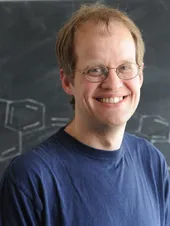
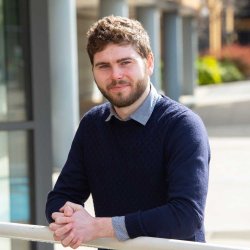
Satu Häkkinen is an Assistant Professor of Polymer Chemistry at Tampere University’s Faculty of Engineering and Natural Sciences, within the Chemistry and Advanced Materials (CAM) department. Her research focuses on sustainable polymers, polymer synthesis, and advanced materials characterization. She leads the Polymer Chemistry and Materials Research Group. Education: M.Sc. Chemistry (University of Helsinki, 2017), Ph.D. Chemistry (University of Warwick, 2022) Postdoctoral Research: NSF Center of Sustainable Polymers, University of Minnesota Her expertise spans polymer synthesis techniques (e.g., CRP, ROP, photopolymerization), homogenous/heterogeneous polymerization processes, and characterization methods such as NMR, SEC, and X-ray/neutron scattering. Her work emphasizes sustainable polymers and chemical recycling. Current projects include Valopolymerointimenetelmiä polymeerien edistyneeseen tuotantoon (PHOTOPOLY) , focusing on advanced polymer manufacturing methods. Her recent articles highlight innovations in RAFT polymerization, graft copolymer design, and self-assembly. Research trends emphasize sustainable materials and functional polymer architectures. No scientific awards listed, but her work is supported by grants from NSF and other institutions. She currently has no documented advisees or postdoctoral trainees. Lab/Team: Polymer Chemistry and Materials Research Group at Tampere University, focusing on sustainable and advanced polymeric materials.
Dr. David Fox is an Associate Professor in the Department of Chemistry at the University of Warwick. His research focuses on synthetic organic and medicinal chemistry, drug discovery and development, asymmetric and catalytic reactions, and synthetic route design for lead molecules. Current projects include medicinal chemistry for enzyme inhibitors, synthetic methodology for heterocycles, and collaborations with RxCelerate Ltd. He teaches undergraduate modules CH222 Speclab, CH271, CH3E9, and CH408. Research Interests: Specializing in small molecule and asymmetric synthesis, with applications in medicinal chemistry/drug discovery and GMP process development. Key areas include drug molecule design, fast synthesis methods, and synthetic route optimization. Publications & Patents: His work spans synthetic methods for autophagy inducers, anti-inflammatory agents, ligands for GPCRs, and molecular imaging of reactive intermediates. Collaborations with IBM Zurich on NC-AFM/STM have enabled structural analysis of otherwise unisolable molecules. Education: BA and DPhil from the University of Oxford, followed by postdoctoral research at Cambridge. Students: Supervises PhD/MSc students Matthew Clayton, Matthew Taylor, and Emma Scott.
Tanja Junkers is a full Professor in the School of Chemistry at Monash University, Australia, where she leads research on continuous flow polymerizations, nanoparticle design, and precision polymers. She also holds a guest professorship at Hasselt University, Belgium. Education: PhD in Physical Chemistry from Georg-August University (Göttingen, Germany, 2006); Diplom (Master) in Chemistry from the same institution (2002). Prior roles include research associate at UNSW Sydney and senior scientist at Karlsruhe Institute of Technology. Research focuses on controlled radical polymerizations, flow chemistry, and applying machine learning to polymer synthesis. Key interests include degradable polymers, self-assembly of block copolymers, and sustainable materials development. Her work contributes to UN Sustainable Development Goals related to sustainable industry and innovation. Current projects include the ARC-funded 'Sustainable Reversible Polymerisation' and 'Data Driven Polymer Synthesis'. She serves as Associate Editor for Polymmer Chemistry (Royal Society of Chemistry). Advising: Actively supervising PhD students in areas like continuous flow reactor polymerization and peptidomimetic synthesis. Her research teams collaborate internationally, with recent projects involving universities in Australia, Germany, and Belgium. Lab/Teams: Leads the Monash group focused on precision polymer design, integrating automation and high-throughput experimentation. Collaborates with interdisciplinary teams on chemical manufacturing and energy materials.
Dr. Hendrik Frisch is an Associate Professor in the School of Chemistry & Physics at Queensland University of Technology (QUT). He holds a Doctor of Natural Science from the University of Münster and is a member of the Royal Australian Chemical Institute (MRACI). His research focuses on peptide chemistry, self-assembly, polymer chemistry, and photochemistry, with applications in macromolecular and materials chemistry and organic chemistry. Education: Doctor of Natural Science (University of Münster). Research interests include the design of functional polymers through radical ring-opening polymerization, pH-responsive materials, light-driven catalytic systems, and peptide-polymer conjugates. His work bridges organic synthesis, materials science, and photochemistry, emphasizing applications in smart materials and sustainable chemistry. Publications highlight advancements in photochemical action plots, light-printed microstructures, and peptide-based polymer folding. He leads the 'Programming Polymer Function via Ring-opening Polymerisation of Peptides' project, funded by an Australian Competitive Grant. Supervision: Currently mentoring PhD students in advanced macromolecular architectures, photo-responsive polymers, and catalytic microfluidic devices. Completed supervisions include studies on single-chain nanoparticles and enzymatically degradable polymers. Labs/Teams: Engaged in collaborative research at QUT's School of Chemistry & Physics, focusing on dynamic covalent chemistry and light-activated materials.
Professor Duncan Wass serves as Professor of Catalysis and Director of the Cardiff Catalysis Institute (CCI) at Cardiff University, where he leads research in organometallic chemistry and homogeneous catalysis with applications for low carbon manufacturing and net zero goals. His work bridges fundamental science with practical sustainable applications across multiple domains. Wass completed his undergraduate studies at Durham University (1992-1995) followed by a PhD at Imperial College London (1995-1998) under Professor Vernon Gibson CB FRS, focusing on late transition metal olefin polymerisation catalysis. After working at BP Chemicals Ltd from 1999-2004, including positions at Sunbury-on-Thames laboratories and BP's Brussels research site, he joined the University of Bristol's School of Chemistry. Promoted to Professor of Catalysis in 2012, he moved to Cardiff University in 2018 to assume his current leadership role. His research portfolio demonstrates remarkable breadth and impact, with significant contributions in biofuel production through catalytic upgrading of alcohols, frustrated Lewis pair chemistry for small molecule activation, CO 2 conversion technologies, and catalytic approaches to waste valorization. The interdisciplinary nature of his work connects fundamental organometallic chemistry with practical applications in energy sustainability, as evidenced by his numerous high-impact publications in journals like Catalysis Science & Technology , ACS Catalysis , and Organometallics . As Director of the Cardiff Catalysis Institute, Wass has established a vibrant research community that fosters cross-disciplinary collaboration between chemists, engineers, and environmental scientists. His leadership positions him at the forefront of catalysis research addressing global sustainability challenges through innovative chemical solutions.
Dr. Quinn A. Besford serves as Group Leader for Functional Polymer Architectures and Research Cluster Leader for Bio-Applied Polymers at the Leibniz Institute of Polymer Research Dresden (IPF), a renowned research institution in Germany. As part of the Division Physical Chemistry and Physics of Polymers, Dr. Besford leads a dynamic research team dedicated to advancing polymer science with biomedical applications. The research program bridges fundamental polymer physics with practical applications in nanomedicine and sensing technologies. Dr. Besford's research focuses on two primary areas: theranostics and polymer-based sensing technologies. In theranostics, the team develops specific nanoparticle architectures to achieve desirable bio-nano interactions in vivo, aiming to overcome biological barriers against nanomedicine for successful disease treatment and diagnosis. The polymer-based sensing research involves high-precision synthesis of unique polymer architectures with integrated fluorophores, enabling 'touch'-based sensing at the nanoscale where changes in polymer conformation can be spatially resolved. This work has significant implications for developing new functional materials for biomedical applications. Analysis of Dr. Besford's recent publications reveals a strong focus on polymer architectures, particularly polymer brushes and glycogen-based nanoparticles. The research trajectory shows increasing sophistication in nanoscale sensing technologies with applications in biomedicine, demonstrating particular strength in fluorescence-based characterization techniques and nanoparticle engineering for biological interfaces. The work consistently bridges fundamental polymer science with practical applications in nanomedicine. Dr. Besford has received several prestigious awards: 2022 IPF Innovation Prize for 'The Development of Mechanofluorescent Polymer Brush Surfaces: Towards Nanoscopic Touch-Sensitive Surfaces' 2022 Discovery Early Career Researcher Award (DECRA) from the Australian Research Council 2019 Ludwig Leichhardt Memorial Fellowship from the Alexander von Humboldt Foundation Dr. Besford mentors multiple PhD candidates and postdoctoral researchers, with a diverse international team. The research program is supported by significant funding from multiple sources including the Deutsche Forschungsgemeinschaft (DFG), Australian Research Council (ARC), IPF Leibniz Research Alliance, PEPSA-MATE Marie Sklodowska-Curie Actions, and the Alexander von Humboldt Foundation. Current projects focus on mechanofluorescent surfaces for investigating microscopic contact forces and understanding cell traction forces. The Besford Lab utilizes advanced techniques including Atomic Radical Transfer Polymerisation (ATRP), Reversible Addition-Fragmentation Chain Transfer (RAFT) polymerisation, Fluorescence Lifetime Imaging Microscopy (FLIM), Confocal Laser Scanning Microscopy (CLSM), Atomic Force Microscopy (AFM), and Small Angle X-ray Scattering (SAXS). The team comprises postdocs, PhD candidates, and research assistants working collaboratively on cutting-edge polymer research with direct biomedical applications.
Dr. Almar Postma is a Team Leader and Senior Research Scientist in the Polymer Chemistry department at CSIRO, specializing in advanced polymerization techniques and applications. His research focuses on RAFT polymerization, waste plastic depolymerization, and polymer-based drug delivery systems. He holds a PhD in Polymer Chemistry from the University of New South Wales and a BSc (Hons.) from the University of Surrey. Postma has led projects on nanobiomedicine, electroactive materials, and high-throughput polymer synthesis automation. Current Roles: Team Leader (Polymer Chemistry), Senior Research Scientist Key Achievements: CSIRO Medal for RAFT Polymerization contributions, Julius Career Award, OCE Postdoctoral Fellowship Professional Experience: Postdoctoral Research Fellow at the University of Melbourne (2005–2008), Experimental Scientist at CRC for Polymers (1999–2001) His research interests span functional polymer design, sustainable materials, and biomedical applications. Postma’s work integrates chemistry and engineering to address challenges in drug delivery, energy storage, and environmental sustainability. He has pioneered methods for light-induced polymer synthesis and antimicrobial polymer development.
Nathaniel Bingham is a Senior Lecturer in Chemistry at the University of Surrey, where he is affiliated with the School of Chemistry and Chemical Engineering within the Faculty of Engineering and Physical Sciences. He teaches across multiple chemistry courses including the Chemistry Foundation Year, which he leads, as well as courses in physical processes, organic structure, reactivity, and carbon-carbon bond formation. Dr. Bingham earned his MChem degree from the University of Southampton in 2016 before pursuing his PhD at the University of Surrey under the supervision of Dr. Peter Roth. His doctoral research focused on the synthesis of novel monomers for degradable polymers, specifically developing the first thionolactone capable of undergoing radical ring-opening polymerization (RROP, TARO). Dr. Bingham's research centers on sustainable polymer chemistry with a focus on degradable materials. His work spans several key areas including radical polymerization techniques, development of degradable polymers through thionolactone chemistry, and radical ring-opening polymerization (RROP). He has made significant contributions to understanding how thionolactones can be incorporated into various polymer systems to create materials that can be fully degraded under specific conditions, with applications ranging from drug delivery to sustainable materials. His research often bridges fundamental polymer chemistry with practical applications in education and industry. Analysis of Dr. Bingham's publication record reveals a consistent focus on degradable polymer systems, particularly those utilizing thionolactone chemistry. His work demonstrates expertise in multiple polymerization techniques including radical, cationic, and controlled methods like RAFT and ATRP. A notable trend is his exploration of how small structural changes in thionolactone monomers affect polymerization behavior and degradation properties. More recently, he has expanded his research to include applications in chemistry education, particularly examining how games and innovative teaching methods can enhance student learning. Dr. Bingham has been actively involved in mentoring students and developing educational approaches. Since 2019, he has led the Chemistry Foundation Year course at Surrey while also investigating the use of games in teaching. His educational research extends to examining how extracurricular activities like hackathons can promote academic and employability skills among students. While specific grant information isn't detailed in the provided text, his extensive publication record suggests successful research funding. Dr. Bingham appears to be part of a collaborative research group focused on polymer science, working closely with Dr. Peter Roth and other colleagues at the University of Surrey. His research has practical applications in developing sustainable materials that can address plastic waste concerns through designed degradation pathways. The group's work has implications for creating circular polymer economies where materials can be fully recovered to their monomeric building blocks.
Dr. Almar Postma is a Senior Research Scientist and Team Leader in Polymer Chemistry at CSIRO. His roles include leading research in RAFT polymerization and its applications in nanobiomedicine, electroactive materials, and waste plastic depolymerization. He holds an honorary fellowship at the University of Melbourne and has been affiliated with CSIRO since 1997. Education: PhD in Polymer Chemistry, University of New South Wales (2005) BSc (Hons) in Chemistry, University of Surrey, UK (1997) Research Focus: Postma’s work centers on radical polymerization mechanisms, high-throughput polymer synthesis, and catalytic depolymerization. He pioneers applications in drug delivery systems and flow chemistry automation using Chemspeed technology. His research bridges fundamental polymer science with industrial and biomedical innovations. Awards & Recognition: CSIRO Medal (2003) for groundbreaking contributions to RAFT technology Julius Career Award (2018-2021) OCE Postdoctoral Fellowship (2014-2017) Grants & Contributions: Lead the OCE-PDF grant (2014-2017). His work has driven strategic partnerships, including the Engineered Polymer/DuPont Alliance (2003). He advises on polymer synthesis automation and waste plastic recycling initiatives. Labs/Teams: Head of the Polymer Chemistry team at CSIRO, advancing projects in flow polymerization and nanomedicine applications.