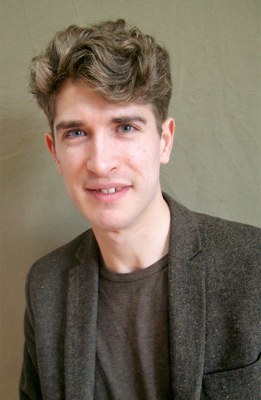
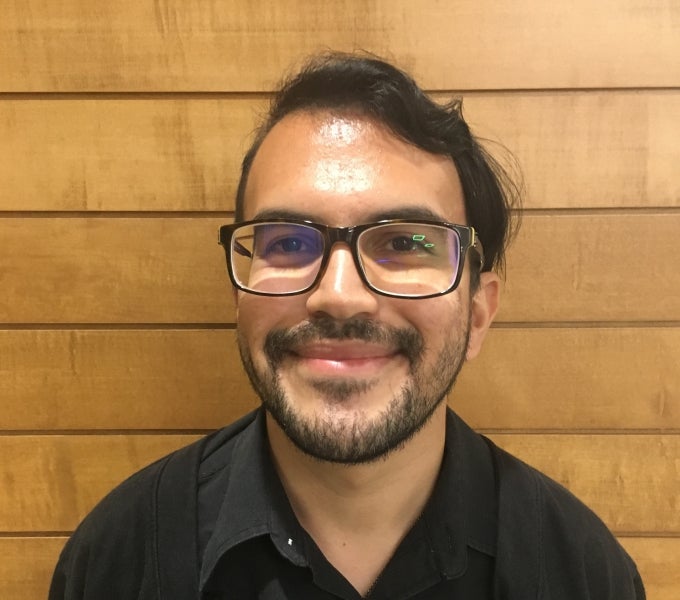
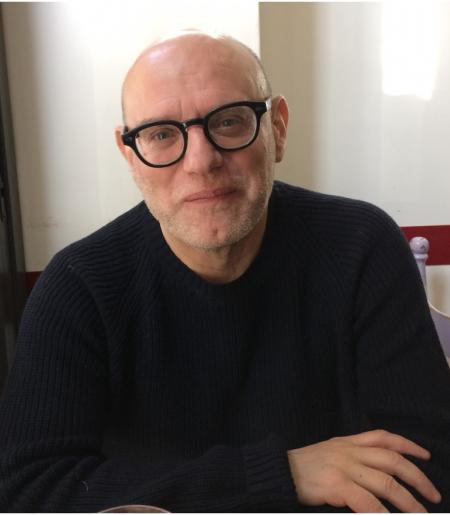
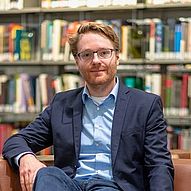
Dr. Victor Kempf is a postdoctoral researcher at the Institut für Philosophie , Humboldt-Universität zu Berlin, since March 2025. He completed his PhD at Goethe-Universität Frankfurt in 2017 and focuses on social and political philosophy from a critical theory perspective.
Dr. Femke Roosma is an Associate Professor at the Tilburg School of Social and Behavioral Sciences , affiliated with the Department of Sociology . Her research focuses on public opinion, welfare state legitimacy, and political discourse dynamics. Current courses: Soc. Movements in Contemporary Societies, Social Problems, Hybrid Organizations. Email: F.Roosma@tilburguniversity.edu Research Interests : Welfare state attitudes and deservingness theory Universal Basic Income (UBI) policy debates Impact of radical right discourse on welfare chauvinism Democratic interventions for societal discontent Recent Publications analyze multidimensional UBI support, welfare chauvinism during crises, and Dutch Twitter discourse networks. Scientific Recognition : Fellow, Wetenschappelijk Bureau GroenLinks (2022–present) External Roles : Chairman, Stichting Straatalliantie (2023–) Professor by Special Appointment, Dr. J.M. Den Uyl Chair, University of Amsterdam (2023–) Member, Stichting De Waterheuvel (2022–) Former Boardmember, Stichting Pro Juventute (2016–2021) Former Member, Amsterdam City Council (2014–2022)
Elias Chavarria Mora is a Lecturer at the School of Political Science, University of Costa Rica, and a PhD candidate in Political Science at the University of Pittsburgh (expected 2025). He focuses on comparative political behavior and Latin American politics , with regional expertise in Central American electoral systems and party politics . Education: PhD in Political Science (2025, University of Pittsburgh) M.A. in Political Science (2020, University of Pittsburgh) Licentiate in Political Science (2017, University of Costa Rica) B.A. in Political Science (2015, University of Costa Rica) His research investigates social media's role in elections , ideology , and unconventional political participation . He employs data science methods , including text analysis, spatial econometrics, and machine learning. Recent publications analyze political education curricula , data protection laws , and electoral dynamics in Latin America. His work appears in journals like Latin American Politics and Society and Revista Latinoamericana de Opinión Pública . He coordinates the Observatorio de la Política Internacional Sergio Iván Moya Mena at the University of Costa Rica and has collaborated with the University of Salamanca's Parliamentary Elites in Latin America Observatory.
Auritro Majumder is Associate Professor of English at the University of Houston's College of Liberal Arts and Social Sciences, holding a courtesy appointment in the India Studies Program. His academic profile spans literary scholarship, critical theory, and intellectual history with a focus on non-Western perspectives. His educational background includes a Ph.D. in English from Syracuse University (2014), a Certificate in Critical Theory from Cornell University (2012), an M.A. (First Class) in English from Jadavpur University (2009), and a B.A. (First Class Honours) in English from Jadavpur University (2007). Majumder's research centers on peripheral internationalism and decolonial knowledge production , examining literary traditions across India, the Soviet Union, China, Latin America, and the United States. His work bridges literary theory , critical race studies , and global political movements , with particular emphasis on Bengali literature, caste-race intersections, and South-South cultural networks. His monograph Insurgent Imaginations: World Literature and the Periphery (Cambridge University Press, 2020) redefines world literature through non-Western frameworks. Analysis of his 15 most recent publications reveals consistent engagement with decolonial aesthetics , transnational solidarity , and subaltern epistemologies . His scholarship demonstrates interdisciplinary reach spanning literary studies, political theory, film criticism, and comparative intellectual history, with increasing focus on contemporary debates around planetary consciousness and peripheral modernities. His scientific recognition includes: Project Completion Grant, CLASS (2019) William Lee Pryor College Professorship (2018-2019) Research Progress Grant (2017) CLASS Research Funds (2016) New Faculty Summer Research Grant (2015) Majumder actively contributes to academic service as Executive Committee member of the Modern Language Association’s South Asian and South Asian Diasporic Language, Literature and Culture Forum, editorial board member for Mediations , jurist for the National Endowment for the Humanities, and reviewer for multiple international journals. He has lectured globally across North America, South Asia, Europe, and Brazil. His teaching portfolio includes courses on postcolonial literature, modern Indian literature, and graduate seminars in postcolonial theory. Current projects include a monograph titled The Global South in Literature and Theory and a co-edited anthology Cultures of the Cold War in South Asia .
Lea Ypi is a Professor of Political Theory at the London School of Economics and Political Science (LSE) and an Honorary Professor of Philosophy at the Australian National University. She holds degrees from the University of Rome La Sapienza and a PhD from the European University Institute, followed by postdoctoral research at Nuffield College, Oxford. Her work spans political theory, the history of philosophy, Marxism, critical theory, and Kantian philosophy. Notable publications include Global Justice and Avant-Garde Political Agency , The Meaning of Partisanship (with Jonathan White), and Free: Coming of Age at the End of History . Ypi’s research has been recognized with the British Academy Prize and a Leverhulme Prize. She is a Fellow of the British Academy, Academia Europea, and the Albanian Academy of Sciences. Her research interests include revolutionary theory, Kantian philosophy, structural injustice, and global justice. Key publications address topics like Kant’s views on colonialism, the ethics of migration, and the role of partisanship in democracy. Ypi’s academic contributions bridge normative political theory with critical engagement in contemporary social and political issues. Awards include the British Academy Prize for Excellence in Political Science (2015), Leverhulme Prize (2014), and fellowships in leading academic institutions. Her interdisciplinary approach integrates historical, philosophical, and contemporary analyses to address urgent political questions.
Enzo Traverso is the Susan and Barton Winokur Professor in the Humanities at Cornell University, affiliated with the College of Arts and Sciences. His scholarly work bridges the Department of History, French Studies Program, Jewish Studies Program, and Romance Studies. Born in Italy, he studied at the University of Genoa and earned his PhD from EHESS in Paris (1989). Before joining Cornell in 2013, he taught political science in France for two decades and held visiting professorships across Europe and Latin America. Education: University of Genoa (Italy), Ecole des Hautes Etudes en Sciences Sociales (PhD, 1989) Traverso’s research explores intellectual history, historiography, and critical theory, focusing on twentieth-century Europe. His work interrogates the intersections of war, fascism, genocide, revolution, and collective memory. His authored books, translated into over fifteen languages, have established him as a leading scholar in these areas. His recent publications reflect a trajectory analyzing historical memory, revolutionary ideologies, and the resurgence of far-right movements. Articles in journals like History & Theory and Historical Materialism further contextualize his contributions to debates on totalitarianism, Jewish modernity, and postwar political thought. Awards: Premio Pozzale (2014), Premio Lo Straniero/Gli Asini (2018), Premio Napoli (2022) Traverso has advised students through courses on topics such as Left-Wing Melancholia, Holocaust memory, and the European Civil War. His academic influence extends via editorial contributions to journals like Jacobin, Constellations, and Il Manifesto.
Stine Krøijer is an Associate Professor in the Department of Anthropology at the University of Copenhagen, Faculty of Social Sciences. Her research focuses on political anthropology, nature-culture relations, cosmology, time, multispecies ethnography, anarchism, autonomy, and indigenous peoples, with regional expertise in the Amazon and Scandinavia. She is actively involved in major research projects such as 'Lokale Landvindinger' (2021–2025) and 'Fire and Political Alterity in Amazonia' (2023–), funded by the Velux Foundation and the Danish Research Council, respectively. Her educational background includes a PhD in Anthropology from the University of Copenhagen, awarded in 2011. Prior to her academic career, she worked with Oxfam_IBIS on forest, climate, and indigenous rights issues in the Amazon basin from 2002 to 2007 and again from 2010 to 2014. Stine Krøijer’s research explores the political agency of non-human entities like trees, the performative aspects of climate activism, and the temporalities of radical politics. Her work bridges anthropology with environmental studies, political theory, and indigenous epistemologies. She investigates how radical environmental change—such as deforestation, peatland restoration, and forest fires—reshapes political subjectivities and social futures. Her recent publications reflect a strong trend in climate politics, environmental activism, and the ontological status of nature. Themes include the agency of trees, dystopian imaginaries in environmental movements, and the co-creation of landscapes in Denmark. Her research combines ethnographic depth with theoretical innovation, particularly in understanding how ecological crises generate new forms of political alterity. Member, Expert Council on Nature National Parks, Ministry of Environment, Denmark Coordinator, Green Solution Centre, University of Copenhagen Editor, Tidsskriftet Antropologi She teaches courses on climate, nature, environment, global flows, project design, and fieldwork methods. Her advisory and grant activities are centered on externally funded research projects focusing on climate change, indigenous rights, and environmental transformation. She is also involved in public engagement through lectures and exhibitions such as 'Amazon Trails' and 'Climate/Kettle: Aesthetics of Resistance'. Stine Krøijer leads and participates in research groups focused on nature, environment, and climate. She collaborates with interdisciplinary teams across Denmark and Latin America, particularly in the Amazon region. Her work is embedded in both academic and policy-oriented networks, contributing to the Green Solution Centre and national environmental councils.
Jeremy Blackburn is an Associate Professor in the Department of Computer Science at Binghamton University. He co-founded the International Data-driven Research for Advanced Modeling and Analysis Lab ( iDRAMA Lab ) and leads its Binghamton satellite. His research focuses on large-scale measurement and analysis of social media, particularly the behavior of malicious actors and disinformation campaigns.
Professor Myrto Tsakatika is a distinguished academic in the Department of Politics at the University of Glasgow's College of Social Sciences, where she has been employed since 2007. She holds the position of Professor in Political & International Studies and serves as Undergraduate Programme Director. Her office is located in the Adam Smith Building (R1311 Level 13), a prominent building housing the university's social sciences disciplines. Dr. Tsakatika earned her PhD from the University of Essex and previously taught at the Athens University of Economics. She has held prestigious visiting positions at the University of Trieste, the Juan March Foundation in Madrid, and the Centre Emile Durkheim at SciencesPo Bordeaux, establishing her as a scholar with significant international connections. Professor Tsakatika's research spans several interconnected domains within political science. Her primary focus lies in European Union politics and governance, particularly examining the democratic deficit, new governance modes, and evolving public attitudes toward European integration. More recently, she has developed expertise in radical left parties and populism, with special attention to Southern European cases including Greece, Portugal, Italy, and Spain. Her work often bridges comparative politics with European studies, analyzing how domestic political developments interact with broader European integration processes. She has made significant contributions to understanding SYRIZA's rise and governance in Greece as well as similar phenomena across Southern Europe. Analysis of Professor Tsakatika's recent publications reveals a consistent scholarly trajectory focused on the intersection of European integration, radical left politics, and populism in Southern Europe. Her work demonstrates increasing specialization in comparative analysis of radical left parties, particularly examining their organizational structures, electoral strategies, and governance challenges. The geographical focus remains firmly rooted in Southern Europe while maintaining connections to broader European political dynamics. Her publications appear in high-impact journals and prestigious academic presses, indicating recognition within the political science community. Professor Tsakatika has successfully supervised numerous PhD students whose research aligns with her expertise, including projects on populism's impact on foreign policy, EU peacebuilding, and the democratic deficit in the European Union. Her grant portfolio reflects sustained research activity, including projects funded by the Carnegie Trust, Caledonian Research Foundation, Royal Society of Edinburgh, and European Commission programs such as PADEMIA (2013-2016) and EUROSUD (2018-2024). These grants have supported comparative research on Southern European politics, European integration, and radical left parties. Within the academic community, Professor Tsakatika serves as Associate Editor for South European Society and Politics and as Editor for Politics Politics and International Relations. She teaches undergraduate courses on the Politics of the European Union (POLITIC4020) and postgraduate courses on Global Social Movements (POLITIC 5111), directly connecting her research expertise to her teaching responsibilities.
Benjamin Kohlmann serves as Professor of English Literature and Culture at the University of Regensburg, where he has held a full professorship since November 2020. Previously, he was Assistant/Associate Professor at the University of Freiburg (2011-2019) and held visiting positions at Columbia University, Cambridge University, UC Davis, and Queen Mary University of London. An elected member of Academia Europaea and the International Association of University Professors of English, Kohlmann maintains an active international research profile with current visiting fellowships at Clare Hall, Cambridge (2024-25). Education Habilitation in English Literature, University of Freiburg (2011-2017) PhD in English Literature, Lincoln College, University of Oxford (2007-2010) MA in Philosophy/English Literature, University of Freiburg and Yale University (2004-2007) Undergraduate Studies in Philosophy/English Literature, University of Freiburg (2001-2004) Research Focus Professor Kohlmann specializes in British literature and culture from 1860 to the present, with particular expertise in the relationship between literature and politics. His scholarship explores the literary and cultural histories of socialism and communism, politicized modernism of the interwar years, the prehistory of the welfare state (c.1860-1940), literary histories of populism, and global approaches to literature. His theoretical work examines how literature conceptualizes political structures and revolutionary events, bridging historical analysis with contemporary theoretical concerns. Publication Trends Kohlmann's research trajectory reveals a consistent engagement with literature's political dimensions across historical periods. Early work focused on modernist political aesthetics, particularly in the 1930s, as seen in his monograph Committed Styles (2014). Recent scholarship demonstrates increasing attention to global revolutionary narratives and the bildungsroman as political form, culminating in his British Literature and the Life of Institutions (2021) and the forthcoming Revolutionary Subjects . His most recent publications show sophisticated integration of theoretical frameworks with historical analysis, particularly in examining how literature processes revolutionary events and conceptualizes institutional frameworks. The 2023-2025 publications reveal heightened focus on contemporary political formations while maintaining historical depth. Scientific Recognition Heisenberg Programme grant from German Research Foundation (2020-2025) Heinz Maier-Leibnitz Prize (2018) Feodor Lynen Fellowship from Alexander von Humboldt Foundation Elected Life Member of Clare Hall, University of Cambridge Member of Academia Europaea Academic Leadership Professor Kohlmann has supervised numerous PhD theses including Nikolina Hatton's award-winning work on decommodified things in 18th-19th century novels and current projects examining democratic essay forms and literary histories of collective resistance. He serves on editorial boards for Critical Quarterly and CUSP , co-edits the Oxford UP book series "Literature and Politics," and has organized multiple international conferences on literature and political thought. His research leadership includes directing the "Writing Collectivity" research group at Regensburg and coordinating international collaborations through the Heisenberg grant. Research Environment At Regensburg, Kohlmann contributes to a vibrant research environment within the Department of English and American Studies, collaborating on interdisciplinary projects examining literature's relationship to political economy and social structures. His "Thinking Revolution" project connects with global scholarly networks through visiting fellowships at Cambridge and other institutions. The department's research focus on British literary history benefits from Kohlmann's leadership in organizing international conferences and securing substantial research funding, creating a dynamic environment for graduate students and junior researchers working at the intersection of literature and political thought.
Sara Kazmi is an Assistant Professor of English at the University of Pennsylvania, with affiliations in Comparative Literature and Literary Theory, and Gender, Sexuality, and Women's Studies. Her interdisciplinary research bridges literary studies, performance, and history to examine anticolonial and Marxist literary movements in South Asia. Focuses on Panjabi writers from India/Pakistan (1960s-70s) Co-editor of 'Digital Teaching Tools' for Revolutionary Papers PhD from University of Cambridge in Criticism and Culture Expertise in oral traditions, manuscript studies, and postcolonial resistance Research Interests explore how marginal literary traditions challenge nationalist and capitalist structures. Her work engages: Anticolonial print cultures Queer and trans theory in South Asian contexts Ghadar movement's transnational legacy Language politics and regional autonomy Archival studies and ethnographic methods Her publications demonstrate expertise in: Marxist literary radicalism Gendered reinterpretations of folk narratives Decolonial approaches to epidemiology and spatial studies
Cecilia Valenti is a Junior Professor for Film Studies at the Institute for Film, Theatre, Media and Cultural Studies, Johannes Gutenberg University Mainz. Her research spans feminist postcolonial theory, archival practices of world cinema, television history, and militant documentary traditions. She actively organizes the IMACS Master's program and participates in academic self-governance via the Georg Forster Forum. Valenti's publications focus on global film heritage, feminist media critique, and political film practices. Her work intersects with 1930s left-wing cinema, archival activism (e.g., Cinemien network), and feminist reworkings of militant film. She teaches seminars on anti-colonial film practice, including Sarah Maldoror's work. She is affiliated with the Zeughauskino Berlin's archival department and co-founded the curatorial collective 'The Canine Condition,' which organized film series in Berlin, Frankfurt, Vienna, and London (2009–2017). Her contact details: cevalent@uni-mainz.de, phone +49 (6131) 39-31750, office hours Wednesday 4-5 PM by appointment.
David Mayer is a Senior Lecturer at the Department of Economic and Social History, University of Vienna. He holds both a Mag. phil. (2003) and Dr. phil. (2012) from the University of Vienna. His research interests include global labour history, intellectual history, the Austrian School of Economics, history of neoliberalism, left-wing intellectuals, Marxist historiographies, and social movements in Latin America. Additionally, he explores the history of historiography and the conceptual evolution of work. Education: 2003: Mag. phil., Universität Wien 2012: Dr. phil., Universität Wien Research activities are anchored in global and transnational frameworks, with a focus on Latin America. He interrogates the intersections of economic theory, political movements, and historical narratives, particularly through Marxist and socialist lenses. His work often critiques historiographical methodologies and their ideological underpinnings. Awards and honors remain unspecified in the text. However, Mayer actively contributes to academic networks, serving as Vice-President of the ITH (International Conference of Labour and Social History) Honorary Fellow of the International Institute of Social History (Amsterdam) Corresponding editor of the International Review of Social History (Amsterdam) Member of advisory boards for journals such as Archivos – de historia del movimiento obrero y la izquierda (Buenos Aires) and Arbeiter – Bewegung – Geschichte In teaching, he oversees diploma, master, and doctoral theses, though specific student names are not listed. His engagement with grants and collaborative projects is implied through his co-authored works and editorial roles, but explicit details are absent. Mayer’s academic influence extends beyond traditional departments through his interdisciplinary work and editorial commitments, though no specific lab or team affiliations are mentioned.
Bruno Leipold is a political theorist and historian of political thought, currently a Research Fellow at the London School of Economics and Political Science (LSE) Department of Government. From September 2025, he will assume the role of Assistant Professor in Political Theory at LSE. His research focuses on Karl Marx’s intellectual development, the republican political tradition, and democratic theory. He holds a DPhil from the University of Oxford, with prior postdoctoral positions at The New Institute (Hamburg), the European University Institute (Florence), and Goethe University Frankfurt. Key publications include the monograph *Citizen Marx* (Princeton UP, 2024), co-editing *Radical Republicanism* (Oxford UP, 2020), and peer-reviewed articles exploring Marx’s analysis of class struggle, republican theory, and 19th-century political movements. His work bridges historical analysis with contemporary debates in political philosophy. Teaching responsibilities include courses on political theory foundations, contemporary justice debates, and liberal ideas of freedom. Leipold’s research emphasizes the intersections of republicanism, socialism, and democratic theory, with a particular focus on Marx’s intellectual legacy and radical political thought.
Cedric Johnson is a Professor of Political Science and African American Studies at the University of Illinois at Chicago (UIC), affiliated with the College of Liberal Arts and Sciences. He holds a PhD from the University of Maryland and is a member of UIC United Faculty Local 6456. His research focuses on racial and ethnic politics, African American political thought, neoliberalization, and urban governance. Johnson is renowned for his critiques of Black Lives Matter’s strategic limitations and his analysis of post-Katrina New Orleans’ neoliberal transformation. Key publications include The Panthers Can’t Save Us Now (2022), Revolutionaries to Race Leaders (2007, winner of the 2008 W.E.B. DuBois Book Award), and The Neoliberal Deluge (2011). His work spans journals like Catalyst , Labor Studies , and Historical Materialism . Notable honors include the Daniel Singer Millennium Prize (2018) and the Jon Garlock Labor Educator of the Year (2008). Johnson’s scholarship interrogates intersections of race, class, and urban policy, emphasizing systemic critiques of capitalism and policing. His theoretical contributions challenge romanticized views of Black Power while advocating for structural economic reforms. He has served as a labor educator, advising on issues of urban marginalization and neoliberalism’s impacts on marginalized communities.