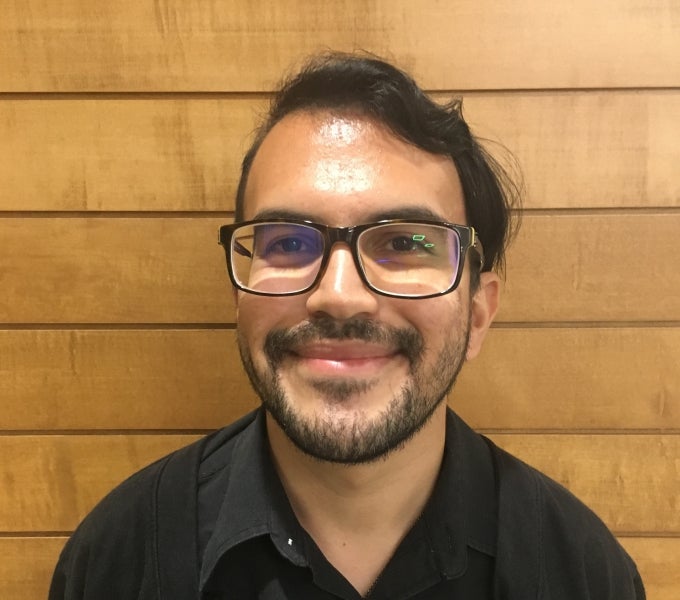
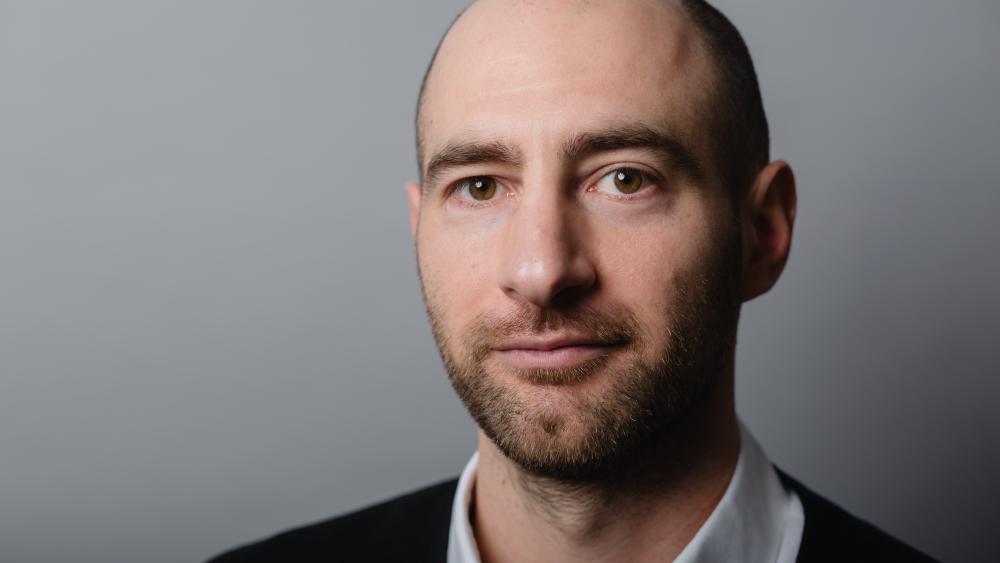
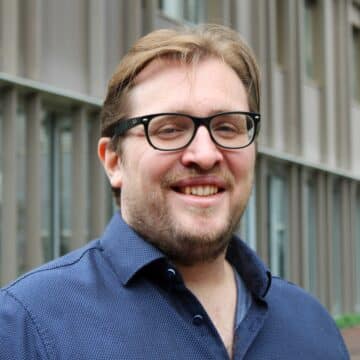
Elias Chavarria Mora is a Lecturer at the School of Political Science, University of Costa Rica, and a PhD candidate in Political Science at the University of Pittsburgh (expected 2025). He focuses on comparative political behavior and Latin American politics , with regional expertise in Central American electoral systems and party politics . Education: PhD in Political Science (2025, University of Pittsburgh) M.A. in Political Science (2020, University of Pittsburgh) Licentiate in Political Science (2017, University of Costa Rica) B.A. in Political Science (2015, University of Costa Rica) His research investigates social media's role in elections , ideology , and unconventional political participation . He employs data science methods , including text analysis, spatial econometrics, and machine learning. Recent publications analyze political education curricula , data protection laws , and electoral dynamics in Latin America. His work appears in journals like Latin American Politics and Society and Revista Latinoamericana de Opinión Pública . He coordinates the Observatorio de la Política Internacional Sergio Iván Moya Mena at the University of Costa Rica and has collaborated with the University of Salamanca's Parliamentary Elites in Latin America Observatory.
Lea Ypi is a Professor of Political Theory at the London School of Economics and Political Science (LSE) and an Honorary Professor of Philosophy at the Australian National University. She holds degrees from the University of Rome La Sapienza and a PhD from the European University Institute, followed by postdoctoral research at Nuffield College, Oxford. Her work spans political theory, the history of philosophy, Marxism, critical theory, and Kantian philosophy. Notable publications include Global Justice and Avant-Garde Political Agency , The Meaning of Partisanship (with Jonathan White), and Free: Coming of Age at the End of History . Ypi’s research has been recognized with the British Academy Prize and a Leverhulme Prize. She is a Fellow of the British Academy, Academia Europea, and the Albanian Academy of Sciences. Her research interests include revolutionary theory, Kantian philosophy, structural injustice, and global justice. Key publications address topics like Kant’s views on colonialism, the ethics of migration, and the role of partisanship in democracy. Ypi’s academic contributions bridge normative political theory with critical engagement in contemporary social and political issues. Awards include the British Academy Prize for Excellence in Political Science (2015), Leverhulme Prize (2014), and fellowships in leading academic institutions. Her interdisciplinary approach integrates historical, philosophical, and contemporary analyses to address urgent political questions.
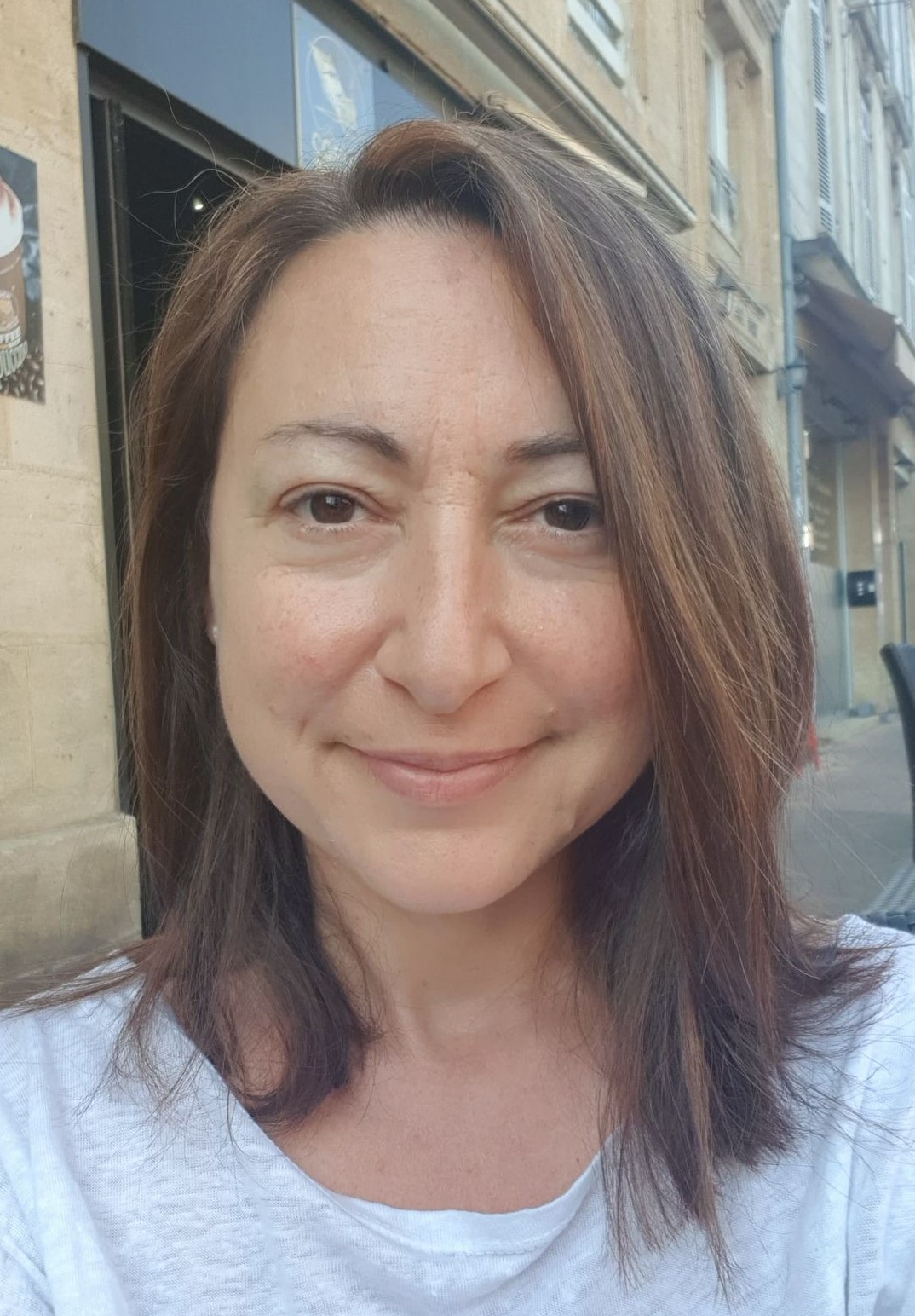
Professor Myrto Tsakatika is a distinguished academic in the Department of Politics at the University of Glasgow's College of Social Sciences, where she has been employed since 2007. She holds the position of Professor in Political & International Studies and serves as Undergraduate Programme Director. Her office is located in the Adam Smith Building (R1311 Level 13), a prominent building housing the university's social sciences disciplines. Dr. Tsakatika earned her PhD from the University of Essex and previously taught at the Athens University of Economics. She has held prestigious visiting positions at the University of Trieste, the Juan March Foundation in Madrid, and the Centre Emile Durkheim at SciencesPo Bordeaux, establishing her as a scholar with significant international connections. Professor Tsakatika's research spans several interconnected domains within political science. Her primary focus lies in European Union politics and governance, particularly examining the democratic deficit, new governance modes, and evolving public attitudes toward European integration. More recently, she has developed expertise in radical left parties and populism, with special attention to Southern European cases including Greece, Portugal, Italy, and Spain. Her work often bridges comparative politics with European studies, analyzing how domestic political developments interact with broader European integration processes. She has made significant contributions to understanding SYRIZA's rise and governance in Greece as well as similar phenomena across Southern Europe. Analysis of Professor Tsakatika's recent publications reveals a consistent scholarly trajectory focused on the intersection of European integration, radical left politics, and populism in Southern Europe. Her work demonstrates increasing specialization in comparative analysis of radical left parties, particularly examining their organizational structures, electoral strategies, and governance challenges. The geographical focus remains firmly rooted in Southern Europe while maintaining connections to broader European political dynamics. Her publications appear in high-impact journals and prestigious academic presses, indicating recognition within the political science community. Professor Tsakatika has successfully supervised numerous PhD students whose research aligns with her expertise, including projects on populism's impact on foreign policy, EU peacebuilding, and the democratic deficit in the European Union. Her grant portfolio reflects sustained research activity, including projects funded by the Carnegie Trust, Caledonian Research Foundation, Royal Society of Edinburgh, and European Commission programs such as PADEMIA (2013-2016) and EUROSUD (2018-2024). These grants have supported comparative research on Southern European politics, European integration, and radical left parties. Within the academic community, Professor Tsakatika serves as Associate Editor for South European Society and Politics and as Editor for Politics Politics and International Relations. She teaches undergraduate courses on the Politics of the European Union (POLITIC4020) and postgraduate courses on Global Social Movements (POLITIC 5111), directly connecting her research expertise to her teaching responsibilities.
Selim Nadi is a researcher and educator specializing in European radical left intellectual history, anti-colonialism, and critical theories. He holds qualifications for the Maître de Conférences position (sections 12 and 22) in French academia. His current roles include teaching German in secondary education and serving as a visiting academic. Formerly, he held ATER (teaching/research) positions at Université d’Avignon and Université Lumière Lyon 2, focusing on political science. His research explores intersections between Marxism, race, and decolonial thought, emphasizing figures like Rosa Luxemburg and C.L.R. James. Nadi is affiliated with the Triangle laboratory (UMR 5206) in Lyon, contributing to interdisciplinary studies on political economy and historical materialism. Education includes a PhD from Sciences Po Paris (2019) on European radical movements, with research stays at Oxford University and Freie Universität Berlin. He has published widely in peer-reviewed journals like Lectures and International Journal of Francophone Studies , focusing on colonial counter-revolution strategies, French Communist Party history, and postcolonial theory. Nadi also translates key works in critical theory and participates in international conferences on topics ranging from Algerian revolutionary networks to Adorno’s philosophy. His teaching spans political science, history, and German language education across various institutions. Nadi’s work bridges historical analysis with contemporary political debates, emphasizing the global dimensions of anti-colonial struggles and Marxist thought.
Prof. Dr. Dieter Ohr is a Professor of Methods of Empirical Social Research at the Free University of Berlin since 2006. Previously, he held positions at the University of Cologne and Justus Liebig University Giessen. His career spans empirical analyses of voter behavior, political communication, and electoral systems. Diploma in Political Science (1989) Diploma in Economics (1991) Doctorate in Economics and Social Sciences (1995, University of Cologne) Ohr’s research focuses on political sociology , voter behavior , candidate image , and media effects . His work often examines long-term electoral trends , social identity , and radical party dynamics . His publications include empirical studies on federal elections , right-wing voting , and political campaigns . Recent articles analyze 2017 Bundestag elections , papal communication , and religious influence in politics. Earlier works explore NSDAP propaganda , candidate priming , and individual voter decision-making . Scientific Awards include a doctoral scholarship from the German National Academic Foundation. Grants include funding from the German Research Foundation (DFG) and the Fritz Thyssen Stiftung . He has contributed to projects on political communication , voter trends , and candidate effects . Ohr is affiliated with the Otto Suhr Institute for Political Science and the Political Sociology Unit at Free University Berlin. He collaborates with scholars like Markus Klein , Hermann Dülmer , and Robert Stelzle .
Miku Matsunaga serves as a Postdoctoral Researcher on an ERC grant within the Department of Politics, International Relations and Philosophy at Royal Holloway, University of London. Her research focuses on the intersection of radical right politics, public opinion, and security issues, with particular emphasis on party systems and voter behavior in European contexts. Her research interests span right-wing populism, radical right party dynamics, political violence justification mechanisms, immigration politics, and terrorism studies. Matsunaga employs rigorous quantitative methodologies to examine how radical right parties influence mainstream political discourse, defense policies, and public perceptions of security threats. Her work frequently analyzes voter behavior in response to political violence and party rhetoric, with particular focus on German and broader European political contexts. Matsunaga's research demonstrates consistent focus on understanding the complex relationships between immigration, radical right party activity, terrorism, and public opinion. Her publications reveal sophisticated analysis of how radical right parties mediate public perceptions of security threats and influence policy positions across the political spectrum. Scientific Awards: James Caporaso Best Paper Award, Comparative Political Studies (August 29, 2024) Matsunaga has established herself as a significant contributor to political science research through her ERC-funded work, with publications appearing in top-tier journals including Journal of European Public Policy, European Journal of Political Research, and Comparative Political Studies. Her research has garnered substantial attention across academic platforms with significant Mendeley readership and social media engagement. Matsunaga's work contributes to UN Sustainable Development Goals related to peace, justice, and strong institutions through her analysis of political violence and party systems.
Dr. Petar Bankov is a Lecturer in Political & International Studies at the University of Glasgow. His research focuses on comparative party politics, political participation, populism, and Central and Eastern European politics. He employs mixed methods including regression analysis, survey experiments, and qualitative approaches (interviews, document analysis). He is Communications Officer for the PSA Left Radicalism Specialist Group and a member of the editorial team of dVERSIA , a Bulgarian left-wing magazine. His work emphasizes improving citizen-party relations to enhance political participation. Education: BA in International Relations, University of Sofia (Bulgaria) Joint International Master’s in Russian, Central, and East European Studies from University of Glasgow and Jagiellonian University (Poland) PhD research on electoral geographies of the European radical left Research Interests: Comparative politics, left-wing politics, political geography, and populism. His work explores party organization dynamics in post-communist contexts, electoral behavior, and democratic resilience. Grants: €10,000 from Friedrich Ebert Foundation-Bulgaria (2022) €3,000 Advanced Postdoctoral Fellowship (Babeș-Bolyai University, 2021) £3,500 Overseas Fieldwork Allowance (ESRC/SGSSS, 2017) Erasmus Mundus Master’s Scholarship (€20,000, 2012–2014) Teaching: Undergraduate: Politics 1B (Liberal Democracy), Politics 2B (Comparative Politics), Central and East European Studies modules Honours: Qualitative Methods in Social Sciences, Politics of the European Left Postgraduate: Qualitative Research Methods Labs/Teams: Part of the PSA Left Radicalism Specialist Group and dVERSIA editorial board. Engaged in non-formal education promoting intercultural exchange.
Dr. Delia Zollinger is a postdoctoral researcher at the University of Zurich in the Department of Political Science . Her work bridges political sociology , political economy , and comparative politics , focusing on how economic and social transformations in post-industrial knowledge societies drive long-term shifts in political conflicts and party systems. Education : PhD (2023) and BA (2015) from the University of Zurich, MSc (2018) from the London School of Economics and Political Science Research Stays : Harvard University (2022), European University Institute (2021) Fellowship : Doc.CH from the Swiss National Science Foundation Her research investigates how voters interpret their societal positions through group belonging , life opportunity perceptions, and changing status hierarchies. Key trends include: analyzing cleavage theory via Bourdieu’s lens, mapping place-based identities in the knowledge society, and quantifying collective identities using open-ended survey responses. Collaborative work explores voter cognition in contexts of electoral realignment and inequality perception . Scientific Award : Doc.CH fellowship (Swiss National Science Foundation) Delia collaborates with scholars like Simon Bornschier, Silja Häusermann, and Marco Steenbergen on projects related to structural change , identity formation , and cleavage consolidation in 21st-century politics. Her work appears in journals like American Journal of Political Science and Comparative Political Studies , emphasizing methodological innovation in political identity analysis.
Jodi Dean is Professor of Politics at Hobart and William Smith Colleges, where she has been a faculty member since 1993. She is affiliated with the Department of Politics within the School of Humanities and Social Sciences, and her scholarly work spans contemporary and modern political theory, communism, digital media, poststructuralism, psychoanalysis, feminist theory, and political responses to climate change. Institution: Hobart and William Smith Colleges Department: Politics Rank: Professor Email: jdean@hws.edu Dean’s research interests are deeply interdisciplinary, combining continental philosophy, media theory, and radical political critique. Her work critically engages with democracy, neoliberalism, digital culture, and the possibilities of collective political action in the 21st century. She is particularly known for retheorizing communism as a viable political horizon and analyzing the role of digital platforms in shaping contemporary subjectivities and publics. Her publications reveal a strong thematic focus on ideology, technology, and collective agency. From Blog Theory to Crowds and Party , her work traces the transformation of political engagement in networked societies. She frequently draws on Lacanian psychoanalysis and Marxist theory to critique liberal democratic frameworks and explore alternatives grounded in solidarity and emancipation. Jodi Dean is actively involved in the academic community as co-editor of the Digital Barricades book series (Pluto Press) and co-director of the Radical Critical Theory Circle. She was formerly co-editor of Theory and Event . She is a member of the American Political Science Association, the Association for the Study of Law, Culture, and the Humanities, and the Law and Society Association. Co-editor, Digital Barricades (book series, Pluto Press) Co-director, Radical Critical Theory Circle Former co-editor, Theory and Event She has also contributed to public intellectual life through lectures and engagements with activist projects such as The Natural History Museum in Stockholm. While no formal list of advisees is provided, her influence extends through her extensive publications and editorial roles. She holds a Ph.D. and M.A. from Columbia University and a B.A. from Princeton University.
Nathaniel George is a Lecturer in Politics of the Middle East at SOAS, University of London. His work bridges global political history and international relations, focusing on revolution, counterrevolution, sectarianism, and US foreign policy in the Arab world. PhD in History, Rice University MA in Middle East Studies, American University of Beirut BA in Cinema, University of Iowa Research spans the modern Arab world, emphasizing Lebanon, Palestine, and the Mashriq. His scholarship interrogates decolonization, imperial legacies, and the dialectics of revolutionary and counterrevolutionary movements. His recent publications analyze the intellectual history of counterrevolutionaries like Charles Malik, the Lebanese National Movement’s constitutional challenges, and transnational solidarity networks. These works appear in American Historical Review , Cultural Anthropology , and Arab Studies Journal . Fellow of the Higher Education Academy (FHEA) George supervises PhD research on Middle Eastern migration diplomacy, diaspora activism, and political party decline. He also leads departmental initiatives including the MSc Middle East Pathway and student experience programs.
Cedric Johnson is a Professor of Political Science and African American Studies at the University of Illinois at Chicago (UIC), affiliated with the College of Liberal Arts and Sciences. He holds a PhD from the University of Maryland and is a member of UIC United Faculty Local 6456. His research focuses on racial and ethnic politics, African American political thought, neoliberalization, and urban governance. Johnson is renowned for his critiques of Black Lives Matter’s strategic limitations and his analysis of post-Katrina New Orleans’ neoliberal transformation. Key publications include The Panthers Can’t Save Us Now (2022), Revolutionaries to Race Leaders (2007, winner of the 2008 W.E.B. DuBois Book Award), and The Neoliberal Deluge (2011). His work spans journals like Catalyst , Labor Studies , and Historical Materialism . Notable honors include the Daniel Singer Millennium Prize (2018) and the Jon Garlock Labor Educator of the Year (2008). Johnson’s scholarship interrogates intersections of race, class, and urban policy, emphasizing systemic critiques of capitalism and policing. His theoretical contributions challenge romanticized views of Black Power while advocating for structural economic reforms. He has served as a labor educator, advising on issues of urban marginalization and neoliberalism’s impacts on marginalized communities.
Raju J Das is a Professor at York University's Faculty of Environmental and Urban Change, affiliated with graduate programs in Geography, Social and Political Thought, Environmental Studies, Development Studies, and Communication and Culture. His research bridges Marxist political economy with contemporary issues including neoliberal industrialization in India, class struggle, and the political dimensions of climate change and public health. Das earned a PhD in Geography from The Ohio State University, an MA in Urban Studies from the University of Akron, an MA in Geography from the University of Delhi, and a BA (Honours) in Geography from Utkal University. He serves on editorial boards of journals like Science & Society , Class, Race and Corporate Power , and the Dialectical Anthropology advisory board. His scholarly work examines geographical uneven development, the ruralization/urbanization of capital, and the interplay between neoliberal state policies and class power. Recent projects funded by SSHRC Insight Grant (2016-2022) analyze industrialization patterns in India's rural periphery, focusing on land acquisition conflicts and the dialectics of capitalist expansion. Das teaches radical political economy at the graduate level and undergraduate courses on global economy, international development, and state-civil society relations. He is a Faculty Fellow at York's Dahdaleh Institute for Global Health, integrating his critique of capitalism with health equity concerns.
Prof Dan Hough is a Professor at the University of Sussex affiliated with the Sussex Asia Centre, specializing in corruption, anti-corruption strategies, and governance with particular focus on China and Asia. His research examines both the effectiveness of anti-corruption measures and the political dynamics of anti-corruption campaigns globally. Hough's work centers on identifying successful anti-corruption frameworks while analyzing the political constraints that influence their implementation. His recent book Corruption, Anti-Corruption and Governance examines case studies including South Korea, and his British Academy-funded research investigated anti-corruption agencies across Asia. Current projects extend into sports integrity (FIFA, football governance) and religious institutions, demonstrating the evolving scope of corruption studies. Analysis of his publication trajectory reveals increasing diversification from traditional political corruption into specialized domains like sports ethics and religious governance, while maintaining core focus on institutional effectiveness. His work consistently bridges theoretical political science with practical policy applications, particularly regarding measurement challenges in corruption perception indices. Hough secured a British Academy Small Research Grant as Principal Investigator to evaluate anti-corruption agencies in Asia, demonstrating active research funding. His advisory role extends through academic supervision and policy engagement, though specific student names aren't publicly listed.
Prof. Dr. Wouter van der Brug is a full-time Professor at the University of Amsterdam 's Faculty of Social and Behavioural Sciences , specializing in democratic representation and electoral behavior. His research focuses on populist parties, voter dynamics, and European integration. Current affiliation: University of Amsterdam Academic rank: Professor Email: W.vanderBrug@uva.nl Research interests include: Generational political alignment and dealignment Populist party support and parliamentary behavior Regional disparities in voting patterns European integration and institutional trust Urban-rural political divides Authoritarian attitudes and far-right voting Recent publications analyze 2024 European Parliament elections, fiscal austerity effects on EU trust, and youth political cognition. His work combines comparative politics, political psychology, and electoral geography across 15 recent articles. Contact: W.vanderBrug@uva.nl | +31 (0)20 000 00000
Max-Valentin Robert is a Postdoctoral Researcher in Political Science at the European School of Political and Social Sciences (ESPOL) within the Catholic University of Lille. He holds a PhD in political science from Sciences Po Grenoble (2021) and has held positions at Istanbul Bilgi University (ERC PRIME Youth project, 2020-2021), the University of Nottingham (Research Fellow, 2022-2023), and currently works on the Horizon Europe project 'ACTEU – Towards a new era of representative democracy.' Research Areas: Elections, Voting and Political Parties Democracy and Authoritarianism Far Right and Populism Turkish Politics Public Opinion Publication Trends: His work spans electoral dynamics in competitive authoritarian regimes, radical right-wing populism, Turkish politics, and the impact of social media on activism. Collaborative projects include analyzing Muslim youth radicalization, Euroscepticism, and European parliamentary representation. Teams and Projects: Involved in the Horizon Europe ACTEU project and the Digital Society Project (DSP) at the University of Nottingham.