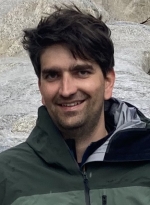
Foteini Oikonomou is an Associate Professor at the Department of Physics, Faculty of Natural Sciences, Norwegian University of Science and Technology (NTNU). She specializes in theoretical astroparticle physics, focusing on extreme astrophysical environments that accelerate particles to energies exceeding 10 20 eV. Current research includes multimessenger emission modeling of active galactic nuclei Expertise in cosmic ray acceleration and high-energy neutrino origin Active in teaching advanced astrophysics and particle physics Her work bridges astrophysics, particle physics, and cosmology, with particular attention to blazars, tidal disruption events, and ultra-high-energy cosmic rays. She contributes to major collaborations like GRAND and GCOS, developing future instrumentation for astroparticle detection. Recent publications explore cosmic ray propagation in diverse source populations, neutrino emission from transient astrophysical phenomena, and magnetic field line effects on particle acceleration. Her research has been featured in journals such as Nature Reviews Physics , Physical Review D , and The Astrophysical Journal . She teaches AST-3451 Astrophysics II and has previously taught particle physics (FY3403/FY8913) and general astrophysics (FY2450). Her outreach includes public explanations of ultra-high-energy cosmic ray research through popular science articles.
Rune Strandberg is an Associate Professor at the Department of Engineering Sciences, University of Agder. He holds a PhD in solar cell physics from NTNU and specializes in photovoltaic materials, solar cell physics, and energy conversion. His research focuses on advanced solar cell concepts including tandem cells, intermediate band solar cells, and thermoradiative energy harvesters. Education: Master of Technology (2005) and PhD (2010) in solar cell physics from NTNU. Pedagogical training includes Uniped courses (2014-2015) and PhD supervision qualification. Current teaching: Renewable Energy, Solar Energy Systems, Electromagnetism, Advanced Photovoltaics Prior roles: PhD student at NTNU (2005-2009), Senior Researcher at Teknova AS (2010-2013) Research areas: New photovoltaic concepts, characterization of photovoltaic cells, solar cell physics, emissive energy harvesters His recent publications analyze band gap optimization, radiative coupling in multi-junction cells, temperature sensitivity, and theoretical efficiency limits across multiple high-impact journals. Collaborators include Anne Gerd Imenes, Alfredo Sanchez Garcia, and Sissel Tind Kristensen. Key contributions include development of analytical models for solar cell performance, field testing of PV modules in Norway, and studies on temperature effects in multicrystalline silicon wafers.
Carlos José Díaz Baso is a Research Fellow at the Rosseland Centre for Solar Physics (RoCS), part of the Institute of Theoretical Astrophysics at the University of Oslo. His research focuses on solar chromospheric phenomena, Bayesian statistics, and deep learning applications in solar physics. Education: Ph.D. in Astrophysics (2014-2018, Universidad de La Laguna, Spain), followed by postdoctoral positions at Stockholm's Institute for Solar Physics (2018–2022) and currently at RoCS (2022–present). Research emphasizes analyzing solar spectra and magnetic field dynamics using advanced statistical and machine learning techniques. Key projects include the ISSRESS initiative studying small-scale solar reconnection events. Recent publications explore spectral resolution impacts, coronal oscillations, and sunspot light bridges. Active in international collaborations using instruments like SST/CRISP and SolO/EUI. Engaged in developing observational strategies for solar telescopes and improving data analysis methodologies.
Norbert Pirk is an Associate Professor at the University of Oslo, affiliated with the Department of Physical Geography and Hydrology. His research focuses on ecohydrology in cold environments, land-atmosphere energy and trace gas exchange, and snow-vegetation interactions. He teaches courses including Geophysical Data Science and Fluvial Hydrology, and contributes to arctic climate studies through field campaigns and modeling. His research spans tundra carbon cycling, permafrost dynamics, and machine learning applications in climate modeling. Recent publications highlight advancements in snow data assimilation techniques, greenhouse gas flux monitoring using drones, and deep learning methods for Arctic methane analysis. He actively collaborates within international research networks. Current projects include SvalGaSess (methane monitoring in Svalbard), SnowSub (snow sublimation impacts on hydropower), and EMERALD (terrestrial climate interactions). He contributes to initiatives like FLUXNET2015 and the Land Sites Platform, advancing Arctic observation systems and climate modeling frameworks.
Martino Marisaldi is a Professor at the Department of Physics and Technology, University of Bergen. He co-leads the 'Hard Radiation from Thunderstorms' research group focusing on atmospheric electricity, high-energy radiation phenomena in thunderclouds, and particle detection technologies. His team includes faculty members, researchers, postdocs, and graduate students working on observational and theoretical aspects of terrestrial gamma-ray flashes and related phenomena. Research interests span atmospheric electricity, thundercloud physics, gamma-ray astrophysics, and high-energy detector development. His work bridges atmospheric science and space physics, investigating radiation mechanisms in thunderstorms using both ground-based and space-borne instrumentation. Recent publications demonstrate a consistent focus on gamma-ray emissions from thunderstorms, with advanced studies on flickering gamma-ray flashes, TGF production mechanisms, and atmospheric discharge phenomena. Collaborative work appears in high-impact journals including Nature and Geophysical Research Letters, highlighting international recognition in this specialized field. Laboratory activities include coordination of flight campaigns (ALOFT mission) and analysis of data from the ASIM (Atmosphere-Space Interactions Monitor) payload on the International Space Station. Current projects investigate links between gamma glows and terrestrial gamma-ray flashes using multi-instrument approaches.
Nicolas Aurelien Corentin Poirier is a Research Fellow at the Rosseland Centre for Solar Physics, Institute of Theoretical Astrophysics, University of Oslo. His academic journey includes a PhD in Astrophysics from the University of Toulouse and an engineering degree in Mechanics and Aeronautics from ISAE-ENSMA. He specializes in solar and plasma physics, focusing on coronal mass ejections, solar wind dynamics, and space weather forecasting. Research interests include coronal heating mechanisms, multi-instrument data analysis of solar phenomena, and the transition of plasma from the solar atmosphere to interplanetary space. He has contributed to projects like HelioCast for real-time space weather prediction and advanced modeling using Parker Solar Probe observations. His work bridges observational data with computational models to improve understanding of solar processes impacting Earth. Education: PhD in Astrophysics (2022, University of Toulouse), Engineering Degree (2018, ISAE-ENSMA) Key Projects: ORCS (Oscillations in the Realistic Corona of the Sun), Rosseland Centre for Solar Physics Teaching: Co-organizer of the Norwegian Astronomy Olympiad (2024), supervised multiple undergraduate interns Publications span solar wind variability, coronal oscillations, and white-light observation techniques, with contributions to journals like Astronomy & Astrophysics and The Astrophysical Journal Supplement Series.
Maryam Saberi is a Researcher at the Rosseland Centre for Solar Physics, University of Oslo. Her work focuses on solar and stellar chromospheric activity, molecular spectral line analysis at mm/sub-mm wavelengths, and radiative transfer modeling of evolved star outflows. Education: Ph.D. in Radio Astronomy, Chalmers University (2014-2019) M.Sc. in Physics, Alzahra University (2011-2013) B.Sc. in Physics, Alzahra University (2006-2010) Research Interests: Investigates how chromospheric activity of solar-type stars evolves through stellar phases, impacting late-stage evolution and circumstellar chemistry. Uses ALMA/APEx observations and chemical modeling to study AGB stars' mass-loss processes and Galactic chemical enrichment. Grants & Projects: Leads the ESGC project on Galactic Chemical Enrichment, collaborates with NoRMA network. Involved in AtLAST telescope development for solar/stellar studies. Labs/Teams: Part of Rosseland Centre's solar-stellar research group and the Nordic Radio and Millimeter Astronomy Network (NoRMA).
Luc Rouppe van der Voort is a Professor and Head of the Department of Theoretical Astrophysics at the University of Oslo since 2025. He serves as Principal Investigator for the Rosseland Centre for Solar Physics (RoCS) under the Norwegian Centre of Excellence (SFF) program until 2027. His academic career at the department spans from Postdoctoral Fellow (2003-2007) to Researcher (2007-2008), Associate Professor (2009-2013), and Professor (2013-2025). He earned his PhD in Astrophysics from Stockholm University (2003) after a PhD fellowship at the Institute for Solar Physics of the Royal Academy of Sciences, and holds an MSc in Astrophysics from Utrecht University (1997). His research focuses on Solar Physics , particularly high-resolution observations of the solar chromosphere, photosphere, and transition region. Key areas include magnetic reconnection (e.g., Ellerman bombs, UV bursts), spicules/downflows , sunspot dynamics , and coronal heating mechanisms . He utilizes data from ground-based telescopes like the Swedish Solar Telescope (SST) on La Palma and space missions such as Hinode , IRIS , Solar Orbiter , and Solar Dynamics Observatory . Recent publications (2023-2025) highlight his work on neural field applications to spectropolarimetric inversions, spectral resolution effects in solar diagnostics, and magnetic topology of quiet-Sun Ellerman bombs. Collaborative studies with teams across Europe and Japan emphasize multi-wavelength analysis and 3D simulations to unravel energy transport and atmospheric coupling. As Deputy Head (2016-2024) and council member of the Nordic Optical Telescope (2015-present), he contributes to leadership and observational infrastructure in solar physics. His work bridges observational datasets with computational models, advancing understanding of solar atmospheric dynamics and heating processes.
Rune Grand Graversen is a Professor at the Department of Physics and Technology , UiT The Arctic University of Norway. His research focuses on Arctic meteorology, climate dynamics, and sea-ice-atmosphere coupling, with expertise in climate modelling and extreme weather events. Arctic warming mechanisms Atmospheric energy transport Polar lows dynamics Sea ice prediction Climate sensitivity Feedback processes His recent publications (2022-2025) emphasize climate sensitivity analysis, energy transport decomposition, and Arctic amplification, utilizing satellite data, climate models, and mathematical methods like wavelet analysis. No scientific awards are mentioned in the provided text. Group Leader, Complex Systems Modelling Member, Intermittent Fluctuations in Physical Systems project
Elias Roland Udnæs is a Doctoral Research Fellow at the Rosseland Centre for Solar Physics, University of Oslo. His research focuses on radiative transfer in stellar atmospheres, leveraging machine learning and programming expertise in Python & Julia. He contributes to advancing computational methods for non-local thermodynamic equilibrium (NLTE) simulations in astrophysics. His academic work includes a notable publication in Astronomy and Astrophysics (2023), addressing irregular grid techniques for 3D radiative transfer models. Udnæs’ interdisciplinary approach bridges theoretical astrophysics with advanced computational tools, aiming to enhance accuracy in stellar atmosphere modeling. No scientific awards or grants are explicitly mentioned in the provided texts. His affiliation with the Rosseland Centre positions him within a leading institution for solar and stellar physics research.
Harald Sodemann is a Professor in Meteorology at the University of Bergen's Geophysical Institute and affiliated with the Bjerknes Centre for Climate Research. His research focuses on atmospheric water cycle processes, numerical weather prediction, and stable water isotopes as diagnostic tools. He leads the Meteorology and Oceanography program board, teaching courses such as GEOF321 (numerical weather/climate prediction) and GEOF351 (atmospheric science seminar). Key affiliations include leadership roles in the FARLAB isotopic research facility and the ISLAS project. Research Interests: Sodemann explores moisture sources, atmospheric transport, and climate model validation using isotopes. His work bridges weather and climate scales, with recent focus on Arctic systems, cold-air outbreaks, and extreme precipitation events like atmospheric rivers. Collaborations include field campaigns (e.g., ISLAS2022) and interdisciplinary projects like ISOSCAN (citizen science for hydroclimate predictions). Publications highlight advancements in Lagrangian diagnostics, isotope-enabled models, and Arctic meteorology. Awards include an ERC Consolidator Grant and a Mercator Fellowship for (AC)³ climate research. His software contributions (e.g., FLIIMP for isotope data processing) and instrumentation (e.g., microdrop isotope devices) underscore his commitment to advancing observational and computational methods.
Daniel Elias Nóbrega Siverio is a Guest Researcher at the Rosseland Centre for Solar Physics, University of Oslo. His research focuses on solar atmospheric phenomena, including magnetic flux emergence, reconnection processes, and plasma dynamics. He holds a PhD (2018) from Universidad de La Laguna (ULL), Spain, with a thesis on eruptive phenomena in the solar atmosphere and computational astrophysics. His work combines radiative magnetohydrodynamic (MHD) simulations with observational data from instruments like IRIS and SST. Education Doctorate (2013–2018): Universidad de La Laguna (ULL), supervised by Prof. Fernando Moreno Insertis and Dr. Juan Martínez Sykora. Master’s in Astrophysics (2012–2013): ULL, focusing on magnetic flux emergence and reconnection. Bachelor’s in Physics (2007–2012): ULL, with a thesis on 3D numerical experiments in solar plasma dynamics. Research Interests His studies address solar magnetic flux emergence, coronal heating, and eruptive events such as surges and jets. He investigates ionization nonequilibrium, ambipolar diffusion, and the role of magnetic reconnection in solar atmospheric layers. His computational work integrates advanced radiative MHD models to interpret observations from space-based telescopes. Key Contributions Recent work includes studies on Ellerman bombs, UV bursts, and the dynamics of small-scale magnetic flux emergence. His publications explore the interplay between solar convection, magnetic fields, and plasma behavior, with implications for understanding coronal heating and solar-terrestrial interactions. Labs & Collaborations He is affiliated with the Rosseland Centre for Solar Physics and collaborates on projects like 'Whole Sun: Untangling the complex physical mechanisms behind our eruptive magnetic star and its twins.'
Sven Wedemeyer is a Professor at the Institute of Theoretical Astrophysics, University of Oslo, and a Principal Investigator at the Rosseland Centre for Solar Physics (RoCS), a center of excellence funded by the Research Council of Norway since 2017. He serves on the Institute board of the Institute of Theoretical Astrophysics as a permanent academic staff member (from January 2025) and is the PhD committee chair at the Institute. Internationally, he is a Member of the Council of the European Astronomical Society (EAS, since July 2024), a Co-opted board member of the European Solar Physics Division (ESPD) of the European Physical Society (EPS, since September 2024), and the EAS representative for ASTRONET (since October 2024). He also serves on the Advanced Grant (PE9) evaluation committee for the European Research Council (ERC AdG 2023) and the MSCAA/ERC reference group of the Research Council of Norway (since 2020). Professor Wedemeyer's research focuses on solar and stellar physics with additional interests in extrasolar planets. His work primarily utilizes realistic numerical simulations in comparison with space-borne and ground-based observations. His current major research activities include solar/stellar science at (sub-)millimeter and radio wavelengths, studies of the solar chromosphere using ALMA observations, and investigations into stellar activity. He is a lead of the solar/stellar science working group for the AtLAST consortium (The Atacama Large Aperture Submm Telescope) and coordinates an international team studying vortex flows in solar plasmas funded by the International Space Science Institute in Bern, Switzerland. His research has produced significant findings, including the discovery and explanation of magnetic tornadoes on the Sun, featured on the front page of Nature in 2012. His publication record demonstrates a strong focus on advancing observational techniques for solar and stellar physics at millimeter wavelengths, particularly through the Atacama Large Millimeter/submillimeter Array (ALMA). His recent work shows an increasing emphasis on connecting solar observations with stellar phenomena, developing new diagnostic tools for solar-stellar activity, and contributing to the development of next-generation telescopes like AtLAST. The interdisciplinary nature of his research spans solar physics, stellar astrophysics, and exoplanet science, with a consistent methodological approach combining numerical simulations with multi-wavelength observations. ERC-funded SolarALMA project (2016-2021) Initiator and co-ordinator of the SSALMON research network (since 2014) Discovery of magnetic tornadoes on the Sun featured in Nature (2012) Professor Wedemeyer has led multiple significant research projects including the EMISSA project (funded by the Research Council of Norway, 2019-2023), the ESO-funded ALMA Development Study 'High-Cadence Imaging of the Sun' (2018-2023), and the ERC-funded SolarALMA project (2016-2021). He serves as Norwegian representative at the Observing Programme Committee of the Nordic Optical Telescope and is actively involved in multiple international research networks including KOINet for exoplanet observations and the Extreme Precision Radial Velocity group. His leadership extends to coordinating the international team 'The nature and physics of vortex flows in solar plasmas' funded by the International Space Science Institute since 2018. Professor Wedemeyer leads the solar/stellar science working group within the AtLAST consortium and is instrumental in developing solar observing modes for ALMA. His work with the SSALMON research network connects over 80 researchers worldwide focused on solar simulations for millimeter observations. He also contributes to the Solar ALMA Science Archive (SALSA) and the Solar ALMA Library of Auxiliary Tools (SALAT), creating essential resources for the solar physics community working with ALMA data.
Dr. Sijing Shen is an Associate Professor at the Institute of Theoretical Astrophysics, University of Oslo . She specializes in numerical simulations of galaxy formation and evolution, focusing on interactions between galaxies and the intergalactic medium, galactic winds, and the physics of the interstellar medium. PhD in Astrophysics (McMaster University, 2010) Postdoctoral Fellow (University of California, Santa Cruz, 2010-2014) Research Associate (University of Cambridge, 2014-2016) Associate Professor (University of Oslo, 2017-present) Her research employs high-performance computing and numerical magnetohydrodynamics to model the co-evolution of supermassive black holes and galaxies, the origins of galactic magnetic fields, and observational signatures of high-redshift galaxies. She develops and utilizes massively parallel magneto-hydrodynamic codes to create virtual universes for comparison with observational data. Recent publications highlight her work on dwarf galaxies, circumgalactic medium physics, and spectral diagnostics for next-generation telescopes like AtLAST. Key themes include feedback mechanisms, dark matter interactions, and computational methods in astrophysics. Young Research Talents Grant, Research Council of Norway Shen supervises 2 PhD students and 1 postdoctoral fellow. Her work bridges theoretical modeling with observational predictions, particularly in galaxy formation and evolution processes.
Tim Carlsen serves as a Researcher at the Section for Meteorology and Oceanography within the Department of Geosciences at the University of Oslo's Faculty of Mathematics and Natural Sciences. Appointed to this position in 2021 following a postdoctoral fellowship at the same institution (2019-2021), he contributes to Norway's leading polar climate research infrastructure while maintaining international collaborations across European Arctic projects. His academic trajectory includes doctoral research at Leipzig University (2014-2018), where he developed expertise in cryospheric remote sensing and cloud microphysics. This foundation supports his current work bridging observational data with climate modeling frameworks. Carlsen's research centers on mixed-phase cloud dynamics in polar regions, with particular emphasis on ice nucleation processes and cloud-phase transitions. His investigations into snow surface reflectivity examine bidirectional reflectance distribution functions under varying illumination and surface conditions. Utilizing multi-platform remote sensing (satellite, airborne, ground-based lidar/radar), he addresses critical gaps in understanding Arctic Amplification mechanisms. Current projects integrate field campaigns like NASCENT with global climate model evaluation. Analysis of his 15 most recent publications (2017-2025) reveals three dominant research thrusts: (1) Arctic cloud-phase representation in CMIP6 models, (2) ice nucleating particle impacts on high-latitude precipitation, and (3) snow grain size retrieval methods for cryospheric albedo modeling. His work consistently employs multi-sensor validation approaches, with growing emphasis on aircraft icing prediction and drifting snow-cloud interactions. Carlsen actively contributes to major research initiatives including the ERC Consolidator Grant 'STate-dEPendent Cloud feedbacks' (STEEPEGE), ERC Start-up grant 'Mixed-phase clouds and climate' (MC2), and the BRACE-MY capacity-building project. His involvement in IceSAFARI demonstrates applied research for aviation safety, while the ACT-Pilot project connects his cloud physics expertise to Arctic sustainability transitions. As part of Oslo's Meteorology and Oceanography section, he collaborates with international teams on field experiments across Svalbard and Antarctica. His current work focuses on improving cloud microphysics parameterizations in Earth system models through targeted observational constraints, with emerging interest in drone-based icing condition monitoring.