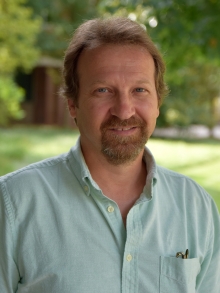
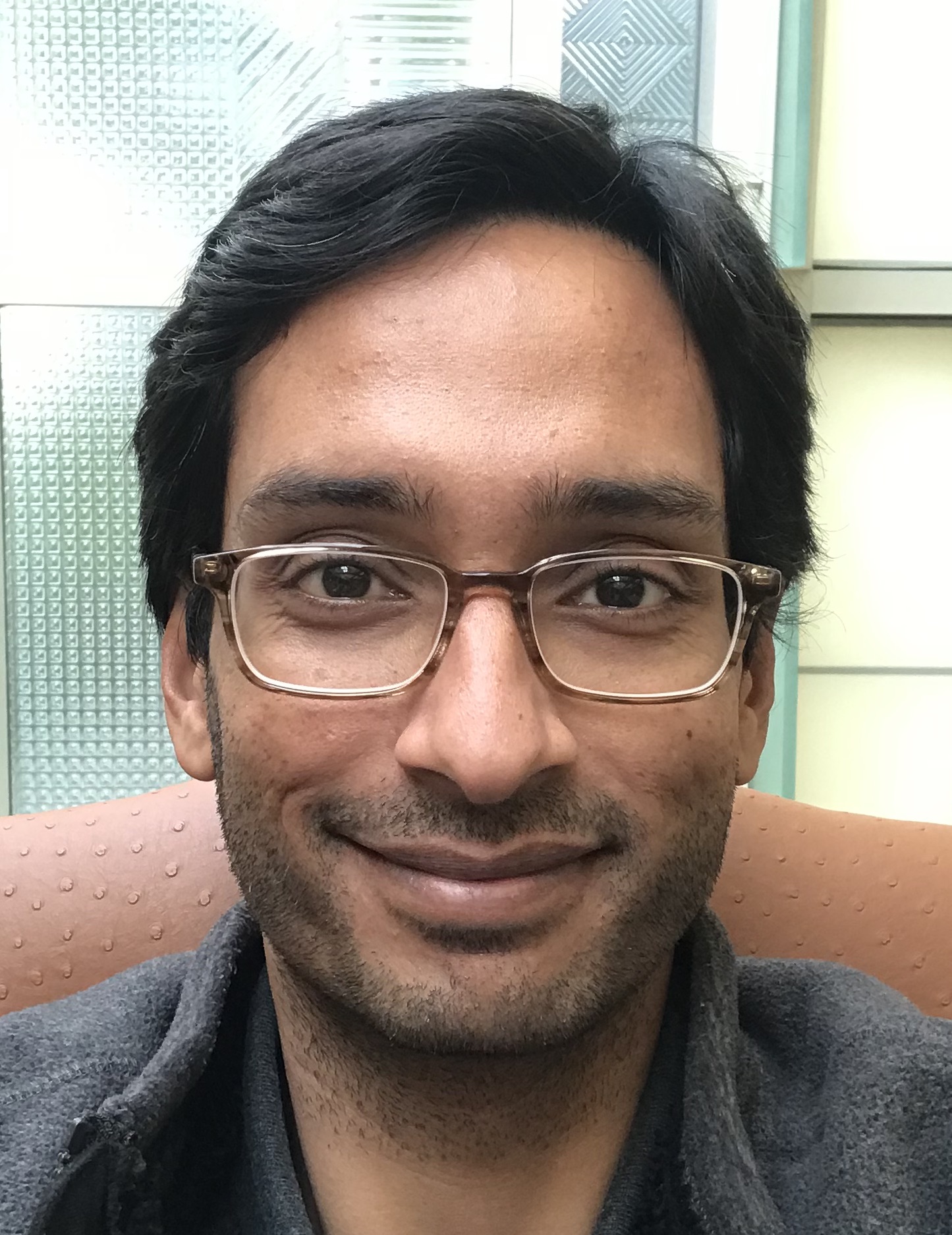
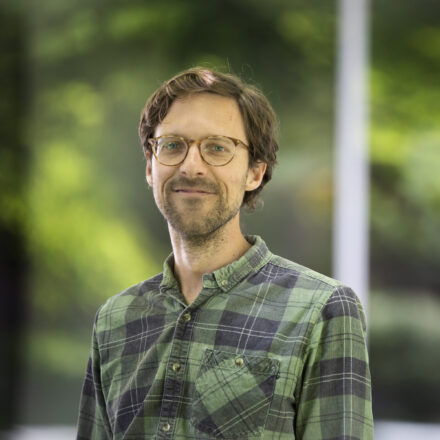
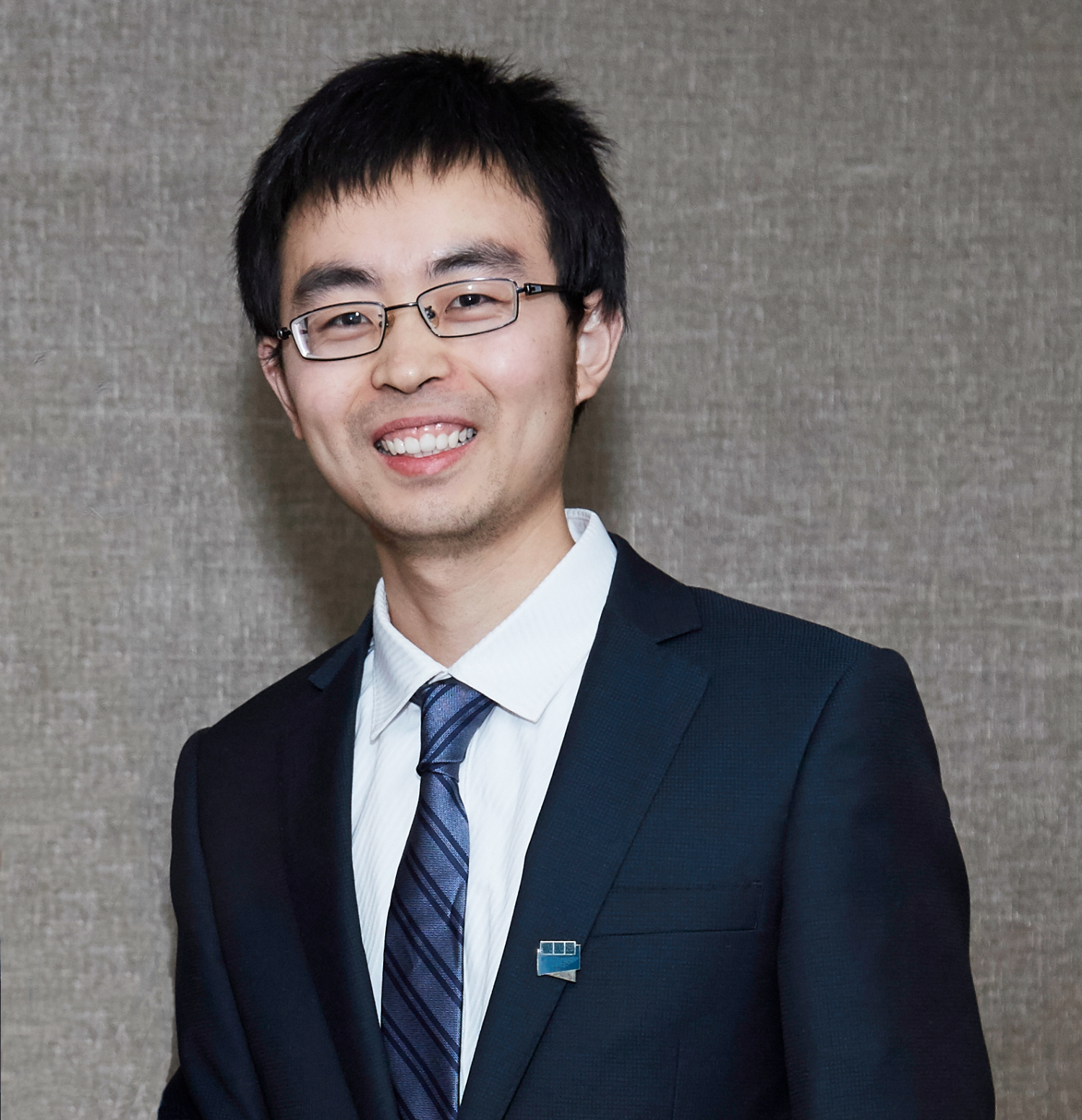
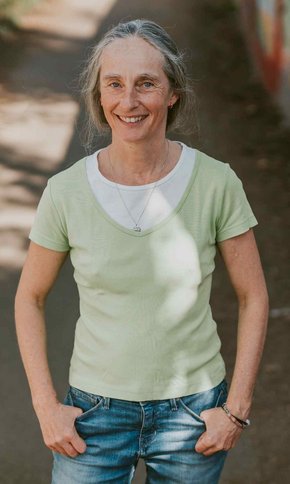
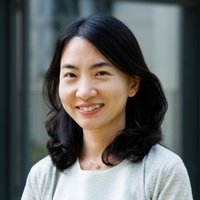
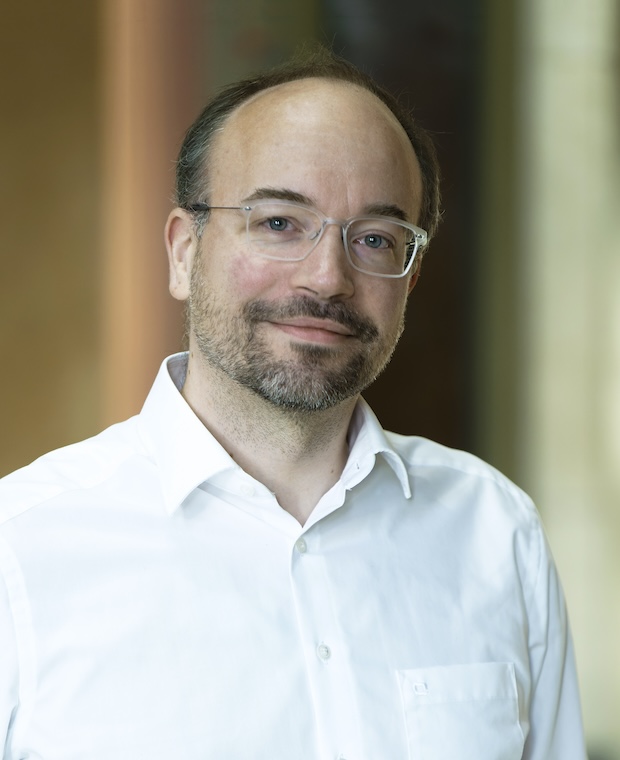
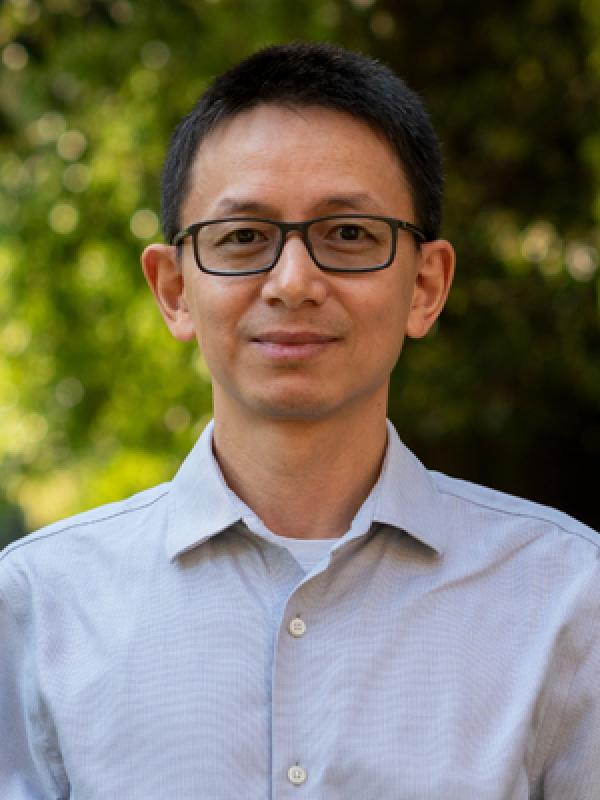
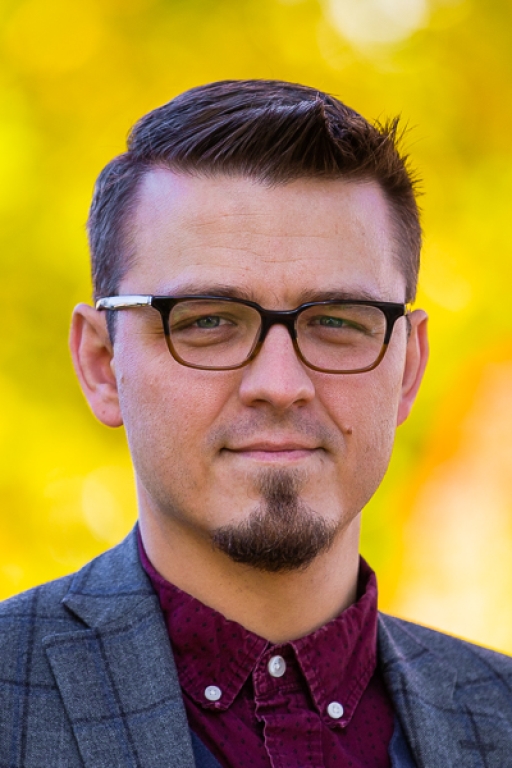
Gunnar Kusch is a Senior Research Associate at the Department of Materials Science & Metallurgy, University of Cambridge. His research focuses on defects in semiconductors, porous AlGaN materials, and advanced characterization techniques like cathodoluminescence (CL) and atom probe tomography (APT). He holds a PhD from the University of Strathclyde and leads projects on UV-B LED optimization, nanoscale defect behavior analysis, and semiconductor device design. His work bridges materials synthesis, characterization, and device performance, with applications in energy-efficient lighting and solar cell technology. Key research areas include: Defect engineering in III-nitride semiconductors Porous AlGaN templates for high-efficiency UV emitters Correlative microscopy techniques (CL, EBSD, APT) Composition-structure-property relationships in photovoltaic materials Notable contributions include developing CL-based methods for nanoscale defect analysis and demonstrating improved Cu(In,Ga)S₂ solar cell efficiencies through compositional engineering. His laboratory focuses on translating microscopic insights into macroscopic device improvements.
Jun Liu is an Assistant Professor in the Department of Mechanical and Aerospace Engineering at the School of Engineering and Applied Sciences, University at Buffalo. His research focuses on advanced energy materials, nano/micro-mechanics, and self-powered systems, with applications in triboelectric energy harvesting and scanning probe microscopy. Education: PhD, Materials Engineering, University of Alberta (2018) MS, Materials Science, Shanghai University (2015) BE, Materials Science and Engineering, Nanchang University (2012) Research Interests: Development of tribovoltaic and triboelectric systems for self-powered electronics Mechanical energy harvesting via dynamic heterojunctions and Schottky contacts 3D-printed hydrogel structures for energy absorption and flexible electronics Nanoscale characterization using atomic force microscopy Design of nanocomposite sensors and catalytic materials Publication Trends: His work emphasizes triboelectricity, nanoscale energy conversion, and sustainable materials. Recent articles explore bionic tactile sensing, tunable hydrogels, and quantum dynamics in sliding interfaces. Awards: SONY Faculty Innovation Award (2021) Nature Springer MINE Young Scientist Award (2020) International Contest of Applications in Nano/Micro Technology Prize (2013) Laboratory: Advanced Energy Materials and Nanomechanics Lab at University at Buffalo.
Dr. Rodney Weber is a Professor in the School of Earth & Atmospheric Sciences at Georgia Institute of Technology, part of the College of Sciences. His research focuses on atmospheric aerosols, urban air quality, and particle formation mechanisms. He holds a Ph.D. (1995) and M.S. (1991) in Mechanical Engineering from the University of Minnesota, and a B.S. (1987) from the University of Waterloo. Key research interests include atmospheric aerosol sources and processing, new particle formation via homogeneous nucleation, and aerosol growth processes. He develops novel instrumentation, such as the Particle Into Liquid Sampler (PILS), and leads field studies like the ALPACA project in Fairbanks, Alaska. His work bridges laboratory experiments and real-world atmospheric measurements. Dr. Weber has received awards including the Cullen-Peck Faculty Fellow Award (2007), Whitby Award (2005), and NASA Global Change Fellowship. His recent publications (2024–2025) address biomass burning plumes, urban pollution dynamics, and aerosol chemistry in cold climates. He collaborates on global initiatives like the NASA Atmospheric Tomography (ATom) mission and FIREX-AQ campaigns. His lab (ES&T 2107/2115) focuses on aerosol optical properties, reactive oxygen species in particulate matter, and the health effects of pollution. Research highlights include quantifying sulfur chemistry in Fairbanks and assessing oxidative potential of PM2.5 in urban environments.
Snehal Banerjee is a Professor of Finance at the Stephen M. Ross School of Business, University of Michigan. He holds the Michael R. and Mary Kay Hallman Faculty Fellowship. Previously, he served as Associate Professor at UC San Diego's Rady School of Management and Northwestern University's Kellogg School of Management. His research focuses on financial markets' information dynamics, liquidity, and behavioral aspects, particularly how investors process information and regulatory policies impact market efficiency. Education: Ph.D. in Finance from Stanford University (2007); B.A. in Economics, Mathematics, and Computer Science from Brandeis University (2002). He has advised multiple Ph.D. students now at institutions like Chinese University of Hong Kong and INSEAD. Research interests include investor disagreement, strategic trading, and transparency effects. Notable publications explore topics like SPACs' theoretical foundations, information acquisition strategies, and securities lending market dynamics. His work has received awards including the RFS Young Researcher Prize and the AES Notable Working Paper Award. Teaching spans PhD and MBA courses in finance theory, asset pricing, and financial management. He serves on editorial boards for Journal of Financial Economics and Management Science, and has held roles in academic service committees at both Ross and Rady Schools.
Matthew W. Kunz is an Associate Professor of Astrophysical Sciences at Princeton University, serving as Associate Chair of the Department of Astrophysical Sciences and Director of Graduate Studies for the Program in Plasma Physics. He holds a B.S. in Astronomy-Physics and B.A. in Music from the University of Virginia (2003), and a Ph.D. in Physics from the University of Illinois at Urbana-Champaign (2009). His research focuses on astrophysical plasma dynamics, including instability, turbulence, and transport in weakly collisional and poorly ionized plasmas, with applications to galaxy clusters, accretion disks, and the solar wind. Dr. Kunz's work employs analytical and numerical methods to study multi-scale plasma dynamics, aiming to understand angular momentum transport in accretion disks, kinetic turbulence cascades, and magnetic field evolution. His research has been recognized with several awards, including an NSF CAREER Award (2020-25), Alfred P. Sloan Research Fellowship (2017-20), and NASA Einstein Postdoctoral Fellowship (2011-14). He teaches courses on plasma astrophysics (AST 521), irreversible processes in plasmas (AST 554), and astrophysical research methods (AST 303). His publications demonstrate a consistent focus on plasma turbulence, magnetic reconnection, and cosmic ray propagation, with recent work emphasizing collisionless plasma dynamics and high-energy astrophysical phenomena.
Peter Huybers is a Professor of Earth and Planetary Sciences and Environmental Science and Engineering at Harvard University , where he investigates the climate system and its societal implications, including interactions between volcanism and glaciation , extreme temperature predictability , and climate change impacts on food production . Research interests span climate change attribution , paleoclimate reconstruction , drought dynamics , crop yield modeling , and earth system feedbacks . His work often integrates art-historical analysis with climate science, as seen in studies of 19th-century air pollution through Turner and Monet paintings . Scientific awards include funding from Harvard Data Science Initiative (2023) for projects on climate change and food supply volatility Amazon Web Services (2023) grant His 20+ peer-reviewed articles since 2020 focus on climate proxies , hydrological modeling , solar forcing , and agricultural-climate interactions , with recent work in Nature , PNAS , and Science Advances . Advising : Mentored 10+ PhD students including Parker Liautaud , Duo Chan , and Marena Lin , while leading research teams with current members like Greta Berendes and Caro Park . Former staff include Jon Proctor and Lucas Vargas Zeppetello , the latter now at UC Berkeley (2024).
Kaighin McColl is an Associate Professor at Harvard University with joint appointments in the Department of Earth and Planetary Sciences and the School of Engineering and Applied Sciences. His research focuses on the terrestrial water cycle and its interactions with weather and climate over land. PhD from MIT (2017) with NSF Graduate Research Fellowship Bachelor's degrees in environmental engineering and applied mathematics from University of Melbourne (2009) Research interests include: Water limitation effects on evapotranspiration Surface energy balance dynamics Atmospheric boundary layer behavior Convective precipitation mechanisms Applications to storm, drought, and heatwave forecasting Scientific contributions span 15 recent articles analyzing soil moisture dynamics, climate engineering impacts, and land-atmosphere interactions. His work has practical implications for wildfire prediction and climate adaptation strategies. Scientific Awards: Sloan Research Fellowship in Earth System Science NSF CAREER award Kavli Fellow by the National Academy of Sciences McColl advises graduate students including Tara Gallagher, Aidan Matthews, and Mariya Pershyna. His lab emphasizes international collaboration and interdisciplinary research requiring physics, mathematics, and climate science expertise. Teaching responsibilities include two different undergraduate course teaching fellowships during PhD training.
Dr. Longji Cui is an Assistant Professor in the Thermo Fluid Sciences, Materials, and Micro/Nanoscale disciplines at the University of Colorado Boulder, affiliated with the Department of Mechanical Engineering within the College of Engineering and Applied Science. His laboratory focuses on high-precision instrumentation and computational techniques to explore energy transport, conversion, and dissipation at extreme scales, including scanning thermal microscopy, picowatt-resolution sensors, and nanophotonics. Lab Location: ECME 1B66F / ECME 108 Office Location: ECME 267B Research Interests: Dr. Cui's work spans thermal energy sciences, ultrahigh-resolution sensing, scanning probe microscopy, nano-optics, and quantum engineering. His interdisciplinary projects address critical challenges in sustainable energy systems, next-generation microelectronics, and advanced sensor technologies for high-performance applications. Notable contributions include innovations in thermophotovoltaic systems, molecular-scale thermal transport, and plasmonic light emission mechanisms. Recent publications emphasize near-field thermal radiation, quantized thermal transport in single-atom junctions, and enhanced energy conversion through nanoscale engineering. These studies bridge fundamental physics with practical applications in renewable energy and nanotechnology. Awards: 2025 CEAS Innovation & Entrepreneurship Fellow 2024 ASME Rising Star Award 2023 NSF CAREER Award 2023 CU Boulder Lab Venture Challenge Award His research group collaborates across disciplines to advance instrumentation for atomic-scale thermal measurements and develop novel materials for energy applications. Ongoing efforts include optimizing thermophotovoltaic devices and exploring hot-carrier dynamics in plasmonic systems.
Dr. Heike Wex is a prominent atmospheric scientist at the Leibniz Institute for Tropospheric Research in Leipzig, Germany, where she serves as a Researcher in the Atmospheric Microphysics department. With over two decades of continuous research since completing her PhD in 2002, she has established herself as a leading expert in aerosol-cloud interactions and ice nucleation processes. Her work spans multiple international collaborations and major research initiatives including (AC)³, PICNIC, MarParCloud, and PI-ICE projects. Her research focuses on experimental investigations and theoretical descriptions of aerosol-cloud interactions, with specific expertise in hygroscopic growth at high relative humidities (>99% RH), particle activation to cloud droplets, heterogeneous ice nucleation processes, and the role of atmospheric aerosol particles as nuclei for cloud droplets and ice formation. Her work bridges atmospheric physics, climate science, and environmental chemistry, with significant contributions to understanding how microscopic processes affect cloud formation and climate. Analysis of her recent publications reveals a strong focus on polar and marine environments, with particular attention to biological contributions to ice nucleation, seasonal variations in Arctic aerosols, and the development of advanced measurement techniques. Her work consistently addresses fundamental questions about how aerosols influence cloud properties and climate systems, with increasing emphasis on climate-relevant processes in polar regions. Dr. Wex has held significant leadership positions, including serving as Vice President of the International Commission on Clouds and Precipitation (ICCP) from 2021-2024. She is also actively engaged with Scientists for Future in Leipzig, demonstrating her commitment to addressing climate change through scientific expertise and public engagement. Beyond her research, she has organized numerous scientific workshops and field campaigns, including leadership roles in the LExNo experiment, FROST projects, and the 16th International Conference on Clouds and Precipitation. Her work has established important methodological approaches for studying ice nucleation and has contributed significantly to our understanding of aerosol impacts on cloud formation across diverse environments from the Arctic to the tropics.
Sarah Kang is the Director of the Department of Climate Dynamics at the Max Planck Institute for Meteorology in Hamburg, Germany, a position she has held since August 2023. She leads the Director's Research Group (CDY) focusing on fundamental climate dynamics. Prior to this, she served as Professor in the Department of Urban and Environmental Engineering at Ulsan National Institute of Science and Technology (UNIST) in South Korea from 2011-2023, progressing through assistant, associate, and full professor ranks. Her research examines complex climate system dynamics, with emphasis on: Large-scale atmosphere and ocean circulation patterns Tropical-extratropical climate interactions Hydrological cycle responses to climate change Mechanisms of polar amplification Teleconnections between ocean basins and climate zones Analysis of her recent publications reveals dominant research themes: Ocean-atmosphere coupling mechanisms Radiative forcing and climate sensitivity Hemispheric climate asymmetries Tropical precipitation dynamics Polar warming impacts on global circulation with consistent methodology employing high-resolution climate modeling and observational verification. Major scientific recognitions include: AGU Atmospheric Sciences Ascent Award (2022) AOGS Kamide Lecture Award (2018) Editor's Citation for Excellence in Refereeing (GRL 2018) UNIST Teaching Excellence Award (2012) NCAR Advanced Studies Fellowship (2009) She maintains extensive professional engagement as: Co-chair of CLIVAR Climate Dynamics Panel Science Steering Committee member for CFMIP Associate Editor for Frontiers in Climate Editor for AGU Advances Board member of Korean Meteorological Society
Prof. Dr. Markus Bachmayr is a full professor at the Institute for Geometry and Practical Mathematics, RWTH Aachen University, holding the chair for Applied Mathematics. His research focuses on nonlinear approximation, high-dimensional partial differential equations (PDEs), uncertainty quantification, and numerical methods in quantum chemistry. He leads the ERC Consolidator Grant project Computational Complexity of Highly Nonlinear Approximations (COCOA) and contributes to CRC 1481 Sparsity and Singular Structures, and RTG 2326 Energy, Entropy, and Dissipative Dynamics. His recent work emphasizes adaptive low-rank and sparse approximation techniques for parametric and stochastic PDEs, including applications in radiative transfer and poroviscoelastic flow modeling. He serves as Editor-in-Chief of Foundations of Computational Mathematics and Associate Editor for multiple journals. Scientific Awards: John Todd Award 2013 Borchers Plakette 2014 Erwin Wenzl Preis 2007 He has taught courses such as Numerische Analysis I/II, Numerische Mathematik für Elektrotechniker, and seminars on numerical methods and approximation theory.
Professor Desheng Liu is affiliated with the Department of Geography at The Ohio State University , within the College of Arts and Sciences . His research focuses on developing spatial and statistical methodologies for environmental monitoring and ecological processes. He holds a Ph.D. in Environmental Science from UC Berkeley (2006) and additional degrees in Statistics, Environmental Science, and GIS. Education: Ph.D., 2006: Environmental Science, University of California, Berkeley M.A., 2004: Statistics, University of California, Berkeley M.S., 2003: Environmental Science, University of California, Berkeley B.E., 2001: GIS, Wuhan University, China Research interests include Remote Sensing , Spatial Statistics , GIScience , and Land Cover Change . His work emphasizes statistical modeling of spatial-temporal dynamics in environmental systems. Recent publications (2008–2012) explore topics like land-cover trajectory reconstruction, thermal infrared downscaling, and object-based classification techniques. No scientific awards are explicitly listed in the provided text. Advising and grants information is not detailed here, though his CV may contain additional details. He is involved in teaching advanced courses such as Quantitative Geographical Methods and Spatial Statistics.
Wojciech Jarosz is an Associate Professor of Computer Science at Dartmouth College, affiliated with the College of Engineering and Computer Science. His research focuses on computer graphics, particularly light transport simulation, rendering algorithms, and digital fabrication. He co-founded the Visual Computing Lab and previously led the rendering group at Disney Research Zürich. Jarosz holds a Ph.D. and M.S. from UC San Diego and a B.S. from the University of Illinois Urbana-Champaign. His educational background includes studies in computer science and engineering, with a strong emphasis on graphics and rendering. Research interests span light transport simulation, Monte Carlo methods, appearance capture, and fabrication. Notable achievements include the Eurographics Young Researcher Award (2013) and the NSF CAREER Award (2019). Jarosz's work integrates theoretical rigor with practical applications, such as real-time rendering techniques and volumetric light transport. His lab develops tools for artistic authoring, including intuitive metaphors for volumetric lighting in animated films. Recent projects explore wave-optics BSDF models, optical heterodyne rendering, and unifying radiative transfer models. Key awards include the SIGGRAPH 2024 Best Paper Award and Neukom Institute prizes. His teaching includes courses on rendering algorithms, computer graphics, and computational photography. Jarosz collaborates with industry (e.g., Disney, NVIDIA) and advocates for diversity in computer graphics research.
Daniel Vanmaekelbergh is a Professor in the Department of Chemistry at Utrecht University, where he leads research in the Condensed Matter and Interfaces group within the Debye Institute for Nanomaterials Science. His academic career spans over two decades with continuous contributions to nanomaterials science and semiconductor physics. Professor Vanmaekelbergh's research focuses on the fundamental properties of semiconductor nanocrystals, quantum dots, and artificial electronic lattices. His work bridges theoretical and experimental approaches to investigate electron transport, quantum confinement effects, and the optical properties of nanoscale materials. He has made significant contributions to understanding the formation mechanisms of nanocrystal superlattices, the electronic structure of artificial honeycomb lattices, and the dynamics of excitons in confined systems. His research group, known as the Vanmaekelbergh Lab, employs advanced techniques including scanning tunneling spectroscopy, electron microscopy, and optical spectroscopy to probe nanoscale phenomena. Analysis of his recent publications reveals a strong emphasis on the physics of quantum-confined systems, particularly in lead chalcogenide and cadmium selenide nanocrystals. His work explores the relationship between nanocrystal structure and electronic properties, with applications in optoelectronics and quantum technologies. Recent research has focused on oriented attachment processes, artificial quantum systems with fractal geometries, and the fundamental limits of light-matter interactions in nanoscale materials. Professor Vanmaekelbergh has established a productive research program with numerous collaborations across the Netherlands and internationally. His work has been published consistently in high-impact journals including Nature Physics, Nano Letters, and ACS Nano, demonstrating the significance of his contributions to the field of nanomaterials science.
George T. C. Chiu is a Professor in the School of Mechanical Engineering at Purdue University, with courtesy appointments in Electrical and Computer Engineering and Psychological Sciences. He holds a 50% appointment as Assistant Dean for Global Engineering Programs and Partnerships. His research focuses on mechatronics, dynamic systems and control, functional printing, and human-machine interaction, with applications in biomedical engineering, robotics, and advanced manufacturing. Education: PhD (1994), MS (1990) University of California, Berkeley; BS (1985) National Taiwan University. Research interests emphasize application-driven solutions for printing technologies, motion control, and embedded systems. Notable projects include developing inkjet printing for biomedical materials and sensor systems. Awards include ASME Fellowship (2013) and the 2024 ASME Rabins Leadership Award. Publications span topics like inkjet drop dynamics, control systems, and biofabrication. He has led initiatives such as the Purdue FIRST Programs, fostering K-12 STEM education through robotics mentorship. Editorial roles include Editor-in-Chief of IEEE/ASME Transactions on Mechatronics (2017-2019).