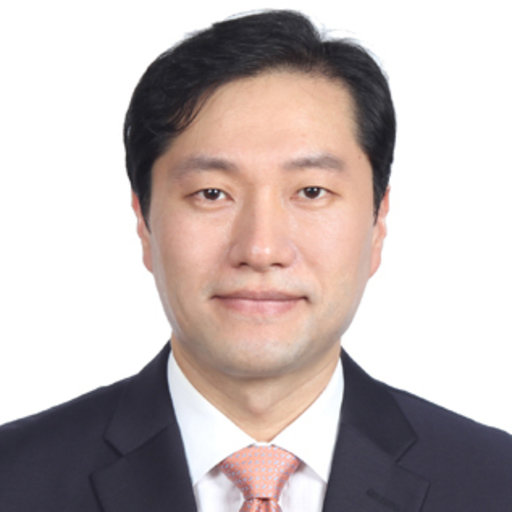
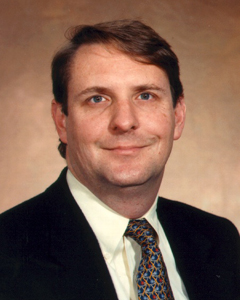
James Harcus is a Senior Lecturer in the Diagnostic Imaging team at Sheffield Hallam University's College of Health, Wellbeing and Life Sciences. He serves as Course Leader for the MSc Diagnostic Imaging program and Admissions Tutor for the BSc(Hons) Diagnostic Radiography program. His expertise spans radiographic image interpretation (chest/abdomen/musculoskeletal) and musculoskeletal ultrasound. He maintains clinical practice registration with HCPC and the College of Radiographers' Sonographers Register. Qualifications: BHSc (Hons), MSc, PGCert, FHEA Clinical Background: 20+ years as Diagnostic Radiographer including roles in teaching hospitals and primary care imaging management Research focuses on developing preliminary clinical evaluation systems ('What, Where, How') and distance learning pedagogy. He leads three modules across undergraduate/postgraduate programs and acts as a clinical placement liaison for two hospitals. Teaching specialisms include: MSc Diagnostic Imaging (distance learning) BSc(Hons) Diagnostic Radiography MSc Medical Ultrasound External roles include serving as an External Examiner for Bangor University's radiography programs.
Eduardo G. Moros is Professor of Physics at USF and Senior Member at Moffitt Cancer Center, serving as Chief of Medical Physics. His research focuses on quantitative imaging radiomics combined with AI for adaptive radiation therapy, particularly using MR-Linac technology. Additional interests include 3D dosimetry of alpha-particle radiopharmaceuticals and quality assurance in radiotherapy. Education includes a PhD in Mechanical Engineering from University of Arizona. He directs the CAMPEP-accredited USF-MCC Medical Physics PhD Program and has supervised over 16 PhD students. Honors include Fellow of ASTRO (2022) and AAPM (2015), and the J. Eugene Robinson Award (2013).
Professor Adam Burgess is an Honorary Professor of Risk Research and Director of the Risk and Uncertainty Research Cluster at the University of Kent's School of Social Sciences. His interdisciplinary work focuses on sociological, historical, and behavioral dimensions of risk, including environmental narratives, individualization, and risk communication. He completed his PhD at Kent on mobile phone health concerns and has held roles at Reading, Bath, Westminster, and Brunel Universities. Active in global risk discourse, he advises initiatives like the Risk Regulation Advisory Council and chairs the CAPUR project. Current research explores meat-alcohol-gluten abstinence trends and historical risk evolution. Teaching includes MA modules on risk and undergraduate sociology courses. Education: PhD (Kent), prior academic roles at multiple UK universities Research Themes: Historical risk evolution, behavioral responses to risk, improving risk communication Media Engagement: Featured in NYT, BBC, and cited by the British Academy Professional Roles: LSE Risk Analysis Fellow, ISA board member, visiting scholar at Princeton His 150+ publications span risk communication, health scares, and governance, reflecting a focus on societal adaptation to uncertainty.
Haori Yang serves as an Associate Professor in the Department of Nuclear Science and Engineering at Oregon State University's College of Engineering, where he leads cutting-edge research in radiation detection technologies for nuclear security, safeguards, and forensics applications. His educational credentials include: Ph.D. in Nuclear Engineering and Radiological Sciences, University of Michigan at Ann Arbor (2009) M.S. in Nuclear Engineering and Radiological Sciences, University of Michigan at Ann Arbor (2006) M.S. in Engineering Physics, Tsinghua University (2003) B.S. in Engineering Physics, Tsinghua University (2001) Dr. Yang's research focuses on developing innovative radiation detection systems including cosmic-ray muon tomography for spent nuclear fuel monitoring, photon-induced fission interrogation for special nuclear material detection, and laser-based techniques like LIBS for nuclear forensics. His group pioneers nanosemiconductor radiation detectors using quantum-confined materials to achieve high-resolution spectroscopy at room temperature, with applications spanning nuclear security, medical imaging, and high-energy physics. Current projects involve glass Cherenkov detectors for high-energy radiation and photofission product yield measurements to enhance nuclear attribution capabilities. He directs the Radiation Detection Technologies and Applications Group, mentoring five graduate students on DOE-funded projects. His team recently completed a prototype muon imaging system and demonstrated LIBS capabilities for yellow cake analysis under IAEA collaboration. Research is primarily funded by the U.S. Department of Energy with documented 2022 funding highlights and ongoing 2025 developments in radioactive threat protection technologies. No specific scientific awards for Dr. Yang are documented in available materials, though his group's work has generated significant institutional recognition including INL Graduate Fellowships for students and coverage in university research highlights.
Dr. Dane Miller is an Associate Professor and Discipline Lead in Construction Management & Quantity Surveying at Bond University's Faculty of Society & Design. He holds a PhD from Griffith University and is affiliated with the Centre for Comparative Construction Research (CCCR). His research focuses on sustainable development in structural engineering, engineered timber products, and structural health monitoring. He collaborates with Australian universities and actively supervises PhD students in construction-related fields. Education: Bachelor of Engineering (HONS1), Bachelor of Science (HONS1), and PhD from Griffith University. Research Interests: Sustainable structural design, carbon fiber strengthening, pre-manufactured buildings, and green building ratings. He emphasizes practical applications of emerging technologies in construction education and collaborates on projects like the 2023 FSD Deans Award Research Grant (robotics in construction). Professional Roles: Adjunct Lecturer at Griffith University (2009–2016), consultant for construction industry projects (e.g., Materials Testing Lab and Building 4.0 CRC initiatives). Lab Affiliations: Centre for Comparative Construction Research (CCCR), Bond University.
Professor Simon Middleburgh is a Professor in Nuclear Materials at Bangor University's School of Computer Science & Engineering and serves as Co-Director of the Nuclear Futures Institute. He holds the distinguished Ser Cymru Professor title and is a Fellow of the Institute of Materials, Minerals and Mining (FIMMM) and Member of the Institute of Physics (MInstP). His research spans nuclear materials development, materials behavior in extreme environments, and the integration of materials modeling with experimental methods. Professor Middleburgh completed his Ph.D. at Imperial College London in 2012, followed by positions at the Australian Nuclear Science and Technology Organisation (ANSTO) and Westinghouse Electric Sweden AB before joining Bangor University's Nuclear Futures Institute in March 2018. His research interests include nuclear fuel development, materials for space applications, fusion materials, nuclear forensics, and corrosion of materials in nuclear environments. He has pioneered work on uranium dioxide, lithium hydride/deuteride systems, high entropy alloys, and advanced ceramics for nuclear applications. His fingerprint includes expertise in Uranium Dioxide (100%), Density (92%), Uranium (68%), Lithium (60%), Zirconia (53%), U3Si2 (52%), Burnable Absorber (47%), and High Entropy Alloys (45%). His publications show a strong focus on nuclear materials characterization, with recent work examining lithium-based materials for fusion, uranium dioxide for nuclear forensics, and advanced ceramic composites. The trend indicates growing emphasis on fusion materials, nuclear forensics techniques, and computational modeling of materials behavior under extreme conditions. Entropy Best Paper Award (2023) Professor Middleburgh supervises numerous PhD and Masters students on projects sponsored by major nuclear industry partners including Westinghouse Electric, Jacobs, Tokamak Energy, UKAEA, and NNL. He leads significant research projects such as the Bangor University Fuel Fabrication Facility (BUFFF), a National Nuclear User Facility, and the Enhanced Methodologies for Advanced Nuclear System Safety (eMEANSS) project as part of the UK-India Civil Nuclear Programme. His research has generated over 80 peer-reviewed journal articles and 14 patents. He directs the MERLIN (Materials for Energy Research Laboratory: Innovating for Nuclear) facility at Bangor University, which combines manufacturing capabilities with materials characterization equipment including electron microscopy, Raman spectroscopy, and X-ray diffraction hardware. He is also a member of the Materials Advisory Panel at Tokamak Energy and participates in international collaborations including MUZIC-3 and CARAT.
Dr. Patrick Stolle is a Researcher at the Institute of Microbiology, Leibniz University Hannover, under the Faculty of Natural Sciences. He has served as Laboratory Manager since 2012 and holds roles including Radiation Protection Officer (since 2008), Biological Safety Officer, and Project Manager for genetic engineering facilities. His academic advisory roles include BAFöG representation and academic guidance for Molecular Microbiology programs. Stolle earned his PhD (2010) and diploma (2007) from Leibniz University Hannover, focusing on microbial enzymology and structural biology. His research explores ribonucleotide reductases in Corynebacteria using EPR spectroscopy and X-ray crystallography, with notable contributions to understanding manganese cofactor mechanisms and protein folding in membrane systems. He contributes to academic governance through membership in examination boards (BSc Biology, MSc Molecular Microbiology) and admissions committees. His technical expertise includes safety protocols and project management in microbiology laboratories.
Bryan McIntosh is an Adjunct Professor in the Department of Physics and Astronomy at the University of Manitoba, Winnipeg, Canada. His research focuses on radiation protection, dosimetry, and detector technologies. He contributes to academic and professional communities through teaching and applied research in radiation-related fields. While specific educational background details are not provided in the source text, his current role indicates advanced expertise in physics and radiation sciences. Research interests emphasize practical applications of radiation measurement and safety protocols. No awards, grants, or advised students are explicitly listed in the available information. His professional activities are centered at the University of Manitoba's Faculty of Science.
Taewoo Nam is a Research Fellow at the Department of Public Administration, Myongji University, South Korea. He holds a PhD in Public Administration from the University at Albany and an MPA from Indiana University and Korea University. His research focuses on local administration, intergovernmental relationships, citizen participation, and digital government innovation. He contributed to the multinational Smart Cities Service Integration project, analyzing municipal service integration in urban governance. Dr. Nam has published extensively in journals such as Government Information Quarterly and Journal of Urban Technology , exploring topics like E-Government use, service integration, and policy evaluation. He serves on the Korean national government’s evaluation board, advising on informatization initiatives. He also holds administrative roles in academic associations including the Korean Society of Organizational Studies and the Korean Association of Policy Analysis and Evaluation. His research trends reflect a dual focus on technological innovation in governance (e.g., 311 systems, ICT integration) and participatory policy-making. Recent interdisciplinary work includes epidemiological studies on environmental health, demonstrating a broad engagement with public health systems and population-based research. Dr. Nam’s advisory roles emphasize practical policy application, bridging academic research with governmental performance assessment. His contributions to public administration scholarship highlight the intersection of technology, citizen engagement, and institutional efficiency.
Kazantzidis Andreas is an Assistant Professor at the Department of Physics, University of Patras, Greece, affiliated with the Applied Physics Division. He teaches courses including Physics Laboratory III, Environmental Physics, Atmospheric Pollution, Physics of the Atmosphere II, and Renewable Energy Sources Laboratory. BA in Physics, University of Thessaloniki, 1994 Master in Environmental and Atmospheric Physics, Aristotle University of Thessaloniki, 1996 PhD in Atmospheric Physics, University of Thessaloniki, 2004 His research focuses on atmospheric physics, UV radiation, solar irradiance modeling, aerosol effects on radiation, and climate modeling. He participates in experimental campaigns and satellite data validation. His publications analyze UV radiation trends, cloud effects on solar energy, and aerosol-climate interactions. Collaborative work spans European institutions and addresses health risks from radiation and climate change impacts. He is a member of the Laboratory of Atmospheric Physics and has participated in international radiation measurement campaigns.
Emily Caffrey is an Assistant Professor in the Department of Health Physics at the University of Alabama at Birmingham (UAB). She holds multiple appointments across UAB's Graduate School and School of Health Professions, including roles as Program Director. Her expertise spans radiation safety, environmental health policy, and dosimetry. Dr. Caffrey earned her PhD in Radiation Biology from Oregon State University (2016), following a Master's (2012) and Bachelor's (2010) in Nuclear Engineering and Radiation Biology. Her research focuses on TENORM regulation, radiation protection policy, and innovative training methods in health physics. Her work bridges academic research and practical applications, including developing shielding technologies for medical settings and advancing environmental dosimetry models for wildlife. Notable contributions include advocating for a National Center for Radiation Epidemiology and critiquing the Linear No-Threshold Model's financial implications. Dr. Caffrey actively mentors students through programs like the Health Physics Society Student Science Award, supporting future professionals in the field. Her recent projects address emerging challenges such as AI integration in radiation safety and post-disaster environmental monitoring.
Erin Berry is a Lecturer in Radiography at the University of Bradford, affiliated with the School of Allied Health Professions & Midwifery within the Faculty of Health Studies. She graduated with a BSc in Diagnostic Radiography from the same university (2014–2017) and transitioned into clinical practice, working for five years at Calderdale and Huddersfield NHS Foundation Trust. She then pivoted to academia, focusing on teaching practical radiography skills, clinical simulation, and student support. Her roles include liaising with clinical placement partners and promoting professional wellbeing. Her research interests span projection radiography, patient care (with a focus on dementia and mental health), and educational practices in radiography. She designs and delivers simulation-based curricula addressing physics, radiation protection, clinical decision-making, and equality/diversity/inclusion. Professional activities include membership in two associations and one un-named award. Her teaching portfolio emphasizes hands-on instruction in radiographic positioning, image interpretation, and person-centered care. She actively contributes to student education through innovative pedagogical approaches and clinical partnerships.
Gareth Iball is an Associate Professor of Diagnostic Radiography at the University of Bradford, specializing in Medical Physics with over 20 years of NHS experience as a Clinical Scientist. His expertise spans CT scanning, radiation safety, patient dosimetry, and image quality optimization. He has contributed over 20 peer-reviewed publications, focusing on innovations in imaging technology and radiation dose reduction strategies. Research interests include technology evaluation for medical imaging systems, patient and staff safety protocols, and process optimization in CT and hybrid imaging modalities. His work emphasizes practical applications such as fetal dose reduction techniques, automated patient positioning systems, and feasibility studies for multi-organ screening programs like the Yorkshire Lung and Kidney Screening Trials. Dr. Iball actively collaborates with professional associations and contributes to national quality assurance initiatives, including IPEM topical reports on fluoroscopy and general X-ray unit testing. His research bridges clinical practice and academic inquiry, addressing real-world challenges in diagnostic imaging safety and efficacy.
Ronald Miller is Chancellor's Professor in Mechanical and Aerospace Engineering at Carleton University. His research specializes in computational materials science, including nanomechanics, multiscale modeling, and molecular dynamics simulations. Focus areas include radiation effects on nuclear materials, transparent armor development, and high strain rate polymer deformation. Co-authored foundational textbooks: Modeling Materials: Continuum, Atomistic and Multiscale Techniques and Continuum Mechanics and Thermodynamics . Leads the Nanomechanics Research Group investigating atomistic modeling of crystal defects and material behavior under extreme conditions. Research applications span aerospace engineering, nuclear reactor safety, and protective materials design. Recent projects include CFD simulations of lubricant flows and nanocomposite ballistic performance analysis.
James Evans Lyne is a Clinical Associate Professor in the Mechanical and Aerospace Engineering Department at the University of Tennessee, Knoxville. He holds dual appointments in engineering and biomedical sciences, reflecting his interdisciplinary expertise in aerospace systems and medical applications. His academic career spans over three decades, beginning in 1993 with roles including Assistant Professor and Staff Physician in the University of Tennessee Medical Center's Emergency Department. Lyne's research focuses on aerocapture technologies for planetary missions, hybrid rocket propulsion, and interplanetary trajectory optimization. He has contributed to NASA studies on Mars aerocapture and aerobraking strategies for manned missions. Lyne earned his BSME (1981), MD (1987), and PhD (1991) from Vanderbilt University and North Carolina State University, respectively. His professional service includes advising the UT AIAA Student Chapter and serving on the Atmospheric Flight Mechanics Technical Committee. Notable honors include the 2017 Pi Tau Sigma Excellence in Teaching Award. His research portfolio includes pioneering work on non-toxic bio-derived rocket fuels, Tunguska meteor entry modeling, and aerogravity assist techniques for Neptune and Saturn orbital insertion. Recent studies explore low-cost multi-target missions to Trans-Neptunian Objects and advanced nozzle designs for hybrid rockets. Lyne's collaborative projects bridge engineering and medicine, such as physiological constraints during aerocapture maneuvers and protein crystallization studies. His work emphasizes practical applications of aerospace engineering principles to solve challenges in space exploration and biomedical systems.