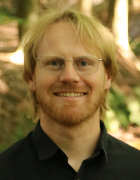
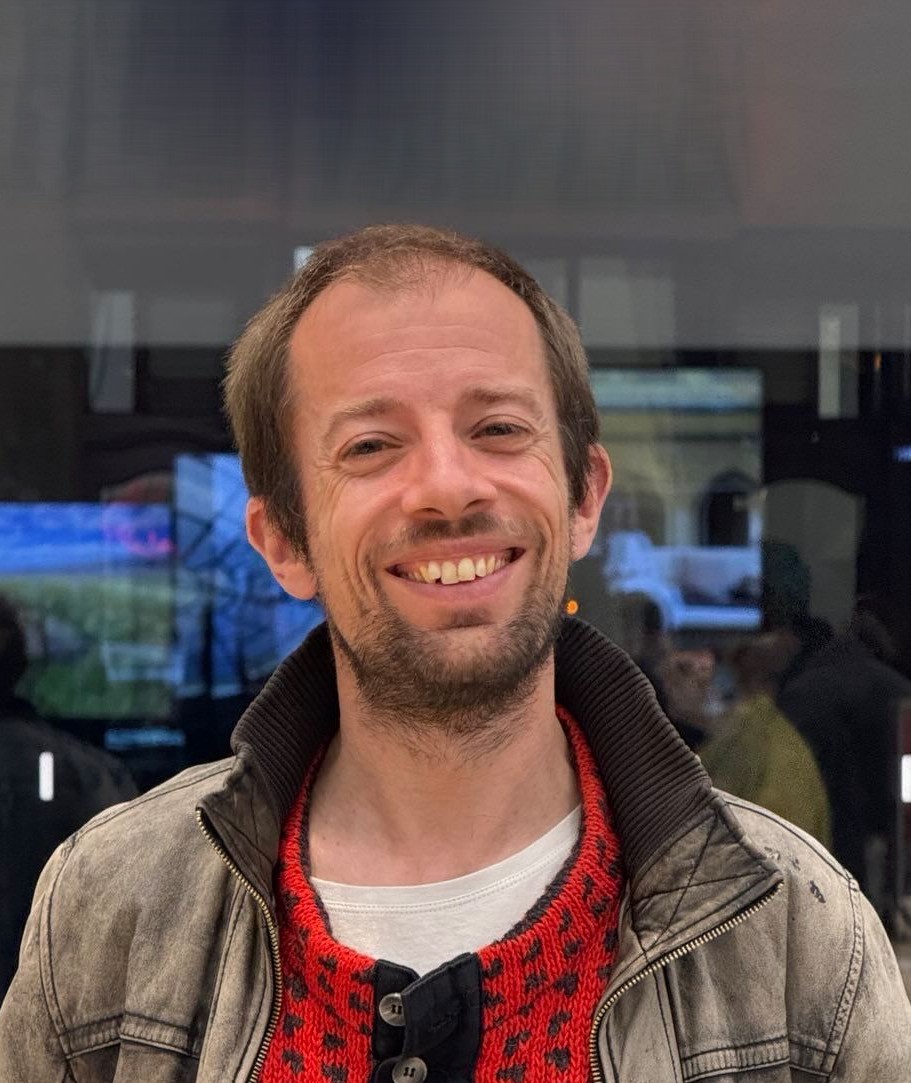
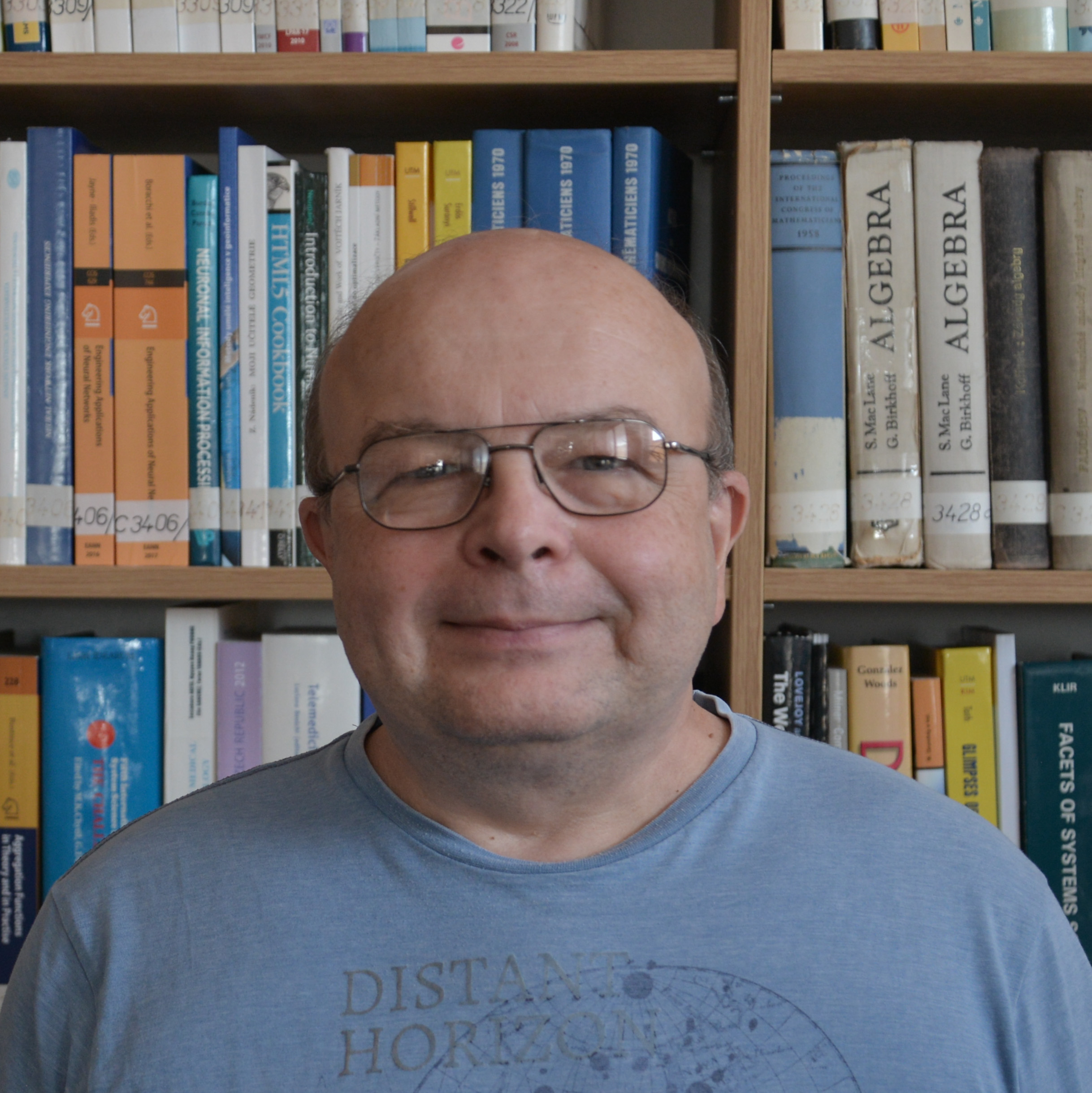
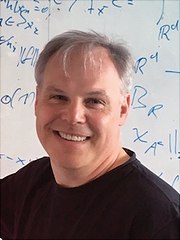
Prof. Richard L. Peters is a Professor and Head of the Chair of Tree Growth and Wood Physiology at the Technische Universität München (TUM) since 2024. His research focuses on tree physiology, wood formation, and climate-forest interactions. He holds a doctorate summa cum laude from the University of Basel (2018) and has conducted postdoctoral research at the Swiss Federal Institute for Forest Science (WSL) and Ghent University. His work integrates forest ecology, dendrochronology, and ecophysiology to address climate change impacts on forests. Education: B.Sc./M.Sc. in Biology at Utrecht University, Ph.D. from University of Basel (2018). Key career steps include a Swiss National Science Foundation (SNSF) fellowship at Ghent University and coordination of the Swiss Canopy Crane II project (2021). Research Interests: Tree water-use strategies, drought tolerance mechanisms, carbon allocation dynamics, and the physiological basis of tree growth. He leads interdisciplinary projects to monitor forest responses to environmental stress using tools like the TreeNet network. Awards: Early Postdoc Mobility Fellowship (SNSF, 2019), Doctorate summa cum laude (2018). Contributions: Authored >180 publications, co-developed the datacleanr R package for ecological data processing, and pioneered methods linking tree-ring data with climate models. His work emphasizes the need for better observational data to improve vegetation models.
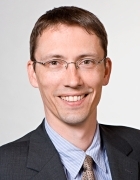
Christian Wald is a Post-doctoral researcher at Technical University Berlin working under Professor Gabriele Steidl, focusing on generative modeling, flow matching, and stochastic processes in machine learning. His research bridges theoretical probability with practical medical imaging applications, particularly in MRI reconstruction and analysis. He completed his PhD at Humboldt University of Berlin in 2017 with a thesis on p-adic quantum groups. His academic journey transitioned from pure mathematics to interdisciplinary machine learning research, reflecting his versatile expertise. Wald's primary research explores generative models through the lens of optimal transport and flow matching, with significant contributions to Wasserstein geometry and conditional distance metrics. His work frequently integrates stochastic processes to enhance medical image reconstruction, demonstrating strong cross-disciplinary impact in both theoretical machine learning and clinical applications. Recent publications highlight innovations in sliced MMD flows, Bayesian OT methods, and uncertainty-aware medical image analysis. Analysis of his 15 most recent publications (2019-2025) reveals a consistent trajectory toward unifying geometric probability with deep learning. Key themes include flow-based generative modeling for medical time-series data, optimal transport applications in image reconstruction, and novel kernel methods for distribution matching. His work spans both foundational theory (e.g., Fisher-Rao curves) and high-impact medical applications (e.g., coronary calcium scoring). No specific scientific awards are documented in the provided text, though his publications appear in prestigious venues including ICLR, IEEE TMI, and Physics in Medicine & Biology. Wald maintains extensive collaborations with the medical imaging group at Technical University Berlin, particularly with Andreas Kofler and Gabriele Steidl. His co-authored works demonstrate consistent contributions to MRI reconstruction pipelines and segmentation frameworks, though no formal advising roles or grant leadership are indicated. Current projects focus on uncertainty quantification in active learning for medical image segmentation. He operates within Gabriele Steidl's research group at Technical University Berlin, which specializes in mathematical imaging and machine learning. The team combines expertise in optimization, probability theory, and deep learning to solve medical imaging challenges, with Wald contributing core algorithmic innovations in generative modeling and stochastic reconstruction.
Prof. Dr.-Ing. H. Siegfried Stiehl is a retired Senior Professor (until Sept 2021) at the Department of Informatics, University of Hamburg. He previously held roles including Dean of the Faculty of Mathematics, Computer Science, and Natural Sciences (2001–2006), Vice President for Research (2007–2013), and Head of the Image Processing Research Group. His academic journey includes a PhD from TU Berlin (1980) and a Habilitation in Computer Vision (1987). Education: 1973: Ing. Degree in Ingenieur-Informatik, Fachhochschule Furtwangen 1976: Diploma in Computer Science, TU Berlin 1980: Dr.-Ing. Dissertation on medical image processing, TU Berlin Research focuses on Computer Vision , Computational Neuroscience , and Cognitive Science , with contributions to medical image registration, 3D landmark detection, and biomechanical modeling. Key projects include the EU-funded 'COVIRA' consortium (1989–1995) and leadership in the SFB 950 'Manuscript Cultures' project (2015–2019). His 110+ publications span biomedical image registration, elastic deformation algorithms, and real-time signal processing. Notable collaborations include work with institutions like the University of Pennsylvania, University of Birmingham, and Philips Research. Leadership roles include organizing scientific events, serving on editorial boards (e.g., Biological Cybernetics), and founding the Interdisciplinary Nanoscience Center Hamburg (INCH) in 2001. His research has addressed challenges in neurosurgical interventions, VLSI implementation of neural networks, and interdisciplinary education.
Prof. Dr. rer. nat. habil. Detlef Hauke Mache is a full Professor of Mathematics and Applied Mathematics at the TH Georg Agricola University of Applied Sciences in Bochum, Germany, within the Faculty of Electrical Engineering, Information Technology, and Industrial Engineering. Since 2003, he has held the chair for Applied Mathematics with a focus on Constructive Approximation. Education: Diploma in Mathematics and Computer Science, University of Dortmund (1988) Doctoral degree (Dr. rer. nat.) in Mathematics, University of Dortmund (1991) Habilitation (Dr. habil.) in Mathematics, University of Dortmund (1997) Research Interests: Prof. Mache's research spans Constructive Approximation Theory , emphasizing the development and analysis of approximation methods. He explores Radial Basis Function (RBF) Networks and their applications in neural networks and fuzzy logic. His work integrates theoretical foundations with practical algorithms, particularly in numerical analysis and approximation techniques. Key areas include: Neural Networks and Fuzzy Logic Systems Quasi-Interpolation Methods Orthogonal Polynomial Expansions Integral Transforms and Convolution Structures Publications and Editorial Contributions: Prof. Mache has authored over 30 peer-reviewed papers and edited several volumes in approximation theory. His research trends indicate a focus on advancing approximation methods through theoretical insights and practical applications in neural networks and computational intelligence. Scientific Awards and Honors: While no specific awards are listed, his extensive editorial roles and habilitation qualification signify recognition in his field. Teaching and Advising: He teaches courses in Higher Mathematics, Applied Mathematics, Differential Equations, and Numerical Analysis. While no specific students are named, his long-standing academic positions suggest significant contributions to graduate education. Laboratories and Teams: As a professor in the Faculty of Electrical Engineering and Information Technology, he likely collaborates with interdisciplinary teams, though no specific labs are mentioned.
Peter Massopust is a Privatdozent at the Technical University of Munich (TUM), where he is affiliated with the School of Computation, Information and Technology and the Department of Mathematics. His research spans multiple areas of mathematical analysis with a focus on fractal geometry, wavelet theory, and approximation methods. His educational background includes: Habilitation in 2011 from Technical University of Munich Ph.D. in Applied Mathematics from Georgia Institute of Technology (1986) MS in Mathematics from Georgia Institute of Technology (1985) MS in Physics from Georgia Institute of Technology (1981) Dr. Massopust's research interests primarily focus on Wavelets and Frames, Harmonic and Functional Analysis, Fractal Geometry and Fractal Interpolation Theory, and Splines and Approximation Theory. His work bridges theoretical mathematics with practical applications in signal processing, image analysis, and computational methods. His approach often combines classical mathematical techniques with innovative fractal-based methods to solve complex problems in approximation theory and functional analysis. His research has significantly contributed to the development of fractal interpolation functions, complex splines, and wavelet theory, with applications spanning from pure mathematics to engineering problems. His publication record demonstrates a consistent focus on fractal-based mathematical methods, with recent work expanding into quaternionic analysis, complex B-splines, and applications in signal processing. His research shows a clear trajectory from foundational work in fractal geometry to increasingly sophisticated applications in multidimensional signal analysis and computational mathematics. His scientific achievements have been recognized through several prestigious awards: Fulbright Scholarship (1980-1981) GIAN (Global Initiative for Academic Network) Award from the Republic of India (2016, 2017) Dr. Massopust has secured substantial research funding from various national and international sources, including the German Research Foundation (DFG), Bayerische Forschungsallianz, VolkswagenStiftung, and collaborations with Sandia National Laboratories and the National Science Foundation. His research program has consistently focused on advancing mathematical methods for signal and image processing, with particular emphasis on fractal-based approaches and wavelet theory. He has also been instrumental in fostering international collaborations, particularly through the EuroTech network and with institutions in Australia and India. Among his notable contributions is the GHM (Geronimo-Hardin-Massopust) Scaling Vector and DGHM (Donovan-Geronimo-Hardin-Massopust) Multiwavelet, developed at the Georgia Tech Research Institute in 1995. This work has had significant impact in the field of wavelet analysis and its applications.
Jiří Šíma is a senior scientist at the Department of Theoretical Computer Science, Institute of Computer Science, Czech Academy of Sciences. He holds the academic title of Research Professor (DrSc.) and has been a key researcher at ICS CAS since 1994. He has also served as head of the department (2010–2012, 2021–2023) and has held external lecturing positions at Charles University, Masaryk University, and Czech Technical University. His educational achievements include a CSc. (Ph.D.) in 1993, an Associate Professor qualification (doc.) and RNDr. in 2000, and a DrSc. in 2009 from the Slovak University of Technology. These qualifications reflect his deep expertise in theoretical computer science and neural networks. Šíma's research focuses on the theoretical foundations of neural computation, including the computational power of analog and spiking neural networks, energy complexity in deep learning models, formal language recognition by neural automata, and complexity theory. His work bridges theoretical computer science and artificial intelligence, with a strong emphasis on mathematical rigor and computational models. The 15 most recent publications highlight a consistent trend in analyzing the computational capabilities and energy efficiency of neural networks. His recent work (2020–2024) centers on energy complexity in fully-connected and convolutional networks, while earlier work explores analog neuron hierarchies, hitting sets for branching programs, and the limitations of spiking neurons. The research spans subfields such as formal languages, computational complexity, dynamical systems, and neurocomputing, demonstrating a cohesive and long-term research trajectory in theoretical machine learning. Best ICS Paper Award (2024) Best ICS Paper Award (2021) Second/Third Best ICS Paper Award (2019) Best ICS Paper Award (2018) Otto Wichterle Award (2003) Award of the CAS for young scientists (1998) Šíma has been principal investigator on multiple Czech Science Foundation grants, including LEDNeCo (2025–2027), AppNeCo (2022–2024), and FoNeCo (2019–2021). He has also served on grant evaluation panels and scientific councils, including at the Czech Science Foundation and Charles University. Although no formal students are listed, he has collaborated extensively with researchers such as J. Cabessa, P. Vidnerová, S. Žák, and P. Orponen. He is actively involved in the academic community, serving on program committees for major conferences such as ICANN, ICONIP, SOFSEM, and MFCS. His work is primarily conducted within the Department of Theoretical Computer Science at ICS CAS, a leading research group in theoretical computer science in the Czech Republic.
Prof. Florian Wellmann is a University Professor at RWTH Aachen University's Chair of Numerical Geosciences, Geothermal Energy and Reservoir Geophysics within the Faculty of Georesources and Materials Engineering. His research focuses on integrating machine learning with geoscience applications, particularly in geothermal energy, structural modeling, and uncertainty quantification. He leads the CG³ research group, developing open-source tools like GemPy and GemGIS for 3D geological modeling. Notably, he received a KI-Campus fellowship for advancing AI in geoscience education. His work includes projects such as the Horizon Europe GeoHEAT initiative, exploring geothermal systems and repurposing idle wells for energy. Education details are not explicitly provided, but his academic roles indicate expertise in numerical geosciences and geothermal engineering. Research interests span physics-based machine learning, subsurface characterization, and probabilistic modeling. His fellowship highlights contributions to digital education, blending AI with geological curricula. Recent publications emphasize sensitivity analysis, fault modeling, and geothermal reservoir optimization. Prof. Wellmann's awards include the KI-Campus fellowship (2021). His grants and advising efforts are reflected in collaborative projects like GeoHEAT and software development. Labs/teams include the CG³ group at RWTH Aachen, equipped with advanced geophysical instruments for field and lab analysis.
Prof. Dr. Armin Iske is a Full Professor of Numerical Approximation at the University of Hamburg's Department of Mathematics, within the Faculty of Mathematics, Computer Science and Natural Sciences. He holds a PhD from the University of Göttingen (1994) and habilitation from TU Munich (2002). His research focuses on numerical approximation, kernel-based methods, computational fluid dynamics, and medical imaging. He has held academic positions globally, including visiting roles at ANU (Australia) and the University of Leicester (UK). Research interests include scattered data approximation, adaptive particle methods for flow simulation, and high-dimensional data analysis. He has authored 118+ publications, including works on kernel interpolation, medical imaging reconstruction, and machine learning applications. He serves on editorial boards for journals like Advances in Computational Mathematics and Sampling Theory . His contributions span interdisciplinary projects, such as SFB/TRR 181 on energy transfer in atmosphere and ocean, and collaborations in nanotechnology for brain interfaces. His work bridges theoretical mathematics with practical applications in engineering and biosciences.
Gianluigi Rozza is a Full Professor in Numerical Analysis and Scientific Computing at SISSA (International School for Advanced Studies) in Trieste, Italy. He leads the SISSA mathLab research group and serves as Coordinator of the Mathematics Area at SISSA. He holds roles such as SISSA Director's Delegate for Innovation and Knowledge Transfer and member of various committees including the SISSA HPC Committee and SIAM Student Chapter. His research focuses on numerical analysis, computational fluid dynamics, reduced order methods (ROM), and their applications in engineering and biomedical fields. Education: Laurea cum Laude in Aerospace Engineering from Politecnico di Milano (2002), PhD in Applied Mathematics from EPFL (2005). Postdoctoral research at MIT (2006-2008), followed by roles at EPFL and SISSA. He has supervised over 30 PhD and Master’s students, with expertise in reduced order modeling and computational mechanics. Research Interests: Reduced basis methods, parametrized PDEs, fluid-structure interaction, cardiovascular simulations, environmental flows, machine learning integration, and industrial collaborations with companies like Danieli and Fincantieri. He coordinates EU projects such as the ERC Consolidator Grant AROMA-CFD (2016-2021) and the ITN ROMSOC project. Publications: Over 90 scientific papers, two books as editor, and contributions to open-source software like rbMIT and ITHACA-FV. Awards include the ECCOMAS Young Investigator Award (2014), SIAM Fellowship (2025), and the Gili Agonistelli Prize (2025). Grants and Projects: Principal Investigator of ERC AROMA-CFD and ARGOS PoC. Coordinates regional projects like UBE (Under Water Blue Efficiency) and TRIM. Engages in environmental modeling (e.g., SOPHYA, PRELICA) and industrial collaborations under MAR tc FVG. Labs/Teams: SISSA mathLab develops open-source tools for computational science, including ROM libraries and fluid dynamics solvers. Active in organizing workshops, serving on editorial boards (e.g., SIAM Journals), and advisory roles for agencies like ARPA FVG.
Prof. Xiaoying Zhuang is a faculty member at the Institute of Photonics within the Faculty of Mathematics and Physics at Leibniz University Hannover . She leads research initiatives in the PhoenixD Cluster of Excellence and contributes to the QuantumFrontiers cluster. Her work spans computational mechanics, quantum optics, and machine learning applications in engineering. Research Focus : Computational modeling of material failure, flexoelectric structures, and seismic metamaterials Key Collaborations : Institute of Photonics, PhoenixD Cluster, QuantumFrontiers Recent publications highlight her contributions to data-driven engineering, phase-field fracture modeling, and quantum-enhanced material simulations. Her methodological innovations include variational damage models and machine learning-powered multiscale analysis frameworks.
Prof. Dr. Hanspeter Mallot is a Professor of Cognitive Neuroscience at the Faculty of Science, Eberhard Karls University Tübingen . His research integrates biological and computational approaches to study spatial cognition in humans and robots. He has authored two key textbooks: Computational Neuroscience: A First Course and Computational Vision: Information Processing in Perception and Visual Behavior . PhD in Biology, University of Mainz Appointments at MIT, Ruhr-University Bochum, Max Planck Institute, and Institute for Advanced Study Research interests include: Spatial cognition and memory Visual navigation and homing Robotics and computational modeling Virtual reality experiments Eye movement and perception studies Projects and grants involve collaborations with EU initiatives (CURVACE, GNOSYS, WAYFINDING), DFG-funded programs (Bioethics, Cognitive Neurobiology), and interdisciplinary consortia (Center for Integrative Neuroscience, Bernstein Center for Computational Neuroscience Tübingen).
Oliver Junge is an Associate Professor of Numerics of Complex Systems at the TUM School of Computation, Information and Technology, Technische Universität München. His research focuses on developing novel numerical methods for dynamical systems, with applications in molecular dynamics, astrodynamics, systems theory, and image processing. He holds a doctorate from the University of Paderborn (1999) and has conducted research at institutions like Georgia Tech and Caltech. Notable awards include the TopMath Supervisory Award (2020) and the Research Prize from the University of Paderborn (2004). Educational Background: He studied mathematics and computer science at the Universities of Darmstadt, Bordeaux, Hamburg, and Bayreuth before completing his PhD in Paderborn. His academic career includes roles as a junior professor in Paderborn and associate professor at TUM since 2005. Research Interests: Junge specializes in numerical mathematics and scientific computing, emphasizing the analysis and implementation of numerical methods for complex systems. His work bridges theoretical rigor and practical applications, particularly in computational fluid dynamics, optimal control, and topological data analysis. Awards: His accolades include the Dilthey Prize (1998) and recognition for his contributions to computational methods in dynamical systems. Grants & Advising: While specific grants or advisee names are not listed, his publications indicate extensive collaborative research and mentorship in computational mathematics and systems theory. Labs/Teams: Collaborates with interdisciplinary teams at TUM and internationally, focusing on numerical methods and their applications in engineering and natural sciences.
Tim Jahn is a MATH+ junior research group leader for "Mathematics of Data Science" at the Technical University of Berlin since September 2023. Previously, he served as Acting Professor for "Data Assimilation" at the University of Potsdam from October 2023 to March 2024, and as a Research Associate with the "Hausdorff Postdoc" position at the University of Bonn from September 2021 to August 2023. Dr. Jahn received his Doctorate with highest honors (summa cum laude) from the University of Frankfurt in April 2021, following an M.Sc. in Mathematics (2016, grade 1.0) and B.Sc. in Physics (2015, grade 1.1), both from the same institution. His academic journey included an Erasmus exchange at Stockholm University in 2014. Dr. Jahn's research focuses on statistical inverse problems , stochastic optimization , dimension reduction , and analysis of neural networks . His work bridges theoretical mathematics with practical applications in data science, particularly in developing regularization methods that function without precise noise characteristics. His publication record shows a clear evolution from fundamental mathematical theory toward increasingly applied work connecting with machine learning methodologies, with his 2024 paper on "Early Stopping of Untrained Convolutional Neural Networks" representing a significant contribution at this intersection. His research program has been supported through competitive fellowships including the prestigious Hausdorff Postdoc fellowship at the University of Bonn and his current MATH+ junior research group leadership at TU Berlin, funded by the Berlin Mathematics Research Center. As leader of the "Mathematics of Data Science" group within the Institute of Mathematics, Dr. Jahn directs research that develops rigorous mathematical foundations for modern data analysis techniques, with particular emphasis on uncertainty quantification and the interface between classical inverse problems and contemporary machine learning approaches.
Professor Hanspeter A. Mallot is a distinguished academic in the Department of Biology within the Faculty of Mathematics and Natural Sciences at Eberhard Karls University Tübingen. Appointed Professor of Cognitive Neuroscience in 2000, he leads research in spatial cognition, computational neuroscience, and vision processing. His work bridges biological and artificial systems, exploring how humans and robots navigate and perceive spatial environments. Dr. Mallot received his PhD from the Faculty of Biology at the University of Mainz, Germany, in 1986. Following his doctoral studies, he held prestigious postdoctoral and research positions at the Massachusetts Institute of Technology, Ruhr-University Bochum, the Max Planck Institute for Biological Cybernetics in Tübingen, and the Institute for Advanced Study in Berlin. Professor Mallot's research primarily focuses on spatial cognition in humans and robots. His laboratory employs behavioral experiments in virtual reality, eye-movement recordings, and simulated agents in both hardware and software environments. His work spans computational neuroscience, cognitive science, and robotics, with particular emphasis on how visual information is processed for navigation and spatial orientation. His research has significant implications for both understanding human cognition and developing more sophisticated artificial navigation systems. His publication record demonstrates consistent contributions to the fields of spatial cognition and computational neuroscience. Over the past decade, his research has increasingly integrated neuroscientific approaches with computational modeling, exploring topics such as path integration, visual homing, spatial memory systems, and the neural basis of navigation. His work often bridges multiple disciplines, combining insights from psychology, neuroscience, computer science, and robotics to develop comprehensive models of spatial cognition. Professor Mallot serves on the editorial board of "Spatial Cognition and Computation" and the "Neuroscientific Society" (NWG). He has previously held leadership positions as president of the European Neural Network Society (ENNS) and the German Society for Cognitive Science (GK), and served on the Neuroscience review panel of the German Research Foundation. He currently leads several major research initiatives including EU Strep CURVACE, the DFG Research Training Group Bioethics, the Center for Integrative Neuroscience (CIN), and the Bernstein Center for Computational Neuroscience Tübingen (BCCN). These projects reflect his interdisciplinary approach, combining neuroscience, cognitive science, and computational modeling to address fundamental questions about spatial cognition. Professor Mallot has established several notable research laboratories and teams focused on spatial cognition and computational neuroscience. His work has been supported by prestigious funding bodies including the European Union and the German Research Foundation (DFG). His research group collaborates extensively with other institutions across Europe, particularly on projects related to robot navigation and spatial cognition in virtual environments.
Hui Zhang is a Professor in the School of Computer Science at Carnegie Mellon University, where he has made significant contributions to networking research for over two decades. He received his PhD from the University of California, Berkeley in 1993 and has maintained a prominent research career focusing on internet protocols, video streaming, and network management. His research interests span computer networking, internet video streaming, quality of service, content delivery networks, network protocols, multimedia communication, and network management. Professor Zhang's work has been particularly influential in developing adaptive video streaming technologies and content delivery mechanisms that power much of today's internet video infrastructure. His recent publications demonstrate continued innovation in networked systems, with a focus on improving video quality of experience through machine learning techniques and advanced network control mechanisms. The research trends show an evolution from foundational network protocol design to more application-focused solutions for video delivery and user experience optimization. Professor Zhang has mentored numerous successful researchers who have gone on to make their own significant contributions to the field. His collaborative work spans multiple institutions including Carnegie Mellon University, University of California, and various industry research labs. His research has been supported by substantial grants from NSF, industry partnerships, and has resulted in technologies that have been widely adopted in commercial video streaming services. Professor Zhang maintains an active research laboratory focusing on next-generation networked multimedia systems.