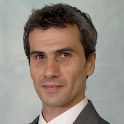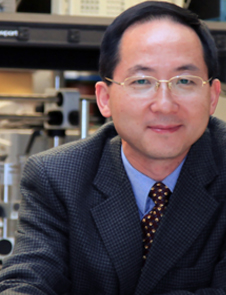
Lassi Roininen is a tenured Professor of Applied Mathematics at LUT University's School of Engineering Sciences, holding this position since September 2022 after serving as Assistant Professor there from 2018 to 2022. He maintains significant adjunct appointments as Associate Professor at University of Oulu, Assistant Professor at Bahir Dar University (Ethiopia), and faculty member at AIMS Rwanda, demonstrating strong international academic engagement. Education: Master of Science (Engineering), Tampere University of Technology Doctorate in Applied Mathematics, University of Oulu (2015) - conducted at Sodankylä Geophysical Observatory His research integrates Statistics, Geophysics, and Applied Mathematics with core expertise in Bayesian inference, uncertainty quantification, and inversion problems. He develops computational frameworks for geophysical imaging, climate modeling, and industrial applications, emphasizing robust statistical methodologies for real-world data challenges. Recent work shows increasing focus on African climate adaptation and medical/industrial tomography. Analysis of his 15 most recent publications reveals dominant trends in Bayesian approaches to climate science (particularly East African adaptation studies), medical/industrial imaging (tomography and fault detection), and geophysical modeling. His work consistently bridges mathematical innovation with practical applications across environmental science, healthcare, and manufacturing sectors. Research support includes Academy of Finland postdoctoral funding. Through AIMS Rwanda, he actively mentors African mathematicians and contributes to capacity building in computational sciences across the continent. His collaborative projects demonstrate commitment to solving region-specific challenges through advanced statistical methods. His work is closely tied to geophysical research networks including Sodankylä Geophysical Observatory, with recent expansions into East African climate resilience initiatives. Current projects integrate multi-instrument atmospheric data with Bayesian frameworks to address pressing environmental challenges in developing regions.