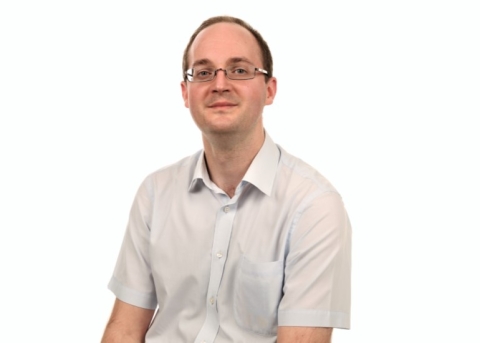
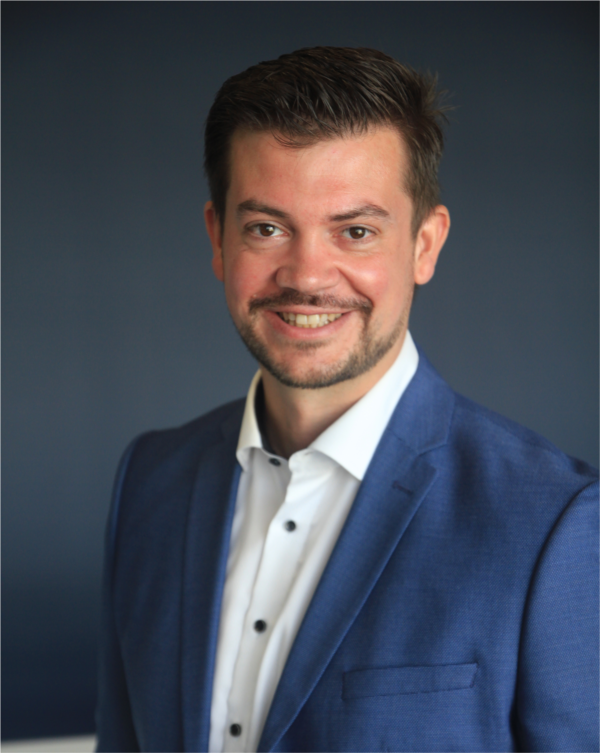
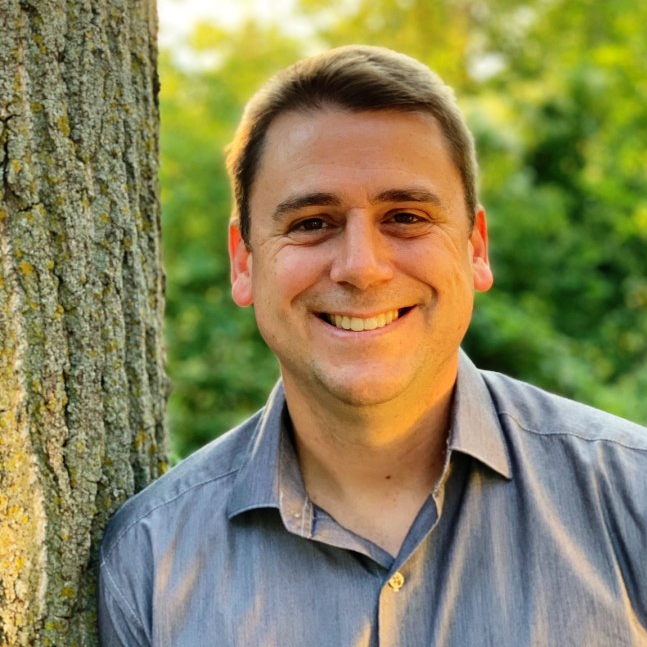
Dr. Dirk-Jan van Manen is a Lecturer at the Department of Earth and Planetary Sciences at ETH Zürich, located in Zurich, Switzerland. His research focuses on geophysics, seismology, and wave propagation with a strong emphasis on metamaterials and experimental wave physics. He is affiliated with the Institut für Geophysik and leads projects in elastic wavefield analysis, acoustic metamaterials, and non-destructive evaluation techniques. His recent work explores topics such as passive speech classification using mechanical neural networks, acoustic cloning, and the design of self-inverting space-time media. His research bridges theoretical models with practical applications in fields like seismic data processing, glaciology, and materials science. Dr. van Manen’s contributions include pioneering immersive wave experimentation setups and innovative methods for signal interpolation and scattering analysis in challenging environments.
Prof. Fabio Dell'Acqua is a Full Professor at the Department of Industrial and Information Engineering , University of Pavia , Italy. His academic activities span remote sensing, telecommunications, and data fusion for risk assessment. Expertise : Satellite data processing, agricultural monitoring, urban change detection Projects : ESA ARTES Demonstration Project "Saturnalia", FabSpace 2.0 educational initiatives Research Focus : He investigates Earth observation applications through: Advanced machine learning for SAR and Hyperspectral RS data Time series analysis of agricultural landscapes Band selection strategies for remote sensing systems Publication Trends : Dell'Acqua's recent work integrates multispectral satellite data with neuromorphic coding , focusing on: Energy-efficient communication in distributed networks Vineyard biomass monitoring via optical-SAR fusion Manure application detection for environmental compliance Academic Roles : Active contributor to ESA projects and IEEE Geoscience initiatives, with teaching responsibilities in Geospatial Data Processing courses.
Dr Edward Smart is a Principal Research Fellow at the University of Portsmouth, affiliated with the Faculty of Technology and School of Electrical and Mechanical Engineering. He is also part of the Centre of Excellence in Defence, Risk & Resilience, Portsmouth AI and Data Science Centre, and the Centre for Operational Research & Logistics. He holds a PhD from the University of Portsmouth (2011) and an MMath from the University of Reading (2005). Education: PhD in Engineering, University of Portsmouth, 2011 MMath in Mathematics, University of Reading, 2005 Research Interests: Dr Smart focuses on learning algorithms for detecting rare or abnormal events in industrial data, particularly in manufacturing, computing, agri-tech, and transport sectors. His work emphasizes anomaly detection, condition-based monitoring, and predictive maintenance, with applications in maritime, railway, aerospace, and high-performance computing industries. He has secured over £6.8M in grants from Innovate UK, STFC, and DASA, collaborating with institutions like Southampton, Nottingham, UCLAN, and Brunel. Grants & Collaborations: Lead or co-investigator on 20+ grants totaling £6.8M (over £3.4M for Portsmouth) Collaborations with industry partners in maritime, railway, aerospace, and agri-tech sectors Labs & Teams: Active in the Centre for Operational Research & Logistics and the Food Cultures in Transition research cluster. He contributes to researcher development through the Researcher Concordat implementation and previously chaired the Researchers' Network.
Mariko Oue is a Research Assistant Professor at Stony Brook University's School of Marine and Atmospheric Sciences (SoMAS). She holds a Ph.D. in Science from Nagoya University (2010), followed by postdoctoral research at the Hydrospheric Atmospheric Research Center (2010–2012) and Pennsylvania State University (2012–2015). Her research focuses on radar polarimetry, mixed-phase cloud microphysics, and radar simulators. She uses forward radar simulators and field observations (e.g., millimeter-wavelength radars and lidars) to study cloud dynamics and microphysics, particularly in Arctic and midlatitude systems. Key contributions include the development of the Cloud Resolving Model Radar Simulator (CR-SIM), now in version 4.0, and leadership in radar science training programs. Her work integrates radar data with Doppler spectral analysis and lidar measurements to understand ice crystal habits, precipitation formation, and cloud properties. She has organized workshops like the 2019 CR-SIM Short Course and contributed to initiatives like the ARM Radar Network. Oue’s research emphasizes bridging observational and modeling approaches to advance understanding of cloud processes and their climatic impacts. She collaborates on projects such as the Tracking Aerosol Convection interactions ExpeRiment (TRACER) and the Investigation of Microphysics and Precipitation for Atlantic coast-threatening snowstorms (IMPACTS). Publications highlight her expertise in Arctic mixed-phase clouds, secondary ice production, and radar-based vertical velocity retrievals. She has led training programs for early-career scientists, including the 2023 Summer School on Cloud and Precipitation Observations at Stony Brook. Her lab, the Stony Brook Radar Observatory, operates cutting-edge radar facilities for atmospheric research.
Inci Batmaz is a Professor of Statistics at the Middle East Technical University (METU) in Ankara, Turkey. She holds a dual Ph.D. in Computer Engineering (Ege University, Turkey) and a Dissertation from Carnegie-Mellon University (USA) as a Fulbright Scholar. Her academic career includes roles such as Chair of the Department of Statistics (2012–2015), Graduate Program Coordinator, and membership in various institutional boards. She has been affiliated with the Financial Mathematics Program at METU's Institute of Applied Mathematics since 2003. Her research focuses on Data Science & Analytics, Data Mining, Computational Statistics, Machine Learning, and Environmental Statistics. She has published extensively in top journals and edited volumes, including Recent Advances in Statistics (2007) and contributed to climate change studies, financial modeling, and simulation metamodeling. Dr. Batmaz has been recognized with multiple awards, including METU Publication Awards (2007–2016), TÜBİTAK Fellowships, and the Netherlands National Research Foundation Grant (2002). Her work bridges statistical methodology with real-world applications in climate science, finance, and industrial quality improvement.
Christoph Baer is a Senior Academic Councillor at the Ruhr-Universität Bochum , affiliated with the Electronic Circuits department under the Faculty of Electrical Engineering and Information Technology . His research focuses on advanced radar systems, microwave engineering, sensor technology, and humanitarian applications such as landmine detection. He leads projects like MEDICI (humanitarian microwave detection in Colombia) and Plaque-CharM (atherosclerotic plaque characterization via mm-wave sensors). Key Contributions: Pioneered radar-based fire and smoke detection, developed dielectric waveguide sensors, and contributed to fluid dynamics and plasma state monitoring. Publications: Over 100 peer-reviewed articles since 2008, including work on radar imaging, material characterization, and FMCW radar systems. His work bridges academic research and practical applications, with patents in radar calibration, material measurement, and sensor design. He actively participates in IEEE conferences and promotes international collaboration in humanitarian technology.
Jeffrey Cunningham is an Adjunct Associate Professor at the Department of Marine, Earth, and Atmospheric Sciences, North Carolina State University. His research focuses on radar meteorology, particularly in improving weather radar calibration and data quality through innovative methods like Bragg scatter analysis and solar scan techniques. He contributes to advancing polarimetric weather radar systems and enhancing operational efficiency in atmospheric monitoring. His work addresses challenges in differential reflectivity (ZDR) bias estimation, hydrometeor analysis, and mesoscale precipitation dynamics. Cunningham’s efforts aim to refine radar algorithms and data exploitation strategies for better weather forecasting accuracy. Despite not listed here, his contributions extend to collaborative projects like the Joint Ensemble Forecast System (JEFS) for Department of Defense operational needs. He holds a position within the College of Sciences, emphasizing interdisciplinary approaches to atmospheric science and engineering solutions for meteorological instrumentation. His research has significant implications for understanding regional climate patterns and improving radar-based weather prediction systems.
Professor Iestyn Pierce is a faculty member at Bangor University's School of Computer Science and Engineering, specializing in electronic engineering. His academic qualifications include a PhD in Wavelet Theory of Optical Pulse Propagation (1998) and an MEng in Electronic Engineering from the University College of North Wales (1994). He holds Chartered Physicist status from the Institute of Physics. His research encompasses numerical modeling of engineering systems, with current focus areas including: Design and implementation of distributed wireless sensor networks for environmental monitoring LoRaWAN deployments in remote ecosystems Hardware-in-the-loop simulation for low-carbon energy control systems Optical communications and nuclear power systems cybersecurity Publication analysis reveals consistent focus on optical communications (OFDM systems, laser dynamics), control systems (battery monitoring, grid management), and interdisciplinary applications (marine robotics, nuclear cybersecurity). Recent work shows increased emphasis on environmental monitoring technologies and industrial control security. Professor Pierce leads significant initiatives including the EU-funded SEEC nuclear power project (£4.6m) and the Global Wales Mekong Delta monitoring collaboration. He co-supervises international engineering student projects with institutions in Mexico, Switzerland, Hong Kong, and Vietnam, focusing on sustainable solutions. He chairs the Engineering Centre for North and Mid Wales, delivering engineering outreach programs, and co-chairs the Science panel for the Coleg Cymraeg Cenedlaethol, promoting Welsh-medium education. His team projects often explore sustainable product development through cross-border academic collaboration.
Peter H. Aaen is an Interim Dean for the Energy and Materials Programs (EMP) and Professor of Electrical Engineering at the Colorado School of Mines. Previously, he held roles as Reader of Microwave Semiconductor Device Modeling at the University of Surrey (UK) and Director of the Nonlinear Microwave Measurement and Modeling Laboratory. He earned B.A.Sc. and M.A.Sc. degrees from the University of Toronto and a Ph.D. from Arizona State University. His research focuses on multi-physics modeling and measurement methodologies for high-power and high-frequency electronic devices, including nonlinear electrothermal transistor modeling and electromagnetic simulations. He leads the Microwave Multiphysics Laboratory, which develops innovative techniques for semiconductor device optimization and system-level performance enhancement. His work spans applications in 5G communications, radar, and power electronics. Key contributions include co-authoring Modeling and Characterization of RF and Microwave Power FETs (Cambridge University Press, 2007) and advancing measurement calibration, compact model development, and electro-thermal simulation techniques. Awards include Best Conference Paper at the 2018 ARFTG Conference and Best Student Paper at the 2018 EuMW and 2016 ARFTG events. His lab emphasizes multiphysics coupling analysis, efficient algorithms for transistor simulation, and novel measurement systems for mm-wave and 5G technologies. Collaborations include partnerships with the National Physical Laboratory (UK) and industry leaders like Freescale Semiconductor.
Abdourrahmane ATTO is a Professor at Polytech Annecy-Chambéry, part of Savoie Mont-Blanc University. His research focuses on advanced machine learning techniques, including deep learning theory, stochastic modeling of multi-fractal processes, and time series analysis of images. He specializes in applications such as SAR image processing, environmental monitoring, and geohazard prediction. His work integrates neural networks, wavelet analysis, and explainable AI methods. Research Themes: Deep Learning Theories (Analysis, Explainability) Multi-Fractality and Stochastic Modeling Time Series of Images & Video Analysis Convolutional Neural Networks SAR and InSAR Image Processing Key Contributions: Developed timed-image representations for action recognition in video sequences. Advanced fractional Brownian field models for texture synthesis and analysis. Created the ISSLIDE dataset for landslide detection using machine learning. Pioneered explainable AI methods for hydrological forecasting and SAR image classification. Labs & Affiliations: Active member of LISTIC laboratory, focusing on interdisciplinary research in signal processing and computer science.
Professor Lang White is a faculty member at the University of Adelaide, holding the position of Professor of Electrical Engineering within the School of Psychology and Faculty of Health and Medical Sciences. His research focuses on statistical signal processing, control systems, optimization, and multi-agent systems with applications in defense, AI-human interaction, and communication networks. He leads projects on hidden reciprocal chain modeling, sensor array processing, and game-theoretic resource allocation strategies. Collaborations include institutions in Italy, France, and the U.S., and he is actively involved in defense-funded initiatives. Current research areas include Bayesian rationality in satisfaction games, Stackelberg game models for asymmetric conflict, and adaptive reinforcement learning algorithms. He has secured postdoctoral positions in human-AI interaction and maintains expertise in MIMO radar waveform design and TCP congestion control. His work bridges engineering and psychology, addressing interdisciplinary challenges in decision-making and system optimization. Professor White seeks consultancy opportunities in signal processing and control systems for defense clients and contributes to academic outreach through conference presentations and journal publications. He advises on emerging trends in distributed optimization and maintains a lab focused on temporal modeling and stochastic processes.
Dr. Ahmed Zoha is a Senior Lecturer at the University of Glasgow specializing in Autonomous Systems & Connectivity. He holds a PhD (2014) and MSc (Communication Engineering) from the University of Surrey and Chalmers University. His research focuses on AI-driven wireless systems, 5G/6G networks, healthcare analytics, and energy monitoring. He has led projects like the $1.45M QSON initiative and contributed to high-impact projects including the NHS UK-funded TIHM. Dr. Zoha has authored over 40 peer-reviewed publications and received UK Exceptional Talent recognition. He serves on IEEE technical committees and organizes conferences. Education: PhD in Electrical & Electronics Engineering, University of Surrey (2014) MSc in Communication Engineering, Chalmers University (Sweden) Awards: Two IEEE Best Paper Awards UK Exceptional Talent Endorsement (Royal Academy of Engineering) HSJ 2018 Award (NHS TIHM Project) Research Interests: AI in 5G/6G networks Healthcare analytics & wearable sensors Federated learning & privacy Smart energy systems Radar signal processing Recent work emphasizes federated learning applications in smart grids, mmWave networks, and healthcare. His research bridges machine learning with real-world wireless systems to address societal challenges in energy, healthcare, and connectivity.
John McAllister is a Professor and Deputy Head of School at Queen's University Belfast's School of Electronics, Electrical Engineering and Computer Science. His research focuses on custom hardware design for FPGA-based embedded/edge computing, signal processing, and machine learning applications, with a particular emphasis on neuromorphic computing, quantum computing, and dataflow architectures. He leads projects such as FPGA Acceleration of SDR Algorithms and picoStream Streaming Multiprocessors, and has supervised work in embedded systems and wearables. Research Interests: Custom FPGA Hardware and High-Level Synthesis Edge Computing and Cyber-Physical Systems Signal Processing Systems Dataflow Computing Neuromorphic Computing Quantum Computing Notable Awards: Best Paper Prize (2011, 2007) Certificate of Merit (2017) Higher Education Academy Fellowship (2007) Grants & Collaborations: R3500ECS: Arm Morello UAV Security (2023–) R8848CSC: FPGA SDR Acceleration (2017–) R3797CSC: Exascale picoStream (2016–2018) Labs/Teams: Active in the Institute of Electronics, Communications & Information Technology, leading interdisciplinary projects in quantum circuit optimization and FPGA-based signal processing.
Maurizio Di Bisceglie is an Associate Professor at the Department of Engineering (DING) of Università degli Studi del Sannio, Italy. He is an expert in signal processing for remote sensing applications, particularly in GNSS Reflectometry (GNSS-R) and Synthetic Aperture Radar (SAR) systems. His research focuses on: Advanced CFAR detection algorithms for extended targets in non-Gaussian clutter GNSS-R data analysis for ocean wind speed , altimetry , and inland water monitoring Statistical modeling of sea surface scattering and clutter characteristics Development of noise reduction and image enhancement techniques in SAR interferograms Applications of multi-spectral satellite data for environmental monitoring His recent publications show a trend toward spaceborne GNSS-R applications for coastal and flood monitoring , with a strong emphasis on machine learning and stochastic modeling . Key journals include IEEE Transactions on Geoscience and Remote Sensing and IEEE International Geoscience and Remote Sensing Symposium proceedings. He teaches Numerical Signal Processing and Sensors for Earth Observation at the University of Sannio. His work has been published in IEEE and other leading technical journals, with collaborations across Italy and international institutions.
Dr. Yang Li is a Professor in the Department of Electrical and Computer Engineering at Baylor University, where he has been a faculty member since 2011. He holds a PhD from The University of Texas at Austin and specializes in electromagnetics, antenna design, wireless propagation, and radar systems with applications in wearable and biomedical sensing. PhD, Electrical and Computer Engineering, The University of Texas at Austin (2011) MS, Electrical and Computer Engineering, The University of Texas at Austin (2007) BS, Electrical Engineering, University of Science and Technology of China (2005) His research focuses on antenna design for body-worn applications , electromagnetic wave propagation on and around the human body , metamaterials , electrically small antennas , and wireless sensing using radar and AI . He investigates how dynamic human motion affects wireless channels and develops wearable antennas using electronic textiles. His work integrates deep learning for classifying human activities from wireless signals and radar micro-Doppler signatures. The recent publications demonstrate a strong trend in millimeter-wave radar for non-contact vital sign and motion monitoring , on-body creeping wave propagation , MIMO antenna design , and durability of e-textile antennas . His research bridges theoretical electromagnetics with practical applications in healthcare, automotive safety, and wearable technology. Scientific awards include: CST University Publication Award IEEE Antennas and Propagation Society Doctoral Research Award Chinese Government Award for Outstanding Students Abroad Houston Endowment President’s Excellence Fellowship Multiple Best Student Poster Awards (1st, 2nd, 3rd place) Young Scientist Award, URSI Atlantic Radio Science Conference (2015) 3rd Prize, USNC-URSI Student Paper Contest (2010) Dr. Li actively advises graduate and undergraduate students, with many of his publications co-authored by student researchers marked with asterisks. He has secured funding for research in wearable antennas, body-area propagation, and radar sensing. He teaches core courses such as Signals and Systems, Applied Electromagnetic Fields, Antennas & Wireless Propagations, Radar Systems, and Antenna Design. He leads a research group focused on Wireless Antenna Design for the Human Body , conducting experiments using motion-capture systems, phantom models, and radar measurements. The lab investigates e-textile durability, human micro-Doppler signatures, and AI-driven classification of physiological and motion data.