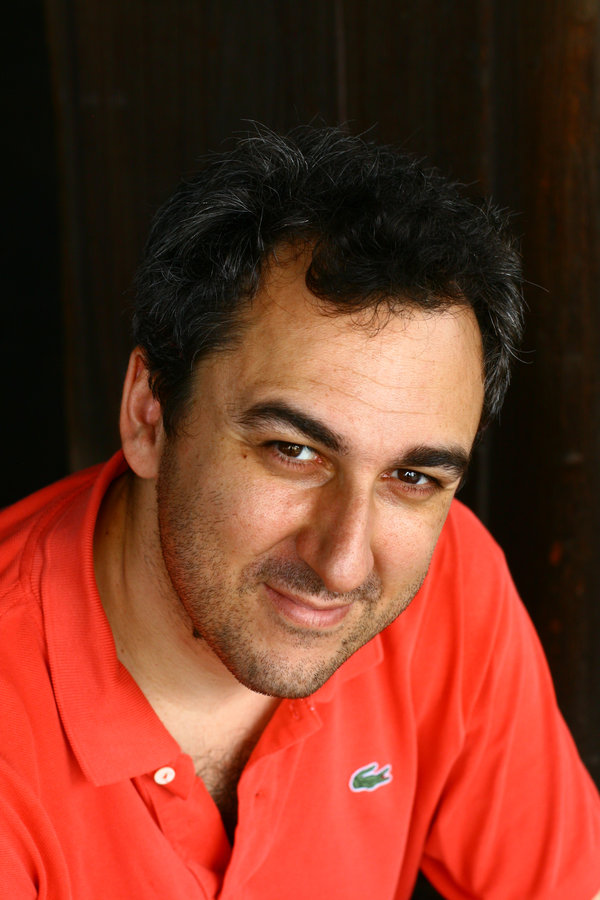
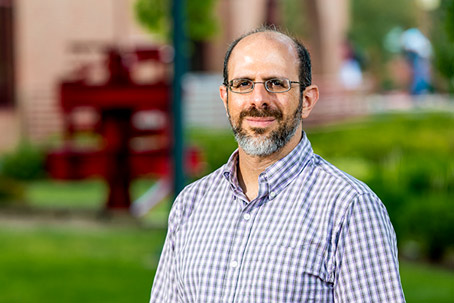
Prof. Jan Pelzl is a Professor of Computer Security at Hamm-Lippstadt University of Applied Sciences. His research focuses on cryptography, cyber security, and embedded security, with a strong emphasis on post-quantum cryptography and industrial security solutions. He leads projects addressing long-term data protection under regulations like the NIS2 Directive and explores practical implementations for critical infrastructure. Key research areas include cryptographic algorithms (ECC, RSA, hash functions), key management systems, and security engineering for embedded systems. Collaborations with industry partners such as Robert Bosch GmbH and TÜV Rheinland Akademie highlight his work on industrial security and safety standards. His publications span over two decades, with recent focus on post-quantum cryptography applications, cryptographic protocols, and embedded security architectures. Pelzl’s contributions address both theoretical advancements and real-world implementations, particularly in automotive and IoT security contexts.
Bhargav Narayanan is an Associate Professor in the Department of Mathematics at Rutgers University. His research focuses on combinatorics, probability theory, statistical physics, and theoretical computer science, with a specialization in combinatorial models and probabilistic methods. He organizes a weekly seminar at Rutgers exploring these topics. Previously, he held a research fellowship at St John's College, Cambridge, and completed his PhD under Béla Bollobás at Cambridge University. Education: PhD in Mathematics from the University of Cambridge. Career: Postdoctoral research at St John's College, Cambridge before joining Rutgers. Research Interests: Combinatorics, probability theory, statistical physics, and theoretical computer science. He has published extensively in top-tier journals such as the Annals of Mathematics and the Journal of the European Mathematical Society. Selected publications highlight contributions to antichain codes, random graph bisections, threshold phenomena, and combinatorial optimization. His work often bridges discrete mathematics and applications in physics and computer science. He has taught graduate courses on additive combinatorics, spectral methods, and probabilistic methods in combinatorics. No scientific awards explicitly listed in the provided texts. Advising: No students listed explicitly in the text. Grants: No specific grants mentioned. Lab/Team: Organizes a weekly research seminar at Rutgers.
Mu-En Wu is an Assistant Professor in the Department of Mathematics at Soochow University (Taiwan) since February 2014. His academic career bridges cryptography, financial engineering, and data science, with significant contributions across both theoretical cryptography and practical financial applications. Previously, he served as a postdoctoral researcher at Academia Sinica's Institute of Information Science (2009-2013, 2013-2014) and as a researcher at the Industrial Technology Research Institute (2013). His educational background includes a PhD in Computer Science from National Tsing Hua University (2004-2009), an MS in Applied Mathematics from National Chiao Tung University (2002-2004), and a BS in Pure Mathematics from National Tsing Hua University (1998-2002). He was recognized with multiple academic honors including the Outstanding Paper Award at Xinmiao Combinatorial Mathematics Workshop (2004) and Best Paper Awards at Information Security conferences (2005, 2009). Wu's research spans two major domains: cryptographic theory (particularly RSA variants and security analysis) and financial data science (algorithmic trading, fund management, and prediction markets). His cryptographic work focuses on improving RSA security through novel factorization techniques and vulnerability analysis, while his financial research emphasizes practical applications of data science in trading strategies, volatility analysis, and risk management. He has developed innovative approaches connecting gambling theory with financial trading, notably through Kelly criterion applications. His publications show a clear evolution from pure cryptography (2005-2010) toward financial applications (2013-present), reflecting his unique interdisciplinary expertise. The most recent work integrates machine learning with financial time series analysis, demonstrating sophisticated approaches to futures market prediction and volatility skew analysis. Bronze Award in University Mathematics Proficiency Test (Calculus) 90 Academic Year Bronze Award in University Mathematics Proficiency Test (Calculus) 91 Academic Year Outstanding Paper Award at Xinmiao Combinatorial Mathematics Workshop 2004 Best Paper Award at Information Security Workshop 2005 NSC Thousand-Mile Horse Scholarship 2007 Honorable Mention Doctoral Dissertation Award 2009 Best Paper Award at Information Security Conference 2009 Wu maintains an active industry presence through his "Biquan Duoli Zhen Yingxiong" column at Coin Chart website since 2013 and extensive teaching engagements with financial institutions. He has delivered over 50 specialized lectures at universities and financial organizations across Taiwan, focusing on R language applications in financial data analysis. His industry collaborations include Taiwan Futures Exchange, Securities and Futures Market Development Foundation, and various commercial banks, where he develops practical trading algorithms and risk management frameworks.
Vladimir Shpilrain is a Professor in the Department of Mathematics at The City College of New York (CUNY). His primary research focuses on post-quantum cryptography, computational complexity, and algorithmic problems in group theory. He is a leading figure in applying algebraic methods to cryptographic protocols and has contributed to foundational work in non-commutative cryptography. His academic affiliations include the Algebraic Cryptography Center and collaborative projects at the intersection of mathematics and computer science. Shpilrain has authored over 100 publications, including two influential books on combinatorial and computational group theory. His work bridges pure mathematics (e.g., combinatorial group theory, affine algebraic geometry) with applied areas like secure communication and blockchain technology. He holds patents for cryptographic systems and has advised numerous students in interdisciplinary research areas. Shpilrain teaches advanced courses in linear algebra, probability theory, and cryptography. His research is supported by grants exploring post-quantum security, Cayley hash functions, and delegation protocols. Collaborations span global institutions, emphasizing both theoretical rigor and practical applications in information security.
Leo Liberti is a CNRS Researcher and part-time professor at the Computer Science Laboratory (LIX, UMR 7161) , École Polytechnique, Palaiseau, France. His academic roles span research and teaching in theoretical computer science, operations research, and mathematical foundations. Research interests include Cryptography (classical and quantum), Logic , and History of Mathematics . He co-organized the Symposium on Experimental Algorithms 2023 and contributed to educational resources like tutorials on TCP/IP protocols. Scientific awards : IBM Faculty Award (2015). His academic website hosts publications, teaching materials, and projects related to distance geometry, combinatorics, and data science.
Riccardo Focardi is a Full Professor at Ca' Foscari University of Venice in the Department of Environmental Sciences, Computer Science and Statistics. He has held this position since September 2017, following roles as Associate Professor (2013–2017) and Researcher (1996–2002). He is also co-founder and Chief Scientist of Cryptosense and 10Sec, startups focused on cybersecurity and IoT security solutions. Education: PhD in Computer Science from the University of Bologna (1999), Laurea cum laude in Computer Science (1993). Research focuses on cybersecurity, cryptography, formal methods for security protocol analysis, and secure hardware/software systems. Notable projects include the Cryptosense Analyzer tool for cryptographic device analysis and contributions to IoT security via 10Sec's fingerprinting technologies. His work on PKCS#11 vulnerabilities and padding oracle attacks has significantly impacted practical cryptographic security. Publications emphasize applied cryptography, API security, and IoT systems. Recent work explores GAN-based authentication (EUAS-GAN) and zero-shot malware detection (Z-MDZS). Over 110 publications span top venues like CRYPTO, CCS, and IEEE S&P. Leadership roles include coordinating national cybersecurity projects (e.g., POR FESR 2017–2020), chairing conferences (ITASEC 2017, CSF 2007), and directing Ca' Foscari's Computer Science PhD program (2012–2019). Active in public engagement, including media appearances on cybersecurity trends. Labs/Teams: Cryptosense (founded 2013), 10Sec (2020), and the DAIS department's security research group. Supervised over 10 PhD students, contributing to academic-industry collaborations in secure systems.
Dr. Marten van Dijk is a Full Professor in the Computer Security department at Vrije Universiteit Amsterdam (VU) since 2022 and a Group Leader for Computer Security at CWI since 2020. He also holds a Gratis Full Research Professor position at the University of Connecticut's ECE Department since 2020. Previously, he served as Associate and Full Professor at the University of Connecticut and held research roles at MIT CSAIL, RSA Laboratories, and Philips Research. PhD in Mathematics (1997, Eindhoven University of Technology) M.S. in Mathematics (Cum Laude, 1993) M.S. in Computer Science (Cum Laude, 1991) His research focuses on foundational computer security problems using cryptographic principles, including secure processor design, oblivious computation, and privacy-preserving machine learning. Notable contributions span Physical Unclonable Functions (PUFs), Aegis secure processor architecture, and oblivious RAM protocols. 15+ publications in 2023-2025 address topics like PUF cryptanalysis, differential privacy in federated learning, and Byzantine fault tolerance Key journals: IEEE Transactions on Computers, Journal of Cryptology, ACM CCS Conference Award highlights include: IEEE Fellow (2022) for secure processor design and encrypted computation IEEE Technical Achievement Award (2023) Intel Test of Time Award (2022) ACM CCS Best Paper (2013) A. Richard Newton Technical Impact Award (2015) His technical leadership spans hardware security (blu-ray error correction codes), cryptographic protocol design, and machine learning privacy frameworks. Current projects focus on secure processors with hardware-enforced isolation and differential privacy optimization.
Dan Boneh is a Professor of Computer Science and Electrical Engineering at Stanford University , where he leads the Applied Cryptography Group and co-directs the Stanford Computer Security Lab. His research focuses on applications of cryptography to computer security, including cryptosystems with novel properties, mobile/web security, and cryptanalysis. Recipient of the Gödel Prize, Packard Award, Alfred P. Sloan Award, RSA Award in Mathematics, and five Best Paper Awards Co-director of Stanford Computer Security Lab Active in academic programs through 2025 as Visiting Scientist and Program Organizer Research interests span applied cryptography, secure computation, and blockchain technologies. Recent work includes exploring obfuscation and quantum-resistant cryptographic protocols. Scientific awards: Gödel Prize Packard Award Alfred P. Sloan Award RSA Award in Mathematics Ishii Award Five Best Paper Awards
Håvard Raddum serves as Chief Research Scientist in the Department of Cryptography at Simula UiB, a joint research entity of Simula Research Laboratory and the University of Bergen. His primary focus involves advancing cryptographic security through algorithm analysis, Fully Homomorphic Encryption applications, and hardware-level attack mitigation. Raddum's research spans cryptography with specialization in security analysis of cryptographic algorithms, practical deployment of Fully Homomorphic Encryption, and physical attacks on hardware implementations. His work addresses vulnerabilities in symmetric ciphers, multivariate schemes, and lattice-based systems through algebraic cryptanalysis, side-channel techniques, and theoretical security proofs. Analysis of his 2019-2025 publications reveals concentrated expertise in cryptanalysis across diverse primitives. Key trends include algebraic attacks on arithmetization-oriented cryptography, side-channel analysis of lightweight ciphers, error detection in lattice computations, and security evaluations of Fully Homomorphic Encryption. His research consistently bridges theoretical frameworks with practical implementation vulnerabilities.
Dr Theodosis Mourouzis serves as an Assistant Professor of Information Management at the University of Nicosia and directs the MSc in Business Intelligence and Data Analytics program within the Department of Information Technologies. Academic Background: PhD in Information Security and Cryptography from University College London (UCL) MSc in Advanced Studies in Mathematics from University of Cambridge BA/MA in Mathematics from University of Cambridge Research Expertise: Dr Mourouzis specializes in information security with deep technical focus on cryptography (including symmetric/asymmetric cryptanalysis) and blockchain ecosystems . His work spans theoretical cryptanalysis of algorithms like GOST and SIMON to practical implementations such as privacy-preserving healthcare blockchain solutions. Current research emphasizes efficient blockchain design and security evaluation frameworks. Publication Trends: His 14 publications (2011-2021) reveal an evolution from foundational cryptanalysis (differential/algebraic attacks on ciphers) toward applied blockchain systems. Key thematic clusters include cryptographic security evaluation (35% of works), blockchain innovation (40%), and authentication systems (25%), demonstrating consistent technical rigor across theoretical and implementation challenges. Academic Leadership: As MSc Director, he oversees program development bridging technical cryptography research with business intelligence applications, indicating strong curriculum design capabilities and industry-academia translation focus.
Joshua Brandon Holden is a Professor of Mathematics at Rose-Hulman Institute of Technology, where he has established himself as an expert in number theory and cryptography. His work bridges theoretical mathematics with practical cryptographic applications, and he has contributed significantly to both academic research and educational initiatives at the institution. Education: PhD in Mathematics from Brown University (1998) AM in Mathematics from Brown University (1994) AB in Mathematics from Harvard University (1992) Dr. Holden's research focuses on computational number theory, discrete logarithms, algebraic number theory, and applications of number theory to cryptography. His work explores the mathematical foundations of cryptographic systems, with particular attention to the discrete exponential function and its properties. He has also pioneered interdisciplinary connections between mathematics, computer science, and art through his investigations of braids, cables, and weaves using mathematical models. His research demonstrates how pure mathematical concepts can have practical applications in information security and artistic patterns. Dr. Holden's publication record reveals a consistent focus on the intersection of mathematics and cryptography, with a special emphasis on educational applications. His work spans theoretical investigations of number-theoretic concepts, practical cryptographic implementations, and innovative approaches to teaching complex mathematical ideas. A notable trend in his research is the connection between abstract mathematical structures and tangible real-world applications, including secure communication systems and artistic patterns. Scientific Awards: Honorary Member of Upsilon Pi Epsilon (2008) Best Paper in Mechanical Engineering Division at ASEE Annual Conference (2005) Dr. Holden has led National Science Foundation-funded research projects exploring discrete logarithms and has served as a cryptography consultant for Vadium Technology, Inc. since 2003. He has advised numerous student projects and theses in mathematics and cryptography. Additionally, he has played a leadership role on campus by chairing the committee on integrating classroom technology, demonstrating his commitment to innovative teaching methods and educational technology. His book 'The Mathematics of Secrets: Cryptography from Caesar Ciphers to Digital Encryption' has made complex cryptographic concepts accessible to a broader audience. While specific laboratory information isn't provided in the text, Dr. Holden's work with wireless tablet PCs and mathematical software suggests he has been involved in developing technology-enhanced learning environments. His research on braids and cellular automata also indicates interdisciplinary collaborations that bridge mathematics with computer science and artistic applications.