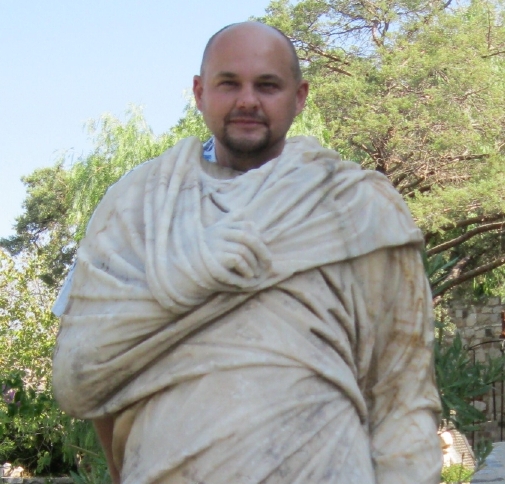
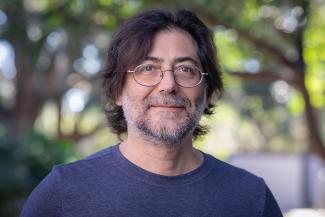
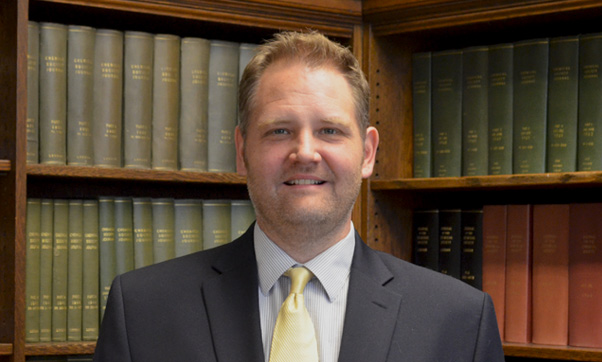
John Martin is an Associate Professor at the University of Illinois Springfield, affiliated with the School of Integrated Sciences, Sustainability, and Public Health. Since 2006, he has taught introductory physics for science majors and astronomy courses while directing the Henry R. Barber Research Observatory and hosting public UIS Star Parties. His research focuses on stellar astrophysics, particularly the life cycles of massive stars and phenomena like Eta Carinae. Stellar Astrophysics Massive Star Evolution Luminous Blue Variables (LBVs) Supernova Impostors Be Stars and Disks Photometry and Spectroscopy His publications, including over 100 peer-reviewed works, emphasize Eta Carinae's 5.5-year spectroscopic events, LBVs in M31/M33, Be star dynamics, and supernova impostors like SN 2009ip. Awards include the 2011 University of Illinois University Scholar title, JJ Nassau Fellowship (1997), and Dean's List recognitions. He earned his PhD in Astronomy from Case Western Reserve University (2003) and BS in Astro-Physics from the University of Virginia (1995). Scientific awards include 2011 University of Illinois University Scholar 1997 JJ Nassau Graduate Research Fellowship 1995 Mastin Graduate Fellowship 1995 Dean's List, University of Virginia 1994 Dean's List, University of Virginia
Professor Lee Jae-woo is a full Professor in the Department of Astronomy and Space Science at Sejong University, where he has served since 2003, advancing from Assistant Professor (2003-2006) to Associate Professor (2007-2012) and full Professor since 2013. His research centers on the formation and evolution of galaxies through detailed analysis of stellar populations in globular clusters using advanced optical and photometric techniques. His primary research focuses on multiple stellar populations in globular clusters, employing innovative photometric systems like Ca-CN-CH-NH to investigate chemical abundances, kinematics, and evolutionary pathways. Key areas include helium enhancement, metallicity variations, and dynamical properties in clusters such as 47 Tucanae, M22, and M92, with increasing utilization of JWST data for high-precision observations. His work bridges observational astronomy with theoretical models of galaxy formation. Analysis of his 15 most recent publications (2018-2025) reveals consistent focus on multi-population systems in globular clusters, with methodological evolution from ground-based photometry to space-based JWST observations. Dominant themes include population-specific chemical tagging, dynamical modeling of energy equipartition, and environmental effects on cluster evolution, significantly advancing galactic archaeology. His scientific excellence is recognized through prestigious awards: 2005 Group Achievement Award (NASA) 2006 16th Science and Technology Excellence Paper Award (Korea Federation of Science and Technology Societies) 2007 Top 50 Research Projects (National Research Foundation) 2010 Outstanding Paper Researcher Award (Sejong University) 2010 Ocean Science Award (Sejong University) 2010 National R&D Excellence Top 100 Achievements 2011 Scientist of the Month Award (Ministry of Education) 2013 Research Excellence Professor (Sejong University) Professor Lee actively supervises Master's and Doctoral students at Sejong University, guiding research in spectral synthesis modeling, photometric analysis of globular clusters, and cosmic distance measurement using RR Lyrae variables. His Stellar Species Research Lab conducts both observational campaigns and theoretical modeling, with recent projects focusing on JWST data analysis and innovative photometric system development. He leads the Stellar Species Research Lab, which operates Monday/Wednesday/Friday 2:00-5:00 PM, conducting observational studies on galactic formation through stellar photometry. Current projects include spectral synthesis for multi-population clusters, RR Lyrae variable analysis, and development of statistical models for population characterization, utilizing facilities like BOAO/KASINICS and JWST.
Krzysztof Stanek is a Professor in the Department of Astronomy at The Ohio State University , where he has been a faculty member since 2005. He holds the title of University Distinguished Scholar (2018) and shared the 2020 AAS Beatrice M. Tinsley Prize with Chris Kochanek for their work on the ASAS-SN project. His research focuses on time-domain astrophysics , including supernovae, gamma-ray bursts, and the use of red clump stars as distance indicators. Stanek leads the All-Sky Automated Survey for Supernovae (ASAS-SN) , pioneering global transient detection. Education: Ph.D. 1996, Astrophysics, Princeton University M.A. 1994, Astrophysics, Princeton University M.Sc. 1991, Physics, Warsaw University Research Interests: His work emphasizes massive stars, stellar explosions, galactic structure, and transient phenomena. Notable contributions include linking gamma-ray bursts to massive star deaths and advancing red clump distance measurements. Awards & Recognition: 2022 Guggenheim Fellowship 2020 AAS Beatrice M. Tinsley Prize 2018 OSU Distinguished Scholar Advising & Collaborations: Current graduate student: Dom Rowan (Ph.D. expected 2025). Past advisees include Jose Luis Prieto, Ben Shappee, Tom Holoien, and Tharindu Jayasinghe. Collaborations span international teams in transient detection and stellar astrophysics. Key Projects: The ASAS-SN project has discovered thousands of supernovae and transients, with data driving studies of stellar evolution, galaxy formation, and cosmology. Recent work includes analyzing tidal disruption events and variable star populations.
Alexey Bobrick is a Research Fellow at the School of Physics and Astronomy at Monash University, actively contributing to the fields of astronomy and astrophysics with a publication record spanning from 2010 to 2025. His research profile shows consistent scholarly output with 26 documented research outputs to date. Dr. Bobrick's research interests include: Astronomy and Astrophysics Gravitational Waves and Space-based Detection Theoretical Physics, particularly spacetime geometries Stellar Evolution in Globular Clusters X-ray and Optical Astronomy Binary Star Systems and Compact Objects His recent publications demonstrate interdisciplinary work connecting observational astronomy with theoretical physics. The 2025 papers show particular focus on gravitational wave detection concepts (including lunar-based antenna proposals) and detailed studies of stellar phenomena in globular clusters. His research has garnered significant attention in the scientific community and media. Dr. Bobrick's scholarly impact is evident from his work being: Picked up by 10 news outlets Blogged about by 2 sources Posted by 38 X users Referenced in 1 Wikipedia page Reddited by 5 users His collaborative network spans multiple countries as indicated by the international collaboration metrics in his research profile.
Dr. Nigel Metcalfe is an Assistant Professor at Durham University, affiliated with the Department of Physics and the Institute for Computational Cosmology. His academic responsibilities include serving on the Laboratories Committee, managing teaching databases, coordinating computer classrooms, and supervising Level 4 projects. He is also an academic adviser and tutor for the Level 3 Problem Solving Computing Course. His research centers on galaxy evolution, cosmology, and large-scale cosmic structures. Key interests include: Deep galaxy counts and clustering analysis Interpreting data through theories of galaxy formation Leading roles in international surveys: Chair of the Pan-STARRS Data Reduction Group, member of VST Atlas and DESI Imaging Validation teams He leverages computational tools to study galaxy distribution and cosmological parameters. Metcalfe's recent publications (2017–2024) focus on: Quasar clustering and dark matter halo mapping Galaxy underdensities (e.g., the 'Local Hole') Pan-STARRS data processing and calibration Machine learning applications in astronomy His work emphasizes survey-based cosmology, instrumentation, and statistical analysis of cosmic structures. He mentors students in computational cosmology and oversees research projects. While no awards are listed, his leadership in major collaborations (Pan-STARRS, VST Atlas) highlights his field impact. Metcalfe co-leads the Durham team within these consortia, focusing on data validation and cosmological inference.
Laura L. Watkins is an ESA-AURA Astronomer at the Space Telescope Science Institute (STScI) in Baltimore, USA. She currently serves as Deputy Mission Head of the Science Mission Office, leading the Science Policies Group and overseeing Science Infrastructure activities. She is a core member of the HSTPROMO research group and participates in the JWST Telescope Scientist Team’s Local Group Proper Motion Science project. Her research focuses on the kinematics and dynamics of small stellar systems, including globular clusters and dwarf galaxies, using data from Hubble and Gaia. She holds a PhD in Astronomy from the University of Cambridge and has held postdoctoral positions at STScI and the Max Planck Institute for Astronomy. She has been awarded ERC Fellowships and numerous scholarships, including the PPARC/STFC studentship. Education: PhD in Astronomy (University of Cambridge, 2010), MSci in Natural Sciences (University of Cambridge, 2006). Professional memberships include the International Astronomical Union and the American Astronomical Society. She has organized conferences, served on review committees (e.g., HST Time Allocation Committee), and contributed to projects like the Gaia Challenge and Theia Consortium. Her work has been featured in media including NASA/ESA press releases and CNN. Research interests emphasize using proper motions and dynamical models to study stellar systems’ formation, evolution, and dark matter distribution. Key projects include analyzing globular cluster kinematics and Local Group dynamics. She has supervised students in summer programs and internships, mentored postdocs, and co-organized workshops like the 2018 Science With Precision Astrometry conference.
Andrew C. Layden is a Professor and Chair of the Department of Physics & Astronomy at Bowling Green State University (BGSU), part of the College of Arts & Sciences. He holds a B.A. from Wesleyan University and a Ph.D. from Yale University. His research focuses on astrophysics, particularly photometry and spectroscopy of variable stars in old stellar populations, including RR Lyrae, Cepheids, and long-period variables. Layden’s work emphasizes determining stellar properties, chemical abundances, and kinematics. Education: B.A., Wesleyan University; Ph.D., Yale University Courses Taught: ASTR 1010, ASTR 2010(H), ASTR 3090, PHYS 1010, PHYS 1910, among others. Research Highlights: Studies variable stars in globular clusters and their implications for galactic structure. Develops observational techniques using telescopes like the BGSU 0.5-m telescope and PROMPT in Chile. His publications explore topics such as symbiotic novae, RR Lyrae properties, and stellar populations in metal-rich clusters. Layden mentors students in astrophotography and observational astronomy, with notable projects like rocket-borne camera experiments and student-led deep-sky imaging. He actively engages in departmental leadership and educational outreach through the BGSU Planetarium and observatory.
Massimo Marengo is a Professor in the Department of Physics at Florida State University (FSU). As a stellar astrophysicist, he specializes in observational studies of variable stars, extrasolar planetary systems, and the structure of the universe. His research leverages data from NASA, National Science Foundation, and European Southern Observatory facilities. Education Ph.D. in Astrophysics (2000), International School for Advanced Studies (SISSA/ISAS), Trieste, Italy Laurea cum Laude in Physics (1993), University of Torino, Italy His research spans three main areas: precise cosmic distance determination using variable stars, stellar population analysis, and extrasolar planetary system characterization. He contributes to understanding dust production in primitive environments, Galactic halo formation, and the chemical composition of RR Lyrae stars through multi-wavelength surveys like GALAH and DUSTiNGS. Recent publications focus on RR Lyrae period-luminosity relations, dust dynamics in symbiotic systems, and JWST-based studies of metal-poor galaxies. Key facilities include Gaia, Spitzer, and Rubin/LSST. Scientific Awards Iowa State University LAS Award for Teaching (2022) Iowa State University Mid-Career Achievement in Research (2015) NASA Group Achievement Award for Spitzer Telescope (2004) Smithsonian Institution Predoctoral Fellowship (1997) SISSA/ISAS Full Graduate Fellowship (1994) Marengo serves as Iowa State University representative to AURA (2016-2022) and co-chair of NASA SAG-10 Galactic Processes. He reviews proposals for NASA's Hubble, SOFIA, and Spitzer programs, and NSF's AST and Mid-Scale Innovations. His work appears in The Astrophysical Journal, Monthly Notices of the Royal Astronomical Society, and other journals.
René Andrae is a Researcher at the Max Planck Institute for Astronomy (MPIA) in Heidelberg, Germany. He works in the Gaia group under Coryn Bailer-Jones and contributes to the Gaia Data Analysis and Processing Consortium (DPAC). Education: Undergraduate studies in physics at the Free University of Berlin (2003) ERASMUS exchange at the University of Manchester (2005-2006) Diploma in physics from the University of Heidelberg (2009) PhD at MPIA with Knud Jahnke (2011, magna cum laude), funded by the Klaus-Tschira Foundation. Research Interests: Stellar Parameter Calibration: Developing statistical methods to correct mismatches between synthetic and real astrophysical spectra, focusing on metallicity and reddening estimates. Galaxy Morphology: Investigating mathematical parametrization of galaxy shapes and unsupervised classification methods like bipartite-graph models. Quasar Variability: Bayesian model comparison of stochastic vs deterministic models using SDSS lightcurves. Exoplanet Detection: Addressing methodological pitfalls in radial-velocity data analysis. Statistical Methodology: Specializing in classification algorithms, regression, and model assessment (e.g., Bayes factors, cross-validation). Programming Expertise: Advanced Java/C++ skills, good Python/Mathematica knowledge, and basic HTML. Scientific Contributions: 15+ peer-reviewed publications (first-author and co-author) on Gaia data analysis, galaxy dynamics, and methodological advancements in astronomy. Key Awards: Klaus-Tschira Foundation PhD scholarship and a magna cum laude PhD distinction.
Vicky Scowcroft is a Senior Lecturer in the Department of Physics at the University of Bath, where she is affiliated with The Bath Physics Observatory (BPO) and specializes in Astrophysics. Her office is located in room 8 WEST 4.03, and she can be reached at V.Scowcroft@bath.ac.uk or by phone at +44 (0) 1225 383132. Dr. Scowcroft earned her MPhys from the University of Leeds in 2006 and her PhD from Liverpool John Moores University in 2010. She then served as a Postdoctoral Research Associate and subsequently as a Senior Research Associate at The Observatories of the Carnegie Institution for Science in Pasadena, CA, from 2009 to 2016. In 2016, she joined the University of Bath as a Prize Fellow. Her research focuses on variable stars, which she uses to probe the structure and evolution of nearby galaxies and the Universe as a whole. By studying different populations of variable stars, she investigates the 3D and chemical structure of galaxies, examining their evolution over time and interactions with each other. She also researches the expansion rate of the Universe using variable stars to better understand its composition and evolution. Her research fingerprint shows strong expertise in RR Lyrae Variable Stars (100%), Metallicity (64%), Red Giant Branch (60%), and other related areas in stellar astrophysics and galactic structure. Dr. Scowcroft's recent publications demonstrate a strong focus on Cepheid variables, RR Lyrae stars, and their applications in measuring cosmic distances and mapping galactic structure. Her work often utilizes infrared observations and data from space telescopes like Hubble. She has made significant contributions to understanding the Magellanic Clouds and calibrating the period-luminosity relation for various types of variable stars. Prize Fellow at University of Bath (2016) Dr. Scowcroft is actively involved in several research projects, including 'IRAM - Confirming cyclical variability of CO in Cepheids' (as CoPI) and multiple phases of development for The Bath Physics Observatory. She has supervised at least one student and has contributed to creating educational resources for undergraduate astronomy education, including a case study on developing affordable observatories for teaching purposes. She has also created valuable astronomical datasets including the 'VizieR Online Data Catalog: Spitzer/IRAC observations of SMC Cepheids' (2016) and the 'Dataset for 'The mid-infrared Leavitt Law for Classical Cepheids in the Magellanic Clouds'' (2020).
Puragra Guhathakurta is a Professor of Astronomy and Astrophysics at the University of California Santa Cruz, where he has held a continuous faculty position since November 1994. His research focuses on galactic structure and evolution through detailed studies of stellar populations in the Milky Way, Andromeda (M31), and Triangulum (M33) galaxies using multi-wavelength surveys. His educational background includes: PhD and MS in Astrophysical Sciences, Princeton University (1985-1989) Physics, University of Calcutta, Science College, Rajabazar (1984-1985) BSc in Physics, Saint Xavier's College, Kolkata (1980-1983) La Martiniere for Boys, Kolkata (1970-1980) GuhaThakurta's primary research interests encompass: Galactic and Extragalactic Astronomy Stellar Populations and Chemical Abundances Galactic Structure and Kinematics Chemical Evolution of Galaxies Stellar Halos and Tidal Streams Dwarf Galaxy Dynamics Analysis of his 15 most recent publications (2023-2025) reveals a consistent focus on chemical abundances and kinematics in nearby galaxies. His work integrates Hubble Space Telescope imaging, ground-based spectroscopy, and Gaia astrometry to investigate weak CN absorption features in evolved stars, stellar halo structures, and the evolutionary histories of dwarf galaxies. A significant theme involves using resolved stellar populations to constrain galaxy formation models in the local universe. His major professional recognitions include: Hubble Fellowship (Princeton University, 1992-1994) Three-year Membership at the Institute for Advanced Study (1989-1992) While specific details of his advising and grant history are not documented in the source material, his extensive publication record demonstrates sustained research leadership. He is a principal investigator or key collaborator in major observational programs including SPLASH, PHATTER, HALO7D, and TREX, which have produced foundational datasets for studies of M31 and M33.
Associate Professor Andrew Casey is a computational astrophysicist at Monash University's School of Physics and Astronomy, specializing in data-driven methods applied to astrophysical problems. He holds a PhD from Australian National University (ANU), with postdoctoral research at the University of Cambridge as a King's College Senior Member. His work bridges astrophysics, statistics, and machine learning, focusing on stellar astrophysics, Bayesian inference, and large-scale surveys like Gaia and GALAH. He leads projects on stellar interiors, galactic evolution, and unresolved binary systems. Casey has received awards including the Young Tall Poppy Award and the Australian Prime Minister's Endeavour Award. He actively mentors PhD students in data analysis and computational methods. Education: PhD in Astronomy & Astrophysics (ANU), Visiting Graduate Student at MIT (via Endeavour Award). Research interests include: computational data analysis, stellar astrophysics, Bayesian statistics, machine learning applications in astronomy, and algorithm optimization. Notable projects include GaiaUnlimited (studying Milky Way disc structure) and GALAH surveys (chemical tagging of stars). Recent articles focus on topics like Gaia data analysis, exoplanet detection via astrometry, and models for M dwarfs. His work often emphasizes interdisciplinary approaches, combining physics-based models with AI-driven techniques. Awards: Young Tall Poppy Award (2018), Fresh Science (2018), Senior Member (2015), Australian Prime Minister's Endeavour Award (2011), and InnovationACT Prize (2011). Advising and grants: Accepting PhD students; leads ARC-funded projects such as the Discovery Early Career Researcher Award. Projects include Gaia survey analysis, star formation studies, and binary star detection. Labs/Teams: Involved with the Monash Astrophysics Group and collaborates internationally on surveys like Gaia and SDSS-V.
Andrea Kunder is an Associate Professor of Physics at Saint Martin’s University’s College of Arts and Sciences. Her research focuses on astrophysics, particularly the structure and evolution of the Milky Way’s Galactic bulge using RR Lyrae stars as key tracers. She leads the Bulge Radial Velocity Assay for RR Lyrae stars (BRAVARR), a National Science Foundation-funded project investigating bulge kinematics and bimodality. Kunder holds a B.A. from Willamette University and a Ph.D. from Dartmouth College, with postdoctoral experience at the Leibniz Institute of Astrophysics and Cerro Tololo Inter-American Observatory. Her work spans over 80 refereed publications, including studies of obscured inner Galaxy populations and collaborations on the Blanco DECam Bulge Survey (BDBS). Notable accomplishments include a 2024 NSF grant ($153,169), a 2023 Murdock poster award for student Claire Skaggs, and the RAISE grant (collaboration with three universities totaling $370k). Kunder actively mentors undergraduates in research projects, with multiple co-authored publications involving student collaborators. Key research themes include RR Lyrae metallicity analysis, Galactic bar dynamics, and tidal tails of globular clusters. She has pioneered methods for analyzing chemo-kinematics in the bulge using Gaia DR3 data and DECam photometry. Current projects include the VESTALE survey exploring dark matter in the bulge and the Roman Space Telescope’s GRIPS survey.
James L. Clem is an Associate Professor of Physics at Grove City College , where he specializes in observational astronomy and photometric analysis of stellar populations. His work bridges academic research with undergraduate education through the college’s 0.5m telescope at the Grove City College Observatory. Education Ph.D., Physics, University of Victoria (2006) M.Sc., Physics, University of Victoria (2002) B.Sc., Physics, University of Arkansas (1998) Research Interests Dr. Clem’s research focuses on: Galactic evolution through photometric studies of star clusters Time-series analysis of variable stars Extrasolar planet transit monitoring Near-Earth asteroid tracking Supernovae and nova outbursts Photometric calibration techniques Stellar population sequences in ugriz and other photometric systems He employs multi-wavelength observations and modern data analysis methods to study these phenomena. Publications & Research Trends His peer-reviewed work spans 15 years , with recent studies focusing on: Proto-planetary nebulae and R Coronae Borealis stars (2017-2019) Kepler field exoplanet transits (2018) Nova light curves and supernovae (2015-2016) Globular cluster stellar populations (2013-2015) Eclipsing binary star systems (2012) Earlier work concentrated on photometric standard fields (2007-2013) and observational data analysis methodologies. Teaching Dr. Clem teaches: Introductory astronomy (open to all majors) Observational astronomy (upper-level) Introduction to astrophysics (upper-level) He emphasizes hands-on training in observational techniques and data analysis at the college observatory. Public Engagement He advises students to: "take advantage of college resources and opportunities to explore the world and self-identity" , reflecting his commitment to holistic undergraduate development.
Željko Ivezić is a Professor in the Department of Astronomy at the University of Washington, affiliated with the College of Arts & Sciences. He leads major roles in the Rubin Observatory/LSST project as Construction Project Director and former LSST Project Scientist. His research focuses on electromagnetic radiation analysis from astronomical sources, with expertise in cosmology, galaxies, data science, and time-domain astronomy. Education: PhD in Physics from the University of Kentucky (1995), undergraduate degrees in Mechanical Engineering and Physics from the University of Zagreb (1990–1991). Career highlights include work on the Sloan Digital Sky Survey (SDSS) at Princeton University before joining UW in 2004. Research interests emphasize large-scale surveys and data-driven astronomy. He pioneered tools like the Dusty radiative transfer code and contributed to catalogs such as the SDSS Moving Object Catalog. His work bridges observational astronomy with computational methods, advancing understanding of asteroid families, quasar variability, and Milky Way structure. Teaching includes courses like Astr 102 (Introduction to Astronomy) and Astr 323 (Extragalactic Astronomy and Cosmology). Advised six PhD students, many now leading roles in academia and research institutions. Key contributions include the Rubin Observatory project, which will revolutionize time-domain astronomy through its vast imaging dataset. His legacy includes over 400 refereed publications and a Google Scholar h-index of 144.