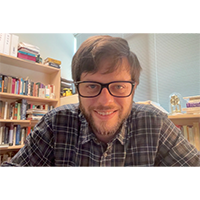
Felix Jünger is an academic researcher at the Chair of Bio- and Nanophotonics, University of Freiburg, within the Faculty of Engineering. He holds a diploma in experimental physics from the Technical University of Kaiserslautern (2010) and completed his doctorate at the same chair, investigating cellular mechanics during phagocytosis using optical methods. Currently serving as an assistant at the Chair, his research focuses on live-cell microscopy, optical trapping, particle tracking, and ROCS microscopy. Education: Diploma in Physics (TU Kaiserslautern, 2010) Doctorate: 2011–2014, University of Freiburg Research Interests: His work bridges physics and biology, emphasizing optical techniques to study cellular processes. Key areas include the mechanics of living cells, advanced microscopy approaches, and light scattering analysis for biological systems.
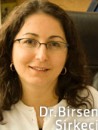
Birsen Sirkeci is a Professor in the Department of Electrical Engineering at San Jose State University (SJSU), San Jose, CA. She holds a PhD from Cornell University (2006), an MSc from Northeastern University (2000), and a BSc from Middle East Technical University, Turkey (1998). Prior to joining SJSU, she was a postdoctoral researcher at UC Berkeley. Her educational background includes: PhD in Electrical Engineering, Cornell University, Ithaca, NY (2006) MSc in Electrical Engineering, Northeastern University, Boston, MA (2000) BSc in Electrical Engineering, Middle East Technical University, Ankara, Turkey (1998) Professor Sirkeci's research spans wireless communications , sensor networks , statistical signal processing , and machine learning . Her work focuses on developing advanced algorithms for cognitive radio networks, spectrum sensing, and cooperative communication systems. She has pioneered applications of neural networks in materials science (e.g., stress prediction in porous ceramics) and medical imaging (e.g., colon cancer detection), demonstrating exceptional interdisciplinary innovation. Analysis of her 2013-2021 publications reveals a dominant trend at the intersection of wireless communications and deep learning. Key themes include spectrum sensing via convolutional neural networks, cooperative broadcast strategies in dense networks, and physics-informed machine learning for materials engineering. Her work consistently addresses real-world constraints like channel estimation errors and hardware limitations using USRP SDRs. Her scientific contributions have been recognized with: Best Paper Awards at MILCOM 2005, WCECS 2010, and ICETEC 2013 IEEE ICME Outstanding Organizing Committee Member (2013) Applied Materials Teaching Award at SJSU (2014) As an advisor, she co-led the SJSU Spartans team to the DARPA Spectrum Challenge finals in 2013. While specific grants aren't detailed in source material, her award-winning publications and competition success indicate sustained research funding. She actively mentors students through capstone projects and competitive teams, emphasizing hands-on implementation. Professor Sirkeci leads wireless communications research within SJSU's Electrical Engineering department, with strong ties to industry through awards like Applied Materials. Her DARPA Spectrum Challenge involvement underscores leadership in translating theoretical research into competitive, real-world systems.
Danielle Touma is a Research Assistant Professor at The University of Texas at Austin, affiliated with the Institute for Geophysics within the Jackson School of Geosciences. She holds an office at ROC and can be reached at danielle.touma@utexas.edu . Her research focuses on climate variability, extreme climate events, hydroclimatology, and natural hazards. She is based at 2305 Speedway Stop C1160, Austin, TX 78712-1692, and can be contacted at (512) 471-6048. Research Interests : Dr. Touma’s work examines the interplay between climate change and extreme weather phenomena, including wildfire risk amplification, hydroclimatic volatility, and the impacts of vegetation dynamics on precipitation regimes. She also explores attribution methods for linking extreme events to anthropogenic climate drivers, with a focus on nonstationary climate systems and multi-dimensional risk assessment. Key Contributions : Her research has highlighted the growing frequency of extreme rainfall events and their compounding effects on post-wildfire landscapes, as well as the role of stratospheric aerosol injection in fire weather mitigation. She has also contributed to understanding tropical cyclone precipitation patterns and the regional impacts of greenhouse gas emissions. Affiliations and Labs : As part of the Institute for Geophysics, she collaborates on projects addressing climate variability and natural hazards, leveraging advanced modeling and observational data to inform environmental policy and disaster preparedness.
Carlos José Díaz Baso is a Research Fellow at the Rosseland Centre for Solar Physics (RoCS), part of the Institute of Theoretical Astrophysics at the University of Oslo. His research focuses on solar chromospheric phenomena, Bayesian statistics, and deep learning applications in solar physics. Education: Ph.D. in Astrophysics (2014-2018, Universidad de La Laguna, Spain), followed by postdoctoral positions at Stockholm's Institute for Solar Physics (2018–2022) and currently at RoCS (2022–present). Research emphasizes analyzing solar spectra and magnetic field dynamics using advanced statistical and machine learning techniques. Key projects include the ISSRESS initiative studying small-scale solar reconnection events. Recent publications explore spectral resolution impacts, coronal oscillations, and sunspot light bridges. Active in international collaborations using instruments like SST/CRISP and SolO/EUI. Engaged in developing observational strategies for solar telescopes and improving data analysis methodologies.
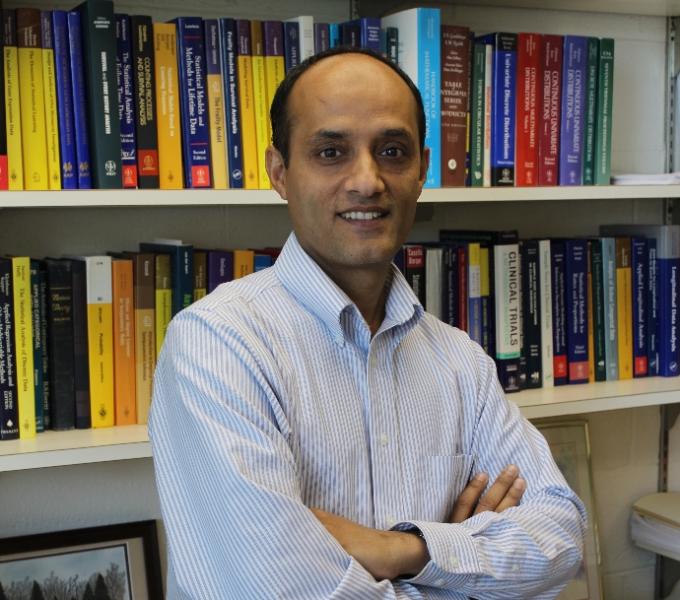
Abdus S. Wahed is a Professor of Biostatistics and Associate Chair in the Department of Biostatistics and Computational Biology at the University of Rochester. His research focuses on developing statistical methods for dynamic treatment regimes (DTRs), particularly in Sequential Multiple Assignment Randomized Trials (SMARTs), and their applications in hepatitis B, cancer, and obesity. He also works on longitudinal data analysis, survival analysis, and causal inference. Key Roles: Associate Chair, Professor of Biostatistics Affiliations: University of Rochester Medical Center His research interests include: Personalized medicine and adaptive treatment strategies Methodologies for analyzing longitudinal and time-to-event data Clinical collaborations in hepatitis B, liver diseases, and cancer treatment Recent work emphasizes statistical innovations in SMART trials, including interim monitoring and sample size adjustments. His collaborations span virology, oncology, and public health, addressing issues like hepatitis B treatment discontinuation and arsenic exposure effects. Awards: No specific awards listed in provided text. Advising & Grants: Active in mentoring graduate students and leading research grants focused on biostatistical methodologies. Collaborates with organizations like the Hepatitis B Research Network and the Longitudinal Assessment of Bariatric Surgery study. Labs/Teams: Engaged in multidisciplinary teams addressing chronic diseases and statistical trial design.
Yu Cheng is a Professor and Chair of the Department of Statistics at the University of Pittsburgh, affiliated with the Dietrich School. She holds secondary appointments in Biostatistics and Psychiatry. Her research focuses on dynamic treatment regimes, SMART trials, causal inference, and multiple endpoints analysis. She leads a PCORI-funded method grant on SMART studies and co-investigates projects on cardiovascular disease and maternal/child health outcomes. Her awards include ASA Fellow (2024) and Pittsburgh Chapter Statistician of the Year (2020). Dr. Cheng earned her PhD in Statistics from the University of Wisconsin-Madison (2006), following MS (National University of Singapore, 2001) and BS (University of Science and Technology of China, 1999) degrees. She has held leadership roles including ASA LiDS Section Treasurer (2021–2023), Department Chair (2014–present), and Director of Graduate Studies (2016). Her research integrates methodological innovation with clinical collaboration, addressing topics like HIV, smoking cessation, lupus, depression, and cystic fibrosis. Her 150+ publications span journals like Biometrics , Journal of the American Statistical Association , and Biostatistics . Teaching includes courses in Survival Analysis, Probability, and Statistical Consulting. She actively mentors students through supervised consulting programs.
Robert Gilmore Pontius Jr. is a Professor at Clark University's Graduate School of Geography specializing in Geographic Information Science with expertise in Land Change Science , Simulation Modeling , and Statistical Analysis . He develops quantitative methods for spatial data analysis that are implemented in the TerrSet software suite. B.S. Mathematics & Economics , University of Pittsburgh (1984) M.S. Applied Statistics , Ohio State University (1989) Ph.D. Environmental Science , SUNY College of Environmental Science and Forestry (1994) His research focuses on map comparison methodology and land change modeling , particularly addressing quantity disagreement and allocation disagreement in spatial data. He pioneered the Total Operating Characteristic (TOC) framework and advanced techniques for accuracy assessment in remote sensing . Recent publications analyze land category transitions , urban risk modeling , and multi-resolution map comparison . His work has received 19,000+ citations and been funded by NSF , NASA , and Edna Bailey Sussman Fund for research in Plum Island Ecosystems and Brazilian Cerrado Biome . Michael Breheny Prize (2005) Fulbright Scholar of Brazil Clark Labs research affiliate Scientific Advisory Board member, MapBiomas He teaches GIS & Land Change Models and GIS & Map Comparison , with student-created tutorials viewed internationally. He also performs as Doctor Stardust , a professional juggler who won the International Jugglers Association's People's Choice Award .
Hüseyin Ataseven is a full-time Lecturer at Karabuk University's School of Foreign Languages, specializing in Foreign Language Education. He earned his PhD in Measurement and Evaluation in Education (2023) from Ankara University, following a Master's degree (2020) and BA (2005) in the same field. PhD: Measurement and Evaluation in Education, Ankara University (2023) MSc: Measurement and Evaluation in Education, Ankara University (2020) BA: Foreign Language Education, Gazi University (2005) His research focuses on educational assessment, language testing, and statistical analysis in education. Recent studies examine configural frequency analysis in test patterns, rubric reliability, and the impact of AI perceptions on career choices. Develops placement test evaluation methodologies Analyzes university branding and institutional identity Investigates inter-rater reliability in assessment Collaborating with scholars from Ankara University and Recep Tayyip Erdoğan University, his work appears in international social sciences conferences (e.g., ICER, EGE, AICHSS). Despite active publication, no scientific awards or citations are recorded in YÖKSİS metrics.
Dr. Olya Hakobyan is a Researcher at the University of Bielefeld, working in the Faculty of Engineering within the Human-Centered Artificial Intelligence Group at the Center for Cognitive Interaction Technology (CITEC). She has been with the university since June 2021 as a research associate in the Multimodal Behavior Processing lab. Dr. Hakobyan's educational background includes: PhD in Computational Neuroscience (2016-2020) from the Institute for Neural Computation at Ruhr University Bochum Master's degree in Cognitive Science (2014-2016) from Ruhr University Bochum Bachelor's degree in Linguistics (2010-2014) from Yerevan Brusov State University of Languages and Social Sciences Her research focuses on the intersection of artificial intelligence, cognitive science, and human-computer interaction. Dr. Hakobyan specializes in affective computing, explainable AI systems, and the development of privacy-preserving data donation platforms. Her work on the Dona platform represents a significant contribution to ethical data collection methods for social interaction analysis. She investigates how AI systems can interpret human emotions through audio and visual channels while maintaining transparency in decision-making processes. Her research also extends to cognitive modeling, particularly in understanding memory processes and recognition mechanisms. Dr. Hakobyan's publication record demonstrates a strong trajectory in developing methods for analyzing social interactions through digital footprints while addressing critical privacy concerns. Her work bridges technical innovation with ethical considerations in data collection. Her scientific contributions have focused on: Privacy-preserving data donation frameworks Explainable AI for emotion recognition systems Analysis of social interactions through digital communication Cognitive modeling of memory processes Ethical considerations in AI and data science
Engy Abdellatif is an Honorary Senior Lecturer in Pathology at Anglia Ruskin University (ARU), affiliated with the School of Medicine within the Faculty of Health, Medicine, and Social Care. She is a histopathologist with expertise in clinical trials and musculoskeletal infections. Engy holds a PhD in Pathology from the University of Manchester and is a Fellow of the Higher Education Academy (HEA) and the Royal College of Pathologists (FRCPath). Her research focuses on diagnosing infections in the musculoskeletal system, particularly septic arthritis. She has contributed to the PathologyOutlines textbook and serves as an expert reviewer for the Clinical Trials Pathology Advisory Group (CT-PAG) and the British Medical Journal Case Reports. Engy also leads educational initiatives in medical pathology at Edge Hill University. Selected publications include chapters on synovial fluid analysis, bone and soft tissue pathology, and molecular diagnostics. Her recent work explores novel biomarkers and diagnostic techniques for musculoskeletal infections. Engy actively participates in professional bodies such as the Academy of Medical Educators and the European Society of Pathology. As an educator, she teaches pathology to medical students and mentors junior doctors. Her career includes roles as a clinical supervisor, medical appraiser, and former representative on the British Medical Association’s Speciality and Associate Specialist committee (BMA SASC).
Amsterdam University of Applied SciencesNetherlands
Lamia Elloumi is a Lecturer/Researcher in Digital Life with a PhD. Her work focuses on integrating social robotics, virtual communities, and health informatics to enhance educational and health outcomes. Key research areas include child-robot educational interactions, social robot design for math tutoring, and physical activity support systems. Education: PhD (specific institution not specified in text). Research Interests: Virtual communities for health behavior change Human-robot interaction in educational settings Social robotics in primary education Health informatics for elderly care Recent publications emphasize sustaining long-term child-robot interactions, designing social robot math tutors, and exploring requirements for robotics in primary education. Earlier work includes virtual communities for physical activity and medication optimization in elderly care. Received the Best Studies Paper Award (Runner-up) in 2023 for work on social robot math tutors. Active in academic outreach, including an invited talk at the ROC studiedag workshop in 2023.
Chad Dubé is an Associate Professor in the Department of Psychology at the University of South Florida, where he has been a faculty member since 2013, advancing from Assistant to Associate Professor in 2019. His research is centered on cognitive psychology, particularly in memory, perception, and decision-making. He completed his Ph.D. and M.S. in Cognitive Psychology at the University of Massachusetts, Amherst, under Caren Rotello, and earned his B.S. in Psychology from Eastern Michigan University. Ph.D., Cognitive Psychology, University of Massachusetts, Amherst (2011) M.S., Cognitive Psychology, University of Massachusetts, Amherst (2009) B.S., Psychology, Eastern Michigan University (2006) His research interests include recognition memory, signal detection theory, ROC analysis, visual short-term memory, alpha oscillations in attention and memory, and deductive reasoning. He employs quantitative and computational modeling approaches to investigate cognitive mechanisms underlying memory and perception. The recent publications reflect a strong focus on theoretical and empirical investigations in memory and perception, particularly using signal detection and computational modeling frameworks. Key themes include central tendency effects, serial dependency, ensemble coding, and the statistical structure of memory representations. His work bridges experimental psychology with formal modeling and information theory. Although no formal awards are listed in the provided text, his publication record in high-impact journals such as Quarterly Journal of Experimental Psychology and Journal of Memory and Language indicates scholarly recognition. Chad Dubé advises graduate and undergraduate students, as indicated by annotations (GA, UA) on his publications. He has collaborated with students such as K. Tong, J. Zepp, and M. Lowry. There is no mention of specific grants or funding sources in the provided text. He previously held a postdoctoral fellowship at Brandeis University’s Volen Center and an adjunct position at Babson College. He is affiliated with the Department of Psychology, which is part of the College of Arts and Sciences at the University of South Florida. His work contributes to the Cognitive and Neural Systems (CNS) specialty area within the department.
Dr. Lin Chia-Yi (Joyce) is a Research Fellow at the European Research Center on Contemporary Taiwan and a Visiting Scholar sponsored by the Japan-Taiwan Exchange Association. She holds a master's degree in Intellectual Property from National Chengchi University and a bachelor's degree in Law from National Taiwan University, with a minor in Economics. Currently pursuing a Ph.D. in National Development at National Taiwan University, her research focuses on industry security, supply chain resilience, international economic policies, and anti-money laundering strategies. Her professional background includes roles as a policy analyst at the Institute for National Defense and Security Research (INDSR), industrial analyst in a British commercial bank, and legal specialist in the Ministry of National Defense (ROC). She possesses certifications in foreign exchanges, investments, stock trading, and insurance. Key research interests include geopolitical security dynamics, technology competition, and regional economic frameworks. Her recent publications analyze military developments in Southeast Asia, semiconductor supply chains, and post-conflict economic impacts. She completed the Comprehensive Security Cooperation Course at the US Department of Defense's DKI APCSS in 2024. Awards: Japan-Taiwan Exchange Association Visiting Scholar (2024) Grants: DKI APCSS Security Course Participation (2024)
Abdus S Wahed is a Professor in the Department of Biostatistics at the University of Pittsburgh. His research specializes in statistical methods for personalized medicine, particularly dynamic treatment regimes through sequentially randomized designs, multivariate longitudinal data analysis, and survival analysis with misclassified events. His educational background includes: Ph.D., Statistics (2003), North Carolina State University, Raleigh, NC M.A., Mathematical Statistics (2000), Ball State University, Muncie, IN M.Sc., Statistics (1994), University of Dhaka, Bangladesh B.Sc., Statistics (1992, Minor: Economics and Mathematics), University of Dhaka, Bangladesh Dr. Wahed's work focuses on developing adaptive treatment strategies for personalized medicine, including methods for screening viable regimes from observational data and identifying critical variables for dynamic decision-making. His methodological interests extend to analysis of censored survival data, length-biased sampling, and joint modeling of longitudinal-time-to-event data with measurement error. Collaborative projects address depression treatment sequencing, bariatric surgery risk prediction, hepatitis clinical trials, and weight-loss interventions. Recent publications (2021-2022) demonstrate expertise in sequential multiple assignment randomized trials (SMART), prognostic accuracy for ordinal competing risks via ROC surfaces, and evaluation of parametric/nonparametric methods for effect measure modification. These contributions advance biostatistical methodology for adaptive clinical trials, causal inference, and personalized treatment optimization. As a professor, Dr. Wahed teaches graduate courses including Linear Models, Estimation Theory, Likelihood Theory, Longitudinal Data Analysis, and Missing Data in Clinical Studies. His research likely involves mentoring graduate students and securing grants in biostatistical methodology and clinical collaborations, though specific details are not provided in the source text.
Iwan Schie serves as Working Group Leader at the Leibniz Institute of Photonic Technology (Leibniz-IPHT) in Jena, Germany, where he leads the Spectroscopy / Imaging Multimodal Instrumentation research group. His work bridges analytical chemistry, biomedical engineering, and clinical applications with a focus on developing Raman spectroscopy-based diagnostic tools. Dr. Schie maintains an active research program with numerous publications in high-impact journals across multiple disciplines. Dr. Schie's research centers on Raman spectroscopy applications in medical diagnostics and environmental monitoring. His work demonstrates particular expertise in developing multimodal imaging systems that combine Raman spectroscopy with complementary techniques like optical coherence tomography and fluorescence imaging. His research spans both fundamental methodological development and clinical translation, with several studies focusing on cancer diagnostics across multiple organ systems including head and neck, bladder, and colon cancers. The environmental applications of his work include microplastic detection and pollen analysis. Analysis of Dr. Schie's publication record reveals a clear trajectory toward clinical implementation of Raman spectroscopy technologies. His recent work increasingly focuses on regulatory-compliant medical device development, with multiple studies conducted in accordance with European Medical Device Regulation standards. The publications demonstrate progression from ex vivo validation studies to in vivo clinical applications, with particular emphasis on workflow integration within surgical settings. His collaborative approach is evident through extensive co-authorship networks spanning physics, engineering, and clinical medicine. Dr. Schie has made significant contributions to advancing Raman spectroscopy methodology, with publications addressing critical challenges in device stability, spectral analysis, and multimodal integration. His work on establishing clinical workflows represents important steps toward routine clinical adoption of these technologies. The practical impact of his research is demonstrated through development of systems like the invaScope Raman endoscopy platform for bladder tumor diagnosis. As Working Group Leader at Leibniz-IPHT, Dr. Schie oversees research activities in spectroscopy and multimodal imaging instrumentation. His team develops advanced optical systems for biomedical applications with particular focus on real-time tissue characterization during surgical procedures. The research environment supports both fundamental methodological development and applied clinical translation, with strong emphasis on regulatory compliance for medical device development.