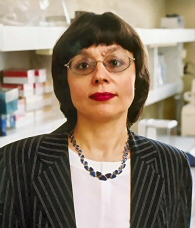
Olga Dontsova is a Full Professor at Moscow State University (MSU) in the Faculty of Chemistry. She serves as Head of the Division of RNA Structure and Function at the Belozersky Institute of Physico-Chemical Biology and Head of the Chair of Chemistry of Natural Compounds. Her research spans molecular biology, bioorganic chemistry, and RNA-based mechanisms. Research Focus: She investigates structure-functional relationships in ribonucleoprotein complexes, with emphasis on translation machinery, transfer-messenger RNA (tmRNA) interactions with ribosomes, RNA methyltransferases, and telomerase's role in cancer. Her team pioneered a chemical-biochemical-genetic approach to map mRNA topography in ribosomes, elucidate trans-translation dynamics, and characterize novel RNA-modifying enzymes. Scientific Contributions: Developed a molecular dynamic model for trans-translation Discovered unique yeast telomerase with unconventional properties Investigated functional roles of modified RNA residues in translation Honors: Member of Academia Europaea (2014) Corresponding Member of Russian Academy of Sciences (2006) European Academy Award for Young Scientists (1994) Grants & Leadership: Her work has been funded by HHMI, HFSP, CRDF, INTAS, RFFI, and Russian Ministry of Science and Education. She chairs the Biology Panel of the Russian Scientific Foundation and serves on editorial boards for Biochimie, Russian Journal of Molecular Biology, and Acta Naturae. Teaching: As a supervisor of 21 Ph.D. students and numerous diploma projects, she teaches advanced courses at MSU while maintaining an active research program.
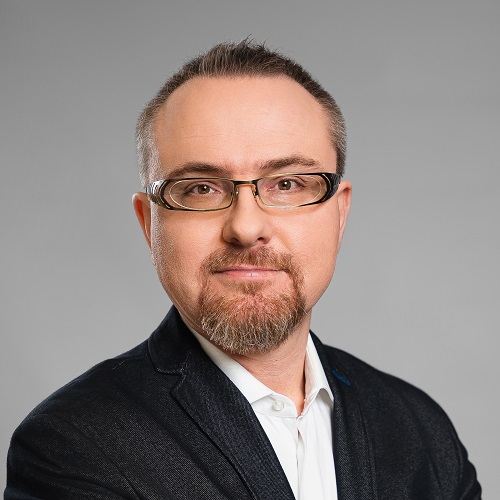
Janusz Bujnicki is a Professor and head of the Laboratory of Bioinformatics and Protein Engineering at the International Institute of Molecular and Cell Biology in Warsaw (IIMCB), Poland. He holds concurrent roles in science policy advisory bodies, including the European Commission's Group of Chief Scientific Advisors (2015-2020, then expert) and the Polish Academy of Sciences’ advisory panel (2024-). He is also a founding member of the Association of ERC Grantees (AERG) and serves on the Scientific Advisory Board of Life Science Center at Vilnius University. Academia Europaea Member (2018-) EMBO Member (2018-) Leadership Academy for Poland (2018) His research spans structural biology, RNA modification, computational biology, and molecular evolution. He has pioneered computational methods like ModeRNA, SimRNA, and ClaRNA for RNA structure prediction and analysis, and developed databases like MODOMICS for RNA modification pathways. His work has applications in understanding RNA function and drug design targeting RNA-processing enzymes. The 15 most recent publications focus on RNA structural modeling (e.g., ModeRNA, ClaRNA, SupeRNAlign), RNA-ligand interactions (LigandRNA), and RNA modification biology (MODOMICS database). These works bridge computational methods with experimental validation in RNA enzymology and structure-function relationships. Scientific Awards: ERC Starting Grant (2010), EMBO Member (2018), Crystal Brussels Sprout (2016), Prime Minister’s Award (2014), Knight’s Cross of Polonia Restituta (2014) Grants & Leadership: Founded RNA bioinformatics infrastructure at IIMCB, led EU science policy advisory groups, and organized international research competitions (RNA Puzzles)
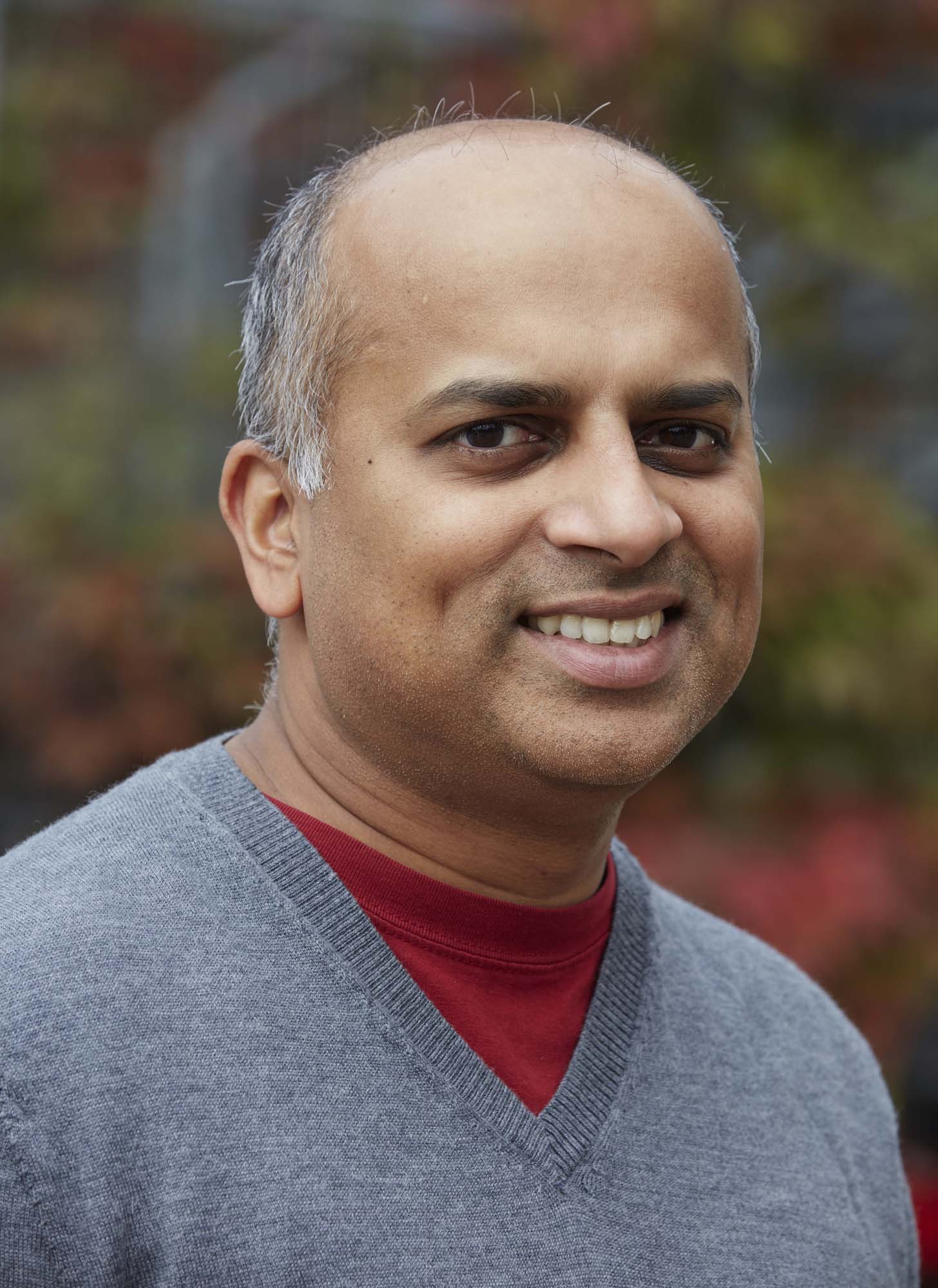
Ramesh Shanmughom Pillai is a Full Professor at the Department of Molecular Biology, University of Geneva, Switzerland. He holds additional roles as a Visiting Professor at the University of Kumamoto, Japan, and has been a Group Leader at EMBL Grenoble and a postdoctoral fellow at the Friedrich Miescher Institute. His research focuses on RNA modifications, epigenetics, and piRNA pathways in germline biology. Pillai has received prestigious awards including the ERC Consolidator Grant and The RNA Society Scaringe Award. Education: BSc Botany (University of Kerala, India) MSc Biotechnology (IIT Roorkee, India) PhD in Cell Biology (University of Bern, Switzerland) Research Interests: Pillai’s work centers on RNA biology, particularly the role of RNA modifications (e.g., m6A, m6Am) in development and fertility. He investigates piRNA biogenesis, transposon silencing, and the molecular mechanisms of RNA-protein interactions. His studies bridge biochemistry, genetics, and structural biology to elucidate how RNA molecules regulate critical biological processes. Teaching & Service: At the University of Geneva, he teaches Molecular Biology courses (BSc/MSc levels) and advises 5 PhD students and 4 postdocs. He chairs the ERC Consolidator Grant Review Panel and organizes major conferences like the PIWI/piRNAs Meeting and Swiss RNA Workshop. Pillai also serves on editorial boards for Nucleic Acids Research and RNA . Awards: ERC Consolidator Grant (2015) Best PhD Thesis Award (2003) RNA Society Scaringe Award (2005) Grants & Labs: Funded by ERC Starting and Consolidator Grants, his lab explores RNA modification networks in germ cells. Former trainees include Professors Simon Conn (Flinders University) and Hao Wu (CAS, China).
Nikolaus (Nik) Fortelny is a Group Leader in Computational Biology at the University of Salzburg, Austria, where he leads the Computational Systems Biology research group within the Department of Biological Sciences & Medical Biology. His research focuses on understanding biological systems at the molecular level through advanced computational approaches. Dr. Fortelny's research interests include: Computational Systems Biology Multi-omics data integration and analysis Single-cell and spatial biology Machine learning applications in biology Network science approaches to biological regulation Immune system modeling His recent publications demonstrate a strong focus on applying computational approaches to understand complex biological systems, particularly in immunology and cellular regulation. His work often involves collaboration with experimental biologists to generate and analyze large-scale datasets from multi-omics experiments collected at single-cell or spatial resolution. Dr. Fortelny is actively involved in research recruitment and is currently hiring for professor positions in Medical Systems Biology and Animal Physiology at the University of Salzburg, with an application deadline of April 19th, 2025. His group regularly seeks students, PhD candidates, postdocs, and staff scientists to join their team.
Matthias Peter is a Professor of Biochemistry at ETH Zurich, leading research into mechanisms governing cell growth and division. His laboratory focuses on ubiquitin-dependent regulation of DNA replication and mitosis, and autophagy's role in cellular quality control. He chairs the Department of Biology (2011-2015) and holds leadership roles in Switzerland's research infrastructure, including Vice Chair of ScopeM's microscopy platform. His academic career includes roles at ISREC (1996-2002) and postdoctoral training at UCSF (1991-1996). Education: PhD in Biochemistry from ISREC (1991), ETH Zurich diploma in Gene Technology (1987). Research interests span molecular mechanisms of cell division, ubiquitin systems, and autophagy. Awards include ERC Advanced Grant (2011) and UBS Excellence in Research (2002). Leadership: Member of Swiss National Research Council, SNF selection committee, and SWTR council. Over 20 years of committee service in national research programs. His lab's work is published in top journals like Science, Nature, and Molecular Cell.
Professor Nikolaus Pfanner, a leading figure in mitochondrial biogenesis and protein transport, has held the Chair of Biochemistry and Molecular Biology at the Institute of Biochemistry and Molecular Biology, University of Freiburg, since 1992. His leadership roles include serving as President of the German Society for Biochemistry and Molecular Biology (2009–2011) and Council Member of the University of Freiburg (since 2008). His research focuses on the targeting, translocation, and folding of mitochondrial proteins , biogenesis of mitochondria , and protein structure and function . Key contributions include elucidating the TOM complex’s role in protein import and the SAM complex in β-barrel assembly. Recent publications explore mitochondrial import stress , complexome analysis , and MIMAS mega-assembly . His work integrates structural biology , proteomics , and kinase regulation . Awarded the Leibniz Prize (2004), Stein and Moore Award (2014), and Hector Research Award (2011), Pfanner is a member of EMBO , Leopoldina , and Academia Europaea . He has mentored numerous researchers, including Thomas Becker , Chris Meisinger , and Nils Wiedemann . His lab receives funding from the Deutsche Forschungsgemeinschaft (DFG) and EXZ BIOSS (since 2010).
Ulrike Kutay is a Full Professor of Biochemistry at ETH Zurich, Switzerland, with a research focus on nuclear biology and dynamics. Her work investigates nuclear envelope structure/function, ribosome biogenesis, and nucleo-cytoplasmic transport. Diploma in Biochemistry (Free University Berlin, 1992) PhD in Natural Sciences (Humboldt University Berlin, 1996) Research interests center on nuclear compartmentalization, including mitotic nuclear envelope breakdown and reassembly, ribosome assembly pathways, and the molecular mechanisms governing nuclear transport. Her lab explores how nuclear dysfunction contributes to diseases like ribosomopathies and cancer. Recent publications highlight her work on SUN/KASH proteins in nuclear envelope dynamics, ribosome biogenesis steps, and nuclear pore complex regulation. Collaborations with groups like the Spahn lab in Berlin underscore her interdisciplinary approach. EMBO Member (2010) Leopoldina Member (2012) ERC Advanced Grant (2012) As a mentor, she has supervised PhD students including Chiara and Roja. She actively participates in editorial boards, grant review panels (e.g., ERC, DFG), and institutional leadership roles at ETH Zurich and the Biochemistry Center Heidelberg. The Kutay Group at ETH Zurich combines proteomics, functional analyses, and structural studies to unravel nuclear processes, fostering a collaborative environment with recent achievements in mitotic nuclear disassembly and ribosome maturation research.
Takashi Gojobori (born October 24, 1951) is a Japanese molecular biologist who serves as Vice-Director of the National Institute of Genetics (NIG) and Professor at the Center for Information Biology and DNA Data Bank of Japan (DDBJ) in Mishima, Japan. He also holds multiple visiting positions including Special Research Consultant at the National Institute of Advanced Industrial Science and Technology (AIST), Visiting Professor at Keio University, Tokyo University, and Tokyo Institute of Technology, and Visiting Research Director at RIKEN. His educational background includes a Ph.D. from Kyushu University (1979), followed by research positions at the University of Texas at Houston (1979-1983), Washington University in St. Louis (1985, 1986), and the Imperial Cancer Research Fund in London (1989). Professor Gojobori's research spans multiple areas of molecular and evolutionary biology. His work focuses on comparative genomics, molecular evolution, viral evolution, and bioinformatics. He has made significant contributions to understanding the rates of synonymous and non-synonymous substitutions, positive selection, horizontal gene transfer, and genome evolution. More recently, he has been investigating the evolution of the brain and central nervous system. His extensive publication record includes 389 peer-reviewed articles as of May 2012, reflecting his broad impact across multiple fields of biological research. His work shows a consistent focus on evolutionary mechanisms at the molecular level, with applications ranging from viral evolution to comparative genomics across diverse organisms including humans, plants, and model organisms like Hydra. Scientific Awards 2009: The Medal with Purple Ribbon from the government of Japan 2007: Academician Member of the Pontifical Academy of Sciences, Vatican 2006: Foreign Honorary Member of the American Academy of Arts and Sciences, USA 2005: Fellow of the American Association for the Advancement of Science (AAAS), USA 2005: Society Prize (Kihara Medal), The Genetic Society of Japan 2004: Society Prize (Motoo Kimura Medal), The Society of Evolutionary Studies, Japan 2004: The Gaetano Salvatore Gold Medal, Statione Zoologica, Anton Dohrn, Italy 1997: Science Award from Japan Science and Technology Corporation (JST), Japan 1995: Science Award from Hitoshi Kihara Memorial Foundation, Japan 1987: Promotion Award from Japanese Society of Genetics, Japan Professor Gojobori has served in numerous editorial capacities, including as Founding Editor of Genome Biology and Evolution, Executive Editor of GENE, and Associate Editor for several major journals. He has also held significant administrative roles including Program Director of the Council for Science and Technology Policy (CSTP) of the Japanese government and Science Officer of MEXT. His contributions to international genomic databases including DDBJ/GenBank/EMBL and the H-Invitational human gene database have been instrumental in advancing global genomics research. As Director of the Center for Information Biology and DNA Data Bank of Japan from 1994-2009, Professor Gojobori led important initiatives in biological data management and analysis. His work continues to influence the field through his leadership roles in international scientific organizations including the International Genetics Federation and CODATA/ICSU.
University of Natural Resources and Life Sciences ViennaAustria
Joseph Strauss is a Full Professor at the University of Natural Resources and Life Sciences Vienna (BOKU), leading the Institute of Microbial Genetics. With a career spanning over three decades, he has focused on fungal genetics, epigenetics, and bioactive metabolite discovery, particularly in filamentous fungi and pathogens. His work bridges fundamental research with applications in agriculture, medicine, and environmental biotechnology. Research Focus: Epigenetic regulation of fungal secondary metabolism, chromatin dynamics, bioactive compounds, nitrate signaling, and microbial interactions. Projects: Leads multiple grants from Austrian Science Fund (FWF), European Commission, and industry partners, including studies on chromatin engineering, fungal biotechnology, and toxin biosynthesis. His recent publications highlight advancements in chromatin proteomics, fungal pathogenicity, and novel bioactive molecules like luteapyrone and rasfonin. Articles emphasize broad disciplines such as Fungal Genetics, Epigenetics, and Natural Product Discovery, with subfields including secondary metabolite clusters, histone modifications, and stress response mechanisms. Scientific Awards: 2021 - Keratinophyton straussii fungal species named after him 1999 - START Preis 1995 - EMBO Stipendium 1994 - OTTO LOEWI Stipendium He has supervised over 69 theses and contributed to 186 publications, reflecting his leadership in fungal genomics and its applications. Projects like 'Bioaktive Mikrobielle Metaboliten' and 'TASSMATA' underscore his commitment to translating research into sustainable solutions.
Joan Steitz is the Sterling Professor of Molecular Biophysics and Biochemistry at Yale University and an Investigator at the Howard Hughes Medical Institute. She holds affiliations with the Yale School of Medicine, the Center for RNA Science and Medicine, and the Yale Cancer Center. Her career includes roles such as Department Chair and leadership in organizations like the American Society for Cell Biology. Education: PhD in Biochemistry from Harvard University (1967); BS from Antioch College (1963). Postdoctoral training at the MRC Laboratory of Molecular Biology, Cambridge. Research focuses on RNA-protein complexes, particularly snRNPs and their roles in RNA processing, viral oncogenesis, and gene expression. Notable discoveries include defining mRNA splicing mechanisms and characterizing noncoding RNAs in herpesviruses. Publications highlight advancements in RNA biology, viral RNA interactions, and stress-induced transcription. Over 300 peer-reviewed articles span molecular biology, virology, and biochemistry. Awards include the Wolf Prize (2021), Lasker Award (2018), and membership in the National Academy of Sciences (1983). Her lab at Yale explores RNA structure-function relationships and viral RNA mechanisms.
Bojan Zagrovic is a Professor at the Department of Structural and Computational Biology , University of Vienna. His research focuses on the interplay between protein structure, RNA interactions, and molecular dynamics, particularly in phase separation, enzyme mechanisms, and disease-related mutations. Key research areas: Structural Biology, Computational Biophysics, RNA-Protein Interactions, Phase Separation, and Protein Aggregation. Recent work includes studying FUS RGG3 phase separation, α-mannosidase pathophysiology, and SPOC domain interactions. His publications span molecular dynamics simulations, RNA modifications (e.g., N6-methyladenosine), and structural insights into ciliary proteins like CFAP410. He teaches courses in computational structural biology, molecular biophysics, and quantitative biology.
Sebastian Falk is an Associate Professor at the Max Perutz Labs, part of the University of Vienna, within the Department of Structural and Computational Biology. His research focuses on the biogenesis and action of small RNAs, particularly piRNAs, employing structural biology and biochemical approaches to elucidate molecular mechanisms. He received the prestigious EMBO Young Investigator award in 2022. His lab investigates RNA surveillance pathways, mRNA splicing, and the interplay between RNA processing and degradation. Key projects include studying the MTR4-NRDE2-CCDC174 complex and piRNA processing factors in C. elegans. Falk has organized major symposia on RNA biology and contributed to high-impact publications in journals like Nature and Nucleic Acids Research . EMBO Young Investigator (2022) Grants: 'Characterization of piRNA processing factors in C. elegans' (2023-2026)
University of Natural Resources and Life Sciences ViennaAustria
Martin Altvater is a researcher at the Institute of Microbiology and Microbial Biotechnology within the Department of Biotechnology and Life Sciences at the University of Natural Resources and Life Sciences, Vienna (BOKU). He holds a Dr. sc. from ETH Zurich and a Dipl.-Biol., and his work focuses on microbial biotechnology, particularly yeast-based systems for sustainable bioproduction. His research spans ribosome assembly, fermentation technologies, and metabolic engineering for lactic acid production. His research interests include Microbiology, Microbial Biotechnology, Yeast Biotechnology, Ribosome Assembly, Sustainable Bioproduction, Lactic Acid Fermentation, Synthetic Biology, Industrial Biotechnology, Bioart, and Metabolic Engineering . These areas reflect a strong interdisciplinary focus on using microbial systems for industrial and environmental applications, particularly in the context of bioeconomy and sustainability. The trends in his recent publications highlight a dual focus: one on fundamental molecular mechanisms in yeast ribosome biogenesis and nuclear export, and another on applied biotechnological innovations for sustainable lactic acid production. His work integrates systems biology, metabolic engineering, and process optimization, often using Saccharomyces cerevisiae as a model and industrial host. A notable recent direction includes bioart collaborations, emphasizing science communication and public engagement. Scientific Awards: No specific awards or fellowships are listed in the available data. Advising and Grants: There is no public record of supervised theses or doctoral students. No research projects are currently listed under his name as principal investigator. However, he actively contributes to the scientific community as a reviewer for journals including Biotechnology Journal , Essays in Biochemistry , Bioengineering , BMC Biotechnology , and FEMS Microbiology Letters . Labs and Research Teams: Martin Altvater is affiliated with the Institute of Microbiology and Microbial Biotechnology at BOKU, where he conducts research in microbial systems and bioprocesses. He collaborates closely with leading researchers such as Diethard Mattanovich and Michael Sauer, known for their work in industrial biotechnology and systems biology. His work is embedded in a larger research ecosystem focused on sustainable bioproduction and synthetic biology.
Pascale Romby is a leading French molecular biologist and CNRS Researcher based at the Institute of Molecular and Cellular Biology (IBMC) in Strasbourg. She serves as Director of CNRS Unit UPR 9002 since 2016 and Team Leader of the 'Bacterial regulatory RNAs and mRNAs' group since 2004. Specializes in RNA biology and bacterial gene regulation Current focus on RNA-protein interactions and stress response networks Member of international/national scientific societies Active editorial and supervisory roles Research Interests : Romby's work centers on regulatory RNAs in bacteria, particularly their roles in virulence, stress responses, and host-pathogen interactions. Her team investigates RNA degradation machineries, translation control mechanisms, and the impact of small RNAs on bacterial persistence and metabolic adaptation. Publications Trends : Her recent work focuses on RNA targetome mapping in Gram-positive pathogens, ribosome structure-function relationships, and multi-layered regulatory networks controlling bacterial virulence. These studies employ biochemical, structural, and systems biology approaches. Scientific Honors : Recipient of the prestigious Pasteur Medal (2018) Langevin Prize by French Academy of Sciences (2010) CNRS Silver Medal (2006) and Bronze Medal (2003) FEBS Fellowship (1984) and Choucroun Prize (1984) Supervision & Leadership : Has mentored 15 PhD students, 10 postdocs, and 23 visiting researchers. Organized two major Jacques Monod Conferences on RNA regulation and delivered over 45 invited seminars worldwide.
Carlos Ibanez is a Professor in Neuroscience at the Department of Neuroscience, Karolinska Institute, Stockholm, Sweden. His research focuses on neuronal growth factors, neurodevelopment, and neurotrophins. He has held his current position since 1996 and is affiliated with the Carlos Ibanez Lab @ KI, collaborating with institutions like Peking University and NUS. His work spans molecular biology, stem cell research, and genomics. Education and career: Ibanez earned his academic credentials and has been a member of prestigious organizations, including Academia Europaea (since 2007) and the European Molecular Biology Organization (EMBO, since 2006). He has received awards like the Goran Gustafssons prize in Molecular Biology (1998) and the Erik K. Fernstrom Young Researcher Prize. Research Interests: His lab investigates neurotrophin signaling, stem cell biology, and genomic approaches to neural development. Notable contributions include studies on neurotrophin-4, cholinergic neuron regulation, and spatial transcriptomics of the medial ganglionic eminence. Awards: Beyond his memberships, Ibanez has been recognized for contributions to molecular biology and neuroscience, including grants from the Swedish Cancer Society and the Swedish Research Council. His lab hosts international collaborations under networks like Molpark and Endocyte. Grants and Funding: Current grants include support from the Swedish Cancer Society (2019–2022) and the Swedish Research Council (2021–2024). His work integrates multidisciplinary approaches to understand neural development and disease mechanisms. Labs and Teams: The Ibanez Lab collaborates globally, with satellite groups at Peking University (CIBR) and NUS. Alumni include researchers like Sabrina Zechel and Pawel Zajac, contributing to genomics and stem cell projects.