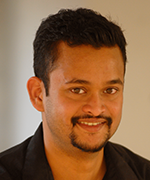
Sauvik Das is an Associate Professor at Carnegie Mellon University's Human-Computer Interaction Institute (HCII), directing the SPUD Lab. His research focuses on the intersection of HCI, AI, and cybersecurity, emphasizing user agency over personal data online. He previously held roles at Georgia Tech and co-founded FuguUX, an early-stage startup improving web usability. Key research areas include socially-aware cybersecurity, privacy collective action, and physically-intuitive privacy interfaces. Notable contributions include work on seed phrase management for cryptocurrency users, anti-surveillance RFID systems, and tools like Purpose Mode to combat social media distractions. His work has received accolades such as a CHI Best Paper (2024) and a USENIX Security Distinguished Paper (2024). He has secured grants from NSF, CMU, and industry partners, and his research is covered in outlets like The Atlantic and Dark Reading. Current projects include designing subversive AI systems against surveillance, exploring ethical agent simulations, and advancing privacy governance through collective action frameworks.
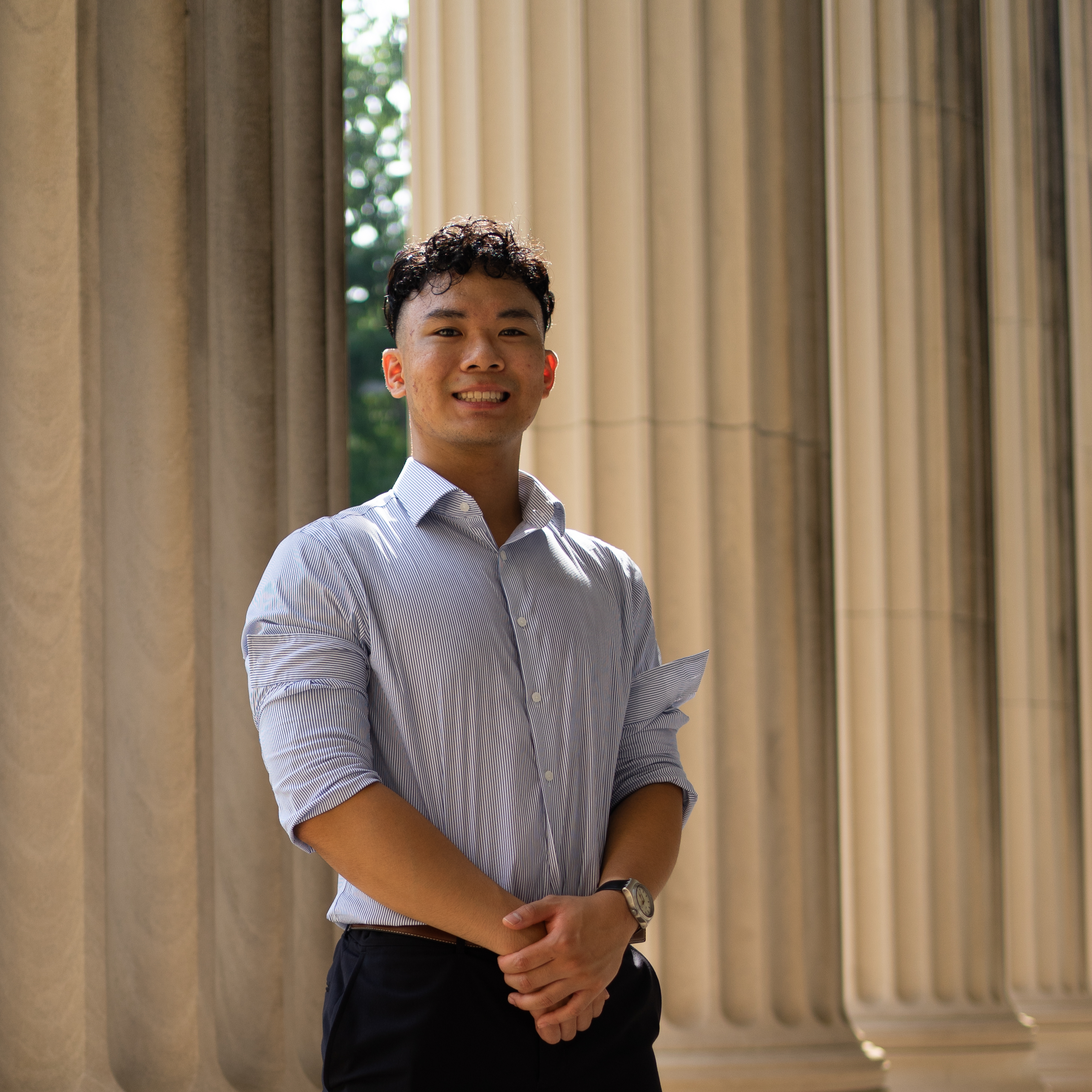
Ruonan Han is a Professor of Electrical Engineering and Computer Science at MIT and serves as Associate Director of the Microsystems Technology Laboratories (MTL) and Director of the MIT-MTL Center for Integrated Circuits and Systems . His research focuses on ultra-high-frequency microelectronic circuits , particularly addressing the 'terahertz gap' in sensing, metrology, security, and communication. He leads the Terahertz Integrated Electronics Group at MIT's MTL, established in 2014. Education: B.S. in Microelectronics, Fudan University (2007) M.S. in Electrical Engineering, University of Florida (2009) Ph.D. in Electrical and Computer Engineering, Cornell University (2014) Research Interests: Terahertz (THz) integrated circuits and systems High-frequency CMOS technologies Quantum sensing and magnetometry RF systems for imaging, radar, and molecular sensing Energy-efficient communication systems His work bridges electronic circuits , electromagnetics , and quantum physics , with applications in defense, healthcare, and environmental monitoring. Awards & Recognition: 2023 IEEE SSCS New Frontier Award 2020 NSF CAREER Award 2019 Intel Outstanding Researcher Award 3× IEEE RFIC Best Student Paper Awards (2012, 2017, 2021) Advising & Leadership: Ph.D. advisor to over 10 students (many recipients of MIT MTL Dissertation Awards) Co-advises with Prof. Anantha Chandrakasan and Prof. Tomás Palacios Editorial roles at IEEE Transactions on Quantum Engineering and VLSI Systems Technical committee member for ISSCC, RFIC, and IMS Labs & Teams: Terahertz Integrated Electronics Group at MIT MTL: Focuses on chip-scale THz systems, quantum devices, and next-generation RF circuits Collaborations with industry (e.g., Apple, MediaTek) and academic groups (e.g., D. Englund's lab at MIT)
Mauro Conti is a Full Professor at the University of Padua, Italy, where he serves as Editor-in-chief of IEEE TIFS, UniPD Academic Advisor for Entrepreneurship Development, Study Program Coordinator of the MSc degree in Cybersecurity, Head of the SPRITZ Security and Privacy Research Group, and Director of the UniPD node of CINI Cybersecurity National Lab. He also maintains affiliations with TU Delft (NL) and the University of Washington (USA). Additionally, he is the CEO and co-founder of CHISITO and co-founder of DYALOGHI. His research focuses on security and privacy for wireless resource-constrained mobile devices (WSNs, RFIDs, and smartphones), computer system security, computer forensics, access control, and distributed and networked systems. Professor Conti has published extensively in top security venues including ACM CCS, IEEE S&P, NDSS, and USENIX Security, with recent work covering topics such as battery authentication, federated learning privacy, private set intersections, USB peripheral fingerprinting, and ATM PIN inference. He has received numerous prestigious awards including IEEE Fellow, Young Academy of Europe Fellow, EU Marie Curie Fellow, and DAAD Fellow. Professor Conti has advised over 100 students at various levels including PhD, MSc, and BSc, many of whom have gone on to successful careers in academia and industry. His research has been supported by multiple European Commission projects, university grants, and industry collaborations with companies like Cisco and Intel.
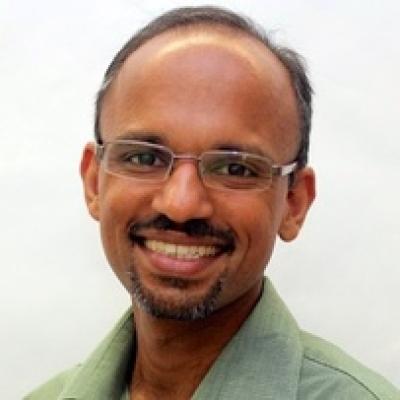
Deepak Ganesan is a Professor at the Manning College of Information and Computer Sciences (CICS) at the University of Massachusetts Amherst. His research focuses on low-power sensing and communication, networked systems, and machine learning applied to pervasive health monitoring and societal challenges. PhD, Computer Science, University of California, Los Angeles (2004) MS, Computer Science, University of California, Los Angeles (2000) BTech, Computer Science, Indian Institute of Technology, Madras (1998) Ganesan's work bridges wireless sensor networks, smart textiles, and healthcare applications. He designs ultra-low-power wearable devices for tracking health signals like drug use, smoking, and cognitive performance, often integrating machine learning for robust detection. His research emphasizes societal impact, particularly in aging and Alzheimer's care through the Massachusetts AI and Technology Center for Connected Care (MassAITC) and the Center for Personalized Health Monitoring (CPHM). Recent publications highlight innovations in edge-cloud collaboration, fabric-based sensors, and longitudinal health analytics. His NIH-funded MD2K Center for Excellence and affiliations with the Center for Data Science and Computational Social Science Institute further underscore his interdisciplinary approach. ACM Fellow NSF CAREER Award (2006) IBM Faculty Award (2008) UMass Junior Faculty Fellow (2008) UMass Lilly Teaching Fellow (2009) Best Paper at CHI 2013 Best Paper Runner-up at Mobicom 2014 Honorable Mentions at Ubicomp 2013 Ganesan leads the SENSORS: Wireless Sensor Networks Group and contributes to global initiatives like the Internet of Battlefield Things. His work spans academic research, industry partnerships, and policy development in AgeTech and digital health.
Prof. Ivan Martinovic is a Professor of Computer Science at the University of Oxford's Department of Computer Science, holding a Fellowship at the institution. He specializes in cyber-physical systems security, wireless network security, and behavioral biometrics. His research focuses on authentication mechanisms, intrusion detection, and trade-offs between security and performance in systems like satellite communications, EV charging infrastructure, and aviation networks. Education: PhD (TU Kaiserslautern); MSc (TU Darmstadt, Germany). Prior roles include postdoctoral research at UC Berkeley (2011) and UC Irvine (2009–2010), supported by a Carl-Zeiss Foundation Fellowship (2009–2011). He has also been an associate lecturer at TU Kaiserslautern. Research Interests: Cyber-physical systems security, wireless networks, behavioral biometrics (e.g., continuous authentication via physiological signals), robust communication protocols, and analysis of security vs. performance trade-offs in distributed systems. Technologies include software-defined radios, NFC/RFIDs, and EEG/eye-tracking devices. Scientific Awards: Carl-Zeiss Foundation Fellowship (2009–2011). Advising & Grants: No explicit student listings; however, his work involves interdisciplinary collaborations and has been funded by government and industrial grants. His research spans labs and teams focused on satellite cybersecurity, smart infrastructure security, and biometric systems. Labs/Teams: Engages with groups exploring satellite communication security, EV charging infrastructure vulnerabilities, and behavioral authentication systems, though specific lab names are not disclosed in the text.
Giorgia Ramponi is an Assistant Professor (tenure-track) in Artificial Intelligence for Cyber-Physical Systems at the University of Zurich (UZH), leading the Autonomous Learning and Predictive Intelligence Lab. She holds affiliations with ETH Zurich’s AI Center and Chalmers University of Technology. Previously, she was a postdoctoral researcher at ETH AI Center, sponsored by Google Brain. Her research focuses on machine learning and mathematical modeling, particularly Reinforcement Learning (RL), Multi-Agent Learning, and Imitation Learning. Notable contributions include work on non-cooperative Markov Decision Processes, mean-field games, and batch IRL for multiple intentions. Publications highlight advancements in constrained MDPs, policy optimization, and applications of RL in cyber-physical systems. Awards include the IBM Best Student Award (2016) and a Hassler Research Grant (2024). She advises students on topics ranging from RL theory to social network analysis. Her academic journey includes a PhD (Politecnico di Milano, 2021) and MSc/BSc (La Sapienza, Rome) with honors. She has taught courses on AI, data science, and machine learning, and contributed to open-source projects like GAN_Time_Series.
Sunder Kekre is the Vasantrao Dempo Professor of Operations Management at Carnegie Mellon University’s Tepper School of Business , where he has held academic appointments since 1984. His research focuses on manufacturing systems, global supply chains, and healthcare operations management. Research Expertise : New product development structures, strategic costing, lean innovation, knowledge sharing in enterprise networks, and business analytics for coordinated supply chains. Key Publications : Contributions to journals like Management Science , Operations Research , and Production and Operations Management , with work on LNG storage valuation, RFID logistics, and healthcare disparities. Scientific Recognition : Dempo Chair Professorship Bosch Chair Professorship Best Paper Award (1995) Teaching : Courses in Operations Management, Strategic Management of the Enterprise, and Information Systems Project. Non-Academic Experience : Prior engineering roles at Tata Steel (1974-1980) and consulting engagements with Fortune 500 firms like Bosch, Caterpillar, and IBM.
Jari Holopainen is a Senior Lecturer at the Department of Electronics and Nanoengineering , Aalto University. His work focuses on advanced antenna systems, wireless communication, and RFID technologies, with significant contributions to broadband, tunable, and wearable antenna designs. Current affiliation: Aalto University Academic role: Senior Lecturer Research interests span antenna design for mobile terminals, microwave engineering, and machine learning applications in RF systems. His publications highlight innovations in: Bluetooth antennas for metallic smartwatches and jewelry Wideband and dual-polarized antenna arrays RFID transponders with beam steering Machine learning-driven load optimization 3D-printed and capacitive-coupling antenna structures Wave propagation and scattering analysis Scientific contributions include: 15+ peer-reviewed articles (2025-2020) Collaborations with leading researchers in electromagnetics (e.g., Ville Viikari, Pertti Vainikainen)
Dr Yong Lin is an Associate Professor in Operations and Supply Chain Management at the Department of Management, Birmingham Business School, University of Birmingham. He joined the university in September 2021, having previously held academic positions at the University of Greenwich and Huazhong University of Science & Technology. He has also served as a visiting researcher at the Institute for Manufacturing (IfM), University of Cambridge, and as a research assistant at the Hong Kong University of Science & Technology. PhD in Management Science and Engineering, Huazhong University of Science & Technology, 2002 MSc in Industrial Engineering and Management, Huazhong University of Science & Technology, 1999 Dr Lin’s research focuses on digital transformation and sustainability strategies in operations and supply chains. His key interests include supply chain risk and resilience, digital logistics platforms, business ecosystems, and manufacturing strategies. He explores how digital technologies such as blockchain and RFID can enhance transparency, efficiency, and sustainability across supply networks. His recent publications reflect a strong trend toward digitalization, resilience, and sustainability in supply chains, with studies on modular resilience in multinational platforms, blockchain in remanufacturing, and digitalization in healthcare logistics. His work frequently appears in top-tier journals such as International Journal of Operations and Production Management , Journal of Cleaner Production , and Technological Forecasting and Social Change . Senior Fellow of the Advance HE (Higher Education Academy) Certified Management and Business Educator, Chartered Association of Business Schools (CABS) Chartered Fellow, Chartered Institute of Logistics and Transport (CILT) Dr Lin has led and coordinated several research projects funded by the National Natural Science Foundation of China (NSFC), the 863 Program, and the European Regional Development Fund. He actively engages in industry consulting to transfer research outcomes into practical business solutions. He welcomes PhD applicants interested in digital transformation, sustainability, logistics platforms, and business ecosystems. He is also involved in advising and mentoring graduate researchers in these domains. Dr Lin is affiliated with the Department of Management at Birmingham Business School, where he contributes to research, teaching, and knowledge exchange in operations and supply chain management. His work bridges academic rigor with real-world application, particularly in digital and sustainable supply chain innovation.
Professor Byung S. Lee is a distinguished faculty member in the Department of Computer Science at the University of Vermont's College of Engineering and Mathematical Sciences. He joined UVM in 1999 and continues to be actively engaged in teaching, research, and service. His office is located in Innovation Hall at the Burlington campus, where he maintains regular office hours and oversees his research lab. Professor Lee holds a Ph.D. from Stanford University, an MS from Korea Advanced Institute of Science and Technology, and a BS from Seoul National University. His educational background provided the foundation for his extensive career in computer science research and education. Professor Lee's research spans multiple domains within computer science, with a particular focus on database systems, data mining, and data science. His work increasingly integrates machine learning techniques with traditional database approaches, especially in the analysis of time series data. He has made significant contributions to graph theory applications, anomaly detection methods, and environmental data analysis. His research often bridges computer science with practical applications in healthcare, environmental science, transportation, and astrophysics through interdisciplinary collaborations. An analysis of his recent publications reveals a strong trend toward time series analysis and anomaly detection, particularly applied to environmental monitoring and healthcare data. His work demonstrates a consistent evolution from foundational database research to more applied machine learning approaches, with increasing emphasis on real-world problem solving across multiple scientific domains. Professor Lee has served as primary advisor for numerous graduate students across multiple cohorts, including PhD candidates, Master's students, and postdoctoral researchers. His advising portfolio reflects the breadth of his research interests, with students working on topics ranging from graph neural networks to medical informatics applications. He has also been actively involved in professional service, serving on program committees for major conferences including SAC, PAKDD, DASFAA, and CIKM. Professor Lee leads a vibrant research laboratory that focuses on cutting-edge data science methodologies and their applications. His team collaborates extensively with researchers in environmental science, hydrology, and healthcare, demonstrating the interdisciplinary nature of modern data science research. The lab maintains active projects in time series analysis, graph analytics, and environmental monitoring systems, often working with large-scale datasets from real-world applications.
Tara Boroushaki is an incoming Assistant Professor in Electrical & Computer Engineering at Yale University. She completed her Ph.D. at MIT (expected May 2025), advised by Prof. Fadel Adib, with a focus on sensing and mobile technologies. Her research spans wireless networking, robotics, and human-computer interaction, emphasizing multi-modal sensing for environmental perception. Key achievements include the Microsoft Research PhD Fellowship (2022–2024) and the IEEE RFID '23 Best Paper Award. Her work on RF-based 'X-ray vision' has been featured in TEDxMIT and media outlets like the BBC and World Economic Forum. She co-founded Cartesian Systems, deploying sensing technologies in retail and supply chain. Research interests include non-line-of-sight perception, RFID localization, and robotic grasping. She has developed systems like FuseBot and RFusion, highlighted as transformative in MIT's '103 Ways to Make the World Better' initiative.
Dr. Scott Chen is an Assistant Professor in the Department of Electrical & Computer Engineering at McMaster University, where he focuses on teaching and research in embedded systems, RF technologies, and biomedical sensors. He previously held roles as a lecturer at the University of Waterloo and program coordinator at Conestoga College, alongside industry experience in embedded systems engineering and sensor development. Education: B.A.Sc. (Simon Fraser University, 2007) and Ph.D. (University of Waterloo, 2015), followed by a MITAC postdoctoral fellowship. His industry experience includes roles at Thalmic Labs/North, Sober Steering Sensors, and Equustek Solutions. Research interests span embedded systems for IoT, RF biomedical sensors, cleanroom micro/nano-fabrication, and game design in Unity. Notable achievements include a 2018 US patent for ethanol sensing technologies and a 2021 teaching award nomination. Current courses taught include Principles of Programming (COMPENG 2SH4), Data Structures and Algorithms (COMPENG 2SI3), and Introduction to Electrical Engineering (ELECENG 2CI4). Awards: US Patent 9,958,444B2 (2018), nominated for Aubrey Hagar Distinguished Teaching Award (2021). His work bridges academia and industry, emphasizing practical applications in wearable sensors, quantum computing components, and interdisciplinary engineering solutions.
Dr. Chutima Boonthum-Denecke is a Professor in the Department of Computer Science at Hampton University's School of Science. She joined Hampton University in 2006 as an Assistant Professor and now serves as Director of the Information Assurance and Cyber Security Center (IAC@HU). She leads the NSF CyberCorps Scholarship for Service program and has contributed to NSF initiatives like ARTSI and STARS Alliances. Her educational background includes a Ph.D. in Computer Science from Old Dominion University (2007), an MS in Applied Computer Science from Illinois State University (2000), and a BS in Computer Science from Srinakharinwirot University (1997). Dr. Boonthum-Denecke's research integrates artificial intelligence, natural language processing, and cybersecurity. Key interests include: Developing intelligent tutoring systems and educational games Secure coding practices for software engineering NLP applications in information retrieval and assessment tools Cyber-physical security for IoT and robotics Her recent publications (2016-2021) focus on machine learning applications in cybersecurity, including sentiment analysis for threat detection, blockchain-enhanced IoT security, and vulnerability assessments of emerging technologies. Collaborative work with students frequently addresses privacy ethics in AI assistants, RFID implants, and cloud systems. She mentors students through the IAC@HU lab, resulting in award-winning conference presentations on cybersecurity topics. As Principal Investigator of NSF CyberCorps, she oversees scholarship programs that bridge academic research with national security needs.
Rajesh Krishna BALAN is a Full-Time Professor at the School of Computing and Information Systems (SCIS) at Singapore Management University (SMU) . His research focuses on Human-Machine Collaborative Systems , Pervasive Sensing , and Health & Wellbeing technologies. Based in Singapore, he leverages mobile computing to address urban sustainability and quality-of-life challenges. PhD from Carnegie Mellon University (2006) Specializes in WiFi sensing , VR/AR , and health monitoring Advises PhD students in areas like urban mobility , empathetic design , and cyber-physical systems Beyond academia, BALAN's work bridges ubiquitous computing and public health , with applications in ageing populations , mental health analytics , and smart city optimization . His recent publications highlight cross-disciplinary approaches to sleep analysis , group behavior modeling , and contactless physiological sensing . BALAN actively contributes to educational technology through projects like Technology-Enhanced Learning frameworks. He is also a mentor in collaborative research areas including biomedical informatics and lifestyle monitoring , with a focus on mobile GPU optimization and low-power systems .
Dr. Curt Lamberth is a Visiting Researcher at the University of Oxford with a multidisciplinary background spanning chemistry, industry, and environmental consulting. His research combines electronic instrumentation development with ecological conservation, focusing on creating innovative tracking systems for small mammals and environmental monitoring networks. Key research areas include: Designing RFID-based wildlife tracking systems for ecological studies Developing intelligent trapping technologies to refine animal research practices Establishing wireless microclimate monitoring networks for habitat analysis Applying technology to ash dieback disease impact assessment in woodlands Dr. Lamberth leads the development of novel RFID devices for the NC3Rs-funded project aimed at reducing animal usage in small mammal research. His current fieldwork at Wytham Woods involves deploying long-range spatial loggers and intelligent traps to study wood mice behavior while prioritizing animal welfare and data quality.