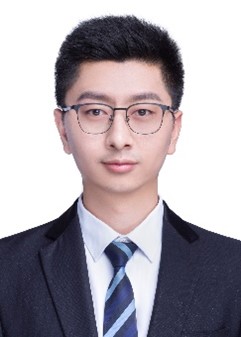
Ling Zhang is an Adjunct Assistant Professor affiliated with the Electromagnetic Compatibility Laboratory at Missouri University of Science and Technology (Missouri S&T). She holds a Ph.D. (2021) and M.S. (2017) from Missouri S&T, along with a B.S. (2015) from Huazhong University of Science and Technology. Her research focuses on the intersection of electromagnetic compatibility and advanced computational methods. Education: Ph.D., Missouri University of Science and Technology, 2021 M.S., Missouri University of Science and Technology, 2017 B.S., Huazhong University of Science and Technology, 2015 Research Interests: Machine learning applications in electromagnetic systems Signal and power integrity analysis RF desensitization mechanisms Electromagnetic interference mitigation
Shigeru Shimamoto is a Professor at Waseda University's School of Fundamental Science and Engineering, Faculty of Science and Engineering. His research spans wireless communication systems, biomedical sensing technologies, and intelligent transportation solutions. Since 2014, he has led the Communication and Computer Engineering department at Waseda University, previously serving as Director of the Global Information and Telecommunication Institute (2020-2024). 2008: Visiting Professor at Stanford University's Electrical Engineering 2000-2002: Research Assistant at University of Electro-Communications Key research areas include: Wireless Communication: OTFS modulation, NOMA, RIS-aided systems, and microwave-based vital sensing Smart Healthcare: Non-contact blood pressure monitoring, SpO2 estimation using microwave reflection Transportation Optimization: On-street parking analysis, traffic flow modeling, and energy-efficient vehicular networks Awarded the 2024 Commendation for Science and Technology from MEXT, his work demonstrates strong interdisciplinary impact combining communication engineering with medical applications. Recent publications focus on machine learning integration in gesture recognition, vehicular detection, and resource allocation for autonomous systems.
Kazuhiko Tamesue is an Associate Professor at the Faculty of Science and Engineering , Waseda University , with a focus on Terahertz Communication , Artificial Intelligence , and IoT Network Security . His academic journey spans academia and industry, including long-term roles at Panasonic Corporation (1991–2009) and current leadership in advanced wireless systems since 2022. Research Areas : Telecommunications, Wireless Hardware, Data Science, Machine Learning, Atmospheric Sensing Key Contributions : Pioneering 300GHz OFDM transceivers, AI-driven GNSS spoofing detection, and dual-frequency THz radar for cloud physics Projects : NICT-funded terahertz networks (2023–2024), ultra-low-latency systems (2022–2024), and security-enhancing radar technologies His 15 most recent publications (2024–2008) demonstrate expertise in (1) terahertz propagation for NTN/HAPS platforms, (2) machine learning for security (LSTM, GANs), and (3) next-generation IoT protocols (LPWAN, distributed ledger). He holds 20+ patents in antenna design, direct-conversion receivers, and power line communication. As an IEEE and IEICE member, he contributes to standards in 5G/6G and EMC.
Professor Frank Gustrau serves as Dean of the Department of Information Technology, demonstrating leadership in both academic administration and electrical engineering education. His career spans multiple decades with consistent contributions to RF and microwave engineering education. Professor Gustrau's research interests focus on RF and Microwave Engineering , High-Frequency Technology , Electromagnetic Design , and Electromagnetic Compatibility . His work bridges theoretical field theory with practical applications in wireless communications, medical technology, and circuit design. The progression of his publications from foundational German texts to international English editions demonstrates growing global impact in the field. His publication record shows remarkable consistency and evolution, with the forthcoming 4th edition of RF and Microwave Engineering (2025) building on previous works dating back to 2006. These publications represent comprehensive educational resources that have shaped RF engineering curriculum internationally, including a Chinese translation (2015) that expanded their global reach. As an educator, Professor Gustrau teaches across multiple programs: Theoretical Electrical Engineering (TET1/TET2) - Master's level core course EM Design (EMD) - Bachelor's level elective High-frequency technology and EM Simulation (HFE) - Master's level elective covering both theoretical and practical simulation aspects Physics courses for Biomedical and Information Technology programs Professor Gustrau maintains an open-door policy for thesis supervision, actively encouraging students to seek him out during office hours for bachelor's and master's projects in the Department of Information Technology. His teaching approach emphasizes connecting theoretical concepts with practical implementation through simulation tools and real-world applications.
Bhumi Bhusal, PhD, serves as a Research Assistant Professor in the Department of Radiology at Northwestern University's Feinberg School of Medicine, focusing on biophysics and translational research to enhance patient safety during MRI procedures for individuals with implanted medical devices. His academic foundation includes: PhD from Case Western Reserve University (2019) Dr. Bhusal's research centers on MRI safety challenges , particularly radiofrequency heating in deep brain stimulation and cardiac devices. He employs interdisciplinary approaches combining engineering, physics, and clinical medicine to develop safer scanning protocols and hardware innovations. His work in simulation education addresses critical training gaps for medical professionals handling implant patients. Recent publications demonstrate consistent investigation of MRI risks across field strengths (0.55T-3T), with emphasis on pediatric applications and surgical modifications to mitigate heating. Key contributions include phantom-to-clinical translation studies and specialized RF coil designs for neurostimulator patients. Professional Engagement: Member, International Society for Magnetic Resonance in Medicine (ISMRM) (2024-Present) Member, IEEE Engineering in Medicine and Biology Society (2024-Present) His collaborative research network spans neurosurgery, cardiology, and biomedical engineering departments, reflecting a strong translational focus on protecting vulnerable patient populations during MRI examinations.
Daniel N. Aloi serves as Professor and Chair of the Electrical and Computer Engineering Department within Oakland University's School of Engineering and Computer Science. His leadership spans department administration while maintaining active research and teaching responsibilities in electromagnetics and navigation systems. His academic credentials include: Ph.D. in Electrical Engineering, Ohio University (1999) M.S.E.E., Ohio University (1996) B.S.E.E. (cum laude), Ohio University (1992) Dr. Aloi's research centers on applied electromagnetics for automotive applications, specializing in antenna design and vehicle-level measurements across 600 MHz to 6,000 MHz frequencies. His work bridges theoretical modeling with practical implementation in GPS systems, satellite communications, and navigation technologies, with particular focus on real-world environmental impacts like vehicle structures and parking garage deployments. Analysis of his 2014-2015 publications reveals concentrated expertise in antenna optimization for automotive navigation systems, with significant contributions to GPS antenna grounding techniques, vehicle-induced radiation pattern distortion, and multi-sensor fusion methodologies for positioning accuracy. His scientific recognition includes: Two Institute of Navigation Best Paper Awards (2004, 2012) IEEE Senior Member distinction (2007) Multiple Oakland University research excellence awards (2004-2007) Dr. Aloi has secured over $1.8 million in external funding from DARPA, FAA, NSF, and automotive industry partners including Chrysler and General Motors. His grants support critical projects ranging from peripheral nerve interfaces to UAV antenna systems, while his consulting practice serves major defense and automotive firms like General Dynamics and John Deere. He directs the Antenna and Electromagnetics Web Lab (AEWL), equipped with advanced instrumentation from his NSF grant, facilitating cutting-edge research in antenna characterization and vehicle-level electromagnetic testing.
Berker Peköz serves as Assistant Professor in the Department of Electrical Engineering and Computer Science at Embry-Riddle Aeronautical University's College of Engineering. His expertise spans wireless communications, artificial intelligence security, and hardware systems, with significant contributions to 5G/6G technologies and aerospace applications. His educational foundation includes: B.S. in Electrical & Electronics Engineering M.S. in Electrical Engineering Ph.D. in Electrical Engineering Research focuses on cutting-edge intersections of communications and AI, particularly transformer model security, antenna-based authentication, and error-correction for emerging hardware. His work bridges theoretical innovation with practical aerospace implementations, evident in patents for antenna array geometries and publications addressing real-world challenges like contested IoT environments and spectral efficiency. Recent publications (2019-2025) show accelerating output with increasing emphasis on AI security frameworks. Scientific recognition includes: National Academy of Inventors membership (2019) Tau Beta Pi honor society induction (2018) Funding is evidenced through patent activity and consistent publications, though specific grants aren't detailed. He mentors students through undergraduate courses (EE 307 Avionics I, EE 327 Electrical Engineering Fundamentals) with likely graduate research supervision in communications security. His interdisciplinary approach connects electrical engineering fundamentals with next-generation AI and aerospace systems, positioning students for careers in secure communications and hardware innovation.
Simona Halunga is a Full Professor at the National University of Science and Technology Politehnica Bucharest, Faculty of Electronics, Telecommunications and Information Technology. She leads research in the Wireless Networks and Internet of Things Laboratory, focusing on cutting-edge communication technologies and security aspects. Her research interests span a wide spectrum of modern communication technologies. She specializes in Wireless Networks, Internet of Things, 5G/6G technologies, Signal Processing, and Network Security. Her work particularly focuses on practical implementations of communication systems in challenging environments, including UAV communications, LoRaWAN networks, and secure data transmission. She has made significant contributions to understanding electromagnetic vulnerabilities, TEMPEST security, and the development of secure communication protocols for IoT applications. Her publication record shows consistent focus on emerging communication technologies, with recent work examining the integration of AI and machine learning in network management, optimization of wireless resources, and addressing security challenges in distributed systems. Her research often bridges theoretical concepts with practical implementations, as evidenced by numerous experimental studies and real-world testing campaigns. 212 publications with 44,818 reads 2,233 citations Professor Halunga has been actively involved in numerous research projects, including the EREMI project funded under ERASMUS+ KA203, which focuses on developing advanced interdisciplinary higher education curriculum for resource efficiency in manufacturing. She collaborates extensively with researchers both within her institution and internationally. Her laboratory work encompasses both theoretical research and practical implementation, with significant contributions to understanding electromagnetic vulnerabilities of various devices, development of secure communication protocols, and optimization of wireless network performance in diverse scenarios.