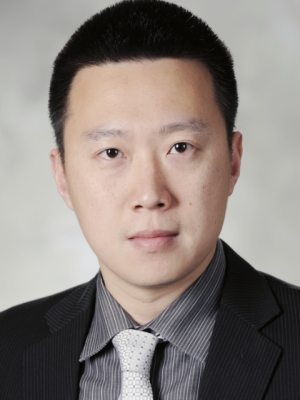
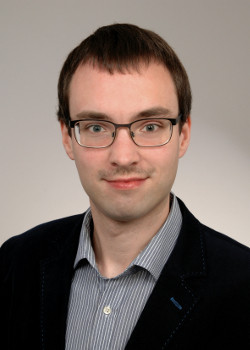
Prof. Dr. Amelie Hagelauer holds a professorship in Micro- and Nanosystem Technology at the TUM School of Computation, Information and Technology, Technical University of Munich. Her work focuses on advanced electronics and systems integration across quantum computing hardware, resistive memory technologies, and high-frequency RF systems. She has contributed to innovations in superconducting qubit readout architectures, multi-level RRAM designs, and 3D-integrated CMOS-compatible quantum devices. Research interests span quantum hardware design, nanoelectronic devices, RF front-end systems, and emerging memory technologies. Her work emphasizes practical implementation challenges such as low-power operation, high-voltage handling in RF switches, and wafer-scale fabrication processes. Recent projects include D-band radar systems, energy-efficient 60 GHz transceivers, and antenna tuning solutions for 5G applications. Publications from 2023-2025 showcase advancements in resistive switching device characterization, mitigation of TLS losses in superconducting qubits, and reconfigurable AI accelerators using RRAM-based digital twins. Her work bridges theoretical device physics with practical integrated circuit design, addressing scalability and reliability in next-gen electronics. Awards and grants: None explicitly listed in provided texts. Active collaborations include EU-funded projects on quantum computing platforms and TUM's Electronic Photonic Integration initiatives. Leads research teams in microsystem technology with emphasis on cross-disciplinary approaches combining CMOS processes, MEMS, and quantum engineering.
Dr. Syeda Fizzah Jilani is a Lecturer in the Department of Physics at Aberystwyth University, UK, and a course coordinator for the MSc Radio Spectrum Engineering program. She holds a PhD in Antennas and Electromagnetics from Queen Mary University of London (2018) and previously worked on US DOE-funded research at the University of Maine. Her research focuses on advanced antenna systems, 5G/6G wireless technologies, millimeter-wave applications, and AI-driven environmental and medical imaging solutions. She has authored/co-authored over 50 papers, a book titled Antennas and Propagation for 5G and Beyond , and secured grants from L3Harris and QinetiQ. Key achievements include the 2024 Aberystwyth University Visibility Award and inclusion in the global '100 Brilliant and Inspiring Women in 6G' list. She leads projects on spectrum monitoring, reconfigurable antennas, and smart city applications, while actively supervising PhD students and contributing to IEEE and IET committees. Education: PhD in Electronic Engineering, Queen Mary University of London (2015–2018) Research Interests: Electromagnetics and Antenna Design Millimeter-Wave and Terahertz Systems Flexible Wearable Antennas Deep Learning in Remote Sensing and Medical Imaging 6G/5G Wireless Communication Networks Sustainable Transportation Solutions Recent Research Trends: Her work spans cutting-edge antenna technologies for 6G, AI-driven environmental monitoring (e.g., landslide detection, air quality analysis), and medical imaging advancements (e.g., breast lesion classification). Recent publications highlight innovations in reconfigurable phased arrays, liquid metal phase shifters, and explainable neural networks for healthcare. Awards and Grants: Principal Investigator: 3-year Serapis Project with QinetiQ/DSTL (£X) PI: L3Harris Technologies Grant (£Y) Featured in '100 Brilliant and Inspiring Women in 6G' (2024) Aberystwyth University Visibility Award (2024) Advising & Grants: Supervises PhD scholars and leads industry-academia collaborations. Projects include spectrum monitoring systems with the UK Spectrum Centre and smart city MIMO antenna arrays. Active in professional service as an IEEE AP-S Young Professional Ambassador and IET Antennas Technical Committee member. Labs/Teams: Works within the Department of Physics' Antennas and Propagation group, focusing on 6G infrastructure and wearable electronics research.
Yun Chiu is a Full Professor and Erik Jonsson Distinguished Professor in the Department of Electrical and Computer Engineering at the University of Texas at Dallas. He is the founding director of the Analog and Mixed-Signal IC Design Lab at the Texas Analog Center of Excellence (TxACE). His research focuses on integrated analog-digital interface ICs, including data converters (ADCs/DACs), RF transceivers, power electronics, and bioelectronic interfaces. Chiu previously held roles at the University of Illinois at Urbana-Champaign and co-founded Formula Microelectronics as CTO. Education: Ph.D. in EECS (University of California, Berkeley), M.S. in EE (UCLA), B.S. in Physics (University of Science and Technology of China). Research Highlights: Specializes in energy-efficient mixed-signal circuits, radiation-tolerant ADCs, and bioelectronic interfaces. His work includes innovations in SAR ADC architectures, noise-shaping techniques, and analog in-memory computing. He has led major programs like the Peacock and Pearl River initiatives. Awards: Jack Kilby Outstanding Paper Award (2004 ISSCC), Best Regular Paper Award (2012 CICC), and multiple student mentorship recognitions. Teaching: Teaches advanced analog IC design, electronic circuits, and data converter courses. Recent courses include EE/CE 2301 (Electrical Network Analysis), EE/CE 3311 (Electronic Circuits), and EECT 7326 (Advanced Analog IC Design). Labs/Teams: Leads the TxACE Analog & Mixed-Signal Lab, focusing on cutting-edge IC design methodologies and collaborations with industry partners.
Jian Rong is a Senior Lecturer at the Department of Agricultural Economics and Rural Sociology at Auburn University, holding positions since 2015. With a Ph.D. in Economics from Fudan University and an MBA from Iowa State University, their expertise spans agricultural economics, rural sociology, and agribusiness management. Professional experience includes visiting roles at UC Berkeley and UC Davis, focusing on agricultural economics and resource economics. Research interests center on agribusiness marketing, agricultural policy, and economic development. Courses taught include Agribusiness Marketing (AGEC 3010), Agricultural Policy and Trade (AGEC 3300), and Principles of Agribusiness Management (AGEC 4000). Professional affiliations include the Agricultural & Applied Economics Association and the American Economic Association. Recent work emphasizes oscillator design and RF technologies, with publications on multi-phase coupled oscillators and low-phase-noise VCOs. They actively engage in faculty development and diversity initiatives through the National Center for Faculty Development & Diversity.
Muhammad Nasir Ullah is a researcher at the Molecular Imaging Instrumentation Laboratory at Korea University , with a Ph.D. in Bio-Convergence Engineering (2020) and a B.S. in Electronic Engineering (2012). His work focuses on radiation detection for medical applications, particularly in detector design for Positron Emission Tomography (PET) , intraoperative gamma probes, and hybrid ultrasound-gamma probe systems. BS: Electronic Engineering, International Islamic University, Islamabad, Pakistan (2012) Integrated MS+Ph.D.: Bio-Convergence Engineering, Korea University, Seoul, South Korea (2020) His research spans nuclear medicine instrumentation , frontend circuit design for radiation and ultrasound detectors, and hybrid imaging technologies . He has published extensively on sub-millimeter PET detectors, time-of-flight PET, and wavelength discrimination techniques. Notable trends include the integration of deep learning for PET calibration and the development of RF-penetrable PET inserts for MRI compatibility . Scientific awards include: IEEE NSS/MIC Trainee Grant (2020, 2016) Best Paper Award, Korea University (2020) Korea University Ph.D. Scholarship (2015-2020) 3rd Prize, Final Year Project, IIUI (2012) He holds 4 patents in South Korea and has contributed to projects like the 1-mm Resolution Dual Panel Clinical PET and CZT-based rhizosphere PET scanners . His work bridges radiation detection physics and medical device engineering , with a focus on clinical and plant imaging applications.
Gregor Lasser is an Assistant Professor at the Microwave Electronics department within Chalmers University of Technology. He holds a PhD and Dipl.-Ing. from the Vienna University of Technology (2008 and 2014, both with distinction). Prior to Chalmers, he served as a Research Associate (2015) and Assistant Research Professor (since 2017) at the University of Colorado, Boulder. Education: Dipl.-Ing., Vienna University of Technology, 2008 PhD, Vienna University of Technology, 2014 Research Interests: His work focuses on advanced microwave and RF systems, including broadband power amplifiers, analog linearization techniques, electronically augmented antennas, and active interference cancellation. Applications span 6G communication systems, reconfigurable intelligent surfaces (RIS), and energy-efficient GaN-based circuits. His research has been recognized with awards such as the EEEfCOM Innovation Award (2008), a departmental award for his doctoral work on automotive RFID sensors (2014), and the WAMICON Best Paper Award (2017). Key Publications & Trends: Recent work includes 6G power amplifier designs (2025), millimeter-wave RIS systems (2024), and dynamic supply modulation techniques (2023). His publications emphasize high-frequency circuits, GaN technologies, and energy-efficient architectures. Awards: Second Prize EEEfCOM Innovation Award (2008) Department Award for Doctoral Dissertation (2014) Best Paper Award, WAMICON Conference (2017) Advising & Grants: Gregor leads projects funded by VINNOVA (2023–2024) and collaborates on wideband receiver frontend development. His work integrates theoretical advancements with practical microwave engineering challenges. Labs/Teams: Part of the Microwave Electronics group at Chalmers, focusing on cutting-edge RF and millimeter-wave systems.
Hao Zhang is a Research Fellow at the School of Electrical and Data Engineering, Faculty of Engineering and Information Technology, University of Technology Sydney (UTS). He is affiliated with the Global Big Data Technologies Centre (GBDTC) at UTS, where he conducts cutting-edge research in high-speed wireless communications and FPGA-based real-time implementation. His work focuses on advancing terahertz and millimeter wave communication systems for next-generation wireless applications. Hao Zhang's educational background includes: Ph.D. in Engineering from the University of Technology Sydney (2019) M.Eng. in Electronics and Communication Engineering from Xidian University, China (2014) B.Eng. in Electronics and Communication Engineering from Xidian University, China (2011) Hao Zhang's research primarily centers on high-speed wireless communications, with a specific focus on real-time implementation using field-programmable gate arrays (FPGAs). His current work explores enhancing algorithm deployment efficiency on FPGAs through advanced LLM-assisted hardware design methodologies, leading to significant improvements in algorithm-hardware co-design and overall system performance. His expertise spans terahertz communication systems, millimeter wave technologies, signal processing, and wireless system implementation. Zhang's research has practical applications in 6G communications, point-to-point links, backhaul networks, and intersatellite communications where atmospheric attenuation is minimal. Analysis of Zhang's recent publications reveals a strong focus on pushing the boundaries of high-speed wireless communication, particularly in the terahertz spectrum. His work consistently demonstrates real-time implementations achieving data rates of 30-50 Gbps, with increasing sophistication in signal processing techniques. The research shows a progression from basic system demonstrations to more advanced implementations incorporating interference suppression, full-duplex capabilities, and nonlinearity mitigation. His publications span both journal articles in prestigious IEEE transactions and conference presentations at major international venues, indicating strong recognition in the wireless communications research community. Hao Zhang has collaborated extensively with researchers across various institutions, particularly within the University of Technology Sydney ecosystem. His work often involves interdisciplinary collaboration between signal processing experts, antenna designers, and hardware implementation specialists. While specific grant information isn't detailed in the provided text, his consistent publication record suggests active funding support for his research activities in high-speed wireless communications. Zhang is part of the Global Big Data Technologies Centre (GBDTC) at UTS, which appears to be a multidisciplinary research center focused on advanced communication technologies. His work within this center involves close collaboration with other researchers working on various aspects of wireless communication systems, from theoretical signal processing to practical hardware implementation. The center likely provides the specialized laboratory facilities necessary for terahertz and millimeter wave research, including advanced signal generators, spectrum analyzers, and FPGA development platforms.
Claudio Talarico is a Professor in the Department of Electrical and Computer Engineering at Gonzaga University's School of Engineering & Applied Science. He holds a Ph.D. in Electrical Engineering from the University of Hawaii and an M.S. from the University of Genoa, Italy. With industry experience at Infineon Technologies, IKOS Systems, and Marconi Communications, his expertise spans VLSI design, embedded systems, and hardware/software co-design. His research focuses on: Low-power/high-performance VLSI circuits Embedded system-on-chip design Computer-aided design methodologies Wireless communication systems Hardware/software co-design Recent publications (2020-2024) demonstrate strong emphasis on: Beam steering architectures for 5G/wireless systems Angle-of-arrival estimation techniques Time synchronization in body area networks Health monitoring platforms FPGA/digital implementations He teaches core courses including VLSI Circuits & Systems, Computer Hardware Design, and Digital Systems. No awards or current students are documented in available materials.
Prof. Dr.-Ing. Khaled Bathich is a Professor at the Berlin University of Technology, affiliated with the Laboratory for Electronics and High Frequency Technology. His research focuses on high-efficiency power amplifiers for modern wireless communication systems, including 5G, LTE, and WiMAX, as well as UWB antenna design. University: Berlin University of Technology Research Lab: Laboratory for Electronics and High Frequency Technology Academic Rank: Professor Bathich's work emphasizes microwave engineering and GaN technology for next-generation mobile base stations. His publications highlight innovations in Doherty amplifiers, harmonically-tuned designs, and bandwidth extension techniques. Recent trends in his research include dual-band MIMO antennas for 5G, asymmetrical amplifiers, and tunable components for RF frontends. His teaching includes courses on high-frequency technology, analog electronics, and electronic components. Contact: khaled.bathich@bht-berlin.de | Phone: 030 4504-2345 | Office: Haus Gauß, Room B 202
Pascal Stadler is a researcher at the Faculty of Electrical Engineering and Information Technology of Ruhr University Bochum , Germany. He is affiliated with the Integrated Systems department, focusing on high-frequency electronics and microwave systems. 2025: E-Band quadrupler design with harmonic rejection 2024: D-Band CMOS power amplifier and 77GHz dielectric characterization 2023: High-frequency multiplier chains and radar component analysis His research spans Microwave Engineering , Integrated High-Frequency Sensors , and Learning Technical Systems . Publications cover topics from 6G communication components to advanced packaging techniques. His work connects Medical Engineering , Photonics , and Microsystems Technology through interdisciplinary applications. Contact: pascal.stadler@rub.de
John Rohde is an Associate Professor at the Department of Electrical and Computer Engineering, Aarhus University. His expertise lies in wireless communication, cognitive radio, and RF engineering. Research Interests: Design and optimization of low-power wireless systems Cognitive radio technology for sensor networks Energy-efficient home automation solutions RF PCB design and parametric modeling Antenna development for IoT and SAR applications Projects: Flexible low-cost and low-power wideband sub 1 GHz cognitive radio frontend (2010-2013)
Professor Eran Socher is a Full Professor at the School of Electrical Engineering, Tel Aviv University, where he heads the High Frequency Integrated Circuits and VLSI Labs. He has been a faculty member since October 2008 and previously served as a Visiting Professor at the University of Toronto (2015-2017). Professor Socher received his B.A. in physics (summa cum laude) and B.Sc., M.Sc., and Ph.D. degrees in Electrical Engineering from the Technion – Israel Institute of Technology. Prior to joining Tel Aviv University, he worked as a research engineer in the Israel Defense Forces (IDF) and as an adjunct lecturer at the Technion and Bar-Ilan University (2003-2006), followed by a position as a visiting researcher and assistant professor at UCLA (2006-2008). His research focuses on mm-wave CMOS circuit design for high-speed communications (>20Gbps) , THz sensing and imaging , and chip interfaces at these frequencies including on-chip antennas and waveguide transitions. Professor Socher has co-authored over 50 journal papers and 90 conference papers in prestigious venues including JSSC, T-MTT, MWCL, RFIC, IMS, SiRF and EuMIC. Analysis of his recent publications (2023-2025) reveals a strong focus on millimeter-wave and terahertz technologies, with particular emphasis on CMOS-based circuit design for communication systems, energy harvesting applications, and advanced antenna systems. His work spans frequencies from 5 GHz up to 0.6 THz, addressing challenges in power amplification, signal processing, and efficient RF-to-DC conversion. The research demonstrates consistent innovation in overcoming the limitations of silicon technology at extremely high frequencies. 2011 TAU Rector's Prize for Excellent Teaching 2015 TAU Rector's Prize for Excellent Teaching Professor Socher holds 8 patents in RF and mm-wave circuit design and regularly consults with industry on RFIC design and characterization. He leads the High Frequency Integrated Circuits and VLSI Labs at Tel Aviv University, where his team works on cutting-edge research in high-frequency integrated circuits. His laboratory focuses on developing CMOS solutions for next-generation communication systems, sensing applications, and imaging technologies that operate at millimeter-wave and terahertz frequencies.
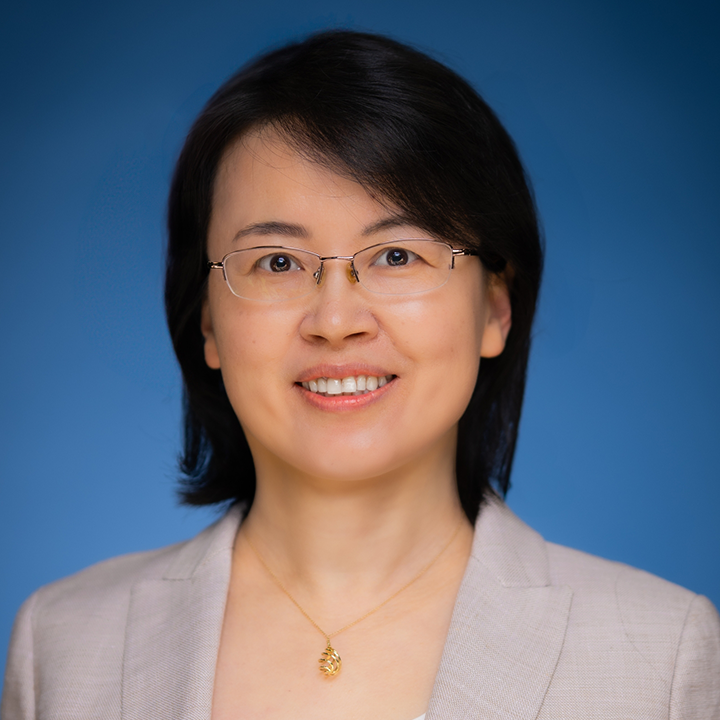
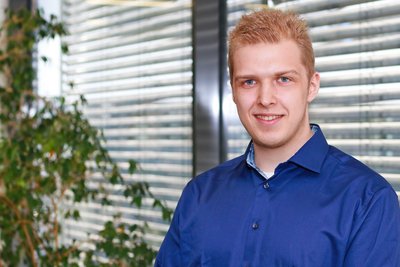
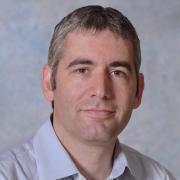
Dr. Yifei Li is a Professor of Electrical & Computer Engineering at the University of Massachusetts Dartmouth, directing the RF Photonics Lab. He holds a PhD from Drexel University (2003) and has held academic roles since 2003, including a visiting faculty position at UC Santa Barbara (2013–2014). Education: B.Eng., Optoelectronics Engineering, Huazhong University of Science and Technology, China (1996) MA, Electrical Engineering, Drexel University (2001) PhD, Electrical Engineering, Drexel University (2003) Research Interests: RF photonics, photonic integrated circuits, coherent optical communications, RF devices/systems, laser physics. His work focuses on advancing high-performance radar and electronic sensing via microwave/photonics integration. Awards: European Microwave Association (EuMA) Young Scientist Prize (1st Prize, 2008) DARPA MTO Young Faculty Award (2008) Grants & Projects: Principal Investigator on $549K+ Navy-funded projects (e.g., underwater unmanned communications systems). Led 8 competitive projects since joining UMassD. Labs/Teams: Director of the RF Photonics Lab, focusing on integrated microwave/photonic systems for radar and sensing applications.
Prof. Hua Wang is a Full Professor at ETH Zürich's Department of Information Technology and Electrical Engineering (D-ITET) and Deputy Head of the Integrated Systems Laboratory. He leads the Integrated Devices, Electronics, and Systems (IDEAS) Group and is a faculty member of the ETH Quantum Center. Prior roles include Founding Director of the Georgia Tech Center of Circuits and Systems and Associate/Assistant Professor at Georgia Tech's School of ECE. His research focuses on silicon and beyond-silicon integrated circuits for communication, sensing, and bioelectronics. Notable contributions include energy-efficient power amplifiers, mm-Wave systems, and AI-assisted design methodologies. Education: PhD (2009), MS (2007) - California Institute of Technology; BS (2003) - Tsinghua University. Research interests span: RF/mm-Wave/THz integrated systems AI-driven circuit design Bioelectronic sensors and actuators 6G communication technologies His 2025 publications highlight advancements in phased arrays, power amplifiers, and bioelectronic sensors. Awards include IEEE Fellow (2022), Qualcomm Faculty Awards (2021, 2020), and multiple student paper recognitions. Advising: Over 20 student paper awards across IEEE RFIC/IMS/CICC conferences. Labs: IDEAS Group (ETH), GEMS Lab (Georgia Tech). Courses taught include Radio-Frequency Electronics, CMOS for Biosensing, and Antenna Design.
Christian Carlowitz is a Lecturer (Akad. Rat) and Research Group Leader at the Friedrich-Alexander-University Erlangen-Nürnberg (FAU), leading the Microwave Photonic & Quantum Systems group within the Institute of Microwaves and Photonics (LHFT). He holds a PhD in High-Frequency Technology from FAU, awarded in 2018 for his thesis on wireless high-speed communication with regenerative sampling. His research focuses on microwave and photonic systems for radar and communication frontends, cryogenic components for quantum technologies, and quantum computing applications. He coordinates the ERASMUS program and leads the Embedded Wireless Laboratory. Education: Born 1985 in Wolfenbüttel, he studied Information Technology at Clausthal University of Technology (Diplomingenieur, 2010). Postdoctoral work at FAU since 2010, becoming an academic council member in 2018. Research Interests: Innovations in microwave photonic systems, electro-optical interfaces, cryogenic microwave components, and radar/communication architectures. Key areas include broadband signal processing, massive MIMO, mm-wave RFID, and quantum-enabled systems. He is a member of IEEE Microwave Theory and Techniques Society (MTT-S) and serves on its Technical Coordinating Committee (MTT-9). Publications: Over 50 peer-reviewed articles in IEEE journals/conferences, emphasizing radar target simulators, sub-THz systems, and cryogenic materials. Recent work includes diffuser-based LIDAR systems (2024), 3D-printed dielectric components (2024), and super-regenerative radar designs (2023). Labs/Teams: Leads the Microwave and Photonic Systems research group, collaborating with FAU’s Institute of Microwaves and Photonics. Active in developing testbeds for 5G/6G communication and quantum sensor systems.




/prod01/production-cdn-pxl/media/umassdartmouth/college-of-engineering/ece-dept/faculty-students/yli.jpg)