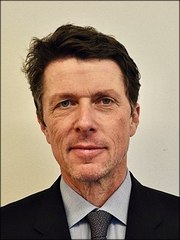
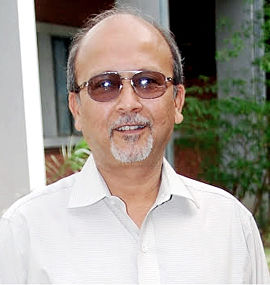
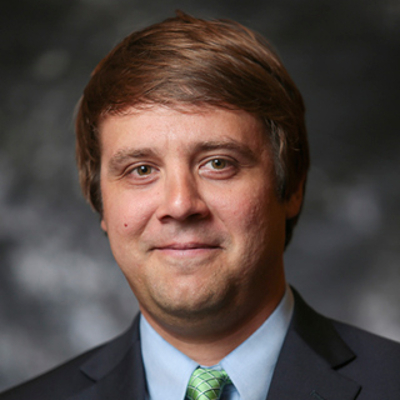
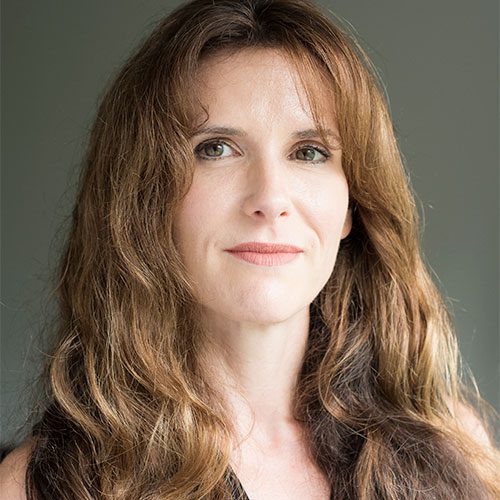
Jari Holopainen is a Senior Lecturer at the Department of Electronics and Nanoengineering , Aalto University. His work focuses on advanced antenna systems, wireless communication, and RFID technologies, with significant contributions to broadband, tunable, and wearable antenna designs. Current affiliation: Aalto University Academic role: Senior Lecturer Research interests span antenna design for mobile terminals, microwave engineering, and machine learning applications in RF systems. His publications highlight innovations in: Bluetooth antennas for metallic smartwatches and jewelry Wideband and dual-polarized antenna arrays RFID transponders with beam steering Machine learning-driven load optimization 3D-printed and capacitive-coupling antenna structures Wave propagation and scattering analysis Scientific contributions include: 15+ peer-reviewed articles (2025-2020) Collaborations with leading researchers in electromagnetics (e.g., Ville Viikari, Pertti Vainikainen)
Professor Steve G Burrow is a faculty member at the School of Civil, Aerospace and Design Engineering at the University of Bristol. His research focuses on energy harvesting, vibration control, and environmental sensing, particularly in aerospace and glaciological contexts. Professor of Aircraft Systems Member of the Cabot Institute for the Environment Active in Dynamics and Control research themes His work in energy harvesting emphasizes electromagnetic transducers and nonlinear resonant structures, while environmental sensing involves deploying sensors under ice sheets to study glacial hydrology. Recent articles highlight inerter-based suspension systems, vibration absorber optimization, and broadband energy harvesting techniques. Collaborations span nonlinear mathematics, glaciology, and structural dynamics. No scientific awards were explicitly mentioned, but his research outputs demonstrate extensive contributions to power electronics and sustainable technologies.
Christian Enz is a Full Professor at École Polytechnique Fédérale de Lausanne (EPFL), where he serves as Director of the Institute of Microengineering and Head of the Integrated Circuits Laboratory. With M.S. and Ph.D. degrees in electrical engineering from EPFL (1984 and 1989), he has established himself as a leading researcher in low-power analog circuit design and semiconductor device modeling. His research interests focus on very low-power analog and RF IC design , semiconductor device modeling , and increasingly on cryogenic electronics for quantum computing applications . Professor Enz is particularly known for his work on FDSOI MOSFET behavior at cryogenic temperatures, developing comprehensive models that address challenges in subthreshold swing saturation, threshold voltage shifts, and self-heating effects. As a Life Fellow of IEEE with 282 publications and over 7,400 citations, Professor Enz has made significant contributions to the field. His recent work demonstrates how the $G_{m}/I_{D}$ design methodology remains effective in advanced technology nodes and can be extended to cryogenic temperature operation. His research bridges fundamental semiconductor physics with practical circuit design considerations for quantum computing interfaces. Life Fellow, IEEE Director of the Institute of Microengineering, EPFL Head of the Integrated Circuits Laboratory 282 publications with 7,400+ citations Specialist in cryogenic CMOS for quantum computing Professor Enz's work on cryogenic electronics addresses critical challenges for quantum computing scalability. By developing accurate models for transistor behavior at temperatures as low as 3.3K, his research enables the design of specialized control electronics that can operate inside dilution refrigerators, potentially solving major wiring constraints that currently limit quantum computer scaling. His laboratory continues to advance the understanding of semiconductor device physics at cryogenic temperatures while developing practical circuit design methodologies for this emerging application domain.
Boris Murmann is Professor at Stanford University, specializing in integrated circuit design, mixed-signal computing, and energy-efficient AI hardware. His research advances neural interface technologies, analog design automation, and tinyML systems. Recent work develops ultra-low-power neural recording ICs for brain-computer interfaces, RRAM-based memory systems, and open-source semiconductor design frameworks. Publications demonstrate innovations in compressive sensing for neural data, hardware-algorithm co-design, and reinforcement learning for analog circuit synthesis. Significant contributions include Medusa (TinyML processor), EMBER (RRAM macro), and methodologies for coarsely-quantized computer vision and analog design automation.
Xingwang Li is an active researcher affiliated with the School of Physics and Electronic Information Engineering at Henan Polytechnic University in Jiaozuo, China. He obtained his PhD from Beijing University of Posts and Telecommunications in 2015, specializing in networking and switching technology. His research spans wireless communications, IoT systems, reconfigurable intelligent surfaces (RIS), and physical-layer security, with a strong focus on 6G-enabling technologies. Dr. Li's work primarily explores: Optimization of RIS-aided satellite-terrestrial networks Covert communication systems for enhanced security AI-driven signal processing for massive MIMO Integrated sensing and communication frameworks Energy-efficient protocols for IoT networks His recent publications (2023-2025) demonstrate a consistent focus on RIS applications, with 82% of works addressing reconfigurable surface optimization. Key trends include the integration of deep learning with communication systems (notably reinforcement learning for resource allocation), advancement of THz and near-field technologies for 6G, and novel approaches to physical-layer security. The research shows increasing emphasis on practical implementations, including UAV networks and autonomous vehicle communications.
Prof. Dr. Robert Blick is a faculty member at the University of Hamburg , leading the Institute for Nanostructure and Solid State Physics under the Faculty of Mathematics, Informatics, and Natural Sciences. He serves as Director of the Center for Hybrid Nanostructures (CHyN) and Head of the Board of Examiners of Nano-Science. Research Focus: Atomic Layer Deposition (ALD), quantum dots, superconducting thin films, biomaterials, and nanomechanical devices. Key Collaborations: Deutsches Elektronen-Synchrotron (DESY), molecular-beam epitaxy groups, Forschungslabor Mikroelektronik Deutschland. His academic contributions span nanoscience, materials growth, and biomedical applications. Current funding includes support from the Deutsche Forschungsgemeinschaft (DFG), Exzellenzcluster CUI, and the Joachim Herz Foundation. The CHyN research group operates a state-of-the-art clean room facility for electron-beam and focused-ion-beam lithography, enabling 8nm feature definition on 6-inch wafers. Applications of his work include memristor technology, quantum devices, and advanced biosensors. His PhD students include Ahmed Alshaikh, Kristian Deneke, Daniel Hensel, Marianna Brede, Daniel Schmidt, Malte Siegmund, and Jan Stelzner. Senior researchers Dr. Stefanie Haugg and Dr. Robert Zierold contribute to materials growth and atomic layer deposition.
Tara Boroushaki is an incoming Assistant Professor in Electrical & Computer Engineering at Yale University. She completed her Ph.D. at MIT (expected May 2025), advised by Prof. Fadel Adib, with a focus on sensing and mobile technologies. Her research spans wireless networking, robotics, and human-computer interaction, emphasizing multi-modal sensing for environmental perception. Key achievements include the Microsoft Research PhD Fellowship (2022–2024) and the IEEE RFID '23 Best Paper Award. Her work on RF-based 'X-ray vision' has been featured in TEDxMIT and media outlets like the BBC and World Economic Forum. She co-founded Cartesian Systems, deploying sensing technologies in retail and supply chain. Research interests include non-line-of-sight perception, RFID localization, and robotic grasping. She has developed systems like FuseBot and RFusion, highlighted as transformative in MIT's '103 Ways to Make the World Better' initiative.
David Blaauw is the Kensall D. Wise Collegiate Professor of Electrical Engineering and Computer Science (EECS) at the University of Michigan. His research focuses on ultra-low-power analog/mixed-signal circuits, mm-scale sensors, neural networks, and biomedical applications. He leads the Blaauw Lab, which has pioneered innovations like the Michigan Micro Mote (M^3) and neural recording probes. His work emphasizes real-world deployability, with applications in environmental monitoring (e.g., monarch butterflies), medical devices, and robotics. Education: B.S. in Physics and Computer Science, Duke University (1986) Ph.D. in Computer Science, University of Illinois Urbana-Champaign (1991) Research Interests: Blaauw’s lab explores ultra-low-power computing, mm-scale systems, RF communication, in-memory computing, and genomics acceleration. Key projects include: Millimeter-scale computers (e.g., 0.04mm³ temperature sensors) Wireless neural interfaces for brain-machine communication Energy-efficient accelerators for edge AI and genomics Micro-robotics with sensing/actuation/computation Awards: IEEE Fellow 2016 SIA-SRC Faculty Award Motorola Innovation Award Best Paper Awards at ISSCC, ISCA, and RFIC Advising & Impact: Over 600 publications, 65 patents, and 4 startup companies spun from his lab. Current research includes genome sequencing accelerators (GenAx) and neural recording dust for brain mapping. He directs the Michigan Integrated Circuits Lab and chairs major conferences like ISSCC and DAC. Labs/Teams: Blaauw Lab (University of Michigan) Michigan Integrated Circuits Lab (MICAL)
Ye (Sarah) Sun is an Associate Professor in the Department of Mechanical Engineering at the University of Virginia (UVA), part of the School of Engineering and Applied Science. She joined UVA in 2021 after serving as an Associate Professor at Michigan Technological University. Her work focuses on wearable sensors, robotics, smart health systems, and cyber-physical systems. She leads the WEARLab research group. Education: Ph.D. in Electrical Engineering from Case Western Reserve University (2021), B.S. in Instrumentation Engineering from Tianjin University (not specified). Research interests include wearable electronics, health monitoring, and human-technology interaction. Her interdisciplinary approach integrates engineering innovations with healthcare applications. Notable projects involve self-powered triboelectric sensors and optical fiber-based health monitoring systems. Recent publications highlight advancements in photodiode technologies for high-frequency applications, including millimeter-wave generation and photonic integrated circuits. Awards include the NSF CAREER Award (2018) and NSF BRITE Award (2022). She has organized major conferences and holds editorial roles in health technology journals. Grants include NSF funding for cyber-physical systems and smart health initiatives. Her lab collaborates on projects involving wearable robotics and connected health solutions, with a focus on real-world applications in healthcare and IoT.
Hua Chen is an Associate Researcher and PhD Supervisor at the School of Quantum Science and Engineering at Southern University of Science and Technology (SUSTech), with extensive experience in quantum computing circuit design and MEMS sensor interfaces. Previously, he served as an Associate Researcher at the Institute of Microelectronics, Chinese Academy of Sciences (2021-2022) and as an Assistant Researcher there from 2017-2021, building on his industry experience as an RF/Analog IC Design Engineer at Southwest Integrated Circuit Design Co., Ltd (2007-2010). Education: Ph.D. in Microelectronics and Solid-State Electronics, University of Chinese Academy of Sciences (2014-2017) M.Eng. in Electronic and Communication Engineering, University of Chinese Academy of Sciences (2011-2014) B.Eng. in Microelectronics, Chongqing University of Posts and Telecommunications (2003-2007) Dr. Chen's research focuses on interface circuit design for quantum computing and MEMS sensors, with particular expertise in high performance analog/RF/mixed-signal IC design. His recent work has shifted toward cryogenic circuit design for quantum bit control and readout systems, representing a strategic pivot toward China's national priority in quantum information technology. His publications reveal a consistent trajectory from MEMS gyroscopes and oscillators toward quantum computing hardware support circuits, demonstrating his ability to adapt expertise to emerging technological frontiers. Dr. Chen's research output shows a clear evolution from traditional MEMS sensor interfaces toward quantum cryogenic electronics, with his 15 most recent publications heavily concentrated in cryogenic circuit design for quantum applications. This represents a strategic shift aligning with China's substantial investment in quantum computing research, particularly in the development of control and readout electronics for scalable quantum systems. His significant honors include: Special talent of Shenzhen's Pengcheng Peacock Plan (January 2024) IEEE Senior Member (February 2022) Intellectual Property Specialist of Chinese Academy of Sciences (January 2020) Outstanding Employee (Top 10%) at Institute of Microelectronics CAS (2020) Multiple Graduate Student Scholarships from Institute of Microelectronics CAS (2015-2017) As a PhD Supervisor at SUSTech, Dr. Chen mentors graduate students in quantum circuit design while leading research funded through multiple sources including a Beijing Natural Science Foundation General Project (RMB 200,000) for RF MEMS disk oscillator drive circuits and a Youth Project (RMB 100,000) for MEMS gyroscope phase alignment. He has also participated in major national projects totaling over RMB 27 million, demonstrating his integration into China's strategic research initiatives. Dr. Chen leads a research group at the International Quantum Academy in Shenzhen focused on cryogenic CMOS integrated circuit design for quantum computing applications. His team develops specialized low-temperature measurement and control chips that address critical challenges in scaling quantum computing systems, with particular emphasis on MEMS-based quantum frequency references and cryogenic amplifiers that operate at temperatures near absolute zero.
Professor Aloke Dutta is a faculty member in the Department of Electrical Engineering at Indian Institute of Technology Kanpur (IIT Kanpur). He holds a PhD in Electrical Engineering from Louisiana State University (LSU), Baton Rouge, Louisiana (1989), an MS in Electrical Engineering from LSU (1985), and a BE in Electrical Engineering from Jadavpur University (1982). Professor Dutta's research focuses on semiconductor device physics and modeling, Analog/Digital VLSI circuits, IC fabrication technology and device characterization, and Mixed Signal RF Circuits. His work bridges fundamental semiconductor physics with practical applications in integrated circuit design and fabrication. His publications demonstrate expertise in MOSFET modeling, particularly in substrate current, gate tunneling, and SOI technologies across various device structures. Professor Dutta has received numerous accolades for his teaching and research, including the Distinguished Teacher Award of IIT Kanpur (2013) and the prestigious Ranjit Singh Chair Professor position at IIT Kanpur (2012). His research publications in high-impact journals demonstrate his expertise in semiconductor device modeling, particularly in MOSFET physics and SOI technology. Distinguished Teacher Award of IIT Kanpur (2013) Ranjit Singh Chair Professor position at IIT Kanpur (2012) Best Dissertation Award by the Graduate Student Council at LSU (1989) Kaiser Fellowship for outstanding research at LSU (1986) Dr. B.C. Roy Gold Medal at Jadavpur University (1982) Professor Dutta has mentored numerous students in the field of semiconductor devices and VLSI circuits. His research has been supported by various grants that have contributed to advancements in semiconductor technology and device modeling. His work spans fundamental semiconductor physics, device modeling techniques, and practical applications in integrated circuit design. His laboratory at IIT Kanpur focuses on semiconductor device characterization and modeling, providing students with hands-on experience in cutting-edge technologies related to integrated circuit design and fabrication. The research environment supports work on MOSFET physics, SOI technologies, and quantum mechanical effects in semiconductor devices.
Taylor Ware is an Associate Professor in Biomedical Engineering and Materials Science & Engineering at Texas A&M University's College of Engineering, holding the Cain Faculty Fellowship. Her research focuses on designing structured biomaterials and medical devices using stimuli-responsive polymers for clinical applications. Education: Ph.D. in Materials Science and Engineering, The University of Texas at Dallas, 2013 Research Interests: Dr. Ware pioneers the development of liquid crystal elastomers as artificial muscles and implantable electronics substrates, engineered living materials for infection treatment, and directed self-assembly of hydrogels. Her lab specializes in polymer formulation, thermomechanical testing, and microfabrication. Key research thrusts include: Smart elastomers, hydrogels, and composites for dynamic medical devices Programming liquid crystalline polymers for shape-morphing applications Engineered living materials that respond to biomolecular cues in urinary tract environments Publication Trends: Recent work (2023-2025) demonstrates convergence of materials science, microbiology, and medical device engineering. Her group advances liquid crystal elastomers for soft robotics and implantable electronics, develops engineered living materials for UTI treatment using microbial competition, and creates novel hemostats and urethral support devices. Publications emphasize translational applications in urology, wound healing, and neural interfaces. Scientific Awards: Invited Participant, NAE Japan-USA Frontiers of Engineering Bilateral (2023) Senior Member, National Academy of Inventors (2022) NSF CAREER Award (2018) Air Force Young Investigator Award (2017) NSF Graduate Research Fellowship (2011) Fellow of AIMBE (American Institute for Medical and Biological Engineering) Advising and Grants: Dr. Ware leads the Ware Lab with significant funding including an NIH R01 grant (with UT Dallas and Case Western collaborators) and the NSF CAREER award. Her lab mentors postdoctoral fellows like Mustafa (winner of a prestigious postdoctoral fellowship) and graduate students. Current projects are supported by the NSF Engineering Research Center HAND, focusing on advanced materials for healthcare applications. Laboratory and Teams: The Ware Lab collaborates globally and is featured in Texas Monthly, Houston Chronicle, and National Geographic for breakthroughs in engineered living materials. As part of the NSF HAND ERC, the lab develops dynamic materials for stress urinary incontinence treatment and collaborates with medical institutions on UTI therapies using engineered E. coli strains.
Patrick Mitran is a full-time Professor at the University of Waterloo's Department of Electrical and Computer Engineering, within the Faculty of Engineering. His research focuses on advanced wireless communication systems, including 5G/6G technologies, millimeter-wave and sub-THz communication, digital predistortion techniques, MIMO systems, and beamforming architectures. He leads projects addressing challenges in transmitter linearization, network resource allocation, and hardware-efficient signal processing. Key research interests include optimizing frequency multiplier-based transmitters, mitigating inter-cell interference in massive MIMO networks, and developing algorithms for reconfigurable intelligent surfaces (RIS). His work often intersects hardware design, signal processing, and network optimization, with applications in next-generation wireless infrastructure. Recent publications highlight innovations in ultrawideband signal generation for 6G testing, practical RIS configurations, and FPGA-based real-time digital predistortion implementations. His contributions emphasize both theoretical advancements and practical system-level solutions. Dr. Mitran's research group collaborates on cutting-edge topics such as hybrid NOMA in multi-cell networks, adaptive coding modulation for Gaussian channels, and interference decoding strategies. His work has been published in top-tier journals and conferences, reflecting a sustained impact on modern wireless communication technologies.
Bertan Bakkaloglu is the On Semiconductor Professor in the School of Electrical, Computer and Energy Engineering at Arizona State University (ASU), where he has been since 2004. Prior to ASU, he worked at Texas Instruments focusing on analog, mixed-signal, and RF SoC development for communication transceivers. His research expertise spans RF and mixed-signal IC design, wireless/wireline communication systems, and broadband communication systems. Education: Ph.D. in Electrical Engineering, Oregon State University (1995) M.S.C. in Electrical Engineering, University of Houston (1992) Research Interests: RF and mixed-signal integrated circuits Power management ICs (including LDO regulators and DC-DC converters) High-efficiency power delivery systems Radiation-hardened electronics for space applications MEMS-based sensor systems Biomedical circuits for implantable devices Grants & Collaborations: Over 40+ funded research projects with institutions like NASA/JPL, BAE Systems, and NSF, focusing on power electronics, space systems, and biomedical applications Key projects include radiation-hardened converters, self-calibrating DACs, and implantable medical device circuits Industry partnerships with Texas Instruments, Space Micro, and FLIR Professional Activities: Technical committee member for IEEE Radio Frequency Integrated Circuits Conference Founding chair of IEEE Solid-State Circuits Society Phoenix Chapter
Alyssa B. Apsel is a Professor of Electrical and Computer Engineering at Cornell University since 2002 and a Visiting Professor at Imperial College London. She became the IBM Professor of Engineering in 2023 and Director of Electrical and Computer Engineering at Cornell in 2018. Education: B.S., Electrical Engineering, Swarthmore College (1995) M.S., Electrical Engineering, California Institute of Technology (1996) Ph.D., Electrical Engineering, Johns Hopkins University (2002) Research Focus: She specializes in power-aware mixed-signal circuits for scaled CMOS and modern systems. Her group explores cost-effective designs addressing device scaling challenges (variation, noise, reduced analog performance) through analog/mixed-signal innovation, particularly in IoT radios and reconfigurable multi-standard wireless systems. Key areas: RF circuits, VLSI integration, biomedical telemetry, and low-power design. Publication Trends: Her 2016 work spans RF transceiver design, thermometer DAC calibration, biomedical ICs with UWB telemetry, and jitter-measurement circuits. These reflect her expertise in low-power wireless systems, analog/mixed-signal design, and biomedical electronics. Awards: IEEE Fellow (2020) IEEE CAS Distinguished Lecturer (2018-2019) ISLPED Design Contest Second Place (2010) Multiple Student Paper Awards (2000, 1995) Fellowships: Abel Wolman (1997), Caltech Institute (1995) Grants & Leadership: She founded EchoICs, which received a $275,000 NSF STTR Phase I Award (2024) for flexible spectrum radios. Her lab focuses on RF interfaces for implantable electronics and photonic integration.