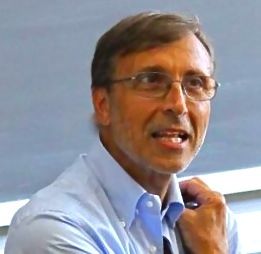
Maurizio Lenzerini is a Full Professor at the Department of Computer, Control and Management Engineering Antonio Ruberti , Sapienza University of Rome. He is a leading international expert in Ontology-Based Data Management , Description Logics , and Data Integration , with foundational contributions to Semantic Web technologies and service composition. ACM Fellow (2009) AAAI Fellow (2021) Peter P. Chen Award (2022) ACM Recognition of Service Award (2008) His research spans Artificial Intelligence , Database Theory , and Service-Oriented Computing , focusing on inference mechanisms, query rewriting, and knowledge graph ecosystems. He has pioneered MASTRO , a tool for ontology-based data access, and led European projects in data interoperability. Recent publications highlight advancements in knowledge graph lifecycle management , semantic classifier explanations , and quality-aware data integration . As PODS 2024 Executive Committee Chair , he shapes database theory research agendas. Teaching includes courses on Databases , Data Management , and Logic in Computer Science , with materials on SQL, ER modeling, and relational algebra.
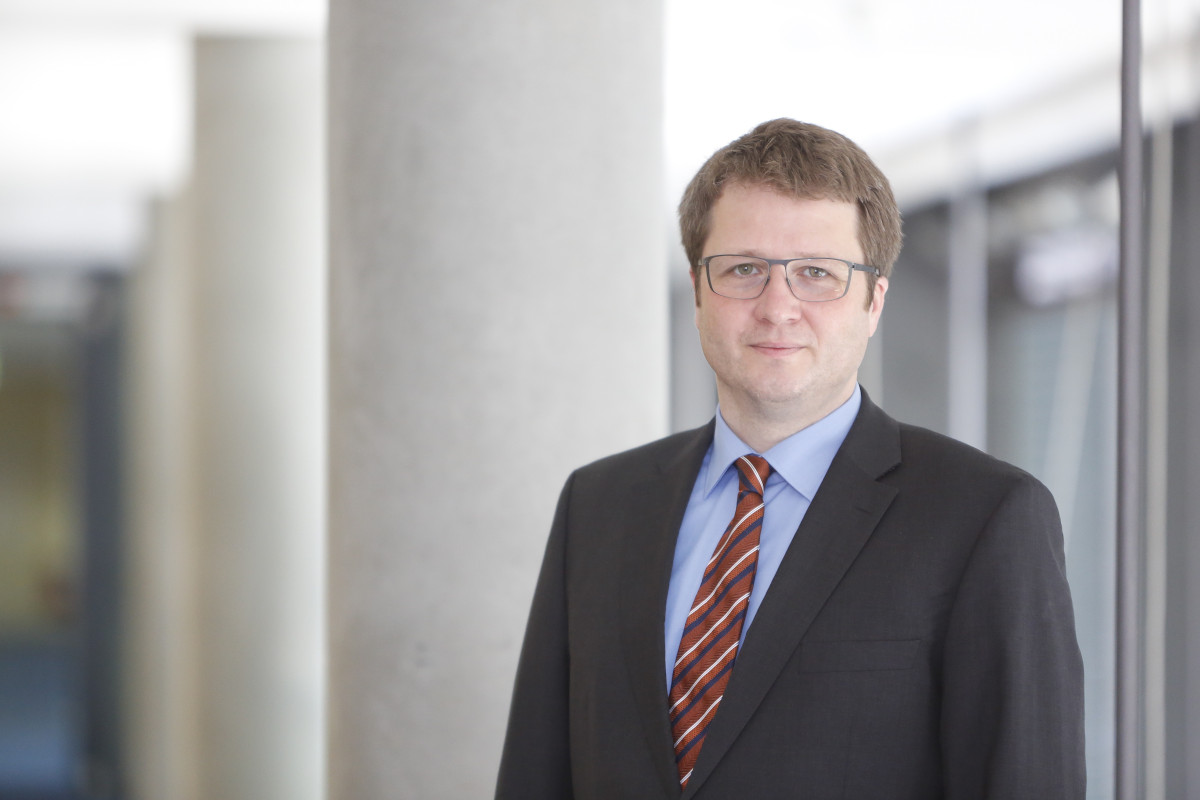
Prof. Dr. Andreas Harth holds the Chair of Business Information Systems, especially Technical Information Systems, at Friedrich-Alexander University Erlangen-Nuremberg (FAU), where he has been a faculty member since 2018. He also serves as a department head at the Fraunhofer IIS-SCS in Nuremberg. His academic work spans both theoretical research and practical applications in decentralized information systems, with strong connections to industry through numerous collaborative projects. Harth completed an apprenticeship as a banker before studying computer science. He earned his doctorate from the Digital Enterprise Research Institute at the National University of Ireland, Galway, and completed his habilitation at the Karlsruhe Institute of Technology. His academic journey included teaching and research stays at the universities of Heidelberg, Innsbruck, Stanford, and Southern California, providing him with a global perspective on information systems research. His research focuses on developing methods and technologies for decentralized information systems found in the World Wide Web and blockchain environments, with applications in companies. He investigates data integration using Semantic Web and Linked Data technologies, process modeling languages, and their applications in the Internet of Things, Web of Things, and Industry 4.0 contexts. His work bridges theoretical computer science with practical business applications, particularly in data sovereignty and decentralized architectures. Analysis of his recent publications reveals a strong trend toward Solid protocol applications, knowledge graph technologies, and the integration of large language models with semantic web technologies. His research increasingly focuses on practical implementations in enterprise settings, healthcare data management, and manufacturing systems, demonstrating the real-world applicability of his theoretical work. As a member of FAU's research focus on Digitalization and Innovation, Harth collaborates with strategic partners including the Fraunhofer Institute for Information Systems (IIS) and major German industrial companies. His work contributes significantly to FAU's position as one of Germany's most research-intensive universities, particularly in the fields of business informatics and decentralized systems.
Sussi Olsen is an Academic Research Staff member (Researcher) in the Department of Nordic Studies and Linguistics at the University of Copenhagen, employed at the Center for Sprogteknologi (CST) since 1997. Her work centers on developing and validating linguistic resources for language technology applications. Education: Masters degree in Spanish and Computational Linguistics, University of Copenhagen Her research spans technological language resources, morphological/syntactic/semantic annotation, computational lexicography, corpus linguistics, and resource validation. She specializes in Danish language processing and EU-level language technology infrastructure, with expertise in historical Danish (19th century) and multilingual resource integration. Her work bridges theoretical linguistics and practical NLP applications. Recent publications (2023-2025) reveal a strategic focus on semantic resource development for Danish, including formal lexicons (COR.SEM), language model evaluation frameworks, and sign language-spoken language integration. These works demonstrate convergence between lexical semantics, benchmarking methodologies, and European language equality initiatives, particularly through EU-funded projects like the European Language Equality agenda. She actively contributes to EU language technology projects including the Central Word Register for Danish (COR), European Language Grid, Federated TermBank, and ELEXIS. Her project portfolio shows sustained engagement with terminology management, semantic annotation standards, and resource validation since 2008. She has presented extensively on historical Danish language processing and semantic annotation methodologies. Olsen is affiliated with the Center for Sprogteknologi and participates in the DigHumLab project. She holds governance roles as Member of the Board of Representatives and Board of Directors of the Danish Language Council, and formerly chaired the Society of Lexicographers in Denmark.
Florent Laroche is an Assistant Professor at École Centrale de Nantes, affiliated with the LS2N laboratory (UMR CNRS 6004), and serves as Vice-President of Nantes University. His academic career spans over 17 years of interdisciplinary research at the intersection of engineering sciences and humanities, with a specialization in Advanced Industrial Archaeology and Knowledge Life Cycle Management for Heritage (KLM for Heritage). His research interests focus on digital documentation and interpretation of cultural heritage, particularly through 3D modeling, virtual reality, and knowledge management systems. Laroche has made significant contributions to the field of Digital Humanities, developing methods to transpose historical knowledge into contemporary contexts while preserving industrial and cultural heritage. His work bridges engineering disciplines with humanities through transdisciplinary approaches that consider heritage as a pillar of knowledge for building sustainable futures. Analysis of his recent publications reveals a strong trend toward long-term preservation of 3D data in humanities, virtual reality applications for heritage interpretation, and knowledge management systems for heterogeneous heritage documentation. His research increasingly focuses on standardized approaches for 3D data archiving, FAIR principles implementation, and developing methodologies for heritage significance assessment using digital tools. Laroche has been actively involved with CIRP (Collège International pour la Recherche en Productique) since 2006, progressing from Research Affiliate to Associate Member in 2017. He has co-organized multiple CIRP conferences and participates in Scientific Committees for Design and Organization. His research leadership is particularly evident in projects like Nantes1900, which created an interactive museum application for the historical harbor of Nantes, and various reconstructions of significant heritage sites including Nero's rotating dining room in Rome and industrial forges. These projects demonstrate his commitment to developing practical applications that make heritage accessible while advancing methodological approaches in digital heritage. Laroche's laboratory work centers on the IS3P team within LS2N, where he develops methods for virtual reconstruction, 3D documentation, and knowledge management systems specifically designed for cultural heritage applications. His approach emphasizes the integration of heterogeneous data sources and the development of user-centered interfaces for heritage interpretation.
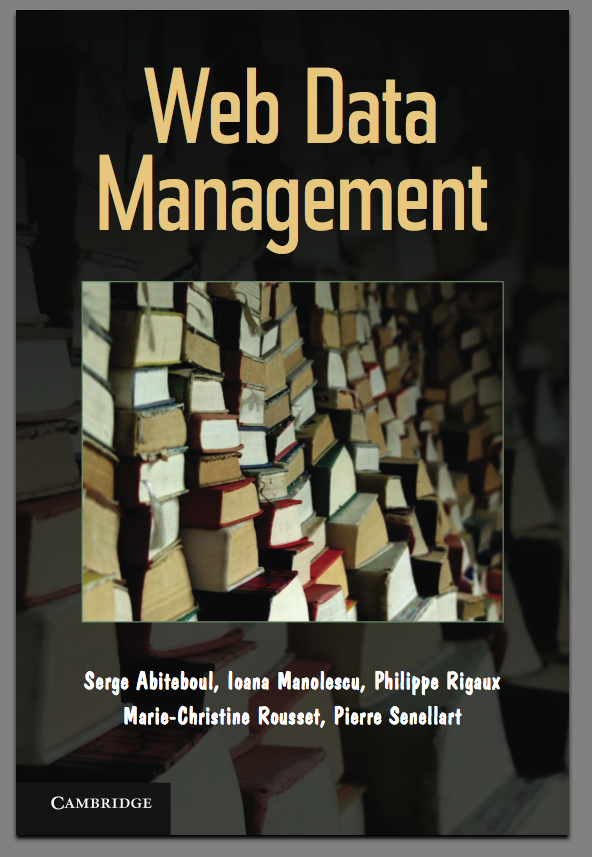
Marie-Christine ROUSSET is a Professor of Computer Science at the University of Grenoble Alpes (UGA) in France, where she is a member of the LIG (Laboratoire d'Informatique de Grenoble) in the SLIDE group. Previously affiliated with Paris-Saclay (LRI), she has established herself as a leading researcher in Knowledge Representation and Information Integration. She holds the distinguished position of Senior member of the Institut Universitaire de France (IUF) (2011-2016, renewed for 2016-2021) and serves as co-responsible for the chair Explainable and Responsible AI within MIAI Grenoble Alpes. Her research focuses on ontology-based data access, logic-based mediation between distributed data sources, query rewriting using views, data linkage, and distributed reasoning for the Semantic Web. She skillfully combines artificial intelligence and database techniques to address complex information integration challenges, with applications spanning biomedical informatics, educational technology, and trustworthy AI. Her work demonstrates consistent innovation from foundational research to practical implementations, as evidenced by her co-authorship of the book 'Web Data Management' published by Cambridge University Press. Professor ROUSSET's recent publications (2019-2022) reveal a growing emphasis on data privacy, RDF graph anonymization, and interactive ontology engineering, while maintaining her strong contributions to semantic web technologies and knowledge representation. Her research shows increasing attention to trustworthy AI concerns, aligning with her leadership roles in relevant projects. Scientific Recognition Senior member of Institut Universitaire de France (IUF) (2011-2016, renewed for 2016-2021) Junior member of Institut Universitaire de France (IUF) from 1997 to 2002 Chevalier de l'Ordre National du Merite (July 11, 2011) EurAI Fellow (nominated ECCAI Fellow in 2005) Best Paper Award at AAAI'96 for 'Verification of Knowledge Bases based on Containment Checking' Professor ROUSSET maintains an active role in the scientific community through editorial work and organizational leadership. She serves on the Editorial Board of Communications of the ACM (CACM) and has held significant roles including PC chair of EGC 2019, Workshops co-Chair of WWW 2018, and Area Chair of IJCAI 2017. Her consistent service on program committees of major international conferences demonstrates her standing in the field. Her laboratory, the SLIDE group within LIG, focuses on semantic web technologies, knowledge representation, and data integration. The group maintains strong connections with the international research community and participates in collaborative projects addressing cutting-edge challenges in artificial intelligence and data management, with particular emphasis on trustworthy and explainable AI systems.
David Chaves Fraga is an Assistant Professor in the Department of Electronics and Computing at the University of Santiago de Compostela (USC), specializing in Computer Science and Artificial Intelligence. He is also a researcher at CITIUS Research Center and maintains a collaboration with the Declarative Languages and Artificial Intelligence Group (DTAI) at KU Leuven. His research focuses on large-scale semantic data integration and its applications across various domains including DevOps, public procurement, and transportation. He is particularly recognized for his work in Knowledge Graph construction and lifecycle management. As co-chair of the W3C Knowledge Graph Construction Community Group and lead scientist for the European Public Procurement Data Space, he plays a significant role in shaping standards and practical implementations in the field. Dr. Chaves Fraga has published over 50 papers in the Semantic Web domain, with several appearing in top conferences like ISWC and ESWC. His work on 'Declarative Generation of RDF Collections and Containers from Heterogeneous Data' received the Best Paper Award at SEMANTiCS Conference. Margarita Salas Fellowship (2022) Best Paper Award at SEMANTiCS Conference (2024) He actively contributes to the academic community as a committee member for major conferences including ISWC, ESWC, WWW, SIGIR, and CIKM, and serves as a reviewer for leading journals in the Semantic Web field. Dr. Chaves Fraga is also involved in organizing two academic workshop series focused on Knowledge Graph Construction and Semantics for Transport.
Oscar Corcho is a Full Professor at the Department of Artificial Intelligence within the School of Computer Science at the Technical University of Madrid. He is a prominent member of the Ontology Engineering Group and has been serving as a Professor since May 2007, with his current position as Full Professor reflecting his significant contributions to the field. Professor Corcho's research primarily focuses on Ontology-based Data Integration and the application of Semantics in Open Science. His expertise extends across the broader domains of Semantic Web, Linked Data, Knowledge Graphs, and Ontological Engineering. His work bridges theoretical research with practical applications, particularly in data integration systems and knowledge representation frameworks. With over 460 publications and more than 12,000 citations, he has established himself as a leading researcher in semantic technologies. His recent publications show a strong emphasis on virtual knowledge graph architectures, RDF-star generation, semantic labeling techniques for tabular data, and applications of semantic technologies in scientific literature analysis. His research demonstrates a clear trajectory toward solving real-world data integration challenges across heterogeneous sources while advancing the theoretical foundations of knowledge representation. Third Spanish Award on Computer Science (2001) Beyond his academic role, Professor Corcho is a co-founder of LocaliData Spain, demonstrating his commitment to translating research into practical applications. He has supervised numerous research projects and has been instrumental in developing tools like Morph-KGC for knowledge graph construction. His work has significant implications for public procurement systems, transportation data integration, citizen science initiatives, and scientific research infrastructure. As leader of the Ontology Engineering Group, he oversees a research program that develops innovative methodologies for ontology engineering and semantic data integration across diverse domains. His group's work has influenced both academic research and industry practices in knowledge representation and semantic technologies.
Professor Michael Beck holds a HTA Professorship in Sustainable Horticultural Management at the University of Applied Sciences Weihenstephan-Triesdorf (HSWT), where he also serves as Director of the Institute of Horticulture. He is affiliated with the Department of Horticulture and Food Technology, contributing to HSWT's research focus on sustainable land use and horticultural production. His research interests span Sustainable Horticultural Management , Water Resource Management in Agriculture , Digital Knowledge Bases for Agricultural Decision Support , and LED Lighting Control in Horticulture . Professor Beck has pioneered work in developing decision support systems for nutrient management using semantic web technologies and fuzzy logic, as well as exploring energy-saving strategies through dynamic LED lighting in plant production. His recent publications demonstrate a strong trend toward digital transformation in agriculture, focusing on data integration, knowledge management, and precision farming techniques. These works consistently address practical challenges faced by farmers while incorporating cutting-edge technologies to improve sustainability and efficiency. Lead researcher on water-saving potential assessment in horticultural irrigation systems Principal investigator for projects bundling research capacities in sustainable horticulture Key contributor to Bavaria's agricultural data space initiatives Professor Beck's advisory approach centers on practical, field-tested solutions that bridge the gap between academic research and real-world agricultural challenges. His projects typically involve close collaboration with industry partners, ensuring research outcomes directly benefit farming practices. As Director of the Institute of Horticulture, he oversees research activities focused on optimizing horticultural production while maintaining environmental sustainability.
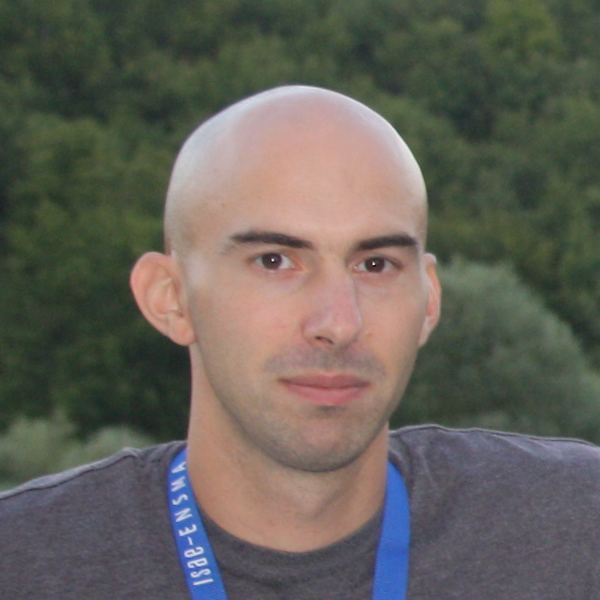
Brice Chardin is an Associate Professor in Data Engineering at ISAE-ENSMA since 2013, affiliated with the LIAS (Laboratoire d'Ingénierie des Applications de la Connaissance et des Systèmes) Data and Model Engineering team. His work bridges academic research and industrial applications, focusing on data management solutions for critical systems. His research spans clustering algorithms under dissimilarity constraints , RDF query relaxation for explaining empty/overabundant results, pattern mining through the RQL language, and energy data management . Key projects include Chronos (a NoSQL system for industrial sensor data) and collaborations with energy companies SRD and Nexeya for predictive consumption analysis. Recent publications (2021-2024) emphasize constrained clustering techniques and cooperative query processing for RDF knowledge bases, revealing a strong trend toward practical solutions for industrial data challenges. His work integrates machine learning with database theory to address real-world data imperfections. PhD in Computer Science from INSA Lyon (2011) Postdoctoral position at LIRIS (2012-2013) on ANR DAG project Specialized in industrial data management since 2011 EDF collaboration Chardin actively supervises academic projects including drone simulation with Ardupilot and Smart Data mining initiatives. His industrial partnerships focus on energy sector applications, particularly predictive analysis for electricity distribution and storage systems. Current work involves developing clustering algorithms with error bounds and query relaxation frameworks for semantic web technologies.
Ibrahim Dellal is a Lecturer in Data Engineering at ISAE-ENSMA, France, affiliated with the LIAS laboratory. His research focuses on semantic web technologies, particularly query processing over uncertain RDF knowledge bases. He addresses critical problems like empty answers and overabundant query results through cooperative approaches that explain and refine unsuccessful queries, contributing significantly to knowledge representation and database systems. Education: PhD in Computer Science from ISAE-ENSMA (2019) on managing large knowledge bases with incomplete and uncertain data Research Interests: Data Engineering and Semantic Web Technologies Uncertainty Handling in Knowledge Bases Cooperative Query Processing Query Result Explanation and Refinement RDF Systems and Knowledge Representation His 2017-2020 publications demonstrate consistent focus on cooperative query answering for uncertain RDF knowledge bases, specifically tackling the empty answer problem through explanation generation and the overabundant answers problem via query refinement. These works advance semantic web and database research by bridging user interaction with automated query optimization under data uncertainty. He is an active member of the Data Engineering team at LIAS laboratory, which operates across ISAE-ENSMA's Chasseneuil campus and collaborates with teams in Automatic Control and Real Time systems for interdisciplinary engineering research.