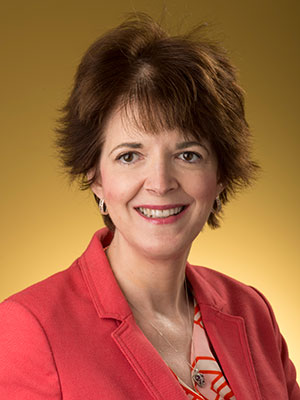
Marie-Ange Remiche is a researcher at the Faculty of Computer Science, Université Libre de Bruxelles. Her work spans stochastic modeling , queueing theory , and educational technology , with a focus on fluid queues, Markov processes, and user experience in digital learning tools. Active in network performance analysis and pedagogical innovation , including projects like Conception d'une Application Numérique en Ligne d'Aide à l'Apprentissage and Cartographie et Mutualisation des ressources numériques en Mathématiques . Key collaborations with researchers like Marie De Vleeschouwer-Dieudonne and contributions to conferences such as EPEW, ASMTA, and QPES. Her recent publications address fluid queue dynamics, web configurator usability, and fairness in probabilistic systems. She supervises PhD students and participates in conference committees and peer review activities.
Line Lervik-Olsen is a Professor of Marketing at BI Norwegian Business School and Head of the Department of Marketing. She holds a Ph.D. in Marketing from BI Norwegian Business School and completed a visiting Ph.D. at the University of Michigan Business School. Her expertise spans service marketing, strategic marketing, and innovation, with a focus on consumer behavior, customer satisfaction, and complaint management. She leads the Norwegian Customer Satisfaction Barometer and serves as Research Director for the Norwegian Innovation Index at NHH’s Center for Service Innovation. Her work emphasizes customer-centric innovation and the intersection of technology, sustainability, and service quality. Lervik-Olsen teaches service marketing and strategic marketing at BI, blending academic rigor with practical industry insights. Her research has addressed topics like compulsive social media use, emotional dynamics in service encounters, and balancing digital/social innovation strategies. She has authored books on service and innovation, and her work appears in journals such as Journal of Service Research and European Journal of Marketing . Her contributions extend to media commentary on consumer trends, digital transformation, and corporate responsibility. Lervik-Olsen’s research methodology emphasizes actionable insights for businesses, particularly in leveraging customer feedback to drive innovation and improve service experiences.
Costis Maglaras is the 16th Dean of Columbia Business School and the David and Lyn Silfen Professor of Business at Columbia University. He holds a BS in Electrical Engineering from Imperial College, London (1990), and MS/PhD in Electrical Engineering from Stanford (1991/1998). His academic roles include chairing the Decision, Risk & Operations Division, directing the doctoral program, and leading Columbia’s Data Science Institute executive committee. Research Focus: Interfaces of applied mathematics, economics, and engineering, with emphasis on stochastic networks, financial engineering, algorithmic pricing, and market microstructure. Professional Experience: Founded Mismi Inc. (2007–2014), a financial tech firm; advised Goldman Sachs’ Global Markets Division on quantitative research; served as chief scientist and president of Mismi. His research spans electronic markets, social network dynamics, ride-hailing economics, and real-estate pricing. He has advised 20 doctoral students and received teaching excellence awards for courses like Managerial Statistics and Technology & Analytics curricula. Awards: INFORMS Fellow, Honorary Fellow of the Foreign Policy Association, Board of Trustees at Athens College. Active in policy roles including the Economic Club of New York. Industry Contributions: Collaborates with hedge funds and financial institutions on algorithmic strategies, advising on topics like optimal execution and market impact modeling.
Jamol J. Pender is an Assistant Professor in the School of Operations Research and Information Engineering at Cornell University, joining in July 2015. His research focuses on queueing theory, applied probability, Markov processes, and their applications in healthcare, transportation, and financial engineering. He holds a Ph.D. in Operations Research and Financial Engineering from Princeton University (2013), and B.S.E. and M.S.E. in Electrical and Systems Engineering from the University of Pennsylvania (2008). Prior to Cornell, he was a Visiting Scholar at Columbia University's Department of Industrial Engineering and Operations Research. His research explores complex systems through stochastic modeling, including topics like dynamic queueing networks, abandonment behaviors, and bifurcation analysis. Notable contributions include advancements in Gaussian skewness approximations and Gram-Charlier expansions for queueing systems. Pender has been recognized with awards such as the INFORMS Telecommunications Best Paper Honorable Mention (2016) and the Patrice Y. Johnson Award (2013). His work intersects interdisciplinary fields, addressing real-world challenges in healthcare logistics, transportation efficiency, and financial systems. Recent projects include modeling shopper interactions to mitigate virus spread in retail environments, demonstrating applications of queueing theory in public health.
Jason Gaitonde is an Assistant Professor at Duke University's Fuqua School of Business and concurrently serves as a Postdoctoral Associate and Instructor in Mathematics at MIT. His research bridges theoretical computer science, algorithms, game theory, networks, and machine learning in strategic contexts. He holds a Ph.D. in Computer Science from Cornell University (advised by Éva Tardos) and dual undergraduate degrees in Mathematics (B.S., Yale University) and Economics (B.A.). His work focuses on theoretical problems at the intersection of algorithms, learning, game theory, networks, and randomness. Notable interests include strategic queuing systems, opinion dynamics in networks, and the design of sample-efficient learning algorithms. He has collaborated with prominent researchers such as Elchanan Mossel and Jon Kleinberg. Education: Ph.D. in Computer Science, Cornell University B.S. in Mathematics (Distinction), Yale University B.A. in Economics, Yale University His publications explore topics like the price of anarchy in queuing systems, polarization in social networks, and pseudorandom generators. He has taught courses such as MIT's 18.424 Information Theory and Cornell's CS 6850 on Network Structures. His work frequently appears in top conferences like STOC and EC, with a focus on advancing the theoretical foundations of computer science and economics.
Kevin Tang is a Professor in the School of Electrical and Computer Engineering at Cornell University, where he has been a faculty member since 2007. His research spans networks, control, optimization, and game theory, with a strong focus on the control and optimization of computer networks. He is affiliated with the Department of Electrical and Computer Engineering and leads a research group focused on information networks and systems. Ph.D., Electrical Engineering, California Institute of Technology, 2006 M.S., Electrical Engineering, California Institute of Technology, 2002 M.S., Electronics Engineering, Tsinghua University, 2001 B.E., Electronics Engineering, Tsinghua University, 1999 Professor Tang's research interests include networks, control theory, optimization theory, and game theory , with applications in computation systems, information theory, and decision systems. His work bridges theoretical foundations with practical implementations in networking and distributed systems. His recent publications show a strong trend in network optimization, privacy-preserving systems, and control of networked systems , appearing in top venues such as IEEE/ACM Transactions on Networking, SIAM Journal on Optimization, NeurIPS, and ICML. Themes include network coding, multipath transport, synchronization, and mathematical optimization for network performance. Notable scientific awards include: Presidential Early Career Award for Scientists and Engineers (PECASE), 2012 IBM Faculty Award, 2018 ACM Senior Member, 2019 First Place in AT&T SDN Network Design Challenge, 2016 Michael Tien '72 Excellence in Teaching Award, 2011 He has advised students such as J. Cheng and S. Tseng, and has been actively involved in research grants and projects related to networked systems and control. From 2016 to 2019, he served as Director of Graduate Studies for the ECE department at Cornell. His research group, accessible at networks.ece.cornell.edu , investigates the interplay between economics, control, and networking in modern distributed systems.
Steven Low is the Frank J. Gilloon Professor of Computing and Mathematical Sciences and Electrical Engineering at the California Institute of Technology. He holds a B.S. from Cornell University (1987), M.S. and Ph.D. from the University of California (1989, 1992). He has been at Caltech since 2000, progressing from Associate Professor to full Professor (2006), and Gilloon Professor (2018). His research focuses on power systems, cyber-physical systems, network architecture, and energy-efficient networking. Notable contributions include foundational work on smart grid optimization, decentralized control, and reinforcement learning applications in power systems. He has received the IEEE Koji Kobayashi Computers and Communications Award and was named an ACM Fellow. Recent publications emphasize grid resilience, stability certification for converter control, and machine learning approaches to power flow problems. He teaches courses such as Power System Analysis and Control and Optimization of Networks . His NetLab research group explores advanced network and energy systems, with patents and industry collaborations (e.g., PowerFlex).
Haoran Qiu is a Systems Researcher at Microsoft Azure Research – Systems (AzRS), focusing on AI-driven cloud systems efficiency. He holds a Ph.D. in Computer Science from the University of Illinois at Urbana-Champaign (UIUC), advised by Prof. Ravishankar K. Iyer, and a B.Eng. in Computer Science from the University of Hong Kong (HKU). His research interests span AI/ML systems, cloud computing, distributed systems, and sustainability. He has interned at Google, Microsoft Research, and IBM Research. Notable awards include the 2023 ML Systems Rising Stars by MLCommons and the Mavis Future Faculty Fellowship. Education: Ph.D., Computer Science, UIUC (2024) B.Eng., Computer Science, HKU (2019) Visiting Student, University of Wisconsin-Madison (2018) Research Interests: Designing learning-based solutions for cloud systems Energy-efficient LLM serving and resource management Resilience and sustainability in hyperscale datacenters AIOps and ML-driven systems management Recent Contributions Include: Advances in thermal-aware scheduling for LLMs (TAPAS) Green computing strategies balancing SLOs and carbon emissions Queue management for large language models (QLM) Awards: Best Paper Finalist (L4DC 2024) Best Presentation Award (COMPSYS 2022) Multiple Fellowships and Scholarships Labs/Teams: Active in Microsoft Azure Research, contributing to cutting-edge ML-centric cloud systems projects. Collaborates widely with industry (Google, IBM) and academic institutions.
Limin Shen is a Visiting Professor in the Computer Science Department at Illinois Institute of Technology. His research focuses on flexible software engineering, adaptive systems, and queueing theory. He has led projects on finance software systems and computerized management information systems, including the widely adopted Wantong Universal Finance and Accounting Software. His work also spans decompilation techniques for malware analysis and performance optimization in electronic commerce systems. Research Projects: Analysis and Application of the Queue Cluster with Simultaneous Inputs (Co-PI, 2002–2005) Flexible Application Software and Computer Management Information Systems (PI, 2003–2005) Wantong Universal Finance and Accounting Software (PI, 1998–2003) Awards: Top-Ten Excellent Invention Award (Hebei Province, 2002) Second Class Science and Technology Award (1995, 1989) Outstanding Teacher Recognition (1991) Grants & Collaborations: Limin Shen has secured funding from the National Natural Science Foundation of China, State Scholarship Foundation, and Hebei Provincial Government. His projects often involve industry partners like Hebei Ocean Shipping Co. Publications: He authored three books on software flexibility, operating systems, and accounting computing. His articles span queueing models, decompilation methods, and flexible system design.
David Stanford is a Professor in the Department of Statistical and Actuarial Sciences at the University of Western Ontario. He earned his Ph.D. from Carleton University in 1981. His office is located in WSC 211 and he can be contacted via phone (519-661-2111 x83612) or email. Research Focus: Dr. Stanford's research spans several interconnected domains including: Queueing Theory : Specializing in multi-server systems, priority queues, and service optimization Actuarial Science : Risk modeling, ruin theory, and insurance mathematics Healthcare Operations : Applying stochastic models to transplant systems and patient flow Environmental Modeling : Forest fire prediction using compound Poisson processes His work frequently combines theoretical stochastic processes with practical applications in healthcare and environmental systems. Publication Trends: Analysis of recent publications shows a strong focus on queueing theory applications in healthcare systems, particularly modeling patient flow and organ transplant logistics. His actuarial research emphasizes advanced ruin probability calculations and risk process modeling. Environmental applications feature stochastic approaches to natural disaster prediction.
Shensheng Tang is a Professor of Physics and Engineering at Bethel University, College of Arts and Sciences. He joined the university in 2024, bringing extensive academic and industry experience in electrical and computer engineering. He holds a Ph.D. in Electrical Engineering from the University of Toledo and a B.S. from Tianjin University. Ph.D. in Electrical Engineering, University of Toledo, 2006 B.S. in Electrical Engineering, Tianjin University, 1990 Dr. Tang's research focuses on wireless and computer networking, IoT, cloud/fog/edge computing, embedded systems, FPGA, cybersecurity, AI/ML, and performance modeling. His work integrates theoretical modeling with practical applications in smart grids, healthcare IoT, and 5G/Wi-Fi convergence. He has published over 100 peer-reviewed papers, with recent publications emphasizing fog-based IoT performance, cloud system modeling, FPGA acceleration, and network security using spatiotemporal models and machine learning. His publication record reveals a strong trend in applying analytical models—particularly queueing theory, Markov processes, and signal modeling—to optimize network performance, reliability, and security in distributed and resource-constrained environments. He frequently explores cross-layer design in wireless networks and integrates AI techniques for traffic analysis and threat detection. MWSU 2012 Dr. James V. Mehl Outstanding Faculty Scholarship Award Best Paper Award, IEEE/CIC ICCC 2016 Excellent Presentation Award, IEEE ICCSN 2016 Spotlight Paper, IEEE TPDS July 2013 Marquis Who's Who in America (2010–2016 editions) Marquis Who's Who in Science and Engineering (10th–12th editions) Dr. Tang has advised numerous students and researchers throughout his career, though specific names are not listed. He has secured significant research output and editorial leadership roles, serving as Editor-in-Chief for the Journal of Science and Engineering Research (JSER) and Journal of Smart Technology Applications (JSTA), and as editor for several international journals including MDPI's IoT. He has chaired program committees and organizing committees for major conferences such as CMVIT, CCISP, ASSE, and ICCSN. His professional service includes active roles in IEEE (Senior Member), ACM SIGMETRICS, INFORMS, and Sigma Xi. He leads research in performance modeling and optimization for next-generation networks and is involved in editorial and conference leadership that shapes discourse in smart technologies, IoT, and cybersecurity.
Eren Çil is an Associate Professor of Operations and Business Analytics at the Lundquist College of Business , University of Oregon, and serves as the Academic Director for the Oregon MBA program. He holds the Robert J. and Leona M. DeArmond Research Scholar title, reflecting his contributions to service operations research. Education : PhD in Operations Management from Northwestern University (2010), MS in Industrial Engineering from Koç University (2006). Professional Affiliations : Member of INFORMS, POMS, and M&SOM societies. Research Interests focus on service operations management , queueing theory , game theory , strategic pricing , and supply chain optimization . His work addresses challenges in large-scale service systems, competitive pricing dynamics, and sustainable supply chain design. Recent Publications demonstrate interdisciplinary applications spanning healthcare operations, retail strategies, and service platforms. Key themes include dynamic pricing , resource allocation , and system optimization under uncertainty. Notable Contributions include studies on: Emergency department admissions in the context of ride-sharing platforms Mass customization strategies in competitive markets Recycling incentives in closed-loop supply chains Customer retaliation and disguised queues Queueing control policies for multi-class systems Collaborations with scholars like Michael Pangburn and Nagesh Murthy highlight his focus on practical problem-solving in service and healthcare operations.
Marla Bell is a Professor of Mathematics and Associate Dean for Student Success at the College of Science and Mathematics, Kennesaw State University. She specializes in applied statistics and data analysis, with over 30 years of academic experience rooted in mathematical sciences. Ph.D. in Mathematical Sciences (1993) from Clemson University M.S. in Mathematical Sciences (1989) with Statistics concentration B.S. in Mathematics (1986) summa cum laude Her teaching portfolio includes graduate courses in mathematical statistics, statistical methods, and regression analysis, alongside undergraduate instruction in statistical software applications. Research interests span: Statistical modeling for public health applications Markov renewal processes in queueing theory Applied regression techniques Mathematical systems analysis
Mehrdad Moharrami is an Assistant Professor in the Department of Computer Science at the University of Iowa . He specializes in reinforcement learning, Markov decision processes, and random graph models for economics and computational systems. Education : BSc in Mathematics and Electrical Engineering from Sharif University of Technology; MSc in Electrical Engineering and Mathematics from University of Michigan; PhD in Electrical Engineering from University of Michigan (2020) His research focuses on robust reinforcement learning algorithms under distributional shifts and network structure analysis using parameterized random graphs. Recent work explores societal systems modeling and risk-sensitive control frameworks. Moharrami's publications demonstrate interdisciplinary expertise across computer science, mathematics, and network science , with notable contributions to: Risk-sensitive reinforcement learning (ICML 2025, Mathematics of Operations Research 2024) Random graph modeling (COLT 2025, Random Structures & Algorithms 2024) Network optimization (IEEE Transactions on Network Science 2024, IEEE Transactions on Information Theory 2023) Scientific recognition includes: Rackham Predoctoral Fellowship (2019) NSF MPS Workshop participation (2022) Multiple conference best paper nominations Iranian National Olympiad medals (2007-2008) As co-organizer of major workshops (SIGMETRICS 2022, Performance 2023), he actively contributes to academic community development while maintaining active referee roles for top journals like IEEE/ACM Transactions on Networking and Mathematics of Operations Research.
Hubert Missbauer is a Full Professor for Production and Logistics Management at the University of Innsbruck. He holds a Diploma (1982) and Doctorate (1986) in Business Administration from the University of Linz, with a Habilitation in Business Administration (1994) focusing on manufacturing planning systems. His research emphasizes production planning concepts, workload control, and optimization in manufacturing systems, particularly in steel production. He co-organizes the International Working Seminar on Production Economics and serves on the editorial board of the International Journal of Production Economics . Research interests include order release optimization, production scheduling in steel industries, and quantitative methods in operations management. Recent work focuses on Lagrangian decomposition algorithms, behavioral perspectives in workload control, and integrated scheduling in steel production processes. He has published extensively in top-tier journals like International Journal of Production Research and European Journal of Operational Research . Education: University of Linz (Diploma 1982, PhD 1986, Habilitation 1994) Affiliations: Institute for Information Systems, Production and Logistics Management at University of Innsbruck Key Projects: Steel production scheduling, iterative LP-simulation algorithms, behavioral studies in manufacturing control Editorial Roles: Guest Editor for International Journal of Production Economics since 2020 His work bridges theoretical models (e.g., clearing functions, transient analysis) with practical applications in industries like steelmaking and construction. Recent presentations include discussions on Lagrangian approaches at the INFORMS Annual Meeting (2024) and EURO conferences.