Prof. Tijani CHAHED is a Professor at Telecom SudParis, part of Université Paris-Saclay, affiliated with the SAMOVAR laboratory and the NeSS research group. His work focuses on network optimization, edge computing, machine learning applications in telecommunications, and game-theoretical frameworks for distributed systems. He holds a position in the Department of Computer Science and Telecommunications. His research spans resource allocation in 5G/6G networks, energy efficiency strategies for mobile infrastructure, reinforcement learning for dynamic systems, and coalitional game theory for multi-agent systems. Key contributions include optimization of cache allocation in edge computing, latency-critical traffic management (URLLC), and strategic investment models for distributed computing infrastructures. Selected articles highlight advances in edge computing resource management, metaverse data transport over 5G, and energy-efficient sleep mode control for base stations. His work often intersects with industrial applications in green networks and smart grid integration for mobile infrastructure. Collaborations involve institutions like École Polytechnique, INRIA, and industry partners in telecommunications. Current projects include 6G network architectures, metaverse-enabled edge services, and decentralized resource allocation frameworks. Labs/Teams: SAMOVAR Lab (Signal and Media Access Networks, Optical and Radio Networks), NeSS Group (Networked Systems and Services).
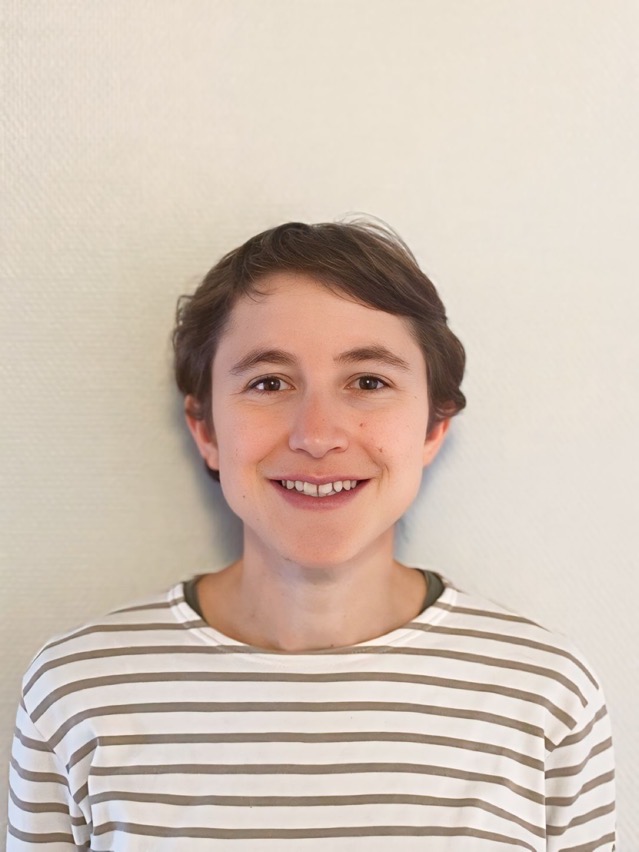
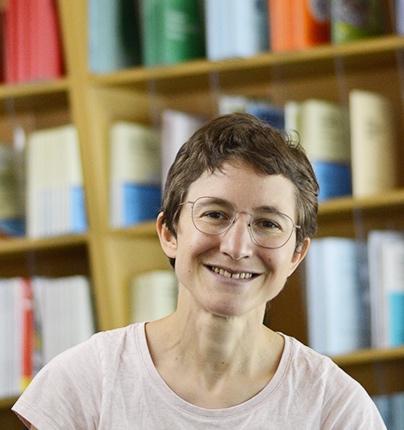
Irène Marcovici is a Professor in the Department of Mathematics at the University of Rouen Normandy, affiliated with the Raphaël Salem Mathematics Laboratory (LMRS). She leads the Probability and Dynamical Systems team within LMRS and participates in the ALEA and SDA2 working groups of the GDR Informatique Fondamentale et ses Mathématiques. PhD in Mathematics (2013, University of Paris Diderot) Habilitation à Diriger des Recherches (2021, University of Lorraine) Her research focuses on probability theory , dynamical systems , and cellular automata , with significant contributions to percolation theory, self-organization phenomena, and combinatorics on words. She investigates how randomness influences complex systems, particularly through probabilistic cellular automata and their ergodic properties. Analysis of her recent publications (2021-2025) reveals a strong emphasis on percolation dynamics (e.g., corner percolation with directional bias), self-stabilization mechanisms in cellular systems, and combinatorial structures like Kolakoski sequences. Her work bridges theoretical computer science and pure mathematics, often employing stochastic methods to solve problems in symbolic dynamics and discrete geometry. Supervision & Collaborations: Currently supervising Maxence Poutrel (with Jérôme Casse) Previously supervised Pierrick Siest (2021-2024), Jocelyn Begeot (now Associate Professor), and Pierre-Adrien Tahay (now PRAG at Telecom Nancy) Regular collaborations with Régine Marchand, Nazim Fatès, and Pascal Moyal Laboratory Context: As leader of the Probability and Dynamical Systems team at LMRS, she contributes to France's national research infrastructure in fundamental mathematics, with connections to CNRS and international working groups focused on automata theory and discrete probability.
Djamal Zeghlache is a Professor at Telecom SudParis (now part of Institut Polytechnique de Paris), where he leads research in network virtualization, cloud computing, and software-defined networking. His work spans multiple domains including wireless communications, network security, and AI applications in networking systems. Affiliated with the SAMOVAR laboratory (Services and Architectures for Multimedia and Ubiquitous Access to Resources), he has established himself as a prominent researcher in network and service management. Professor Zeghlache's research interests focus on the intersection of networking and artificial intelligence, with particular emphasis on network virtualization, cloud computing, and software-defined networking. His work addresses critical challenges in network function virtualization, resource allocation, and optimization in distributed systems. In recent years, he has expanded his research to include AI-driven approaches for network management, healthcare monitoring using wireless technologies, and optical network control. His publications demonstrate a consistent trajectory from traditional networking challenges to more complex, AI-integrated solutions for modern network infrastructures. Analysis of his recent publications (2023-2025) reveals a strong trend toward integrating machine learning, particularly deep reinforcement learning and graph neural networks, into network management systems. His work spans multiple application areas including healthcare monitoring (using RF-based techniques for vital sign detection), transportation systems (bike-sharing optimization), and optical networking (disaggregated control frameworks). The interdisciplinary nature of his research connects computer networking with biomedical engineering, urban mobility, and formal methods for system verification. Professor Zeghlache has supervised numerous PhD students and collaborated extensively with researchers across Europe and internationally. His work has resulted in significant contributions to network virtualization, cloud resource management, and network security. He has been involved in multiple research projects focusing on next-generation networking technologies, including 5G, network slicing, and cloud-native network functions.
Laurent ALFANDARI is a Full Professor at ESSEC Business School, specializing in Operations Research and Decision Analytics within the Information Systems, Decision Sciences and Statistics (IDS) Department. He has held key academic roles including Academic Co-Director of the ESSEC-CentraleSupélec Master in Data Sciences & Business Analytics (2019–2023) and Coordinator of the Operations & Data Analytics PhD concentration (2018–2021). His research focuses on optimization techniques applied to supply chains, logistics, healthcare, and disaster preparedness. He has authored over 50 journal articles in top venues like European Journal of Operational Research and Transportation Science. Education : - Doctorate in Operations Research (Université Paris Dauphine-PSL, 1999) - Master of Research in Management Science (Université Paris Dauphine-PSL, 1995) - M.Sc in Management (ESSEC Business School, 1993) - Bachelor in Mathematics & Social Sciences (Université Paris Dauphine-PSL, 1990) Research Interests : His work addresses complex optimization challenges in urban logistics, healthcare networks, and disaster response. Notable contributions include freight-on-transit systems, autonomous robot delivery, and pandemic intervention sequencing. He emphasizes practical solutions for real-world problems through mixed-integer programming and robust optimization frameworks. Teaching & Mentoring : Teaches Decision Analytics and Operations Research across ESSEC programs (Grande École, Executive MBA, PhD). Supervised 14 PhD theses, including recent works on sustainable last-mile deliveries and healthcare analytics. Awards & Activities : 2020 ESSEC Top 4 Teaching Award, Vice-President of ROADEF (2012–2015), and leader in industrial collaborations with SNCF and Aid-Impact. Active in organizing academic conferences and serves as a journal reviewer for Annals of Operations Research and others. Labs & Collaborations : Member of LIPN (Sorbonne Université) and LAMSADE (Paris Dauphine). Consults for organizations like Babcock-Wanson and contributes to public-sector projects like EDF's ROADEF challenge.
Professor Hugues MOUNIER is affiliated with Paris Saclay University and the Laboratoire des Signaux et Systèmes (L2S) at CentraleSupélec. His primary role is as a Professor leading the COMEDY team, focusing on control systems and their applications. He has been a permanent member of L2S since 2010 and joined Paris Saclay University in 2008. His research spans theoretical and applied domains: differential flatness (for nonlinear and infinite-dimensional systems), Liouvillian systems, controllability/observability properties, and applications in contemplative neuroscience, physiological systems, and engineering systems like drilling, automotive, and network control. He leads the ANR project MindMadeClear, integrating mathematical models for meditation practices with physiological and phenomenological analysis. Key contributions include modeling oilwell drilling vibrations, model-free control strategies for vehicles and data centers, and neuroscientific studies using EEG classification for meditation states. His work bridges abstract theory (e.g., flatness analysis for HPA axes) with real-world applications (e.g., congestion control, energy management). He collaborates internationally, presenting at venues like ECC, IFAC, and IEEE conferences. His lab teams include SYCOMORE and MODESTY, focusing on dynamical systems modeling and estimation. No awards are explicitly listed, but his extensive peer-reviewed publications reflect sustained academic impact.
Irène Marcovici is a Professor at the University of Rouen Normandy, affiliated with the Raphaël Salem Mathematics Laboratory (LMRS) and leading the Probability and Dynamic Systems Team. Her research spans probability theory, cellular automata, stochastic processes, and combinatorics, with a focus on ergodicity, percolation, and self-organization phenomena. She collaborates with institutions like the GDR Fundamental Computer Science and its Mathematics and has contributed to journals such as Probability Theory and Related Fields, Annales Henri Lebesgue, and Theoretical Computer Science. Education: Habilitation à Diriger des Recherches (2021, University of Lorraine), PhD in Mathematics (2013, University of Paris Diderot) Research Focus: Marcovici's work explores probabilistic cellular automata, percolation models, and their applications in physics, computer science, and mathematics. Key projects include analyzing stability regions in queueing systems, developing decentralized diagnostics, and studying self-descriptive sequences. Her articles highlight interdisciplinary connections between discrete mathematics and stochastic dynamics. Notable Collaborations: She has co-authored publications with researchers like Jérôme Casse, Régine Marchand, Nazim Fatès, and Mathieu Sablik. Her team participates in the ALEA and SDA2 working groups under GDR Fundamental Computer Science and its Mathematics.
Raziyeh REZA-GHAREHBAGH is an Assistant Professor of Supply Chain Management at EM Normandie, France, since 2023. She holds a PhD in Industrial Engineering from the Islamic Azad University (IAU), Tehran, Iran (2020), and completed a PostDoc at Rennes School of Business. Previously, she was an Assistant Professor of Operations Management at the University of Sussex (2022–2023) and a Scientific Researcher at the Center for Innovation and Development of AI (CIDAI) in Iran (2020–2021). She is a Fellow of the Higher Education Academy (FHEA) in the UK. Her research focuses on analytical operations and supply chain management, sustainable business models, and the integration of operations research with digital platforms. Key themes include environmental sustainability in supply chains, green entrepreneurship, and the application of game theory to financial policy analysis. She teaches Supply Chain Management and Operations Management at EM Normandie. Her publications span topics like retailer-manufacturer partnerships in e-commerce, CSR policy impacts on sustainability, and financing strategies for green technology. Recent work emphasizes digital platforms' role in sustainable finance and policy-driven market dynamics. Awards: Fellowship of the Higher Education Academy (FHEA), UK. Grants/Advising: No explicit grants listed; no advisee names provided in the text. Labs/Teams: Affiliated with EM Normandie’s Supply Chain & Management Digital department; no specific lab/team details mentioned.
Amar BENASSER is an Associate Professor affiliated with the Université d'Artois, specifically within the Department of Computer Science and Automation (LGI2A). His research focuses on traffic flow modeling, control systems for transportation networks, and hybrid simulation techniques. Key areas include ramp metering optimization, variable speed limit coordination, and multi-agent systems applied to traffic management. Education: Not explicitly detailed in the text. His work emphasizes the integration of control theory and computational models to address challenges in urban traffic systems. Research themes include dynamic traffic adaptation, infrastructure coordination strategies, and the development of advanced traffic simulation frameworks. Publications span conferences such as CIFA, IFAC, and IEEE ITSC, with a focus on practical applications in transportation engineering. No scientific awards are listed, though his contributions are highlighted through collaborative projects with institutions like the LGI2A. Advising and grants are not explicitly detailed, though his involvement in multiple publications suggests active research collaboration. His primary affiliation remains the LGI2A laboratory, where he contributes to both theoretical and applied research in automated traffic systems.
Vlad Stefan BARBU is an Associate Professor of Mathematics (Statistics) at the Laboratory of Mathematics Raphaël Salem UMR 6085, University of Rouen - Normandy (URN) - CNRS, France. He serves as Director of the Research Federation Normandy-Mathematics, Scientific Secretary of the Romanian Society of Probability and Statistics, and Vice-president of the Romanian Society of Applied and Industrial Mathematics. His research focuses on stochastic processes, particularly semi-Markov models and their applications in reliability, survival analysis, and biostatistics. Education: HDR (Habilitation to Conduct Research) in Statistics (2017) PhD in Statistics (2005) Master in Applied Statistics and Optimization (1997-1998) BA in Mathematics (Bac + 5) (1992-1997) Barbu's research interests center on semi-Markov and Hidden semi-Markov processes, Markov models, statistical inference for stochastic processes, and nonparametric estimation. His work extends to reliability and survival analysis, biostatistics with applications in DNA modeling, entropy and divergence measures, and model selection. He has developed several R packages for semi-Markov modeling, demonstrating his commitment to translating theoretical advances into practical tools for researchers and practitioners. Analysis of his recent publications reveals a consistent focus on advancing semi-Markov theory with applications across diverse domains. His work spans theoretical developments in estimation methods, hypothesis testing, and reliability analysis, while maintaining strong connections to practical applications in reliability engineering, biostatistics, and risk modeling. The interdisciplinary nature of his research is evident in publications spanning statistics journals, mathematics journals, and applied fields. Research Grants: Coordinator of project 'Reliability and Survival Analysis of Multi-State Random Systems' (2024-2025) Team leader for LMRS in ANR project 'Hidden Semi Markov Models: INference, Control and Applications' (2022-2025) Participant in ANR project 'Swimming and Para-swimming: All United for our Champions' (2020-2024) Participant in multiple regional and international research projects Barbu has supervised numerous PhD students and served on doctoral committees in France and abroad. His research leadership extends to coordinating significant research projects and organizing international conferences. He maintains active research collaborations across Europe, with frequent visits to institutions in Greece, Romania, and other countries. His work bridges theoretical statistics with practical applications, particularly in reliability engineering and biostatistics. As Director of the Research Federation Normandy-Mathematics, Barbu leads a substantial mathematical research network. His international engagement is further evidenced by his leadership roles in Romanian statistical societies and his participation in European research networks and projects.
Yezekael HAYEL is a Researcher at the Laboratoire d'Informatique Avignon (LIA) and Director of the Agrosciences & Sciences Doctoral School at Avignon Université. His research focuses on optimizing complex systems with network structures, bridging computer science, applied mathematics, and social sciences. Key areas include opinion dynamics in social networks, cybersecurity, and infrastructure optimization for electric vehicles. He co-authored several influential articles on crowdfunding dynamics, epidemic control, and smart charging algorithms. As Doctoral School Director, he oversees interdisciplinary programs spanning biology, STAPS, computer science, and agricultural sciences. His leadership in the IMPLANTEUS university research school highlights his commitment to multidisciplinary collaboration. Recent work includes a CNRS-published article on opinion evolution models and a collaboration with the Nancy Automation Research Center. Education: Multidisciplinary background in mathematics and computer science Key Projects: ANR-funded IMPLANTEUS research school Optimization of EV charging ecosystems Cybersecurity strategies against network epidemics His pedagogical contributions include teaching at New York University and advocating for international academic exchange. He emphasizes perseverance and creativity in research, advising students to embrace curiosity amid challenges. Awards: None explicitly mentioned, but his leadership roles reflect institutional recognition. Labs/Teams: Active in Avignon Université's Metaboscope Platform and DARI department, collaborating with industry partners like the Nancy Automation Research Center.
Paolo Ballarini is a Professor specializing in stochastic modeling, formal verification, and computational biology. He leads the Paolo Ballarini Laboratory for Mathematics and Computer Science for Complexity and Systems , focusing on interdisciplinary research at the intersection of computer science and life sciences. His work spans probabilistic systems analysis, statistical model checking, and algorithm design for complex networks. Research interests include stochastic process discovery, parameter estimation in biological systems, and performance evaluation of wireless networks. His contributions to formal methods have advanced applications in healthcare systems, manufacturing processes, and genetic network analysis. Key technical developments include the COSMOS platform for statistical model checking and the HASL formal language for specifying verification properties. His work bridges theoretical foundations with practical tools for analyzing real-world systems under uncertainty. Ballarini’s recent studies emphasize Bayesian methods for biological pathway inference and optimization-based approaches to stochastic process discovery. His collaborations span academia and industry, addressing challenges in network security, distributed systems, and systems biology.
Catherine COMBES is an Assistant Professor at the University Jean Monnet Saint-Etienne , affiliated with the Laboratoire Hubert Curien UMR CNRS 5516 and its Machine Learning Team . Her research bridges Artificial Intelligence and Healthcare Systems through applications of Data Mining , Complex Data Analysis , and Probabilistic Modeling . PhD in Computer Science (1994, University of Clermont-Ferrand) Specializes in Amoroso family distributions for financial and healthcare data Her work spans Deep Learning for elderly autonomy modeling, Network-on-Chip optimization, and Operational Research in surgical scheduling. Publications include 15+ journal and conference contributions since 2000, with a 2006 best paper award in healthcare engineering. Scientific Contributions: Developed Generalized Extreme Value models for surgical durations Created UML-statechart tools for dialysis unit simulation Integrated constraint programming for endoscopy scheduling Advanced Markov Chain applications in geriatric care Current affiliations include Laboratoire Hubert Curien , where she applies 4th-parameter Generalized Gamma Distributions to stock returns and medical data.
Jérôme Lelong is a Professor at Grenoble Institute of Technology - ENSIMAG, Université Grenoble Alpes, and Director of AMIES. He is a member of the DAO team at Laboratoire Jean Kuntzmann, where he leads the development of the open-source numerical library PNL. He also maintains the LaTeX extension for Visual Studio Code (LaTeX Workshop) and vscode-latex-basics. His research focuses on: Computational finance and stochastic optimization Advanced Monte Carlo methods and parallel computing Stochastic modeling for financial and industrial applications Machine learning approaches for option pricing and risk management Lelong's publications demonstrate consistent focus on stochastic methods in finance, with recent emphasis on machine learning integration. His work bridges theoretical mathematics with practical applications in derivatives pricing, risk analysis, and high-performance computing. He actively advises doctoral students, including: Valentin Reis (co-directed, defended 2018) Zineb El Filali Ech-Chafiq (CIFRE Natixis, defended 2022) Tom Picard (CIFRE Nexialog Consulting, defended 2023) William Thévenot (CIFRE SCOR, ongoing) Ghada Ben Youssef (CIFRE Exiom Partners, ongoing) At ENSIMAG, he co-heads the Financial Engineering major and teaches specialized courses including FX derivatives, Monte Carlo methods for finance, and C++ implementation techniques for pricing models.
Florian Simatos is a Professor of Probability and Statistics at ISAE-SUPAERO's Department of Complex Systems since February 2015, where he leads the Applied Mathematics research group (2020-2025). His academic journey includes positions as a Researcher at Inria (2014), Lecturer at École Normale Supérieure de Paris (2014), Post-doc at Eindhoven University of Technology (2012-2013), Post-doc at CWI (2010-2011), PhD at Inria under Philippe Robert (2006-2009), MSc in Electrical Engineering from Stanford (2005), and undergraduate studies at École Polytechnique (2001-2004). His research spans three interconnected domains: Applied Probability (branching processes, scaling limits, heavy traffic analysis), Reliability Theory (importance sampling in high dimensions, sensitivity analysis), and Sustainable Aviation (environmental impact beyond climate, planetary boundaries). His work integrates rigorous mathematical frameworks with real-world aeronautical challenges, particularly in decarbonizing air transport. Current projects include analyzing high-dimensional rare events (Jason Beh's PhD) and broadening aviation's environmental impact assessment (Bastien Païs' PhD). His publication trends reveal a strategic pivot from foundational probability (2009-2015) toward reliability engineering (2015-2021) and sustainable aviation (2021-present), reflecting both theoretical depth and applied relevance. This evolution demonstrates his ability to bridge abstract mathematics with pressing industrial challenges. ACM SIGMETRICS Rising Star Researcher Award (2014) ACM SIGMETRICS 2010 Best Paper Award (for Load balancing via randomised local search ) As a supervisor, he mentors seven PhD candidates across probability, reliability, and sustainable aviation, often co-supervising with domain experts like Jérôme Morio (reliability) and Lorie Hamelin (environmental science). His service includes editorial roles for Queuing Systems (2016-2021) and extensive journal reviewing (>50 reviews across probability, queuing theory, and environmental science). He actively collaborates with aerospace stakeholders through ISAE-SUPAERO's Applied Mathematics group, focusing on quantitative sustainability frameworks for aviation.
Ulas Ozen is an Associate Professor of Supply Chain Management at EM Normandie since 2023. He holds a PhD in Operations Management and Logistics from Eindhoven University of Technology (2007). His research focuses on supply chain operations, stochastic modeling, inventory theory, and game-theoretic approaches to supply chain coordination. Prior roles include Associate Professorships at IMT Dubai (2021–2023) and Ozyegin University (2014–2020), and a Research Scientist position at Alcatel-Lucent Bell Labs (2008–2012). His work bridges theoretical contributions (e.g., cooperative game frameworks) with applied problems like tactical inventory planning in repair services. Research interests span Stochastic inventory systems under uncertainty Cooperative strategies in supply chains Dynamic optimization in production planning Service-level driven inventory models Recent work emphasizes spare parts systems and penalty cost structures in cooperative models. Over 15+ publications appear in top journals like Production and Operations Management and European Journal of Operational Research . Professional service includes R&D consulting at ICRON Technologies (part-time, 2018–2020). His academic contributions integrate theoretical rigor with real-world operational challenges, particularly in high-tech manufacturing and repair logistics.