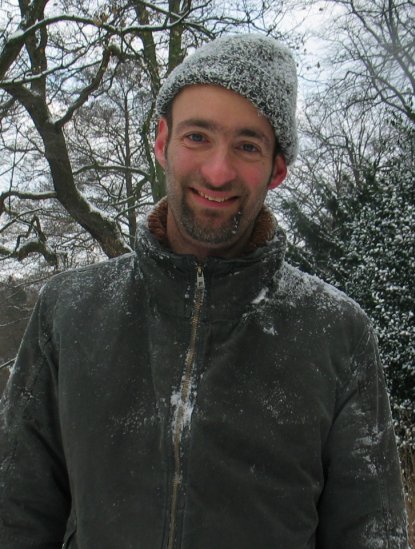
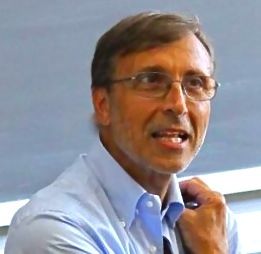
Claus Stadler is a researcher at the Business Information Systems department within the Institute of Computer Science at the University of Leipzig , affiliated with the Agile Knowledge Engineering and Semantic Web (AKSW) group since 2011. His work centers on Semantic Web technologies and data integration challenges. Specializes in RDB-RDF query rewriting/optimization and infrastructure for semantic knowledge bases. Contributor to key projects like LinkedGeoData (geospatial data integration) and Sparqlify (SPARQL-to-SQL rewriter). Research Focus : • Modeling spatial/temporal data for the Semantic Web • Scalable query rewriting using unsatisfiability testing • Update propagation in semantic knowledge graphs
Carsten Lutz is a Professor at the University of Leipzig, Faculty of Mathematics and Informatics, Institute of Informatics, where he leads the Department of Foundations of Knowledge Representation. He joined the university in April 2022 after previously holding positions at other institutions. His extensive service to the academic community includes numerous roles as Program Committee Chair, Area Chair, and Senior PC Member for major conferences in artificial intelligence, database theory, and knowledge representation. Professor Lutz's research focuses on the theoretical foundations of knowledge representation, with particular emphasis on description logics, ontology-mediated querying, and the intersection of database theory with artificial intelligence. His work bridges formal logic with practical applications in semantic technologies. His research has led to significant contributions in understanding the computational properties of knowledge representation formalisms and developing efficient query processing techniques. His recent publications demonstrate a continued focus on the theoretical aspects of knowledge representation, with increasing attention to connections with machine learning, particularly in areas like graph neural networks and PAC learning of logical concepts. The research trends show a consistent thread of applying logical methods to analyze and improve modern AI systems while maintaining strong theoretical foundations. Scientific Awards: Fellow of the Asia-Pacific Artificial Intelligence Association (AAIA) 2022 EurAI (formerly ECCAI) fellow 2016 IJCAI2023 distinguished paper award PODS2023 Best Paper Award PODS2023 Test of Time Award for PODS2013 paper on Ontology-Mediated Querying "AI Ten to Watch" award of IEEE Intelligent Systems Magazine Professor Lutz has been highly active in academic service, serving as PC Co-Chair for IJCAR2026, Area Chair for KR2025 and IJCAI2025, and PC Member for numerous prestigious conferences including ICDT2026, PODS2025, and DL2025. His commitment to reducing academic carbon footprint through reduced conference travel is noteworthy. He has also developed several software systems including Grind, Combo, and Spell that implement theoretical advances in ontology-mediated querying and concept learning.
Nicolas HIOT is a Post-doctoral fellow at the University of Orleans affiliated with the LIFO laboratory (Laboratoire d'Informatique Fondamentale d'Orléans) and the Pamda project. His research bridges database systems, natural language processing, and medical informatics with a focus on text-to-database integration and consistency maintenance. His research interests center on: Database Systems for medical applications with emphasis on consistency and evolution Natural Language Processing for clinical text analysis and relation extraction Knowledge Graph construction from unstructured textual data Medical Informatics applications for healthcare data management Analysis of his 15 most recent publications (2020-2024) reveals a cohesive research trajectory at the intersection of databases and NLP. Key thematic clusters include automated medical database construction from clinical texts, consistency management in evolving RDF/property graph systems, and clinical entity/relation extraction for knowledge graphs. His work consistently addresses real-world challenges in healthcare data integration through tools like DataFix and ArchiTXT, demonstrating strong translational potential. Nicolas HIOT actively contributes to the LIFO research laboratory at the University of Orleans, collaborating extensively with Jacques CHABIN, Mirian HALFELD-FERRARI, and Dominique LAURENT. His technical output includes multiple software systems for database evolution management and clinical text processing, reflecting both theoretical contributions and practical implementations in semantic data management.
Maurizio Lenzerini is a Full Professor at the Department of Computer, Control and Management Engineering Antonio Ruberti , Sapienza University of Rome. He is a leading international expert in Ontology-Based Data Management , Description Logics , and Data Integration , with foundational contributions to Semantic Web technologies and service composition. ACM Fellow (2009) AAAI Fellow (2021) Peter P. Chen Award (2022) ACM Recognition of Service Award (2008) His research spans Artificial Intelligence , Database Theory , and Service-Oriented Computing , focusing on inference mechanisms, query rewriting, and knowledge graph ecosystems. He has pioneered MASTRO , a tool for ontology-based data access, and led European projects in data interoperability. Recent publications highlight advancements in knowledge graph lifecycle management , semantic classifier explanations , and quality-aware data integration . As PODS 2024 Executive Committee Chair , he shapes database theory research agendas. Teaching includes courses on Databases , Data Management , and Logic in Computer Science , with materials on SQL, ER modeling, and relational algebra.
Prof. Dr.-Ing. Sebastian Esser serves as Group Lead for Information Management at the Chair of Computing in Civil and Building Engineering at Technical University of Munich. His research focuses on advancing Building Information Modeling (BIM) methodologies, particularly in infrastructure and railway applications. He contributes significantly to international standardization efforts including IFC-Road and IFC-Rail projects, and leads research initiatives such as RIMcomb and BauPuls360. Dr. Esser's research spans several critical areas in digital construction: Graph-based version control systems for BIM collaboration Digital twin development for infrastructure management Semantic modeling of built environments BIM-based regulation checking for railway infrastructure Interdisciplinary model coordination techniques Knowledge representation in civil engineering His work bridges theoretical computer science with practical civil engineering applications, focusing on improving data interoperability and workflow efficiency in construction projects. Analysis of his recent publications reveals a strong emphasis on graph-based approaches to BIM challenges. His research has evolved from foundational work on BIM programming interfaces to sophisticated implementations involving knowledge graphs, semantic reasoning, and digital twin architectures. Key trends include increasing integration of semantic web technologies with BIM standards, development of specialized query interfaces like GraphQL for construction data, and application of formal methods to infrastructure modeling problems. Dr. Esser actively supervises numerous bachelor's and master's theses annually, with recent topics covering graph-based entity alignment, BIM-GIS integration for flood assessment, incremental model updates, and digital twin implementations. His teaching portfolio includes courses such as Bau- und Umweltinformatik, BIM.fundamentals, BIM.infra, and Semantic Modeling of the Built World, demonstrating his commitment to educating the next generation of digital construction professionals. He is involved in multiple research initiatives including DFG FOR 5672 (The information backbone of robotized construction), SPP 2187 (Adaptive modularized constructions), and AM2PM (Additive to Predictive Manufacturing). His laboratory work spans the BIM-Lab and related computational infrastructure supporting his research in digital construction technologies.
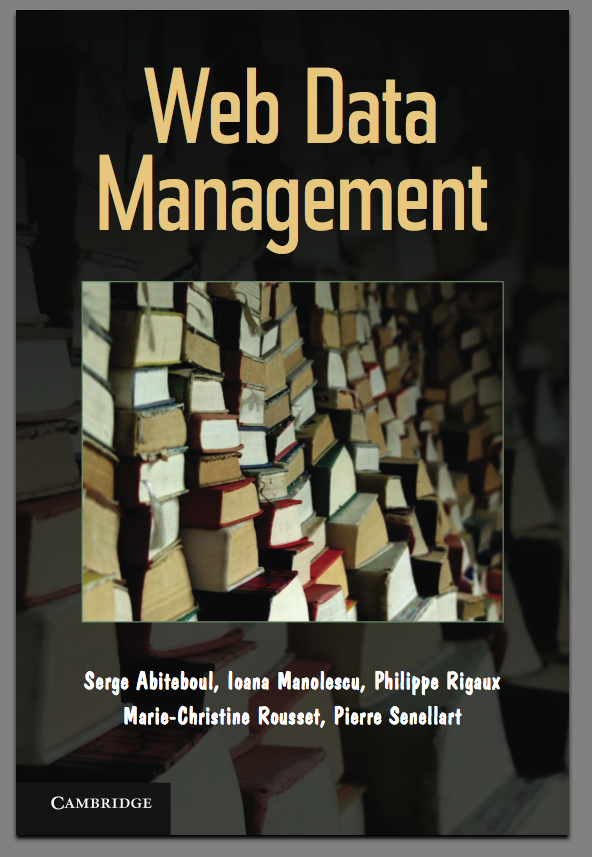
Marie-Christine ROUSSET is a Professor of Computer Science at the University of Grenoble Alpes (UGA) in France, where she is a member of the LIG (Laboratoire d'Informatique de Grenoble) in the SLIDE group. Previously affiliated with Paris-Saclay (LRI), she has established herself as a leading researcher in Knowledge Representation and Information Integration. She holds the distinguished position of Senior member of the Institut Universitaire de France (IUF) (2011-2016, renewed for 2016-2021) and serves as co-responsible for the chair Explainable and Responsible AI within MIAI Grenoble Alpes. Her research focuses on ontology-based data access, logic-based mediation between distributed data sources, query rewriting using views, data linkage, and distributed reasoning for the Semantic Web. She skillfully combines artificial intelligence and database techniques to address complex information integration challenges, with applications spanning biomedical informatics, educational technology, and trustworthy AI. Her work demonstrates consistent innovation from foundational research to practical implementations, as evidenced by her co-authorship of the book 'Web Data Management' published by Cambridge University Press. Professor ROUSSET's recent publications (2019-2022) reveal a growing emphasis on data privacy, RDF graph anonymization, and interactive ontology engineering, while maintaining her strong contributions to semantic web technologies and knowledge representation. Her research shows increasing attention to trustworthy AI concerns, aligning with her leadership roles in relevant projects. Scientific Recognition Senior member of Institut Universitaire de France (IUF) (2011-2016, renewed for 2016-2021) Junior member of Institut Universitaire de France (IUF) from 1997 to 2002 Chevalier de l'Ordre National du Merite (July 11, 2011) EurAI Fellow (nominated ECCAI Fellow in 2005) Best Paper Award at AAAI'96 for 'Verification of Knowledge Bases based on Containment Checking' Professor ROUSSET maintains an active role in the scientific community through editorial work and organizational leadership. She serves on the Editorial Board of Communications of the ACM (CACM) and has held significant roles including PC chair of EGC 2019, Workshops co-Chair of WWW 2018, and Area Chair of IJCAI 2017. Her consistent service on program committees of major international conferences demonstrates her standing in the field. Her laboratory, the SLIDE group within LIG, focuses on semantic web technologies, knowledge representation, and data integration. The group maintains strong connections with the international research community and participates in collaborative projects addressing cutting-edge challenges in artificial intelligence and data management, with particular emphasis on trustworthy and explainable AI systems.
Bartosz Zieliński is a Lecturer in the Department of Computer Science within the Faculty of Physics and Applied Computer Science at the University of Lodz. His academic work spans multiple disciplines including quantum computing, database systems, concurrency programming, and formal methods. He maintains an active research profile with numerous publications in prestigious journals and conferences. His research interests focus on the intersection of theoretical computer science and practical applications. Zieliński has made significant contributions to quantum geometry, particularly in noncommutative geometry and quantum spheres, while also exploring database theory through allegories and formal concept analysis. His work on concurrency programming, especially in Python, demonstrates practical applications of theoretical concepts in modern software development. Analysis of his publications reveals a strong pattern of interdisciplinary research connecting mathematics with computer science. His early work focused on quantum computing and noncommutative geometry, while more recent publications emphasize database systems, access control mechanisms, and programming language theory. This evolution shows a trajectory from pure mathematical research toward more applied computer science topics with practical security and database implications. Zieliński actively contributes to the academic community through publications in journals such as Journal of Noncommutative Geometry, Axioms, and various conference proceedings. His blog demonstrates engagement with practical programming topics, particularly concurrency in Python and Windows systems programming. As a faculty member, Zieliński teaches in the Department of Computer Science, with documented office hours on Tuesdays from 12:00-14:00. His technical blog showcases expertise in Python concurrency, Windows systems programming, and PowerShell scripting, indicating a strong practical component to his teaching approach alongside his theoretical research.