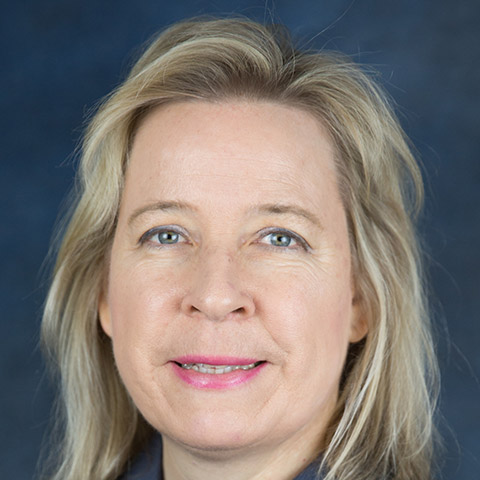
Tselil Schrammمشاهده پروفایل
استادیار
Tselil Schramm is an Assistant Professor in the Department of Statistics at Stanford University, with courtesy appointments in Computer Science and Mathematics. She is actively engaged in research and teaching in theoretical computer science and statistics. Department: Department of Statistics School: School of Humanities and Sciences University: Stanford University Office: CoDa E254 Email: tselil@stanford.edu She earned her PhD from UC Berkeley under Prasad Raghavendra and Satish Rao, followed by postdoctoral work at Harvard and MIT with Boaz Barak, Jon Kelner, Ankur Moitra, and Pablo Parrilo. Her research lies at the intersection of theoretical computer science and statistics, focusing on high-dimensional estimation, information-computation tradeoffs, sum-of-squares algorithms, and random graph theory. She develops algorithms for statistical problems and investigates the boundaries between what is statistically possible and what is computationally feasible. Her recent publications span topics including the overlap-gap property, discrepancy algorithms, robust message passing, semidefinite programming, spectral clustering, and random geometric graphs, appearing in top venues such as STOC, FOCS, COLT, NeurIPS, and The Annals of Statistics. She teaches a range of courses, including Introduction to Statistics (STATS 60), Theory of Statistics II (STATS 300B), and Machine Learning Theory (STATS 214 / CS 228M), reflecting her expertise in both foundational and advanced statistical theory. Runner-up for Best Paper at COLT 2021 Invited to STOC 2022 special issue of SICOMP Invited to SODA 2016 special issue of ACM Transactions on Algorithms Invited to CCC 2019 special issue of Theory of Computing Tselil Schramm advises and collaborates with numerous students and researchers, including Shuangping Li, Misha Ivkov, and Siqi Liu. She has been involved in multiple research grants and projects, particularly in the areas of high-dimensional inference and algorithmic robustness. Her work often bridges theoretical guarantees with practical algorithmic design. She is affiliated with Stanford’s theoretical computer science and statistics research groups, contributing to a vibrant academic environment. Her future work is expected to further explore the limits of efficient computation in statistical settings, with potential applications in machine learning, signal processing, and network analysis.