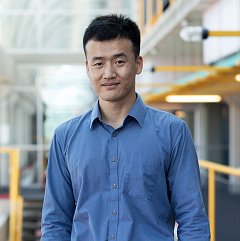
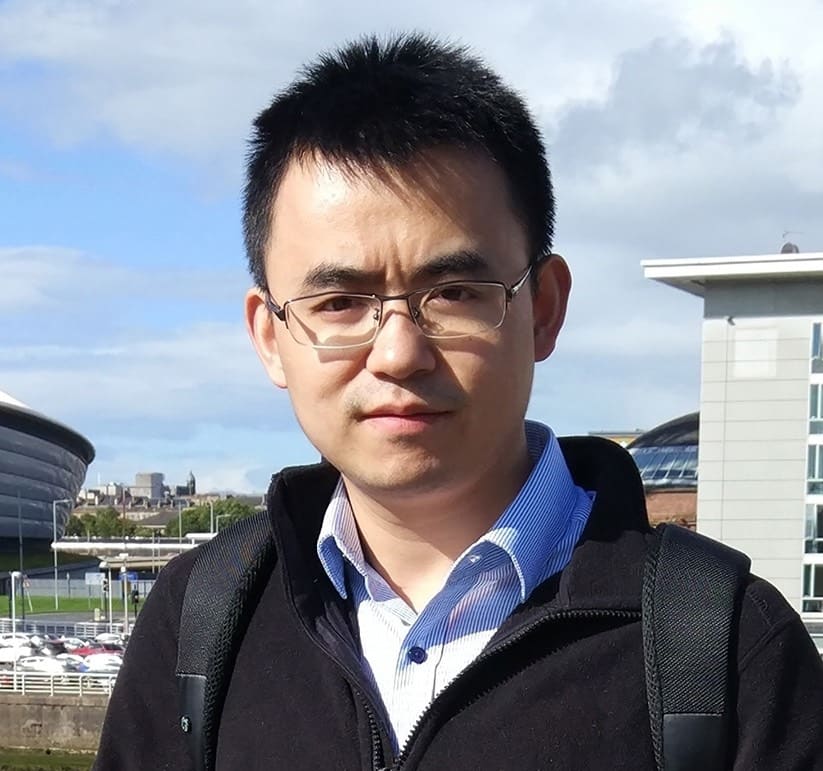
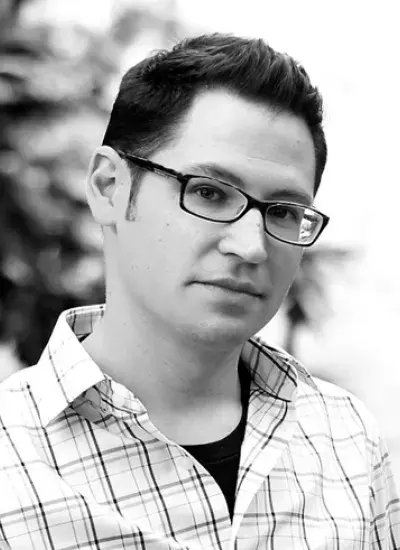
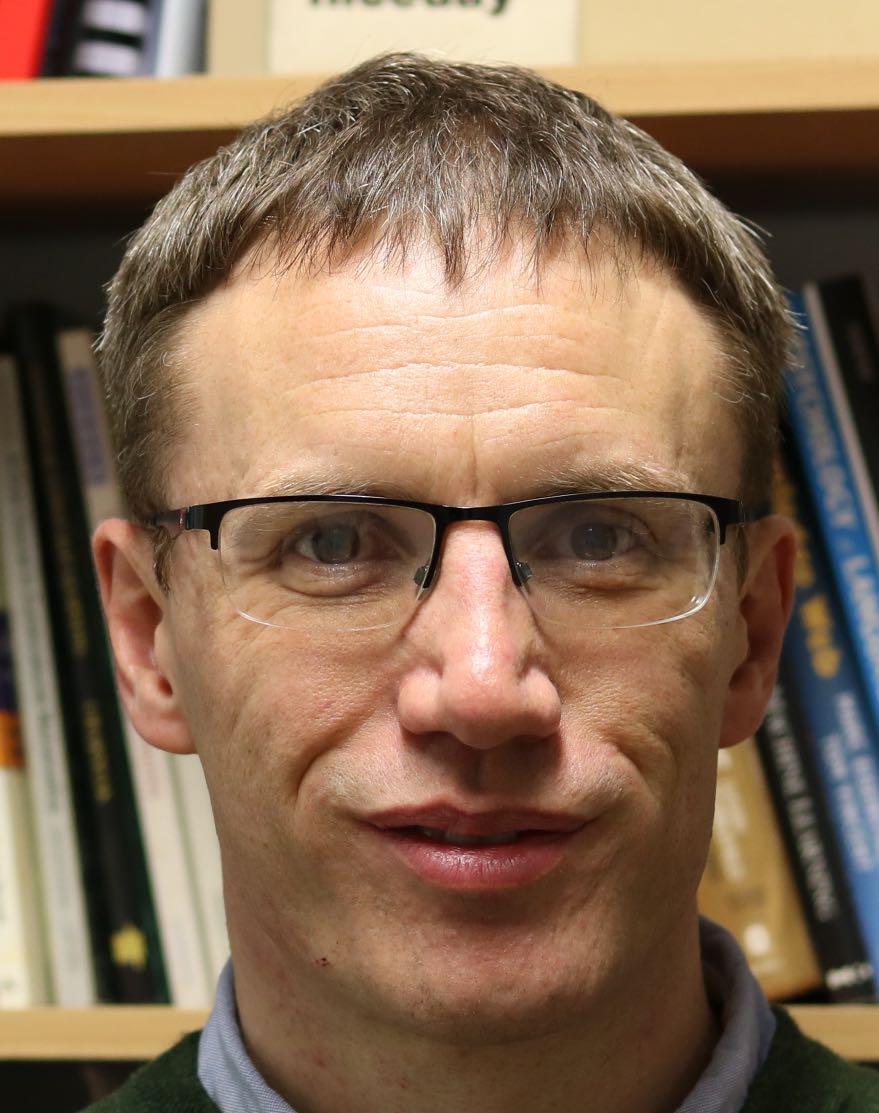
Chengnian Sun is an Associate Professor at the Cheriton School of Computer Science , University of Waterloo, Canada. His research focuses on software engineering and programming languages with an emphasis on software reliability and programming productivity. Education : Ph.D. in Computer Science from National University of Singapore (2013) His work spans compiler testing (EMI, Dfusor, Kitten), program reduction (Perses, Vulcan, PPR), Android testing, and DNN testing. He has received multiple grants including Google Research Scholar Program (2025) and NSERC Discovery Grants (2024-2029). His recent publications focus on LLM-based compiler testing, weighted delta debugging, and ransomware resilience. Scientific Awards : Most Influential Paper Award at SANER (2022) NUS Research Scholarship (2008-2012) ACM SIGSOFT Distinguished Paper Award at ASE (2012) IBM Cup Campus Innovation Contest First Prize (2005) He advises Ph.D. and MMath students in software engineering, compiler testing, and program analysis, including several who have contributed to top-tier conferences like ICSE, ISSTA, and ASPLOS. His service includes program committee roles in ICSE, OOPSLA, and ISSTA.
Yang Cao is a Lecturer at the School of Informatics , University of Edinburgh , and holds a RAEng Research Fellow position. His work focuses on Databases and Data Mining Foundations of Database Systems Data Management and Optimization Research Interests: Yang Cao's research spans multiple areas in database systems, including In-database machine learning explanations Vector database optimization Transaction scheduling and isolation Graph transaction frameworks Query optimization under constraints Graph computation vectorization Article Trends: Recent work emphasizes Integrating AI/ML with database systems Graph transaction models and isolation Query optimization for big data Data quality through pattern dependencies Cache consistency in transactional systems Scientific Awards: RAEng Research Fellow SIGMOD Research Highlight Award (2018) Best Paper Award at SIGMOD (2017) PhD Students: Current and former students include Ziying Chen (2025--) Beining Yang (2024--) Tianjian Yang (2024--) Shuai An (Associate Professor, Beijing Jiaotong University) Wenyue Zhao (Amazon, London) Wenzhi Fu (Research Associate, University of Edinburgh) Multiple PhD and postdoc positions are available.
Adam Perer is an Associate Professor at Carnegie Mellon University, where he is a member of the Human-Computer Interaction Institute within the School of Computer Science. He serves as Co-Director of the Data Interaction Group and holds leadership positions as Area Papers Chair at IEEE VIS and Visualization Subcommittee Papers Chair at ACM CHI. Previously, he worked as a Research Scientist at IBM Research. Ph.D. in Computer Science from the University of Maryland, College Park Perer's research integrates data visualization and machine learning techniques to create visual interactive systems that help users make sense of big data. His work focuses on human-centered data science, extracting insights from clinical data to support data-driven medicine, and facilitating human-AI collaboration. He investigates how people engage with and make decisions using data, designing new interfaces to interact with complex information while assisting impactful domains drowning in data. His recent publications reveal a strong trend toward healthcare applications of AI and visualization, particularly in clinical decision support and overdose prevention. There's also a significant focus on explainable AI (XAI), with multiple papers examining how imperfect explanations affect human-AI collaboration and decision-making in critical contexts like healthcare. His work consistently bridges visualization theory with practical applications in high-stakes domains. Best Paper Honorable Mention for 'Dead or Alive: Continuous Data Profiling for Interactive Data Science' (VIS 2023) Best Paper for 'Neo: Generalizing Confusion Matrix Visualization' (CHI 2022) Most Reproducible Paper Award for 'SQLShare' (SIGMOD 2016) Perer actively mentors students across all levels, with PhD students focusing on human-AI collaboration in healthcare settings, visualization techniques, and clinical decision support systems. His lab receives funding for projects related to human-centered AI, data visualization in healthcare, and explainable machine learning systems. The Data Interaction Group, which he co-directs, focuses on empowering everyone to analyze and communicate data through interactive systems. His research has been supported by collaborations with medical institutions and appears in premier venues for visualization, human-computer interaction, and medical informatics. Current projects include Eye into AI (improving XAI interpretability), Predicting and Visualizing Overdose Risk, and AI applications in intensive care units.
Jarno Alanko is a Postdoctoral Researcher at the University of Helsinki within the Department of Computer Science . Specializing in algorithmic bioinformatics and computational genomics, he is affiliated with the Genome-scale Algorithmics research group led by Professor Veli Mäkinen. Research Interests: Bioinformatics algorithms String processing Genomic data structures Graph-based sequence representation Metagenomic analysis Space-efficient computing Notable Research Contributions: His work focuses on optimizing k-mer-based analyses through novel data structures like Finimizers and Eulertigs, improving sequence alignment efficiency, and developing graph indexing methods beyond Wheeler graphs. Recent publications in IEEE/ACM Transactions on Computational Biology and Bioinformatics and Algorithmica highlight his contributions. External Collaborations: Alanko has collaborated with institutions such as the Max Planck Institute for Molecular Cell Biology and Genetics during his 2017 academic visit. Contact: jarno.alanko@helsinki.fi | ORCID: 0000-0002-8003-9225
Professor Torben Bach Pedersen at Aalborg University's Department of Computer Science within The Technical Faculty of IT and Design is a leading expert in Data Engineering, Artificial Intelligence, and Energy Systems. With over 394 publications and 19 completed projects, he directs research at the Daisy – Center for Data-intensive Systems and leads innovations in energy flexibility and smart grid technologies. Key research areas: Data Warehousing, AI/ML, Energy Systems, Smart Grids Major projects: domOS (Smart Building OS), FEVER (Virtual Power Plants), DiCyPS (Cyber-Physical Systems) His research spans data-intensive systems, AI applications in energy management, and smart infrastructure development. Recent work focuses on transformer-based network AI and energy flexibility metrics. Scientific recognition includes: Æresdoktor (Honorary Doctor) at TU Dresden (2021) Best Paper Award Runner-Up (2019) WWW 2017 Best Demo Award Best Poster Award World Smart Grid Forum (2013) Member of Danish Academy of Technical Sciences (2013) As principal investigator and supervisor in 17 PhD projects, he advances AI-driven solutions for 6G wireless systems, smart buildings, and energy market optimization.
Mark Stevenson is a Senior Lecturer in the School of Computer Science at the University of Sheffield, UK. He leads undergraduate programs and serves as a key member of the Natural Language Processing research group , focusing on knowledge extraction from text and user information access solutions. Research Interests : Natural Language Processing Information Retrieval Machine Learning Biomedical Text Disambiguation Lexical Semantics Exploratory Search Systems Scientific Awards : EPSRC Advanced Research Fellowship (2006-2011) Best Paper Award at CLEF 2004 Grants & Projects : He has secured significant funding including the EU FP7 PATHS project (£709,407), EPSRC grants for biomedical disambiguation (£239,920) and Lexical Adaptation (£30,000), and NIHR funding for public health research access systems.
Dr. Procheta Sen is a Lecturer in Computer Science at the University of Liverpool's Faculty of Science and Engineering, Department of Computer Science, where she joined in 2022 as part of the Natural Language Processing research group. Her work focuses on developing transparent, fair, and accessible AI language models through explainability research. She earned her PhD from Dublin City University, Ireland (2021) under supervisor Gareth J.F. Jones, with affiliation at ADAPT Centre Ireland. Prior to Liverpool, she conducted postdoctoral research with Emine Yilmaz in University College London's Web Intelligence Group. Dr. Sen's research spans three explainability categories: post-hoc methods (feature attribution, counterfactuals), mechanistic interpretability (neural network circuit mapping), and intrinsic interpretability (human-readable model design). She targets diverse end-users including clinicians, legal experts, and laypersons, with applications in bias mitigation and socially responsible AI systems. Her work bridges Natural Language Processing, Machine Learning, and Information Retrieval to address real-world challenges in transparency and equity. Analysis of her 2023-2025 publications reveals dominant trends in LLM bias analysis, legal document processing, and adaptive conversational systems. Key themes include mechanistic interpretability for bias detection, retrieval-augmented generation for dialogue systems, and multilingual knowledge extraction—demonstrating consistent focus on making AI both technically robust and socially beneficial across domains like law and finance. Dr. Sen actively advises PhD student Lingfang Li (AAAI 2025 accepted work) and emphasizes compassionate talent development. Her open-source research has been deployed in legal sector applications, and she organizes the annual NLP for Social Good symposium fostering interdisciplinary collaboration for responsible AI. She leads initiatives including the 2025 virtual NLP for Social Good Symposium and collaborates with institutions like Nokia Bell Labs Cambridge, maintaining active research momentum in transparent AI systems.
Dr Nikhil Mande is a researcher at the University of Liverpool's Department of Computer Science within the School of Electrical Engineering, Electronic and Computer Science. His work bridges quantum computing and classical complexity theory, with a focus on decision trees, communication complexity, and Fourier-sparse Boolean functions. His research includes groundbreaking work in quantum query complexity and communication complexity, supported by a Royal Society grant (2024-2026) titled "Power of Knowledge in Explorable Uncertainty." He has developed novel frameworks for comparing quantum and classical algorithms and analyzing complexity lower bounds. Key research outputs include studies on quantum sabotage complexity (2024), parity decision trees (2024), and randomized vs deterministic decision tree size (2023). His theoretical work challenges established conjectures, such as the Log-Approximate-Rank Conjecture (2020). He co-authored publications in venues like Quantum journal and LIPIcs conference proceedings. Scientific awards include: Royal Society Grant (2024-2026)
Ruzica Piskac is a Professor of Computer Science at Yale University, where she leads the Rigorous Software Engineering (ROSE) group. She has made significant contributions to the fields of software verification, security, automated reasoning, and code synthesis, focusing on improving software reliability and trustworthiness through formal techniques. Dr. Piskac received her PhD from the Swiss Federal Institute of Technology (EPFL) in 2011, where her dissertation won the Patrick Denantes Prize. Prior to joining Yale, she led an independent research group at the Max Planck Institute for Software Systems in Germany (2012-2013). Her research spans several key areas: symbolic execution for Haskell (G2), privacy-preserving formal methods (PPFM), functional reactive synthesis, verification of configuration files, and analysis of software updates. Her work consistently bridges theoretical formal methods with practical applications in real-world systems. Dr. Piskac's recent publications demonstrate a strong trend toward applying formal verification techniques to emerging challenges including large language models, quantum computing security, legal accountability of automated systems, and cyber-physical systems. Her research increasingly intersects with AI, cryptography, and legal domains while maintaining strong foundations in formal methods. Her scientific achievements have been recognized with numerous prestigious awards: Multiple Amazon Research Awards Yale University's Ackerman Award for Teaching and Mentoring Facebook Communications and Networking Award Microsoft Research Award for the Software Engineering Innovation Foundation (SEIF) Patrick Denantes Prize for her PhD dissertation Dr. Piskac has graduated five PhD students, four of whom have gone on to become assistant professors of computer science. She has served as Program Chair of the 37th International Conference on Computer Aided Verification and is on the Steering Committee of the Formal Methods in Computer-Aided Design conference. She leads the Rigorous Software Engineering (ROSE) group at Yale, which focuses on several key projects including: Symbolic Execution Engine for Haskell (G2) Privacy Preserving Formal Methods (PPFM) Functional Reactive Synthesis Verifications for Configuration Files Analysis of Software Updates and Configuration Files
Wei Liu is an Associate Professor in Machine Learning and Director of the Future Intelligence Research Lab at the University of Technology Sydney's School of Computer Science. He holds a PhD in Machine Learning from the University of Sydney and maintains active roles as a senior IEEE member and area chair for top AI conferences including KDD, AAAI, and ICDM. Education: PhD in Machine Learning, University of Sydney His research focuses on adversarial machine learning, generative AI, cybersecurity, and multimodal learning, with particular emphasis on AI security, robustness of algorithms, and model fairness. Liu's work addresses critical challenges in developing next-generation AI systems that can withstand cyber attacks while maintaining performance with multi-modal data and balanced outcomes despite data imbalances. Analysis of his recent publications reveals a strong trend toward securing large language models against novel attack vectors while advancing multimodal learning techniques. His work spans both theoretical contributions in adversarial frameworks and practical applications in cybersecurity, transportation, and industrial systems. Scientific Awards: 3 Best Paper Awards Most Influential Paper Award at PAKDD Nominee for NSW Premier's Prizes for Early Career Researcher (2017) Liu actively supervises numerous PhD students working on adversarial attacks, robust AI models, and agricultural applications. He has secured substantial funding including ARC Discovery Projects, government grants, and industry partnerships with organizations including Agriwebb, CSIRO Data61, and AVEVA. His Future Intelligence Research Lab specifically targets three emerging challenges: AI security against cyber attacks, robustness with multi-modal data, and model fairness with imbalanced datasets. The Future Intelligence Research Lab produces next-generation AI algorithms addressing AI security vulnerabilities, multi-modal robustness challenges, and fairness issues in real-world deployment scenarios, with multiple representative papers demonstrating practical applications in each domain.
Zsolt J. Nagykaldi, PhD , is a Professor in the Department of Family and Preventive Medicine at the University of Oklahoma Health Sciences Center. He serves as Director of Research at the OU Family Medicine Center, Associate Director of Community-Engaged Research, and Associate Director of the Oklahoma Primary Healthcare Improvement Collaborative. His work bridges practice-based research networks (PBRNs), health information technology, and patient-centered outcomes, with a focus on preventive medicine and chronic disease management. University: University of Oklahoma Health Sciences Center Department: Family and Preventive Medicine Academic Rank: Professor Research Interests : Nagykaldi's research spans Practice-Based Research Networks (PBRNs), health IT, telemedicine, and preventive care. Recent projects include mHealth interventions for diabetes, lung cancer screening in tribal communities, and opioid slang detection via social media analytics. His work emphasizes community-academia partnerships and evidence-based quality improvement. Scientific Trends : Articles from 2025–2023 highlight innovations in patient-centered care, including chronic pain management, mHealth for diabetes, and tribal lung cancer screening. Methodologies range from stepped-wedge trials to social media NLP, reflecting interdisciplinary engagement with public health and behavioral science. Grants & Collaborations : He led a PCORI-funded project on patient-directed queries networks and collaborated on NIH/IDeA infrastructure grants. His partnerships with the Oklahoma Primary Care Research Network (OKPRN), tribal clinics, and community organizations underscore his commitment to practice transformation.
Amine Mhedhbi is an Assistant Professor at Polytechnique Montréal in the Department of Computer Engineering and Software Engineering. He is affiliated with the Institute for Data Valorization (IVADO) and the Software Engineering for Machine Learning Applications (SEMLA) group. His research focuses on data management systems, particularly graph-structured databases, multimodal data engineering, and AI-driven query optimization. Ph.D. in Computer Science from University of Waterloo Former technical advisor to enterprise companies Prior applied research leadership at Distyl AI and internships at Microsoft Research His recent work explores integrating large language models (LLMs) into database systems, optimizing SQL generation, and advancing graph database architectures. Key projects include GraphflowDB and FlockMTL , addressing scalability and declarative semantic applications. Scientific awards include: NSERC Discovery Grant with Discovery Launch Supplement (2025) Cheriton School Distinguished Dissertation Award (2024) Microsoft Research Ph.D. Fellowship (2020) VLDB Best Paper Award (2018) He supervises graduate students in database systems and machine learning applications and serves on program committees for top-tier conferences like VLDB and SIGMOD.
Mahanth Gowda is an Associate Professor in the Department of Computer Science and Engineering, leading a prolific research program at the intersection of mobile systems, wireless sensing, and human-computer interaction. His work has been continuously funded by the U.S. National Science Foundation since 2019, serving as Principal Investigator on four awards and Co-PI on two others, collectively spanning edge computing for XR, sign-language recognition, next-generation wireless networking, and healthcare-oriented wearables. Research Interests Millimetre-wave and ultra-wideband sensing for 3-D finger motion tracking and speech eavesdropping Edge-IoT platforms for real-time sign-language recognition and translation Neural-augmented game streaming and super-resolution on commodity mobile devices Open-source wearable systems for sports analytics and rehabilitative healthcare Security and privacy implications of motion sensors in smartphones and IoT devices Over the past five years his publication trajectory has concentrated on leveraging emerging radio modalities—especially millimetre-wave radar, Wi-Fi, and UWB—to extract fine-grained human-centric information such as finger gestures, facial micro-motions, and spoken content. A complementary thread develops edge-native machine-learning frameworks that push intelligence to resource-constrained devices, enabling immersive AR/VR experiences and assistive technologies for the Deaf and hard-of-hearing communities. Grants & Projects CAREER: Sign-to-Speech – NSF, $500k, 2021-2026; Edge-IoT platform for real-time ASL recognition. SHF: Medium: Next-Gen XR Edge Platform – NSF, $1.2M, 2022-2025; Co-PI with Das, Sivasubramaniam, Kandemir. CNS Core: IoTScope – NSF, $450k, 2020-2025; Sensing physical materials via low-cost IoT radios. CNS Core: Medium: ML-driven Next-G Wireless – NSF, $800k, 2020-2024; Co-PI with Yang and Mahdavi. I-Corps: Smart Ring for Healthcare Analytics – NSF, $50k, 2023-2025; Commercialization of finger-motion wearables. Labs & Teams Gowda directs a research group that operates at the confluence of wireless networking, embedded systems, and applied machine learning. The lab maintains active collaborations with faculty in computer architecture, augmented reality, and accessibility studies, and routinely mentors graduate researchers whose work appears in top-tier venues such as ACM MobiCom, IEEE INFOCOM, ISCA, and ACM IoTDI.
Prof. Tegawendé F. Bissyandé is a Chief Scientist in the Professor category at the Interdisciplinary Centre for Security, Reliability and Trust (SnT) at the University of Luxembourg. He holds the prestigious position of ERC Fellow and serves as Principal Investigator of the NATURAL project focused on Artificial Intelligence for Program Repair. His research spans software engineering, cybersecurity, and artificial intelligence, with particular emphasis on applying machine learning techniques to software development and security challenges. Dr. Bissyandé's research interests include: Software Debugging (especially bug localization and program repair) Software Security (especially malware detection and analysis) Code Search (both free-form and semantic code-to-code) Machine Learning and Natural Language Processing for software engineering Cyber-security applications in mobile and cloud environments His recent work demonstrates a strong focus on leveraging Large Language Models (LLMs) for various software engineering tasks. Analysis of his 15 most recent publications reveals several key trends: extensive application of LLMs to program repair and code generation; innovative approaches to Android security and malware detection; development of novel techniques for code search and understanding; and exploration of the intersection between natural language processing and software engineering. His research increasingly bridges theoretical software engineering with practical applications in mobile security and developer productivity tools, with a significant portion of his work focusing on Android ecosystem security and program repair technologies. Dr. Bissyandé has received numerous prestigious awards throughout his career: APSEC Best ERA Paper Award (2018) for 'LSRepair: Live Search of Fix Ingredients for Automated Program Repair' IPSJ SIG SE Excellent Research Award (2018) for 'FaCOY: a Code-to-Code Search Engine' FOSS Impact Paper Award (2018) for 'Characterizing Deprecated Android APIs' SANER Best ERA Paper Award (2016) for 'Parameter Values of Android APIs: A Preliminary Study on 100,000 Apps' ASE Best Paper Award (2012) for 'Diagnosys: automatic generation of a debugging interface to the Linux kernel' As an active member of the software engineering research community, Dr. Bissyandé serves on program committees for major conferences including ICSE, ASE, and ISSTA, and has been an Area Chair for ICSE 2024. His industry partnerships include significant collaborations with BGL BNP Paribas (since January 2019), Luxembourg Stock Exchange (since January 2018), and Paul Wurth (January 2015 to 2018), demonstrating the practical impact of his research. He leads the SerVAL lab at SnT, which focuses on software validation and analysis, with particular expertise in mobile security and program repair technologies, and actively mentors PhD candidates through FNR research grants.
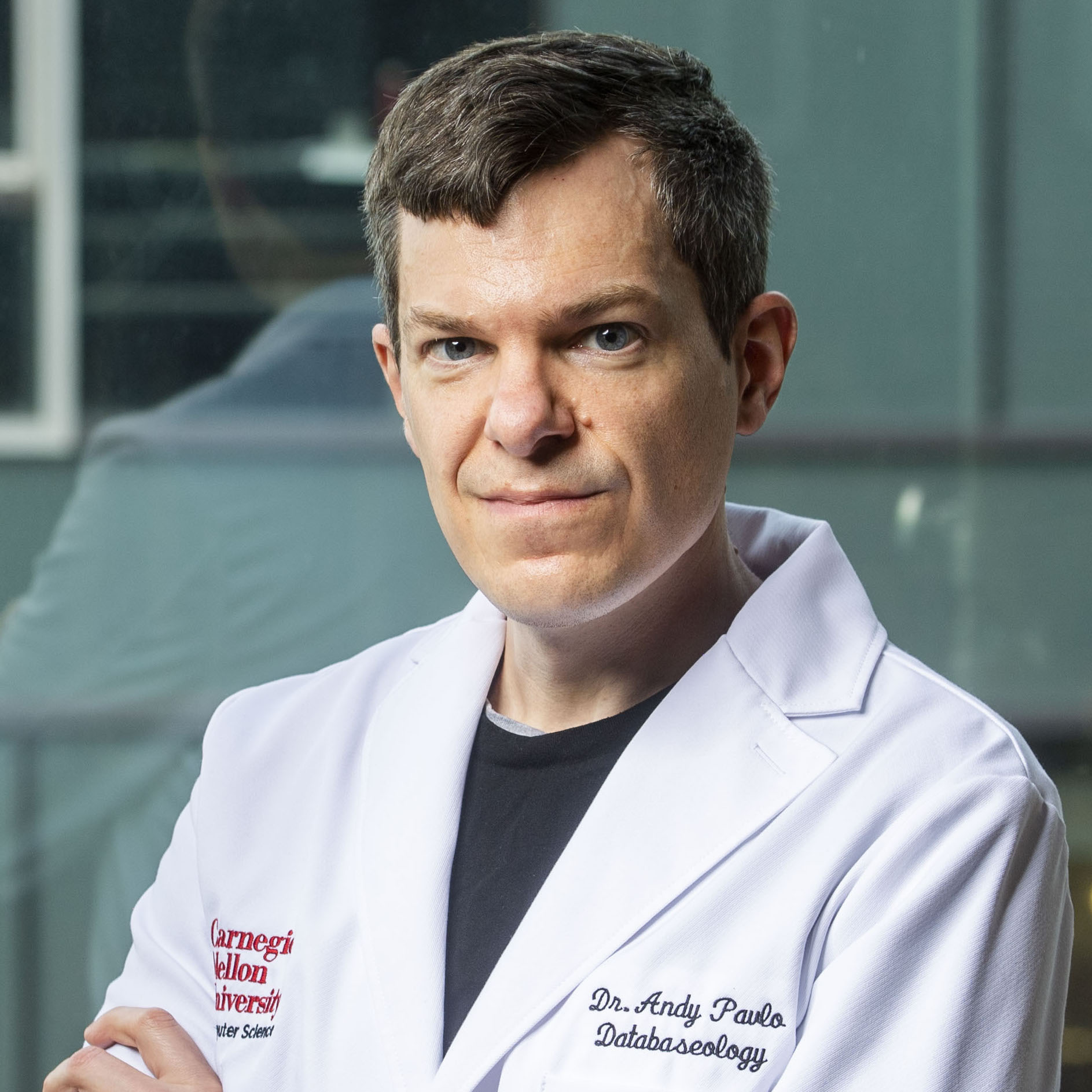
Andrew Pavlo is an Associate Professor of Databaseology in the Computer Science Department at Carnegie Mellon University , part of the School of Computer Science . His research focuses on database systems, particularly self-driving architectures, transaction processing, and large-scale analytics. He is a member of the CMU Database Group and Parallel Data Laboratory. His awards include the NSF CAREER (2019), Sloan Fellowship (2018), and ACM SIGMOD Jim Gray Dissertation Award (2014). He co-founded OtterTune, a database tuning startup, though it later ceased operations. Current research interests emphasize autonomous database systems, query optimization, and distributed computing. Recent publications (2024) highlight work on self-driving DBMS, null representation in columnar formats, and UDF optimization techniques. Awards: NSF CAREER Award (2019) Sloan Fellowship (2018) ACM SIGMOD Jim Gray Dissertation Award (2014) Advising: Mentors students in database systems, including Sam Arch, Wan Shen Lim, and William Zhang. Labs/Teams: Leads the Database Group and collaborates with the Parallel Data Laboratory.