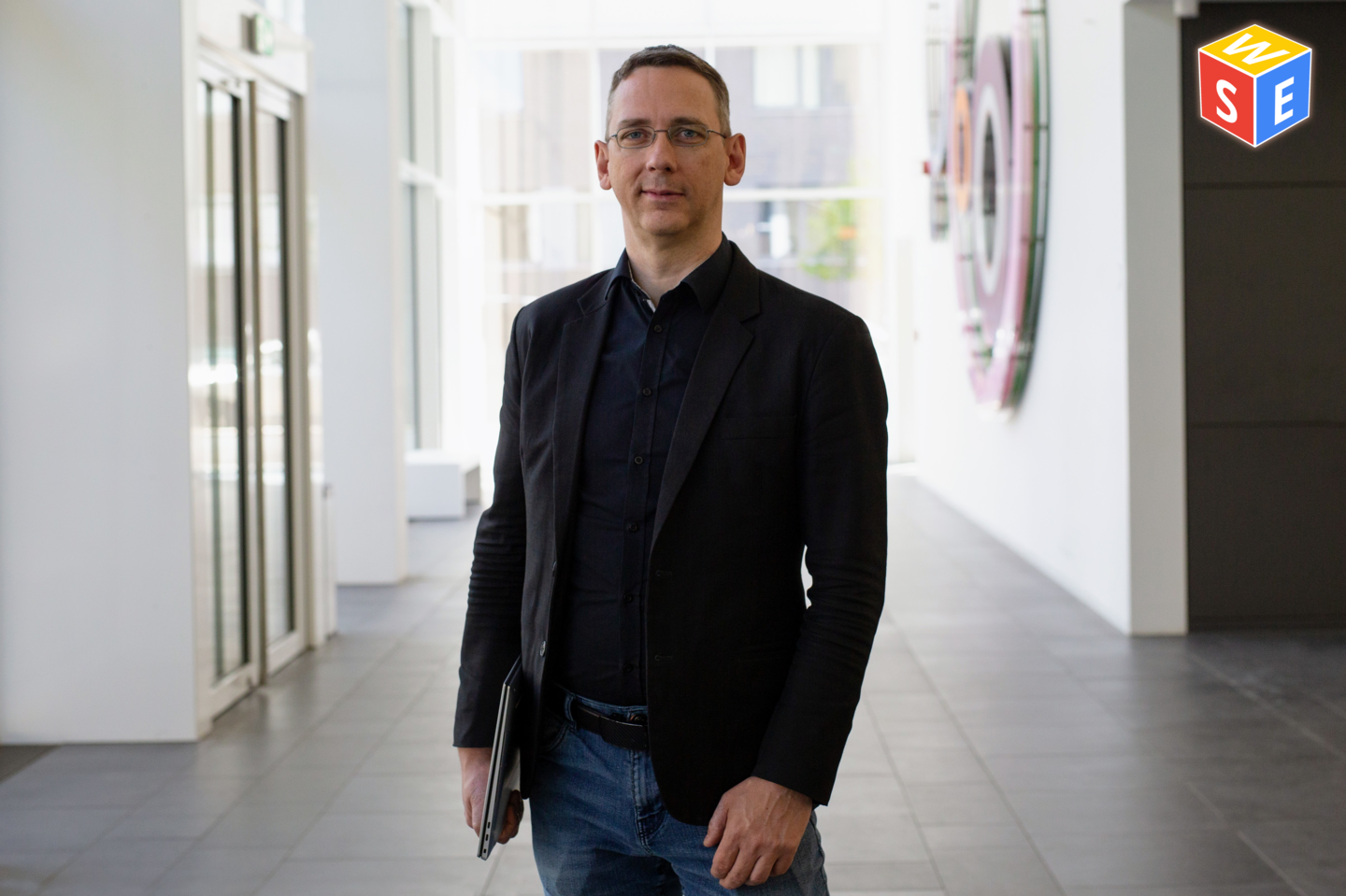
Carsten Lutz is a Professor at the University of Leipzig, Faculty of Mathematics and Informatics, Institute of Informatics, where he leads the Department of Foundations of Knowledge Representation. He joined the university in April 2022 after previously holding positions at other institutions. His extensive service to the academic community includes numerous roles as Program Committee Chair, Area Chair, and Senior PC Member for major conferences in artificial intelligence, database theory, and knowledge representation. Professor Lutz's research focuses on the theoretical foundations of knowledge representation, with particular emphasis on description logics, ontology-mediated querying, and the intersection of database theory with artificial intelligence. His work bridges formal logic with practical applications in semantic technologies. His research has led to significant contributions in understanding the computational properties of knowledge representation formalisms and developing efficient query processing techniques. His recent publications demonstrate a continued focus on the theoretical aspects of knowledge representation, with increasing attention to connections with machine learning, particularly in areas like graph neural networks and PAC learning of logical concepts. The research trends show a consistent thread of applying logical methods to analyze and improve modern AI systems while maintaining strong theoretical foundations. Scientific Awards: Fellow of the Asia-Pacific Artificial Intelligence Association (AAIA) 2022 EurAI (formerly ECCAI) fellow 2016 IJCAI2023 distinguished paper award PODS2023 Best Paper Award PODS2023 Test of Time Award for PODS2013 paper on Ontology-Mediated Querying "AI Ten to Watch" award of IEEE Intelligent Systems Magazine Professor Lutz has been highly active in academic service, serving as PC Co-Chair for IJCAR2026, Area Chair for KR2025 and IJCAI2025, and PC Member for numerous prestigious conferences including ICDT2026, PODS2025, and DL2025. His commitment to reducing academic carbon footprint through reduced conference travel is noteworthy. He has also developed several software systems including Grind, Combo, and Spell that implement theoretical advances in ontology-mediated querying and concept learning.