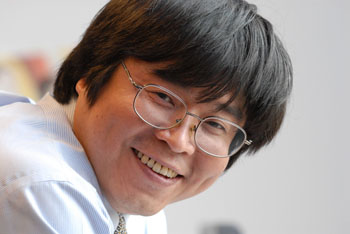
Professor Wenfei Fan is a Chair of Web Data Management at the University of Edinburgh since 2006. He holds adjunct roles at Huawei Edinburgh Research Laboratory and the International Research Center on Big Data at Beihang University. His research focuses on database systems, theory, big data, data quality, and constraint applications. He is a Fellow of the ACM and Royal Society of Edinburgh, and recipient of the ERC Advanced Grant (2015). His work includes foundational contributions to XML constraints, data quality management, and graph databases, with over 160 top-tier publications and 8 patents. Education: BSc and MSc from Peking University (1985, 1988); PhD from the University of Pennsylvania (1999). Professional Roles: Editor for TODS, TCS, VLDBJ, and TBD; PC Chair for PODS, CIKM, APWeb, and others. Key awards include the Roger Needham Award (2008), Yangtze River Scholar (2007), and multiple best paper awards at SIGMOD, PODS, VLDB, and ICDE. He has led over 15 grants totaling €6M and advised students who all received top conference awards. His labs and initiatives drive industry collaboration, with deployed solutions at Huawei for big data query optimization.
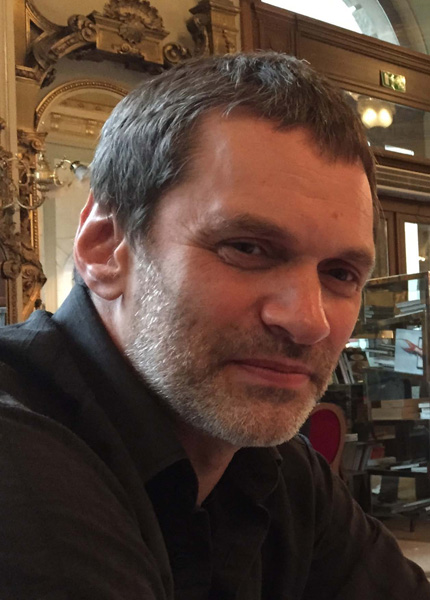
Tomasz Miksa is a researcher affiliated with TU Wien's Department of Research Data Management, focusing on machine-actionable data management plans (maDMPs), semantic web technologies, and data reproducibility. He collaborates extensively on projects involving automated assessment of data management workflows, FAIR data implementation, and privacy-preserving analysis platforms. Primary affiliation: TU Wien Department: Research Data Management Key projects: WellFort, FAIR Data Austria, openEO API His research integrates semantic technologies with data governance to enhance reproducibility in scientific workflows, particularly in domains like environmental monitoring and legal informatics. Recent publications emphasize ontological frameworks (DCSO), API harmonization, and auditable machine learning systems. Notable collaborative works include: Reproducibility standards for soil moisture data Knowledge graph applications in cyber-physical energy systems Dynamic data citation mechanisms He supervises students in theses related to maDMP integration, data citation frameworks, and institutional research data planning architectures.
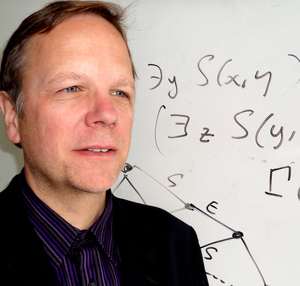
Reinhard Pichler is a Full Professor at the Vienna University of Technology (TU Wien), affiliated with the Faculty of Informatics and the Department of Databases and Artificial Intelligence . His research focuses on Database Theory , Computational Logic , and Parameterized Complexity . He leads multiple research projects like DeConquer (2023–2027) and HyperTrac (2018–2022), addressing challenges in query optimization and hypergraph decompositions. He holds the prestigious START Prize (2014–2022) for young researchers. His work spans theoretical foundations (e.g., hypertree decompositions) and practical applications (e.g., SPARQL query processing systems like SparqLog). He contributes to academic governance, serving on faculty councils and curriculum commissions. His research innovations bridge algorithmic theory and real-world database systems, emphasizing efficient query evaluation and tractability analysis. Key contributions include advancing fractional hypertree decompositions , SPARQL query optimization , and consistent query answering . His projects often involve collaborations with industry and international funders like the Austrian Science Fund (FWF) and Vienna Science and Technology Fund (WWTF). He actively publishes in top venues like Journal of the ACM , ACM Transactions on Database Systems , and Proceedings of the VLDB Endowment . His academic leadership extends to course design, teaching advanced topics like Complexity Theory and Theoretical Computer Science . He mentors doctoral students and oversees research teams exploring cutting-edge areas like uncertain databases and cloud-based computational social choice .
Frank van Harmelen is a full professor at the Vrije Universiteit Amsterdam and scientific director of The Network Institute. He specializes in Artificial Intelligence, Knowledge Representation, and the Semantic Web. His research includes foundational contributions to OWL, Sesame, and large-scale reasoning engines. He holds a PhD from the University of Edinburgh (1989) and has been recognized with awards like the 10-Year Impact Award (2012). Research interests span symbolic knowledge representation, large knowledge bases, and medical guideline formalization. Notable projects include the EU-funded Large Knowledge Collider and the formalization of Dutch breast-cancer guidelines using dynamic temporal logic. Awards: Distinguished Lecturer (2003), Keur der Wetenschap (2005), European AI Society Fellow (2007), and Most Cited Article Award (2011). Advising includes student Jacopo Urbani, co-author of prize-winning work. His work integrates theorem-proving with medical applications and semantic web infrastructure.
Leonid Libkin is a Professor and Chair of Foundations of Data Management at the University of Edinburgh , affiliated with the School of Informatics and the Laboratory for Foundations of Computer Science (LFCS) . Since 2006, he has been leading research and teaching in data management, database theory, and logic in computer science. Education and Career: 2006–present: Professor and Chair of Foundations of Data Management, University of Edinburgh 2004–2006: Full Professor, University of Toronto 2001–2004: Associate Professor, University of Toronto 1999–2000: Visiting Researcher, INRIA-Rocquencourt 1994–2001: Member of Research Staff, Bell Laboratories, Murray Hill Research Interests: Libkin's research spans databases, logic in computer science, and finite model theory. His work includes query languages for relational and graph databases, data integration, constraints, incomplete data, automata theory, and applications of logic in computer science. He has also contributed to lattice theory and programming semantics. Awards and Honors: Royal Society Wolfson Research Merit Award (2016) Member of Academia Europaea (2015) Fellow of the ACM (2012) Fellow of the Royal Society of Edinburgh (2012) Marie Curie Chair, EU FP6 (2006) Premier's Research Excellence Award, Ontario (2001) Five best paper awards from top-tier conferences (KR, ICDT, PODS) Books and Publications: Libkin is the author of several influential books including Elements of Finite Model Theory , Principles of Databases , and others on database theory and logic. His extensive publication record includes foundational papers in database theory and logic in computer science.
Shqiponja Ahmetaj is an Assistant Professor in the Department of Knowledge-Based Systems at the Faculty of Informatics, TU Wien. She specializes in semantic web technologies, knowledge representation, and graph data management. Her research focuses on SHACL validation, ontology integration, and formal methods for constraint satisfaction in graph databases. Education: PhD in Computer Science, TU Wien (2019): 'Rewriting approaches for ontology-mediated query answering.' MSc in Computer Science, TU Wien (2013): 'Planning in graph databases under description logic constraints.' Roles: Course instructor for 'Introduction to Artificial Intelligence,' 'Knowledge-based Systems,' and 'Semantic Technologies.' Principal investigator in projects like FRESH (2021–2026) and SEE (2012–2016). Research Interests: Her work addresses challenges in semantic web validation, ontology semantics, and graph data evolution. She develops formal methods for SHACL constraint validation, explanation generation for non-validation, and repair algorithms. Her contributions bridge the gap between semantic web standards and practical database systems. Her recent publications focus on SHACL validation of evolving graphs , ontology-ontology interoperability , and consistent query answering under constraints . Projects like FRESH emphasize theoretical and applied aspects of SHACL in knowledge graphs. Grants & Projects: FRESH (FWF, 2021–2026): 'Shapes in Graph Data: Theory and Implementation.' SEE (WWTF, 2012–2016): 'SPARQL Evaluation and Extensions.' Advising: Supervised theses such as 'SHACL validation of evolving RDF graphs' (2023) and 'A metaheuristic approach to crowdsourced package delivery' (2023). Labs/Teams: Active in TU Wien's research groups on semantic technologies and knowledge representation, collaborating with international institutions on projects like OMEGA and KtoAPP.
Matthias Paul Lanzinger is an Assistant Professor at the Technische Universität Wien's Faculty of Informatics, Department of Database and Artificial Intelligence. His research focuses on algorithms, graph neural networks, hypergraph decomposition techniques, parameterized complexity, and computational logic. He leads projects like 'DeConquer' (Vienna Science Fund) and 'HyperTrac', exploring efficient query processing and hypergraph-based algorithms. Research interests include theoretical computer science, database systems, and applying logical frameworks to solve complex computational problems. Recent work emphasizes hypertree decompositions, fuzzy Datalog, and graph motif analysis via the Weisfeiler-Leman test. He co-edited the 2024 Datalog-2.0 workshop proceedings and has supervised students on topics like column-store performance and graph query languages. His publications span venues like ACM Transactions on Database Systems, ICLR, and IJCAI, highlighting contributions to algorithmic efficiency, database theory, and logical reasoning systems. Active in academic service, he teaches courses on database systems, scientific research, and advanced topics in informatics.
Sareh Aghaei serves as a Research Fellow at the Institute of Management Sciences within the Faculty of Mechanical Engineering and Industrial Management at Vienna University of Technology (TU Wien), focusing on knowledge-driven solutions for industrial maintenance and healthcare systems. Her academic credentials include: Ph.D. in Computer Science from the University of Innsbruck (2023) M.Sc. in Computer Science from the University of Isfahan Dr. Aghaei's research integrates knowledge graphs with natural language processing and machine learning to develop explainable AI systems. Her work spans industrial maintenance optimization, clinical decision support, and tourism information systems, emphasizing ontology engineering and question-answering frameworks that transform unstructured data into actionable knowledge. Analysis of her 2021-2025 publications reveals a strategic shift toward domain-specific knowledge graph applications, particularly in maintenance management (2022-2025) and health informatics (2023-2024). This evolution demonstrates increasing specialization in medical knowledge representation while maintaining foundational contributions to semantic web technologies established in earlier works like her 2011 Web services architecture research. Her scholarly recognition includes: netidee Grant Call 17: Austria's award for most innovative doctoral theses Dr. Aghaei's doctoral research was funded through the netidee scholarship. Current documentation indicates no active student supervision or major grant leadership beyond her postdoctoral position at TU Wien. Within TU Wien's Institute of Management Sciences, she contributes to research bridging production engineering and artificial intelligence, developing knowledge-based systems for predictive maintenance and industrial process optimization through interdisciplinary collaboration.
Paul Primus is a researcher at the Institute of Computational Perception, Johannes Kepler University Linz, specializing in audio processing and machine learning. His work focuses on sound event detection, acoustic scene classification, and language-based audio retrieval, with significant contributions to the DCASE (Detection and Classification of Acoustic Scenes and Events) challenges. Education: Dr. (PhD) MSc BSc Research Interests: Primus's research bridges audio signal processing and deep learning, addressing real-world challenges in machine listening. His work emphasizes device invariance, data efficiency, and transformer architectures for audio analysis. Key contributions include knowledge distillation for audio retrieval, multi-stage transformer training, and novel approaches to language-audio interaction. He actively explores low-complexity solutions suitable for embedded systems and edge deployment. Publication Trends: Primus's recent work (2023-2025) shows a clear trajectory toward multimodal audio-language systems, leveraging transformers and pretraining techniques. His publications increasingly focus on data efficiency, device generalization, and practical deployment constraints, as evidenced by his DCASE challenge submissions. The integration of metadata and cross-modal alignment represents a growing research emphasis. Activities: Adversarial Robustness in Data Augmentation (2020) Exploiting Parallel Audio Recordings to Enforce Device Invariance in CNN-based Acoustic Scene Classification (2019) Labs and Teams: Primus is a core member of the Institute of Computational Perception at JKU, which leads research in computational audio analysis. The institute maintains strong participation in international challenges like DCASE and collaborates extensively on audio transformer development and language-audio interaction systems.
Janusz Kacprzyk is a Full Professor at the Systems Research Institute, Polish Academy of Sciences (1970–present, full-time). He concurrently holds part-time professorships at WIT – Warsaw School of Applied Information Technology and Management (since 1998), the Industrial Institute of Automation and Measurements (PIAP) (since 2007), and the Department of Electrical and Computer Engineering, Cracow University of Technology (since 2010). He is an IEEE Fellow (since 2006) and IFSA Fellow (since 1997), a Full Member of the Polish Academy of Sciences (since 2010), and Foreign Member of the Bulgarian Academy of Sciences (since 2013) and the Spanish Royal Academy of Economic and Financial Sciences (since 2007). Education M.Sc. in Automatic Control and Computer Science, Warsaw University of Technology, Poland Ph.D. in Systems Analysis, 1977 D.Sc. in Computer Science, 1991 Research Interests Professor Kacprzyk’s research exploits modern computational and artificial intelligence techniques—especially fuzzy logic—to address uncertainty, imprecision, and human-centric reasoning in systems. Core themes include: Multivalued and fuzzy logic for uncertainty modelling Natural-language-based system representation and reasoning Data mining and linguistic summarisation of large data sets for decision support Flexible database querying with imprecise or bipolar user preferences Computational models for group decision making, social choice, voting, and consensus reaching Multistage optimal fuzzy control via dynamic programming These strands converge on real-world applications in ICT, mobile robotics, business analytics, and finance. Scientific Awards & Distinctions 2014 WAC Lifetime Achievement Award in Soft Computing 2013 IFSA Award for Outstanding Academic Contributions and Lifetime Achievement 2010 Medal of the Polish Neural Network Society 2007 IEEE CIS Silicon Valley Chapter Pioneer Award 2006 IEEE CIS Fuzzy Systems Pioneer Award 2006 Kaufmann Award and Gold Medal (SIGEF & FEGI) 2000 AutoSoft Journal Lifetime Achievement Award Fellow, IEEE (2006–) Fellow, IFSA (1997–) Foreign Member, Bulgarian Academy of Sciences (2013–) Full Member, Polish Academy of Sciences (2010–) Foreign Member, Spanish Royal Academy of Economic and Financial Sciences (2007–) Leadership & Service President, Polish Operational and Systems Research Society (PTBOiS), since 2007 Past President, International Fuzzy Systems Association (IFSA), 2009–2011 Member, Administrative Committee (AdCom), IEEE Computational Intelligence Society, since 2010 Member, Award and Fuzzy Pioneer Committee, IEEE CIS, since 2010 Distinguished Lecturer, IEEE Computational Intelligence Society, 2010–2013 He has held visiting appointments in the USA, Italy, UK, Mexico, and China, and serves as Editor-in-Chief of six Springer book series and two journals, while sitting on the editorial boards of approximately 40 further journals.
Tova Milo is a Full Professor and Head of the Department of Computer Science at Tel Aviv University, where she has held academic roles since 1995. She specializes in database systems, XML, data integration, and crowd-sourcing. Her research bridges theoretical foundations and practical applications in data management. Education: Ph.D. in Computer Science from Hebrew University (1992). She has led major initiatives such as the ERC Advanced Investigators grant (MoDaS project) and holds ACM Fellow status. She chairs key committees like the ACM SIGACT-SIGMOD PODS executive committee and has organized over 50 international conference programs. Research interests focus on database management, XML, data-centric business processes, and leveraging crowd-sourcing for data tasks. Her work has been recognized with the ACM PODS Test-of-Time Award (2010) and an IBM Faculty Award (2008). Grants and funding include over 20 awards from the European Union, US-Israel Binational Science Foundation, and industry partners like IBM and Microsoft. She contributes to editorial boards of ACM Transactions on Database Systems and The VLDB Journal.
Erich Neuhold is a Professor of Computer Science at the University of Vienna and Darmstadt University of Technology. He holds honorary professorships at several institutions, including the University of Guiyang and the New Jersey Institute of Technology. His career spans over five decades, with roles as Director of the Fraunhofer Institute for Integrated Publication and Information Systems (IPSI) and professorships at multiple universities globally. Education: Erich Neuhold earned a Dipl.-Ing. (M.S.) in Electronics and a Dr.-techn. (PhD) in Mathematics and Computer Science from the Technical University of Vienna. He holds special honors in his academic career, including Fellowships from IEEE and the Gesellschaft für Informatik. Research Interests: His work focuses on distributed databases, object-oriented systems, internet databases, information retrieval, semantic web, interoperability, and applications in digital libraries, e-science, and e-government. He pioneered advancements in transaction models, multimedia databases, and semantic integration frameworks. Publications: Over 200 papers and four books, with recent contributions including retrospectives on computing history and foundational work in supercomputing architectures. His articles reflect deep engagement with historical and future trends in computer science. Awards: Recognitions include the Meritorious Service Award from IEEE, medals from academic institutions, and honorary professorships worldwide. Grants & Labs: Led projects like the POREL distributed database system and contributed to initiatives like the EU’s FRESCO e-science cockpit. His work spans academic-industrial collaborations, with budget leadership at IPSI (€10M/year). Labs/Teams: Co-founded the Fraunhofer IPSI and directed research teams in Austria, Germany, and internationally, emphasizing interdisciplinary collaboration in information systems.
Georg Gottlob is a Professor of Informatics at the University of Oxford and an Adjunct Professor at Vienna University of Technology (TU Wien). He is a Fellow of St John's College, Oxford, and focuses on algorithms and complexity in areas like database theory, constraint satisfaction, and computational logic. His work bridges theoretical foundations and practical applications, including web data extraction and quantitative finance. Education: Engineer and Ph.D. in Computer Science from TU Vienna (1979, 1981) Previous Positions: Full Professor at TU Vienna (1988-2006), Director of Christian Doppler Laboratory for Expert Systems (1989-1996), McKay Professor at UC Berkeley (1999) Research Interests: Gottlob specializes in graph/hypergraph-based problem decomposition methods for tractable instances of NP-hard problems, with applications in database query optimization, constraint satisfaction, and combinatorial auctions. His work spans database theory, AI, and computational complexity. Article Trends: Recent publications emphasize knowledge graph construction from financial data (2022), complexity analysis in logical frameworks (2021), and foundational work in guarded existential rules (2014). Themes include AI-driven data extraction, computational complexity, and logic programming. Scientific Awards: Fellow of the Royal Society (2010) Ada Lovelace Medal (2017) Wittgenstein Award (1998) Honorary Doctorates (University of Calabria, Klagenfurt) Advising and Leadership: Supervised numerous students and directed industry-funded projects like the Christian Doppler Laboratory. Co-founded Lixto Corporation and established the Oxford-Man Institute of Quantitative Finance (2006). Served as Editor-in-Chief of Artificial Intelligence Communications and on editorial boards of major journals.
Herr Marc Masana Castrillo is a Researcher at the Institute of Computer Graphics and Vision within Graz University of Technology (College of Engineering). Holding a PhD in Computer Vision (cum laude) from Universitat Autònoma de Barcelona (2020), he specializes in Deep Learning , Continual Learning , and Neural Network Compression . His work addresses catastrophic forgetting in sequential tasks, out-of-distribution detection, and domain adaptation. PhD Thesis: "Lifelong Learning of Neural Networks: Detecting Novelty and Adapting to New Domains without Forgetting" MSc in Computer Vision (with Honours, 2015) BSc in Mathematics and Computer Science (2014) His research spans continual learning frameworks , feature disentanglement , and multimodal translation . Publications in top-tier venues like TPAMI , BMVC , and ICCV highlight his contributions. He co-developed Avalanche , an open-source PyTorch-based library for reproducible continual learning research. Scientific recognition includes the Best Master Thesis Project at UAB (2015) and the Business Track Award at Accenture Datathon (2016). His email addresses are mmasana@tugraz.at and marc.masana@icg.tugraz.at . He has reviewed for journals like TPAMI and conferences including CVPR and ICCV .
Michael Morak is a Professor at the Department of Artificial Intelligence and Cybersecurity, Alpen-Adria-Universität Klagenfurt, affiliated with the Faculty of Technical Sciences. He holds the titles Privatdozent, Diplom-Ingenieur, and Doctor. His research focuses on artificial intelligence, cybersecurity, and computer science, with notable contributions in logic programming, answer set programming, and algorithmic methods. He has led and contributed to multiple research projects funded by entities like the Austrian Research Promotion Agency (FFG) and the Austrian Agency for International Cooperation in Education (OeAD), addressing topics such as multi-agent systems, radar simulation, and educational technology. His work spans theoretical advancements, including reversibility in planning and dynamic programming, as well as practical applications like interactive SQL learning tools (aDBenture). He collaborates with industry partners, including Infineon Technologies, and has published extensively in top-tier conferences and journals. Morak’s teaching emphasizes innovative methods in computer science education, leveraging game-based learning and interactive platforms to enhance student engagement. Key areas of research include formal methods in AI, algorithmic complexity, and the integration of logic programming with real-world systems. His projects often bridge academia and industry, aiming to solve complex challenges in cybersecurity, robotics, and educational innovation.