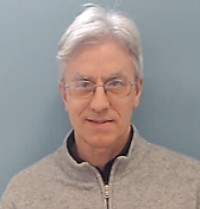
Alessandro Perotti is an Associate Professor of Geometry at the Department of Mathematics, University of Trento, Italy. His research focuses on hypercomplex analysis, particularly slice regular functions over quaternions, Clifford algebras, and other noncommutative structures. He has contributed extensively to topics such as Fueter regularity, Cauchy integral formulas, and spectral theory in quaternionic Hilbert spaces. Teaching responsibilities include courses like Geometria B , Geometria differenziale , and Geometria e algebra lineare . His work bridges pure mathematics and applications, with collaborations in operator theory and differential geometry. Key contributions include foundational studies on slice function algebras, eigenvalue problems, and harmonicity in noncommutative settings.
Vincenzo Recupero is an Associate Professor in the Department of Mathematical Sciences "GL Lagrange" (DISMA) at Politecnico di Torino, Italy. His research and teaching are centered on advanced topics in mathematical analysis, with a focus on functional, nonlinear, and quaternionic analysis, as well as partial differential equations and hysteresis models. He teaches core mathematics courses such as Mathematical Analysis II and Mathematical Methods for Engineering to undergraduate students in computer, mechanical, and engineering physics programs, and also lectures in PhD programs on variational evolution problems. His research interests span Quaternionic and Hypercomplex Analysis , motivated by applications in quantum mechanics; Partial Differential Equations in Phase Transition Models such as Penrose-Fife and Stefan systems; and Rate-Independent Processes and Moreau Sweeping Processes , with applications in elastoplasticity, hysteresis, and crowd dynamics. His work emphasizes the well-posedness and continuity of solution operators under various topologies, ensuring robustness and applicability of mathematical models. The recent publications (2011–2023) reflect a consistent focus on sweeping processes, BV solutions, and quaternionic operator semigroups, with increasing sophistication in algebraic and functional-analytic frameworks. These works appear in prestigious journals such as Transactions of the American Mathematical Society and Journal of Differential Equations , indicating strong theoretical contributions to nonlinear analysis and mathematical physics. He is actively involved in the academic community, serving on program committees for international conferences like the International Symposium on Hysteresis Modeling and Micromagnetics (HMM 2025) and chairing organizing committees for summer schools on multi-rate processes and slow-fast systems. His research is aligned with ERC sectors in analysis, mathematical physics, and dynamical systems, and contributes to UN SDGs on quality education and reduced inequalities. Scientific Service and Leadership: Program Committee, International Symposium on Hysteresis Modeling and Micromagnetics (HMM 2025) Program Committee, Two-day Workshop on Nonlinear Analysis Chairman, Organizing Committee, Summer School on Multi-Rate Processes, Slow-Fast Systems and Hysteresis (2019) Program Committee, Control of State Constrained Dynamical Systems (2017) Chairman, Organizing Committee, Summer School on Multi-Rate Processes, Slow-Fast Systems and Hysteresis (2017) He has held external research appointments, including as a Researcher at Tongji University (2013). He is a member of the College of Computer, Film and Mechatronics Engineering and part of the Nonlinear Analysis and Calculus of Variations research group at DISMA. While no formal advisees are listed, his collaborative work includes prominent mathematicians such as Riccardo Ghiloni, Pavel Krejci, and Filippo Santambrogio.
Marco Maggesi is an Associate Professor at the University of Florence, affiliated with the Department of Mathematics and Computer Science 'Ulisse Dini'. His research focuses on the formal representation of mathematical and computational systems using proof assistants like HOL Light and UniMath. Research interests span mathematical logic, formal methods, computer science, theorem proving, and category theory, with applications in complex systems, quaternionic analysis, and type theory. His work emphasizes rigorous verification of emergent behaviors in adaptive systems and foundational computational structures. Publication trends show consistent contributions to formal verification (e.g., provability logic, universal algebra), interdisciplinary applications (e.g., IoT, blockchain), and educational outreach (e.g., visual machine learning guides). Research is frequently supported by national projects such as MIUR PRIN grants.
Vincenzo Recupero is an Associate Professor at the Department of Mathematical Sciences (DISMA) , Politecnico di Torino . His research focuses on mathematical analysis and its applications to complex systems. Scientific Branch : MATH-03/A - Mathematical Analysis ERC Sectors : Analysis, Application of mathematics in sciences, Mathematical physics, ODE and dynamical systems, Operator algebras SDG Goals : Quality education (Goal 4), Reduced inequalities (Goal 10) His research interests include partial differential equations for phase transitions (Penrose-Fife and Stefan models), quaternionic functional analysis in noncommutative frameworks, and rate independent processes like Moreau’s sweeping processes. These are applied to elastoplasticity, economic theory, crowd motion modeling, and electric circuits. The 9 recent articles highlight his expertise in Mathematical Analysis , Partial Differential Equations , and Operator Theory . Key trends include continuity methods for sweeping processes, BV solutions in variational inequalities, and advancements in quaternionic semigroups and Clifford algebras. Recupero teaches Mathematical Analysis II and Mathematical Methods for Engineering to undergraduate and graduate students. He has held research positions at Tongji University (2013). Conference Roles : Program committee, International Symposium on Hysteresis Modeling and Micromagnetics (HMM 2025) Chairman, Summer School on Multi-Rate Processes (2017, 2019) He contributes to the Nonlinear Analysis and Calculus of Variations research group and explores connections between hypercomplex analysis and quantum mechanics .