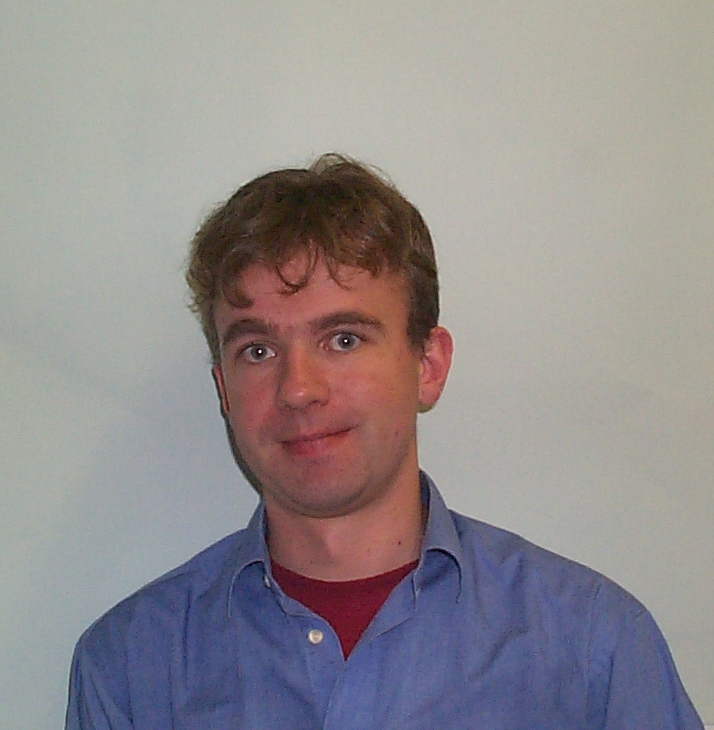
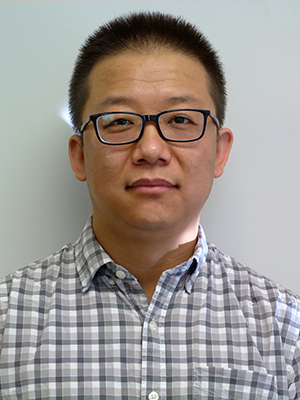
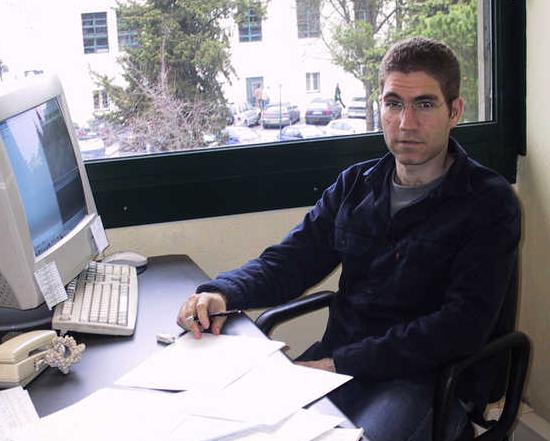
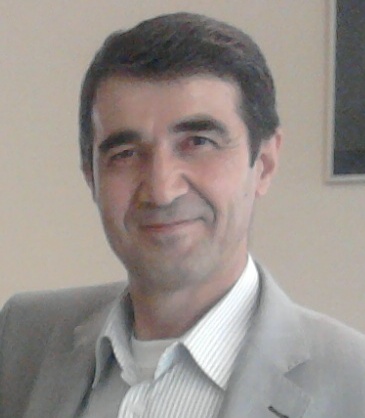
David M.J. Calderbank is a Professor in the Department of Mathematical Sciences at the University of Bath , England. He is actively engaged in research and teaching, offering advanced courses such as Projective Geometry, Differential and Geometric Analysis, and Group Theory. His research lies at the intersection of differential geometry, geometric analysis, and mathematical physics, with a particular focus on Kähler and Einstein metrics, integrable systems, and parabolic geometries. His work often explores the interplay between geometric structures and algebraic conditions such as stability. The recent publications highlight a sustained focus on extremal and Einstein metrics, c-projective and ambitoric geometry, and integrability in geometric contexts. His work frequently involves collaborations with prominent geometers such as Vestislav Apostolov, Paul Gauduchon, and Michael Singer. No scientific awards are mentioned in the provided materials. He advises no students listed in the provided texts. His research has been supported through standard academic channels, though specific grants are not detailed. He has collaborated extensively, notably with Tammo Diemer on conformal geometry and invariant operators. While no formal lab or research team is described, his collaborative publication record suggests an active research group or network in differential geometry at Bath.
Dan Fretwell is a Lecturer in Security and Protection Science within the School Of Mathematical Sciences at Lancaster University. His academic journey includes a PhD from the University of Sheffield (2015) under Prof. Neil Dummigan, a Heilbronn Research Fellowship at the University of Bristol (until 2022), and a Lecturer position at the University of South Wales (2022-2023). His research spans Algebraic Number Theory with extensive work on: Quadratic forms, lattices, and error correcting codes Modular forms, elliptic curves, and number fields Automorphic forms, Galois representations, and L-functions Interacting particle systems with applications in Statistical Mechanics Fretwell's work is significantly motivated by the Langlands program, focusing on computational evidence for conjectures and practical applications. His recent publications show a clear trajectory toward cybersecurity applications, particularly in cryptography and quantum computation. His 2025 publication on 2-superirreducible polynomials over finite fields demonstrates this applied direction. The publications collectively reveal expertise across pure number theory, computational mathematics, and increasingly relevant cryptographic applications. He teaches MATH320: Mathematical Cryptography and supervises PhD students in Algebraic Number Theory with emphasis on Modular Forms and Galois Representations. His professional activities include public engagement through the STEM Lecturer Series, "The Magic of Maths" public lecture, Pint of Science events, and school outreach programs at Winstanley College and Rochdale Sixth Form College.
Knud Henriksen serves as a Part-time Lecturer at the Department of Computer Science (DIKU), University of Copenhagen, within the Image Analysis, Computational Modelling and Geometry research section. His academic profile integrates teaching and research in computer graphics, physics-based animation, and computer vision, contributing to DIKU's expertise in visual computing methodologies. His educational background comprises: Elektroingeniør (Electrical Engineering) Cand. Scient (Master of Science) Ph.D. Henriksen's research focuses on Computer Graphics, Physics-Based Animation, Computer Vision, and Mathematics, with current investigations into inverse kinematics using bone representations and quaternions. His work emphasizes improving computational efficiency and realism in character animation through mathematical modeling and geometric algorithms. Analysis of his 30 publications (2002-2008) reveals consistent innovation in animation algorithms, particularly in inverse kinematics, physics simulation, and spline-based modeling. These contributions bridge theoretical computer graphics with practical applications in gaming and virtual reality, demonstrating robust solutions for 3D interaction and character rigging. No scientific awards are documented in the available information. Henriksen has supervised graduate projects including a 2008 thesis on quaternion-based inverse kinematics. While specific grant details are absent, his research aligns with DIKU's interdisciplinary approach. He operates within the Image Analysis, Computational Modelling and Geometry section, which collaborates extensively with industry on visual computing challenges.
Liu Zhen holds dual faculty appointments as an Adjunct Assistant Professor of Teaching in the Department of Computer Science and Engineering at the University at Buffalo's School of Engineering and Applied Sciences and an Adjunct Lecturer in the Department of Economics within the College of Arts and Sciences. His interdisciplinary work bridges computational methods with economic theory, focusing on information asymmetry, behavioral decision-making, and financial market dynamics. His educational foundation includes a PhD and MA from Stony Brook University and a BA in Economics from Tsinghua University, establishing strong quantitative and theoretical grounding. These qualifications are reflected in his dual-departmental roles where he integrates technical and economic perspectives. Research interests emphasize how information structures influence market outcomes (information economics), psychological factors in economic choices (behavioral economics), and financial market mechanisms, extended through software and IT systems applications. This synthesis enables modeling of complex phenomena like investor behavior and policy impacts using computational frameworks. His publication record shows an evolution from advanced mathematical research—particularly in matrix theory and algebra—to applied economic investigations. The mathematical works provide rigorous analytical tools now leveraged in current economic studies, demonstrating methodological continuity despite disciplinary shifts. Key recognition includes: 2007 Outstanding Doctoral Student Paper Award (American Accounting Association Mid-Atlantic Regional Meeting) Research funding highlights comprise a Michigan Retirement Research Center grant (2008-2009) and a SUNY-Stony Brook Seed Grant for Survey Research (2007-2008), supporting projects on retirement literacy and survey methodologies. While no formal advisees are documented, his teaching roles involve mentoring students across computer science and economics curricula. Current collaborative work connects with University at Buffalo's interdisciplinary research ecosystem, particularly through the Center for Survey Research during his Stony Brook tenure, indicating ongoing engagement with empirical economic analysis teams.
Prof. Vicente Cortés is a faculty member in the Department of Mathematics at the University of Hamburg, affiliated with the MIN Faculty and the Center for Mathematical Physics. He holds the academic rank of Professor and specializes in differential geometry, mathematical physics, and geometric analysis. His research focuses on topics such as quaternionic Kähler manifolds, Einstein metrics, generalized complex structures, and geometric flows. He is involved in major research initiatives including the Cluster of Excellence Quantum Universe and Collaborative Research Centre (SFB) 1624. His work bridges geometry with theoretical physics, particularly in areas related to supersymmetry, supergravity, and string theory. Notable contributions include studies on homogeneous spaces, conformal transformations, and geometric structures on Lie groups. He actively organizes conferences and workshops, such as the Northern German Differential Geometry Days and events under the SFB 1624. Prof. Cortés teaches advanced courses in differential geometry and mathematical physics, including 'Differential Geometry' and 'Generalized Geometry' at the master's level. His research is supported by grants from the Deutsche Forschungsgemeinschaft (DFG) and other institutions. He collaborates internationally, with co-authors from institutions like the University of Edinburgh, DESY, and KU Leuven.
Dr. Xiaolong Li is an Assistant Professor at the Department of Mathematics, Statistics and Physics, Wichita State University, within the Fairmount College of Liberal Arts and Sciences. He holds a Ph.D. from the University of California, San Diego (2017), where his advisors were Professors Lei Ni and Ben Chow. Prior to his current role, he served as a Visiting Assistant Professor at the University of California, Irvine (2017–2020), working under Professor Richard Schoen, and held a Britton Postdoctoral Fellowship at McMaster University (2020–2021). His undergraduate studies were at Tsinghua University. His research focuses on Geometric Analysis , particularly employing partial differential equations to study geometric and topological properties of Riemannian manifolds. Key interests include Ricci flow, Kähler-Ricci flow, curvature operators, Einstein manifolds, and eigenvalue problems. Recent work emphasizes curvature constraints, geometric rigidity, and applications of matrix estimates in geometric evolution equations. Dr. Li’s publications (2016–2025) explore topics such as Li-Yau-Hamilton estimates, curvature operator analysis, and Robin eigenvalue problems, reflecting a deep engagement with both pure geometry and analytic techniques. His work bridges geometric flows, spectral theory, and complex geometry, contributing to foundational understanding of manifold structures and their topological implications. His academic journey includes postdoctoral research at leading institutions, reflecting a trajectory of rigorous scholarly contribution to differential geometry and geometric analysis.
Radu Ionas is a Lecturer in the Department of Physics and Astronomy at Stony Brook University. He holds a PhD in Theoretical Physics from Stony Brook University and has teaching experience at both Stony Brook and the University of Edinburgh. His research focuses on the intersection of mathematics and theoretical high-energy physics, particularly supersymmetry, string theory, and geometric structures such as hyperkähler and quaternionic-Kähler manifolds, twistor geometry, and exceptional Lie groups. Education: PhD in Theoretical Physics, Stony Brook University Research Interests: Supersymmetry and String Theory Hyperkähler and Quaternionic-Kähler Manifolds Twistor Geometry Normed Division Algebras and Exceptional Lie Groups No specific articles, grants, or awards are listed in the provided materials. His academic focus remains on teaching and theoretical research in physics and mathematics.
Pedro Ferreira dos Santos is an Assistant Professor at the Departamento de Matemática, Instituto Superior Técnico in Lisbon. His research focuses on algebraic topology, algebraic geometry, and their interplay with homotopy theory, integrable systems, and Riemann-Hilbert problems. He holds a Ph.D. in Mathematics from the State University of New York at Stony Brook (1999), complemented by a M.A. (1995) and a Licenciado (1992) from Instituto Superior Técnico. Research interests prominently include motivic cohomology, equivariant homotopy theory, and real algebraic geometry. He explores connections between algebraic cycles, analytic currents, and geometric structures on real varieties. Recent work addresses Riemann-Hilbert factorization problems, integrable systems via Segal-Wilson approaches, and Lax equation singularities. Teaching engagements since 2001 have covered complex analysis, differential equations, algebra, and topology courses at the undergraduate and graduate levels. His publications emphasize theoretical frameworks linking algebraic geometry with topological methods, often collaborating with researchers like Paulo Lima-Filho and António F. dos Santos.
Prof. Dr. Levent KULA is a full-time professor at Ahi Evran University, Faculty of Arts and Sciences, Department of Mathematics. His academic career spans institutions like Ankara University (1997-2007) and Ahi Evran University (2007-present). He holds a PhD in Mathematics from Ankara University (2003), following a master's (1998) and bachelor's (1994) in Mathematics. Education: PhD (2003), MSc (1998), BSc (1994) from Ankara University. Administrative Roles: Department Chair (2012-2019), Institute Director (2015-2017). Dr. KULA specializes in Differential Geometry , focusing on helices in Euclidean and Minkowski spaces , split quaternions , and surface characterization via curve intersections. His work bridges theoretical geometry with applications in higher-dimensional spaces and coordinate transformations. His 15 most recent publications (2016-2025) explore topics like slant curves, polynomial helices, and hyperspherical structures, primarily in E3 and Minkowski 3-space . These studies employ differential equations, quaternions, and geometrical frameworks like Sabban and pseudo-Sabban frames. Editorial Contributions: Served as editor for journals including International Electronic Journal of Geometry and Mathematical Sciences and Applications E-Notes (2016-2021). Collaborations: Frequent co-authorship with researchers like Bülent Altunkaya and Hasan Altınbaş. His work has been cited 969 times, with an h-index of 12.
Ramazan Koç is a Professor in the Department of Physics Engineering at Gaziantep University's Faculty of Engineering. He has been serving in this position since 2007, having previously held positions as Associate Professor (2002-2007) and Assistant Professor (1995-2002) at the same institution. His academic career spans over three decades with significant contributions to mathematical physics, group theory, and crystallography. Education: PhD (1992-1995): Çukurova University, Institute of Science, Physics MS (1991-1992): Gaziantep University, Institute of Science, Physics Engineering BS (1983-1989): Middle East Technical University, Gaziantep Engineering Faculty, Physics Engineering Ramazan Koç's research primarily focuses on mathematical physics with special emphasis on group theory applications in crystallography and quasicrystals. His work explores the connections between higher-dimensional lattices and their projections to lower dimensions, particularly examining Coxeter groups, quaternions, and their applications to physical systems. He has made significant contributions to understanding the mathematical structures underlying quasicrystalline materials, including dodecahedral structures, twelvefold symmetries, and aperiodic tilings. His research also extends to quantum mechanics, where he has developed methods for solving quantum systems including the Pauli equation and quantum gates. His publication record demonstrates a consistent research trajectory spanning over 30 years with more than 50 scholarly articles in prestigious journals. His recent work (2018-2022) shows a continued focus on mathematical crystallography while also expanding into applied research on energy conversion technologies, particularly metal-air batteries. His publications appear in high-impact journals such as Acta Crystallographica, Journal of Physics A, and Journal of Mathematical Physics, indicating the interdisciplinary nature of his work bridging mathematics, physics, and materials science. Research Projects: Radioactive and Chemical Energy Conversion to Electrical Energy (2018-2019) Investigation of Spectrum Shift Related to Phosphors on Photovoltaic Panel Efficiency (2017-2018) Conversion of Radioactive Decay Energy to Electrical Energy (2014-2016) Quasicrystallography from Projections of Higher Dimensional Lattices (2014-2016) Professor Koç has supervised 5 doctoral theses and 11 master's theses, mentoring students in diverse areas including quantum information, energy conversion, and mathematical physics. His administrative experience includes serving as Department Chair (2008-2009, 2015-present), Institute Director (2008-2012), and Vice Dean (2006-2008). He has also contributed to the academic community through two patents related to aluminum-air batteries and membership in the Physics Engineers Association since 2009.
Alan Reid is the Edgar Odell Lovett Professor of Mathematics and Chair of the Mathematics Department at Rice University . His work focuses on hyperbolic geometry, Kleinian groups, 3-manifolds, and arithmetic groups, with significant contributions to geometric topology and profinite rigidity. Research Interests: Hyperbolic 3-manifolds and orbifolds Profinite rigidity and group separability Mapping class groups and surface subgroups Arithmetic and geometric properties of Kleinian groups Low-dimensional topology and geometric embeddings Publications span key areas such as commensurability classes , surface subgroup constructions , volume minimality , and profinite properties of 3-manifold groups. Recent work includes studies on thin subgroups and geometric boundaries in higher dimensions. Books: In the Tradition of Ahlfors-Bers (co-editor) Surface Subgroups and Subgroup Separability in 3-Manifold Topology (with Long) The Arithmetic of Hyperbolic 3-Manifolds (with Maclachlan) Recent Lectures include presentations at the Workshop on Geometric Topology (Cortona, 2017), the NZMRI Summer Workshop (2018), and the International Congress of Mathematicians (2018).
Prof. Dr. Kai Köhler is a faculty member at the Mathematisches Institut of Heinrich-Heine-Universität Düsseldorf. He teaches advanced courses in Global Analysis , Homogeneous Lie Groups , and Mathematical Foundations , with active research in differential geometry, Arakelov geometry, and analytic torsion. Research Interests: Differential geometry, Global analysis, Homogeneous spaces, Arakelov geometry, Analytic torsion, Index theorems, and applications to physics. Advising: Supervised PhD theses by Tobias Ebel, Thomas Ueckerdt, and Pascal Teßmer on topics like equivariant torsion, arithmetic fixed points, and asymptotics of holomorphic torsion. Publications: Authored a textbook on differential geometry (Springer 2024) and published key works in Mathematische Zeitschrift , Inventiones Mathematicae , and journals on heat kernels, Dirac operators, and Lefschetz-type fixed point formulas. Contact: Office 25.22.03.58, +49 211 81-12191, koehler@math.uni-duesseldorf.de .
Heiko Dietrich is a Professor in the School of Mathematics at Monash University and serves as the Associate Dean Graduate Education in the Faculty of Science. His roles include overseeing graduate education, research leadership, and editorial board memberships. He holds a doctoral degree from the University of Braunschweig (2009) and has held positions at institutions including the University of Trento and University of Auckland. Research Interests His research focuses on computational group theory , computational algebra , finite groups , and Lie algebras . He applies computational methods to problems in algebra and has contributed to areas such as Hadamard matrices and classification of quantum states. Recent Research Trends Recent work includes studies on maximal subgroups of the Monster group, coclass theory, and algorithmic approaches to group isomorphism. His publications span theoretical advances and applications in quantum information and combinatorics. Awards: Australian Research Council Discovery Early Career Researcher Award (2013) Cheryl E. Praeger Visiting Research Fellowship (2022) 2019 Victorian Tall Poppy Award Advising & Grants He has supervised over 20 students, including HDR candidates and Master’s researchers. Notable projects include investigations into finite p-groups, computational group theory, and combinatorial identities. He led research initiatives funded by ARC and international collaborations, such as the Computing with Lie groups and algebras project (2019–2023). Labs & Affiliations Editorial roles include Associate Editorships at Mathematische Nachrichten , Journal of Computational Algebra , and Beiträge zur Algebra und Geometrie . He contributes to STEM education through CSIRO’s STEM Professionals in Schools program.
Marc Masdeu Sabate is a researcher in the Department of Mathematics, focusing on advanced topics in number theory and algebraic geometry. He is actively involved in academic research, currently leading the project VALORACIONES NO ARQUIMEDIANAS EN GEOMETRIA Y TEORIA DE NUMEROS EXPLICITAS as a Co-Principal Investigator. His work emphasizes p-adic analysis, elliptic curves, and modular forms. Research interests include plectic theory, p-adic singular moduli, and computational methods in arithmetic geometry. Recent contributions involve interdisciplinary approaches to Darmon points and triple-product p-adic L-functions. He collaborates internationally on projects exploring non-Archimedean valuations and their applications in explicit number theory. Masdeu is accepting PhD students and has published extensively in top-tier journals like Advances in Mathematics and Research in Mathematical Sciences . His research integrates automorphic forms with computational experimentation to address foundational questions in arithmetic geometry.
Ari Shnidman is an Associate Professor in Mathematics at the Hebrew University of Jerusalem. For the 2024/25 academic year, he is a member of the Institute for Advanced Study in Princeton. His research focuses on number theory, particularly arithmetic geometry, special values of L-functions, and arithmetic statistics. Research Interests: Shnidman investigates deep connections between algebraic curves, abelian varieties, and L-functions. His work spans Tate-Shafarevich groups, Ceresa cycles, Heegner cycles, and rank distribution in elliptic curves. Key methodologies include algebraic geometry, representation theory, and computational number theory. Publications: Recent papers explore Ceresa cycles, torsion in Tate-Shafarevich groups, and arithmetic of curves like Picard curves. Collaborative work dominates his output, with frequent co-authorship on papers involving elliptic curves, L-functions, and geometric invariants. Theoretical frameworks are often complemented by computational experiments. Funding: European Research Council Israel Science Foundation Academic Leadership: Shnidman co-organizes the HUJI-BGU Workshop in Arithmetic and leads seminars including: Lunch Seminar on Transcendental Number Theory (Spring 2024) Seminar on Honda-Tate Theory (Spring 2023) Fundamental Lemmas and Fourier Transform Seminar (Spring 2021)