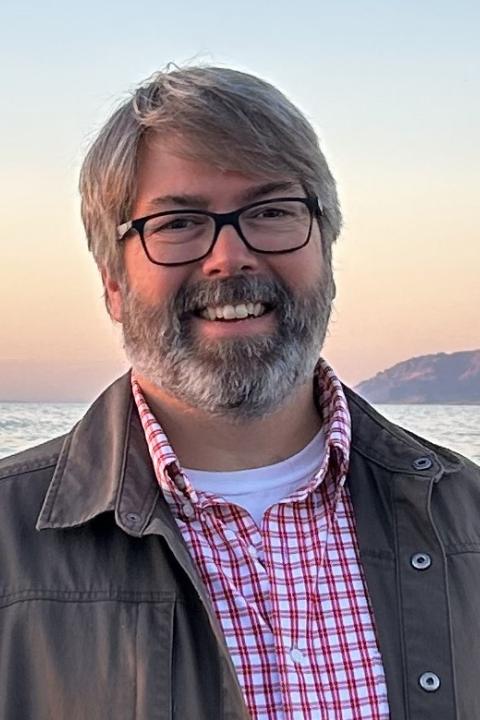
Joel Johnson is a Professor in the Department of Earth Sciences at the University of New Hampshire. He teaches courses in Earth History, Structural Geology, Sedimentology, Geotectonics, Geological Oceanography, and research-focused classes. With a Ph.D. in Geological Oceanography from Oregon State University and an M.S. in Structural Geology & Tectonics from the University of Illinois at Urbana-Champaign, his research spans gas hydrate systems, sedimentology, and methane cycling in marine environments. Ph.D., Geological Oceanography, Oregon State University M.S., Structural Geology & Tectonics, University of Illinois at Urbana-Champaign B.S., Geology, University of Minnesota Duluth His work examines gas hydrate dynamics in settings like Hydrate Ridge (Cascadia margin) and Svyatogor Ridge (Fram Strait), focusing on crustal processes , fluid flow mechanisms , and authigenic carbonate formation . Studies in the Gulf of Mexico and Indian continental margins analyze hydrate accumulation controls, while Arctic lake research explores methane emission temperature sensitivity and microbial influences . Collaborative projects include 3D seismic analysis , tectonic stress modeling , and monsoon-driven sedimentation in the Bay of Bengal and Andaman Sea. Recent publications highlight earthquake-enhanced carbon cycling in deep sediments (2023), primary deposition controls on gas hydrate reservoirs (2022), and crustal-scale methane systems in Arctic regions (2022). His 15 most recent articles span 2023-2014, emphasizing gas hydrate systems , methane seepage , sedimentary diagenesis , and tectonic influences on fluid flow. Subfields include authigenic carbonate formation , 3D seismic imaging , isotopic geochemistry , and late Quaternary climate reconstructions . Contact: Joel.Johnson@unh.edu
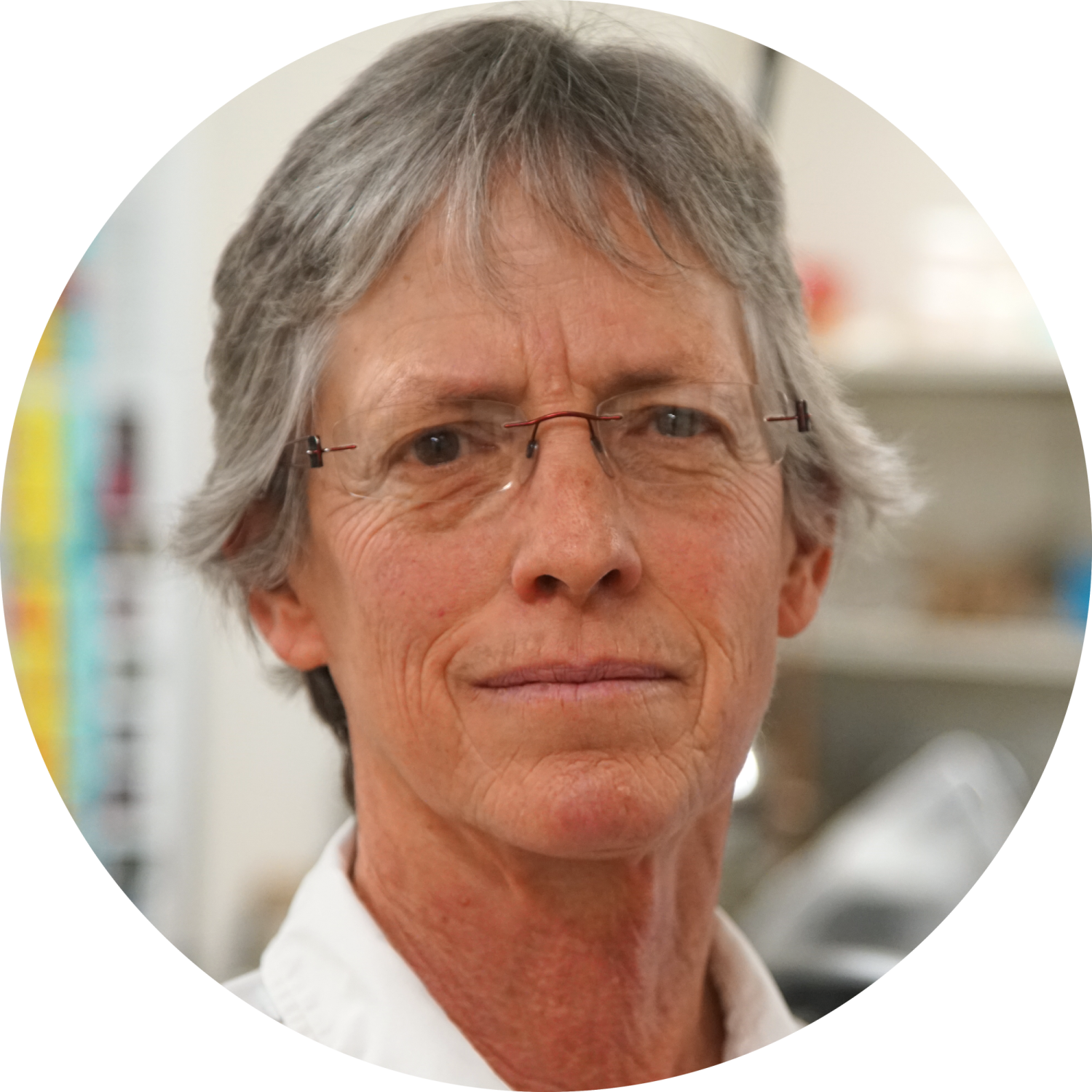
Anne Jennings is a Senior Research Associate at the Institute of Arctic and Alpine Research (INSTAAR) at the University of Colorado Boulder, where she serves as Co-editor of Arctic, Antarctic and Alpine Research . Her research focuses on Arctic paleoclimate reconstruction through marine sediment analysis, with particular expertise in ice-sheet/ocean interactions and foraminiferal micropaleontology. Her academic credentials include: PhD in Geology from the University of Colorado Boulder (1989) BS in Geology from Duke University (1980) Dr. Jennings' work centers on Quaternary paleoenvironmental changes in the Arctic, utilizing sediment cores from Baffin Bay, Lancaster Sound, and Nares Strait to investigate ice stream dynamics, paleomagnetic variations, and biomarker-based climate proxies. Her research connects past glacial-interglacial transitions to contemporary climate change scenarios, emphasizing the role of Arctic systems in global climate regulation. Analysis of her 15 most recent publications (2021-2025) reveals consistent focus on Arctic paleoceanography, with methodological emphasis on IODP expeditions, micropaleontological analysis, and multi-proxy sediment studies. Key research trajectories include ice sheet-ocean coupling during deglaciation, development of novel paleoclimate proxies, and reconstruction of Holocene sea-ice dynamics in critical Arctic gateways. Her scholarly contributions have been recognized through: Fellowship in the Geological Society of America (2015) Creative Research Award from the CU Boulder Graduate School (1986) As leader of the Micropaleontology Lab and contributor to Core Processing & Sedimentology Labs at INSTAAR, Dr. Jennings directs specialized analyses of marine sediments for international research collaborations, including major IODP expeditions targeting Arctic glaciated margins and paleoclimate archives.
Edouard Bard (born September 1, 1962) is a distinguished French climatologist currently serving as Professor of Climate and Ocean Evolution at the Collège de France. He is also a member of the French Academy of Sciences and deputy director of the European Centre for Research and Education in Environmental Geosciences (CEREGE) at the Arbois Technopole in Aix-en-Provence. His academic journey began with geological engineering studies at ENSG in Nancy, followed by doctoral research at the Commissariat à l'énergie atomique (CEA) in Gif-sur-Yvette (1987), and postdoctoral work at Columbia University's Lamont-Doherty Earth Observatory (1988-1989). Bard's research spans climatology, oceanography, and geology with a focus on understanding the natural functioning of the ocean-atmosphere-cryosphere-biosphere system across timescales from centuries to millions of years. His work integrates analytical chemistry techniques to reconstruct past environments from marine and lake sediments, corals, stalagmites, and polar ice. He has pioneered methods using mass spectrometry to measure radioactive isotopes for dating climate variations recorded in geological archives. Bard's publication record shows consistent contributions across paleoclimatology, with particular emphasis on radiocarbon dating calibration, sea level reconstruction, and climate-ocean interactions. His recent work (2010-2013) focuses on ice sheet dynamics, meltwater pulses, and cosmogenic nuclide applications, while maintaining his foundational work in radiocarbon methodology. His research demonstrates a clear trajectory from methodological development to application in major climate questions. His scientific achievements have been recognized with numerous prestigious awards: Macelwane Medal of the American Geophysical Union (1997) Wegener Medal of the European Geosciences Union (2013) Foreign Member of the National Academy of Sciences of the USA (2014) Multiple recognitions as a Highly Cited Researcher Beyond research, Bard has significantly contributed to public understanding of climate science through popular books like 'L'Homme et le climat' (2005) and 'L'Océan, le climat et nous' (2011). He organized numerous Collège de France symposia on climate change, served as scientific curator for major exhibitions, and participated in high-level policy discussions including the Grenelle de l'Environnement and UN Climate Change Conferences. As deputy director of CEREGE and coordinator of the EQUIPEX ASTER-CEREGE project, he leads significant research infrastructure in environmental geosciences.
Summer Rupper is a Professor at the School of Environment, Society & Sustainability at the University of Utah, where she has held her position since July 2019. Her research focuses on understanding the interactions between climate, glaciers, and water resources, with particular emphasis on high mountain regions including High Mountain Asia, the Himalayas, and polar regions. She leads multiple research projects examining glacier dynamics, hydrological processes, and climate change impacts on water security for downstream populations. BS in Geology from Brigham Young University (2001) MS in Geology from University of Washington (2004) PhD in Earth and Space Sciences from University of Washington (2007) Professor Rupper's research spans physical geography, environmental geoscience, and climate change science, with specific expertise in glaciology, hydrology, and atmospheric sciences. Her work integrates field measurements, remote sensing, and numerical modeling to understand glacier dynamics, snow processes, and water resource availability in mountainous regions. She has particular expertise in High Mountain Asia, where glaciers provide critical water resources for over a billion people. Her research addresses fundamental questions about glacier response to climate change, hydrological partitioning, and the implications for water security in vulnerable regions. Her recent publications demonstrate a consistent focus on understanding glacier dynamics, hydrological processes, and climate interactions in mountainous regions. The work spans multiple methodologies including remote sensing analysis, numerical modeling, statistical approaches, and field-based measurements. Key themes include glacier melt contributions to river systems, precipitation patterns in complex terrain, snow density modeling, and the impacts of climate change on water resources in High Mountain Asia and polar regions. Her research often integrates multiple data sources and approaches to address complex questions about cryospheric processes and their societal implications. Superior Research Award (2024, CSBS, University of Utah) G.K. Gilbert Award for Excellence in Geomorphic Research (2022) Outstanding Utah Higher Education Science Teacher (2021) Top Researcher Award, Celebrate U showcase (2017) Antarctic Service Medal (2010, USAF) Professor Rupper actively mentors graduate students through thesis research courses at both the PhD and Master's levels, as well as individual projects. She has secured significant research funding from multiple federal agencies including NSF, NASA, and USAID, with current projects examining climatic controls on Antarctic ice sheets, glacier dynamics in High Mountain Asia, and historical glacier changes. Her collaborative work extends across international boundaries, working with scientists in Pakistan, Bhutan, and other regions to address shared water security challenges. She also engages in community outreach through workshops with school districts and science teacher associations to communicate climate science to broader audiences. Professor Rupper participates in multiple collaborative research teams including the NASA High Mountain Asia Team (HiMAT), where she contributes expertise in glacier dynamics and hydrology. She serves on several scientific committees including the NSF Ice Core Facility Sample Allocation Committee and the American Geophysical Union Cryosphere Section Fellows Committee. Her research often involves interdisciplinary teams combining expertise in glaciology, hydrology, remote sensing, and climate modeling to address complex questions about mountain water systems under changing climate conditions.
Professor Victoria C. Smith is a leading volcanologist at the School of Archaeology, University of Oxford. Her research focuses on tephrochronology, using volcanic ash layers to date and correlate sedimentary and archaeological records. She manages Oxford's electron microprobe facilities and cryptotephra laboratory, supporting global research on explosive volcanism. Research Interests : Volcanology, tephrostratigraphy, magmatic processes, and paleoenvironmental reconstruction. Geographic Focus : Italy, Mexico, Japan, Azores, Canary Islands, Ethiopian Rift, Antarctica. Her recent publications highlight collaborations in geochronology, magma evolution modeling, and tephra applications in synchronizing climate-human records. She supervises MSc and doctoral students in Archaeological Science, focusing on volcanic ash as chronological tools.
Ramon Arrowsmith is a Professor at Arizona State University's School of Earth and Space Exploration (SESE). His research focuses on earthquake geology, tectonic geomorphology, and active faulting, with a particular emphasis on leveraging high-resolution topography through initiatives like OpenTopography. He has over 35 years of experience in paleoseismology, geomorphic mapping, and fault zone analysis. Arrowsmith has held administrative roles such as Deputy Director of SESE and associate directorships in graduate studies and geological sciences departments. His work integrates remote sensing, lidar technology, and robotics to address geological hazards and landscape evolution. Key projects include the QUAKES mission for topographic data collection and the development of low-cost seismic tools like ShakeBot. His research spans global regions, including the San Andreas Fault, Pamir-Tien Shan collision zone, and volcanic fields in Arizona and Mexico. Arrowsmith's recent publications highlight advancements in fault slip modeling, seismic hazard assessment, and open-access geospatial data platforms. His contributions to education include courses on field geology and computational methods in earth sciences. Collaborations with international teams and interdisciplinary projects underscore his commitment to advancing geoscience through innovation and accessibility.
Prof. Turgay İşseven is a Professor at the Department of Geophysical Engineering, Faculty of Mining, Istanbul Technical University. He holds a PhD in Geophysical Engineering from the same institution. His primary research interests include Earth Physics, Applied Geophysics, and Paleomagnetism, with a focus on tectonic evolution, volcanic rock analysis, and gravity modeling in regions like Eastern Anatolia and Thrace Basin. He has led multiple projects funded by TÜBİTAK and BAP, investigating topics such as the paleomagnetic properties of volcanic rocks and the structural analysis of sedimentary basins. Prof. İşseven has advised numerous graduate students and contributed to over 20 publications in peer-reviewed journals. His work integrates advanced geophysical techniques like Ground Penetrating Radar (GPR) and deep learning for subsurface imaging and object detection. Key projects include the investigation of Lake Van's volcanic formations and the development of software for gravity data processing. He is also involved in teaching courses on Geomagnetism and Paleomagnetism. Educational Background: PhD in Geophysical Engineering, Istanbul Technical University (2001) MSc in Geophysical Engineering, Istanbul Technical University (1995) BSc in Geophysical Engineering, Istanbul Technical University (1991) Research Interests: Gravity anomalies and structural modeling Paleomagnetic studies of volcanic rocks Geophysical exploration techniques (GPR, resistivity) Tectonic evolution of Anatolia and the Eastern Mediterranean Projects: Investigation of Miocene-Quaternary volcanic rocks in Lake Van using paleomagnetic methods Gravity modeling of sedimentary basins in Eastern Anatolia Development of GravPack, a MATLAB-based gravity data processing tool Advising and Labs: Advisor to 7+ graduate students (e.g., Nedim Aydın, Orhan Apaydın) Collaborations with institutions like the Eurasian Geosciences Institute His research contributes to UN Sustainable Development Goals related to climate action and sustainable cities, through studies on earthquake hazard mitigation and geological resource management.
John Rayburn is a Professor in the Department of Geological Sciences at SUNY New Paltz , where he has been affiliated since 2007 (promoted to Professor in 2020). He holds a PhD from Binghamton University , an MSc from the University of Manitoba , and BS and BA degrees from SUNY Plattsburgh and St. Lawrence University, respectively. Research Interests : Glacial Geomorphology – Investigating ice margin retreat, meltwater floods, and post-glacial landscape evolution. Paleoclimatology – Analyzing climate records from sediment cores , tree rings , and varve sequences . Geoarchaeology – Applying Ground Penetrating Radar (GPR) to locate historical and prehistoric structures. Article Trends (15 Most Recent): Spanning 2024–2014, his work focuses on glacial lake dynamics , tree-ring hydrology , and GPR applications . Recent projects include 3D sediment modeling , dendroclimatic drought analysis , and anthropogenic impact studies in New York watersheds. Scientific Awards : 2015 SUNY Chancellor's Award for Excellence in Teaching Advising & Grants : While specific students are not listed, he collaborates extensively with co-authors on NSF-funded projects and REU fieldwork . His grants emphasize Quaternary climate reconstruction and geoarchaeological mapping . Labs & Teams : Affiliated with SUNY New Paltz’s Quaternary Research Group , he works with the Geological Society of America and American Geophysical Union , integrating LiDAR , GPR , and dendrochronology in multidisciplinary studies.
Professor Geoff Duller has been a faculty member at Aberystwyth University's Department of Geography & Earth Sciences since 1995, holding a Personal Chair since 2005. He studied Geography at St Catherine's College Oxford (BA 1987), completed his PhD in 1992 at Aberystwyth on luminescence dating of Quaternary sediments in New Zealand, and established the Aberystwyth Luminescence Research Laboratory in 2000. His research focuses on luminescence dating method development and application, particularly for Quaternary environmental change studies. Key contributions include creating single-aliquot dating methods and leading the NERC-funded BRITICE-Chrono project for ice sheet deglaciation chronology. He serves as Associate Editor of Radiation Measurements and editor of Journal of Quaternary Science , with editorial board membership at Ancient TL . His article portfolio demonstrates expertise in: Luminescence signal analysis (2025: IRPL/IRSL in feldspars; 2024: opercula thermoluminescence) Quaternary chronology (2025: Thar desert floodouts; 2024: Tibetan glaciofluvial sediments) Methodological innovation (2025: EMCCD crosstalk reduction; 2024: pIRIR protocol optimization) Scientific recognition includes the Bigsby Medal (2012). Current supervision includes PhD students Robyn Pinder, Svenja Riedesel, and Nina Ataee. He co-directs the Aberystwyth Luminescence Research Laboratory and manages specialized equipment including Risø luminescence readers.
Professor Richard Bailey is Professor of Environmental Systems at the University of Oxford's School of Geography and the Environment. He serves as a Tutorial Fellow and Dean of St Catherine's College, a Senior Research Fellow at the Institute for New Economic Thinking, and a member of the Oxford Biodiversity Institute. Bailey co-directs the Oxford Luminescence Dating Laboratory and leads the CoHESys-lab research group focused on complex human-environmental systems. Richard's research centers on the dynamics of natural environmental systems and coupled human-environment interactions across various timescales. His work employs mathematical modeling, numerical simulations, and empirical data analysis to understand complex systems, with a strong focus on sustainability applications, particularly in ocean systems. The CoHESys-lab develops models that integrate machine learning methods to explore implementable policies for environmental challenges. His recent publications demonstrate a strong trend toward interdisciplinary research combining environmental science, computational modeling, and sustainability. Bailey's work spans from theoretical explorations of complex systems to applied projects addressing pressing issues like plastic pollution, fisheries management, and climate change impacts on marine ecosystems. His research increasingly incorporates agent-based modeling and machine learning approaches to tackle coupled human-environment challenges. Co-Director of Oxford Martin School Programme on Sustainable Oceans Co-Director of Oxford Luminescence Dating Laboratory Leader of CoHESys-lab research group Professor Bailey currently supervises graduate students Maike Nowatzki (focusing on dunefield morphology using deep learning) and Thomas Youngman (working on macroeconomic modeling for UK climate transition). His recent advisees include Emily Neil (rewilding impacts at Knepp Estate) and Diana Bailey (LM OSL analysis techniques). His research is supported through collaborations with organizations including Ocean Conservancy, Stanford University, George Mason University, and the University of California at Santa Barbara, with computational support from Amazon Web Services. Bailey leads the CoHESys-lab (Complex Human Environmental Systems Simulation Laboratory), which develops sophisticated models for understanding coupled human-environment systems. His OSIRIS framework (Ocean Systems Interactions, Risks, Instabilities and Synergies) represents a significant contribution to analyzing multiple stressors on marine systems. The lab maintains strong collaborations with environmental organizations and academic institutions worldwide to address sustainability challenges through innovative computational approaches.
Dr. Agnieszka Gruszczyńska is a researcher specializing in paleoenvironmental studies at an academic institution in Poland, working within the Department of Dynamics of Past Landscapes. She completed her PhD in 2023 after conducting extensive research on the paleogeographic development of the Great Sertei Lake Basin in the Vitebsk Lake District, using paleoecological analyses as her primary methodology. Education: 2016-2023: PhD studies on Paleogeographic development of the Great Sertei Lake Basin in the Vitebsk Lake District in the light of paleoecological studies 2014-2016: Master's degree in Environmental Protection, Faculty of Biology and Environmental Protection, University of Lodz, specialization in ecology and water protection 2012-2014: Master's degree in Pedagogy with physical and health education, Faculty of Geographical Sciences, University of Lodz Dr. Gruszczyńska's research centers on ecosystem responses to violent and extreme events throughout geological history, with particular expertise in Chironomidae ecology where she investigates non-temperature factors influencing population dynamics and community quality. Her work spans paleoecological analysis of aquatic invertebrate remains and examines climate change patterns throughout the Pleistocene and Holocene epochs. She frequently employs multi-proxy approaches to reconstruct past environmental conditions, with fieldwork concentrated in Eastern Europe, particularly Western Russia's Serteya region and various Polish lake districts. Her extensive publication record demonstrates a methodological focus on paleolimnology and paleoenvironmental reconstruction using lake sediments, peat bogs, and other natural archives. Recent work shows increasing emphasis on human-environment interactions throughout history, particularly regarding historical land use practices like charcoal production and their long-term ecological impacts. Her collaborative research bridges Quaternary science, archaeology, and modern environmental concerns, often examining how past environmental changes can inform contemporary ecological challenges. Dr. Gruszczyńska actively participates in international research collaborations, particularly with institutions in Russia and other European countries, contributing to our understanding of long-term environmental changes and human adaptation to these changes across the East European Plain.
Michael E. Oskin is a Professor and former Department Chair (2017-2021) in the Department of Earth and Planetary Sciences at the University of California, Davis. He also serves as faculty director of the Lassen Field Station, part of the UC Natural Reserve System. His research focuses on structural geology, geomorphology, and active tectonics, particularly the interplay between earthquakes, surface processes, and landscape evolution. He specializes in using high-resolution topography and geochronological techniques to study deformation rates, fault mechanics, and tectonic processes in regions like California and the Tibetan Plateau. Education: B.S. in Geology/Engineering Geology, UC Los Angeles (1995) Ph.D. in Geology, California Institute of Technology (2002) Research Interests: His work addresses deformation rates linked to earthquakes, continental deformation mechanisms, and topographic responses to geologic structures. Techniques include field observations, cosmogenic dating, and lidar analysis to quantify processes like fault slip, erosion, and landscape evolution. Publications: Recent work includes studies on fault rupture dynamics (e.g., San Andreas and Ridgecrest earthquakes), geochronological modeling, and tectonic evolution in regions like the Tibetan Plateau. His research bridges structural geology with quantitative methods to advance understanding of active crustal processes. Awards: Recipient of the UC Davis Graduate Program Advising and Mentoring Award (2020). Advising & Grants: Mentor to over 20 graduate students, emphasizing collaborative research, fieldwork, and open science practices. Prioritizes student summer support and funding for field/analytical costs. Leads a lab focused on earthquake geology and hosts weekly reading groups. Labs/Teams: Oversees the Lassen Field Station, teaching the summer field course GEL 110A and conducting research in the region. Active in the UC Natural Reserve System and collaborates with international research groups.
Dylan Rood is an Associate Professor in the Department of Earth Science and Engineering at Imperial College London, within the Faculty of Engineering. He leads research in cosmogenic isotopes and accelerator mass spectrometry (AMS) applied to Earth surface processes, active tectonics, climate change, and earthquake hazards. His affiliations include the CosmIC Laboratory, Dynamic Earth, Earth Observation Network, and the Imperial Centre for Geohazards. He coordinates teaching for four undergraduate courses, including field classes in Spain and Wales. Education: PhD in Geological Sciences from the University of California, Santa Barbara (2010), and BA in Earth and Environmental Science from Wesleyan University (2002). Research funding exceeds £2M since 2008, with notable grants from NERC and NSF. He has published over 113 peer-reviewed papers, including high-impact journals like Nature and Science , with a total of 3,650 citations and an h-index of 35. Research interests focus on glacial dynamics, tectonic processes, and climate interactions. His work combines field and laboratory methods to study ice sheet stability, coastal cliff erosion, and earthquake hazards. Notable findings include insights into Greenland ice sheet behavior and accelerated cliff retreat rates in Great Britain. Scientific awards include the NSF Earth Science Postdoctoral Fellowship (2010) and the Lawrence Scholar Fellowship (2005). He has supervised 4 PhD and 11 MSci students, currently mentoring 3 PhD candidates. His work bridges geology, geophysics, and environmental science, addressing global challenges like sea-level rise and natural hazard mitigation.
Christopher Miller is a Professor of Geoarchaeology at Eberhard Karls University of Tübingen (since 2016) and Director of Undergraduate Studies in the Institute for Archaeological Sciences (since 2013). He previously served as Junior Professor of Geoarchaeology (2010-2016) and Acting Head of the Archaeometry Division (2013-2015). His research focuses on site formation processes, archaeological micromorphology, and the role of fire in human evolution, with a particular emphasis on Paleolithic cave sites. Education: PhD (2010): Eberhard Karls University of Tübingen, Dissertation on Paleolithic cave sites' formation processes and settlement dynamics MSc (2004-2006): University of Maine, Thesis on geoarchaeological settings in the eastern US BA (2000-2004): Boston University, Dual degree in Archaeology and Earth Science Research interests include: Micromorphological analysis of archaeological sediments Geochemical tracing of Paleolithic sites Reconstruction of prehistoric human-environment interactions Development of novel microanalytical techniques for archaeological contexts His recent publications highlight interdisciplinary approaches to site formation processes, paleoenvironmental reconstruction, and the application of clumped isotope thermometry in archaeological contexts. He has conducted fieldwork in South Africa, Italy, Germany, and the Levant, focusing on cave systems and open-air sites. As an academic leader, he oversees the Geoarchaeology research group and collaborates with international teams on projects such as the Neolithic Movila lui Deciov settlement and the Swabian Jura Paleolithic sites. His work bridges geochemistry, archaeology, and environmental science to unravel the complexities of human adaptation in prehistoric environments.
Patrick A. Rafter is an Assistant Professor in the Chemical Oceanography department at the University of South Florida College of Marine Science . His research focuses on marine carbon cycling , isotope geochemistry , and paleoceanography , with specific interests in understanding carbon dynamics across geological timescales and developing methods for marine carbon dioxide removal (mCDR) . Key Research Themes Carbon cycling in modern and ancient oceans Application of stable and radiocarbon isotopes Biogeochemical impacts of climate change Deep-sea circulation and carbon sequestration Marine carbon removal strategies Recent Work explores carbonate dissolution fluxes, glacial-interglacial CO2 cycles, and alkalinity enhancement in the California Current System. His Ocean and Climate Lab integrates field measurements with modeling to trace carbon pathways. Contact : prafter@usf.edu