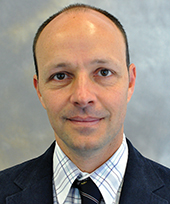
Tim Conley is Professor and Chair at the Department of Economics, University of Western Ontario. He holds a Ph.D. from the University of Chicago (1996). His research focuses on applied econometrics with emphasis on spatial dependence, cross-sectional analysis, and empirical industrial organization. His primary research interests include methodological development in econometrics, particularly around dependence modeling in cross-sectional data and spatial analysis techniques. He has made significant contributions to understanding technology adoption in developing economies and detection of collusion in market mechanisms. Professor Conley's publications demonstrate consistent focus on developing robust statistical methods for economic applications, with recent work emphasizing practical applications in policy evaluation and market analysis. His methodological innovations have been implemented in statistical software packages used by researchers worldwide.
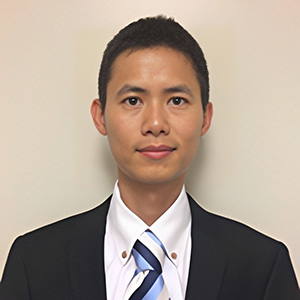
Xiaoyue Shan is an Assistant Professor of Economics at the National University of Singapore (NUS), located at 1 Arts Link, AS2 #05-36. She holds a Ph.D. in Economics from the University of Zurich (2021) and previously conducted postdoctoral research at the Wharton School of the University of Pennsylvania. Her research focuses on labor economics, behavioral/experimental economics, and gender economics, employing experimental and quasi-experimental methods to study topics like gender disparities, discrimination, social interactions, and skill development. Her work explores how peer groups influence personality traits (e.g., conscientiousness, competitiveness), discrimination mechanisms in labor markets, and the impact of policies on gender dynamics. Notable studies include examining sequential spillover effects in resume evaluations and analyzing pension systems' effects on child investment in China. Teaching interests align with her research, emphasizing behavioral and experimental economics. She is reachable at x.shan@nus.edu.sg .
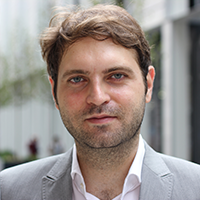
Eduardo Azevedo is the John M. Bendheim and Thomas L. Bendheim Professor of Business Economics and Public Policy at the Wharton School , University of Pennsylvania. He holds a courtesy appointment as Professor of Economics and was awarded the 2016 Sloan Foundation Fellowship. His research integrates economic theory with practical applications across science and business domains. His research interests include: Market design Selection markets Social science genetics Experimental economics Game theory Recent publication trends focus on: Economic theory applications to healthcare and digital markets Empirical Bayes methods in A/B testing Adverse selection in insurance markets Strategic behavior in two-sided matching Evolutionary behavioral economics He serves as an instructor for BEPP2500 - Managerial Economics , emphasizing real-world application of microeconomic theory to business problems. His work also involves software development for economic research, including MATLAB-based empirical Bayes tools for analyzing treatment effects in large-scale experiments. Scientific awards : Sloan Foundation Fellow (2016)
Lisa M. Jones is a Research Associate Professor of Psychology at the University of New Hampshire , affiliated with the Crimes Against Children Research Center (CCRC) and Family Research Lab . With over 20 years of experience, she specializes in child victimization, abuse, trafficking, and digital safety. Education: Ph.D. in Clinical Psychology – University of Rhode Island (1999) M.A. in Clinical Psychology – University of Rhode Island B.A. in Psychology – University of Virginia Research Focus: Dr. Jones's research spans child abuse and neglect , commercial sexual exploitation of children (CSEC) , human trafficking , youth internet victimization , and digital citizenship education . She leads multiple large-scale studies funded by the CDC, NIJ, WHO, and private foundations, focusing on prevention, intervention, and policy development. Current Projects: She is Principal Investigator on: A 5-year CDC-funded RCT evaluating youth-focused trafficking prevention education in Minnesota. An NIJ-funded quasi-experimental evaluation of Love 146’s services for trafficking victims. An NIJ-funded study on improving national surveillance of child sexual abuse in youth-serving organizations. Private RCTs evaluating digital citizenship programs like Common Sense Education and Google Be Internet Awesome. Publications & Impact: With over 100 publications, her work has shaped national and international discourse on child protection, digital safety, and trauma-informed practices. She regularly presents at national and international conferences. Contact: Email: lisa.jones@unh.edu Address: Crimes Against Children Research Center, 10 West Edge Dr., Suite 106, Durham, NH 03824, USA
Megan S. Ryerson holds the UPS Chair of Transportation and serves as Associate Chair of City and Regional Planning at the University of Pennsylvania's Stuart Weitzman School of Design. Previously, she was Associate Dean for Research (2018–2023), demonstrating sustained leadership in academic administration while maintaining an active research profile focused on transportation systems integration. Her educational credentials include: Ph.D. in Civil and Environmental Engineering, University of California, Berkeley (2010) B.Sc. in Systems Engineering, University of Pennsylvania (2003) Ryerson's research pioneers the integration of intercity transportation into urban planning frameworks, with foundational work in aviation infrastructure planning , airline demand forecasting , and transportation resilience . She investigates airport competition dynamics across megaregions, airline disaster recovery protocols, and fuel-efficient flight planning methodologies. Her scholarship actively bridges civil engineering and urban planning disciplines to design transportation systems that are inherently safe , efficient , and resilient against disruptions. Analysis of her 15 most recent publications reveals a pronounced shift toward transportation equity since 2022, particularly examining driver education accessibility ('driver training deserts') and bikeshare infrastructure allocation. This equity focus coexists with continued aviation research, while pandemic-era studies on transportation behavior (2020–2023) demonstrate methodological adaptability through quasi-experimental designs and real-world crisis response analysis. Her scientific recognition includes: UPS Chair of Transportation (prestigious endowed professorship) Dr. Ryerson has significantly expanded urban planning pedagogy by incorporating megaregional transportation systems into core curricula. Her leadership as former Associate Dean for Research reflects active engagement with funding agencies and research administration, though specific grant details aren't documented in source materials. Current work emphasizes translating research into equitable policy frameworks, particularly for vulnerable transportation populations.
Prof. Dr. André Rubbia is a Full Professor of Experimental Physics at ETH Zurich's Department of Physics, holding this position since December 2003 after serving as Associate Professor from 1998. His research spans neutrino physics, astro-particle physics, and dark matter detection through major international collaborations including CERN, Gran Sasso National Laboratory, and Fermilab. He currently serves as Co-Spokesperson for the billion-dollar DUNE neutrino project at Fermilab, managing over 900 scientists. His educational background includes: Diploma in Physics from the University of Geneva (1990), with thesis work on the L3 experiment at CERN's LEP accelerator Ph.D. in Physics from MIT (1993) under Nobel Laureate S.C.C. Ting, focusing on high-energy electron-positron collisions Rubbia's research centers on fundamental particle interactions, particularly neutrino oscillations and physics beyond the Standard Model. He pioneered liquid Argon Time Projection Chamber (LAr TPC) technology and dual-phase detection systems, enabling breakthroughs in neutrino mass measurements and dark matter searches. His work spans underground laboratories (Gran Sasso, Canfranc), the LHC's CMS detector, and neutrino beam experiments like T2K. Recent explorations include antimatter gravity tests, electron-positron bound states, and dark hidden sector searches. His 2025 publications reveal intense focus on neutrino oscillation parameter precision (T2K, Hyper-Kamiokande), FASER's LHC neutrino program, and DarkSide-20k dark matter detector development. Key themes include cross-section measurements, advanced detector technologies (SiPMs, emulsion tracking), and statistical methods for oscillation analysis, reflecting integration of theoretical modeling with cutting-edge instrumentation. Scientific recognition includes: Breakthrough Prize for Fundamental Physics (2016) awarded to the international team for discovering matter-anti-matter asymmetry in neutrino oscillations APS Viewpoint selection for editing the paper announcing first electron neutrino appearance at accelerators Rubbia has supervised over fifty PhD and Master's theses while securing substantial research funding as Principal Investigator for 20+ Swiss National Science Foundation projects and Coordinator of two EU FP7 Design Studies. His DUNE leadership involves complex international grant management across 30+ countries. He leads ETH Zurich's experimental particle physics group across multiple facilities: the ICARUS neutrino detector at Gran Sasso, CMS at CERN, DUNE at Fermilab, and DarkSide-20k for direct dark matter detection. His team developed the first underground ton-scale liquid argon detector and maintains collaborations with Japanese (Super-Kamiokande) and American (Fermilab) institutions.
Ricardo Sabates is a Professor of Education and International Development at the University of Cambridge, affiliated with the Faculty of Education and the Research for Equitable Access and Learning (REAL) Centre . He is a Fellow at Hughes Hall and serves as Deputy Director of Research at the Faculty of Education. His career spans institutions including the University of Sussex, Institute of Education London, and Hughes Hall, Cambridge. PhD in Development (University of Wisconsin-Madison, USA) MSc in Economics (University of Wisconsin-Madison, USA) BA Honours (ITAM, Mexico) Ricardo is a development economist with expertise in educational inequalities , particularly in low-income countries. His work focuses on quantitative methods , maternal education impacts , and equity in educational access and learning . He collaborates with international agencies such as the OECD , UNICEF , UNESCO UIS , DFID , and the World Bank . His recent research trends include large-scale educational reform in Ethiopia , community-school participation in India , disability and learning outcomes , and teacher effectiveness in Africa . Projects often involve experimental/quasi-experimental designs and policy evaluation in Ethiopia, Ghana, India, Pakistan, Rwanda, and Tanzania. Ricardo also supervises postgraduate doctoral and masters students and contributes to core research training courses at Cambridge. He is actively involved in multiproject collaborations funded by the DFID-ESRC , MasterCard Foundation , and CAMFED , addressing topics like girls' secondary education , teacher effectiveness , and equity in educational interventions .
Gustavo J. Bobonis is a Professor in the Department of Economics at the University of Toronto, with affiliations at the Munk School of Global Affairs and Public Policy. He holds a Ph.D. from the University of California, Berkeley (2005) and a B.A. from the University of Puerto Rico at Rio Piedras (2000). He co-directs the Forward Society Lab and is actively involved in research on development, labor, political economy, and economic history. Research Interests: His work focuses on development economics, particularly the impact of public policies on poverty, violence, education, and governance. He employs rigorous empirical methods, including field experiments and quasi-experimental designs, to analyze issues such as intimate partner violence, corruption, clientelism, and human capital accumulation. His research is geographically concentrated in Latin America and Puerto Rico. Recent Research Trends: His recent publications and working papers (2022–2025) demonstrate a strong focus on institutional reform, including anti-corruption audits, domestic violence courts, and education management. He also investigates long-term social impacts of welfare programs and climate adaptation strategies. His interdisciplinary approach bridges economics, public policy, and social science. Scientific Awards: U of T Department of Economics Faculty Award for Excellence in Undergraduate Teaching, 2015 John C. Polanyi Prize in Economic Science, 2009 National Academy of Education / Spencer Foundation Postdoctoral Fellow, 2008 Advising and Grants: While specific student names are not listed, he advises graduate students through the Honours Essay and research workshops. He leads collaborative research projects funded through grants and affiliations with J-PAL and BREAD, often involving large interdisciplinary teams. His work includes randomized evaluations and long-term follow-ups, suggesting sustained funding and research support. Labs and Teams: He co-directs the Forward Society Lab, which likely supports policy-relevant research on social development. He frequently collaborates with economists such as Paul Gertler, Marco Gonzalez-Navarro, Simeon Nichter, and Luis R. Cámara Fuertes. His affiliations with J-PAL and BREAD indicate integration into major global research networks focused on development and poverty alleviation.
Dr. Alyas Widita is an Assistant Professor in the Urban Design program at Monash University, Indonesia. He is actively involved in research and teaching, focusing on urban planning, transportation, and smart city technologies. He serves as the Program Coordinator for Urban Design and teaches courses such as Urban Design Studio: Smart City and Smart City Technologies. Education: Ph.D. in City and Regional Planning, Georgia Institute of Technology, United States Dr. Widita's research centers on the built environment, transportation systems, and urban analytics, with a strong emphasis on developing Asian cities. His work explores congestion impacts of mass transit, ride-hailing effects on vehicle ownership, rural-urban migration, walking behavior, and spatial patterns of MSMEs. He employs advanced data analytics and causal evaluation methods to inform urban policy. His recent publications span high-impact journals such as Transport Reviews , Journal of Planning Education and Research , and Travel Behaviour and Society . The research trend shows a consistent focus on data-driven urban policy, sustainable mobility, and equity in urban development across Indonesia and Southeast Asia. Scientific Awards and Recognition: No specific awards listed, but research widely cited and featured in media outlets. Dr. Widita has secured and contributed to multiple research projects funded by international and national agencies, including the World Bank, Korea Transport Institute (KOTI), Central Bank of Indonesia, and Georgia Department of Transportation. He is currently leading or co-leading projects on Jakarta’s subsidence, flood risk management using remote sensing, and the Citarum River revitalization. He collaborates extensively with researchers across disciplines and institutions. His work contributes to UN Sustainable Development Goals, particularly those related to sustainable cities and communities. He is accepting PhD students interested in the built environment, transportation, and urban analytics in developing Asia. He is involved in key labs and research teams including the Citarum Action Research Program (CARP), Intelligent and Dynamic Remote Sensing for Flood Risk, and interdisciplinary urban analytics initiatives at Monash Indonesia.
Dr. Wenwu Xu is an Associate Professor in the Department of Mechanical Engineering at San Diego State University (SDSU), affiliated with the College of Engineering. His research focuses on advanced materials science, nanotechnology, and computational modeling of material behavior. He specializes in investigating dislocation dynamics, electric field effects on materials, and the development of novel processing techniques for metallic and ceramic composites. His work spans topics such as hydrogen embrittlement, nanocrystalline material properties, and 3D printing of bioinspired structures. He employs molecular dynamics simulations, atomistic modeling, and experimental validation to study material deformation, sintering mechanisms, and phase stability. Xu’s contributions include pioneering quasi-instantaneous materials processing via high-intensity electrical nano-pulsing and designing recyclable piezoelectric composites for wearable sensors. His research has been published in over 40 peer-reviewed articles since 2007, reflecting a sustained focus on nanoscale material behavior, thermodynamic stability, and industrial applications. While no awards are explicitly listed, his extensive publication record underscores his expertise in materials engineering and computational methods. Dr. Xu’s lab (via mmm.sdsu.edu ) likely explores cutting-edge materials processing and characterization techniques, though specific grants or advising roles are not detailed in the provided text.
Ninette Pilegaard is a Professor and serves as Deputy Head of Division and Head of Section for Transport Policy at the Department of Technology, Management and Economics, Technical University of Denmark (DTU). Her academic career spans multiple research domains with significant contributions to transportation policy and economics. Her research interests focus on transportation policy analysis with particular expertise in: Road charging systems and pricing mechanisms Bicycle infrastructure and safety analysis Commuting behavior and accessibility impacts Car ownership and usage patterns Relationship between transportation accessibility and labor market outcomes Dr. Pilegaard's scholarly work demonstrates a strong empirical approach combining transportation engineering with economic analysis. Her recent publications reveal a consistent focus on evidence-based policy evaluation, particularly in the Danish context. She frequently employs quasi-natural experimental methods to assess transportation policy impacts, with particular attention to road pricing, cycling infrastructure, and the economic implications of transportation systems. Her research has been supported by major funding bodies including Innovation Fund Denmark and Forskningsrådsfinansiering, and has resulted in publications in high-impact transportation journals such as Transportation Research Parts A and D, and Journal of Safety Research. As an academic supervisor, Dr. Pilegaard has served as Main Supervisor for PhD projects, including the 'Productivity and agglomeration' project. She has been actively involved in numerous research collaborations both within DTU and with external partners. Her laboratory work focuses on transportation data analysis, particularly utilizing Danish transportation datasets to examine policy impacts. She has developed expertise in analyzing hospital data for traffic safety research and has contributed to methodologies for assessing infrastructure effects on traffic accidents.
Rainer Watermann is a Full Professor for Empirical Research in Education at the Free University of Berlin since 2011, previously serving as Full Professor for Education and Empirical Research in Schools at Georg-August University of Göttingen (2005-2011). His academic career includes significant research positions at the Max Planck Institute for Human Development in Berlin (1997-2005). Watermann earned his Diploma in Educational Science from the University of Münster (1996), followed by a Dr. phil (2002) and Habilitation (2005), both from Freie Universität Berlin. His educational background established the foundation for his extensive research in educational transitions and disparities. His research focuses on educational transitions, particularly from primary to secondary school and into higher education, examining motivational factors, social background influences, and achievement goal development. Watermann's work consistently addresses how social disparities affect educational opportunities and outcomes, with particular attention to gender differences and longitudinal developmental patterns. His methodological expertise includes latent class analysis, structural equation modeling, and large-scale assessment design. Watermann's publication portfolio reveals consistent research trajectories examining motivational frameworks (particularly expectancy-value theory), educational transitions, social disparities in education, and political socialization. His work spans both theoretical development and practical applications for educational policy and practice, with increasing focus on intervention effectiveness in recent years. As an active member of the academic community, Watermann serves on multiple editorial boards including the Swiss Journal for Educational Sciences and Empirical Educational Science , and regularly reviews for major educational and psychological journals. He has also contributed to significant research centers, including serving as spokesman for the Center for Empirical Research on Teaching and Learning in Schools (ZeUS) at the University of Göttingen (2008-2010). Watermann maintains an active research program with numerous collaborations across Germany and internationally, evidenced by his consistent publication record through 2025. His work bridges educational psychology, sociology of education, and policy-relevant research, maintaining strong connections between theoretical frameworks and practical educational contexts.
Dr. Florian Foos is an Associate Professor in Political Behaviour at the LSE's Department of Government, affiliated with the LSE Data Science Institute and Electoral Psychology Observatory. He holds a D.Phil from Nuffield College, Oxford. His research focuses on partisan election campaigns using randomized field experiments to study electoral mobilization, opinion change, and political activism. Key interests include social influence in political networks, media effects, and campaign strategies. He has published in top journals like the American Political Science Review and American Journal of Political Science. Current projects include the Register to Vote '21 initiative testing voter registration methods. He teaches experimental methods and political behavior, and co-organizes the European Workshop in Empirical Political Science (EuroWEPS). Research highlights include analyzing tabloid media's impact on Euroscepticism, the role of partisan cues in mobilization, and subnational representation effects. His work combines experimental designs with quasi-experimental methods, emphasizing causal inference. Collaborations span institutions like King's College London and German parliamentarians. He advises on policy experiments and serves on academic advisory boards.
Dr. Arghya Das is an Associate Professor in the Department of Civil Engineering at the Indian Institute of Technology Kanpur (IIT Kanpur), where he has been serving since 2014. He previously held the position of Assistant Professor at IIT Kanpur from July 2014 to November 2020 before being promoted to Associate Professor in December 2020. Prior to joining IIT Kanpur, he completed his Post-Doctoral Research Fellowship at Northwestern University, USA, and served as a Research Associate at the University of Sydney, Australia. Dr. Das earned his educational qualifications from prestigious institutions: PhD in Geotechnical Engineering from the University of Sydney, Australia (2013), M.Tech from IIT Bombay, India (2009), and B.E. from Jadavpur University, India (2006). His research focuses on advanced aspects of soil mechanics and geotechnical engineering, with particular emphasis on constitutive modeling of geomaterials, micromechanics of granular materials, and flow through porous media. His work integrates numerical and physical modeling approaches to address complex geotechnical challenges including bifurcation and instability analysis in geomaterials. Dr. Das teaches several advanced courses including Constitutive Modeling of Frictional Materials, Advanced Geotechnical Engineering, Rock Mechanics, Computational Methods in Engineering, and Soil Mechanics. Dr. Das's publication record demonstrates a consistent focus on discrete element modeling (DEM) applications in geomechanics, particle crushing behavior, and constitutive modeling of soils. His recent work (2020-2022) has particularly emphasized unsaturated soil mechanics, chemomechanical effects on granular materials, and advanced computational approaches to soil behavior. These publications appear in high-impact journals such as Acta Geotechnica, Geomechanics for Energy and the Environment, and International Journal of Geomechanics. PK Kelkar Fellowship - IIT Kanpur (2022-2025) FEIT University of Melbourne Visiting Researcher Fellowship (2022-2023) YGE Award for Best Paper on Computational Geomechanics, Indian Geotechnical Society (2018) SERB - Early Career Research Award (2016-2019) Dr. Das has successfully secured multiple research grants including projects funded by ONGC, CSIR, and SERB focusing on micro-poro-mechanical modeling, experimental assessment of Indian crushable sands, and permeability evolution in deep-reservoir rocks. He serves as a corresponding member of the International Technical Committee TC-105 on 'Geo-Mechanics from Micro to Macro' of the International Society for Soil Mechanics and Geotechnical Engineering (ISSMGE) and is a member of the Indian Geotechnical Society.
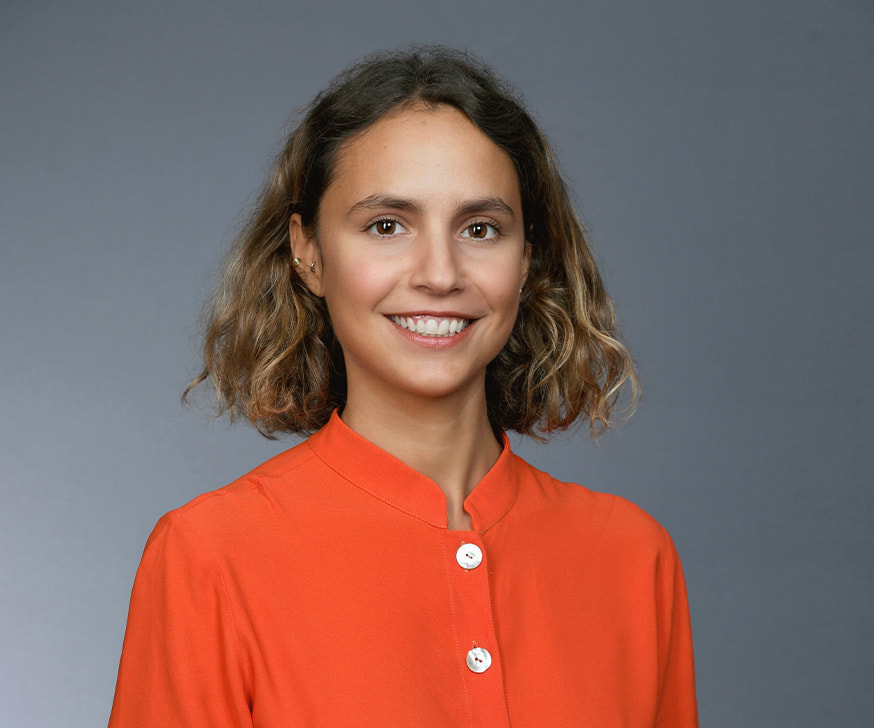
Maddalena Ronchi is an Assistant Professor of Finance at the Kellogg School of Management , Northwestern University. Her research bridges labor economics and finance, focusing on labor market frictions and their impacts on workers' careers and corporate dynamics. Expertise in applied microeconomics, gender inequality, and corporate behavior Recipient of the Drake Scholar recognition Her work employs quasi-experimental designs and employer-employee matched data to analyze gender gaps in employment, earnings, and occupational choices, as well as firm-level outcomes like talent retention and growth. Her notable publication includes: 2020: Gender gaps and the structure of local labor markets (Labour Economics) with Barbara Petrongolo Contact: maddalena.ronchi@kellogg.northwestern.edu