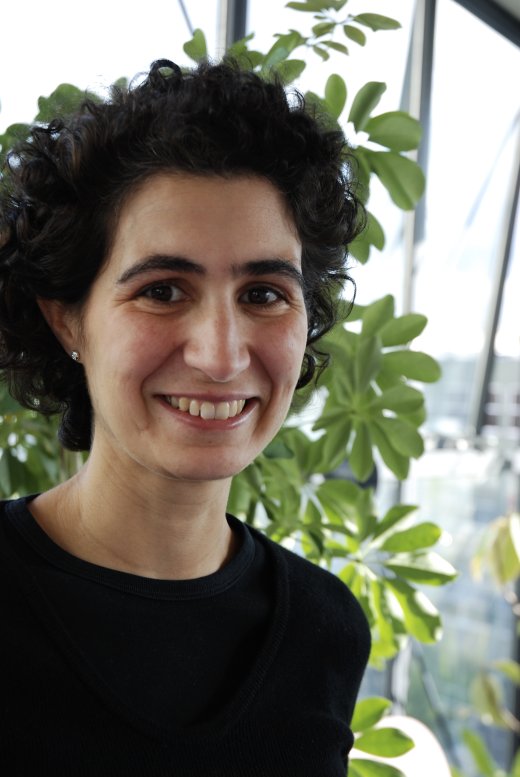
Lourdes Agapito is a Professor of 3D Vision at the Department of Computer Science, University College London (UCL), within the Faculty of Engineering Sciences. She leads research in Non-Rigid Structure from Motion (NR-SFM) and 3D reconstruction from monocular video sequences. Her work addresses dynamic scenes, deformable objects, and articulated structures, with applications in robotics and computer vision. She holds an ERC Starting Grant (2008–2014) and led the EU Horizon 2020-funded Second Hands project (2014–2019), collaborating with institutions like EPFL and KIT to develop robots with 3D visual perception for maintenance tasks. Her research group focuses on dense optical flow estimation, video registration, and deformable tracking. Agapito’s research interests include monocular 3D reconstruction, non-rigid motion analysis, and neural approaches to 3D modeling. She has supervised multiple PhD students and postdocs, including notable researchers such as Ravi Garg and Marco Paladini (Sullivan Prize recipient). Her contributions to conferences include roles as Program Chair for CVPR 2016 and CVPR 2017, and she has authored influential papers on topics like Video-Popup (ECCV 2014) and Modal Space (CVPR 2017). Current projects involve advancing neural parametric models and real-time 3D reconstruction techniques. Awards include the ERC Starting Grant and recognition for her team’s work in non-rigid reconstruction. She actively mentors students and collaborates on grants, with recent openings for postdocs and PhD candidates in 3D vision and robotics.
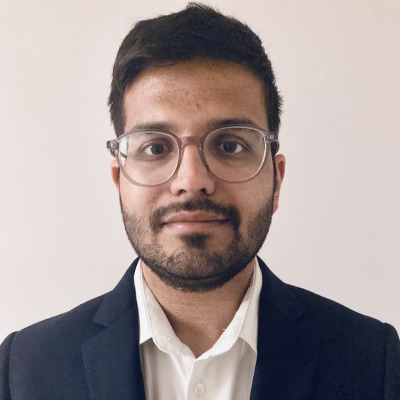
Aditya K. Jagannatham is a Professor in the Department of Electrical Engineering at the Indian Institute of Technology Kanpur (IIT Kanpur). With expertise in wireless communications and signal processing, he has established himself as a leading researcher in 5G/6G technologies, MIMO systems, and cognitive radio networks. His educational background includes: PhD in Electrical and Computer Engineering from UC San Diego (2007) M.S. in Electrical and Computer Engineering from UC San Diego (2004) B.Tech. in Electrical Engineering from IIT Bombay (2001) Professor Jagannatham's research primarily focuses on next-generation wireless communication systems, with special emphasis on 5G and 6G technologies. His work spans OTFS modulation, Terahertz communications, Visible Light Communication (VLC), Intelligent Reflecting Surface (IRS) technology, Massive MIMO, mmWave MIMO, Non-Orthogonal Multiple Access (NOMA), and Filter-Bank Multi-Carrier (FBMC) systems. His research integrates theoretical analysis with practical implementation challenges, addressing critical issues in modern wireless networks. His recent publications demonstrate a strong trend toward advanced signal processing techniques for next-generation wireless systems, particularly focusing on Sparse Bayesian Learning approaches for channel estimation, cooperative communication systems with energy harvesting capabilities, and millimeter wave MIMO technologies. His work bridges theoretical communication theory with practical implementation challenges in emerging wireless standards. Professor Jagannatham has received numerous prestigious awards and fellowships: Arun Kumar Endowed Chair Professorship (2019) Qualcomm Innovation Fellowship (2018) P.K. Kelkar Young Faculty Research Fellowship for excellence in research (2015-2018) IEEE Signal Processing Society travel grant to attend ICASSP 2015 Gopal Das Bhandari Memorial Distinguished Teacher Award (2012-13) Cal(IT)2 fellowship for graduate study at UC San Diego As an educator, Professor Jagannatham has received commendation letters from the Director of IIT Kanpur for excellence in teaching courses including EE624 Information and Coding Theory, EE670 Wireless Communications, and EE320 Principles of Communication Systems. His research has attracted significant funding, though specific grant details are not provided in the available information. He likely supervises graduate students working on cutting-edge wireless communication research. Professor Jagannatham is based in the Advanced Centre for Electronic Systems (ACES) at IIT Kanpur, where he leads research in wireless communications. His work appears to be closely connected with the Center for Developing Intelligent Systems (CDIS) and other research centers at IIT Kanpur focused on next-generation communication technologies.
Robert M. Weikle, II is a Professor in the Charles L. Brown Department of Electrical and Computer Engineering at the University of Virginia, with a courtesy appointment in the Department of Physics. He earned his B.S. from Rice University (1986), M.S. (1987), and Ph.D. (1992) in Electrical Engineering from Caltech, followed by postdoctoral work at Chalmers University of Technology (1992). His research focuses on millimeter-wave and terahertz electronics , applied electromagnetics, integrated antennas, low-noise sensors, and heterogeneous integration of compound semiconductors. His work bridges electronics and photonics for spectrum access, with applications in astronomy, spectroscopy, and metrology. He has published extensively on micromachined silicon substrates, superconducting materials, and emerging technologies. Scientific Awards: IEEE Microwave Prize (1993) David A. Harrison III Award (1999) University of Virginia All-University Outstanding Teaching Award (2000) Edlich-Henderson Innovator of the Year (2016) Fulbright Scholar (2001) As Chief Technology Officer and co-founder of Dominion Microprobes, Inc., he commercializes micromachined wafer probes for high-frequency metrology. His lab, located in E220 Thornton Hall and the Jesse W. Beams Physics Building, has produced 15+ recent publications on submillimeter-wave devices, THz probes, and calibration techniques.
Kshitij Sabnis is a Lecturer in Aerospace Engineering at the School of Engineering and Materials Science, Queen Mary University of London. He serves as Admissions Lead and Outreach & Recruitment Lead for Aerospace Engineering, and Deputy Director of Industrial Engagement (Graduate Attributes). He is affiliated with the Centre for Intelligent Transport and conducts experimental research in high-speed aerodynamics. Education: PhD in Experimental Aerodynamics, University of Cambridge Master’s in Physics Dr Sabnis's research focuses on experimental aerodynamics across various speed regimes, particularly shock/boundary-layer interactions, vortex dynamics, and supersonic flows. His work involves wind tunnel experiments on simplified models to understand complex fluid mechanics in applications ranging from racecar wings to supersonic aircraft intakes. He employs advanced diagnostics and develops novel experimental setups to enhance physical insight into flow phenomena. His recent publications (2019–2025) reflect a strong emphasis on high-speed flow behavior, including shock-induced separation, vortex interactions, and nacelle aerodynamics. Key themes include flow control, wind tunnel design, and validation of turbulence models. His work bridges fundamental fluid dynamics with practical aerospace engineering challenges. Scientific Awards: FHEA (Fellow of the Higher Education Academy) Dr Sabnis actively supervises PhD students and leads externally funded research projects. He has secured grants from EPSRC and the Royal Society, supporting work on schlieren imaging enhancement and small-scale wind turbines for rural energy. He teaches advanced aerodynamics modules and contributes to curriculum and industrial engagement. He leads a research group focused on experimental high-speed aerodynamics and is involved in developing new diagnostic techniques and test rigs. His team investigates vortex interactions and aerodynamic performance under extreme flow conditions.
Jes Frellsen is an Associate Professor at the Department of Applied Mathematics and Computer Science (DTU) since 2016. Previously, he held academic positions at the IT University of Copenhagen (2016-2019), postdoctoral roles at University of Cambridge (2013-2016) and University of Copenhagen (2011-2013). Education: PhD in Bioinformatics (2011), University of Copenhagen MSc in Bioinformatics (2007), University of Copenhagen BSc in Mathematics and Computer Science (2005), University of Copenhagen EAP Exchange at University of California, Santa Cruz (2004-2005) Research Focus Jes Frellsen specializes in statistical machine learning , particularly generative AI and deep generative models with applications in bioinformatics . His work integrates Bayesian inference , directional statistics , and Markov chain Monte Carlo methods to address challenges in macromolecular structure prediction and missing data imputation . Recent efforts explore uncertainty quantification in image segmentation and generative modeling for materials science. Advising & Collaborations He actively supervises PhD students and postdoctoral researchers in projects spanning news recommendation systems , medical imaging , and 3D structure generation . Collaborations include work with Zoubin Ghahramani (Cambridge) and Thomas Hamelryck (Copenhagen), with contributions to protein structure prediction and statistical methods in structural bioinformatics .
Hsiao-Dong Chiang is a Professor in the School of Electrical and Computer Engineering at Cornell University. He holds a Ph.D. in Electrical Engineering from the University of California, Berkeley, and has made significant contributions to nonlinear system theory and power system stability. His research spans theoretical development and practical applications in electric power systems, nonlinear optimization, and machine learning. B.S., Electrical Engineering, National Taiwan University, 1979 M.S., Electrical Engineering, National Taiwan University, 1981 Ph.D., Electrical Engineering, University of California, Berkeley, 1986 Chiang's research interests focus on nonlinear system theory , power system stability and control , nonlinear optimization , and their applications to modern power grids with high penetration of inverter-based resources. He is renowned for developing the BCU method and TRUST-TECH methodology , which have enabled fast direct stability assessment and global optimization in complex systems. His work bridges fundamental theory with industrial deployment through his companies, Bigwood Systems, Inc. and Global Optimal Technology, Inc. His recent publications (2024–2025) reflect a strong trend toward integrating machine learning and deep neural networks with power system analysis , particularly in state estimation, optimal power flow, and voltage control. There is a clear emphasis on handling uncertainty, non-convexity, and multi-scale dynamics in active distribution networks and integrated energy systems . His work increasingly focuses on resilience , real-time control , and user-centered methodologies for modern grid operations. Chiang has received numerous scientific honors, including: IEEE Fellow (1997) United States Presidential Young Investigator Award (1989) Multiple DOE Grid Optimization Challenge Awards (2020–2023) Best Paper Awards from IEEE Transactions and Conferences Outstanding Education Award, Cornell University (1990) He has successfully managed over 100 research projects and holds 28 U.S. and international patents. As the founder of Bigwood Systems, Inc., he has commercialized advanced software for utility companies across the U.S. and Japan. His team has published over 480 refereed papers and received more than 17,500 citations. He advises a large research group and leads innovations in computational methods for energy systems. His lab is actively involved in developing next-generation tools for grid security, optimization, and machine learning integration.
Harald Kucharek is a Research Professor in the Physics & Astronomy Department at the University of New Hampshire (UNH), part of the College of Engineering and Physical Sciences. He is affiliated with the Space Science Center and holds a dual Ph.D. in Physics from the Technical University of Munich and an M.S. in Physics from the University of Regensburg. His research focuses on heliospheric physics, interstellar medium interactions, and space plasma dynamics, leveraging data from missions like IBEX and Solar Orbiter. Dr. Kucharek's work centers on understanding the global structure of the heliosphere, interstellar neutral gas flow, and particle acceleration at shocks. He has contributed to studies of pickup ions, energetic neutral atoms (ENAs), and magnetic reconnection processes. His teaching includes courses on Space Plasma Physics and Magnetohydrodynamics of the Heliosphere. He has been involved in over 22 grants (2005–2024), including mission-related research for IMAP and interstellar probe concepts. Key research trends include analyzing IBEX observations of interstellar helium and oxygen, investigating shock dynamics and ion acceleration, and modeling the heliospheric boundary. His recent work explores the implications of hybrid simulations and multi-spacecraft data for understanding plasma behavior in extreme environments. Collaborations with institutions like NASA and ESA highlight his role in advancing space physics through both observational and theoretical contributions.
Andrea Barth is a W3-Professor of Computational Methods for Uncertainty Quantification at the University of Stuttgart, leading the Research Group for Computational Methods for Uncertainty Quantification within the Excellence Cluster for Simulation Technology. She holds a Ph.D. from the University of Oslo (2009) and has held positions at ETH Zürich and the University of Stuttgart. Her work focuses on stochastic partial differential equations, numerical methods for uncertainty quantification, and applications in engineering and natural sciences. Education: Ph.D. in Mathematics, University of Oslo (2006–2009) Lecturer/Postdoc at ETH Zürich (2010–2013) Junior Professor at University of Stuttgart (2013–2017) Research Interests: Stochastic PDEs, uncertainty quantification, Monte Carlo methods, Bayesian inverse problems, and numerical analysis of random fields. Her work bridges stochastic analysis and numerical simulations, addressing challenges in modeling and simulating complex systems with uncertainties. Grants & Funding: Principal Investigator in projects like 'Data-Integrated Simulation Science' (ExC 2075) and 'Quantitative Methods for Visual Computing' (SFB/TRR 161). Her research also explores applications in porous media, carbon dioxide storage, and optical flow analysis. Supervision: Advised PhD students including Oliver König, Fabio Musco, and Robin Merkle. Current students focus on topics like deep learning for stochastic PDEs and continuous level Monte Carlo methods.
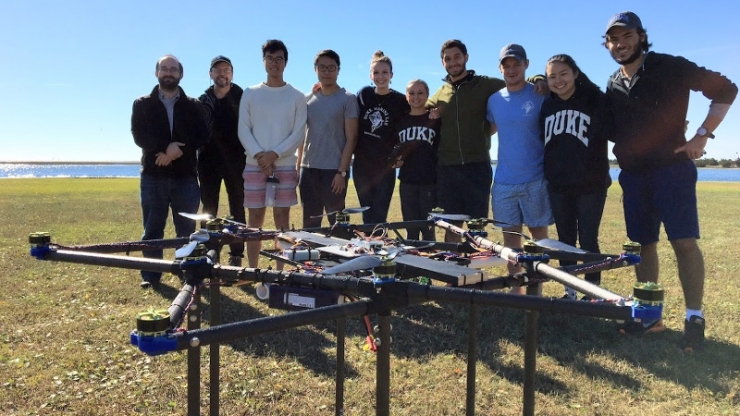
Martin Brooke is an Associate Professor of Electrical and Computer Engineering at Duke University's Pratt School of Engineering. He earned his B.E. in Electrical Engineering (First Class Honors) from Auckland University, New Zealand (1981), followed by M.S. (1984) and Ph.D. (1988) degrees from the University of Southern California. His career includes positions at Georgia Institute of Technology (1988-2003) before joining Duke. Dr. Brooke's research spans analog/RF/optoelectronic circuits, sensor interfaces, and deployable sensor systems with applications in ocean engineering and biomedical imaging. He leads innovative projects including ocean pH monitoring sensors and X Prize seafloor mapping initiatives, focusing on solving 'open-ended problems' through interdisciplinary approaches combining engineering with marine science. His extensive publication record (160+ articles) demonstrates consistent focus on sensor technologies, integrated circuits, and engineering education. Recent works emphasize biomedical applications (cancer margin assessment), environmental monitoring (ocean sensors), and educational innovations (remote microelectronics labs), showing a trend toward multidisciplinary solutions for real-world challenges. Awards and Honors: Capers and Marion McDonald Award for Teaching/Research Excellence (2022) Georgia Tech Outstanding Thesis Advisor Award (2003) IEEE Midwest Symposium Best Paper Award (1992) NSF Research Initiation Award (1990) Analog Devices Career Development Award (1988-1993) He has graduated 23 PhD students and mentors teams for major challenges like the X Prize ocean robotics competition. His research group develops deployable sensor systems with funding from NSF, X Prize Foundation, and industry partners. Current projects include drone-based ocean floor mapping systems and advanced pH sensors for marine ecosystem monitoring. Dr. Brooke leads the Brooke Research Group focusing on analog/RF systems and sensor integration. The team collaborates with Duke Marine Lab on ocean engineering initiatives and maintains eight U.S. patents. Future work emphasizes scalable sensor networks for environmental monitoring and biomedical diagnostics.
Marie-Christine Zdora is a Research Fellow in the School of Physics and Astronomy at Monash University. She holds adjunct roles including Adjunct Scientist at ETH Zürich (2022–2020) and Postdoctoral Researcher at Paul Scherrer Institut (2021–2021). Her academic journey includes a PhD in Physics from University College London (2015–2020), and master’s degrees from TU Munich and the University of Sydney. Her research focuses on advanced X-ray imaging techniques, particularly phase-contrast imaging using near-field speckles, dark-field imaging, and multi-modal approaches. Key areas include medical imaging applications, biological tissue analysis, and synchrotron-based tomography. She leads projects such as Multi-scale, multi-modal X-ray imaging using speckle and collaborates internationally on diagnostic radiology innovations. Zdora has received prestigious awards including the Springer Thesis Award (2020) and the Award of Congressi Stefano Franscini (2016). She serves as an Associate Editor for Optics Express and actively supervises students and mentors interns. Her work contributes to SDGs related to health, innovation, and sustainable development.
Dr Tom Barrick is Reader in Magnetic Resonance Imaging and Head of the Neurological Disorders and Imaging Section within the Neuroscience and Cell Biology Research Institute at City St George's, University of London (formed from the merger of City, University of London and St George's, University of London on August 1, 2024). His research focuses on developing automated image analysis techniques for identifying neuroimaging biomarkers of disease diagnosis and prognosis across multiple conditions. PhD in Medical Imaging, University of Liverpool (1997-2004) MSc in Pure Mathematics (Distinction), University of Liverpool (1996-2004) BSc in Mathematics (First Class Honours), University of Liverpool (1993-1996) Dr Barrick's research concentrates on the development of MR image acquisition and analysis techniques, with particular focus on novel diffusion MRI methods capable of quantifying tissue heterogeneity in the brain. He has developed Quasi-Diffusion Imaging (QDI), a technique based on continuous time random walk models that provides robust quantification of diffusion and tissue heterogeneity with high signal-to-noise ratios from clinically acceptable acquisition times. His work spans applications in brain tumours, dementia, traumatic brain injury, Parkinson's disease, cerebrovascular disease, chronic obstructive pulmonary disease, and other neurological conditions. Dr Barrick's extensive publication record (110 peer-reviewed articles, H-index 38) demonstrates a strong focus on advancing neuroimaging techniques, particularly diffusion MRI and QDI. His research spans multiple disease areas with significant clinical collaborations, especially in cerebrovascular disease and dementia. His work increasingly integrates machine learning to combine information from various imaging biomarkers for improved diagnosis and prognosis assessment. Dr Barrick has published 110 peer-reviewed journal articles with an H-index of 38 (Europe PubMed Central), reflecting substantial scholarly impact in medical imaging and neuroscience. Teaching: Provides lectures on Clinical Neuroscience module (BSc Biomedical Sciences) and supervises research projects for BSc Clinical Pharmacology, BSc Biomedical Sciences, MSc, MRes, and PhD students Funding: Has received active funding from GSK, St George's Hospital Charity, Medical Research Council, Innovate UK, Cancer Research UK, St George's Innovation and Enterprise Award, and Alzheimer's Research UK Research Group: Leads a team including Dr Mohani-Preet Dhillon (Lecturer in Interdisciplinary Education and Research), Mike Mills (MRI physicist), and Ian Storey (Image Analyst) Dr Barrick leads the Neurological Disorders and Imaging Section and collaborates extensively both within City St George's (with neurologists, neurosurgeons, and respiratory specialists) and externally with researchers from institutions including University of Bristol, National Physical Laboratory, Northwestern University, University of Cambridge, and The University of Queensland. He is a founding member of the Anomalous Relaxation and Diffusion Study group, reflecting his specialized expertise in advanced diffusion imaging techniques.
Prof. Niek van Hulst is a Professor at the Institute of Photonic Sciences (ICFO), leading the Molecular Nanophotonics group. His research focuses on nanoscale optical fields, single emitters, and ultrafast spectroscopy, leveraging nanoantennas and femtosecond techniques to control light-matter interactions. Key interests include emission control, nano-focusing, and nanoscale imaging. He collaborates with institutions such as ETH Zürich, CSIC, and the University of Twente. Notable awards include the 2003 European Science Prize from the Körber Foundation. His research employs advanced tools like heterodyne near-field microscopes, femtosecond lasers, and pulse shapers. Funding comes from ICREA, the European Research Council (ERC), and the MICINN. His work bridges plasmonics, quantum optics, and nanotechnology, with applications in energy transfer, bio-nano interfaces, and ultrafast imaging. Key achievements include pioneering studies on exciton dynamics in 2D materials, hot-carrier cooling in graphene, and spatiotemporal tracking of charge carriers. His lab integrates cutting-edge facilities like the ICFO-NPL NanoPhotonics Lab for nanofabrication and advanced optical characterization.
Hristo Chipilski is an Assistant Professor in the Department of Scientific Computing at Florida State University. His research focuses on data assimilation, artificial intelligence, numerical weather prediction, and atmospheric dynamics, combining theoretical, computational, and applied approaches. Education: 2021-2023 ASP Postdoctoral Fellow (NCAR), 2016-2021 PhD in Meteorology (University of Oklahoma), 2012-2016 MMet in Meteorology and Climate (University of Reading, UK) Research Interests: Data assimilation (optimal combination of models and observations) drives his work, particularly for atmospheric systems. He explores AI integration with traditional assimilation methods, targeting convective-scale weather prediction and real-time high-performance computing applications. His studies analyze bore-generating convection, cloud microphysics, and multiscale dynamics. Article Trends: Recent publications emphasize nonlinear ensemble filtering techniques, diffusion models, and generative AI for data assimilation in geophysical systems. Topics span surface quasi-geostrophic dynamics, partial observation handling, and real-time numerical weather prediction (NWP) frameworks optimized for high-performance computing.
Seyed Jalaleddin Mousavirad (Jalal) serves as a Postdoctoral researcher at Mid Sweden University in Sundsvall, Sweden, within the Department of Computer and Electrical Engineering (DET) and affiliated with the STC Research Centre. His research focuses on advancing AI-driven solutions for sustainable technologies and complex optimization problems. He earned his PhD in Computer Engineering specializing in Artificial Intelligence from the University of Kashan, Iran. Previous academic appointments include Assistant Professor at Hakim Sabzevari University (Iran), instructor roles at the University of Tehran (2018-2019) and Azad University (2019-2020), and a Research Fellow position at the University of Beira Interior (Portugal) where he contributed to the European GreenStamp project on sustainable Android applications. Dr. Mousavirad's research spans Image Processing and Computer Vision, Machine Learning, Evolutionary Computation, and Applied Artificial Intelligence, with significant contributions in pattern recognition, metaheuristic algorithms, and neural network optimization. His work demonstrates strong interdisciplinary applications in healthcare diagnostics, power systems, and medical imaging. Recent publications reveal a pronounced trend toward federated learning frameworks for privacy-preserving medical analysis, adversarial robustness in diffusion models, and hybrid optimization techniques for ECG classification and brain tumor detection. This reflects a strategic focus on translating AI innovations into practical healthcare and sustainability solutions. He actively contributes to the academic community as a guest editor for journals including Computational Intelligence and Neuroscience, Entropy, and Mathematical Biosciences and Engineering. His editorial leadership extends to organizing special sessions at IEEE CEC and EvoApplications conferences. Dr. Mousavirad maintains extensive peer-review commitments across 50+ prestigious venues including IEEE Transactions on Evolutionary Computation and IEEE Transactions on Cybernetics. His collaborative research includes international engagements at Xi'an Jiaotong-Liverpool University (China) and current work within Mid Sweden University's STC Research Centre on energy-aware computing and neural network optimization.
Irene Fonseca is a Full Professor of Mathematics at Carnegie Mellon University (CMU), where she also holds the Kavčić-Moura Professorship in Mathematics. She is Director of the Center for Nonlinear Analysis and has served as President-Elect of SIAM (2012–2013) and Vice-President of the American Mathematical Society (2024–2027). Her research focuses on calculus of variations, geometric measure theory, partial differential equations, and their applications to materials science and image processing. Education: Licenciatura in Mathematics, University of Lisbon (1980) MS (1983) and PhD (1985) in Mathematics, University of Minnesota Affiliations: Mellon College of Science (CMU) Center for Nonlinear Analysis (CMU) Her work addresses properties of novel materials, phase transitions, fracture mechanics, and image reconstruction. Over 140 peer-reviewed papers and 2 books highlight her contributions. Key awards include the AWM-SIAM Sonia Kovalevsky Lecture (2006), the International Society for the Interaction of Mechanics and Mathematics Senior Prize (2022), and knighthood in Portugal’s Military Order of St. James (1997). Notable research includes: Epitaxial film growth dynamics Homogenization techniques in materials science Mathematical models for dislocations and defects in solids She mentors over 40 postdocs and students, fostering international collaborations through affiliations with institutions worldwide. Her leadership in professional societies and advocacy for women in mathematics further amplify her global impact.