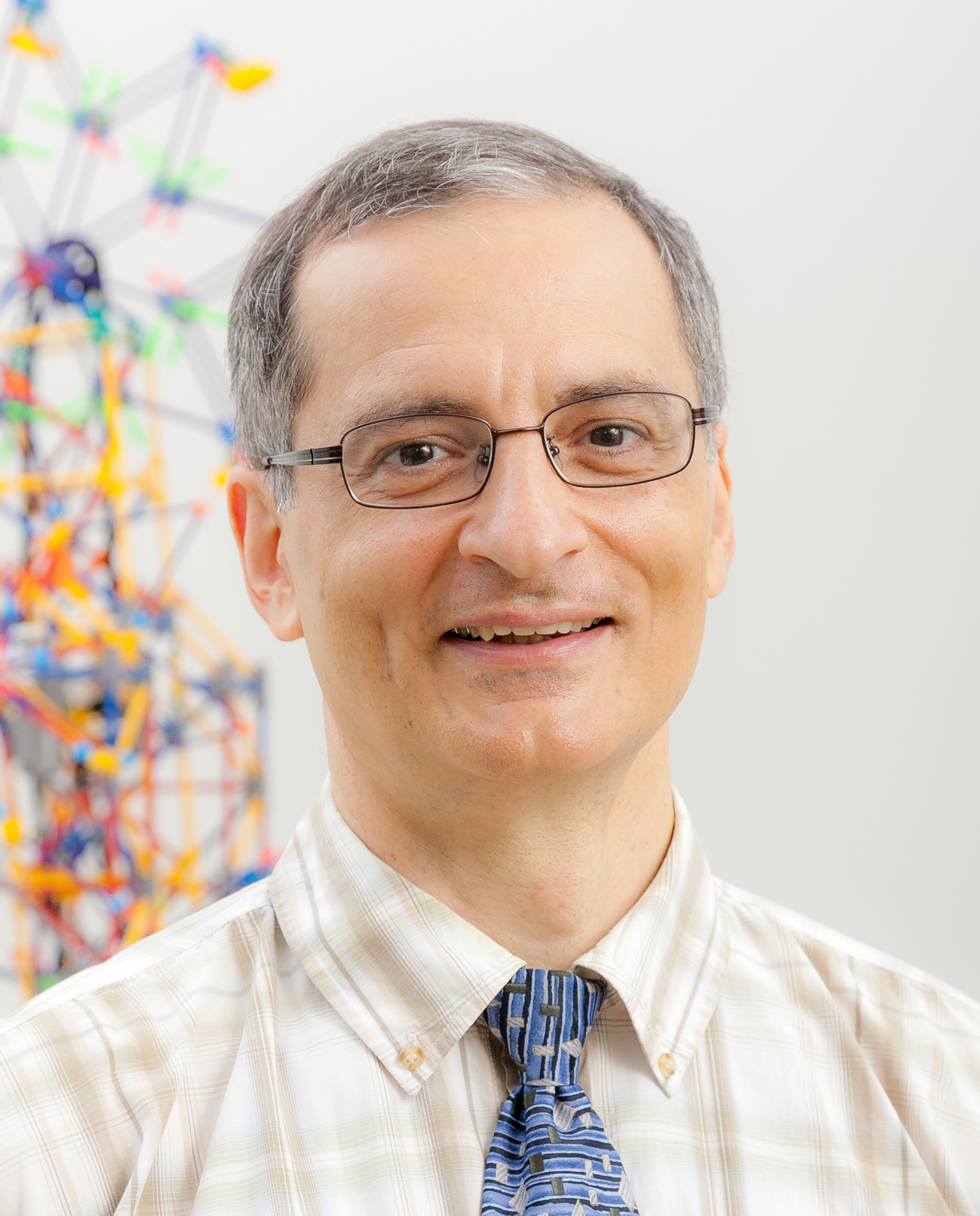
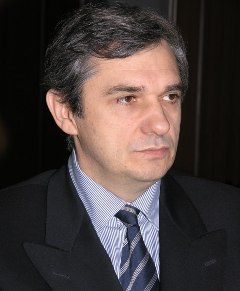
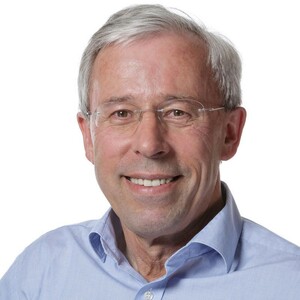
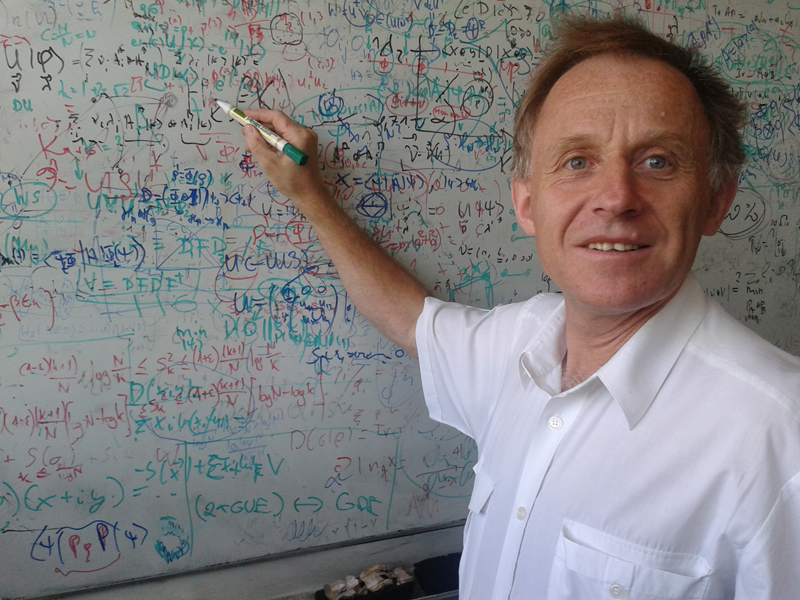
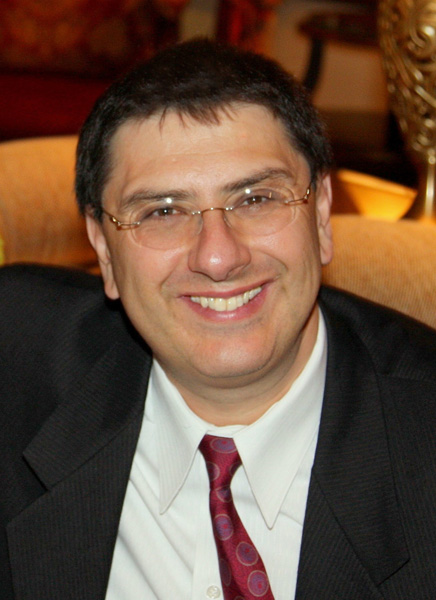
Univ.-Prof. Dr. Hans J. Briegel is a Professor at the Institute of Theoretical Physics within the Faculty of Mathematics, Computer Science and Physics at the University of Innsbruck. His research group focuses on Quantum Information and Computation . He can be contacted via Hans.Briegel@uibk.ac.at and is located in Room 4S15.
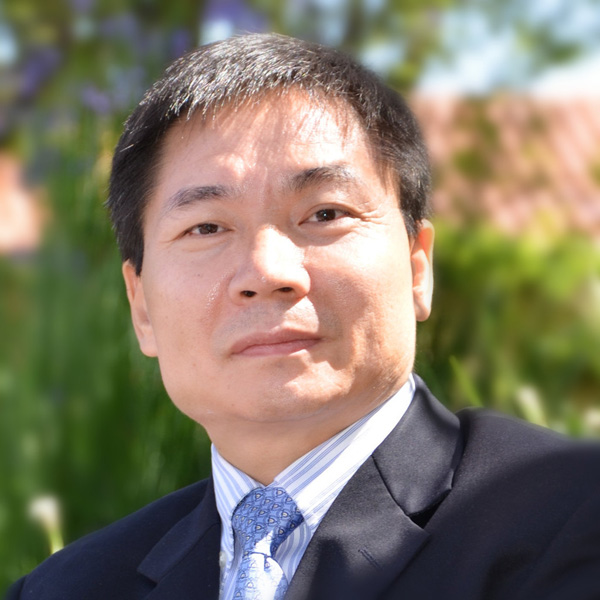
Dr. Yunjie Yang is an Associate Professor at the University of Edinburgh's School of Engineering, with affiliations at the Edinburgh Futures Institute (EFI), the Edinburgh Generative AI Laboratory (GAIL), and the Edinburgh Centre for Robotics. He previously held the Chancellor's Fellow in Data Driven Innovation (2018-2023) and Bayes Innovation Fellow (2023-2024) positions. His research focuses on AI-powered sensing and imaging, machine learning, and soft sensors & electronics for robotics. Yang received his PhD in Engineering Electronics from the University of Edinburgh, MSc in Control Science & Engineering from Tsinghua University, and BEng in Measurement & Control Engineering from Anhui University. After his PhD, he worked as a Postdoctoral Research Associate in Chemical Species Tomography before securing his lectureship. His research interests center on developing intelligent sensing systems that replicate human perception capabilities for robotics and intelligent systems. He pioneers flexible sensing and imaging technologies across various scales through innovative multi-modal sensors, soft electronics, and their modeling using machine learning approaches. His work aims to enable autonomous physical artificial intelligence by bridging the gap between robotic systems and human-like perception. Analysis of his recent publications reveals a strong focus on soft robotics perception, particularly through electrical impedance tomography (EIT) and transformer-based architectures. His research spans medical imaging applications, digital twin modeling for industrial processes, and machine learning approaches for sensor data interpretation. The trend shows increasing integration of physics-informed deep learning with traditional tomographic techniques to achieve higher accuracy and efficiency. European Research Council (ERC) Starting Grant (2024) IEEE J. Barry Oakes Advancement Award (2024) IEEE I&M Society Graduate Fellowship Award (2015) Multiple Best Paper Awards Senior Member of IEEE Fellow of the International Society for Industrial Process Tomography Fellow of the Higher Education Academy ESI highly cited papers Dr. Yang serves as Associate Editor for IEEE Transactions on Instrumentation and Measurement and holds editorial positions with Scientific Reports and IEEE Sensors Journal. His research has been licensed to overseas research institutes and industry partners and received wide media coverage including BBC, EFE, USA Today, and STV. He has secured significant grant funding including the prestigious ERC Starting Grant. He leads the Edinburgh SMART Lab (Sensing/imaging + Machine Learning + Robotics), which aims to replicate human perception capabilities for robotics and advance flexible sensing technologies through innovative multi-modal sensors and machine learning approaches. The lab focuses on enabling autonomous physical artificial intelligence with applications spanning medical diagnostics, industrial monitoring, and advanced robotics systems.
Nori Franco serves as Professor in the Department of Physics at the University of Michigan and Chief Scientist at RIKEN's Theoretical Quantum Physics Laboratory in Japan. His dual appointments reflect his significant contributions to both American and Japanese academic communities, with continuous service at Michigan since 1990 and at RIKEN since 2002. His research spans quantum information, condensed matter physics, and quantum optics, with particular focus on light-matter interactions, superconducting qubits, optomechanics, and quantum open systems. Franco's work bridges theoretical foundations with experimental implementations, especially in circuit quantum electrodynamics and quantum computing applications. Analysis of his recent publications reveals a strong emphasis on non-Hermitian quantum systems, quantum control techniques, and applications of quantum information science to fundamental physics problems. His research group consistently produces highly cited work, with publications appearing in top journals across quantum physics and condensed matter disciplines. Scientific Awards: Charles Hard Townes Medal (2024) - sole recipient for fundamental contributions to quantum optics and quantum information processing Research Doctorate Honoris Causa from University of Messina (2024) Highly Cited Researcher for eight consecutive years (2017-2024) Member of Academia Europaea (2023) Willis E. Lamb Medal (2023) for quantum electronics research Throughout his career, Franco has secured significant research funding and mentored numerous students and postdoctoral researchers. His work has received international recognition through invitations to deliver prestigious lectures including the Stanislav Ulam Lecture and Sir Nevill Mott Lecture in 2024. His research group maintains strong collaborations across multiple continents, reflecting his global impact on quantum physics. At RIKEN, Franco leads the Quantum Information Physics Theory Research Team within the Quantum Computing Center, directing cutting-edge theoretical work that complements experimental efforts in quantum computing hardware development.
Dr. Li Baowen is Chair Professor at Southern University of Science and Technology (SUSTech) with joint appointments in the Department of Physics and Department of Materials Science and Engineering. A pioneer in phononics and thermal metamaterials, he previously held endowed professorships at University of Colorado Boulder and UC Berkeley. His research focuses on controlling heat transfer at nano scales, developing thermal metamaterials like thermal cloaks, and applying complex networks to physical systems. Dr. Li has published over 400 papers including 3 in Reviews of Modern Physics and 30 in Physical Review Letters, with more than 34,800 citations (H-index 98). He is recognized with the Brillouin Medal from the International Phononics Society and is a Fellow of the American Physical Society. He founded research centers including the China-EU Joint Lab for Nanophononics at Tongji University. His current research explores quantum phononics, machine learning applications in thermal materials, phonon lasers, and quantum sensing technologies.
Vlatko Vedral is a Professor of Quantum Information Science at the University of Oxford and a Professor of Physics at the National University of Singapore. He is a Governing Body Fellow at Wolfson College, Oxford, and a Principal Investigator at the Centre for Quantum Technologies (CQT), Singapore. His research spans quantum physics, quantum information, quantum computation, and many-body physics, with foundational work on quantum entang *ul> for education and leadership roles. PhD in physics at Imperial College of Science, Technology and Medicine (1995-1998), supervised by Prof. Sir Peter L. Knight, FRS. Thesis: 'Quantum Information Theory of Entanglement', summarized in a review article in Rev. Mod. Phys. (2002). BSc in physics (first class) at Imperial College, specializing in Theoretical Physics (1992-1995). Vedral has organized major international conferences such as Foundations of Physics (Leeds 2007), Theoretical Quantum Computation (Singapore 2009), and Quantum Discord (2011). He has led international collaborations, including a group of 15 Oxford academics at the James Martin School on 'Bio-inspired quantum technologies' and served on editorial boards for Annalen der Physik and JPhysA . With over 300 publications, including 44 in Physical Review Letters , 13 in Nature , and six invited reviews on quantum information, Vedral's work has been cited over 25,000 times, with an h-index of 62. He has delivered around 300 invited lectures globally, including plenary talks at major conferences and public lectures for Café Scientifique (2007) and New Scientist (2016). Scientific Awards and Honors Fellowship at the UK Institute of Physics (2017) Chair Professorship at Tsinghua University, Beijing (2015) Award 'Srpski Krivak', Belgrade (2015) Marko Jaric Award, Serbian Institute of Physics (2010) World Scientific Medal and Prize, Singapore IOP (2009) Royal Society Wolfson Research Merit Award (2007-2009) Finalist, John Archibald Wheeler competition, Princeton (2002) Abdus Salam Award, Imperial College (1997) Overseas Research Student Award, Imperial College (1995-1998) University of London Knight Trust Scholarship (1996-1998) He has supervised 40 PhD students and numerous undergraduates across the UK, US, and Singapore through programs like SURF Caltech exchange and Stanford University collaborations. His leadership roles in academia highlight his influence in advancing quantum information theory and fostering global research initiatives.
Dr. Borivoje Dakic is an Associate Professor at the University of Vienna , affiliated with the Faculty of Physics and the Quantum Optics, Quantum Nanophysics and Quantum Information department. His research spans foundational and applied aspects of quantum theory. Operational reconstruction of quantum formalism Quantum interference as a resource for communication Tomography of large-scale quantum systems Macroscopic quantum phenomena His work includes scalable verification techniques for quantum devices and collaborations with experimental teams like Philip Walther’s and Markus Aspelmeyer’s groups. He received the Marko Jarić Prize (2025) for his contributions. Recent projects focus on diagnostics of quantum devices (FWF BeyondC SFB), information-theoretic foundations of quantum interference (FWF P36994), and local operations in quantum field theory (Cluster of Excellence QuantA). His research on quantum coherence in networks and macroscopic entanglement challenges traditional assumptions about quantum-classical boundaries. Publications emphasize resource-efficient tomography, device-independent verification, and foundational frameworks for quantum statistics and field theory. Teaching: Quantum Information (2025W), Theory in Quantum Optics (2025S), VCQ Summerschool Labs: Dakić Group at University of Vienna
Marco Canteri is a Researcher in the Department of Experimental Physics at the University of Innsbruck, Austria. He holds an MSc degree and contributes to quantum information science with a focus on trapped-ion systems for quantum computing and networking. His educational background includes a Master of Science degree. The specific institution is not provided in available sources. Canteri's research spans quantum networking, quantum communication, and quantum sensing using trapped ions. Key areas include ion-photon interfaces, quantum memory, entanglement distribution, and scalable quantum hardware. His work addresses challenges in noise resilience and long-distance quantum links through experimental implementations of multiqubit systems and telecom-wavelength interfaces. Analysis of his 12 recent publications (2020-2025) reveals consistent advancement in trapped-ion quantum technologies. Notable achievements include entanglement distribution over 101 kilometers, multimode quantum networking, and development of ten-qubit quantum registers. The research demonstrates strong interdisciplinary integration of atomic physics, quantum optics, and quantum information theory for practical quantum network applications. No scientific awards are listed in the available information. Information regarding students advised or research grants obtained by Marco Canteri is not provided in current sources. He operates within the quantum information research group of the Department of Experimental Physics, utilizing advanced laboratories equipped for trapped-ion quantum computing experiments including optical cavities, precision laser systems, and single-photon detection infrastructure under department head Hanns-Christoph Nägerl.
Ljubisa Stankovic is a Full Professor at the University of Montenegro with extensive academic and political experience. He has served as Rector of the University of Montenegro (2003-2008), Member of the National Academy of Sciences and Arts (CANU) since 1996, and Ambassador of Montenegro to the United Kingdom since 2010. As an IEEE Fellow (2012), he has made significant contributions to signal processing research. His research focuses on Signal Processing , particularly Time-Frequency Analysis , Data Processing in Joint Time and Frequency Domain , Analysis of Non-Stationary Signals , and Radar Signal Processing . With about 300 technical papers published (83 in leading international journals, mainly IEEE editions) and several textbooks in Signal Processing, his work has substantially influenced the field. The analysis of his recent publications reveals a consistent focus on advanced time-frequency methods applied to radar systems, non-stationary signal analysis, and emerging applications in machine learning and quantum processing. His research shows evolution from theoretical foundations toward practical implementations in communications, radar, and biomedical applications. His notable scientific achievements include: Member of the National Academy of Sciences and Arts (1996) Highest State award of Montenegro '13. jul' (1997) Fellow of the IEEE (2012) Fulbright fellowship (1984-1985) Alexander von Humboldt fellowship (1997) Volkswagen award grant (2001) Scientific Achievement Award by Montenegrin Academy of Science and Art (1991) Stankovic has held significant editorial positions including Associate Editor for IEEE Transactions on Image Processing, IEEE Signal Processing Letters, and IEEE Transactions on Signal Processing since 2003. He was also a member of the IEEE Signal Processing Society's Technical Committee on Theory and Methods (2002-2008). His research group received a Volkswagen Foundation research grant (2001-2003), demonstrating his ability to secure competitive funding. Beyond academia, he has held prominent political positions including Vice-president of Montenegro (1989-1991) and Member of Yugoslav Parliament (1992-1996).
Peter Zoller is a Professor of theoretical physics at the University of Innsbruck and Scientific Director at IQOQI Innsbruck (Austrian Academy of Sciences). His research focuses on quantum optics, many-body quantum physics, and quantum information science, with a strong emphasis on quantum simulation of gauge theories and atomic systems. He has trained 34 PhD students and hosted 57 postdoctoral researchers, fostering collaborations between theory and experiment. His group, the Zoller Group, explores quantum phenomena such as lattice gauge theories, entanglement dynamics, and topological order using advanced quantum simulation techniques. Key research interests include atomic physics, quantum gases, and applications of quantum technologies to high-energy physics problems. Recent work addresses string breaking in quantum simulators, entanglement Hamiltonians, and scalable architectures for fermionic quantum processors. Collaborations span institutions like Harvard, MIT, and the University of Innsbruck’s experimental teams. His contributions bridge foundational physics with cutting-edge quantum technologies, aiming to solve problems inaccessible to classical methods.
Dr. Quirin Thomas Simon Vogel is a Senior Lecturer at the Department of Statistics, University of Klagenfurt. He previously held postdoctoral positions at the Technical University of Munich, New York University Shanghai, and served as an Interim Professor at Ludwig-Maximilians University of Munich. His research bridges probability theory with statistical mechanics and algorithmic applications. Current role: Senior Lecturer (2025) Previous roles: Postdoc (TUM, NYU Shanghai), Interim Professor (LMU Munich) His research focuses on: Random walks and their geometric/stochastic properties Randomized algorithms with applications in statistical models Quantum-inspired probabilistic systems (e.g. interacting bosonic loop soups) Large deviation theory for complex systems Percolation and phase transitions in particle models The articles reflect trends in probability theory, mathematical physics, and algorithmic applications. Key topics include high-dimensional percolation, Bose gas models, neural network theory, and stochastic geometry. The work combines rigorous mathematical analysis with interdisciplinary applications in physics and computer science. Scientific awards and functions cannot be determined from the provided data, as they describe other researchers. The department's research activities include projects on statistical learning, quantum models, and algorithmic probability, though Vogel's direct involvement in these specific funded projects isn't explicitly stated.
Martin Ringbauer is an Associate Professor at the Department of Experimental Physics , University of Innsbruck . His research focuses on advancing quantum computing and quantum simulation through innovative applications of trapped ion qudits and high-dimensional quantum systems . Affiliation: Department of Experimental Physics, University of Innsbruck Research Areas: Lattice gauge theories, symmetry-protected topological phases, quantum verification protocols, and fidelity estimation Key Contributions: Development of qudit-based quantum processors for simulating complex physics, experimental demonstrations of quantum error correction and joint measurements His recent publications highlight advancements in quantum simulation (lattice gauge theories, Haldane phases), quantum verification (fidelity estimation, classical validation), and qudit engineering (mixed-dimensional frameworks, entanglement optimization). These works leverage trapped ion technology as a platform for scalable and precise quantum operations.
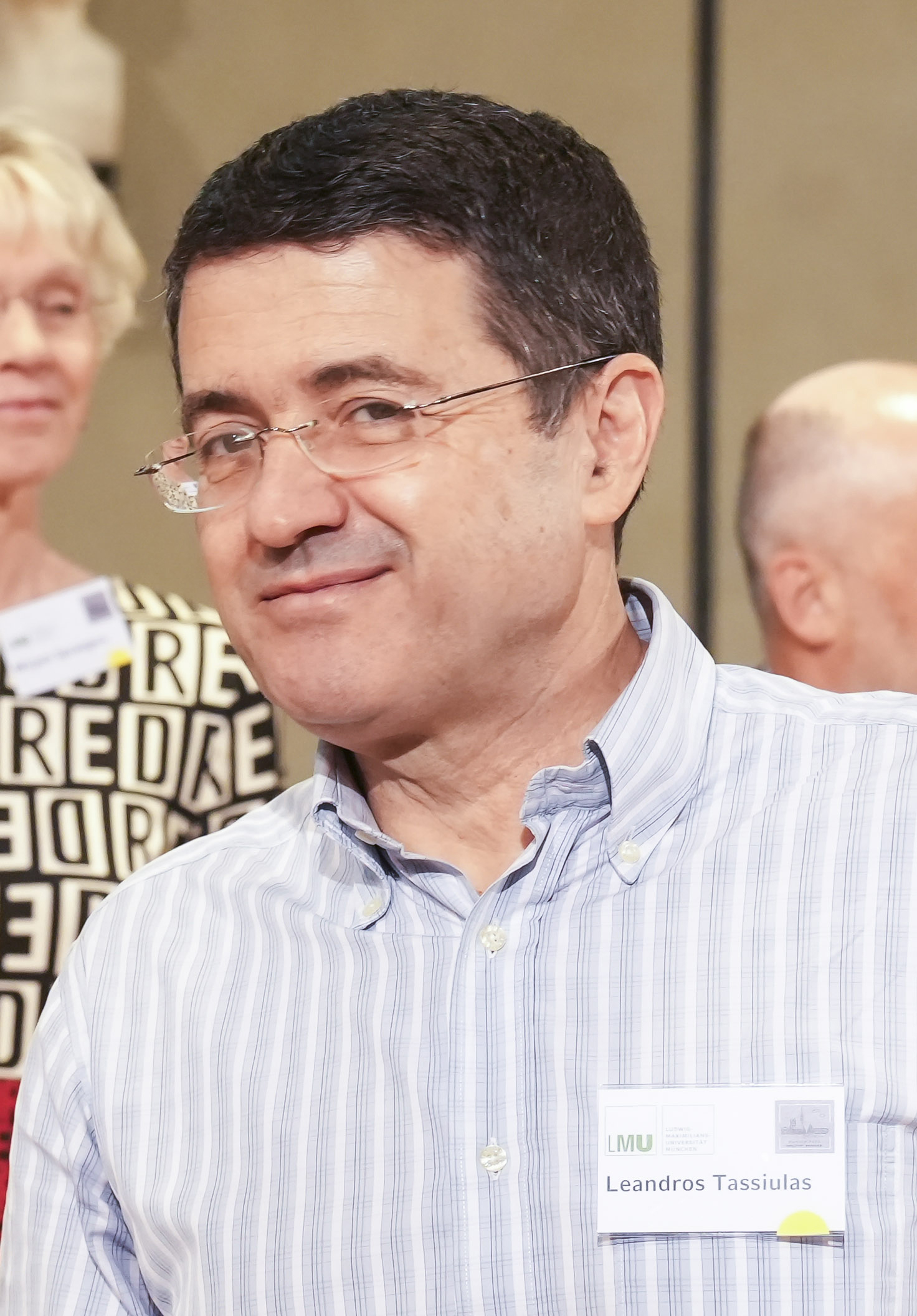
Leandros Tassiulas is the John C. Malone Professor of Electrical Engineering at Yale University, with additional appointments in Computer Science. His career spans faculty positions at the University of Thessaly, University of Maryland, University of Ioannina, and Polytechnic University. A Fellow of both IEEE (2007) and ACM (2020), he is renowned for contributions to network control theory, including the max-weight scheduling algorithm and back-pressure network policy. PhD in Electrical Engineering (1991) from the University of Maryland, College Park His research focuses on computer and communication networks , emphasizing mathematical models for complex networks , wireless system architectures , stochastic systems , and energy-efficient network design . Recent work explores quantum networking (Pant et al., 2019) and federated learning in edge environments (Jiang et al., 2022). Key publication trends include stability analysis (earlier works), mobile edge computing (2019), software-defined networking (2021), and smart grid optimization (2012-2013). The list includes monographs on network theory and patents for distributed bandwidth allocation (2011) and directional antenna protocols (2002). Scientific Awards ACM Fellow (2020) for network control contributions IEEE Koji Kobayashi Award (2016) for scheduling/stability analysis IEEE INFOCOM Achievement Award (2007) for resource allocation Bodossaki Foundation Prize (1999) for distributed systems NSF CAREER, ONR Young Investigator, and multiple best paper awards His work has been funded by the NSF, ONR, and IBM. Current projects bridge AI , quantum communication , and next-generation network architectures .
Karol Życzkowski is a Professor of Physics at the Smoluchowski Institute of Physics, Jagiellonian University, Cracow, Poland, and also holds a position at the Center for Theoretical Physics, Polish Academy of Sciences, Warsaw. He has held visiting positions at the Perimeter Institute for Theoretical Physics (2004/05) and previously served as Director of the Quantum Information Center in Gdańsk (2019-2023). Since January 2023, he has been President of the Cracow Branch of the Polish Academy of Sciences. Education Ph.D. in Theoretical Physics (1987, Jagiellonian University) Habilitation in Physical Sciences (1994, Jagiellonian University) Życzkowski’s research spans Quantum Information Theory , with a focus on quantum entanglement, geometry of quantum states, random matrices, and operator theory. His work bridges theoretical physics, mathematics, and interdisciplinary applications, including voting systems (e.g., Jagiellonian Compromise) and scientometrics. He has authored or co-authored over 150 papers and the influential monograph Geometry of Quantum States (Cambridge University Press, 2006, second edition 2017). His recent publications emphasize quantum thermodynamics (e.g., Jarzynski equality for stochastic maps), entanglement detection via uncertainty relations, and mathematical structures in quantum theory. Collaborations span 134 scientists from 19 countries, and his work has been cited over 6500 times (Google Scholar) with an H-index of 40. Scientific Awards Award of Rector of Jagiellonian University (2013) for work on quantum information foundations Award of Rector of Jagiellonian University (2007) for the monograph Geometry of Quantum States Prime Minister Award (1995) for habilitation thesis Humboldt Fellowship (1989), Fulbright Fellowship (1997/98) Życzkowski has supervised 5 Ph.D. and 16 Master’s theses, with 3 Ph.D. students currently in progress. He coordinated 9 research grants, participated in 10 others, and led the Polish node of a German SFB-Transregio project. He serves on editorial boards for journals including Open Systems & Information Dynamics and Journal of Physics A . He co-organized workshops (including Oberwolfach and Marseille) and founded research networks like the European Research Network Krzyżowa Initiative for Quantum Information. His Jagiellonian Quantum Information Team (JQIT) and involvement in the Mark Kac Complex Systems Research Centre highlight his collaborative leadership.
Institute of Science and Technology AustriaAustria
Thomas Henzinger is a Professor at the Institute of Science and Technology Austria (ISTA), where he leads the Henzinger Thomas Group focused on improving software reliability through mathematical methods. He previously served as ISTA's President (2009–2022) and held academic positions at EPFL, Max Planck Institute, UC Berkeley, and Cornell University. Education: Dipl.-Ing. in Computer Science (Johannes Kepler University, Austria), M.S. in Computer and Information Sciences (University of Delaware), PhD in Computer Science (Stanford University), and Honorary Doctorates from Fourier University (France) and Masaryk University (Czech Republic). The group's research spans concurrent systems , embedded systems , quantitative model checking , runtime monitoring , and trustworthy AI . They develop tools like HyTech and VAMOS, emphasizing predictability, robustness, and fairness in safety-critical software. Recent publications highlight trends in quantitative automata , fairness in AI , quantum algorithms , and automata theory , reflecting interdisciplinary applications from cyber-physical systems to neural networks. Collaborative projects include SPyCoDe (security foundations) and VAMOS (software monitoring). Honors & Awards: 2024 Fellow of the Royal Society 2020 Member, US National Academy of Sciences 2015 Royal Society Milner Award 2012 Wittgenstein Award 2006 ACM and IEEE Fellow 1995 NSF CAREER and ONR Young Investigator Awards Henzinger advises current and former PhD students including Mahyar Karimi, Pavol Kebis, and Mathias Lechner. His grants include ERC Advanced Grants (QUAREM, VAMOS) and FWF funding (Wittgenstein Award, NFN RISE). Labs & Teams: He leads the Henzinger Thomas Group at ISTA, collaborating with FORSYTE (TU Wien) and contributing to EU-funded initiatives. The group integrates postdocs, PhD students, and interns in formal methods and system verification.
Rafail Ostrovsky is a Professor of Computer Science and Mathematics at UCLA , affiliated with the Center for Information and Computation Security at the Henry Samueli School of Engineering and Applied Science. He earned his Ph.D. in Computer Science from MIT in 1992 under Silvio Micali. Research Focus: His work spans cryptography, algorithms, and theoretical computer science, emphasizing secure multi-party computation, zero-knowledge proofs, oblivious RAM, and high-dimensional data analysis. Applications include privacy-preserving data mining, systems security, and quantum cryptography. Article Trends: Recent publications address concurrent security protocols, robust secret sharing via expander graphs, and efficient multi-party computation. Topics intersect computational complexity, cryptographic reductions, and practical security implementations. Awards: Recipient of the 2018 RSA Conference Excellence in Mathematics Award , 2017 IEEE Fellow , and multiple IEEE/ACM honors. Holds 14 U.S. patents and over 290 refereed papers. Advising: Supervised 27 Ph.D. students, many now professors at top institutions. Served on 40+ program committees, including FOCS 2011 Chair. Labs: Leads the CICS research center, fostering interdisciplinary work in information security and cryptographic systems.