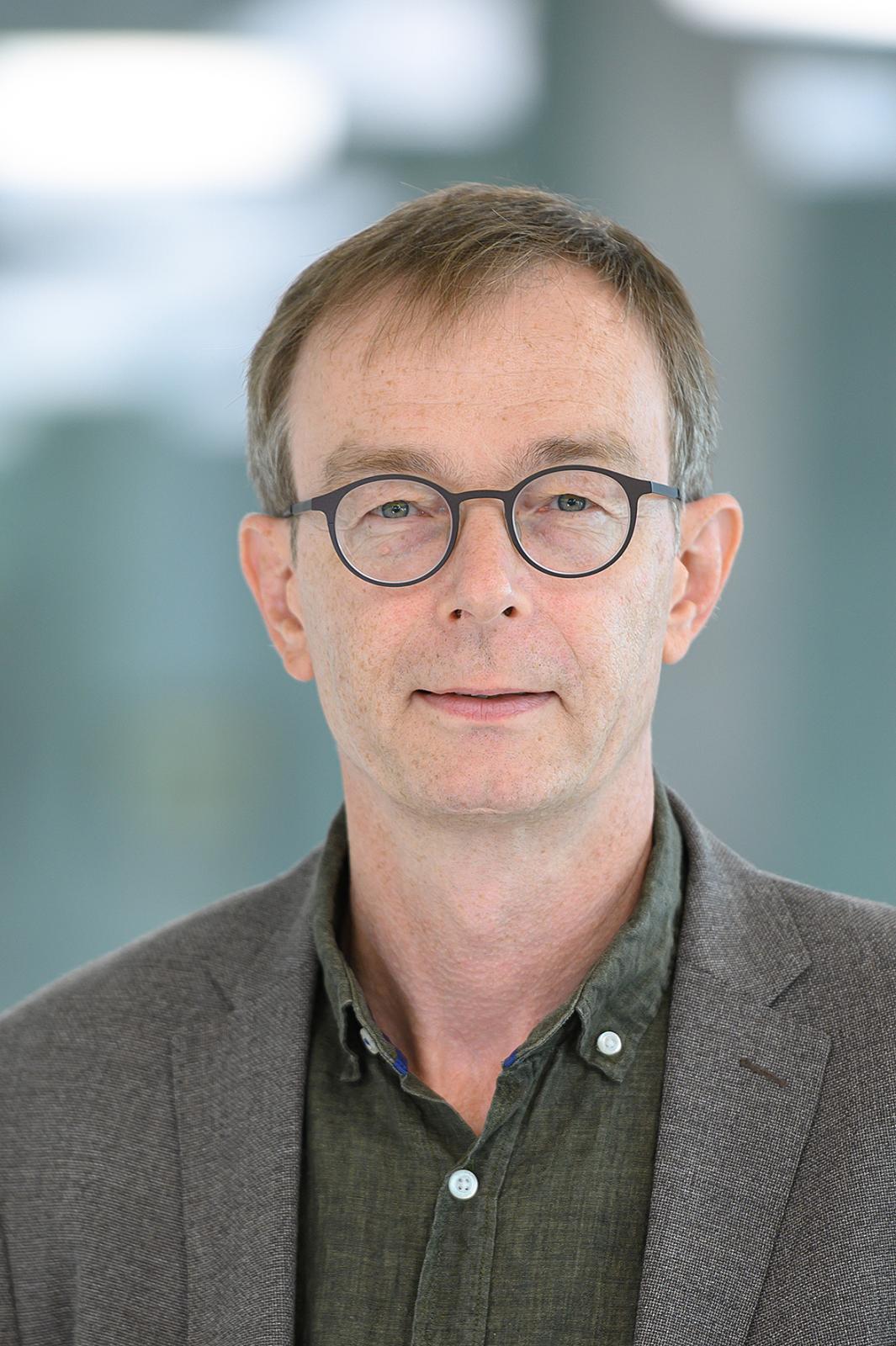
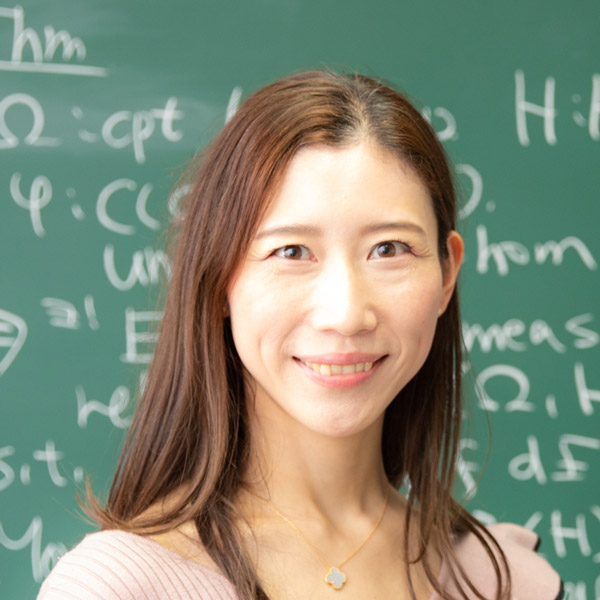
Bruno Nachtergaele is a Professor of Mathematical Physics at the University of California, Davis , affiliated with the Department of Mathematics. His research focuses on Mathematical Physics , with particular emphasis on equilibrium and non-equilibrium statistical mechanics, quantum spin systems, and quantum information theory. Applications include condensed matter physics and materials science. His work explores foundational aspects of quantum many-body systems, including Lieb-Robinson bounds, topological order, and fractional quantum Hall effects. He has contributed to understanding gapped phases, symmetry breaking, and dynamics in quantum spin chains. Notably, he received the LeRoy Apker Award for his research contributions. His publications highlight advancements in quasi-locality bounds for lattice systems, spectral gaps in fractional quantum Hall systems, and the study of anyonic excitations. He has also co-edited special issues in journals like Journal of Mathematical Physics , reflecting his leadership in the field. Dr. Nachtergaele’s research bridges abstract mathematical techniques with real-world condensed matter phenomena, contributing to both theoretical frameworks and applied insights in quantum technologies.
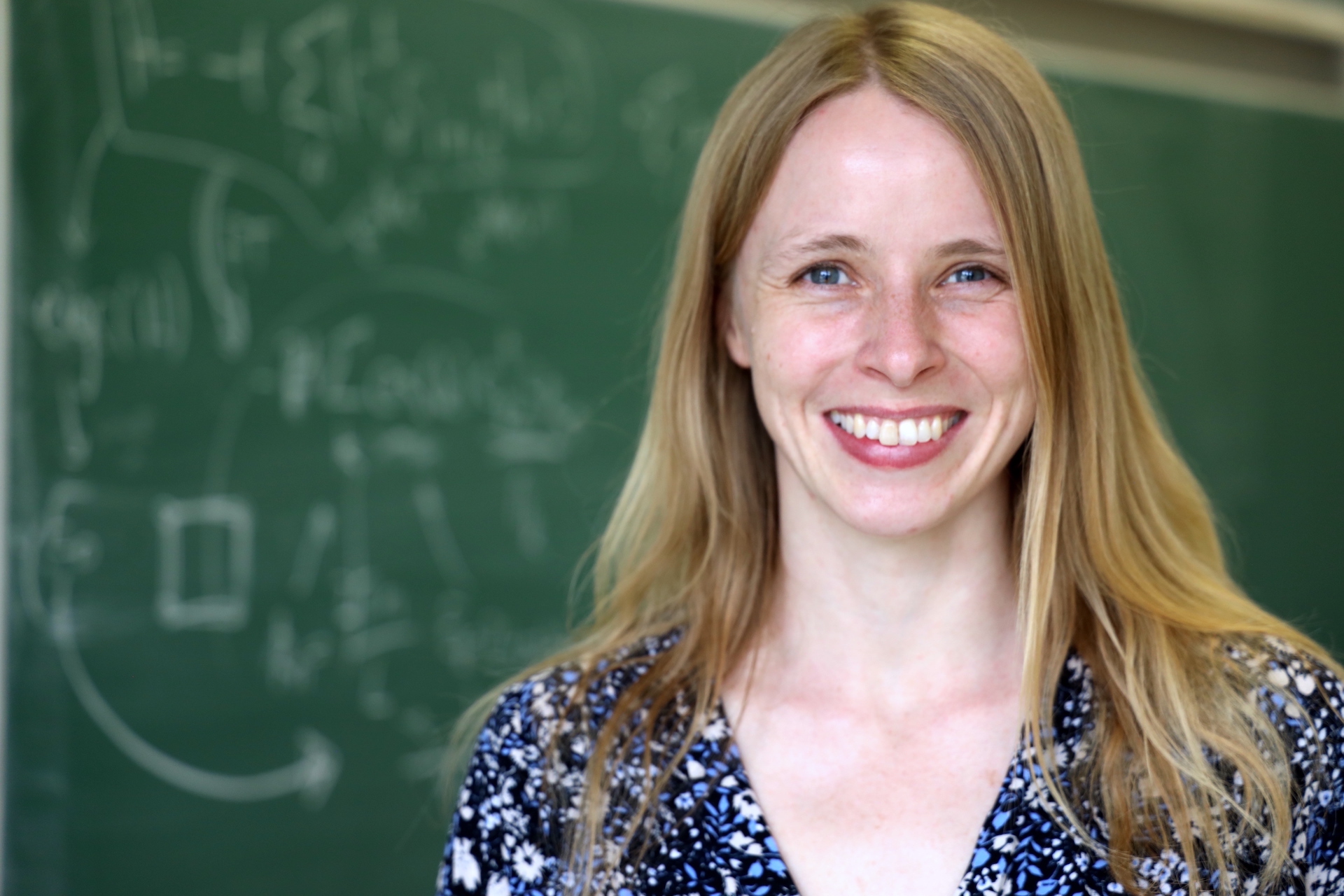
Annabelle Bohrdt is a Professor at the University of Regensburg's Faculty of Physics, affiliated with the Institute of Theoretical Physics. Her research focuses on strongly interacting quantum many-body systems, combining numerical methods, quantum simulation experiments, and machine learning techniques like neural networks. She explores topics such as the Fermi-Hubbard model, t-J model, and stripe formation in doped antiferromagnets. Her work bridges theoretical models and experiments, leveraging quantum gas microscopy and interpretable machine learning tools. Notable contributions include studies on pairing mechanisms in bilayer antiferromagnetic Mott insulators and the role of fluctuations in quantum many-body systems. Bohrdt actively collaborates with experimental groups to validate theoretical predictions. Teaching includes specialized courses on numerical methods for quantum many-body systems and machine learning applications in physics. She advises graduate and undergraduate students on projects in quantum matter and computational physics.
Robert Seiringer is a Professor at the Institute of Science and Technology Austria (ISTA). His academic career spans institutions including McGill University (Associate Professor, 2011–2013) and Princeton University (Assistant Professor, 2003–2010; Postdoc, 2001–2003). His research focuses on quantum many-body systems , mathematical physics , and quantum statistical mechanics , with significant contributions to Bose-Einstein condensation, superfluidity, and polaron models. Research Trends : His recent work explores superconductivity (BCS theory), quantum gases (Bose-Einstein condensation, Landau-Pekar equations), and mathematical tools for non-perturbative analysis. Key subfields include stability of many-body systems, spectral theory, and Density Functional Theory. Awards : Fellow, American Mathematical Society Corresponding Member, Austrian Academy of Sciences ERC Advanced Grant Henri Poincaré Prize (IAMP) Alfred P. Sloan Fellow Erwin Schrödinger Fellow Collaborations : Leads a research group at ISTA with postdocs (e.g., Davide Desio, Lorenzo Pigozzi) and collaborators (e.g., C. Hainzl, B. Schlein).
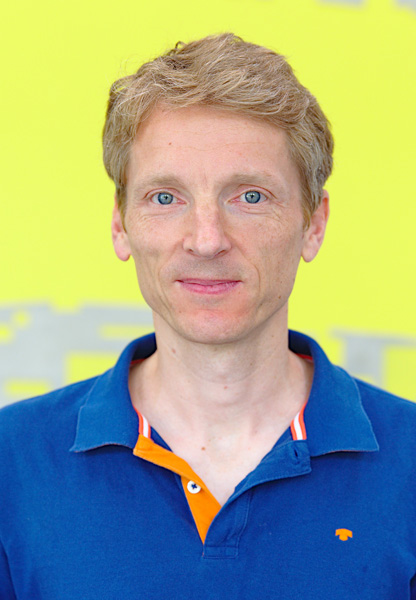
Prof. Dr. Ferdinand Evers is a Chair of Computational Condensed Matter Theory at the Institute of Theoretical Physics , University of Regensburg. His research spans quantum transport , spintronics , molecular electronics , and many-body localization , with a focus on ab initio and DFT-based modeling of nanostructures and low-dimensional systems . Key Research Areas: Quantum transport in molecular junctions Spin-orbit coupling and chiral effects Multifractality at quantum phase transitions Electronic structure of topological materials Ultrafast laser-driven electron dynamics Anderson localization and disorder Recent Article Trends (2021–2024): High-harmonic generation in topological insulators Spin-selective transport in chiral systems Mechanical torque in molecular rotors Self-consistent GW methods for molecular electronics Quantum interference in graphene nanoribbons Teaching: Lecturer for Theoretical Physics I-IV , Advanced Quantum Mechanics , and Scientific Perspectives courses at the University of Regensburg Focus on statistical mechanics , quantum transport , and computational nanoscience
Rune Strandberg is an Associate Professor at the Department of Engineering Sciences, University of Agder. He holds a PhD in solar cell physics from NTNU and specializes in photovoltaic materials, solar cell physics, and energy conversion. His research focuses on advanced solar cell concepts including tandem cells, intermediate band solar cells, and thermoradiative energy harvesters. Education: Master of Technology (2005) and PhD (2010) in solar cell physics from NTNU. Pedagogical training includes Uniped courses (2014-2015) and PhD supervision qualification. Current teaching: Renewable Energy, Solar Energy Systems, Electromagnetism, Advanced Photovoltaics Prior roles: PhD student at NTNU (2005-2009), Senior Researcher at Teknova AS (2010-2013) Research areas: New photovoltaic concepts, characterization of photovoltaic cells, solar cell physics, emissive energy harvesters His recent publications analyze band gap optimization, radiative coupling in multi-junction cells, temperature sensitivity, and theoretical efficiency limits across multiple high-impact journals. Collaborators include Anne Gerd Imenes, Alfredo Sanchez Garcia, and Sissel Tind Kristensen. Key contributions include development of analytical models for solar cell performance, field testing of PV modules in Norway, and studies on temperature effects in multicrystalline silicon wafers.
Swiss Federal Institute of Technology in LausanneSwitzerland
Nikita Kavokine serves as Tenure Track Assistant Professor at École Polytechnique Fédérale de Lausanne (EPFL) within the School of Basic Sciences . His dual appointments span the Institute of Chemical Sciences and Engineering (ISIC) and the School of Chemical Sciences and Engineering (SCGC) , where he leads the Quantum Plumbing Lab (LNQ) and contributes to graduate teaching. Based at Building CH A2 398 in Lausanne, he maintains active research and instructional roles across EPFL's chemistry and chemical engineering programs. His research pioneers quantum nanofluidics and nanoscale transport phenomena , focusing on electron-ion coupling mechanisms in confined geometries. Key investigations include quantum friction in water-carbon interfaces, hydroelectric energy conversion through nanochannels, and plasmon-hydron resonances in two-dimensional materials. His work bridges condensed matter physics, electrochemistry, and fluid dynamics to develop fundamental principles for next-generation nanofluidic devices and quantum sensors. Analysis of his 15 most recent publications (2023-2025) reveals three dominant research thrusts: quantum-enhanced energy conversion (evident in hydroelectric drag and electron cooling studies), non-classical ion transport (including ionic Coulomb blockade and interaction confinement), and emergent quantum hydrodynamics (momentum tunneling, collective modes). These publications consistently integrate advanced numerical methods with nanoscale experimental systems, establishing new paradigms for solid-liquid quantum interactions. Kavokine currently supervises three PhD students: Gispert Peter , Lu Hao , and Rigaux Killian David . His teaching portfolio includes graduate courses in Statistical Mechanics for Chemistry and Nanofluidics , emphasizing theoretical frameworks for many-particle systems and nanoscale fluid dynamics. Research funding supports his laboratory's exploration of quantum effects in nanofluidic channels, though specific grant details are not provided in source materials. The Quantum Plumbing Lab (LNQ) operates at the forefront of nanoscale quantum transport research, utilizing advanced nanofabrication and characterization techniques to probe electron-ion coupling phenomena. The lab's interdisciplinary team combines expertise in quantum physics, electrochemistry, and fluid dynamics to investigate fundamental limits of energy conversion and transport at atomic scales, with particular focus on graphene-based systems and angstrom-scale confinement.
Mark Law is a Professor in the Department of Electrical & Computer Engineering at the University of Florida, part of the Herbert Wertheim College of Engineering. His research focuses on semiconductor process modeling, integrated circuit fabrication, and superconductivity. He leads the ColdFlux superconductor design tool project and has contributed to advancements in Ga2O3 and GaN-based devices. Education: PhD, Electrical Engineering, Stanford University (1988) MS, Electrical Engineering, Stanford University (1982) BS, Computer Engineering, Iowa State University (1981) Research Interests: Design and modeling of IC fabrication processes, semiconductor device behavior, superconducting electronics, radiation effects in semiconductors, and TCAD simulation tools. His work emphasizes practical applications of advanced materials like Ga2O3 and GaN in power electronics and high-voltage devices. Notable Contributions: Developed the ColdFlux EDA tool for superconducting circuits, pioneered edge termination techniques for β-Ga2O3 rectifiers, and modeled radiation damage in wide-bandgap semiconductors. Awards: Fellow, National Collegiate Honors Council (2023) UF Academy of Distinguished Teaching Scholars (2019) IEEE Electron Device Society J.J. Ebers Award (2010) Multiple teaching awards, including College of Engineering Teacher of the Year (1996). Advising & Grants: While no specific students are listed, his research has been supported by industry and government grants. He advises on semiconductor fabrication processes and has led collaborative projects with SEMI and the Semiconductor Research Corporation. Labs & Teams: Leads the ECE Device Simulation Group and collaborates with the University of Florida’s Materials Science Department on advanced semiconductor projects.
Prof. Dr. Tilman Esslinger is a Full Professor at the Department of Physics, ETH Zürich. He serves as Deputy Head of the Institute for Quantum Electronics and has held leadership roles including Head of the Department of Physics (2013-2015) and Vice Director of the National Centre of Competence in Research Quantum Science and Technology (2011-2022). His research focuses on quantum many-body physics, matter-light interactions, and quantum simulation using ultracold atoms in optical lattices. Institutions: ETH Zürich (Department of Physics, Institute for Quantum Electronics) Roles: Full Professor, Deputy Head of Institute, Former Head of Department Research Interests: Esslinger pioneers experimental studies of quantum phase transitions, topological materials, and quantum computing. His work on optical lattice-based quantum simulators has revealed novel phenomena like fermionic Mott insulators, quantum magnetism, and artificial graphene. Recent efforts include realizing dissipative quantum systems, topological pumps, and exploring thermoelectric effects in quantum gases. Scientific Awards: Fellow of the American Physical Society Honorary Doctorate from Heriot-Watt University Senior BEC Award (shared) Philip-Morris Research Prize ERC Advanced Grants (2) SNF Advanced Grant Contributions: Esslinger has published over 140 papers (13 in Nature, 10 in Science). His lab has trained numerous researchers who now hold professorships globally. He has held visiting positions at institutions like JILA, Harvard University, and the University of Innsbruck.
Dr. Vadim Cheianov is an Associate Professor in the Leiden Institute of Physics (LION) within the Faculty of Science at Leiden University. He leads the Cheianov Group, which specializes in theoretical quantum many-body physics with applications in condensed matter and ultracold atomic systems. His research interests span several cutting-edge domains in theoretical physics, including the behavior of mobile quantum impurities in quantum fluids, adiabatic protocols in driven many-body systems, mechanisms of non-ergodicity in quantum systems such as many-body localization and integrability, and the macroscopic manifestations of quantum anomalies like the chiral magnetic effect in condensed matter and cosmological contexts. The recent publications from his group reflect a strong focus on quantum dynamics, topological effects, and fundamental aspects of quantum statistical mechanics. These works integrate concepts from condensed matter, ultracold atoms, quantum field theory, and mathematical physics, often bridging theoretical predictions with potential experimental observations in quantum simulators and solid-state devices. Scientific Awards: NWO Physics Projectruimte Grant (2018) Dr. Cheianov has secured competitive research funding, including the NWO Physics Projectruimte grant awarded in 2018, which supports innovative and high-risk theoretical physics research. While formal advising roles are not detailed in the provided text, his leadership of an active research group implies mentorship of PhD and master’s students. His work contributes significantly to foundational understanding in quantum matter and has implications for quantum technologies and emergent hydrodynamic phenomena in quantum systems. The Cheianov Group operates within the Quantum Matter and Optics division of LION, collaborating with experimental and theoretical physicists to explore non-trivial quantum phenomena in both synthetic and natural quantum materials.
Nathan Garland is a Lecturer in Applied Mathematics and Physics at Griffith University, Australia. He is affiliated with the Queensland Quantum and Advanced Technologies Research Institute (QUATRI) and the Centre for Quantum Dynamics. Prior to joining Griffith, Garland conducted postdoctoral research at Los Alamos National Laboratory and served as sessional teaching staff at James Cook University. Education: PhD in Electrical and Electronic Engineering and Mathematics from James Cook University B.Eng (Hons) and B.Sc in Electrical and Electronic Engineering and Mathematics from James Cook University His research focuses on computational plasma modeling, with applications in low-temperature plasmas, tokamak fusion, electron transport in liquids, and deep learning integration for plasma simulations. He combines advanced numerical methods with experimental validation to address challenges in energy systems and plasma medicine. Recent publications highlight trends in plasma physics, machine learning-driven cross-section determination, and electron transport across gas-liquid interfaces. Garland contributes to fusion energy discourse through media appearances and peer review roles in journals like Plasma Sources Science and Technology and European Physical Journal D . Grants: Quantum Mechanics: The Missing Link? - $1.2M LANL LDRD grant (2019-2021) Digitally Disrupted Demos - $7.5K Griffith Sciences grant (2022) Supervision: Principal Supervisor for PhD project 'Better Modelling of Solvents' Associate Supervisor for PhD projects on landscape evolution modeling and non-equilibrium electron scattering Collaborations: Member of Tokamak Disruption Simulation (TDS) SciDAC Center IAEA Fusion Energy Conference Program Committee member
Max Planck Institute for Sustainable MaterialsGermany
Dr. Barak Ratzker is a researcher at the Max Planck Institute for Sustainable Materials , affiliated with the Microstructure Physics and Alloy Design department. His work focuses on the sustainable synthesis of materials, particularly through hydrogen-based reduction pathways and advanced sintering techniques like spark plasma sintering (SPS) and hot isostatic pressing (HIP). His research spans transparent ceramics, MAX/MXene phases, and alloy design. Key research areas include: Hydrogen reduction of oxides for sustainable metallurgy Pressure-assisted sintering (SPS/HIP) of transparent ceramics Microstructure engineering in refractory materials Development of MXene-based composites for electronics Thermodynamic and kinetic analysis of solid-state reactions His recent publications highlight trends in: Environmentally conscious processing of ferromanganese oxides High-pressure synthesis of MAX phases and MXenes Optimization of optical and mechanical properties in ceramics Dynamic deformation behavior under extreme conditions Biological material interactions (e.g., crusticul-chitin systems)
Chihiro Matsui is an Associate Professor at the Department of Mathematical Structure Theory, Graduate School of Mathematical Sciences, University of Tokyo. Her research focuses on quantum solvable models and solvable stochastic processes, leveraging algebraic structures like quantum groups and the Yang-Baxter equation to derive exact physical quantities. She has made significant contributions to understanding supersymmetry emergence in quantum field theories from non-supersymmetric spin chains and extending asymmetric exclusion processes to multi-state applications. University of Tokyo, Graduate School of Mathematical Sciences Research fields: Mathematical Physics, Quantum Integrable Systems, Stochastic Processes Her work on quantum solvable models connects many-body scattering decomposition to integrability, while her studies on multi-state asymmetric exclusion processes explore applications in traffic engineering and micromeritics through higher-dimensional Temperley-Lieb representations. Recent articles analyze weak ergodicity breaking and partially solvable quantum systems. Scientific awards include the Statphys27 Poster Award (2023), NTT Com Online Prize (2014), and a Best Poster Award Bronze Prize (2013). She serves on the editorial board of the Journal of the Physical Society of Japan since 2017.
Dr. Ji Hoon Lee is a Professor in Theoretical Physics at ETH Zürich, affiliated with the Professur für Theoretische Physik. His research focuses on quantum gravity, holography, integrable systems, and gauge-gravity dualities. He explores topics such as AdS/CFT correspondence, string theory vacua, and black hole microstates through advanced mathematical frameworks. His work spans theoretical physics with a strong emphasis on holography, including studies of giant gravitons, D-brane dynamics, and Kondo line defects in affine Gaudin models. Recent publications (2021–2024) highlight contributions to integrable systems, stringy microstate counting, and gravitational brane couplings in AdS3 black holes. Though no explicit awards or grants are listed, his publications indicate active participation in cutting-edge research areas. No student advising details or lab affiliations were provided in the source text.
Dr. Sergii Yakunin is a Lecturer at the Department of Chemistry and Applied Biosciences at ETH Zürich, specializing in inorganic functional materials. His research focuses on advanced materials for radiation detection, semiconductor devices, and optoelectronic applications. Key areas include perovskite nanocrystals, quantum dots, and photodetector technologies. He leads the Laboratory of Inorganic Chemistry (LAC), emphasizing material synthesis, characterization, and device integration. Research interests encompass radiation detection systems, energy materials, and nanotechnology applications. Recent work highlights advancements in X-ray/gamma detectors using perovskites, colloidal nanocrystal fabrication, and compact optical spectrometers. His contributions bridge fundamental material science with applied technologies for medical imaging, energy harvesting, and photonics. Publications emphasize detector performance optimization, nanocrystal stability, and novel material designs. Current efforts address challenges in detector sensitivity, environmental stability, and scalable manufacturing. Collaborative projects focus on integrating functional materials into wearable and compact devices for next-generation applications.
Izak Snyman is an Associate Professor in the School of Physics at the University of the Witwatersrand (Wits), where he conducts theoretical research in condensed matter physics. He holds a PhD from Leiden University and has established a strong publication record in quantum many-body systems and quantum transport. Research Interests: His work focuses on theoretical aspects of quantum impurities, the Kondo effect, Josephson junctions, and quantum transport in nanoscale systems such as graphene and carbon nanotubes. He also explores connections to circuit quantum electrodynamics and quantum information platforms. His recent publications (2019–2025) highlight a shift toward integrating theoretical models with experimental quantum devices, particularly in superconducting circuits, where quantum fluctuations and many-body effects are observed. Themes include Kondo physics, screening clouds, topological junctions, and bosonization techniques. Scientific Contributions: While no specific awards are listed, his consistent publication in high-impact journals such as Physical Review Letters , Physical Review B , and Nature Communications underscores his influence in theoretical condensed matter physics. Advising and Grants: The provided text does not mention any students, grants, or funding sources. However, his long-standing research activity since 2004 suggests sustained academic engagement and likely mentorship and grant involvement. Labs and Research Groups: No specific lab or team is mentioned in the text. Given his focus on theoretical physics, he likely leads or contributes to a theoretical research group within the School of Physics at Wits, possibly collaborating with experimentalists in quantum device physics.