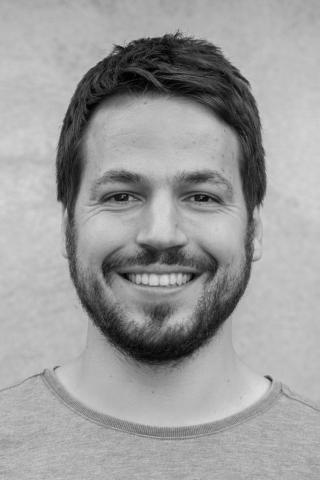
Konstantinos Markantonakis is a Professor of Information Security at the Department of Information Security at Royal Holloway, University of London. He leads the Information Security Group (ISG) and is affiliated with the Smart Card and IoT Security Centre and Engineering Research Centre. His academic journey includes a BSc (Hons) in Computer Science from Lancaster University (1995), followed by an MSc in Information Security (1996), PhD in Smart Card Security (2000), and an MBA in International Management (2005), all from Royal Holloway. His research focuses on smart card security, cryptographic protocol design, embedded system security, and IoT security. Notable contributions include work on trusted execution environments, drone/automotive security, and NFC/RFID security. He has supervised 11 research students and led major projects such as EXFILES (EU-funded forensic smartphone analysis) and Future TPM (quantum-resistant security protocols). He has published over 211 research outputs, including peer-reviewed articles and conference proceedings. His recent work addresses control-flow attestation, edge computing security, and secure embedded device management. He contributes to UN Sustainable Development Goals through cybersecurity solutions that enhance global security and privacy.
Yihan Shao is an Associate Professor in the Department of Chemistry and Biochemistry at the University of Oklahoma. He holds a B.S. from Nanjing University (1993) and a Ph.D. from UC Berkeley (2002). Prior to OU, he served as a Principal Scientist at Q-Chem Inc. (2002–2016). His research focuses on computational chemistry applications, theory, and software development, particularly in enzyme reactions, photochemical processes, and polariton chemistry. Key areas include free energy simulations, quantum mechanical phenomena in complex environments, and molecular modeling using QM/MM approaches. Shao leads a research group producing impactful work in Enzyme catalysis mechanisms (e.g., CRISPR-Cas9) Photochemical reactions in photon cavities Development of machine learning potentials His work has been supported by grants such as the NIH R35 and NSF awards. Shao has advised numerous students and collaborators, including notable achievements like Xiaoliang Pan’s 2019 PCCP HOT Article and Junjie Yang’s 2021 JCP Editor’s Pick. His lab also contributes to software advancements, including the Q-Chem package and CHARMMing interface. Current projects include polariton chemistry simulations and enzyme reaction modeling. Scientific awards include the 2018 Ralph E. Powe Junior Faculty Enhancement Award and grants for spin-crossing reactions and polariton chemistry. Shao’s research bridges theory and application, addressing challenges in quantum processes and chemical systems.
Dr. Alston J. Misquitta is a Senior Lecturer at Queen Mary University of London, affiliated with the School of Physical and Chemical Sciences and the Centre for Experimental and Applied Physics. His research focuses on intermolecular interactions, electronic structure methods, and computational chemistry. He leads projects in symmetry-adapted perturbation theory (SAPT(DFT)), distributed molecular properties (e.g., ISA-DMA multipoles), and CamCASP software development. Current grants include EPSRC funding for machine learning-enhanced molecular potential models and Royal Society support for soot formation studies. He collaborates with institutions like Sorbonne, Cambridge, and UCL, and has supervised multiple PhD students exploring quantum nanodots, energetic materials, and excited-state molecular crystals. His teaching includes courses on Electronic Structure Methods and Mathematical Techniques. Recent work includes novel pyridine crystal forms and contributions to PHYMOL, an MSCA-funded doctoral network on intermolecular interactions. Research Interests: Intermolecular interactions, distributed molecular properties (multipoles/polarizabilities), SAPT(DFT), CamCASP software, crystal structure prediction, and soot formation mechanisms. Key achievements include developing SAPT(DFT) and WSM methods, and advancing models for anisotropic interactions in organic crystals and nanomaterials. Grants: £265k EPSRC grant (2023-2027) for machine learning in molecular potentials, and Royal Society funding for soot nucleation studies (2019-2024). Students: Amir Sidat (excited-state crystals), Lei Tan (nanoclusters), Alex Aina (energetic materials), Tong Liu (functionalized fullerenes), and others.
Steven Anlage is a Professor in the Department of Physics at the University of Maryland, College Park, and a member of the Quantum Materials Center (QMC). His research focuses on experimental studies of superconductivity, quantum chaos, metamaterials, and high-resolution microwave microscopy. He leads the Anlage Research Group, which explores topics like superconducting metamaterials, nonlinear dynamics in GHz circuits, and the electrodynamics of nanostructured materials like carbon nanotubes and graphene. His work includes developing applications for time-reversed wave propagation and wireless power transfer. Anlage holds the UMD Distinguished Scholar-Teacher award and has advised PhD students including Chung-Yang Wang and Jingnan Cai. His affiliations include the MRSEC (Materials Research Science and Engineering Center), MURI projects, and initiatives like Chaos@UMD and the Institute for Research in Electronics and Applied Physics (IREAP). Recent research highlights include the experimental realization of photonic topological insulator graphs, studies of UTe2 superconductivity, and investigations into exceptional points in non-Hermitian systems. He collaborates with institutions such as UCLA and CNAM/UMD on nanophysics projects. Anlage's experimental facilities support advanced microscopy and scattering studies, with grants funding work on complex wave systems and metamaterials. His lab's innovations include a world-record superconducting single-photon camera and contributions to understanding electromagnetic field imaging in chaotic systems.
Dr. Tristan Bereau is a researcher affiliated with the Max-Planck-Institute for Polymer Research, focusing on multiscale modeling of soft matter systems augmented by data-driven approaches. His work bridges quantum chemistry to continuum mechanics, emphasizing enhanced force-field transferability and high-throughput screening of drug interactions. Primary Affiliation: Max-Planck-Institute for Polymer Research His research utilizes machine learning to improve physics-based simulations, particularly in predicting thermodynamic properties of drug membranes and enhancing force-field adaptability across scales. While the provided text does not explicitly list publications, his work reflects interdisciplinary advancements in computational biophysics and polymer science. Dr. Bereau has presented his work in seminars and temporary research groups, indicating active collaboration and dissemination within academic circles. No specific awards, students, or grants are detailed in the scraped text.
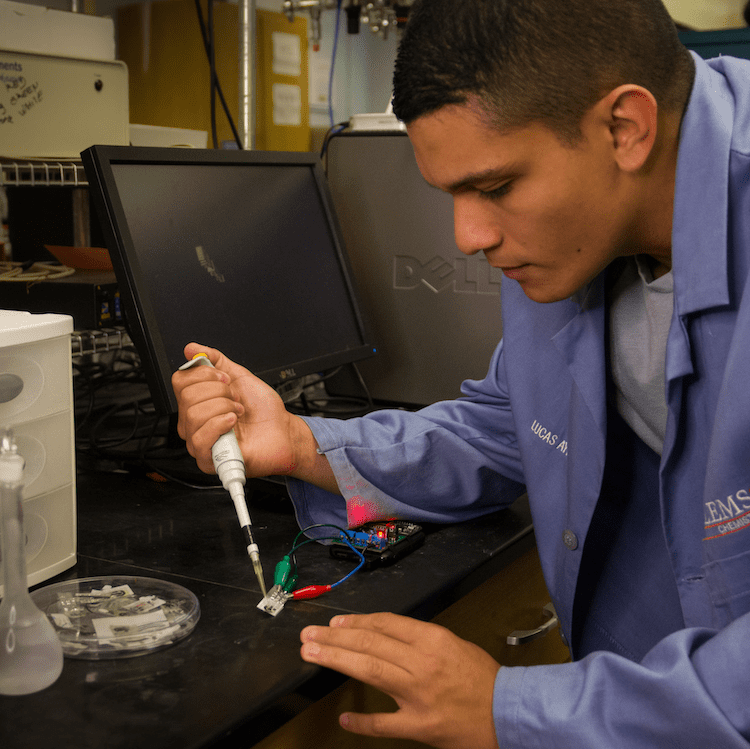
Dr. Lucas B. Ayres is a researcher specializing in analytical chemistry , artificial intelligence , and sensor development . He earned his bachelor's degree in Pharmacy-Biochemistry from the University of Sao Paulo and completed his PhD focusing on low-cost sensors , instrumentation , and AI applications . Currently affiliated with Carlos D. Garcia's Lab , he develops open-source technologies such as Arduino, 3D printers, and Android for chemical instrumentation. Research Interests : Development of deep eutectic solvents for antioxidant applications, electrochemical biosensors, AI-driven data mining for chemical analysis, and smartphone-based detection systems. Scientific Contributions : Cover articles in ACS Sustainable Chemistry & Engineering (2025), Analytical Methods (2025), and Sensors and Diagnostics (2024) Co-author on 15+ publications spanning electrochemical chips, metabolite prediction, and portable diagnostics Collaborations : Works with Drs. Do Lago, Gutz, and Carlos D. Garcia on open-source instrumentation and AI-enhanced sensor systems.
Professor Halina Rubinsztein-Dunlop is a distinguished academic at the University of Queensland's School of Mathematics and Physics, affiliated with the ARC Centre of Excellence for Engineered Quantum Systems (EQUS). She holds the rank of Professor and teaches first-year physics. Her research focuses on quantum optics, atom optics, laser micromanipulation, and biophotonics, with contributions to quantum computing and nano-optics. Her work includes pioneering techniques like laser-enhanced ionization spectroscopy and dynamical tunneling in quantum systems. She leads projects on optically driven micromachines, quantum dots for quantum computing, and superfluid dynamics. Collaborations span nano-fabrication (e.g., with the Nanotechnology Lab in Sweden) and biological applications (e.g., optical trapping in zebrafish). Key achievements include over 500 publications (252 journal articles, 180 conference papers) on topics like optical tweezers, structured light, and quantum chaos. Her computational tools, such as the OTSLM toolbox, advance optical trapping simulations. She also explores applications in mechanobiology, using optical tweezers to study cellular mechanics and fluid dynamics. Labs/Teams: Leads the Rubinsztein-Dunlop research group, focusing on quantum optics and biophotonics. Collaborates with international teams on atomtronics, optical microrheology, and superfluid acoustics.
Dr. Jian-Xun Wang is an Associate Professor at the Sibley School of Mechanical and Aerospace Engineering at Cornell University (starting 2025). Previously, he held positions at the University of Notre Dame as Robert W. Huether Collegiate Associate Professor. He earned his Ph.D. in Aerospace Engineering from Virginia Tech in 2017, followed by postdoctoral training at UC Berkeley. His research focuses on computational mechanics and scientific AI, integrating advanced machine learning with physics-based models. Key areas include Scientific Machine Learning, Bayesian Data Assimilation, and Uncertainty Quantification, with applications in aerodynamics, biomedical engineering, and advanced manufacturing. He directs the Computational Mechanics & Scientific AI Lab (CoMSAIL), funded by NSF, NIH, and others. Education: M.S. (Ocean Engineering, Virginia Tech, 2016), Ph.D. (Aerospace Engineering, Virginia Tech, 2017), Postdoc (Bioengineering, UC Berkeley, 2018) Research Lab: CoMSAIL (Cornell) Key Awards: ONR YIP (2023), NSF CAREER (2021) Teaching interests span Computational Fluid Dynamics, Numerical Methods, and Bayesian Learning. His work bridges AI and computational physics to address complex multiscale problems in fluid dynamics, solid mechanics, and biomedical systems.
Dr. Chen Wang serves as an Assistant Professor in the Department of Statistics and Actuarial Science at the University of Hong Kong, with visiting appointments at the University of Cambridge Faculty of Economics during June-August 2024, July-August 2022, and July-December 2019. His academic position and active research output confirm his status as a current faculty member engaged in interdisciplinary statistical research. His core research focuses on: Random Matrix Theory for high-dimensional covariance estimation Time Series Analysis in complex stochastic systems High-dimensional Data Analysis methodologies These statistical frameworks provide foundational tools for modern data-intensive scientific domains. Analysis of his 2022-2025 publications reveals a strategic expansion into biomedical AI applications, particularly in single-cell genomics and spatial biology. His work demonstrates consistent innovation in developing AI agents for biological experimentation (e.g., PerTurboAgent for Perturb-seq, SpatialAgent) and advancing molecular design through diffusion models. This trajectory shows a deliberate integration of his statistical expertise with cutting-edge computational biology challenges. No scientific awards or honors were documented in the provided materials. The available information contains no details regarding graduate student supervision, research grant funding, or laboratory affiliations. His visiting positions at Cambridge suggest collaborative international research activities, but specific advising relationships or grant mechanisms remain unreported in the source text.
Shuming Nie is the Grainger Distinguished Chair in Bioengineering and Professor of Chemistry at the University of Illinois at Urbana-Champaign. He holds additional professorships in Bioengineering, Micro and Nanotechnology Lab, Electrical and Computer Engineering, and Materials Science and Engineering. His research focuses on nanotechnology, biomedical imaging, and materials science with applications in cancer diagnostics and therapy. Nie leads interdisciplinary efforts in developing advanced optical sensors, plasmonic nanoparticles, and SERS-based imaging systems for precision medicine. His work spans innovations in perovskite nanocrystals for multispectral imaging, biomimetic nanoparticle design, and machine learning-aided diagnostic tools. He has pioneered techniques like intraoperative molecular imaging for real-time tumor detection during surgery. Nie's contributions include over 400 publications and inventions in nanomedicine, including US patents for targeted drug delivery systems and bioconjugated nanocarriers. Research interests include: 1) Nanoparticle engineering for biodiagnostics 2) Optical biosensors 3) Photothermal therapy materials 4) Image-guided surgery platforms 5) Cancer nanotechnology 6) Biocompatible materials development. His lab collaborates across disciplines to bridge nanoscience with clinical applications.
Professor John Jeffers is a leading academic in the Department of Physics at the University of Strathclyde, Faculty of Science, and a member of the Scottish Universities Physics Alliance (SUPA). His research lies at the forefront of quantum optics and quantum information science, with a focus on quantum illumination, quantum lidar, quantum retrodiction, and quantum key distribution. He is actively involved in both theoretical and experimental quantum technologies. His educational background is not explicitly detailed in the text, but his extensive research output and professorial rank suggest a strong foundation in physics, likely including a PhD in a quantum-related field. Jeffers' research interests span quantum sensing, quantum communication, and quantum foundations. He explores how quantum states can enhance detection and ranging capabilities beyond classical limits, particularly in noisy or adversarial environments. His work integrates theoretical modeling with practical implementations, often in collaboration with experimental groups. He is especially known for contributions to quantum retrodiction and the optimization of quantum illumination protocols using simple detection schemes. The most recent articles show a strong trend toward applied quantum technologies, particularly quantum-enhanced sensing and secure communication. His work frequently appears in high-impact journals like Philosophical Transactions A and Physical Review series, reflecting both theoretical depth and experimental relevance. Keywords across his publications include quantum optics, photonics, quantum information, and quantum metrology, with subfields such as quantum lidar, finite-key QKD, and entanglement-based sensing dominating recent efforts. Fellow of the Institute of Physics (2008) Award for Outstanding Refereeing (2008) Professor Jeffers has supervised multiple PhD students and postdoctoral researchers, including Richard Murchie and Roberto Gonzalez Pousa. He has led and co-led numerous research projects funded by EPSRC and NPL, such as the DTP 2224 studentship and the NPL iCASE project on quantum transduction. These grants support doctoral training and interdisciplinary research in quantum photonics. He also contributes to dataset creation and open science, supporting reproducibility in quantum experiments. He is actively involved in research labs and teams at the University of Strathclyde, particularly those working on quantum technologies. He collaborates with the Quantum Optics group and participates in the QuantIC hub. His projects often involve multidisciplinary teams combining theory and experiment, focusing on quantum sensing, communication, and imaging. He regularly presents at major conferences and hosts visiting researchers, indicating a vibrant and collaborative research environment.
Felix Binkowski is a researcher at the Zuse Institute Berlin within the Modeling and Simulation of Complex Processes department and Computational Nano Optics group. His work focuses on computational methods for photonic systems and quantum technologies. Position: Researcher Email: binkowski@zib.de Research Interests include: modal analysis of nanophotonic devices, resonance phenomena in non-Hermitian systems, Purcell effect optimization for quantum emitters, and application of Riesz projections to eigenvalue problems. His projects span from theoretical developments to experimental validation of optical materials. Key methodologies: AAA rational approximation, Riesz projections, Gaussian process optimization Application areas: photovoltaics, nanolasers, plasmonic systems Recent Publications (2024-2025) demonstrate expertise in: computational resonance extraction, pole-zero analysis of photonic systems, and uncertainty-guided design optimization. Notable works include software frameworks for resonance expansion (RPExpand) and studies on Purcell enhancement in 2D material-based nanoresonators. Education includes a doctoral degree (2023) from Freie Universität Berlin under Christof Schütte, and a Master's (2017) from Technische Universität Berlin with advisors Jörg Liesen and Martin Weiser.
Katerina Kanta is a Lecturer at the University of Portsmouth's School of Computing within the Faculty of Technology. She is actively affiliated with the Portsmouth AI and Data Science Centre and the Centre for Cybercrime and Economic Crime, contributing to interdisciplinary cybersecurity research. She holds a Ph.D. in Context-Based Password Cracking for Digital Investigation from University College Dublin, awarded on June 25, 2023. Her research spans password cracking, digital forensics, cybersecurity, authentication, and STEM education. She applies AI techniques to enhance forensic investigations and examines societal impacts through studies on password portrayal in media and mobile health security. Her work aligns with UN Sustainable Development Goals for security and quality education. Recent publications reveal a strong trend toward context-based password cracking using generative models, alongside investigations into cybersecurity frameworks for 6G networks and mobile health applications. This demonstrates technical innovation blended with practical societal applications across digital forensics and security domains. As a Co-Investigator on the active XTRUST-6G project (2025-2027), she contributes to developing security solutions for next-generation telecommunications. She has no listed doctoral advisees but participates in collaborative research teams through university centers. She actively engages with the Portsmouth AI and Data Science Centre and Centre for Cybercrime and Economic Crime, working within teams that address real-world security challenges through applied research and industry partnerships.
Mengyun Chen is a Postdoc researcher in the Department of Physics, Chemistry and Biology (IFM) at Linköping University, working under Prof. Feng Gao in the Electronic and Photonic Materials (EFM) division. Her primary focus is developing perovskite-based optoelectronic devices, particularly light-emitting diodes (LEDs) utilizing nanoplatelet structures. Her research spans optoelectronics and advanced materials synthesis , with specialized expertise in perovskite nanomaterials including metal-organic frameworks, halide perovskites, and nanoplatelets. Key investigations involve carrier dynamics in solar cells, stability engineering of nanostructures, and sustainable alternatives to lead-based materials. This work integrates materials chemistry, nanotechnology, and device physics to address challenges in renewable energy and lighting technologies. Recent publications demonstrate a clear trajectory toward precision-controlled nanomaterial synthesis (using data-driven and kinetic methods) and interface engineering for improved device performance. Her studies frequently explore both fundamental mechanisms (e.g., trapped carrier dynamics) and application-oriented solutions (e.g., chiral membranes for separation), reflecting a balanced approach to materials innovation for energy applications. Chen actively contributes to IFM's Electronic and Photonic Materials research environment, collaborating with international teams on cutting-edge projects in perovskite optoelectronics. Her current work emphasizes stability enhancement and lead-free alternatives to advance commercial viability of next-generation optoelectronic devices.
Prof. Valter Mariani Primiani is a Full Professor at the Polytechnic University of Marche within the Department of Information Engineering . His research focuses on electromagnetic fields, with expertise in reverberation chambers, wireless communication systems, and quantum computing applications. He holds office hours Monday to Friday from 9-13 at the Dipartimento di Ingegneria dell'Informazione (via Brecce Bianche, Ancona) and is reachable at v.mariani@univpm.it . His work emphasizes electromagnetic compatibility , 5G technology , and quantum-based simulations . Recent studies include optimizing reconfigurable intelligent surfaces for wireless networks and analyzing 5G signal propagation in controlled environments. He actively contributes to IEEE standards, such as the P2718 Working Group, and collaborates on open-source tools for electromagnetic measurement. His research integrates computational methods (e.g., FDTD simulations) with experimental setups in reverberation chambers, addressing challenges in dosimetry, channel emulation, and high-frequency performance. His work supports advancements in both theoretical and applied electromagnetics, with applications spanning from biomedical dosimetry to smart infrastructure.