Armando Nazareno Faria Aleixo serves as an Associate Professor at the Institute of Physics, Federal University of Rio de Janeiro (UFRJ), where he holds a CNPq Research Productivity Scholarship at Level 2. He earned his PhD in Physics from UFRJ and contributes to undergraduate and graduate programs including the Master's and Doctorate in Physics, Professional Master's in Physics Teaching, and Multidisciplinary Academic Master's in Applied Physics. His research spans three primary domains: Nuclear Reactions and Scattering (focusing on specific reaction mechanisms) Mathematical Methods of Physics (theoretical frameworks and computational techniques) Atomic Spectra and Photon Integration (quantum phenomena and electromagnetic interactions) Award recognition: CNPq Research Productivity Scholarship Level 2 (Brazil's premier research productivity grant) Based in room A-307/4 at UFRJ's Institute of Physics, he participates in the institute's research ecosystem that includes laboratories, the Interactive Physics Museum (LADIF), and multiuser facilities supporting computational and experimental physics education.
Marcelo Paleologist França Santos is a Full Professor at the Institute of Physics, Federal University of Rio de Janeiro. He holds a PhD in Physics from UFRJ and is a recipient of the CNPq Research Productivity Scholarship – Level 1C. His research focuses on Quantum Optics , Open Quantum Systems , and Quantum Information . He is affiliated with the Institute of Physics, located at Av. Athos da Silveira Ramos, 149, Technology Center – Block A, in Rio de Janeiro. Contact details include room A-318/18 and phone +55 (21) 3938-7931. His LATTES CV is available for further professional details. Research interests emphasize theoretical and applied aspects of quantum systems, with potential contributions to quantum computing and foundational physics.
Marcello Barbosa da Silva Neto serves as Associate Professor at the Institute of Physics, Federal University of Rio de Janeiro (UFRJ), where he maintains active research in condensed matter physics. His work is supported by Brazil's prestigious CNPq Research Productivity Scholarship at Level 2, reserved for established researchers demonstrating significant scientific output. Education PhD in Physics (Brazilian Center for Physical Research - CBPF) His research centers on quantum phenomena in complex materials, with emphasis on high-temperature superconductors and strongly correlated electron systems. Specialized investigations include frustrated/anisotropic quantum antiferromagnetism and itinerant ferromagnetism in heavy fermion compounds, addressing fundamental questions in quantum magnetism and unconventional superconductivity. Scientific Recognition CNPq Research Productivity Scholarship – Level 2 (Brazil's National Council for Scientific and Technological Development) As a CNPq Level 2 scholar, he directs independent research programs and likely supervises graduate students within UFRJ's Physics Graduate Program. His laboratory work utilizes the Institute of Physics' specialized facilities including cryogenic systems and condensed matter characterization equipment. Current research focuses on quantum critical behavior in correlated electron systems, with potential applications in quantum computing materials.
Mauro Melchiades Dória is a Full Professor at the Instituto de Física, Universidade Federal do Rio de Janeiro (UFRJ), Brazil. He holds a CNPq Research Productivity Scholarship (Level 1C), recognizing his contributions to condensed matter physics. His office is located in Room A-432/1, and he can be contacted via email at mmd@if.ufrj.br. Education: He earned his PhD in Physics from Yale University. Research Interests: Prof. Dória specializes in superconductivity, magnetism, and fluid dynamics, with a focus on vortex behavior in mesoscopic systems. His work combines theoretical modeling (e.g., Ginzburg-Landau theory) with computational techniques to study: Vortex patterns in superconductors under magnetic fields Topological states in layered materials Quantum fluid dynamics using lattice Boltzmann methods Magnetic-superconductor heterostructures Publications: His recent articles (2010–2014) explore vortex dynamics, electronic states in superconductors, and geometric approaches to quantum phenomena. A consistent theme is the interplay between magnetic fields and superconducting phases in confined geometries. Awards: CNPq Research Productivity Scholarship – Level 1C (Brazil’s prestigious research grant) Advising & Memberships: He has supervised Master’s and PhD students on topics spanning vortex matter and computational physics. He is an active member of: The University Council of UFRJ (Consuni) Multisuper Network Núcleo de supercondutividade teórica e computacional
Carlos Eduardo Magalhães de Aguiar is an Associate Professor at the Institute of Physics of the Federal University of Rio de Janeiro . With a PhD in Physics from UFRJ, his work spans both Nuclear Physics and Physics Education . Research interests include: Heavy-ion fusion dynamics and quark-gluon plasma hydrodynamics Innovative teaching methodologies for physics, especially in thermal physics and computational physics Development of inclusive experimental tools for visually impaired students His recent publications focus on nuclear fusion models (2025), dark matter pedagogy (2023), and velocity/acceleration teaching frameworks (2022). Articles show interdisciplinary expertise in Nuclear Physics , Optics , Thermodynamics , and Quantum Mechanics . Students advised include: PhD: Marcos Moura (2023) Master's: Samuel Ximenes (2016), Rodrigo Jordão (2021) Undergraduate researchers: Francisco Laudares (2000), Gustavo Rubini (2003)
Belita Koiller is a Full Professor at the Institute of Physics, Federal University of Rio de Janeiro (UFRJ), where she conducts cutting-edge research in semiconductor physics, nanostructures, quantum computing, and electronic properties of disordered systems. Her work bridges condensed matter physics and quantum information science, contributing to fundamental advancements in next-generation electronic devices and quantum technologies. She earned her PhD in Physics from the University of California at Berkeley, establishing a robust foundation for her theoretical and computational investigations into quantum mechanical phenomena in low-dimensional materials. Prof. Koiller's research focuses on electron behavior in semiconductor nanostructures and disordered media, with emphasis on quantum transport, localization effects, and potential applications in quantum computing architectures. Her methodologies integrate advanced theoretical modeling with computational simulations to unravel complex electronic properties. Her exceptional scientific contributions are recognized through Brazil's most prestigious research honor: CNPq Research Productivity Scholarship Level 1A
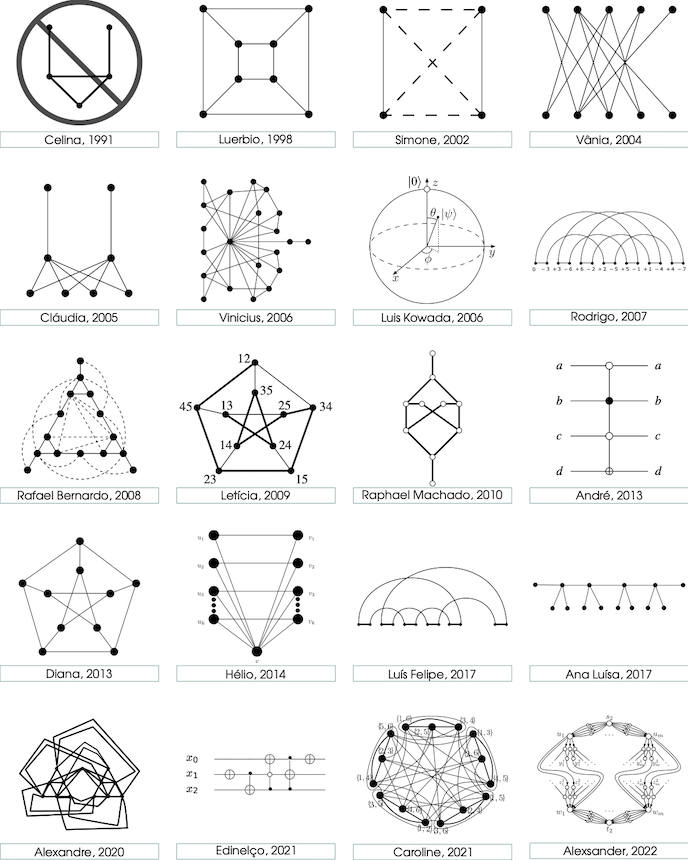
Celina Miraglia Herrera de Figueiredo is a full Professor at the Systems Engineering and Computer Science Program (PESC) of COPPE, the Alberto Luiz Coimbra Institute for Graduate Studies and Research in Engineering at the Federal University of Rio de Janeiro (UFRJ). She holds a PhD in systems and computer engineering from UFRJ and a postdoctoral degree from the University of Waterloo, Canada. She is a CNPq Level 1A Research Fellow and a FAPERJ Cientista do Nosso Estado awardee, and leads the algorithms and combinatorics research group at COPPE/UFRJ. University: Federal University of Rio de Janeiro School: Alberto Luiz Coimbra Institute for Graduate Studies and Research in Engineering Department: Systems Engineering and Computer Science Program Academic Rank: Professor Email: celina@cos.ufrj.br Her research centers on theoretical computer science, with a focus on graph theory, algorithms, computational complexity, and combinatorial optimization. She has made significant contributions to the understanding of graph classes such as perfect graphs and snarks, algorithm design, and computational complexity. Her work is grounded in the Mathematics Subject Classification codes 05-XX (Combinatorics), 68-XX (Computer Science), and 90-XX (Operations Research). The most recent publications indicate a strong trend in analyzing the computational complexity of graph problems (e.g., MaxCut, Steiner Tree, total coloring) on structured graph classes such as interval, permutation, and path graphs. Her work frequently involves proving NP-completeness results, developing parameterized algorithms, and studying graph invariants like pebbling numbers and chromatic numbers. She consistently publishes in high-quality journals such as Discrete Mathematics , Discrete Applied Mathematics , and RAIRO Operations Research . Giulio Massarani Award for Academic Merit (2006) COPPE Fifty Years Award (2013) CNPq Research Fellowship (Level 1A) FAPERJ Cientista do Nosso Estado Member of the Brazilian Academy of Sciences (2023) Celina has advised numerous students, including Raphael Machado, Vinícius de Sá, Alexsander Melo, and Ana Silva, and has secured significant research funding from CNPq and FAPERJ. She is deeply involved in the academic community, serving on the editorial boards of RAIRO Theoretical Informatics and Applications, Bulletin of the Brazilian Mathematical Society, and Matemática Contemporânea. She has also been a key organizer and committee member for major international conferences such as LAGOS, WG, LATIN, and FCT, reflecting her leadership in the fields of algorithms and combinatorics. She coordinates the Center of Excellence in Randomized, Quantum, and Approximative Algorithms and has been a driving force in promoting women in science, serving on the jury of the L'Oréal–UNESCO–ABC Program for Women in Science. Her Erdős number is 2, highlighting her extensive collaborative network in mathematics and computer science.
Camilla Ferreira de Sá Codeço is an Assistant Professor at the Institute of Physics of the Federal University of Rio de Janeiro. She is affiliated with the university's graduate programs in Physics and Applied Physics, contributing to both undergraduate and postgraduate education. Contact: Email - camilla@if.ufrj.br | Phone - 2562-7729 | Office - Room A-310 Her research interests align with core areas of physics, including theoretical physics, condensed matter physics, quantum mechanics, and computational physics. Despite limited explicit details in the provided text, her role in the Institute of Physics suggests expertise in foundational and applied physics domains. Information on scientific awards, publications, students, or laboratory affiliations is not present in the scraped data. Further details about her research projects, grants, or educational background may be documented elsewhere but are not accessible here.
Luca Roberto Augusto Moriconi is an Associate Professor at the Institute of Physics , Universidade Federal do Rio de Janeiro (UFRJ), with a PhD in Physics from PUC-RJ. His research focuses on Field Theory, Statistical Mechanics , and their applications to Condensed Matter and Turbulence . Education: PhD in Physics, Pontifícia Universidade Católica do Rio de Janeiro (PUC-RJ) Research Interests span the statistical physics of turbulence, vortex dynamics, multifractality, and magnetohydrodynamics. His recent work explores coherent structures in pipe flows, circulation statistics, and numerical methods like lattice Boltzmann simulations. Publications highlight interdisciplinary applications of turbulence in fluid dynamics, magnetohydrodynamics, and condensed matter systems, with a focus on extreme events, stochastic models, and geometric approaches to turbulent flows. Scientific Awards: CNPq Research Productivity Scholarship – Level 2 Teaching and Outreach include graduate courses on statistical field theory, thermodynamics, and turbulence. He co-leads the UFRJ Turbulence Research Group , fostering collaboration across physics, engineering, and mathematics. Outside academia, he plays the transverse flute .
Malena Osorio Hor-Meyll serves as an Associate Professor at the Institute of Physics, Federal University of Rio de Janeiro (UFRJ), where she contributes to both undergraduate and graduate education while maintaining an active research profile in theoretical physics. Her institutional affiliations include the Graduate Program in Physics and the Multidisciplinary Academic Master's Degree in Applied Physics. Education: PhD in Physics, Federal University of Rio de Janeiro (UFRJ) Research Focus: Dr. Hor-Meyll specializes in quantum information theory with emphasis on open quantum systems, quantum entanglement phenomena, and quantum optics applications. Her work bridges theoretical frameworks with potential experimental implementations, exploring decoherence mechanisms and quantum coherence preservation in complex environments. This research sits at the intersection of quantum computing foundations and quantum communication protocols. Professional Activities: She maintains an active presence through the LATTES CV platform and participates in UFRJ's academic governance structures including the Congregation. Her laboratory engagements include connections to the Central Computing facility and multiuser research labs within the Institute of Physics infrastructure.
Ruynet Lima de Matos Filho serves as an Associate Professor at the Institute of Physics, Federal University of Rio de Janeiro (UFRJ), where he conducts research and teaching activities within the physics discipline. Education: PhD in Physics, University of Rostock Research Focus: His work centers on quantum information theory, decoherence mechanisms, trapped ion systems, and cavity quantum electrodynamics. These interconnected fields address foundational challenges in quantum computing and quantum communication, particularly in maintaining quantum coherence and developing experimental platforms for quantum information processing. His research bridges theoretical frameworks with experimental implementations in atomic and optical physics. Contact: Available via email matos@if.ufrj.br , phone +55 (21) 3938-7900, or office A-319/16 at the Institute of Physics.
Natanael de Carvalho Costa is an Assistant Professor at the Institute of Physics, Federal University of Rio de Janeiro (UFRJ), holding this position since December 2019. He is also a collaborator in the Graduate Program of Physics at Universidade Federal do Piauí (UFPI) and SISSA (Italy). Ph.D. in Physics (2018), Federal University of Rio de Janeiro Research Interests: His work focuses on theoretical condensed matter physics, particularly on strongly correlated electron systems, superconductivity, magnetism, and charge density waves. He employs quantum Monte Carlo simulations and other computational methods to study quantum phase transitions in materials like Lieb lattices and kagome lattices. Publication Trends: Recent articles emphasize quantum criticality in flat band systems, superconducting vortex dynamics, and the interplay between spin-orbit coupling and charge order. His work spans from fundamental quantum mechanics (e.g., angular momentum addition) to applied materials science (e.g., nano-bridge superconductors). Collaborations: He works with institutions in Brazil (UFPI) and Italy (SISSA), blending computational physics with experimental insights.
Marcelo Paleologo França Santos serves as a Full Professor at the Institute of Physics, Federal University of Rio de Janeiro (UFRJ), where he conducts advanced research in quantum physics disciplines. Holding a PhD in Physics from UFRJ, he maintains active teaching and research responsibilities within the university's physics programs. Education PhD in Physics, Federal University of Rio de Janeiro (UFRJ) Research Focus His work centers on Quantum Optics, Open Quantum Systems, and Quantum Information—exploring quantum coherence, decoherence mechanisms, and quantum computing applications. These fields bridge theoretical physics with emerging quantum technologies, emphasizing experimental and theoretical approaches to quantum state manipulation. Scientific Recognition CNPq Research Productivity Scholarship – Level 1C (Brazil's National Council for Scientific and Technological Development) Professional Activities As a core faculty member, he contributes to undergraduate and graduate physics programs including Master's and Doctorate degrees in Physics. His institutional engagement spans curriculum development and research supervision within UFRJ's physics ecosystem. Contact Information Email: mfsantos@if.ufrj.br Phone: +55 (21) 3938-7931 Office: Room A-318/18, Institute of Physics
Dr. Marcos Gonçalves de Menezes serves as an Associate Professor at the Institute of Physics, Federal University of Rio de Janeiro (UFRJ), where he maintains an active research program in computational materials physics while teaching core undergraduate courses including Electromagnetism 1 & 2, Physics 1 & 3, and Condensed Matter Physics. His research focuses on computer simulation of nanomaterials, quantum materials, 2D and topological materials, semiconductors, defects, surfaces, interfaces, heterostructures, and energy conversion and storage . He employs computational methods to investigate electronic properties at the nanoscale, with particular emphasis on novel materials systems for next-generation electronic and energy applications. Dr. Menezes holds a CNPq Research Productivity Scholarship at Level 2, recognizing his significant contributions to Brazilian science. His publication record includes 31 papers with 330 citations and an h-index of 11 according to Web of Science (August 2025). He actively contributes to educational outreach through the Preparation Material for the Brazilian Physics Olympiad (OBF) initiative, where he supervises undergraduate students developing solutions to competition problems. Additionally, he is a key member of the NAMOR Group (Nanoscience Modeling in Rio), which focuses on quantum materials research. His teaching methodology incorporates both traditional classroom instruction and digital resources, with courses featuring comprehensive lecture notes, exercise lists, and virtual learning environments. Current teaching responsibilities include courses scheduled through the 2025 academic year, demonstrating his active faculty status.
Thales Agricola Calixto de Azevedo serves as an Associate Professor at the Institute of Physics, Federal University of Rio de Janeiro (UFRJ), where he maintains an active research and teaching position in theoretical physics. His research focuses on fundamental theoretical frameworks, with core interests spanning: Theoretical Physics Quantum Field Theory String Theory Gauge/Gravity Dualities Scattering Amplitudes His work explores deep connections between quantum theories and gravitational phenomena through modern computational approaches. No scientific awards or student advisement records are documented in the available institutional information.