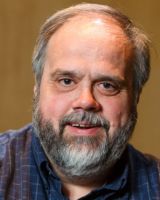
Rupert Klein is a Professor at Freie Universität Berlin in the Department of Mathematics and Computer Science , specializing in Geophysical Fluid Dynamics . His research spans atmospheric dynamics, numerical methods, and gas dynamics of combustion. Research Interests : Geophysical Fluid Dynamics and Atmospheric Modeling Multiscale Asymptotic Analysis Wave Propagation and Turbulence Combustion and Pressure Gain Combustion Climate Dynamics and Data Assimilation Scientific Awards : DRS Award for Excellent Supervision (2014) ECMWF Fellowship (renewed 2017) His recent work includes multiscale models for atmospheric flows, vortex dynamics, and combustion processes. Key collaborations involve DFG SPP 1276, CRC 1029 (TurbIn), and CRC 1114 (SCCS) projects. He contributes to numerical methods for low-Mach-number flows and geophysical simulations.
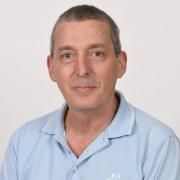
Professor David Mowbray is a Professor of Physics at the University of Sheffield, affiliated with the School of Mathematical and Physical Sciences and the Department of Physics. His research focuses on III-V semiconductors, quantum dots, and nanostructures, emphasizing applications in high-efficiency lasers and light emitters. He has pioneered studies on AlGaInP band structures and quantum dot-based devices, including lasers on Si substrates for silicon integration. Qualifications: B.A. in Physics (Hertford College, Oxford, 1984) and D.Phil. in Physics (Hertford College, Oxford, 1989). Research interests include optical spectroscopy of wide band gap materials (AlGaInP, AlInGaN) for visible/UV emitters, quantum dot lasers with low threshold currents, and nanowire quantum dots for single-photon sources. Current projects involve quantum dots in quantum wires with UCL and Warwick, aiming for nanoscale lasers and efficient photon sources. Teaching includes courses on Fourier Techniques, Electromagnetism, and nanotechnology. He has held leadership roles, such as Head of Department and Senior Tutor, and serves on professional committees like the Institute of Physics Degree Accreditation Committee. Grants include EPSRC funding for quantum dot lasers on Si (2012–2016) and nanowire quantum dots for silicon-based emitters (2016–2020). His work bridges semiconductor physics, nanostructure engineering, and optoelectronic device applications.
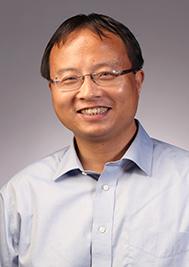
Riyadh Baghdadi is an Assistant Professor of Computer Science at New York University Abu Dhabi and a Global Network Assistant Professor at the Tandon School of Engineering, NYU. He is also a Research Affiliate at MIT, where he previously completed a postdoctoral fellowship. His academic journey includes a PhD and Master’s from Sorbonne University (INRIA/UPMC) and an engineering degree from Ecole Supérieure d’Informatique in Algiers. Assistant Professor, NYU Abu Dhabi Global Network Assistant Professor, Tandon School of Engineering, NYU Research Affiliate, MIT His research lies at the intersection of compilers, programming languages, and applied machine learning, with a focus on developing advanced compiler techniques for deep learning, high-performance computing, and data-parallel algorithms. He is the lead developer of the Tiramisu compiler , a polyhedral compiler designed to optimize dense and sparse deep learning workloads across diverse architectures including CPUs, GPUs, and FPGAs. Riyadh’s recent publications demonstrate a strong trend toward integrating machine learning into compiler optimization—particularly in cost modeling, loop scheduling, and automatic code generation. His work addresses critical challenges in optimizing sparse neural networks and enabling efficient execution on resource-constrained platforms like smartphones and autonomous vehicles. Outstanding Paper Award, MLSys 2021 He has mentored 18 students and taught core courses such as Computer Systems Organization and Machine Learning at NYUAD. His service to the academic community includes program committee roles at MLSys, IPDPS, ECOOP, and PACT, as well as organizing workshops on polyhedral compilation and machine learning for hardware-software co-design. Riyadh actively contributes to open-source projects and collaborates with industry leaders including Google, Facebook, NVIDIA, and Intel. He leads the development of Tiramisu and collaborates on DSLs like GraphIt and Halide, focusing on performance portability and automation in compiler design.
Dr. Richard M. Green is a Professor of Mathematics at the University of Colorado Boulder, where he has been teaching since at least 2001. He holds a Ph.D. from the University of Warwick (1995) and specializes in algebraic combinatorics and representation theory. His teaching portfolio includes undergraduate courses like Calculus 3 and Number Theory, as well as graduate courses in Algebra and Ring Theory. Education: Ph.D. in Mathematics, University of Warwick, 1995 Dr. Green's research focuses on the intersection of algebra and combinatorics, with particular emphasis on Coxeter groups, Hecke algebras, and diagram algebras. His work explores the combinatorial structures underlying representation theory, including Kazhdan-Lusztig theory, heaps of pieces, and minuscule representations. He has made significant contributions to understanding the structure of cellular algebras and their connections to Lie theory. His 2013 book "Combinatorics of Minuscule Representations" (Cambridge University Press) is a major reference in the field. Analysis of Dr. Green's recent publications reveals a continued focus on Coxeter groups and their generalizations, with increasing attention to 2-roots, orthogonal structures, and connections to Weyl groups. His work demonstrates a consistent thread connecting combinatorial structures with representation-theoretic phenomena, particularly in the context of Kazhdan-Lusztig theory and cellular algebras. The research shows progression from foundational work on Temperley-Lieb algebras to more sophisticated analyses of Coxeter group structures and their applications. Dr. Green has authored numerous scholarly publications and his book "Combinatorics of Minuscule Representations," which has established him as a leading researcher in algebraic combinatorics. His Erdős number is 3, indicating significant connections to the broader mathematical community. As an educator, Dr. Green has supervised numerous undergraduate and graduate students through coursework and independent studies. His teaching spans the mathematics curriculum from introductory calculus to advanced graduate algebra. He has taught a wide range of courses including MATH 2400 (Calculus 3), MATH 3110 (Number Theory), MATH 3170 (Combinatorics 1), and graduate courses MATH 6130/6140 (Algebra 1/2) and MATH 6250 (Theory of Rings). His teaching philosophy emphasizes clear exposition of complex mathematical concepts. Dr. Green maintains active research collaborations and contributes to the academic community through publications and participation in the Rocky Mountain Algebraic Combinatorics Seminar. His work continues to influence both theoretical developments in algebraic combinatorics and pedagogical approaches to advanced mathematics.
Christopher Re is a Professor in the Department of Computer Science at Stanford University, affiliated with the Stanford AI Lab, Machine Learning Group, and Center for Research on Foundation Models. His research focuses on the intersection of machine learning, database systems, and scientific computing, with applications in humanitarian efforts, scientific discovery (e.g., extrasolar neutrinos, DNA foundation model Evo), and industry partnerships with companies like Apple and Google. He has been recognized with prestigious awards, including the MacArthur Foundation Fellowship and multiple test-of-time awards. His work emphasizes advancing thermal materials, phase-change memory, and ultrafast electron microscopy technologies. Re's research contributions span database theory, systems, and machine learning, with best papers at PODS 2012, SIGMOD 2014, and ICML 2016. His lab’s innovations have been incorporated into products globally, and he actively invests in technology startups. Key projects include developing thermal interface materials for 3D integrated circuits and exploring energy-efficient neuro-inspired memory systems. His awards reflect sustained excellence: NeurIPS 2020 and PODS 2022 test-of-time awards, along with recent accolades for student-led initiatives at MIDL 2022 and ICLR22. Re’s interdisciplinary approach bridges academia and industry, driving both scientific and humanitarian impact.
Martin Wells is the Charles A. Alexander Professor of Statistical Sciences at Cornell University, with joint appointments in Social Statistics, Clinical Epidemiology, and Industrial Labor Relations. Since joining Cornell in 1987, he has developed methodologies spanning Bayesian inference, tensor analysis, and machine learning applications in biomedicine and finance. His research integrates statistical theory with computational innovations, particularly in high-dimensional modeling and quantum-inspired algorithms. Recent work focuses on geometric approaches to tensor decomposition, misclassification correction methods, and phylodynamic models incorporating dormancy effects. Professor Wells teaches statistical methodology across disciplines including law, medicine, and biology, adapting analytical frameworks to diverse research contexts. His interdisciplinary collaborations extend to Weill Medical College and the School of Industrial and Labor Relations.
Prof. Ady Arie is a Professor of Electrical Engineering at Tel Aviv University, where he serves as the Head of the Tel Aviv University Center for Light-Matter Interaction and holds the Marko and Lucie Chaoul Chair in Nano-Photonics. He has been a faculty member at the Iby and Aladar Fleischman Faculty of Engineering since 1993, previously serving as Head of the School of Electrical Engineering (2013-2017) and Vice Dean of Research (2011-2013). His educational background includes: B.Sc. in Mathematics and Physics from Hebrew University of Jerusalem (1983) M.Sc. in Physics from Tel-Aviv University (1986) Ph.D. in Engineering from Tel-Aviv University (1992) Prof. Arie's research spans multiple frontiers of optics and photonics. His work in nonlinear optics focuses on advanced frequency conversion techniques and shaping of light parameters using nonlinear photonic crystals. In quantum optics , he develops quantum light sources based on spontaneous parametric down conversion and explores applications in quantum sensing and communication. His plasmonics research investigates manipulation of surface plasmon polaritons on metal surfaces. In electron optics , he studies electron-matter-light interactions and techniques for sculpting electron wave functions. His lab also explores hydrodynamics through quantum simulations with water waves, creating analogies to quantum mechanical phenomena. Analysis of Prof. Arie's recent publications (2023-2025) reveals a strong focus on quantum technologies, particularly in quantum light generation, quantum sensing, and quantum information processing. His work increasingly integrates concepts from nonlinear optics, electron microscopy, and quantum physics, with growing emphasis on practical applications in quantum communication and computation. The research shows sophisticated manipulation of light-matter interactions across multiple platforms including nonlinear photonic crystals, plasmonic structures, and electron beams. Prof. Arie has received significant recognition for his work: Kadar Foundation Award for Excellence in Research (2016) Fellow of the Optical Society of America Editorial roles including Topical Editor of Optics Letters (2008-2014) and Associate Editor of Optica (since 2018) Prof. Arie leads the Nonlinear Optics and Wave Propagation Laboratory at Tel Aviv University, where his team investigates diverse wave phenomena from light frequency conversion to electron beam manipulation. He has served as chair of the national steering committee of the Israeli Planning and Budgeting Committee on Quantum Science and Technology. His research has been supported by various grants enabling the development of novel optical technologies and quantum systems. While specific grant details aren't provided in the text, his extensive publication record and leadership positions suggest substantial research funding. Prof. Arie's laboratory focuses on the intersection of classical and quantum wave phenomena. The lab investigates light manipulation through nonlinear optical processes, plasmonic structures, and electron microscopy techniques. Current research directions include quantum light generation, electron-photon interactions, and hydrodynamic analogs to quantum systems. The lab appears well-equipped for advanced optical experimentation with capabilities spanning visible to infrared wavelengths, nonlinear crystal engineering, and electron beam characterization.
Prof. Jelena Klinovaja is a Professor in the Department of Physics at the University of Basel, affiliated with the Philosophisch-Naturwissenschaftliche Fakultät. She holds leadership roles in research groups focusing on quantum theory of condensed matter, topological systems, and spin phenomena. Her career includes a PhD from the University of Basel (2012), a Harvard Fellowship (2013), and tenure as an assistant (2014) and associate professor (2019) before her current rank. She leads research on topological insulators, graphene, and Majorana fermions, with applications to topological quantum computing. Notable awards include the Swiss Physical Society Prize (2013) and an ERC Starting Grant (2017). Her work combines theoretical physics with experimental collaborations, particularly in nanowires and superconducting systems. She mentors students in the Honors Track program and contributes to interdisciplinary initiatives like NCCR SPIN. Education: Bachelor/Master from Moscow Institute of Physics and Technology (2007-2009); PhD in Theoretical Physics from University of Basel (2012). Research Interests: Topological effects in condensed matter, spintronics, quantum transport, Majorana fermions, and cavity quantum electrodynamics. Publications span over 50 peer-reviewed articles since 2012, focusing on topics like Josephson junctions, topological superconductivity, and hybrid systems. Her work bridges theoretical models with experimental realizations, emphasizing practical applications in quantum technologies. Awards: Swiss Physical Society Prize (2013), ERC Starting Grant (2017). Active in the scientific community, she collaborates with institutions worldwide and advises PhD students in quantum physics and nanoscience. Her research group also explores magnonic systems and topological materials engineering.
Hao Shen is a Professor in the Department of Mathematics at the University of Wisconsin-Madison. His academic work focuses on stochastic partial differential equations and their connections with quantum field theory, statistical mechanics, and geometric flows. Dr. Shen's educational background includes a PhD from Princeton University in 2013 under the supervision of Weinan E. He completed postdoctoral training at the University of Warwick with Martin Hairer (2014-2015) and served as a Ritt Assistant Professor at Columbia University with Ivan Corwin (2015-2018) before joining UW-Madison. Hao Shen's research interests span multiple areas of mathematical physics and probability theory: Stochastic partial differential equations (SPDEs) Quantum field theory, particularly Yang-Mills theory and gauge theories Statistical mechanics and interacting particle systems Geometric flows, including Ricci flow Stochastic quantization methods Renormalization theory for singular SPDEs His recent publications demonstrate a strong focus on the mathematical foundations of quantum field theories through stochastic methods, with particular attention to Yang-Mills theory in various dimensions and the O(N) sigma model. Shen's work often bridges rigorous mathematical analysis with physical applications, employing advanced techniques from regularity structures, paracontrolled distributions, and stochastic analysis. Simons Fellow in Mathematics (2024-2025) NSF CAREER DMS-2044415 (2021-2026) NSF DMS-1954091 (2020-2023) NSF DMS-1712684 / DMS-1909525 (2017-2020) As an academic leader, Dr. Shen serves on the editorial boards of prestigious journals including Annals of Probability, Stochastics and Partial Differential Equations: Analysis and Computations, and Annales de l'Institut Henri Poincaré. He actively contributes to the mathematical community through organizing conferences and summer schools, such as the 2024 MSRI/SLMath Summer Graduate School on "Stochastic quantization" and the upcoming 2025 SLMath semester program "Recent Trends in Stochastic Partial Differential Equations." Dr. Shen's teaching portfolio includes advanced courses in probability theory, stochastic analysis, and specialized topics in stochastic partial differential equations. His commitment to education is evident in his development of graduate-level courses that bridge theoretical mathematics with applications in physics.
Dario Valdebenito is an Assistant Professor of Mathematics at Ave Maria University. He holds a B.S. and diploma in Mathematical Engineering from the University of Chile, followed by an M.Sc. and Ph.D. in Mathematics from the University of Minnesota. His postdoctoral research included positions at McMaster University and the University of Tennessee. His research focuses on partial differential equations, spatial dynamics, and boundary layer problems, applying dynamical systems techniques to elliptic equations. He has over 15 years of college-level teaching experience in diverse settings. Beyond academia, he has a passion for music, including piano and choral singing, and interests in opera, history, and transportation. Dr. Valdebenito’s research explores fluid dynamics with low viscosity and ideal fluid comparisons, as well as quasiperiodic solutions in elliptic equations using KAM theory. His work intersects applied mathematics, fluid dynamics, and nonlinear analysis. He contributes to the mathematical community through peer reviews and Mathematical Reviews reporting.
Dr. Jonathan Hu is a Professor in the Department of Electrical and Computer Engineering at Baylor University's School of Engineering and Computer Science. He holds a PhD from the University of Maryland Baltimore County (2008) and completed a postdoctoral fellowship at Princeton University (2009–2011). He is an active researcher in optics and photonics, leading the Photonics Research Laboratory and advising both graduate and undergraduate research assistants. Research Interests: Nanophotonics and metamaterials for photovoltaic and biomedical applications Mid-IR supercontinuum generation using chalcogenide photonic crystal fibers 2D materials such as graphene and their alignment via magnetic fields Coherent optical communication and quantum optical Fredkin gates Numerical simulation of electromagnetic problems and leaky mode analysis His recent publications (2019–2024) demonstrate a strong focus on quantum plasmonics, specialty optical fibers, optofluidics, and nonlinear optical phenomena, with high-impact work in journals like Science Advances , ACS Photonics , and Advanced Materials . The research shows a clear trend toward integrating photonics with 2D materials and quantum systems, with applications in sensing, communication, and materials characterization. Scientific Awards and Recognition: 35 Baylor faculty named among top 2% most cited researchers (2023) Editor’s Pick, Journal of Applied Physics (2018) Top three downloads in OSA journals for three consecutive months (2009) NSF Graduate Research Fellowship (awarded to advisee) Chinese Government Award for Outstanding Self-Financed Students Abroad (awarded to advisee) Second Place in FiO + LS Student Competition (awarded to advisee) Advising and Grants: Dr. Hu actively mentors students at all levels, with current graduate research assistants including Wei Zhang, Zhihao Hu, and Sterling Walzel. His lab is supported by external funding, though specific grants are not detailed in the text. He has advised PhD students such as Joshua Young, Chao Niu, and Chengli Wei, many of whom have gone on to successful academic and industry careers. His teaching includes core courses like EGR 1302, ELC 2320, and ELC 4320, as well as advanced topics in computational photonics and integrated photonics. Labs and Teams: He leads the Photonics Research Laboratory at Baylor University, located at the BRIC facility. He is also involved with the Baylor University Optica Student Chapter, promoting optics outreach and networking among students and researchers.
Herb Winful is a Professor of Optics at the University of Michigan's College of Engineering, Department of Electrical and Computer Engineering. He specializes in nonlinear optics, laser physics, quantum tunneling , and photonics , with a focus on phenomena like superluminal group velocities, frequency comb generation, and light storage via stimulated Brillouin scattering. Research areas span quantum tunneling times , nonlinear photonic materials , and coherent beam combining in fiber laser arrays. His work includes frequency comb spectroscopy using quantum-well diode lasers, ultrafast erbium fiber lasers , and negative group delay engineering in birefringent waveguides. The article list reveals expertise in supercontinuum generation , evanescent wave dynamics , photonic crystals , and nonlinear pulse manipulation . Key subfields include stimulated Brillouin/Raman scattering , parabolic similaritons , and time-domain modeling of optical systems. Award-winning scientific contributions include resolving the Hartman effect paradox and optimizing fiber laser arrays for high-power applications. His research bridges theoretical insights with practical innovations in optical engineering and quantum optics .
Professor Phil King leads a research group within the School of Physics and Astronomy at the University of St Andrews, where he is part of the Centre for Designer Quantum Materials. His research focuses on the electronic structure and many-body interactions of quantum materials using electron spectroscopy, particularly angle-resolved photoemission (ARPES), and creating new designer quantum materials through atomic layer-by-layer growth. King's research interests center on quantum materials, with particular emphasis on topological matter, transition-metal oxides, and 2D quantum materials. His group investigates strain and pressure tuning of quantum materials, photoemission spectroscopy of correlated systems, and engineering band structures in 2D conductors. They develop methods to exploit strong electronic interactions in 2D systems to create new functional materials with tunable properties. Their approach combines experimental screening of candidate materials, bottom-up atomic assembly of custom heterostructures, and advanced spectroscopic feedback. Analysis of King's recent publications reveals a strong focus on the electronic structure of quantum materials, particularly transition metal dichalcogenides, delafossite metals, and topological systems. His work frequently examines charge density waves, spin-orbit coupling effects, Van Hove singularities, and quantum phase transitions. A notable trend is the integration of materials synthesis with advanced spectroscopic characterization, enabling precise control over electronic properties through strain engineering, doping, and heterostructure formation. King actively supervises PhD students on projects related to quantum materials, including probing elastic coupling in exotic magnets, angle-resolved photoemission from tailored mesostructures, thermodynamics and spectroscopy, oxide metals, and gate tuning of 2D quantum materials. His research is supported by major funding sources that enable access to cutting-edge equipment and international facilities. The King Group operates advanced experimental facilities including a high-resolution lab-based ARPES system with multiple light sources, and two DCA R450 molecular-beam epitaxy systems optimized for transition-metal oxides and chalcogenides. They are developing the UK's first spin-resolved ARPES capability. The group regularly utilizes major international facilities including Diamond Light Source, Elettra, SOLEIL, and HiSOR synchrotrons, as well as the ARTEMIS facility for time-resolved studies.
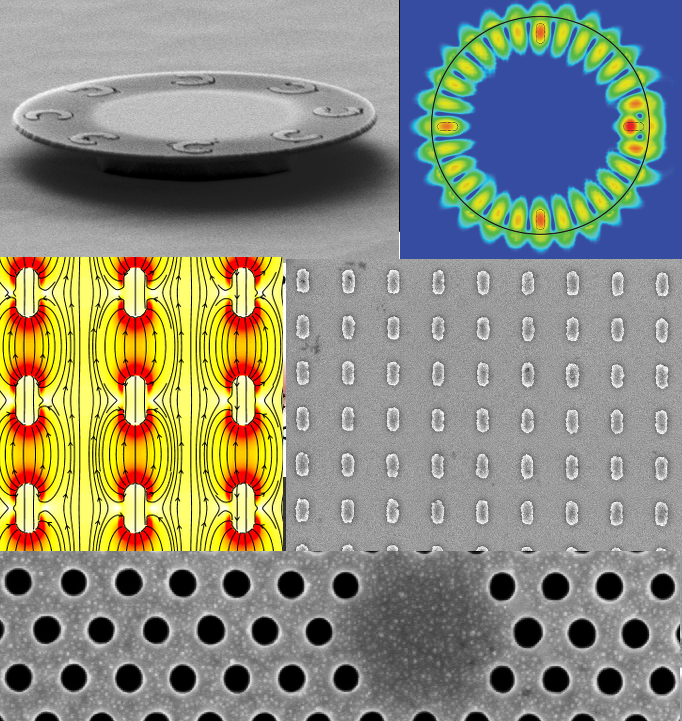
Prof. Dr. Cedrik Meier is a faculty member at the University of Paderborn , affiliated with the Faculty of Natural Sciences and serving as the head of the Department of Physics . He holds the academic rank of Professor and chairs the Audit Committee. Education: Diplom in Physik, Ruhr-Universität Bochum (1998) Dr. rer. nat. in Experimentalphysik, Ruhr-Universität Bochum (2001) Habilitation, Universität Duisburg-Essen (2007) His research focuses on Nanophotonics , Plasmonics , Metamaterials , and Nonlinear Optics . The work involves developing novel photonic devices using nanofabrication techniques and materials like zinc oxide (ZnO) and silicon metasurfaces . Recent publications highlight advancements in third harmonic generation , correlated photon sources , and nonlinear optical effects in nanostructured materials. Key projects include TRR 142 (Tailor-Made Nonlinear Photonics) and studies on quantum dot positioning and liquid crystal-tunable devices . Scientific Awards: Golden Chalk for teaching physics (2016) Junge Kolleg, NRW Academy of Sciences (2007) Gottschalk-Diederich Baedeker Prize (2007) NanoFutur Award (2006) DFG Postdoc Fellowship (2003) Evangelical Study Association Villigst Scholarship (1998) He has led research groups at multiple institutions and currently oversees the Nanophotonics & Nanomaterials working group. His teaching includes Experimental Physics D and Lab Projects .
Jean-Pierre Magnot serves as an Associate Researcher at LAREMA (Laboratoire Angevin de Recherche en Mathématiques), University of Angers, France, while concurrently holding a High-School Teacher position at Lycée Jeanne d'Arc, Clermont-Ferrand, France. He maintains additional affiliation with the Lepage Research Institute in Slovakia. His research integrates three core domains: Infinite dimensional geometry (focusing on diffeological structures, vector pseudobundles, and Grassmannians), Mathematical physics (specializing in Kadomtsev-Petviashvili hierarchies and pseudo-differential operators), and Decision science (developing geometric frameworks for pairwise comparison matrices and inconsistency reduction). This interdisciplinary approach frequently bridges gauge theory concepts with decision-making algorithms, exemplified by Yang-Mills formulations applied to ranking problems. Recent publications (2024-2025) reveal a cohesive trajectory where diffeological methods unify mathematical physics and decision theory. Key trends include the geometrization of pairwise comparisons through quantum gravity analogies, well-posedness analysis of generalized KP systems, and optimization frameworks for infinite-dimensional spaces. His work demonstrates consistent application of abstract geometric constructs to both theoretical physics and practical decision systems. No scientific awards were documented in the provided sources. Information regarding students advised, doctoral supervision, or research grant acquisitions was not present in the source material. Magnot actively collaborates with international institutions including the Union of Czech Mathematicians and Physicists, University of Prešov (Slovakia), Eötvös Loránd University (Hungary), Italian Society for General Relativity and Gravitation, Transilvania University of Brasov (Romania), VŠB-TU Ostrava (Czech Republic), and Lodz University of Technology (Poland). These partnerships span mathematical physics, differential geometry, and decision science applications.