Debra McGivney, PhD, is an Assistant Professor in the Department of Biomedical Engineering at the Case School of Engineering, Case Western Reserve University. She also serves as Associate Chair of the Case School of Engineering. Her research focuses on mathematical modeling of biomedical applications, particularly in medical imaging. She specializes in magnetic resonance fingerprinting (MRF), inverse problems using Bayesian frameworks, and computational solutions for imaging challenges. Education: PhD in Applied Mathematics, Case Western Reserve University (2013) MS in Mathematics, John Carroll University (2006) BS in Mathematics, University of Notre Dame (2004) Her research interests include MRF techniques for quantifying tissue properties, tackling the partial volume effect, and improving imaging accuracy through pattern matching and statistical methods. Recent work emphasizes optimizing pulse sequences, reducing artifacts, and applying MRF to brain tumors and epilepsy diagnostics. Her publications highlight advancements in MRF simulation, error estimation, and integration with quantum-inspired algorithms. She has contributed to 3D imaging techniques, radiomic analysis, and automated sequence design. Labs and collaborations involve interdisciplinary teams focused on medical imaging innovation, though specific lab names are not mentioned.
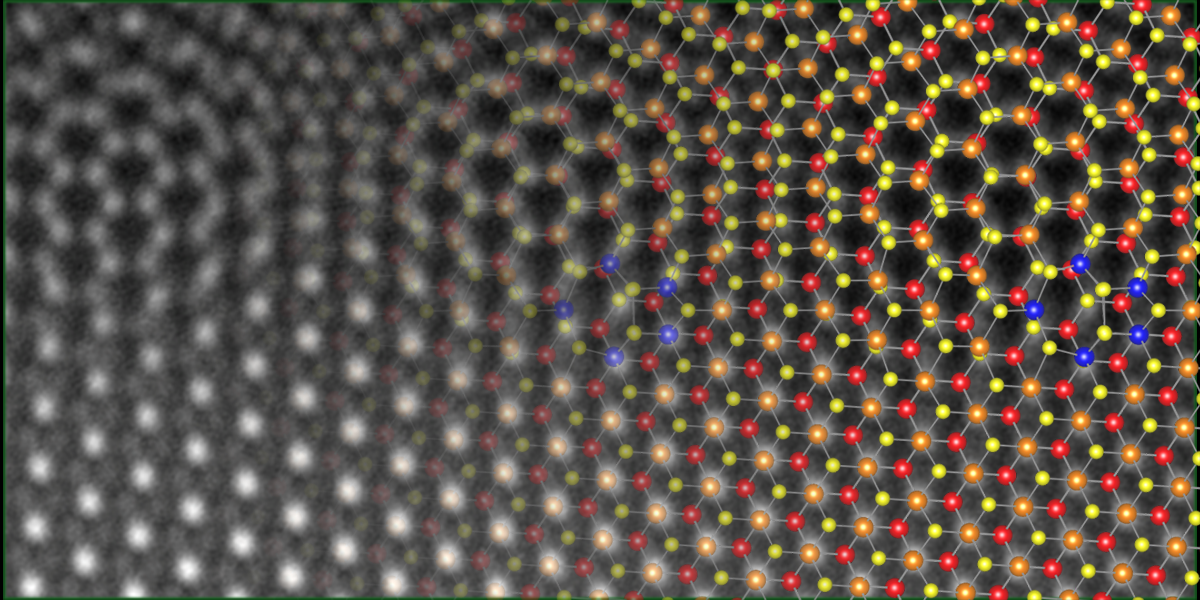
Pinshane Huang is an Associate Professor and Ivan Racheff Faculty Scholar in the Department of Materials Science and Engineering at the University of Illinois Urbana-Champaign. She holds a B.A. in Physics from Carleton College and Ph.D. in Applied Physics from Cornell University. Her research focuses on transmission electron microscopy and spectroscopy of 2D materials, soft-hard interfaces, and atomic-scale defects. Huang leads the Huang Research Group, headquartered at the Materials Research Laboratory. Education: PhD, Cornell University, Applied and Engineering Physics MS, Cornell University, Applied and Engineering Physics BA, Carleton College, Physics (with Distinction) Research Interests: Huang’s work bridges physics, chemistry, and materials science. Her group develops advanced electron microscopy techniques (e.g., ptychography) to image atomic structures in 2D materials like graphene and transition metal dichalcogenides. Key areas include defect dynamics, strain engineering, and material interfaces. Recent breakthroughs include sub-angstrom resolution imaging in uncorrected microscopes and atom-by-atom visualization of silica glass defects. Key Contributions: Pioneered high-resolution ptychography methods Discovered atomic-scale dynamics in 2D materials Developed machine learning tools for microscopy data analysis Awards & Recognition: Presidential Early Career Award for Scientists and Engineers (2019) David and Lucile Packard Fellowship (2017) Sloan Research Fellowship (2018) Multiple teaching awards including Grainger College of Engineering Teaching Excellence Award (2021) Labs & Collaborations: Huang’s lab is part of the Materials Research Laboratory (MRL) at UIUC. Current projects are funded by NSF, AFOSR, 3M, and the Packard Foundation. Collaborations span academia and industry, focusing on quantum materials, nanoelectronics, and energy applications.
Stefan Leue is a Professor for Software and Systems Engineering at the Department of Computer and Information Science at the University of Konstanz since 2004. He serves as a member of the Extended Directorate of the Centre for Human | Data | Society (elected in 2022) and is part of the Cluster of Excellence Centre for the Advanced Study of Collective Behaviour since 2018. His academic background includes a doctorate from the University of Bern (1995) and prior professorial positions at the University of Freiburg (2000-2004) and University of Waterloo (1995-2000). Leue's research focuses on formal methods in software engineering, particularly in the design and analysis of complex systems. His expertise spans embedded software systems, verification of AI-based software, automotive software engineering, causality analysis, and safety-critical systems. He leads several research projects including Neural Network Repair, Causality in Systems (QuantUM and CausCheck), SCADNet, TarTar, and DiRePro. His research group has produced significant work in model checking, directed search algorithms, real-time systems verification, and probabilistic system analysis. Current research trends emphasize the application of formal methods to AI safety, particularly in neural network verification and repair, as well as extending formal techniques to collective behavior modeling and safety-critical automotive systems. Steering Committee Member, SPIN Symposium on Model Checking of Software since 2007 Member, Cluster of Excellence Centre for the Advanced Study of Collective Behaviour since 2018 IEEE Computer Society member ACM member Gesellschaft für Informatik (German Informatics Society) Professor Leue has supervised numerous PhD and Master's students, many of whom now hold prominent positions in industry and academia. His research group maintains active collaborations with industry partners in automotive and safety-critical systems domains. Current work focuses on bridging formal methods with machine learning to address safety challenges in autonomous systems.
Ranxiao Frances Wang is a Professor of Psychology at the University of Illinois, with additional appointment at the Beckman Institute for Advanced Science and Technology. She holds her office in the Psychology Building and maintains an active research laboratory focused on spatial cognition and perception. Dr. Wang earned her Ph.D. from Massachusetts Institute of Technology before joining the University of Illinois faculty. Her research program spans multiple domains within cognitive psychology, particularly focusing on how humans process spatial information and attention. Her primary research interests include mind wandering and cognitive control, human-robot interaction, biologically-informed artificial intelligence, visual perception, and spatial memory. She has developed innovative methodologies to study spontaneous cognitive processes, particularly in meditation contexts, and has pioneered research on human navigation in non-Euclidean spaces. Her work bridges cognitive psychology with robotics, quantum physics, and virtual reality technologies. Analysis of her recent publications reveals a strong emphasis on the cognitive mechanisms underlying attentional states, spatial navigation in both Euclidean and non-Euclidean environments, and the application of cognitive principles to human-robot interaction. Her research consistently employs rigorous experimental methods combined with computational modeling to uncover fundamental principles of human cognition. Dr. Wang has received consistent research funding that has supported numerous graduate students and collaborative projects across disciplines. Her work has been published in top-tier journals across psychology, neuroscience, and human-computer interaction fields. She actively mentors graduate students in the Psychology Department and collaborates with faculty from multiple departments including Engineering, Computer Science, and Physics. Her laboratory maintains cutting-edge virtual reality equipment for spatial cognition research.
Felix Binkowski is a researcher at the Zuse Institute Berlin within the Modeling and Simulation of Complex Processes department and Computational Nano Optics group. His work focuses on computational methods for photonic systems and quantum technologies. Position: Researcher Email: binkowski@zib.de Research Interests include: modal analysis of nanophotonic devices, resonance phenomena in non-Hermitian systems, Purcell effect optimization for quantum emitters, and application of Riesz projections to eigenvalue problems. His projects span from theoretical developments to experimental validation of optical materials. Key methodologies: AAA rational approximation, Riesz projections, Gaussian process optimization Application areas: photovoltaics, nanolasers, plasmonic systems Recent Publications (2024-2025) demonstrate expertise in: computational resonance extraction, pole-zero analysis of photonic systems, and uncertainty-guided design optimization. Notable works include software frameworks for resonance expansion (RPExpand) and studies on Purcell enhancement in 2D material-based nanoresonators. Education includes a doctoral degree (2023) from Freie Universität Berlin under Christof Schütte, and a Master's (2017) from Technische Universität Berlin with advisors Jörg Liesen and Martin Weiser.
Mathias Senge is a Professor of Organic Chemistry at Trinity College Dublin, where he has held the Chair of Organic Chemistry since 2005. He is also a Hans Fischer Senior Fellow at the Institute for Advanced Study, Technische Universität München (TUM-IAS) since 2020, and previously served as an August-Wilhelm Scheer Visiting Professor at TUM in 2018. His research focuses on porphyrins, tetrapyrroles, and their applications in photochemistry, photobiology, and photomedicine. Dr. Senge's educational background includes: Undergraduate studies in chemistry and biochemistry at Freiburg, Amherst, Marburg, and Lincoln Diplom-Chemiker from Philipps Universität Marburg (1986) PhD in plant biochemistry with Prof. Horst Senger in Marburg (1989) Habilitation in Organic Chemistry at Freie Universität Berlin (1996) Professor Senge's research spans multiple areas of chemistry with a particular emphasis on the synthesis and properties of porphyrins and related tetrapyrrole compounds. His work in synthetic organic chemistry has led to innovations in hydrocarbon scaffold molecules including triptycenes and cubanes. In bio(in)organic chemistry , he has made significant contributions to understanding porphyrin chemistry and its biological implications. His medicinal chemistry research focuses on photodynamic therapy and imaging techniques. Senge's work in photobiology connects to natural photosynthesis processes, while his crystallography research examines structure-function relationships. More recently, he has expanded into material science applications including photonics materials and 2D nanostructures, as well as exploring the history and philosophy of photochemistry. Analysis of Professor Senge's recent publications reveals a strong focus on molecular engineering of porphyrin systems, with particular attention to conformational control, symmetry properties, and applications in materials science. His work bridges fundamental chemical principles with practical applications in photomedicine, quantum computing, and nanotechnology. The interdisciplinary nature of his research is evident in collaborations spanning chemistry, physics, materials science, and medical applications. Among his notable scientific achievements: Hans Fischer Senior Fellow, Institute for Advanced Study, TUM (2020) Laboratory Team of the Year award for 'Senge Group' from the Irish Laboratory Awards (2020) August-Wilhelm Scheer Visiting Professor, TUM (2018) KIT International Collaborator Award (2018) Election to Professorial Fellow at Trinity College Dublin (2006) Science Foundation Ireland Research Professorship (2005-2009) Heisenberg-Fellowship of the Deutsche Forschungsgemeinschaft (1997-2002) Professor Senge has secured significant research funding throughout his career, including a prestigious Science Foundation Ireland Research Professorship from 2005-2009. His research group, the 'Senge Group,' was recognized with the Laboratory Team of the Year award in 2020. He has established international collaborations with institutions including Technische Universität München, Karlsruhe Institut für Technologie, and various research groups across Europe. His work has resulted in over 370 publications in the area of organic chemistry, porphyrins and photosciences. The Senge Group at Trinity College Dublin operates as a vibrant research team focused on molecular engineering of porphyrin systems. Their work spans synthetic chemistry, materials science, and photomedicine applications. The group has developed expertise in conformational control of porphyrins, molecular symmetry analysis, and applications of porphyrin chemistry in quantum information science. Their research has implications for photodynamic therapy, molecular electronics, and nanotechnology.
Víctor H. Cervantes serves as an Assistant Professor in the Quantitative Area of the Department of Psychology at the University of Illinois Urbana-Champaign within the College of Liberal Arts & Sciences. His interdisciplinary work bridges mathematical psychology, cognitive science, and quantum mechanics through rigorous analysis of contextual systems. His academic foundation includes a Ph.D. in Mathematical and Computational Cognitive Science from Purdue University, complemented by Master's degrees in Statistics (Universidad Nacional de Colombia, 2010), Psychology (Purdue, 2016), and Mathematics (Purdue, 2019). Dr. Cervantes' research pioneers probabilistic contextuality across scientific domains, investigating foundational probability theory, measurement frameworks in psychometrics, and knowledge space modeling. His theoretical contributions enable novel interpretations of cognitive phenomena through quantum-inspired mathematical structures. Publication trends from 2018-2023 reveal consistent advancement in contextual analysis methods, evolving from psychophysical experiments and decision-making studies toward generalized quantum mechanical applications and cyclic system modeling. This trajectory demonstrates increasing mathematical sophistication while maintaining psychological relevance. His scientific recognition includes: J. William Fulbright Fellowship for doctoral studies, Fulbright Colombia (2014) Though no formal advisees are listed, his collaborative publications with Ehtibar Dzhafarov indicate mentorship within quantitative psychology. Current research appears grant-supported through institutional channels given his productive publication record in high-impact journals. His work operates within the Department of Psychology's Quantitative Area infrastructure, leveraging university resources for computational modeling of contextuality while contributing to Illinois' leadership in mathematical psychology.
Jol Thoms is a Studio Lecturer at Goldsmiths, University of London, within the Department of Art. His practice spans art, sound design, and research, focusing on transdisciplinary approaches that merge environmental humanities, quantum field theory, and Indigenous knowledge systems with creative ethics. Research Interests: Thoms investigates sentient landscapes and ethical engagement with non-human entities. His work bridges Western scientific frameworks with mysticism, non-duality, and feminist anti-colonial science studies, often involving fieldwork in remote environments like the Pacific Ocean and dark matter laboratories. He advocates for radical pluralities of knowledge practices to address anthropocentric exploitation. Selected Publications: His notable works include Doubling Down on Wicked Problems (2022), which explores oceanic ArtScience collaborations, and Diffractive Aesthetics & Holographic Literacies (2021), which integrates quantum physics with artistic critique. He also contributed to The Anthropocene Review (2017) and The Live Creature and Ethereal Things (2018). Scientific Awards: MERU Art*Science Award Ed. IV (2016) Grants: Thoms received multiple Project to Realization Grants from the Canada Council for the Arts (2021, 2022) and a Creating Earth Futures Grant (2018) from Royal Holloway University's Centre for the GeoHumanities. Exhibitions & Collaborations: His projects include Radio Amnion , which transmits sound to the Pacific Ocean during full moons, and participation in the Drift: Art and Dark Matter residency (2020-2022). He has exhibited globally, including at the Venice Biennale (2024), McaM Shanghai (2023), and RADIUS Centre for Contemporary Art and Ecology (2023).
Dr. Sabine Schilling is a Lecturer at the Lucerne School of Business, part of Lucerne University of Applied Sciences and Arts, affiliated with the Institute of Tourism and Mobility (ITM). She holds a PhD in Theoretical Particle Physics from the University of Zurich and studied physics at the University of Heidelberg. Her research focuses on interdisciplinary applications of statistics , machine learning , and numerical simulations , with particular emphasis on biomedical challenges like intracranial aneurysm analysis. Key areas include: Morphological quantification of vascular structures Hemodynamic modeling of blood flow Genome-wide association studies for neurological disorders Development of computational biology frameworks She maintains active software development contributions, including the R package visStatistics for automated statistical test visualization. Her teaching portfolio includes courses in descriptive statistics.
Chi-Ren Shyu is a Professor in the Department of Electrical Engineering and Computer Science at the University of Missouri, where he also serves as Associate Dean for Graduate Education and Strategic Initiatives and Director of the MU Institute for Data Science and Informatics (MUIDSI). The institute unites 68 interdisciplinary faculty from 24 departments, supporting over 140 graduate students in data science and informatics programs with emphases in bioinformatics, health informatics, and geospatial informatics. PhD, Purdue University MS, Purdue University BS, Feng Chia University Dr. Shyu's research spans biomedical informatics, explainable AI, quantum computing, cybersecurity, and spatial big data analytics . His work integrates artificial intelligence with public health, precision medicine, and rural health coordination. He has led initiatives in blockchain-based clinical trial matching, AI for Type 1 diabetes, and geospatial platforms for socioeconomic and health data visualization. The recent publications reflect a strong trend in interdisciplinary, data-driven health research , combining AI, blockchain, and quantum computing to solve real-world problems in healthcare, security, and public policy. His work emphasizes scalability, explainability, and ethical deployment of technologies. Scientific honors include: National Science Foundation CAREER Award Fellow of the American College of Medical Informatics (FACMI) Fellow of the American Medical Informatics Association (FAMIA) Mizzou Alumni Association Faculty Alumni Award (2022) UM System President’s Leadership Award Multiple teaching and research awards Dr. Shyu is Principal Investigator of Mizzou’s NSF CyberCorps SFS program ($3.6M), which provides full scholarships for cybersecurity students committed to public service. He has mentored numerous trainees who have gone on to make significant contributions in informatics. His leadership in establishing interdisciplinary programs and securing major grants underscores his role as a key academic innovator. He leads the MU Institute for Data Science and Informatics, which functions as a central hub for data-driven discovery across precision medicine, agriculture, behavioral science, and rural health. The institute fosters collaboration among 22 schools and departments, promoting team-based research and education in emerging technologies.
Jordan Harshman is an Associate Professor in the Department of Chemistry and Biochemistry at Auburn University. He holds the C. Harry Knowles Associate Professorship and has served since 2023. Previously, he was an Assistant Professor at Auburn (2017–2023), a postdoctoral scholar at the University of Nebraska-Lincoln and University of Iowa, and a visiting assistant professor at the University of Iowa. His research focuses on graduate education reform in chemistry, STEM instructional practices, and advancing statistical methods in education research. Notable projects include developing the COPUS observation protocol for undergraduate STEM classrooms and co-founding the CHIRAL instrument library. His work emphasizes evidence-based approaches to improve teaching effectiveness and graduate student preparedness for diverse career paths. He teaches introductory chemistry and courses on R programming for data analysis. His lab develops tools like the COPUS Analyzer website to provide educators with actionable classroom feedback. He advocates for robust statistical practices using R in chemistry education research. Harshman has published extensively in journals like Science, CBE Life Sciences Education, and Journal of Chemical Education. His research is supported by grants focusing on educational equity, faculty development, and curriculum innovation. He collaborates widely with institutions like the University of Virginia and Portland State University on national education initiatives.
Katja Stefanie Engstler is a Researcher at the Institute of Geometry and Topology within the Faculty of Mathematics & Physics at the University of Stuttgart. She specializes in bridging mathematical and physical concepts with artistic expression through public engagement projects. Her key roles include coordinating the university's scientific collections and co-developing the 'Forms and Forces' educational tour, which explores mathematical-physical principles in campus artwork with Prof. Markus Stroppel and Dr. Marc Scheffler. Engstler holds a Dipl.-Wirt.-Ing. (FH) engineering degree and actively contributes to interdisciplinary initiatives like the 2025 Quantum Science & Art project. Her work focuses on making complex scientific ideas accessible through visual and spatial installations. She manages the Collection of Mathematical Models and serves as a liaison for the university's Sammlungsnetzwerk (collection network), promoting cross-disciplinary resource sharing. Engstler's publications emphasize curatorial practices in STEM fields and the role of physical models in education. She collaborates on projects linking architecture, public art, and academic research, exemplified by her work on scaling phenomena in geometric structures and the historical documentation of computing devices. Her research interests span university collections management, educational outreach, and the intersection of art with mathematical/physical sciences. Engstler's contributions are integral to Stuttgart's efforts in making academic knowledge visible through tangible and accessible formats.
R. Bruce Weisman is a Professor of Chemistry and Materials Science and NanoEngineering at Rice University, serving as Associate Chair for Teaching in the Department of Chemistry. His research focuses on spectroscopy and photophysics of fullerenes and carbon nanotubes, with applications in biomedical imaging, structural health monitoring, and analytical nanotechnology. He leads the Weisman Research Group, based in George R. Brown Hall, and collaborates with interdisciplinary teams across Rice’s Smalley-Curl Institute and Institute of Biosciences and Bioengineering. Education: B.A. Johns Hopkins University (1971), Ph.D. University of Chicago (1977), Postdoc University of Pennsylvania (1977-1979) Awards: APS Fellow (2008), ECS Fellow (2012), AAAS Fellow (2015) Research interests include nanotube fluorescence, SWIR spectroscopy, and strain-sensing technologies using nanotube-based smart skins. His work bridges fundamental physics and applied engineering, with over 200 peer-reviewed publications and pioneering discoveries like the first observation of nanotube fluorescence. Key projects: Variance spectroscopy for nanotube analysis, spectral triangulation for in vivo imaging, and strain paint for non-contact structural monitoring. Current students include Yu Zheng, Vanessa Espinoza, and Kunhua Lei.
Professor Zi Yang Meng is a theoretical and computational physicist at the Department of Physics, University of Hong Kong , with prior affiliation at the Institute of Physics, Chinese Academy of Sciences . He earned a B.Sc. from University of Science and Technology of China , and M.Sc. and Ph.D. from University of Stuttgart , followed by postdoctoral work in the US and Canada. His research focuses on quantum many-body simulations to study quantum materials, topological phases , and entanglement phenomena . His work spans quantum phase transitions , non-Fermi liquid behavior , and dynamical signatures in quantum magnets , with over 140 publications and ~7000 citations. He develops numerical methods for constrained lattice models and Rydberg atom arrays , addressing challenges in high-temperature superconductivity and quantum computer building blocks . Recent grants include Collaborative Research Fund (CRF) 2022/23 and General Research Fund (GRF) projects for quantum moiré materials and entanglement computation . Research Grants: CRF C7037-22G (2022): Many-body paradigm in quantum moiré material research GRF 17302223 (2023): Novel phases of Rydberg arrays GRF 17301924 (2024): Precise computation of quantum entanglement Supervision: PhD students in computational quantum physics, 2D materials, and condensed matter theory Projects on topics like fractional Chern insulators , dimension-tunable quantum systems , and disorder operators Collaborations: Prof. Kai Sun (University of Michigan) Prof. Han-Qing Wu (Sun Yat-sen University) International teams from CUHK, Yale, UCSB, and German institutions He actively contributes to knowledge exchange via public lectures and science communication , and serves on editorial boards for journals like Reports on Progress in Physics . Upcoming conferences include "Fractional Chern Insulators: Theory, Numerics, and Experiment" (2025) at HKU, where he chairs the organizing committee.
Bahareh Tolooshams is an Assistant Professor in the Department of Electrical and Computer Engineering at the University of Alberta, where she leads the NeuBahar Lab (Neuro–Bayesian AI for Human-interpretable Abstractions and Representation Learning). She is also a Fellow at the Alberta Machine Intelligence Institute (Amii), a world-leading AI institute, and a member of the Neuroscience and Mental Health Institute (NMHI). Her educational background includes a PhD from Harvard University (School of Engineering and Applied Sciences, May 2023), where she was affiliated with the Center for Brain Science, and a BASc with distinction from the University of Waterloo's Department of Electrical and Computer Engineering. Prior to joining the University of Alberta, she completed a postdoctoral fellowship at Caltech's AI for Science Lab, supported by the Swartz Foundation Fellowship for Theoretical Neuroscience. Dr. Tolooshams' research bridges machine learning, neuroscience, and signal processing, with a focus on developing interpretable AI systems that can provide mechanistic insights into neural computation. Her work centers on sparse representations, Bayesian methods, neural operators, and developing methods for analyzing neural signals and biological data. She has made significant contributions to dictionary learning, unrolled optimization networks, and physics-informed deep learning for inverse problems. Her recent publications demonstrate a strong trend toward developing interpretable deep learning models for neuroscience applications, particularly focusing on sparse coding frameworks that provide mechanistic insights into neural computation. She has pioneered approaches that bridge theoretical neuroscience with practical deep learning techniques, creating models that are both powerful and interpretable for understanding brain function and processing biological signals. Scientific Awards and Recognition Tianqiao and Chrissy Chen Brain-Machine Interface Grant Award at Caltech (2025) Rising Stars Award in Conference on Parsimony and Learning (2023) Rising Star in UChicago Data Science (2023) Swartz Foundation Fellowship for Postdoctoral Research in Theoretical Neuroscience (2023) AWS Machine Learning Research Awards (2019) QBio Student Fellowship (2019) QBio Student Award Competition Fellowship (2018) Dr. Tolooshams is actively involved in mentoring and community building, having participated in the Women in STEM Mentorship program at Harvard and the InTouch peer-to-peer support network for graduate students. She has co-initiated the NeurReps Global Speaker Series and served on the organizing team for the NeurReps workshop at NeurIPS. Her current research at the University of Alberta focuses on developing neuro-Bayesian AI approaches for creating human-interpretable representations that can provide insights into both artificial and biological intelligence. The NeuBahar Lab, under her leadership, is developing cutting-edge methodologies that combine Bayesian inference with deep learning to create models that not only perform well but also provide interpretable insights into the underlying data structures, with applications spanning neuroscience, medical imaging, and computational biology.