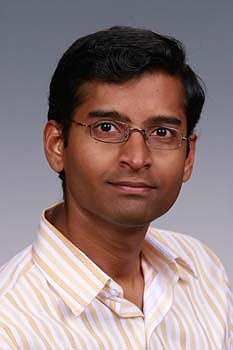
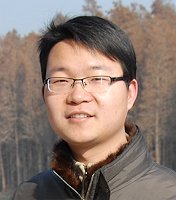
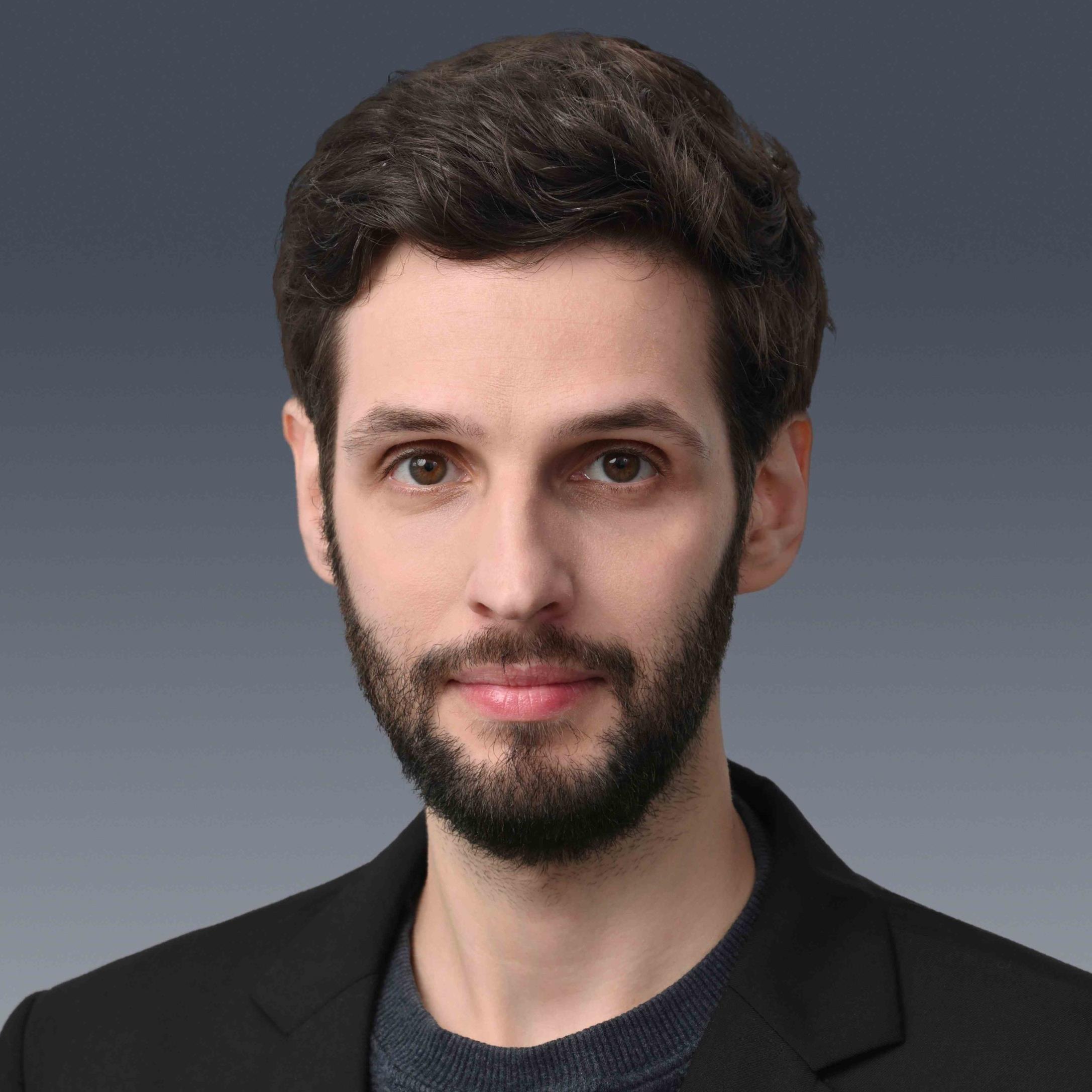
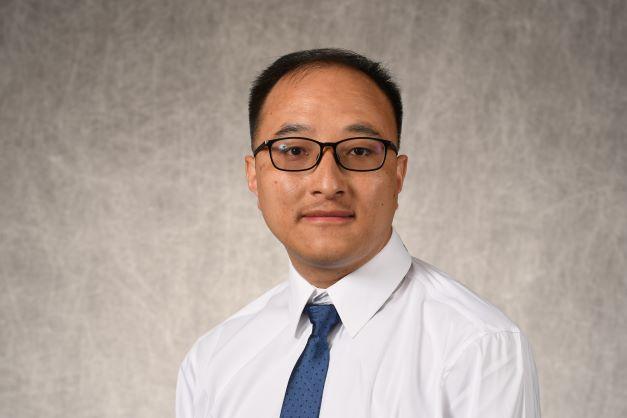
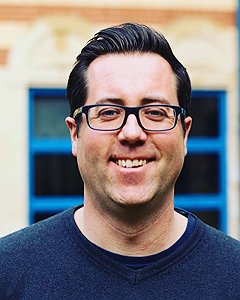
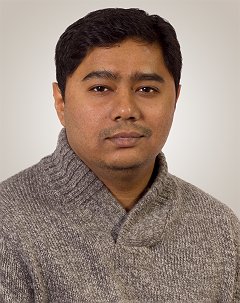
M. Bokdam is an Assistant Professor at the Computational Chemical Physics department within the MESA+ Institute at the University of Twente. His work bridges computational physics and materials science, focusing on advanced simulation techniques and machine learning applied to complex material systems. Research interests include Perovskite materials and their thermal/electronic properties Machine learning force fields for ab initio molecular dynamics Spin dynamics and quantum mechanical modeling Graphene-based heterostructures and interface phenomena Phase transitions and structural distortions in 2D materials Recent publications highlight trends in using AI-driven simulations to study perovskites and graphene interfaces, with keywords spanning computational physics, materials science, and thermodynamics. His work has been recognized through prizes in 2022, including the FAIR DATA Fund and Onderwijsprijs TN (Teaching Award in Natural Sciences). Scientific awards include FAIR DATA Fund 2022 Onderwijsprijs TN 2022 Applied Physics Prize 2022 Key datasets co-authored by Bokdam include force field training databases for CsPbBr3, LaMnO3/SrRuO3, and mixed MAPbI3−xBrx perovskites, emphasizing open science practices.
Prof. Klaus Lips is a faculty member at Freie Universität Berlin, Department of Physics (Experimental Physics), and holds a joint appointment at the Helmholtz Centre Berlin for Materials and Energy where he leads the Institute of Nanospectroscopy. He heads the Working Group 'Advanced Analytics' and serves as the leading manager of the Energy Materials In-Situ Laboratory Berlin (EMIL), a cutting-edge facility for solar cell preparation and synchrotron-based characterization. His research focuses on fundamental loss mechanisms in solar cells, electronic properties of semiconductors and organic materials, and photon upconversion for third-generation photovoltaics. Through the Joint Berlin EPR Laboratory (BeJEL), Lips investigates performance-limiting defects using advanced spectroscopy techniques including continuous-wave/time-domain electron paramagnetic resonance (EPR), electrically/optically detected magnetic resonance (EDMR/ODMR), photoluminescence, Hall effect measurements, and synchrotron-based methods. Lips' recent publications predominantly explore spin-dependent phenomena in semiconductors, thin-film solar cell technologies (particularly silicon-based heterojunctions), and quantum computing applications of fullerenes. His work demonstrates strong emphasis on defect spectroscopy, materials characterization, and novel measurement techniques for photovoltaic optimization. He maintains active public engagement through science outreach including the 'Long Night of Sciences' events and educational programs for kindergartens and schools.
Sriram Krishnamoorthy is a Research Professor at Washington State University's School of Electrical Engineering & Computer Science and a research scientist at Pacific Northwest National Laboratory (PNNL), where he serves as the System Software and Applications Team Leader in PNNL's High Performance Computing group. Dr. Krishnamoorthy earned his B.E. from the College of Engineering, Guindy in Chennai, India, and his M.S. and Ph.D. degrees from The Ohio State University. He is a senior member of the Institute of Electrical and Electronics Engineers. His research focuses on parallel programming models, fault tolerance, and compile-time/runtime optimizations for high-performance computing. He has made significant contributions in areas including: Fault tolerance techniques that minimize rollback during failures Dynamic load balancing for irregular parallel applications Compiler and runtime optimizations for HPC applications GPU programming and heterogeneous computing Quantum chemistry simulations and quantum computing Dr. Krishnamoorthy's publications span computational science, high-performance computing, and quantum chemistry. His recent work shows strong trends toward quantum computing applications, fault tolerance in large-scale systems, and optimization of computational chemistry methods. He has developed techniques for density matrix quantum circuit simulation, floating-point error analysis, and scalable execution of coupled-cluster models. His scientific achievements have been recognized with several prestigious awards: Best Paper Award at International Conference on High Performance Computing (HiPC'03) Best Paper Award at International Parallel and Distributed Processing Symposium (IPDPS'04) U.S. Department of Energy Early Career award (2013) PNNL's Ronald L. Brodzinski Award for Early Career Exceptional Achievement (2013) The Ohio State University's Outstanding Researcher award (2008) Dr. Krishnamoorthy has advised numerous graduate students and collaborated extensively with researchers across computational science domains. His work on the NWChem project demonstrates significant grant funding and large-scale collaborative research efforts in computational chemistry. He leads research efforts in PNNL's High Performance Computing group, focusing on system software and applications development for next-generation supercomputing platforms.
Dr. Zhenman Fang is an Associate Professor in the School of Engineering Science (Computer Engineering Option) and Associate Member in the School of Computing Science at Simon Fraser University, Canada. He founded and directs the HiAccel Lab, focusing on accelerator-rich architectures. His PhD (2014) is from Fudan University, China, with 15 months spent at the University of Minnesota. Prior to SFU, he was a Staff Software Engineer at Xilinx (2017-2019) and a postdoc at UCLA (2014-2017). His research spans: Hardware acceleration for ML, big data, genomics, and HPC FPGA-based customizable computing and near-data processing Compiler/runtime systems for heterogeneous platforms Performance/reliability optimization of accelerator-rich systems His recent publications (2024-2025) focus on FPGA acceleration for machine learning (e.g., on-device training, quantization), computational chemistry, image/video compression, database systems, and reconfigurable computing, demonstrating cross-domain applications of specialized hardware. Awards & Honors: Best Paper Awards: FPL 2024, MEMSYS 2017, TCAD 2019 Best Paper Nominations: ICCAD 2025, FCCM 2025, HPCA 2017, ISPASS 2018 SFU Research Excellence Horizon Award (2025) NSERC Alliance, CFI JELF, and Xilinx University Awards He advises 20+ PhD/Master's students in HiAccel Lab, focusing on accelerator design. Major grants include NSERC Alliance (2020) and CFI JELF (2019). The lab operates a 10-node cluster with FPGA/GPU infrastructure.
Giacomo Nannicini is an Associate Professor in the Daniel J. Epstein Department of Industrial & Systems Engineering at the University of Southern California's School of Advanced Computing, with a courtesy appointment in the Ming Hsieh Department of Electrical & Computer Engineering. His research focuses on optimization broadly defined, with particular interests in algorithms, software, models of computation, and quantum computing applications. His research interests span optimization theory , quantum algorithms , computational methods , and mixed-integer programming . Nannicini has made significant contributions to both classical optimization techniques and emerging quantum computing approaches, developing algorithms that bridge theoretical foundations with practical applications in various domains. Nannicini has received numerous prestigious awards including the 2021 Beale–Orchard-Hays prize, the best paper award at IEEE QCE 2021 (quantum algorithms track), the 2016 COIN-OR Cup, the 2015 Robert Faure prize, and the 2012 Glover-Klingman prize. His publication record demonstrates consistent high-impact contributions across top journals in operations research, computer science, and quantum computing. He has successfully advised multiple PhD students who have gone on to prominent positions including research scientists at Saint-Gobain and SINTEF, as well as tenure-track faculty positions. Nannicini actively recruits PhD students interested in computational optimization, quantum optimization, GPU-enabled computational optimization, and mixed-integer derivative-free optimization.
Tobias Diez is an Associate Professor at Shanghai Jiao Tong University (SJTU) since 2023, previously serving as Assistant Professor there (2021-2023). He earned his PhD in 2019 from the University of Leipzig and Max Planck Institute under Gerd Rudolph, followed by postdoctoral work at Delft University of Technology (2019-2021) with Bas Janssens. Research Interests Mathematical Physics Symplectic Geometry Quantum Field Theory Infinite-dimensional Lie Groups Geometric Quantization Hamiltonian Systems His work explores symmetries in classical and quantum field theories through infinite-dimensional symplectic manifolds, moduli spaces, and geometric quantization. Publications span topics like singular symplectic reduction, momentum maps for diffeomorphism groups, and applications to gauge theory and hydrodynamics. Collaborators Tudor Ratiu (SJTU) Karl-Hermann Neeb (FAU Erlangen-Nürnberg) Cornelia Vizman (West University of Timișoara) Akito Futaki (Tsinghua University) Johannes Huebschmann (Université de Lille)
Zhengping Jay Luo serves as Assistant Professor II in Rider University's Department of Computer Science and Physics, specializing in cybersecurity and computer science with research spanning machine learning security, network defenses, and quantum computing applications. Education: Ph.D. Systems and Security, University of South Florida, Tampa, Florida, United States M.S. Computer Application Technology, Jinan University, Guangzhou, China B.S. Computer Science and Technology, Hebei University of Science and Technology, Shijiazhuang, China His research centers on three interconnected pillars: securing machine learning systems within IoT and communication infrastructures, developing advanced network security protocols, and exploring quantum computing's security implications—particularly in quantum machine learning frameworks. This work addresses critical vulnerabilities in AI-driven systems while pioneering defense mechanisms against next-generation threats. Analysis of his 15 most recent publications (2025-2017) reveals a consistent trajectory toward securing emerging technologies, with 2025-2023 works dominating publications on AI security (SpeechGPT jailbreaks), quantum machine learning, and UAV network defenses. His research bridges theoretical innovation with practical implementations across wireless communications, cryptography, and adversarial machine learning. Scientific Awards: None documented in provided materials. Professor Luo actively mentors Rider students through CYB/CSC 490 Independent Research projects and advises both the ACM Club and Asian American Students Association. His professional service includes NSF Panelist roles (2024-2025), CCSC Eastern conference committee membership, Mercer County Science Fair judging, and NJCCIC affiliation, though specific research grants remain unlisted. He maintains active engagement with the cybersecurity community through invited talks at international conferences and summer tournaments, focusing on quantum computing mathematics and RSA algorithm fundamentals for diverse audiences.
Michael Pradel is a full professor at the University of Stuttgart and a faculty member at the CISPA Helmholtz Center for Information Security. He leads the Software Lab at the University of Stuttgart and holds additional affiliations with the International Max Planck Research School (IMPRS) for Intelligent Systems and the Stuttgart ELLIS Unit. Previously, he served as an assistant professor at TU Darmstadt, a postdoctoral researcher at UC Berkeley, and a lecturer and postdoctoral researcher at ETH Zurich, where he completed his PhD. His educational background includes computer science studies at TU Dresden and engineering studies at Ecole Centrale Paris, with a master's thesis conducted at EPFL. He has taken sabbaticals at Facebook, UC Berkeley, and UCLA. Pradel's research spans software engineering, programming languages, security, and machine learning, with a focus on tools and techniques for building reliable, efficient, and secure software. He is particularly interested in neural-symbolic software analysis, analyzing web applications, dynamic analysis, and test generation. His recent work increasingly incorporates large language models for software engineering tasks including bug detection, test generation, and program repair. His research group has produced significant work in WebAssembly analysis, Python dynamic analysis, quantum program analysis, and automated program repair, with notable tools including Wasm-R3, DynaPyt, LintQ, and RepairAgent. Ernst-Denert Software Engineering Award Emmy Noether grant by the German Research Foundation (DFG) (1.3 million Euro) ERC Starting Grant (1.5 million Euro) Best/Distinguished Paper Awards at FSE (3x), ISSTA, ASE, ASPLOS, and MSR ACM Distinguished Member Multiple ACM SIGSOFT Distinguished Paper and Artifact Awards Pradel has advised numerous PhD students including Matteo (thesis on "Testing and Analysis of Quantum Software"), Luca (thesis on "Supporting Software Evolution via Search and Prediction"), and Daniel (thesis on program analysis for WebAssembly). His research has been supported by significant grants including the Emmy Noether grant and ERC Starting Grant. He serves in leadership roles for major conferences including PC co-chair for FSE 2027 and area chair for ICSE 2026. Pradel leads the Software Lab at the University of Stuttgart, which includes visiting professors Cristian Cadar and Prem Devanbu (both supported by Humboldt Research Awards). The lab maintains active collaborations with institutions including CMU, Google, KAIST, and USI Lugano, and regularly contributes to major software engineering conferences.
Phil McMinn is a Professor of Software Engineering at the University of Sheffield, UK, where he leads the Testing Research Group, one of the largest software testing groups in the UK. His research focuses on developing automated techniques for software testing to help developers maintain robust test suites that effectively find bugs. His primary research interests include Software Testing , Search-Based Software Engineering , Flaky Tests , Mutation Analysis , and Pseudo-Tested Code . Recently, his work has centered on helping developers detect and mitigate flaky software tests, as well as developing mutation analysis approaches to assess test suite quality. His research has been funded by the EPSRC and Meta. Analysis of his recent publications (2023-2025) reveals a strong focus on addressing critical challenges in software testing, particularly around test flakiness, pseudo-tested code detection, and test suite optimization. His work spans both theoretical foundations and practical tool development, with significant contributions to understanding the limitations of current testing practices and developing novel approaches to improve test reliability and effectiveness. Professor McMinn serves as an associate editor for the Software Testing, Verification and Reliability journal and has supervised ten PhD students to completion as first supervisor. He currently mentors five PhD students and a post-doctoral researcher on projects related to test flakiness, mutation analysis, and testing for autonomous systems. He teaches the first-year COM1001 Introduction to Software Engineering module and the third-year COM3529 Software Testing and Analysis module at the University of Sheffield, emphasizing team-based development, automated testing, and code quality improvement through refactoring.
Iftekhar Ahmed is an Associate Professor in Informatics at the Donald Bren School of Information and Computer Science, University of California, Irvine. His research focuses on software engineering, particularly combining software testing, static analysis, and machine learning to develop better tools and techniques for software quality assurance. His educational background includes: PhD in Computer Science (2018) from Oregon State University, advised by Carlos Jensen BSc in Computer Science & Engineering (2007) from Shahjalal University of Science and Technology Dr. Ahmed's research interests center on software testing, static analysis, and the application of machine learning to software engineering problems. He has made significant contributions to mutation analysis, particularly in scaling this technique for real-world software systems. His work often bridges theoretical advances with practical applications, focusing on how to make software testing more effective and efficient for developers. He leads the STAIRS (Software Engineering & Testing Using Artificial Intelligence for Reliable Software) research group at UCI, where his team explores innovative approaches to software reliability through AI and machine learning. His recent publications demonstrate a strong trend toward integrating artificial intelligence with traditional software engineering practices. There's a clear focus on applying machine learning to code analysis, commit message generation, and bug detection, while maintaining rigorous empirical validation through studies of real-world software projects and developer practices. His work spans multiple domains including web accessibility, quantum computing, and Jupyter notebooks, showing both depth in core software engineering topics and breadth across application areas. Dr. Ahmed has received several prestigious awards: IBM Ph.D. Fellowship for academic year 2016-2017 Graduate School tuition relief Scholarship for academic year 2016-2017 IBM Ph.D. Fellowship for academic year 2017-2018 Actively involved in the academic community, Dr. Ahmed serves on program committees for major software engineering conferences including ASE, ICSE, and ESEC/FSE. He is currently accepting PhD students into his research group and emphasizes mentorship and professional development. His research has been supported by various grants that enable his team to explore innovative approaches to software testing and analysis. Dr. Ahmed leads the STAIRS research group at UCI, which focuses on developing AI-powered techniques for software testing and reliability. The group collaborates with industry partners and academic institutions to ensure their research addresses real-world challenges in software development. Current projects include improving mutation testing scalability, analyzing code smells in emerging domains like quantum computing, and developing tools for accessibility testing.
Hong Li is an Associate Research Scholar in the Department of Neuroscience at Yale University's Yale School of Medicine. Their research focuses on molecular mechanisms of cortical developmental malformations in neurodevelopmental and psychiatric disorders, employing animal models and integrative methodologies including molecular biology, genetics, morphology, and transcriptomics. Dr. Li holds a DPhil from the University of Helsinki (2007) and an MD from Anhui University (1997). Their work aims to advance understanding of neuropsychiatric diseases and develop therapeutic strategies. Educational Background: DPhil in Neuroscience, University of Helsinki (2007) MD, Anhui University (1997) Research Interests: Investigating molecular pathways underlying cortical development abnormalities, with emphasis on translational research to bridge basic science and clinical applications. Techniques include advanced genetic engineering, transcriptomic profiling, and cross-disciplinary approaches combining neuroscience and molecular biology. Advising & Grants: No specific grants or trainees listed in available materials, though their publications suggest collaborative research in quantum computing, embedded systems, and telecommunication networks. Recent work includes cross-domain contributions to quantum error correction systems and LLM-based robotic applications. Professional Contributions: Active in systems engineering, publishing on operating systems design, FPGA-based quantum decoders, and secure memory management. Their work bridges biomedical research with computational and hardware innovations.
Yang Lin is a doctoral assistant at the AQUA Lab within the School of Engineering at École Polytechnique Fédérale de Lausanne (EPFL). He works on integrating single-photon avalanche diodes (SPADs) with artificial and spiking neural networks for biological and medical imaging applications, particularly fluorescence lifetime imaging. Ph.D. in Computational and Quantitative Biology (expected 2025), École Polytechnique Fédérale de Lausanne B.Eng. in Automation (2020), Shanghai Jiao Tong University His research focuses on developing intelligent image sensors by combining SPAD technology with neural networks, including ASIC SPAD sensors, FPGA-based processing units, and optical setups for biomedical applications. He is exploring spiking neural networks (SNNs) for energy-efficient, real-time imaging with SPADs. Yang's recent publications highlight advancements in quantum ghost imaging, SPAD sensor integration with neural networks, and fluorescence lifetime imaging. He has presented at conferences like WACV 2024 and received recognition for his work at BMPN 2022. Best Talk of a Young Researcher, BMPN 2022 He designs hardware-software co-systems for biomedical imaging and is open to research or engineering roles post-2025.
Gian Carlo Cardarilli is a researcher specializing in digital hardware design and machine learning acceleration. His work focuses on FPGA implementations, Residue Number System (RNS) architectures, and reconfigurable computing for applications in wireless communication, edge AI, and fault-tolerant systems. Key collaborations with institutions like IEEE and ACM through publications. Active in translating theoretical algorithms into practical hardware solutions for real-time systems. Research interests include: Optimizing deep learning models for heterogeneous platforms. Developing radiation-hardened memory systems. Creating energy-efficient signal processing architectures. Advancing reconfigurable functional units for embedded processors. His article analyses span fields like Quantum Cellular Automata , Variable Fractional Delay Filters , and RNS-Based Position Estimation , reflecting a trend toward adaptive, low-power, and domain-specific hardware.
Elena Dubrova is a Professor at the Division of Electronics and Embedded Systems, KTH Royal Institute of Technology. She specializes in hardware security, cryptography, and embedded systems security. Her roles include examiner and course responsible for advanced degree projects in Computer Engineering, Communication Systems, Embedded Systems, and Machine Learning. She also teaches courses such as Design of Fault-Tolerant Systems, Hardware Security, and Internet Security and Privacy. Her research focuses on side-channel attacks, cryptographic algorithm vulnerabilities, and FPGA security. Notable work includes analyzing hardware security flaws in cryptographic implementations (e.g., CRYSTALS-Kyber, AES), RF signal leakage in chips, and mitigating threats in FPGA-based systems. Her contributions span both theoretical advancements and practical countermeasure development. Dr. Dubrova’s articles highlight trends in post-quantum cryptography vulnerabilities, machine learning-assisted security analysis, and the integration of physical unclonable functions (PUFs) for secure authentication. She emphasizes hardware-software co-design for robust security solutions. No scientific awards are explicitly listed in the provided information. Her work involves collaborative projects on cryptographic protocol design and secure embedded system architecture, though specific grants or lab affiliations are not detailed here.
Peter Schwabe is a scientific director at the Max Planck Institute for Security and Privacy (MPI-SP) and a part-time professor in the Digital Security Group at Radboud University, Nijmegen, The Netherlands. His primary research focuses on cryptographic engineering, particularly post-quantum cryptography, secure cryptographic implementations, and high-assurance systems. He holds a PhD from Eindhoven University of Technology (2011) and a Diplom in Computer Science from RWTH Aachen University (2006). His work includes leading projects like the ERC-funded EPOQUE project, which engineered post-quantum cryptographic standards. He contributed to NIST’s post-quantum cryptography standardization efforts, notably as a core developer of CRYSTALS-Kyber and CRYSTALS-Dilithium. His research spans lattice-based cryptography, code-based cryptography, and formal verification of cryptographic software. Publications highlight advancements in secure implementations against side-channel and speculative execution attacks, high-assurance cryptographic libraries (e.g., EasyCrypt), and practical post-quantum TLS protocols. Key contributions include optimizing cryptographic algorithms for embedded systems (ARM Cortex-M) and formal verification of KEMs like ML-KEM. Scientific awards include an ERC Starting Grant (2018). He advises numerous PhD students and collaborates with industry and academia on cryptographic standards and security. His labs focus on cryptographic engineering, with teams advancing both theoretical and applied aspects of post-quantum security.